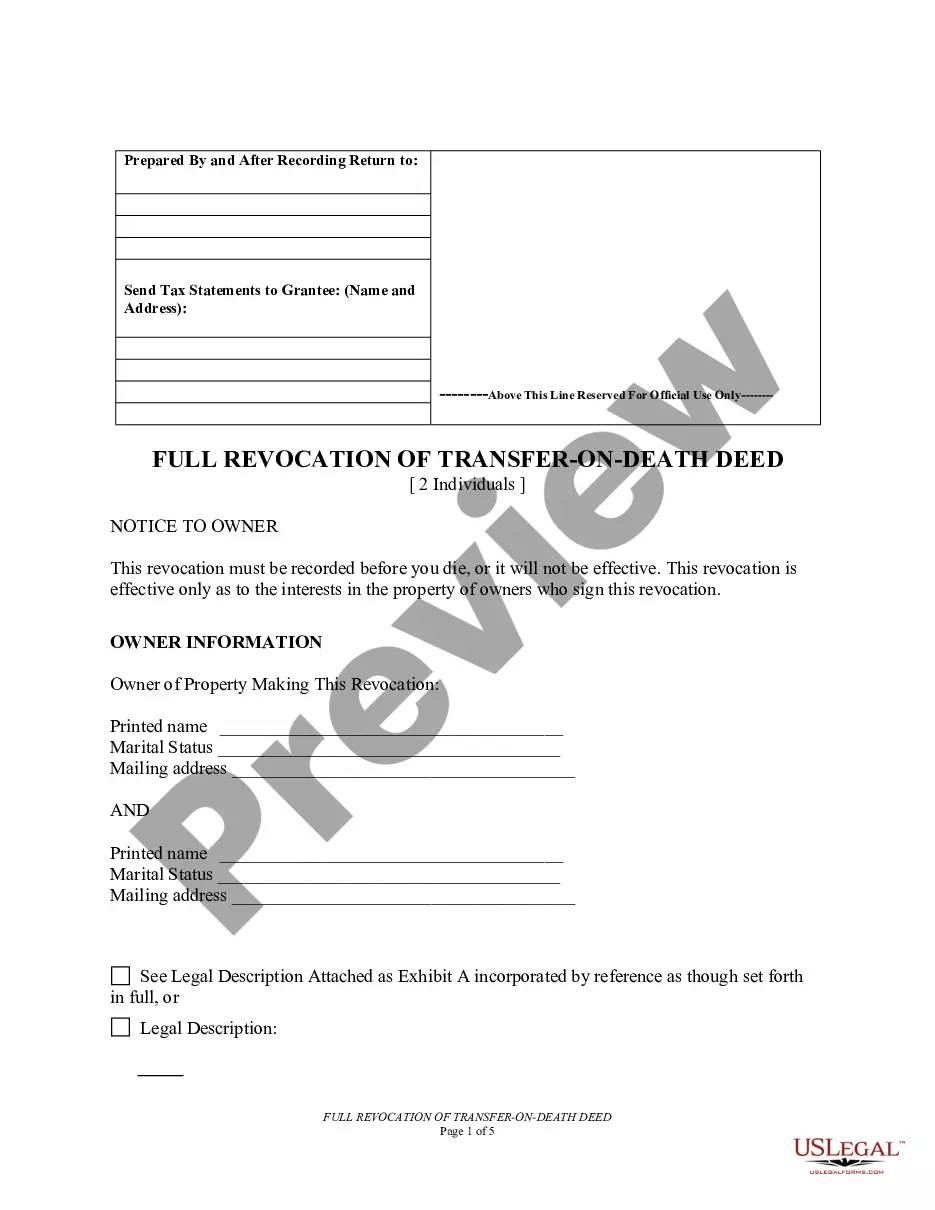
Washington Renunciation And Disclaimer of Joint Tenant or Tenancy Interest
Overview of this form
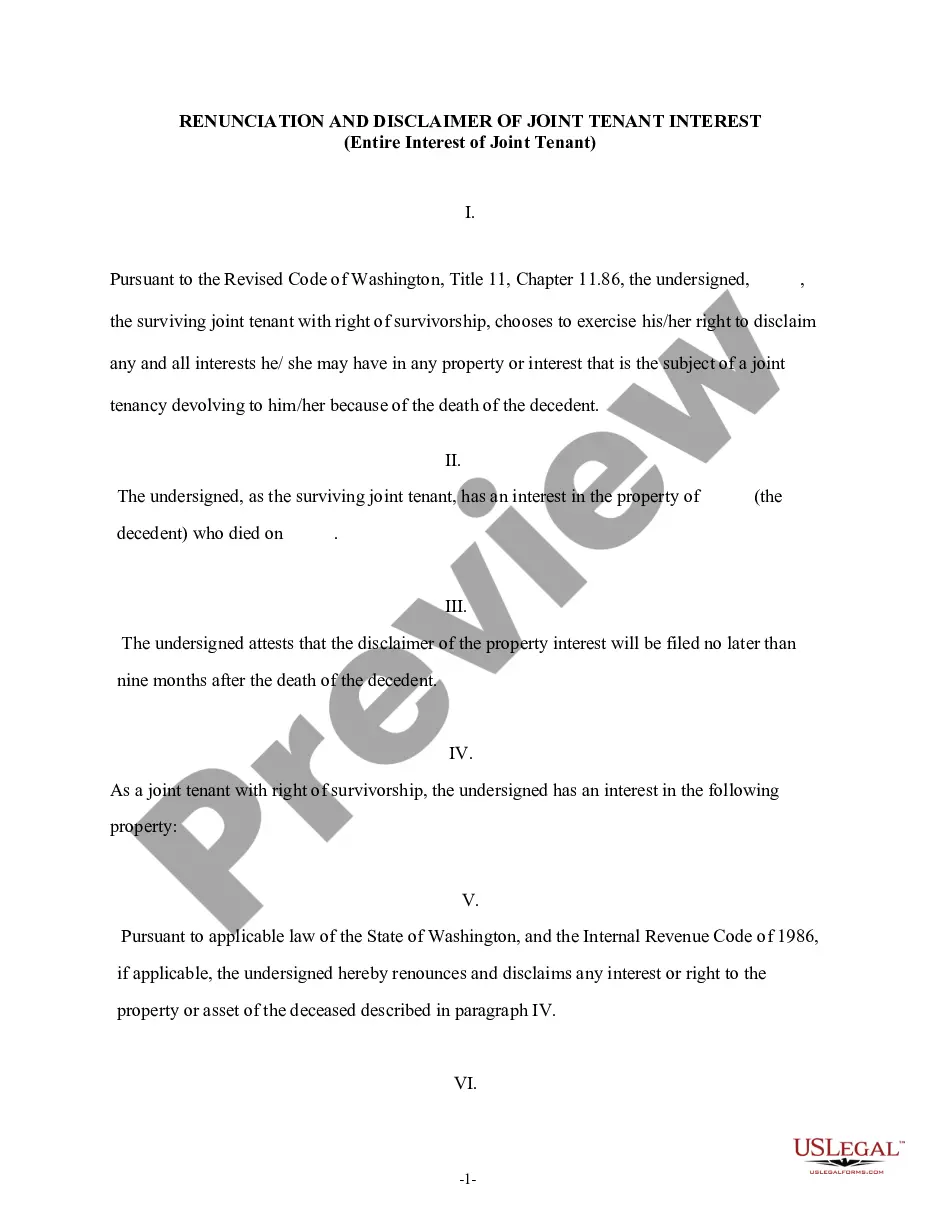
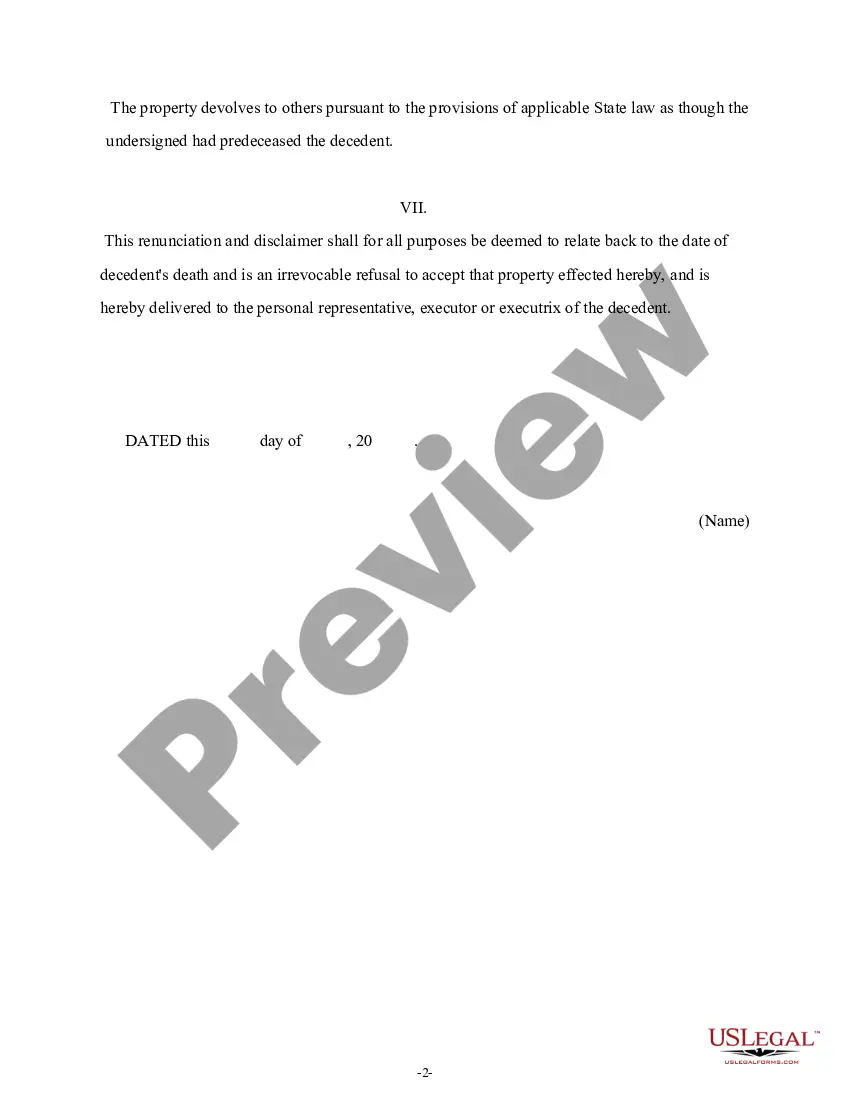
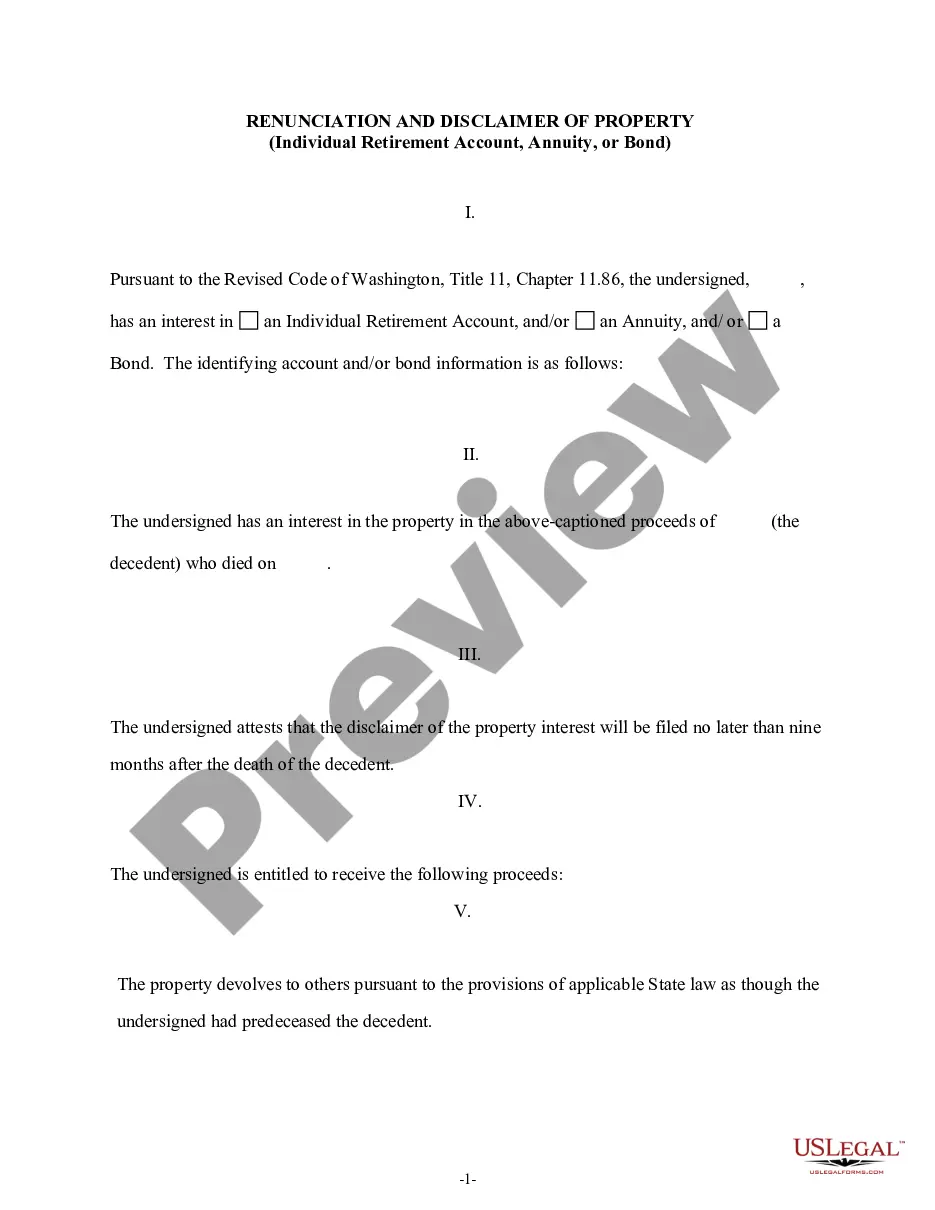
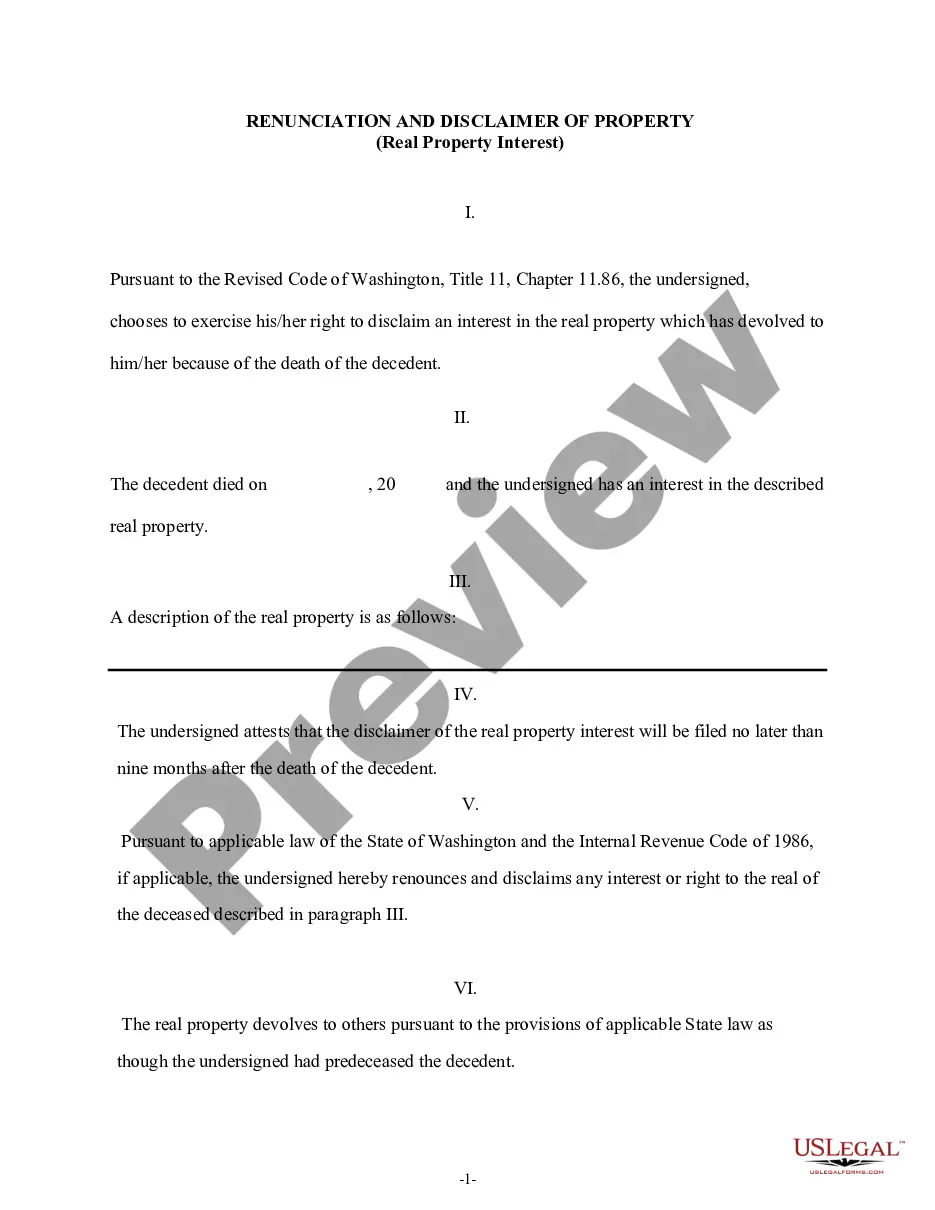
The Renunciation and Disclaimer of Joint Tenant or Tenancy Interest form allows a beneficiary to formally reject their interest in a property acquired upon the death of the decedent. By completing this form, the beneficiary chooses to disclaim their entire interest, resulting in the property passing to other heirs as if the beneficiary had predeceased the decedent. This form differs from other estate planning documents by focusing specifically on the relinquishment of joint tenancy rights.
What’s included in this form
- Details of the joint tenancy, including property description.
- Statement of renunciation and disclaimer by the beneficiary.
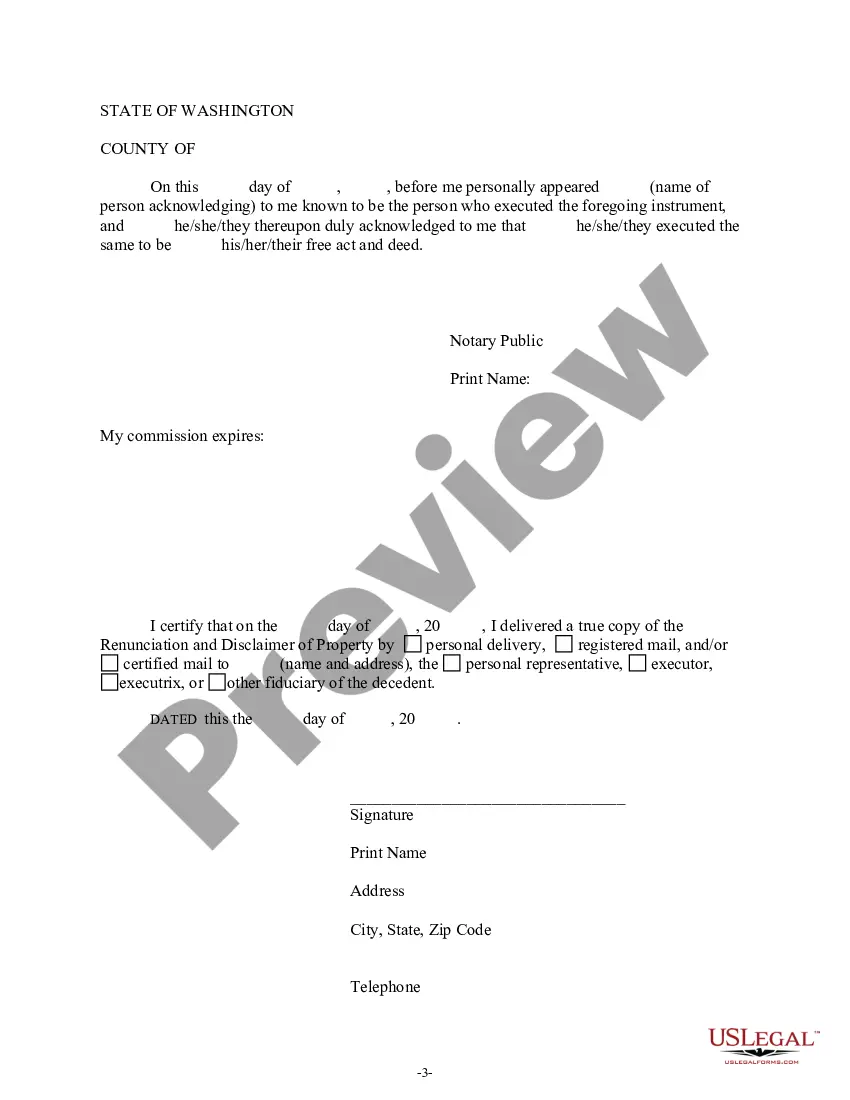
- Legal acknowledgment section tailored for Washington state.
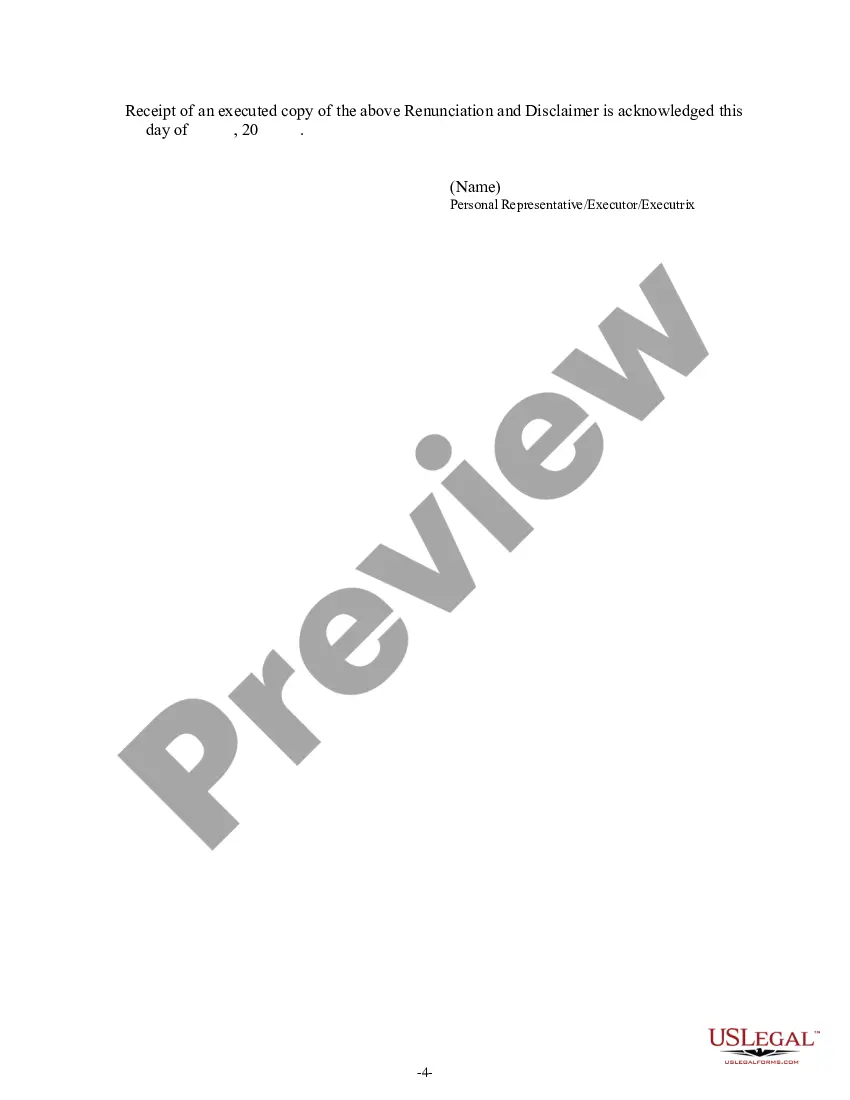
- A certificate to verify delivery of the document.
- Signature sections for the beneficiary and the personal representative.
Situations where this form applies
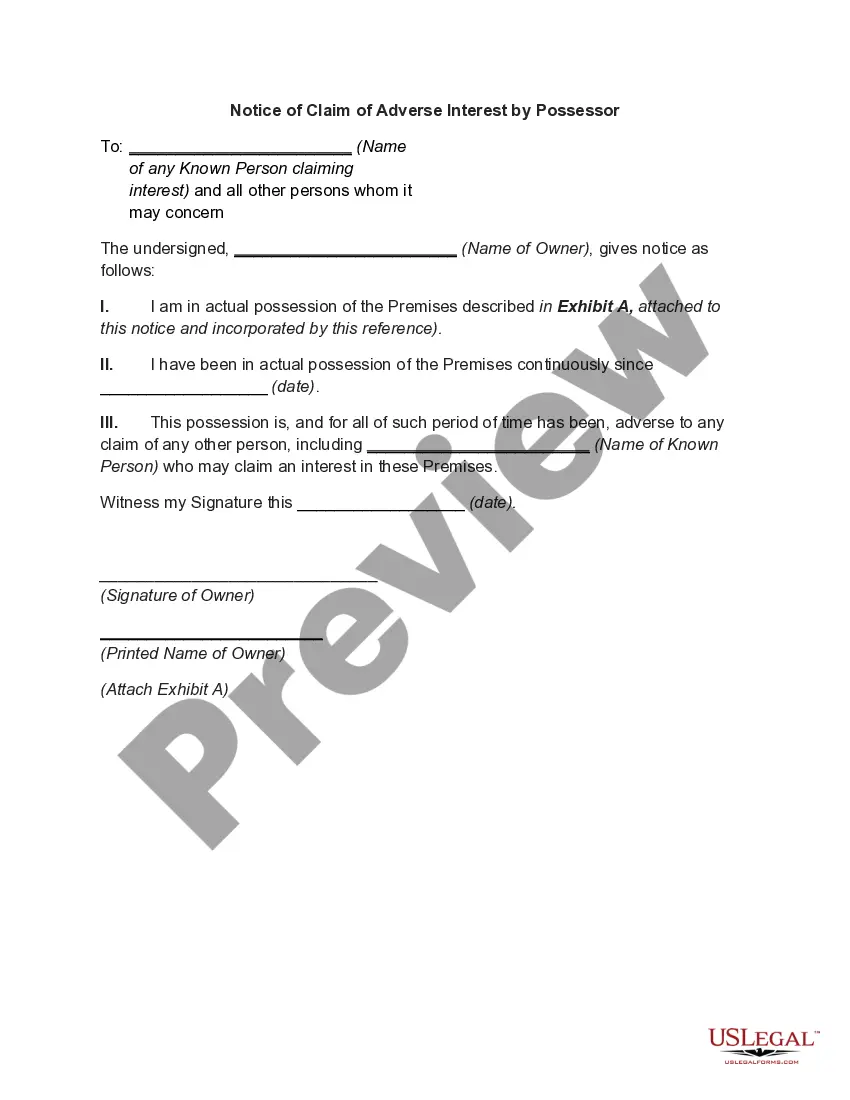
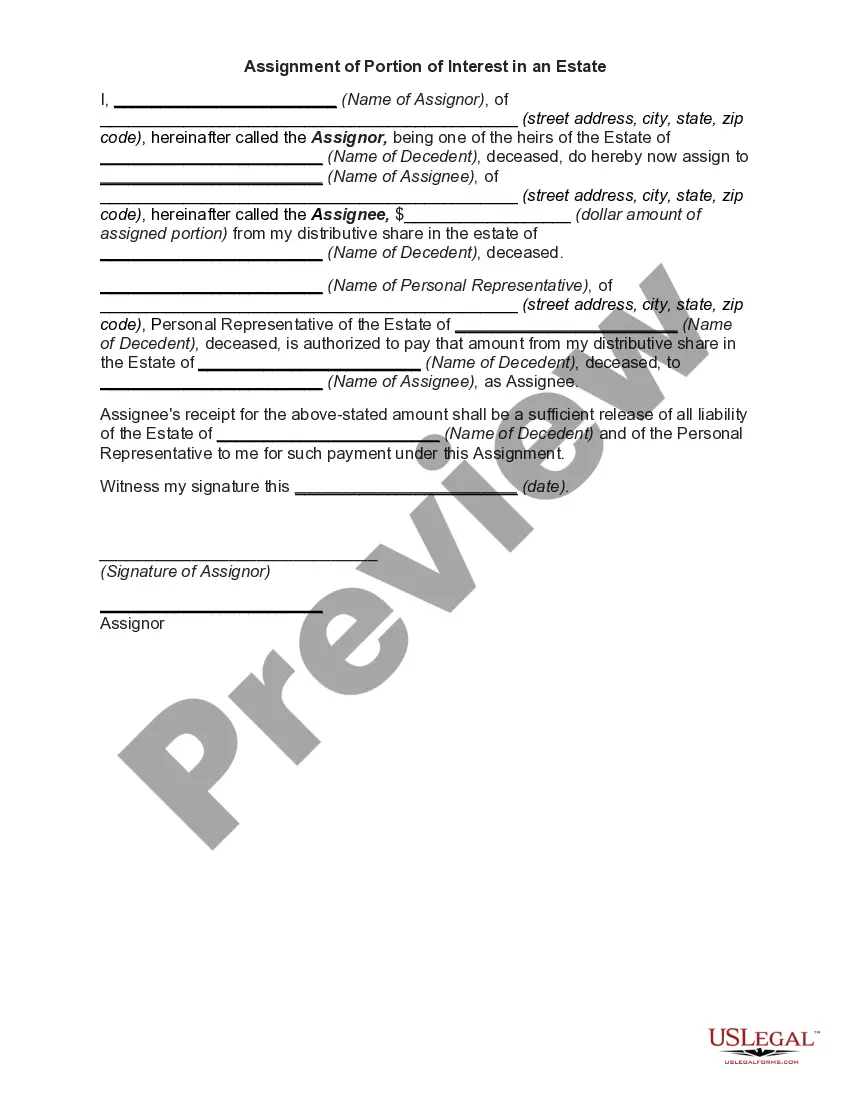
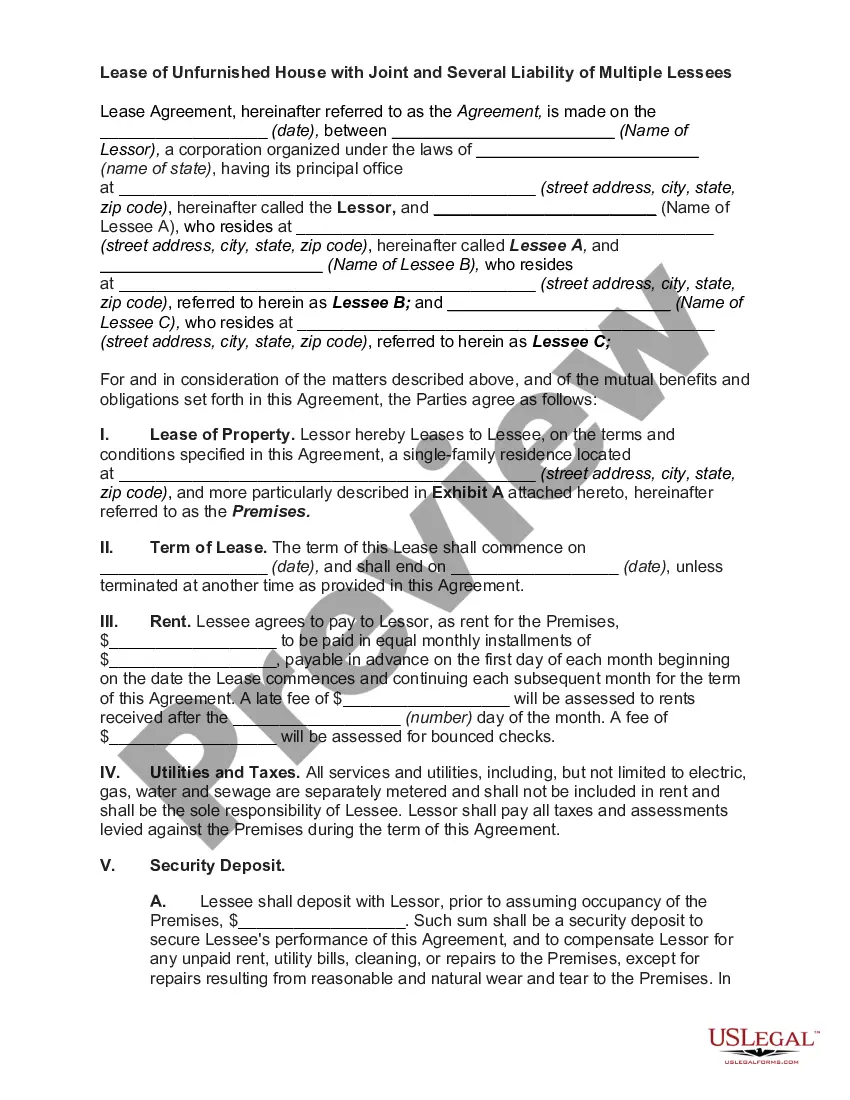
This form is used when a beneficiary wishes to relinquish their interest in a property that they have inherited through joint tenancy. Common scenarios include situations where the beneficiary is not interested in or able to manage the property, or when they prefer that the property be passed down to other heirs or beneficiaries.
Who needs this form
- Beneficiaries who wish to disclaim their interest in inherited property.
- Personal representatives managing the estate of a decedent.
- Heirs looking to simplify the distribution of assets among surviving family members.
How to prepare this document
- Identify the beneficiary and the decedent's details in the form.
- Describe the property involved in the joint tenancy.
- Clearly state the intention to renounce and disclaim the interest in the property.
- Provide necessary signatures from both the beneficiary and the personal representative.
- Include the certificate of delivery to ensure the form is properly executed.
Notarization guidance
This form must be notarized to be legally valid. US Legal Forms provides secure online notarization powered by Notarize, allowing you to complete the process through a verified video call.
Get your form ready online
Our built-in tools help you complete, sign, share, and store your documents in one place.
Make edits, fill in missing information, and update formatting in US Legal Forms—just like you would in MS Word.
Download a copy, print it, send it by email, or mail it via USPS—whatever works best for your next step.
Sign and collect signatures with our SignNow integration. Send to multiple recipients, set reminders, and more. Go Premium to unlock E-Sign.
If this form requires notarization, complete it online through a secure video call—no need to meet a notary in person or wait for an appointment.
We protect your documents and personal data by following strict security and privacy standards.

Make edits, fill in missing information, and update formatting in US Legal Forms—just like you would in MS Word.

Download a copy, print it, send it by email, or mail it via USPS—whatever works best for your next step.

Sign and collect signatures with our SignNow integration. Send to multiple recipients, set reminders, and more. Go Premium to unlock E-Sign.

If this form requires notarization, complete it online through a secure video call—no need to meet a notary in person or wait for an appointment.

We protect your documents and personal data by following strict security and privacy standards.
Common mistakes to avoid
- Failing to provide accurate property details, which can invalidate the form.
- Not obtaining all required signatures, leading to incomplete documentation.
- Neglecting to verify delivery, which can affect acceptance of the disclaimer.
Benefits of completing this form online
- Convenience of downloading and completing the form at your own pace.
- Editable format allows you to tailor the document to individual needs.
- Assured reliability with forms drafted by licensed attorneys.
Legal use & context
- The disclaimer must be filed within a specific timeframe as defined by state law.
- This form is enforceable under the laws governing estate and property transfers.
- Non-compliance with the requirements may lead to unintended inheritance obligations.
Main things to remember
- The Renunciation and Disclaimer of Joint Tenant or Tenancy Interest form allows beneficiaries to disclaim their inheritance.
- Utilizing this form can simplify estate management and clarify intentions regarding property interests.
- Always consider state-specific rules and deadlines when using the form.
Looking for another form?
Form popularity
FAQ
In estate law, joint tenancy is a special form of ownership by two or more persons of the same property. The individuals, who are called joint tenants, share equal ownership of the property and have the equal, undivided right to keep or dispose of the property. Joint tenancy creates a Right of Survivorship.
The key characteristic of a joint tenancy is that you will own the property equally with whoever you are buying it with. This is a popular choice where a property is being purchased together with a relative or someone you're in a relationship with.
For example, let's say an unmarried couple purchases a house. At the time of purchase, they opt for joint tenancy. The deed to the property will name the two owners as joint tenants. Since each party has a claim to the property, they also share the benefits.
Here are some of the options: Joint Ownership. If mom, daughter, and (perhaps) son-in-law own the house as joint tenants with right of survivorship, when mom passes away the house will go to the other owners without going through probate.
Tenancy in common is a form of ownership of real property in which each co-owner owns a separate, distinct share of the property as a whole.For example, Fred may obtain his interest in the property several years after John. For example: Jessica and Marie purchase a house together for a purchase price of $200,000.
Danger #1: Only delays probate. Danger #2: Probate when both owners die together. Danger #3: Unintentional disinheriting. Danger #4: Gift taxes. Danger #5: Loss of income tax benefits. Danger #6: Right to sell or encumber. Danger #7: Financial problems.
For example, joint tenants must all take title simultaneously from the same deed while tenants in common can come into ownership at different times. Another difference is that joint tenants all own equal shares of the property, proportionate to the number of joint tenants involved.
In California, most married couples hold real property (such as land and buildings) as joint tenants with right of survivorship.For instance, many married couples share real property as joint tenants. This way, upon the death of a spouse, the surviving spouse will own 100% share of the property.
In estate law, joint tenancy is a special form of ownership by two or more persons of the same property. The individuals, who are called joint tenants, share equal ownership of the property and have the equal, undivided right to keep or dispose of the property. Joint tenancy creates a Right of Survivorship.