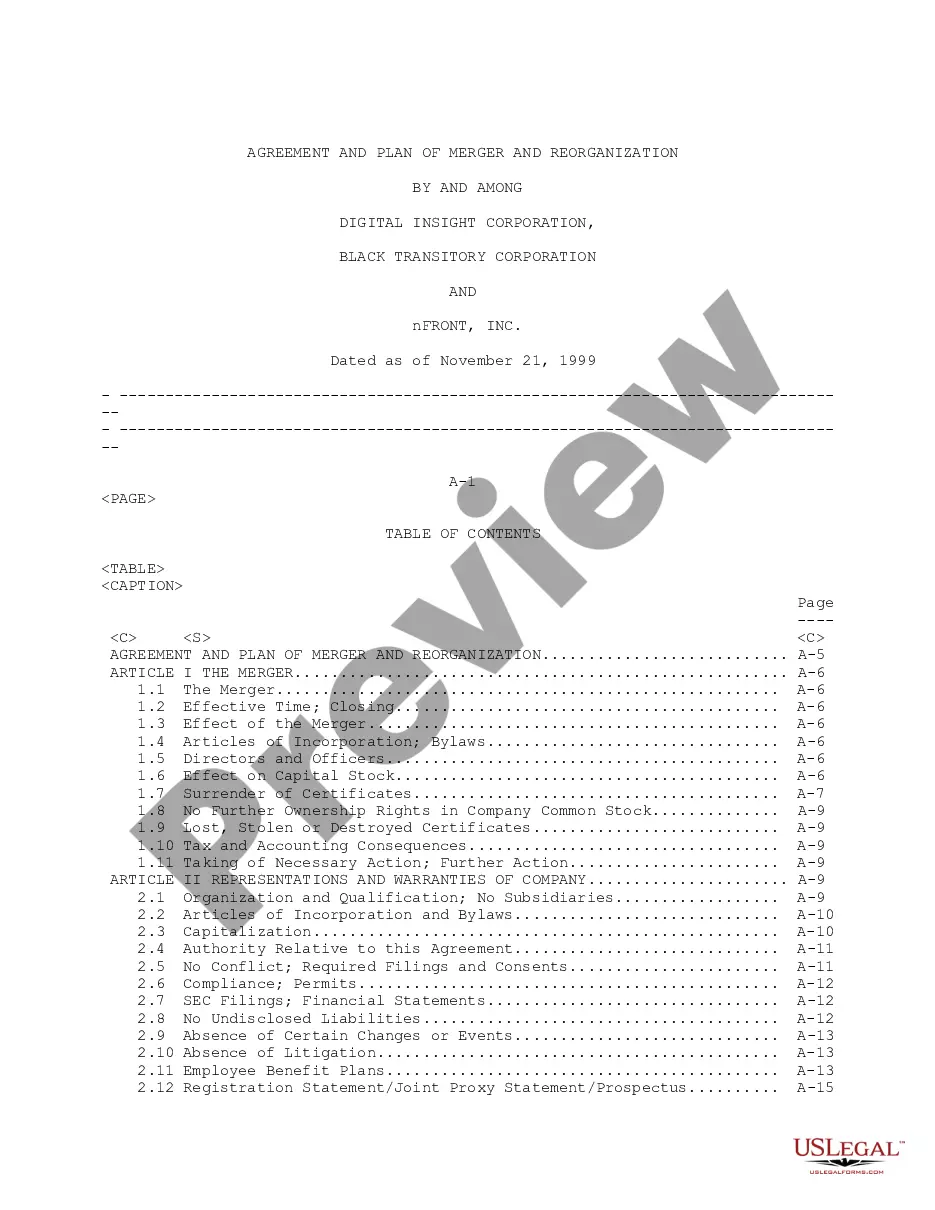
Vermont 30 Day Notice to Terminate Verbal Lease When Leased Premises is Sold - Residential
What is this form?
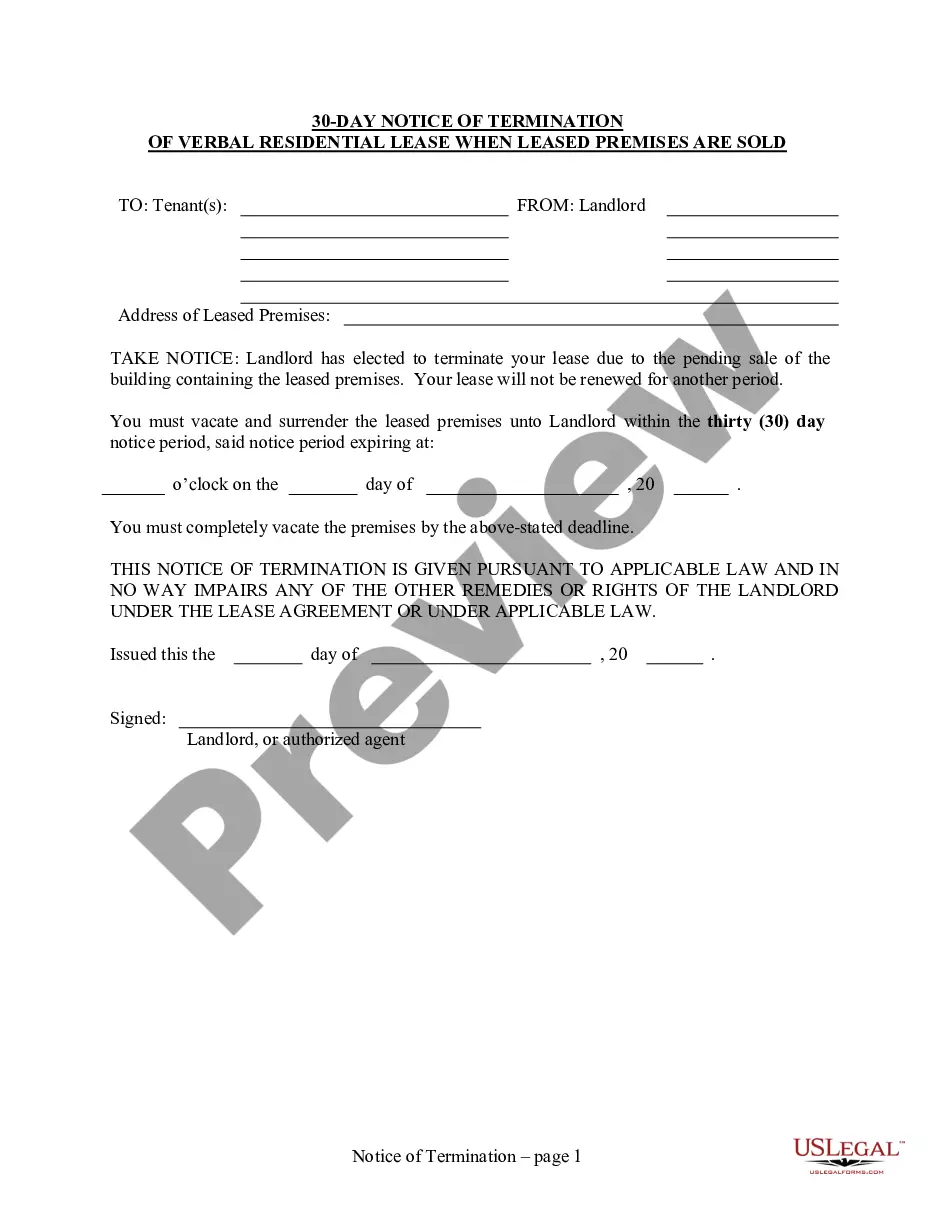
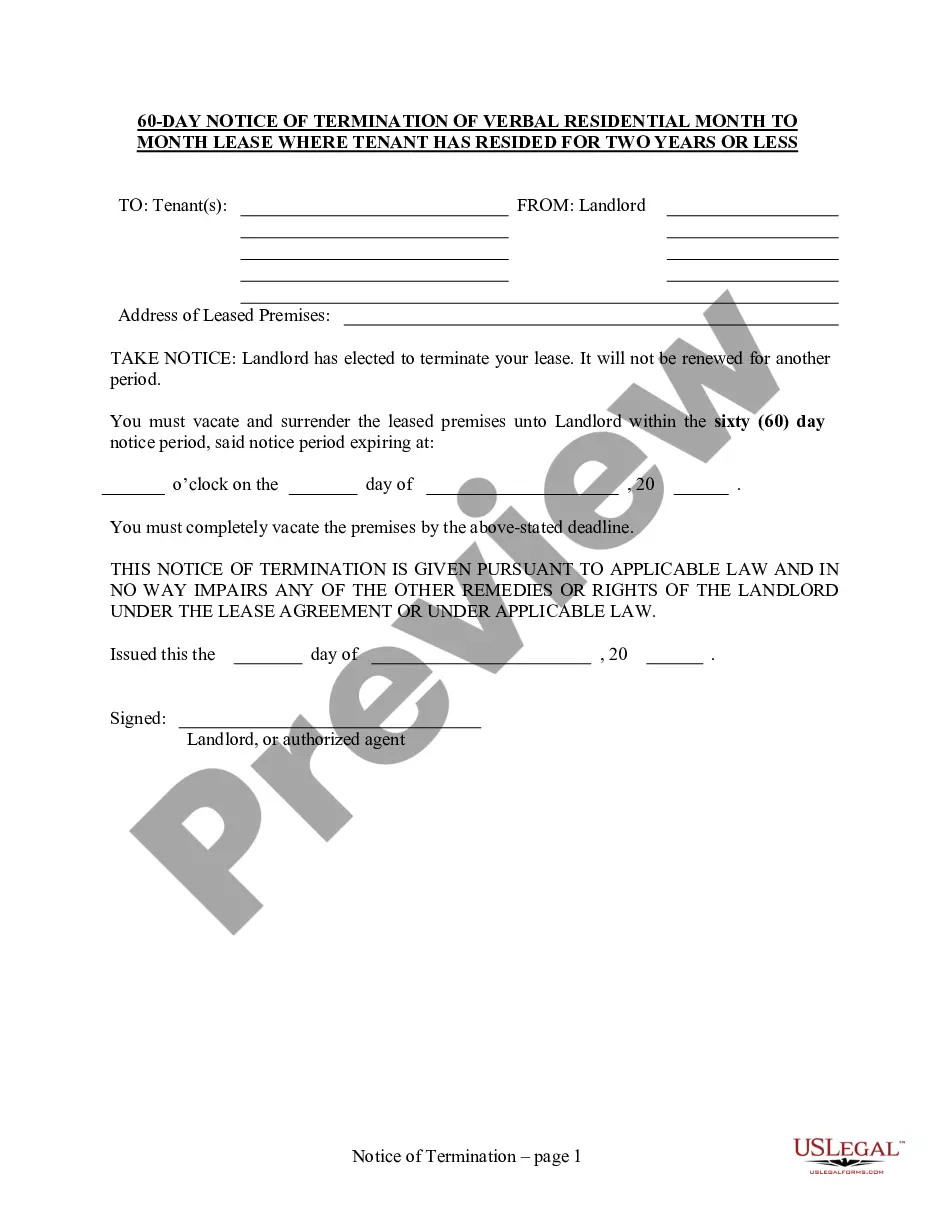
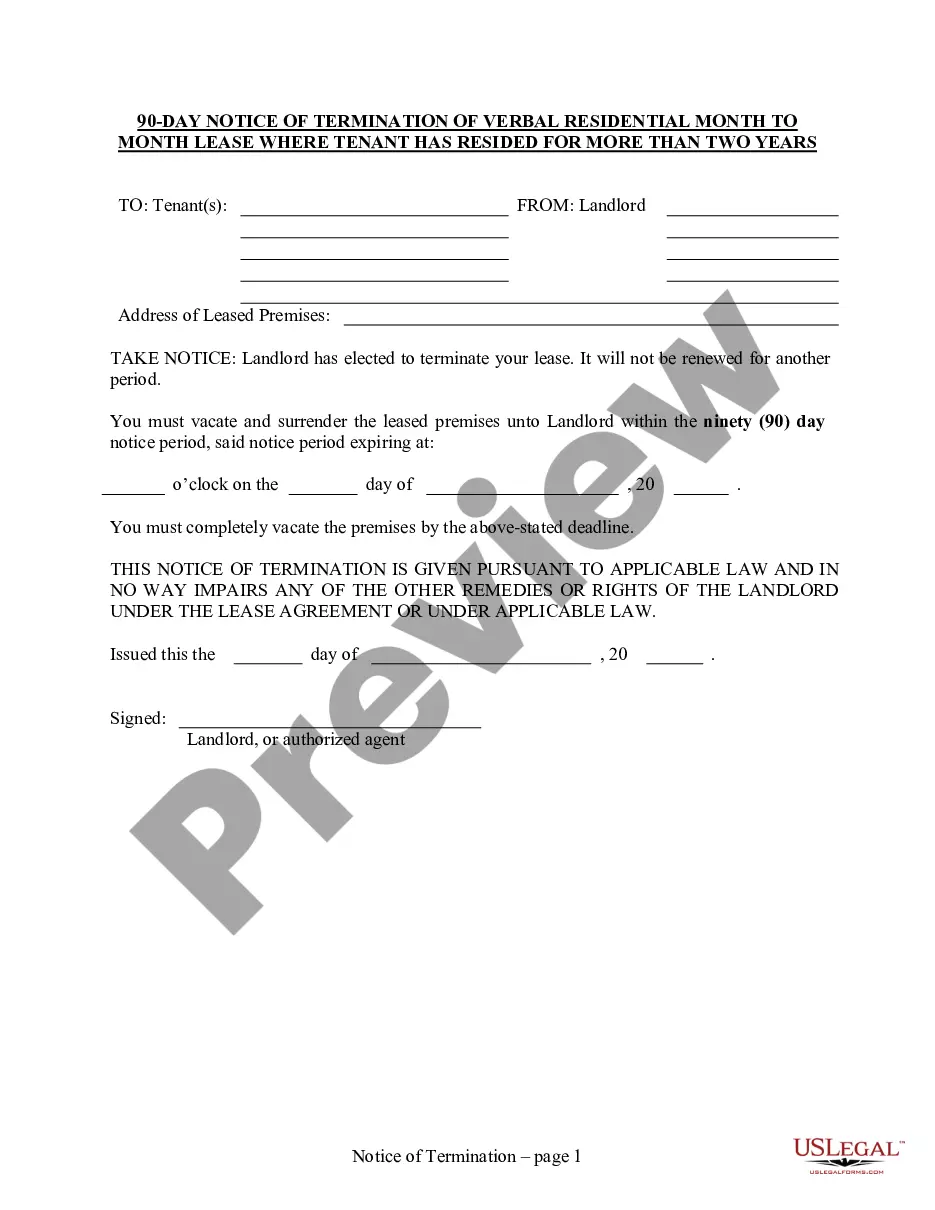
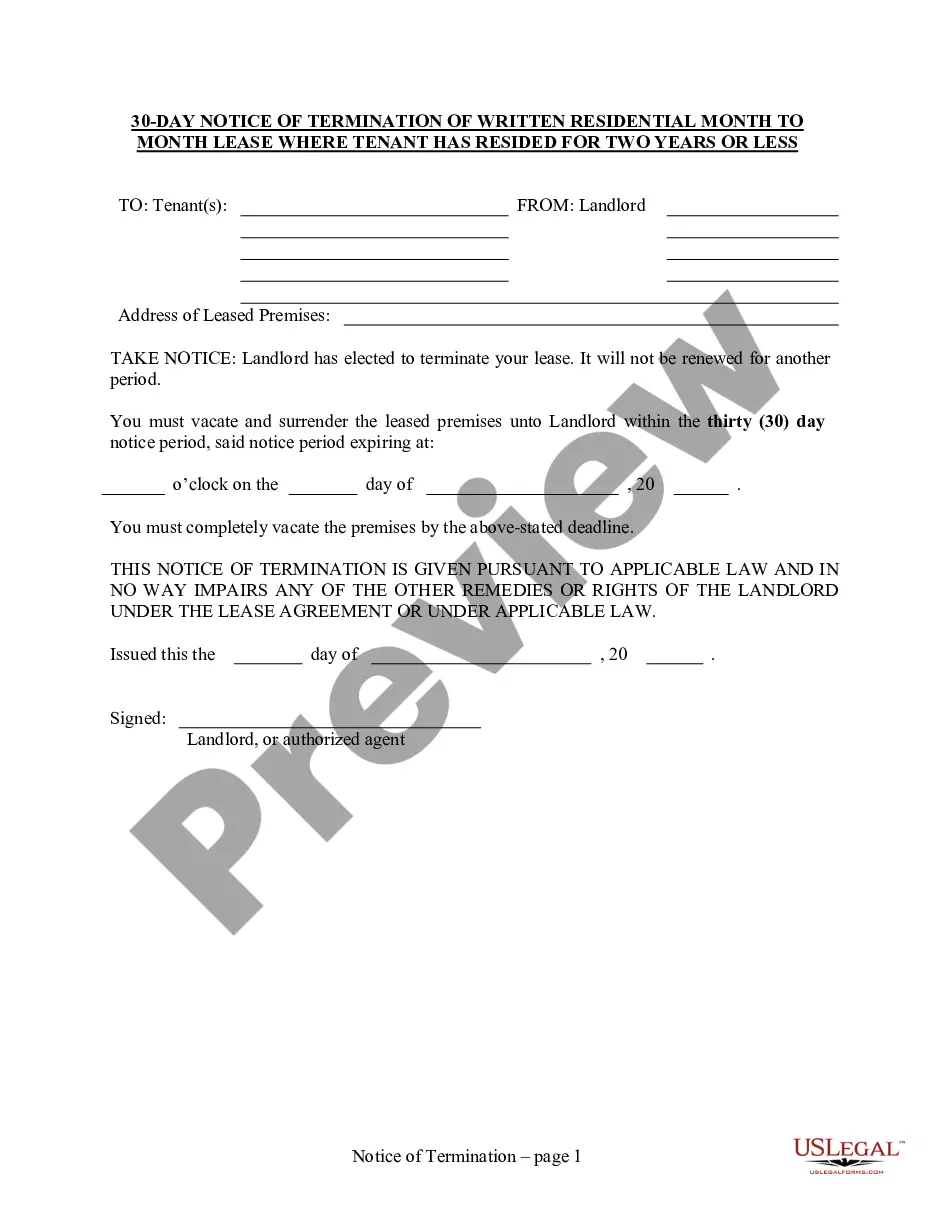
The 30 Day Notice to Terminate Verbal Lease When Leased Premises is Sold is a legal document used by landlords to end a verbal lease agreement when they decide to sell the property. This form notifies tenants that their lease will be terminated with a minimum of 30 days' notice prior to the termination date, ensuring compliance with relevant rental laws. This distinguishes it from written lease termination notices, which may follow different requirements.
What’s included in this form
- Identification of the landlord and tenant parties involved.
- Address and description of the leased premises.
- Notice of lease termination due to sale of the property.
- Specific deadline by which the tenant must vacate the premises.
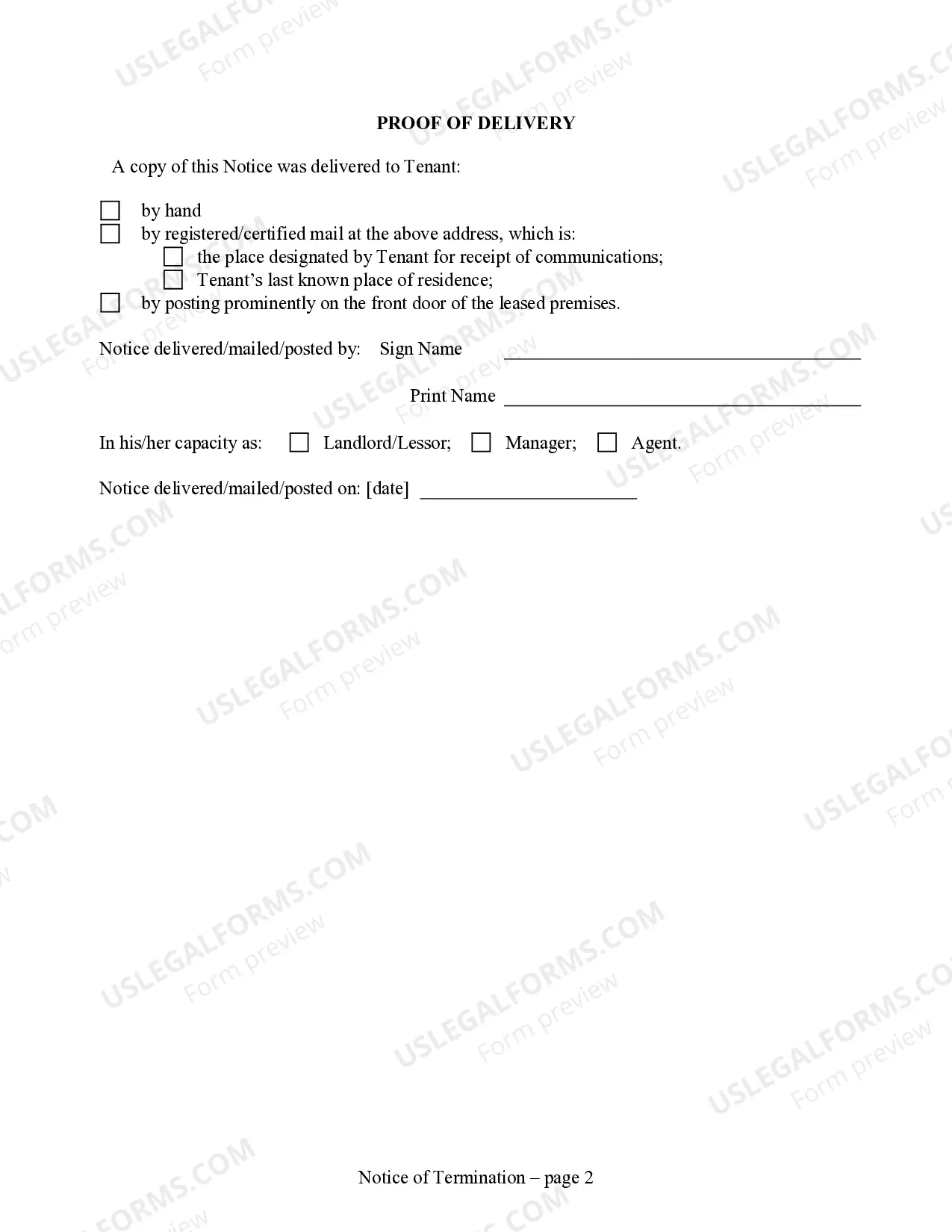
- Proof of delivery section indicating how the notice was served to the tenant.

Situations where this form applies
This form should be used when a landlord has sold their property and needs to terminate a verbal lease agreement with a tenant. It is essential when the landlord wishes to ensure that the tenant vacates the property in a timely manner, allowing the new owner to take possession without dilatory delays.
Who should use this form
- Landlords planning to sell their rental property.
- Property managers acting on behalf of landlords.
- Tenants who need a clear understanding of their lease termination notice.
Steps to complete this form
- Identify the parties by entering the names of the landlord and tenant.
- Specify the address of the leased premises.
- Fill in the date you are issuing this notice.
- Clearly state the date by which the tenant must vacate.
- Sign the notice as the landlord or authorized agent.
- Document the method of delivery used to inform the tenant.
Notarization guidance
Notarization is generally not required for this form. However, certain states or situations might demand it. You can complete notarization online through US Legal Forms, powered by Notarize, using a verified video call available anytime.
Get your form ready online
Our built-in tools help you complete, sign, share, and store your documents in one place.
Make edits, fill in missing information, and update formatting in US Legal Forms—just like you would in MS Word.
Download a copy, print it, send it by email, or mail it via USPS—whatever works best for your next step.
Sign and collect signatures with our SignNow integration. Send to multiple recipients, set reminders, and more. Go Premium to unlock E-Sign.
If this form requires notarization, complete it online through a secure video call—no need to meet a notary in person or wait for an appointment.
We protect your documents and personal data by following strict security and privacy standards.

Make edits, fill in missing information, and update formatting in US Legal Forms—just like you would in MS Word.

Download a copy, print it, send it by email, or mail it via USPS—whatever works best for your next step.

Sign and collect signatures with our SignNow integration. Send to multiple recipients, set reminders, and more. Go Premium to unlock E-Sign.

If this form requires notarization, complete it online through a secure video call—no need to meet a notary in person or wait for an appointment.

We protect your documents and personal data by following strict security and privacy standards.
Avoid these common issues
- Failing to provide at least 30 days' notice.
- Not specifying the date by which the tenant must vacate.
- Incorrectly filling out the delivery method or date of notice.
- Omitting the signature of the landlord or authorized agent.
Why complete this form online
- Convenience of downloading and printing the form immediately.
- Editability allows customization for specific lease agreements.
- Reliability with language drafted by licensed attorneys.
Looking for another form?
Form popularity
FAQ
Get an Injunctive Order from the Court to Stop the Behavior: A tenant can go to court to get a legal order from the court for the landlord to stop the harassing behavior. 12feff Sue the Landlord: A tenant could also sue the landlord for damages due to the harassment.
Your lease remains valid in case a rental property is sold, and your former landlord is obliged to provide you with a name and address of a new landlord.This means that tenants cannot be forced to leave or asked to pay a different rent until the current lease expires.
In general, you are only required to give a 30-day notice to quit to someone who is a tenant. You are usually not required to give a guest a 30-day notice, no matter how long that person has lived in your home.
Under the terms of a verbal agreement, most states allow the landlord to make changes by giving written notification to the tenant.In other words, a month-to-month verbal lease would require the landlord to provide 30 days' written notice to the tenant for changes such as rent increases and notices to vacate.
A verbal agreement is as good as the paper it is written on. You have no obligation to rent to the person and can change your mind. The person can at the same time tell the apartment where he is living that he is not moving afterall. Go with your gut instincts and do not rent to the person.
A rental agreement can be oral or written. It is the same thing as a lease. An oral rental agreement is where you and the landlord agree that you can rent a unit but your agreement is not in writing. An oral rental agreement is still enforceable.
Verbal agreements between two parties are just as enforceable as a written agreement. Like written contracts, they just need to meet the requirements of a valid contract to be enforced in court. If the agreement meets those requirements, both verbal and written agreements are enforceable.
Letters. Emails. Texts. Quotes. Faxes. Notes made at the time of the agreement. Proof of payment such as canceled checks or transaction statements.
If a person does not fulfill their part of the verbal contract, there may be grounds to suebut it will depend on the overall nature of the agreement and stipulations involved. If you believe another party violated your valid verbal contract, do not hesitate to get legal help you can trust.