Utah Assignment of Deed of Trust by Individual Mortgage Holder
What is this form?
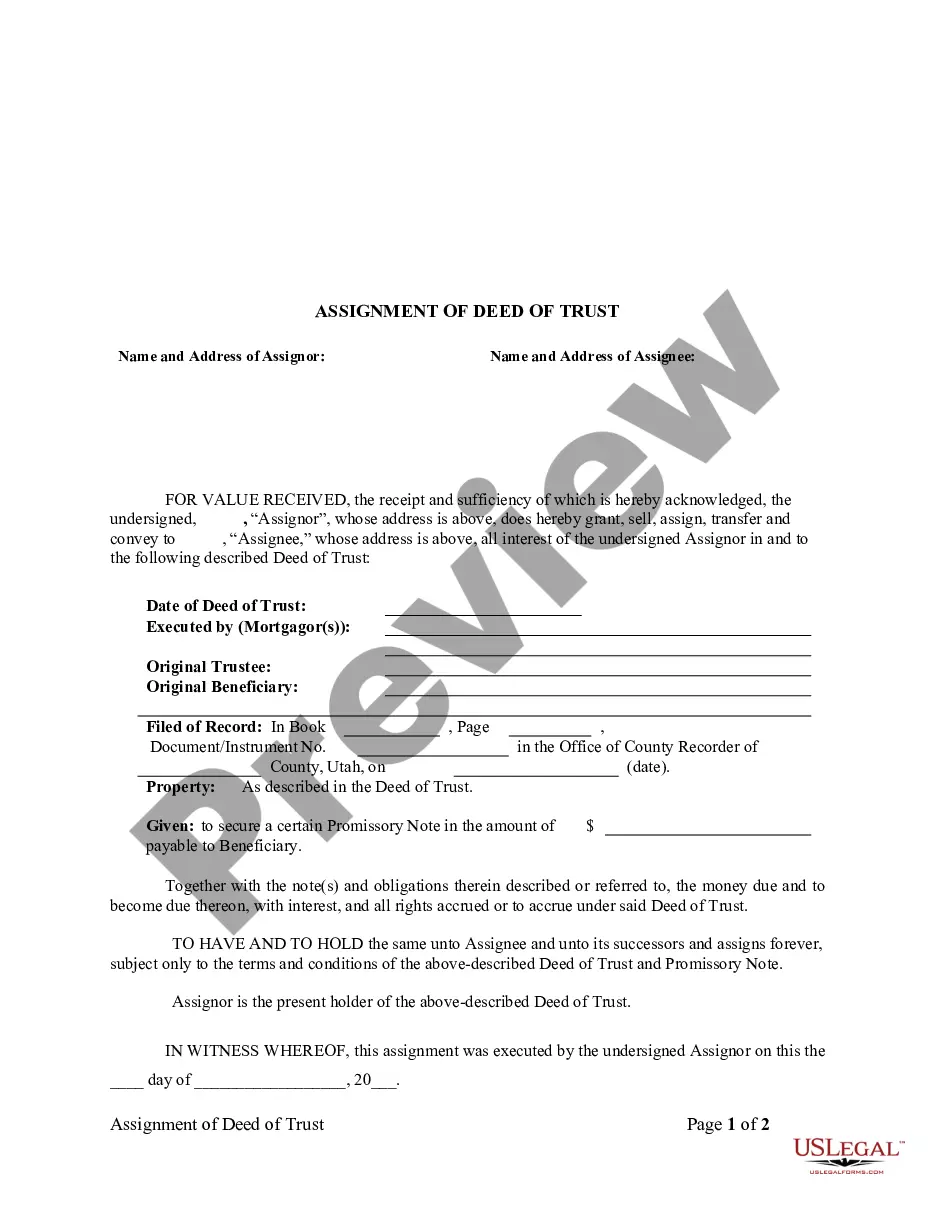
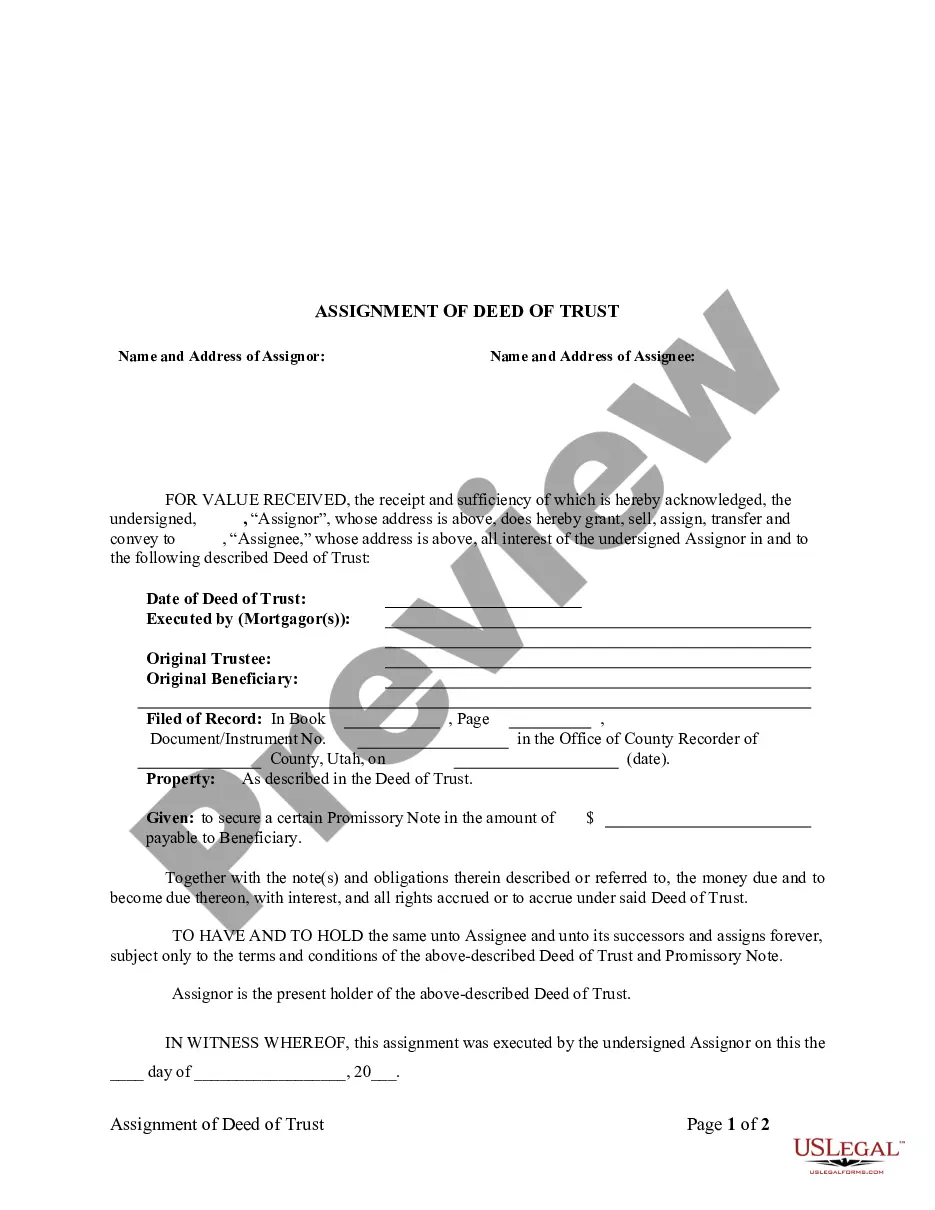
The Assignment of Deed of Trust by Individual Mortgage Holder is a legal document that allows the current holder of a deed of trust or mortgage to transfer their interest to a third party. This form is essential when an individual mortgage holder wishes to assign their rights and responsibilities to another entity, distinguishing it from other mortgage-related documents that may not involve such assignments.
Main sections of this form
- Assignment of rights: The transfer of the mortgage holder's interests in the deed of trust.
- Identification of parties: Detailed information about the Assignor and Assignee.
- Property description: Clear identification of the property associated with the mortgage.
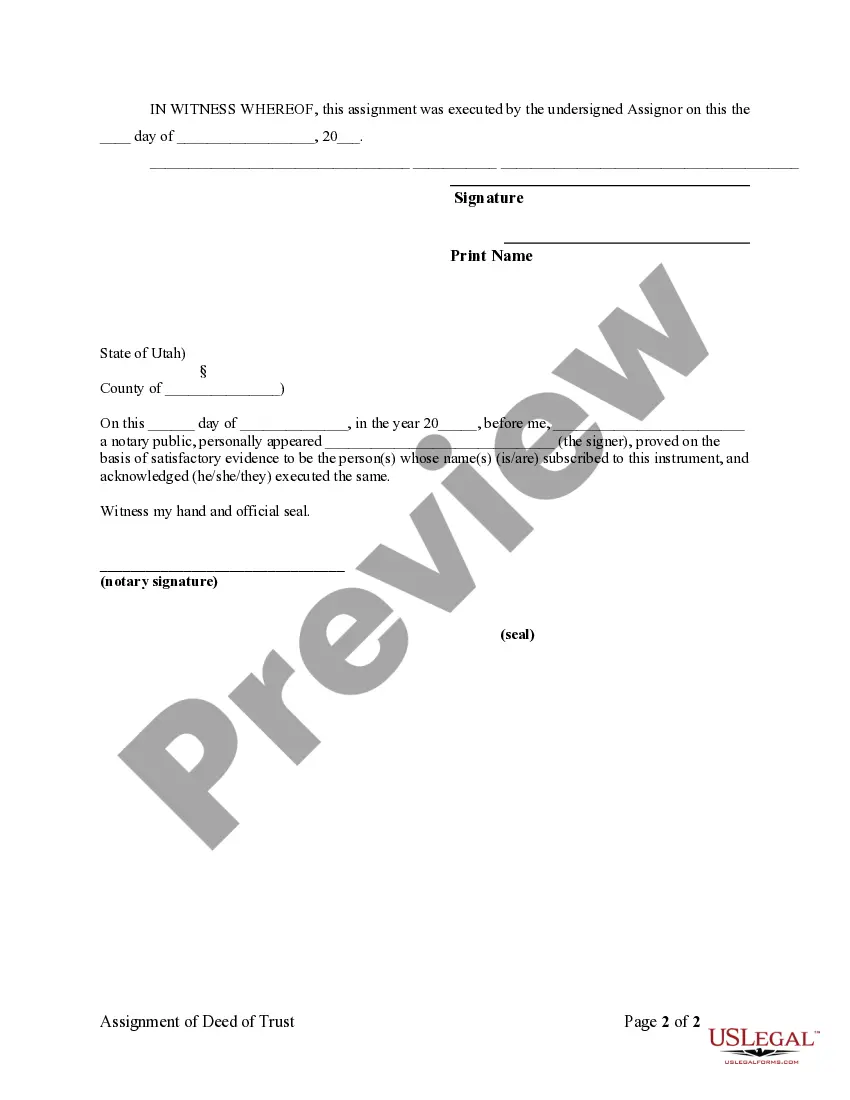
- Execution section: Requirements for signing and dating the document.

When to use this document
This form should be used when an individual mortgage holder wants to transfer their rights under a deed of trust to another party. Scenarios include selling property with an existing mortgage, refinancing through a different lender, or modifying loan terms through assignment. It is a critical step to ensure that the transferee has legal authority to collect payments and manage the mortgage obligations.
Who needs this form
- Individual mortgage holders looking to transfer their mortgage rights.
- Real estate investors who acquire properties with existing deeds of trust.
- Parties involved in refinancing or restructuring existing loans.
How to complete this form
- Identify the Assignor: Provide full legal name and information of the current mortgage holder.
- Identify the Assignee: Enter the full legal name and details of the party receiving the assignment.
- Specify the property: Clearly describe the property involved in the deed of trust.
- Enter the date: Fill in the completion date of the assignment document.
- Sign the form: Ensure the Assignor signs and dates the form as required for validity.
Does this form need to be notarized?
This form needs to be notarized to ensure legal validity. US Legal Forms provides secure online notarization powered by Notarize, allowing you to complete the process through a verified video call, available anytime.
Get your form ready online
Our built-in tools help you complete, sign, share, and store your documents in one place.
Make edits, fill in missing information, and update formatting in US Legal Forms—just like you would in MS Word.
Download a copy, print it, send it by email, or mail it via USPS—whatever works best for your next step.
Sign and collect signatures with our SignNow integration. Send to multiple recipients, set reminders, and more. Go Premium to unlock E-Sign.
If this form requires notarization, complete it online through a secure video call—no need to meet a notary in person or wait for an appointment.
We protect your documents and personal data by following strict security and privacy standards.

Make edits, fill in missing information, and update formatting in US Legal Forms—just like you would in MS Word.

Download a copy, print it, send it by email, or mail it via USPS—whatever works best for your next step.

Sign and collect signatures with our SignNow integration. Send to multiple recipients, set reminders, and more. Go Premium to unlock E-Sign.

If this form requires notarization, complete it online through a secure video call—no need to meet a notary in person or wait for an appointment.

We protect your documents and personal data by following strict security and privacy standards.
Avoid these common issues
- Failing to provide complete and accurate information about the parties involved.
- Not properly identifying the property connected to the deed of trust.
- Neglecting to sign or date the document, which can lead to enforceability issues.
Advantages of online completion
- Convenience of downloading and completing the form at your own pace.
- Editability to enter specific information as needed before finalizing.
- Access to attorney-drafted templates that ensure legal compliance.
Key takeaways
- The Assignment of Deed of Trust is crucial for transferring mortgage responsibilities.
- Ensure all information is accurate and all parties sign the document.
- Verify specific state requirements before finalizing the assignment.
Looking for another form?
Form popularity
FAQ
You may be able to transfer your interest in the property through a quitclaim deed, where you relinquish all ownership of the property to someone else. Your lender may also agree to add another name to the mortgage. In this case, someone else would be able to legally make payments on the mortgage.
An assignment of trust deed is a document that lenders use when they sell loans secured by trust deeds. While they can freely sell the promissory notes between themselves, the trust deeds that give them the right to foreclose have to be assigned with a legal document.
No law forbids adding someone to your mortgaged home's deed or in signing your home over to others through one. Mortgage lenders understand deeds, though, and use loan due-on-sale clauses to prevent unauthorized property sales or transfers.
The law doesn't forbid adding people to a deed on a home with an outstanding mortgage. Mortgage lenders are familiar and frequently work with deed changes and transfers.When you "deed" your home to someone, you've effectively transferred part ownership, which could activate the "due-on-sale" clause.
Whether you have a deed of trust or a mortgage, they both serve to assure that a loan is repaid, either to a lender or an individual person. A mortgage only involves two parties the borrower and the lender. A deed of trust adds an additional party, a trustee, who holds the home's title until the loan is repaid.
They serve different purposes and are signed by different parties. The warranty deed transfers the property's ownership from the current owner to the new buyer, while the deed of trust ensures the lender has interest in the property in the event a buyer defaults on the loan.
The following states may use either Mortgage Agreements or Deed of Trusts: Colorado, Idaho, Illinois, Iowa, Maryland, Montana, Nebraska, Oklahoma, Oregon, Tennessee, Texas, Utah, Wyoming, Washington, and West Virginia.
The deed of trust is currently used in Alabama, Alaska, Arkansas, Arizona, California, Colorado, District of Columbia, Georgia, Hawaii, Idaho, Iowa, Michigan, Minnesota, Mississippi, Missouri, Montana, Nevada, New Hampshire, North Carolina, Oklahoma, Oregon, Rhode Island, South Dakota, Tennessee, Texas, Utah, Virginia,
If you or another party to the deed of trust already own the property and you enter into a deed of trust to regulate an arrangement there is usually no reason to inform your mortgage lender.Therefore the mortgage company's position is secure and they need not be concerned with a deed of trust.