South Dakota Certificate of Trust by Individual
About this form
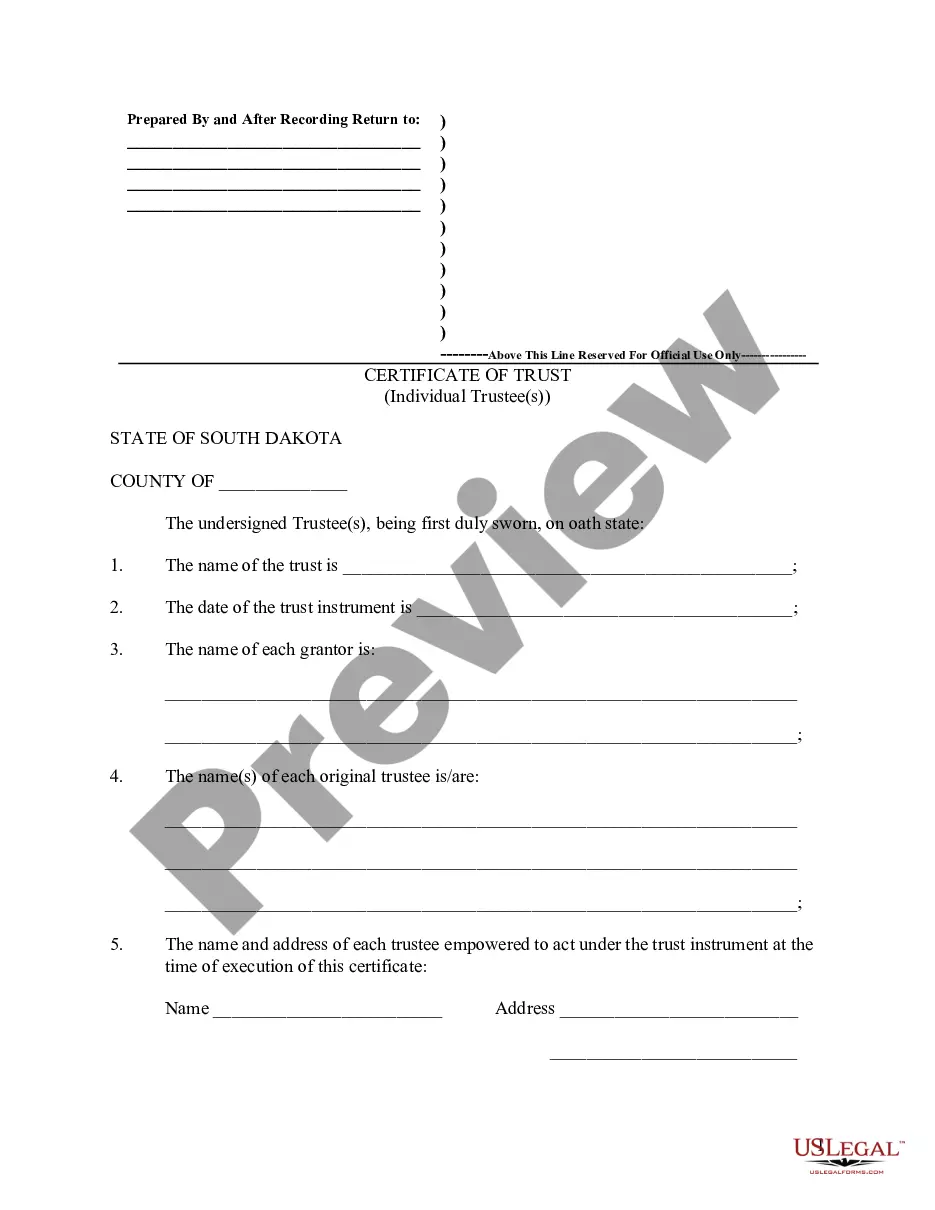
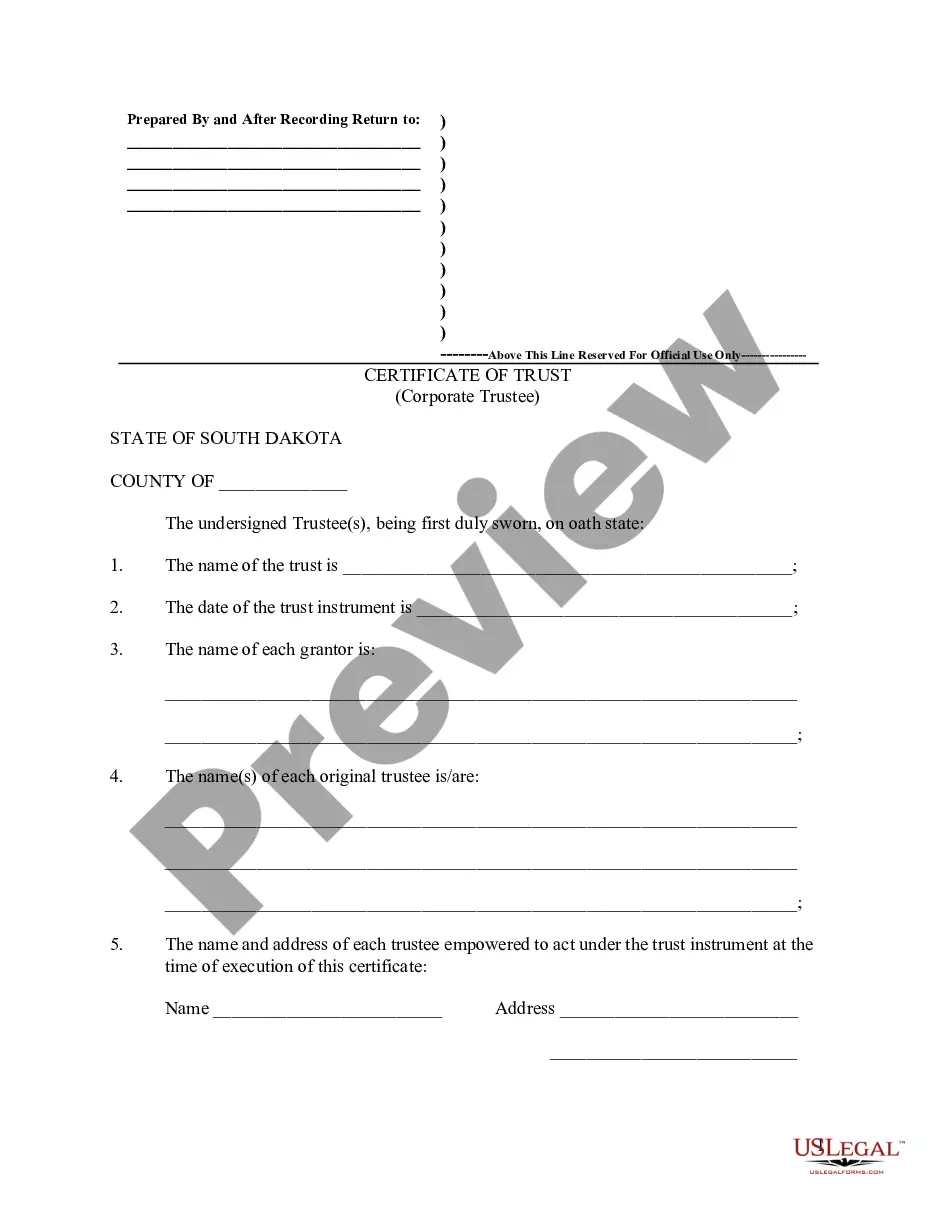
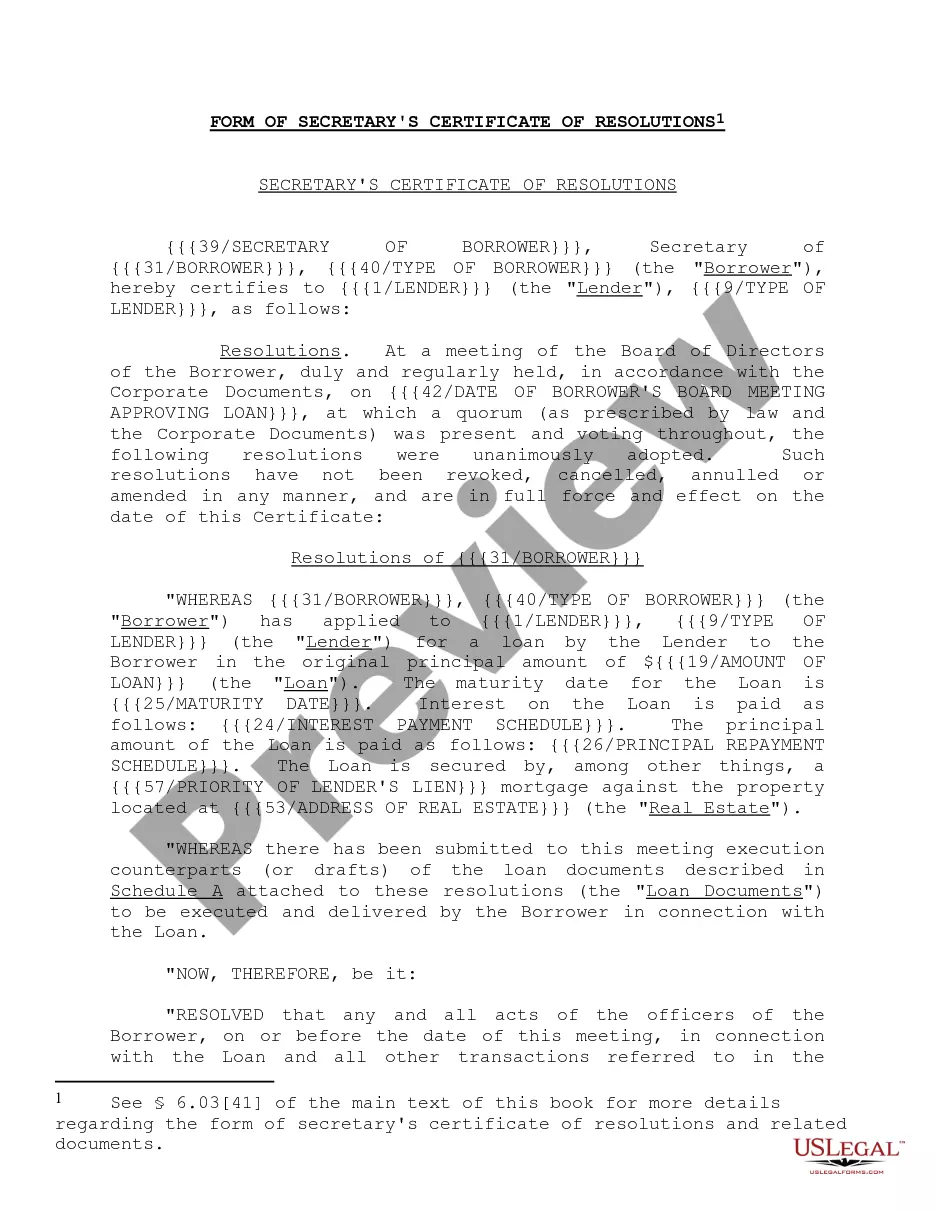
The South Dakota Certificate of Trust by Individual is a legal document that provides proof of the existence and terms of a trust without requiring the full disclosure of the trust's detailed provisions. This form allows an individual trustee to certify the existence of a trust when dealing with third parties, ensuring necessary confidentiality while confirming the trustee's authority.
Main sections of this form
- Name of the trust.
- Date of the trust instrument.
- List of grantors.
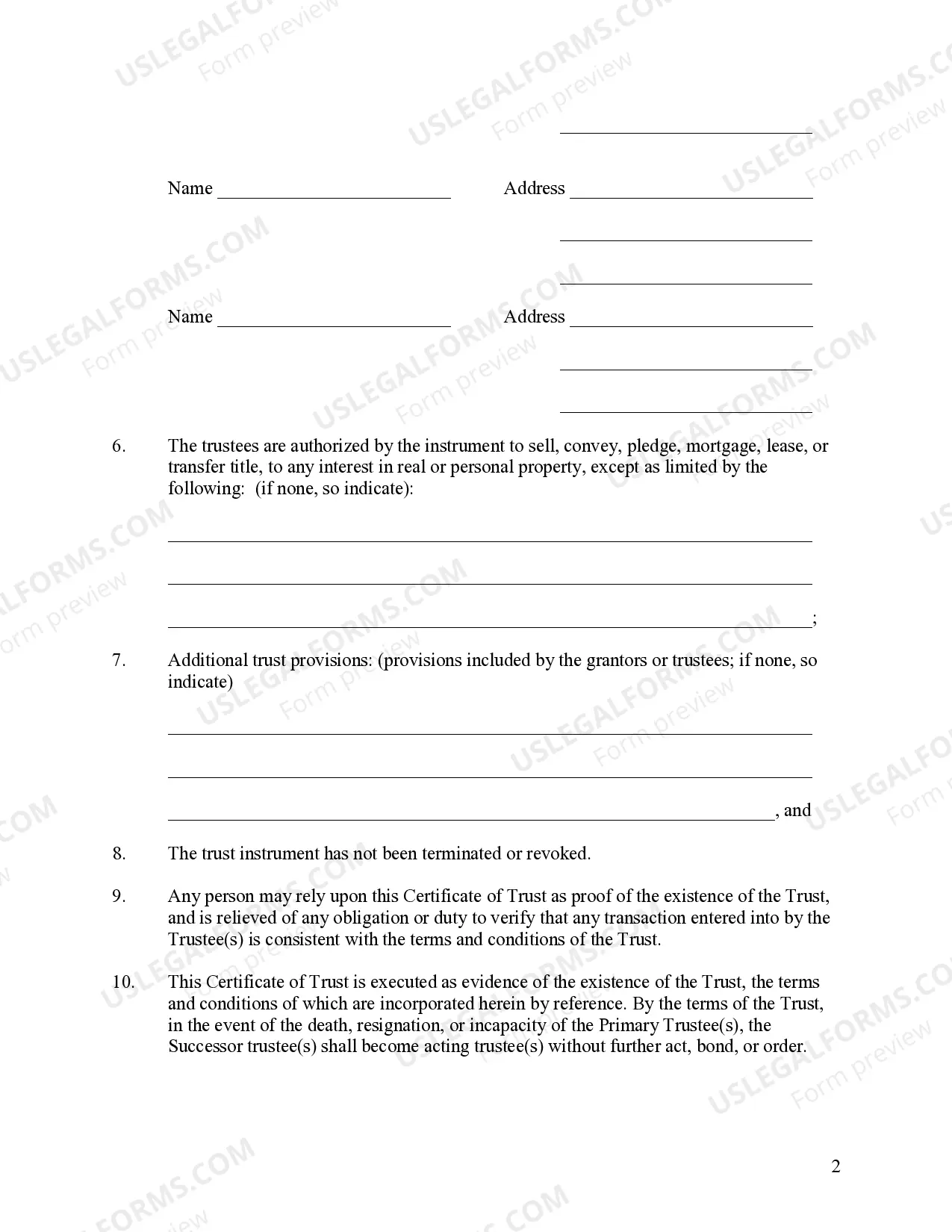
- Names and addresses of original and current trustees.
- Authority granted to trustees, including the ability to sell or transfer property.
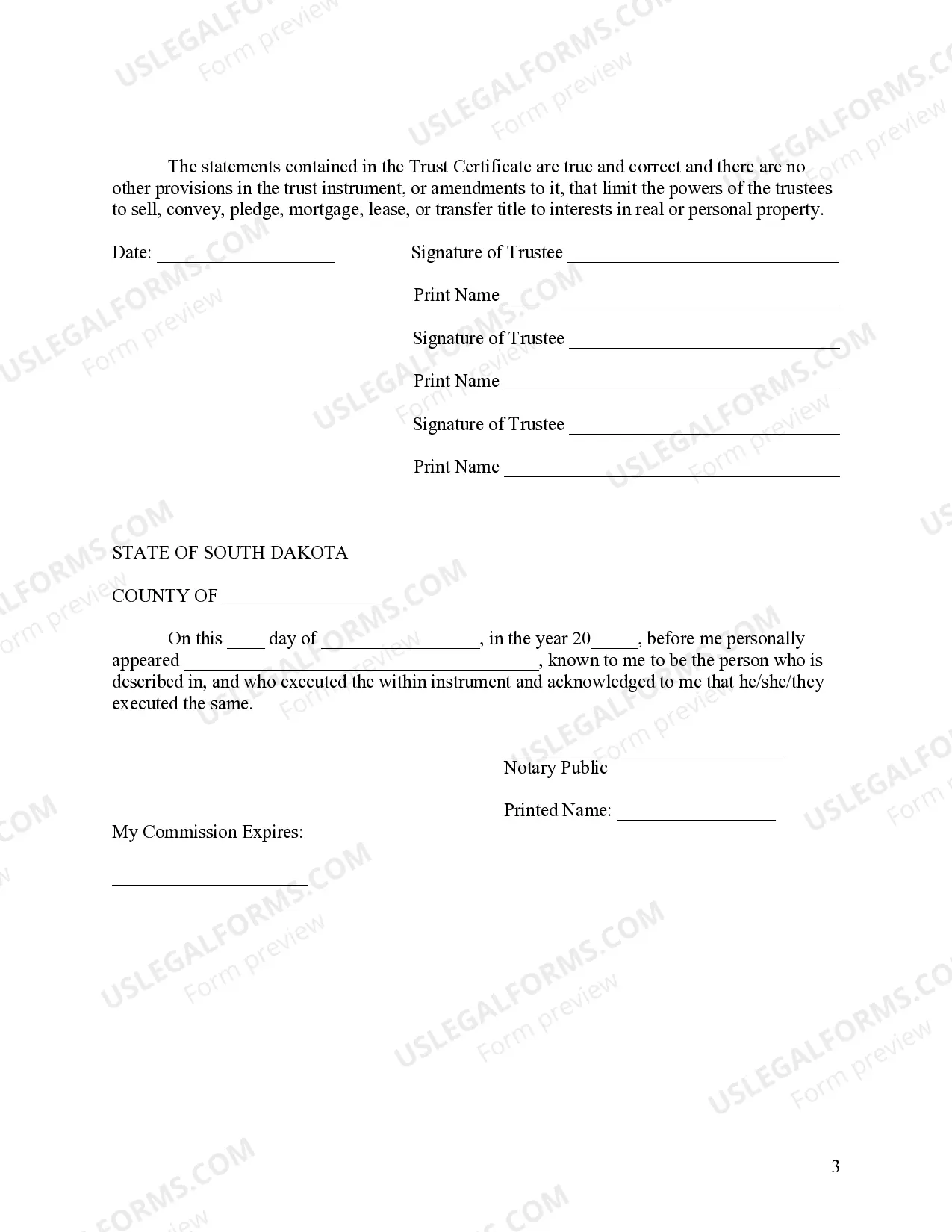
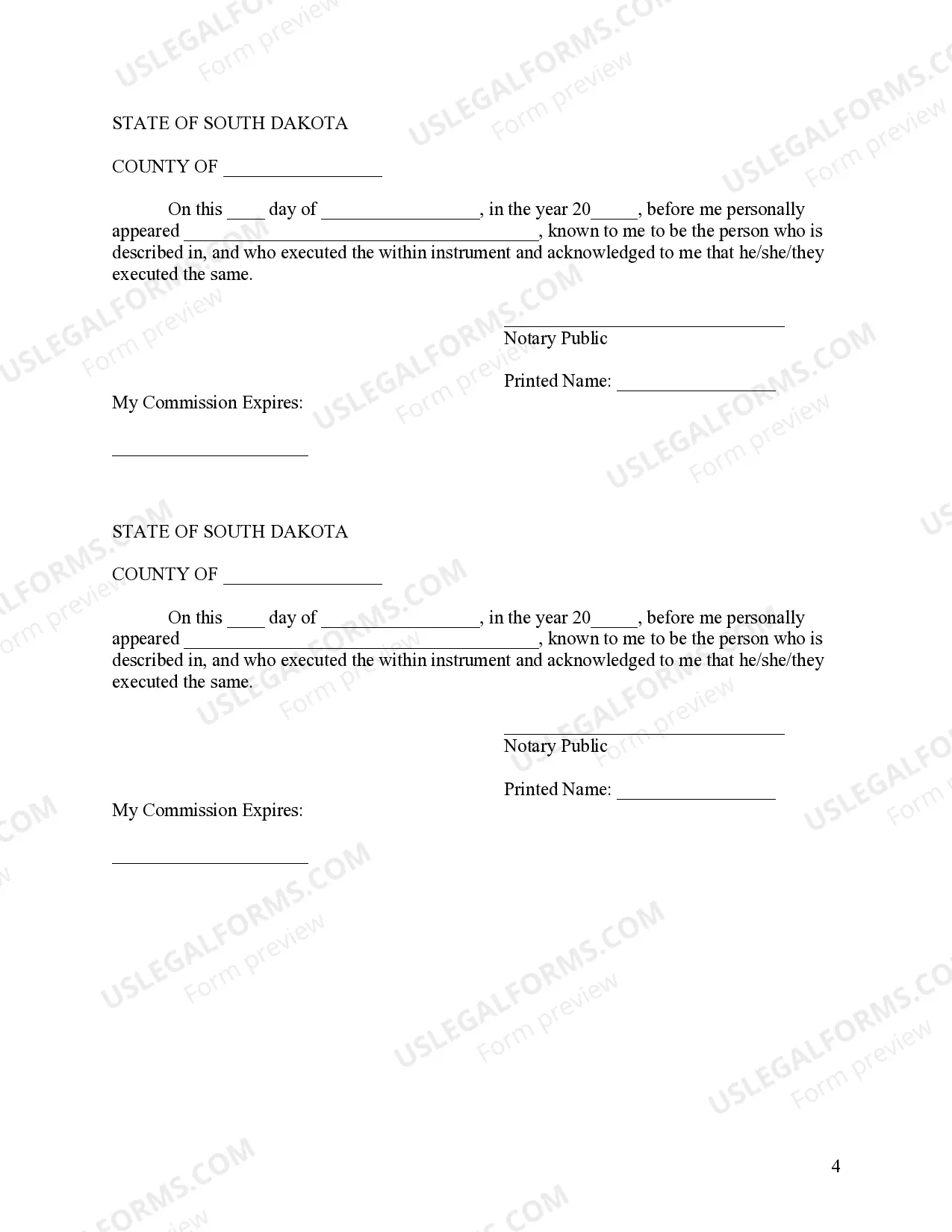
- Signature and acknowledgement by a notary public.
Situations where this form applies
This form is useful when an individual trustee needs to provide assurance to a bank, real estate agent, or other entities that a trust exists. It is often utilized in situations where a trustee must engage in transactions involving trust assets without revealing sensitive details of the trust document itself.
Intended users of this form
- Individual trustees managing a trust.
- Grantors who wish to establish a trust and need to confirm its existence.
- Financial institutions and real estate professionals requiring proof of trust authority.
How to complete this form
- Fill in the name of the trust and the date of the trust instrument.
- List all grantors and original trustees involved in the trust.
- Provide the names and addresses of current trustees authorized to act under the trust.
- Specify any limitations on the trustees' authority, if applicable.
- Sign the certificate in the presence of a notary public to validate the document.
Notarization requirements for this form
Yes, this form must be notarized to be legally valid. Notarization ensures the authenticity of the signatures and the integrity of the document. With US Legal Forms, you can access integrated online notarization services available 24/7, allowing for secure video calls with notaries without needing to travel.
Get your form ready online
Our built-in tools help you complete, sign, share, and store your documents in one place.
Make edits, fill in missing information, and update formatting in US Legal Forms—just like you would in MS Word.
Download a copy, print it, send it by email, or mail it via USPS—whatever works best for your next step.
Sign and collect signatures with our SignNow integration. Send to multiple recipients, set reminders, and more. Go Premium to unlock E-Sign.
If this form requires notarization, complete it online through a secure video call—no need to meet a notary in person or wait for an appointment.
We protect your documents and personal data by following strict security and privacy standards.

Make edits, fill in missing information, and update formatting in US Legal Forms—just like you would in MS Word.

Download a copy, print it, send it by email, or mail it via USPS—whatever works best for your next step.

Sign and collect signatures with our SignNow integration. Send to multiple recipients, set reminders, and more. Go Premium to unlock E-Sign.

If this form requires notarization, complete it online through a secure video call—no need to meet a notary in person or wait for an appointment.

We protect your documents and personal data by following strict security and privacy standards.
Mistakes to watch out for
- Failing to include all trustees' names and addresses.
- Not providing the correct date of the trust instrument.
- Leaving out limitations on trustee authority, which can cause ambiguity.
- Not signing the document in front of a notary, making it invalid.
Advantages of online completion
- Convenient access and immediate download availability.
- Editable format to customize based on specific trust details.
- Reliable templates drafted by licensed attorneys.
Quick recap
- The South Dakota Certificate of Trust provides a summary of the trust's existence and terms.
- This form is essential for individual trustees needing to prove their authority.
- Notarization is mandatory for this form to be valid and enforceable.
Looking for another form?
Form popularity
FAQ
A Certificate of Trust is recorded in the Official Records of the county in which any trust real property is located. It aids in clearing title to the property. Generally, where the trust owns no real property, there is no need to record a Certificate...
A certification of trust (or "trust certificate") is a short document signed by the trustee that simply states the trust's essential terms and certifies the trust's authority without revealing private details of the trust that aren't relevant to the pending transaction.
The declaration of trust is your trust. The certificate of trust is not needed but can help keep things private and provide a easier way to open bank or stock accounts...
Choose the trust that best suits your financial situation. Take inventory of your property to determine what you'd like to include in the trust. Choose a trustee to manage your trust. Create the trust document. Sign the trust in front of a notary public. Transfer property into the trust to fund it.
Look for an attorney to draw up the paperwork. In addition, you can go online and use a legal website, to search for a copy of a recorded living trust, or forms on a CD to make the living trust. Sign the living trust in front of a notary public to notarize it.
A: An affidavit of trust and a certificate of trust are essentially the same thing. At least they serve the same functions. Simply put, an affidavit of trust is an abbreviated version of the trust agreement that provides general information about the terms of the trust.
The Definition of a Certificate of Trust A certification of trust is a document that is used to certify that a trust was established. It provides important information, like the name of the trust, the trustees, and the date it was formed. It is also referred to as an abstract or memorandum of trust.
A Certificate of Trust is recorded in the Official Records of the county in which any trust real property is located. It aids in clearing title to the property. Generally, where the trust owns no real property, there is no need to record a Certificate...
Once a declaration of trust has been executed, subsequent declarations can be issued to confirm current terms or amend the existing agreement. Depending on the jurisdiction, the declaration of trust can also be referred to as a trust agreement or a trust document.