Ohio Affidavit and Notice of Garnishment of Personal Earnings and Answer of Employer
What is this form?
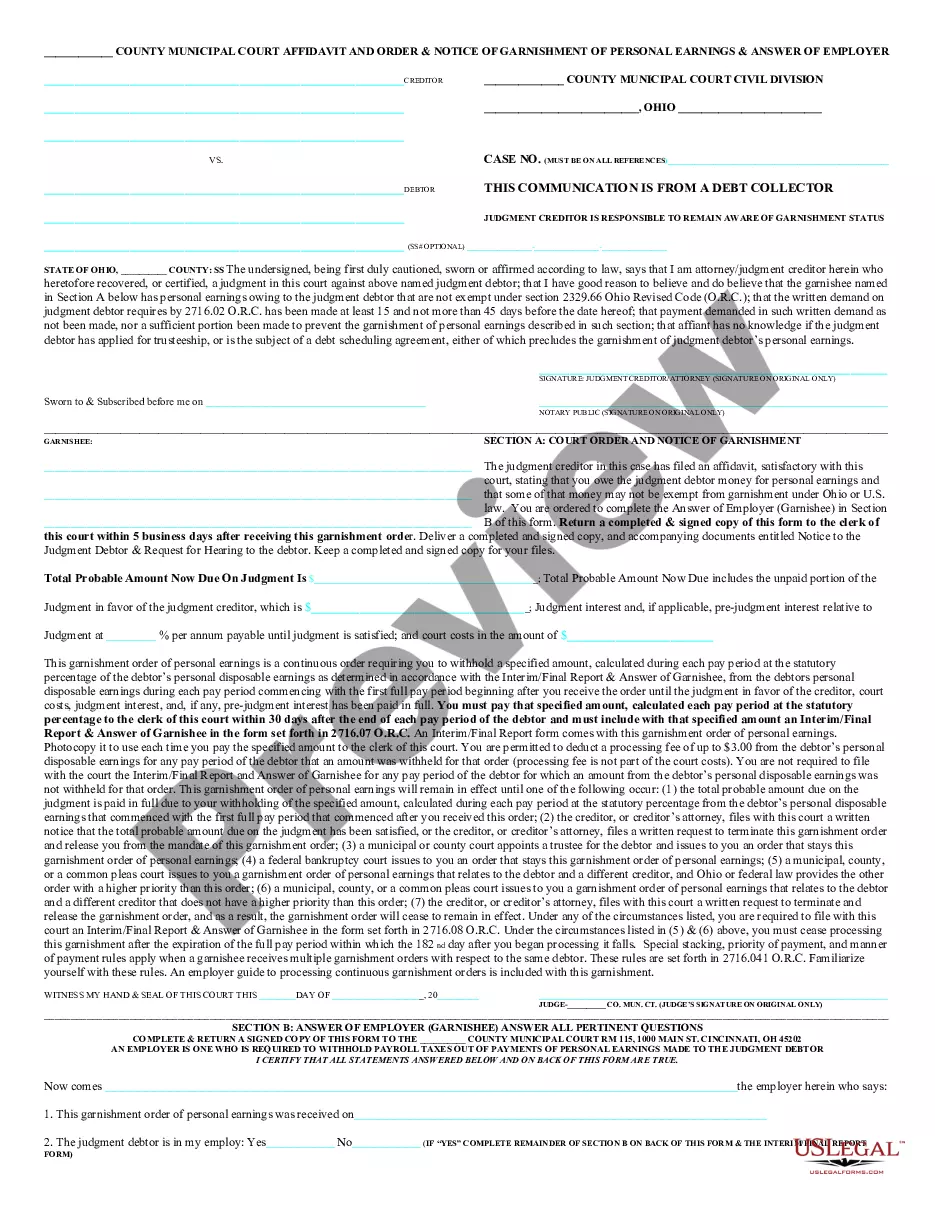
The Affidavit and Notice of Garnishment of Personal Earnings and Answer of Employer is a legal form used in Ohio for garnishment cases. This form enables a creditor to initiate garnishment of a debtor's personal earnings to recover funds owed following a court judgment. It serves a specialized purpose that differs from other garnishment forms by including specific details regarding the wages to be garnished and the employer's responsibilities in this process.
Key components of this form
- Identification of the creditor and debtor involved in the case.
- Details regarding the judgment, including the case number and amounts owed.
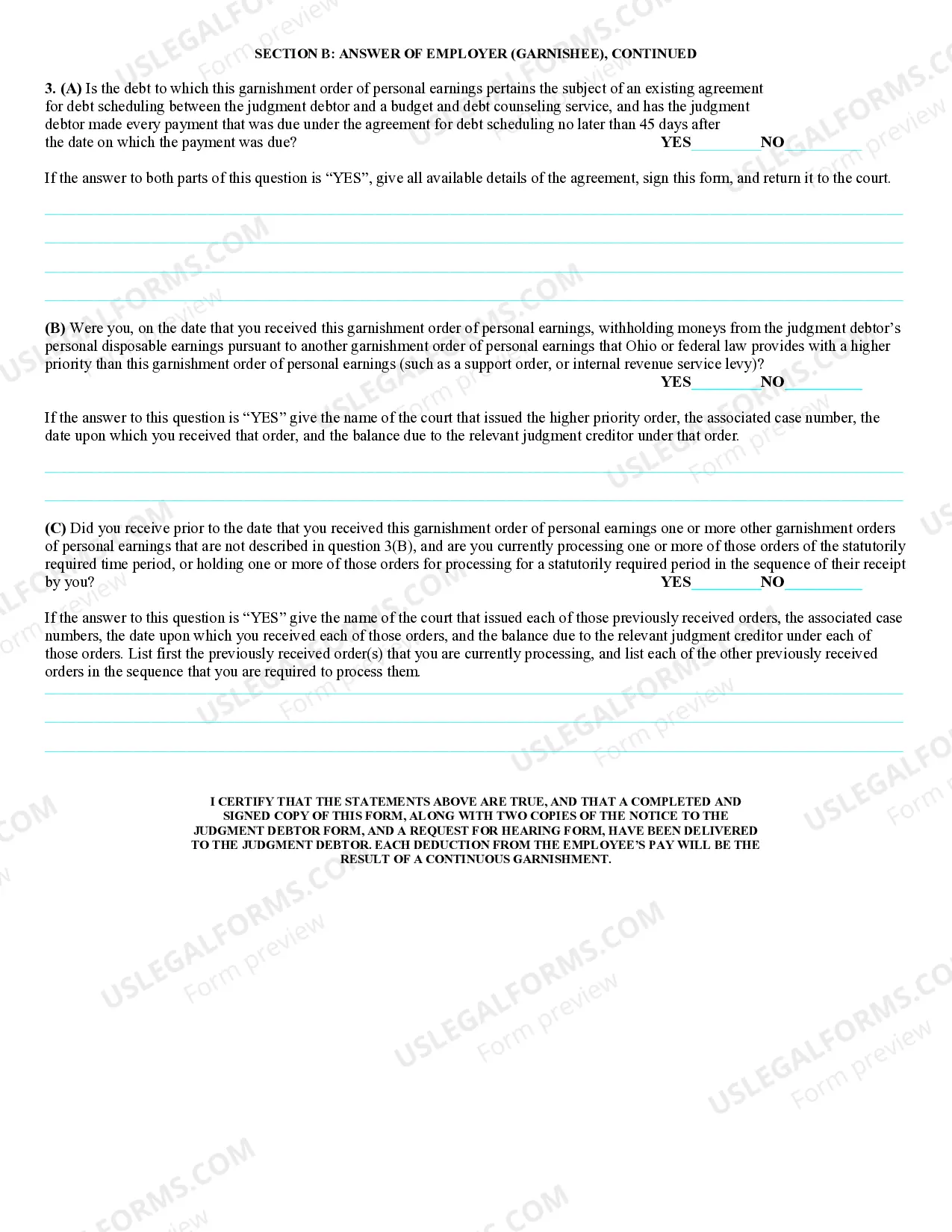
- Sections for the employer (garnishee) to respond to the garnishment notice.
- Instructions for the employer on processing the garnishment.
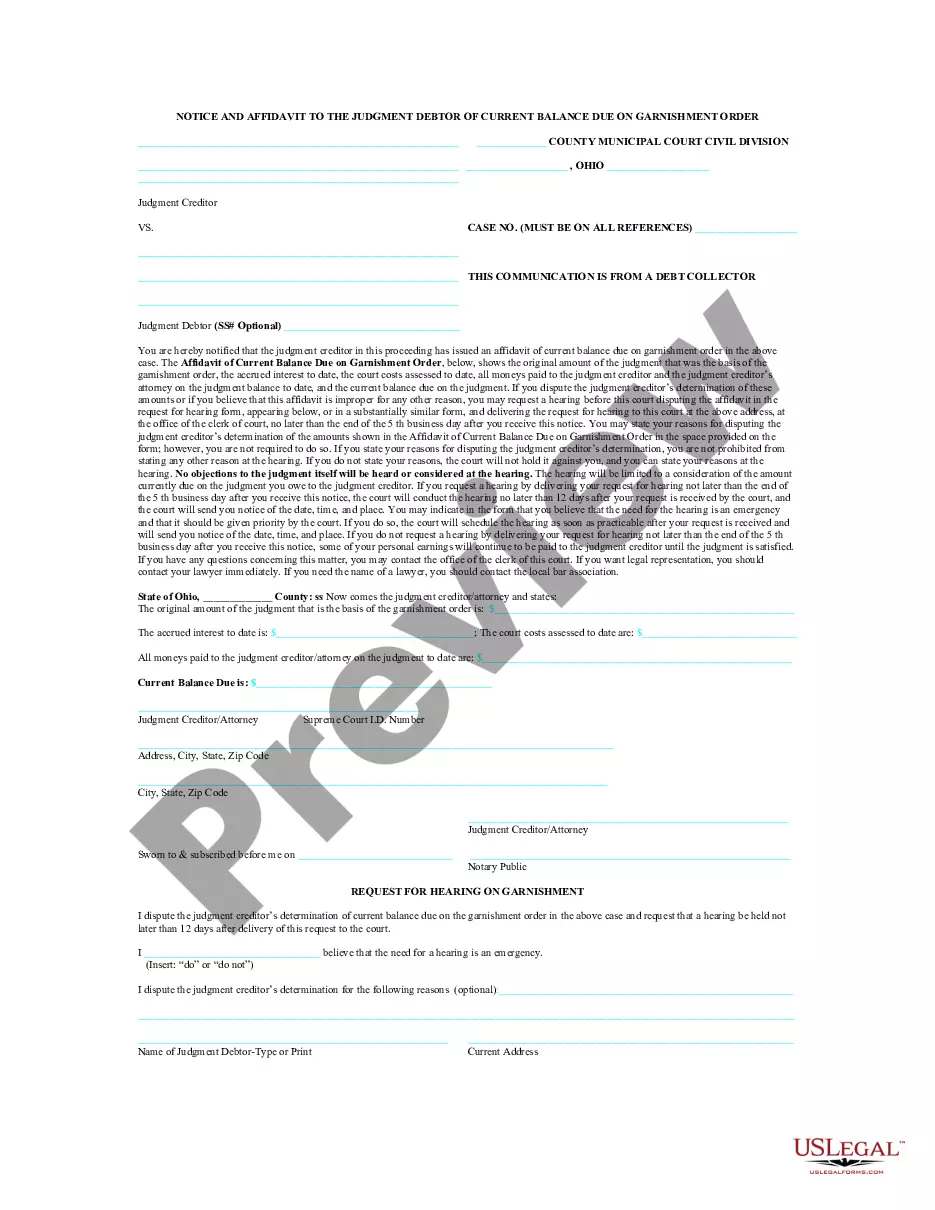
- Requirements for maintaining records and notifying the court and the debtor.

Situations where this form applies
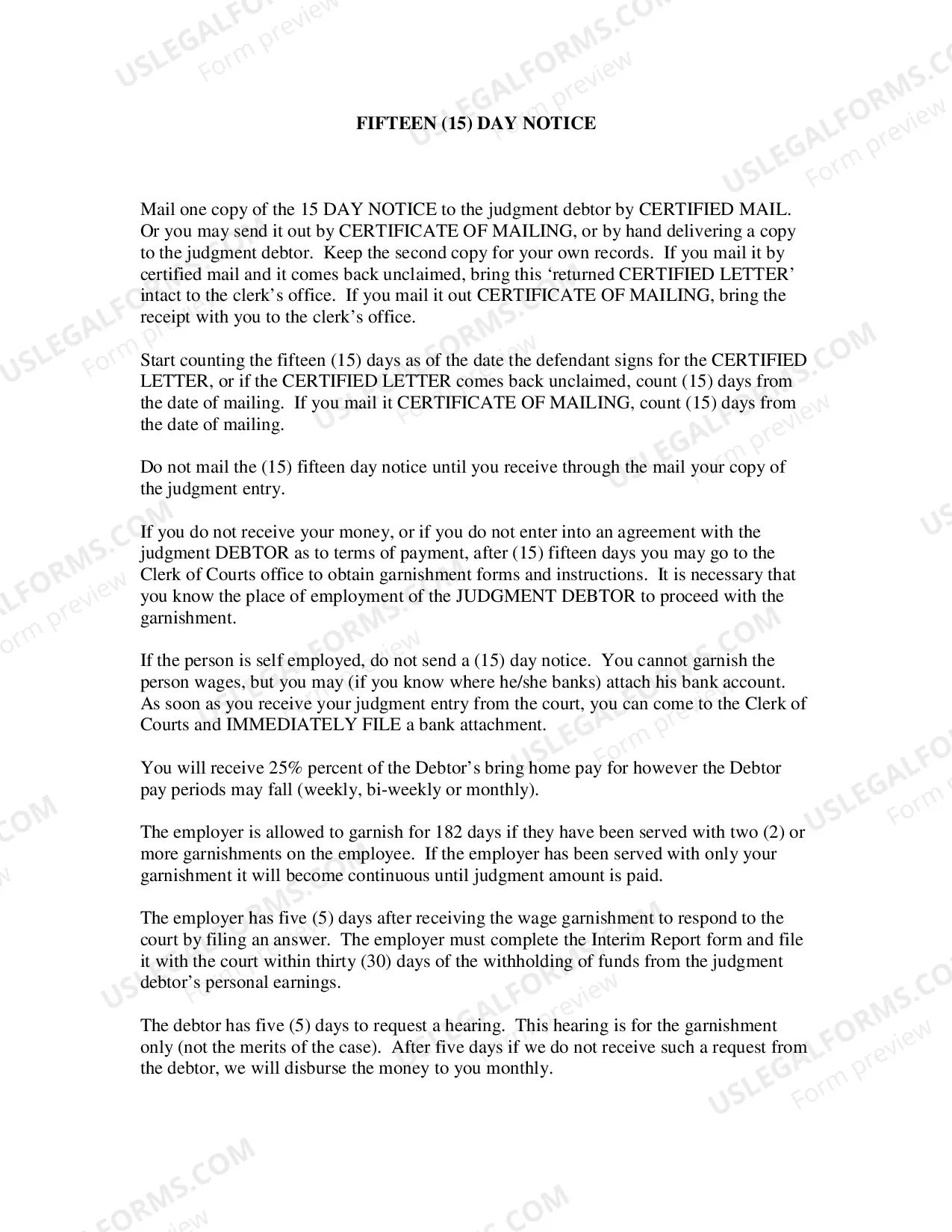
This form is necessary when a creditor has obtained a judgment against a debtor in Ohio and seeks to garnish the debtor's wages to collect the owed amounts. It is applicable in cases where the creditor has made a prior written demand for payment that has not been met, and they believe the debtor has disposable earnings subject to garnishment.
Intended users of this form
- Creditor or judgment creditor seeking to collect a debt through wage garnishment.
- Employers (garnishees) who have received a garnishment order and need to respond appropriately.
- Attorneys representing creditors in garnishment actions.
Instructions for completing this form
- Fill in the names and addresses of the creditor and debtor at the top of the form.
- Include the case number associated with the judgment against the debtor.
- Specify the details of the garnishment, including the names of any involved employers or garnishees.
- Sign and date the affidavit section before a notary public.
- Ensure that the completed form is filed with the appropriate court and served to the debtor and garnishee.
Does this form need to be notarized?
Yes, this form must be notarized to be legally valid. The Affidavit portion requires a signature from a notary public to ensure authenticity. US Legal Forms provides an integrated online notarization service, available 24/7, allowing you to complete your form securely via video call, eliminating the need for in-person visits.
Get your form ready online
Our built-in tools help you complete, sign, share, and store your documents in one place.
Make edits, fill in missing information, and update formatting in US Legal Forms—just like you would in MS Word.
Download a copy, print it, send it by email, or mail it via USPS—whatever works best for your next step.
Sign and collect signatures with our SignNow integration. Send to multiple recipients, set reminders, and more. Go Premium to unlock E-Sign.
If this form requires notarization, complete it online through a secure video call—no need to meet a notary in person or wait for an appointment.
We protect your documents and personal data by following strict security and privacy standards.

Make edits, fill in missing information, and update formatting in US Legal Forms—just like you would in MS Word.

Download a copy, print it, send it by email, or mail it via USPS—whatever works best for your next step.

Sign and collect signatures with our SignNow integration. Send to multiple recipients, set reminders, and more. Go Premium to unlock E-Sign.

If this form requires notarization, complete it online through a secure video call—no need to meet a notary in person or wait for an appointment.

We protect your documents and personal data by following strict security and privacy standards.
Mistakes to watch out for
- Failing to include the correct case number can result in delays.
- Not providing adequate notice to the debtor before filing.
- Inaccurately calculating the amount to be garnished from the debtor's earnings.
- Neglecting to sign the affidavit in front of a notary public.
- Not following the specific requirements for the timing of responses from the employer.
Advantages of online completion
- Convenience of immediate access and download, enabling quicker action.
- Editability allows customization to fit specific case details.
- Reliability from forms reviewed and drafted by licensed attorneys.
Legal use & context:
- This form serves as a legal assertion that a debt exists and is enforceable through garnishment.
- Failure to comply with the garnishment order can result in legal consequences for the employer.
- The form adheres to specific Ohio legal standards for garnishments and protects the rights of both creditors and debtors.
Key takeaways
- The Affidavit and Notice of Garnishment is essential for starting wage garnishment in Ohio.
- Accurate and timely completion of the form is critical to avoid legal pitfalls.
- Employers must respond promptly to this form to remain compliant with Ohio law.
Looking for another form?
Form popularity
FAQ
In most states, employers answer a writ of garnishment by filling out the paperwork attached to the judgment and returning it to the creditor or the creditor's attorney.
If you are served with a garnishment summons, do not ignore these documents because they do not directly involve a debt that you owe. Instead, you should immediately freeze any payments to the debtor, retain the necessary property, and provide the required written disclosure.
Employees cannot be fired because their wages are garnished. Federal law protects you from being fired simply because your wages are being garnished for a single debt. However, if your wages are being garnished for two or more debts, your employer can fire you if it decides to do so.
Unfortunately, by ignoring the proper Writ of Garnishment, your employer can get in trouble and Debbie may get fired.and the creditor finds out, your employer may end up going to court on an Order to Show Cause, where they have to explain to the judge why they ignored the court documents.
Respond to the Creditor's Demand Letter. Seek State-Specific Remedies. Get Debt Counseling. Object to the Garnishment. Attend the Objection Hearing (and Negotiate if Necessary) Challenge the Underlying Judgment. Continue Negotiating.
Garnishment is a proceeding by a creditor (a person or entity to whom money is owed) to collect a debt by taking the property or assets of a debtor (a person who owes money). Wage garnishment is a court procedure where a court orders a debtor's employer to hold the debtor's earnings in order to pay a creditor.
The employer is also required to return a statutory response form within 7 days of receiving the writ of garnishment. This form is usually sent to the employer with the garnishment order. With very few exceptions, the employer is required to complete the form indicating that they will pay the garnishment.
If you have won a court judgment against someone with a decent job, you may be able to intercept up to 25% of his or her wages to satisfy your judgment. This process, permitted in nearly every state, is called a wage garnishment.
Unfortunately, by ignoring the proper Writ of Garnishment, your employer can get in trouble and Debbie may get fired.and the creditor finds out, your employer may end up going to court on an Order to Show Cause, where they have to explain to the judge why they ignored the court documents.