New Mexico Revocation of Statutory General Power of Attorney
Understanding this form
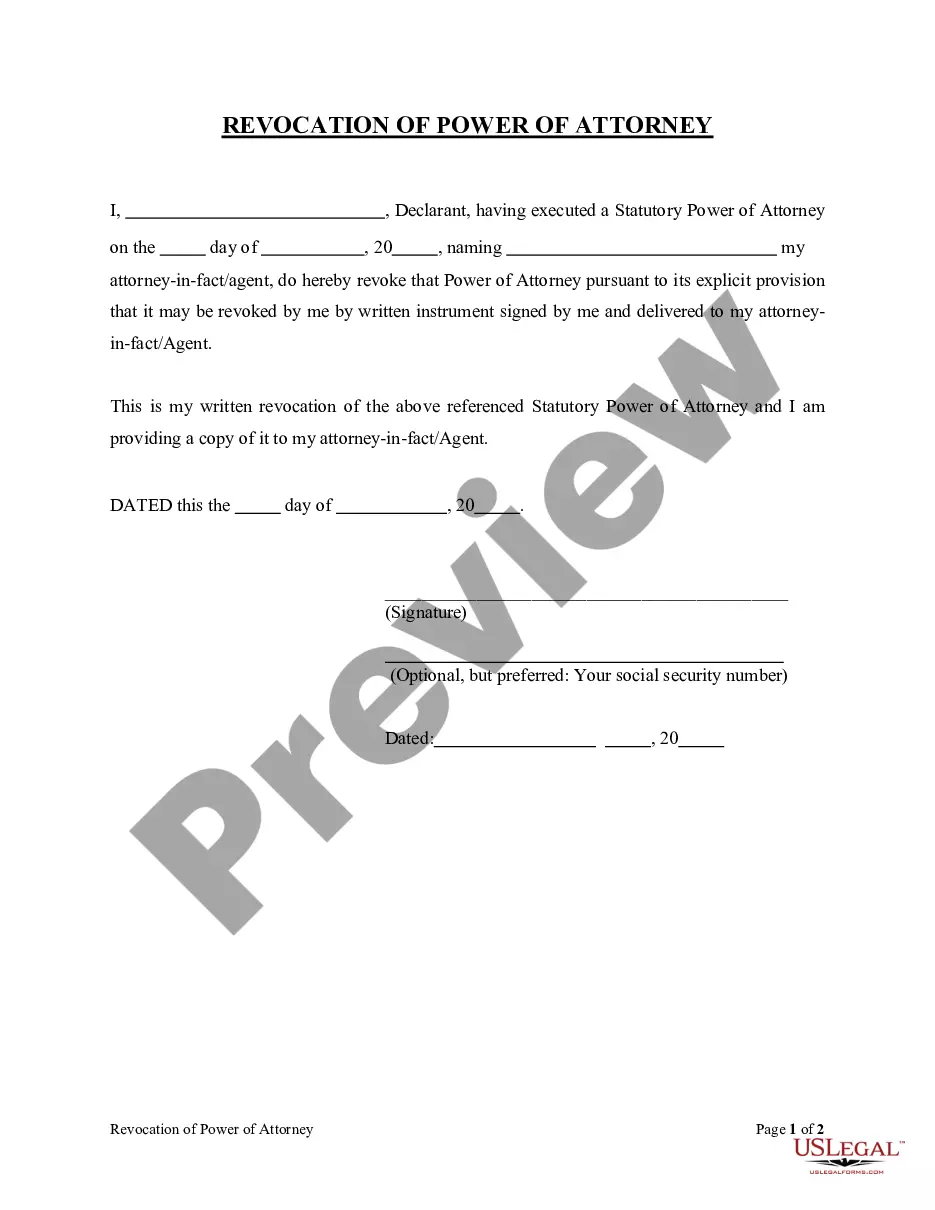
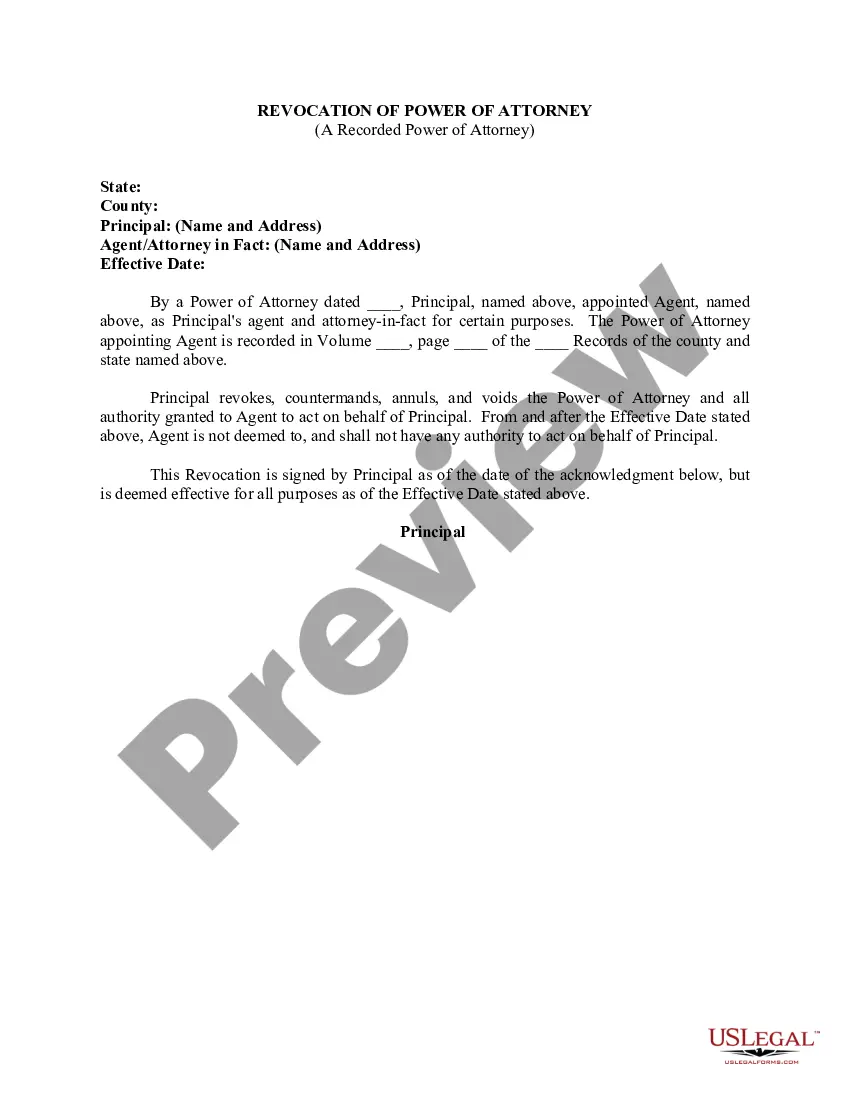
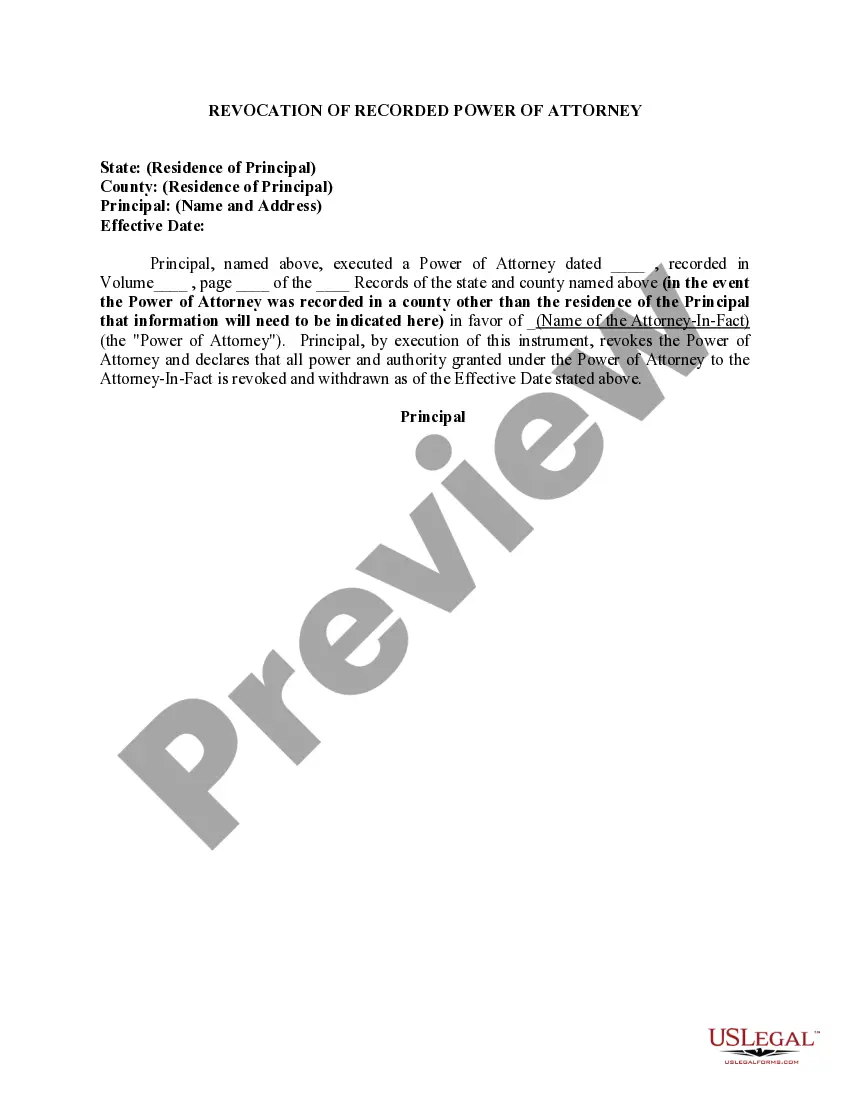
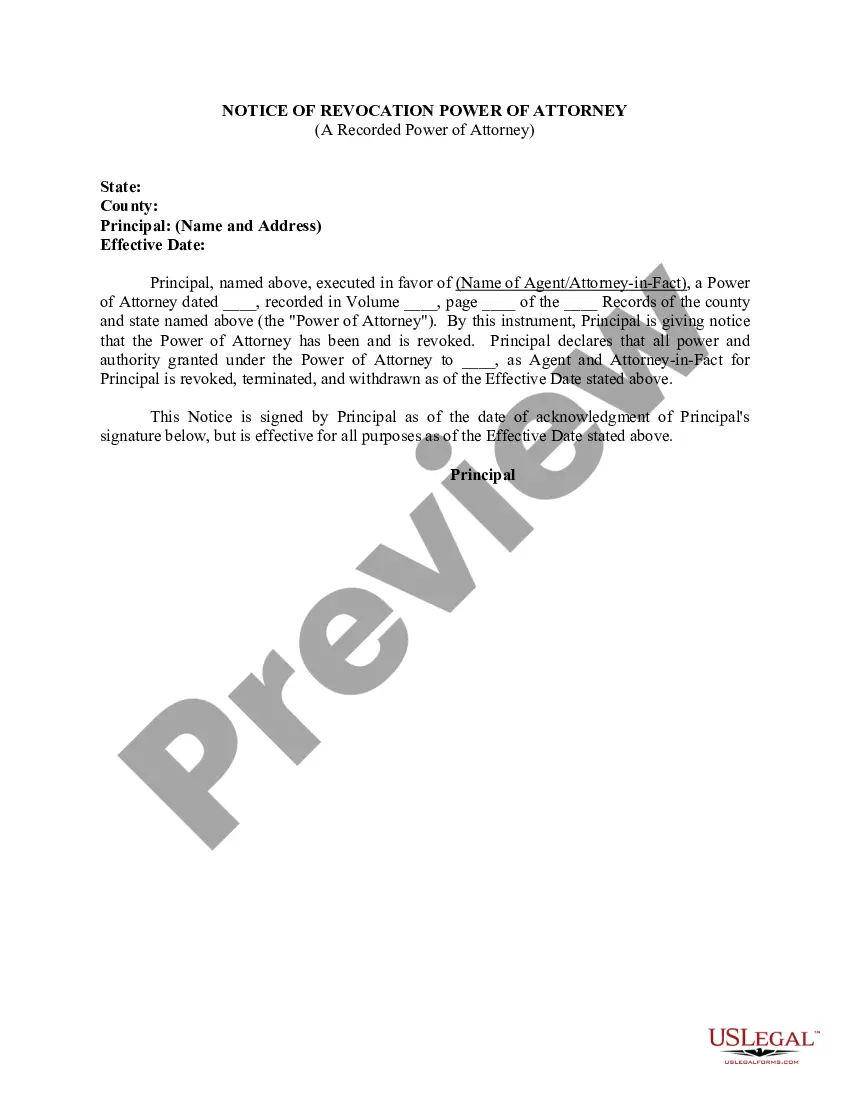
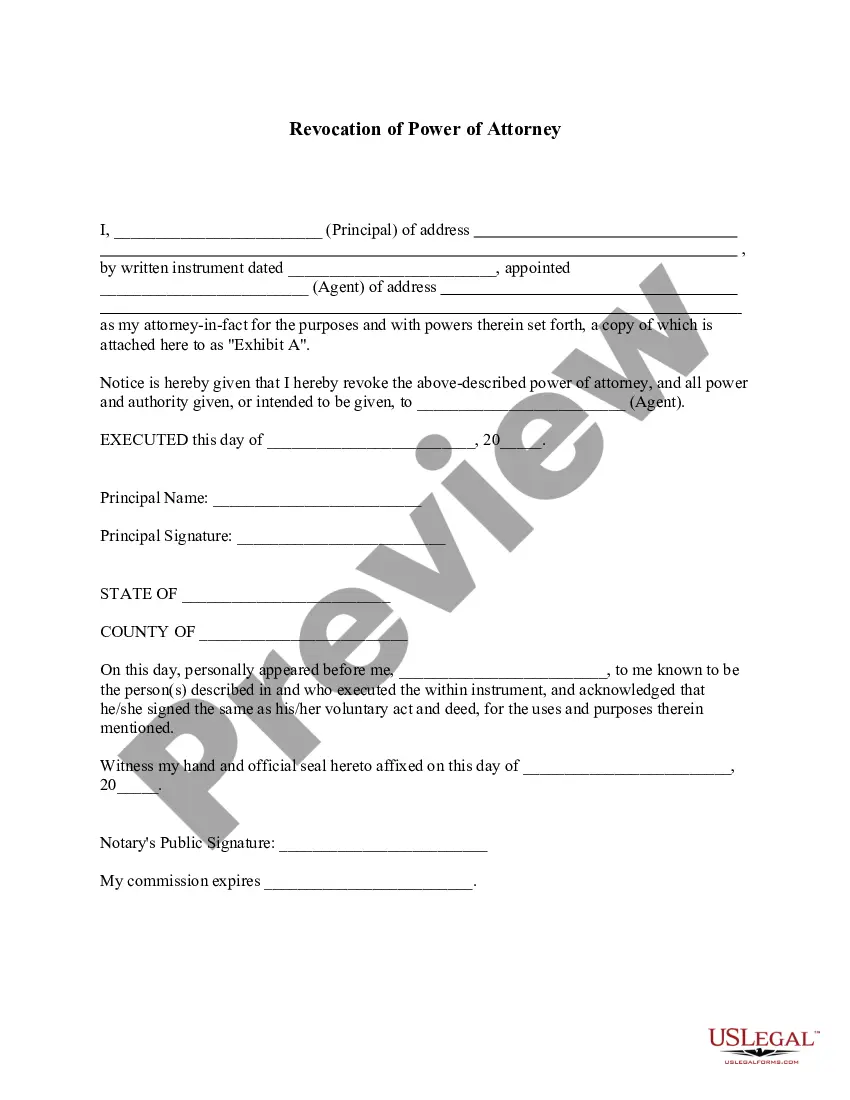
The Revocation of Statutory General Power of Attorney is a legal document that allows you to officially revoke (cancel) a previously granted statutory power of attorney, specifically stated in Form NM-P010. This form enables you to terminate the authority given to an attorney-in-fact (agent) to make legal decisions on your behalf regarding financial, property, or business matters. Unlike similar forms, this document serves specifically for revocation, ensuring that your prior agent can no longer act under the previous power of attorney.
Form components explained
- Identification of the principal (the person revoking the authority).
- Details regarding the previous statutory power of attorney being revoked.
- Signature of the principal to validate the revocation.
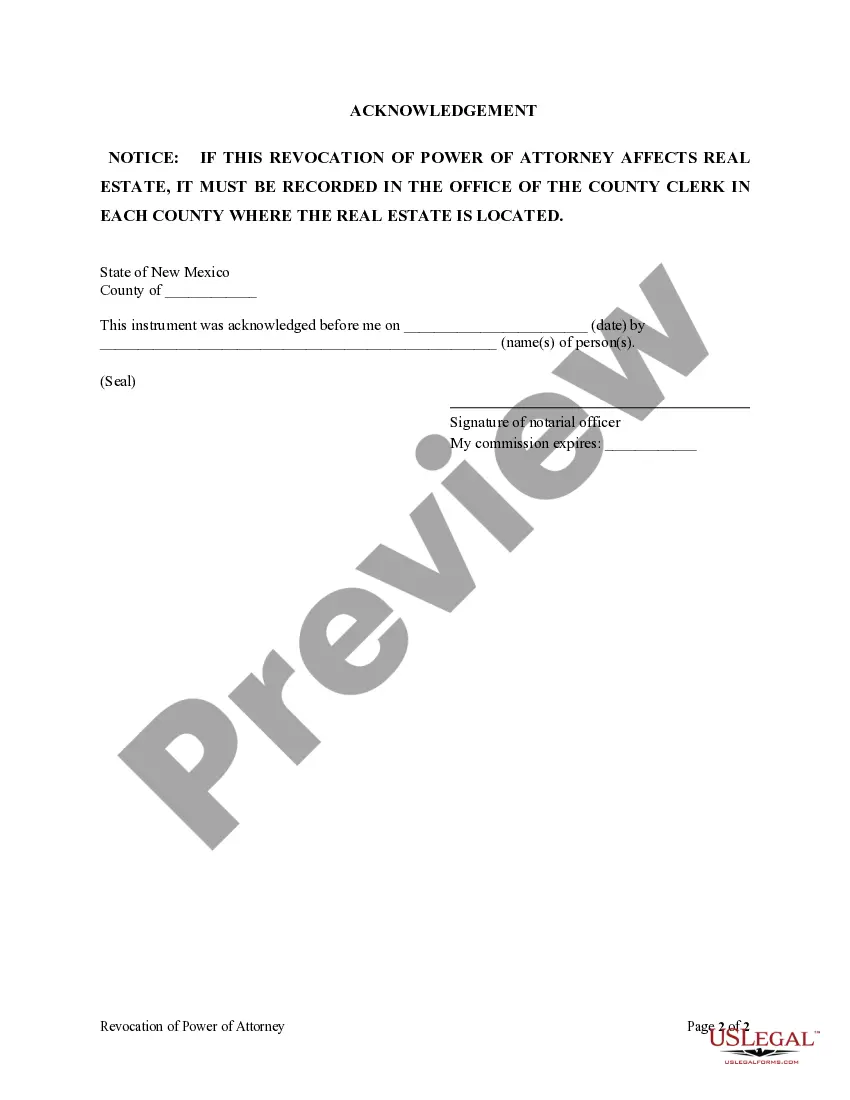
- Notarization section to provide official witnessing of the signature.
- Statement confirming that a copy of the revocation has been provided to the agent.
When to use this form
You should use the Revocation of Statutory General Power of Attorney form when you wish to terminate the authority entrusted to an agent under your previous power of attorney. This may be necessary if you have lost trust in your agent, found a more suitable person to represent your interests, or if your situation has changed significantly, requiring a revocation of the prior agreement.
Who can use this document
- Individuals who have previously appointed an agent under a statutory power of attorney.
- People who wish to take back legal decision-making authority from their current agent.
- Anyone who has experienced a change in circumstance that warrants revoking their previous power of attorney.
Completing this form step by step
- Clearly identify yourself as the principal at the top of the form.
- Reference the specific statutory power of attorney you are revoking.
- Sign the document to formalize the revocation.
- Have the form notarized by a licensed notary public.
- Provide a copy of the signed revocation to the designated agent.
Is notarization required?
To make this form legally binding, it must be notarized. Our online notarization service, powered by Notarize, lets you verify and sign documents remotely through an encrypted video session.
Get your form ready online
Our built-in tools help you complete, sign, share, and store your documents in one place.
Make edits, fill in missing information, and update formatting in US Legal Forms—just like you would in MS Word.
Download a copy, print it, send it by email, or mail it via USPS—whatever works best for your next step.
Sign and collect signatures with our SignNow integration. Send to multiple recipients, set reminders, and more. Go Premium to unlock E-Sign.
If this form requires notarization, complete it online through a secure video call—no need to meet a notary in person or wait for an appointment.
We protect your documents and personal data by following strict security and privacy standards.

Make edits, fill in missing information, and update formatting in US Legal Forms—just like you would in MS Word.

Download a copy, print it, send it by email, or mail it via USPS—whatever works best for your next step.

Sign and collect signatures with our SignNow integration. Send to multiple recipients, set reminders, and more. Go Premium to unlock E-Sign.

If this form requires notarization, complete it online through a secure video call—no need to meet a notary in person or wait for an appointment.

We protect your documents and personal data by following strict security and privacy standards.
Common mistakes to avoid
- Failing to sign the document, rendering it invalid.
- Not notarizing the form, which may be required to legally enforce the revocation.
- Neglecting to provide a copy of the revocation to the agent, which can lead to confusion about authority.
Benefits of completing this form online
- Immediate access to a legally vetted document template.
- Ability to fill out the form at your convenience.
- Editability for personalizing specific details.
- Secure storage of your completed forms.
Main things to remember
- The form is used to revoke a previously authorized power of attorney.
- It must be signed and notarized to ensure legal validity.
- A copy must be delivered to the agent who was originally granted authority.
- Applicable in New Mexico, following local laws for revocation.
Looking for another form?
Form popularity
FAQ
A principal can rescind a Power of Attorney at any time, even if the Power of Attorney has a specified end date, so long as the principal is competent and the attorney-in-fact is notified. Third parties (such as a bank or the Land Titles Office) should also be notified of the revocation.
A principal can revoke the power of attorney while he or she is still mentally competent. A principal can complete a formal written document requesting the revocation of a power of attorney at any time, for any reason, while he or she is still competent. The principal must sign and notarize the revocation request.
A Power of Attorney shall not be deemed to be an irrevocable one merely because it states, in the clauses of the deed executed for grant of such Power of Attorney, of it being irrevocable. Such Power of Attorney may be revoked by the principal or the Power of Attorney holder by the procedure according to law.
If you decide that you want to cancel / revoke a PoA that is registered with us, you will need to tell us. A PoA can only be cancelled / revoked by you, the granter, if you are capable of making and understanding this decision.
Until an attorney-in-fact's powers are properly revoked, they can continue to legally act for the principal. To cancel a Power of Attorney, the principal can create a document called a Revocation of Power of Attorney or create a new Power of Attorney that indicates the previous Power of Attorney is revoked.
If you decide that you want to cancel / revoke a PoA that is registered with us, you will need to tell us. A PoA can only be cancelled / revoked by you, the granter, if you are capable of making and understanding this decision.
While any new power of attorney should state that old powers of attorney are revoked, you should also put the revocation in writing. The revocation should include your name, a statement that you are of sound mind, and your wish to revoke the power of attorney.
In other words, a Revocation of Power of Attorney is written confirmation that a principal (the person who appointed power in a Power of Attorney) no longer wants or needs their attorney-in-fact (the person who was appointed power in a Power of Attorney, sometimes called an agent or donor) to act on their behalf.
The Principal can override either type of POA whenever they want. However, other relatives may be concerned that the Agent (in most cases a close family member like a parent, child, sibling, or spouse) is abusing their rights and responsibilities by neglecting or exploiting their loved one.