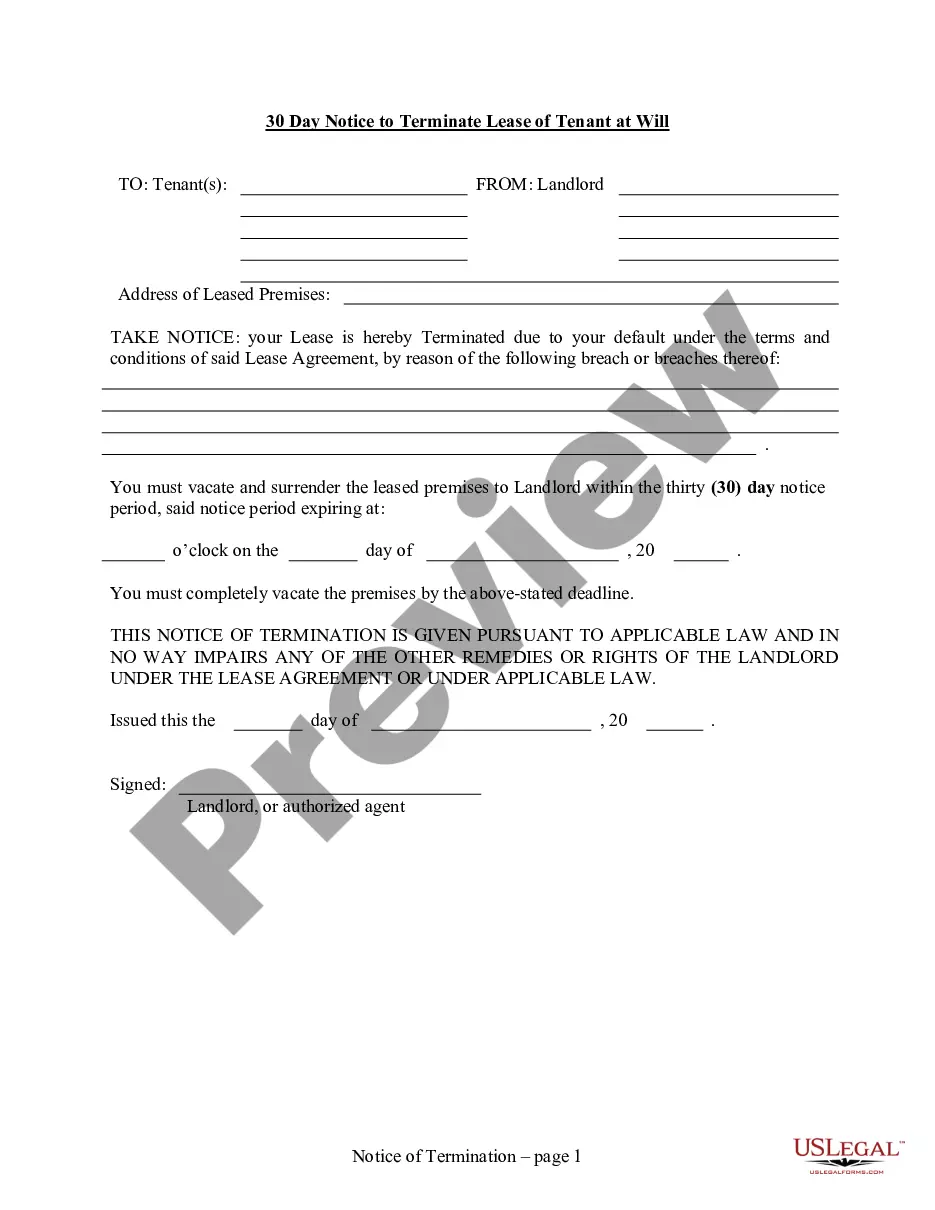
New Mexico Mutual Wills Package of Last Wills and Testaments for Man and Woman living together not Married with Adult Children
This Mutual Wills Package of Last Wills and Testaments is designed specifically for a man and woman living together who are not married, but wish to create mutual wills. This package includes two distinct wills that enable partners to leave specified property to one another while also addressing the interests of their adult children. This form is tailored for those in non-marital partnerships and differs from standard marital wills by providing specific clauses suited to cohabiting partners and adapting it to their family structures.
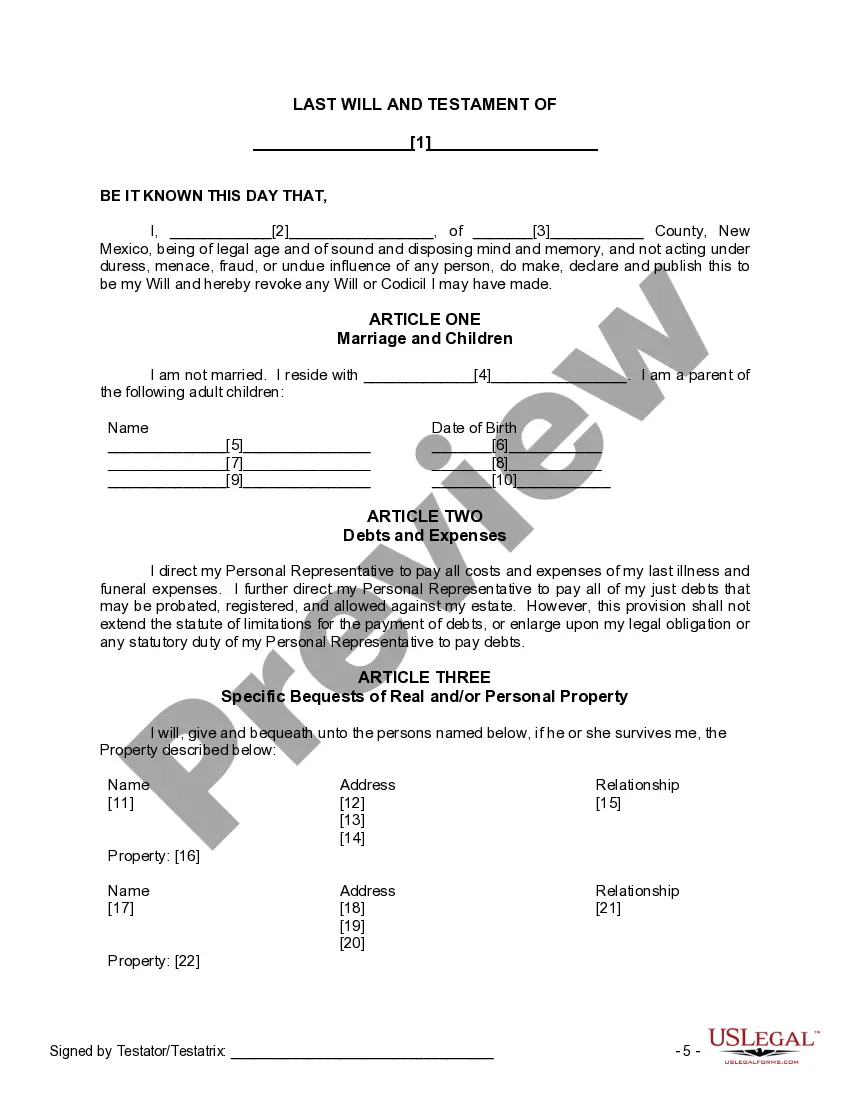
- Identification of the testators and declaration of the wills
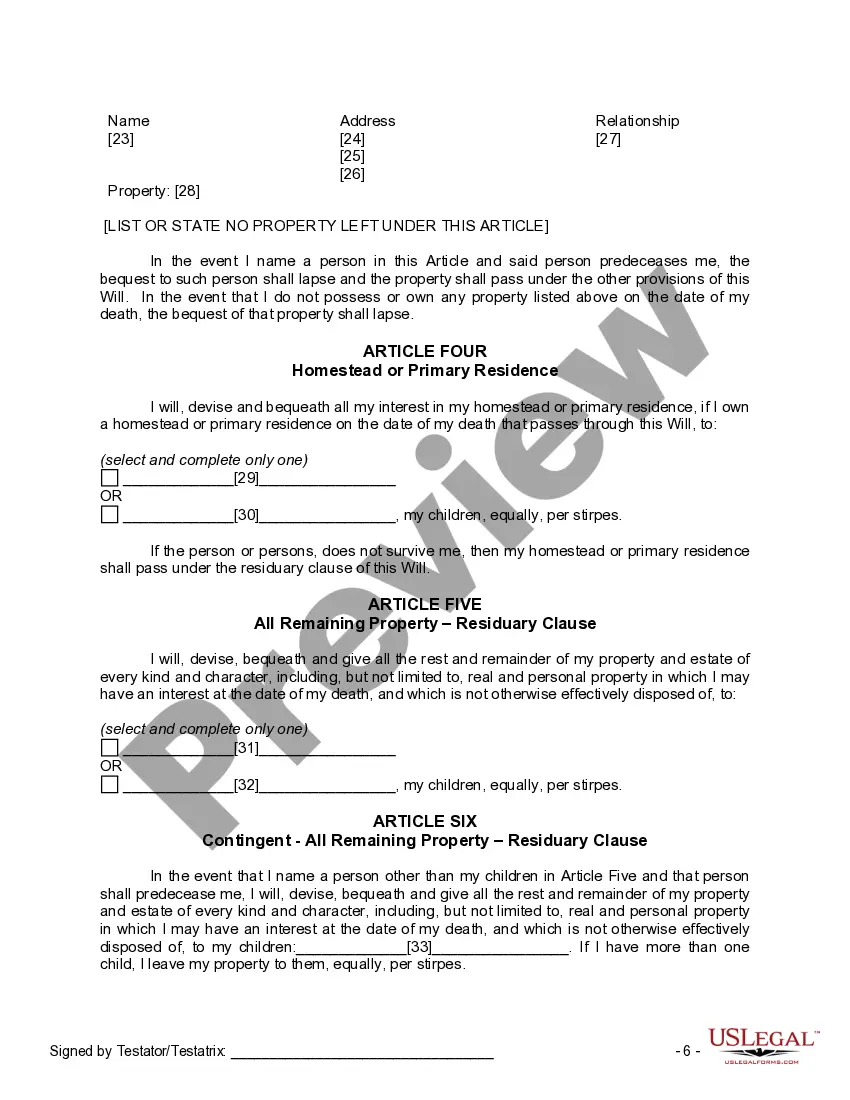
- Designation of adult children and any specific bequests
- Provisions for debts, expenses, and funeral arrangements
- Homestead or primary residence bequest
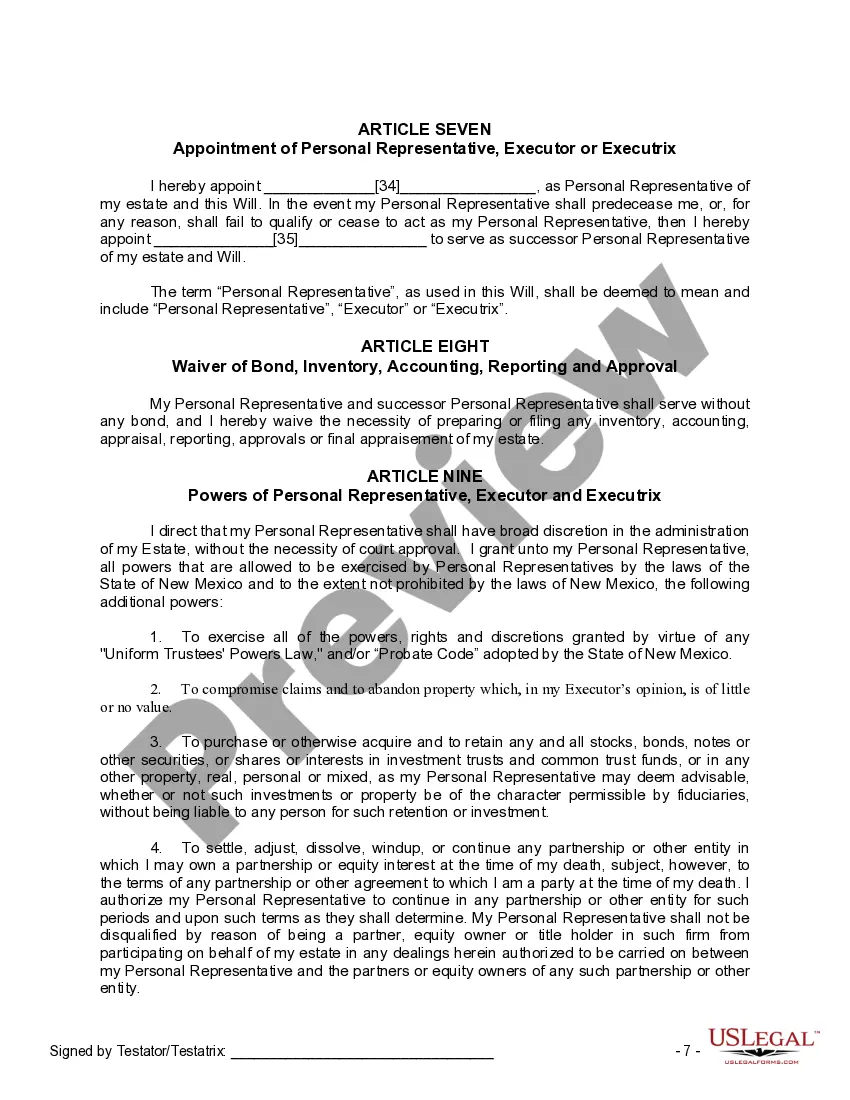
- Appointment of a personal representative for estate management
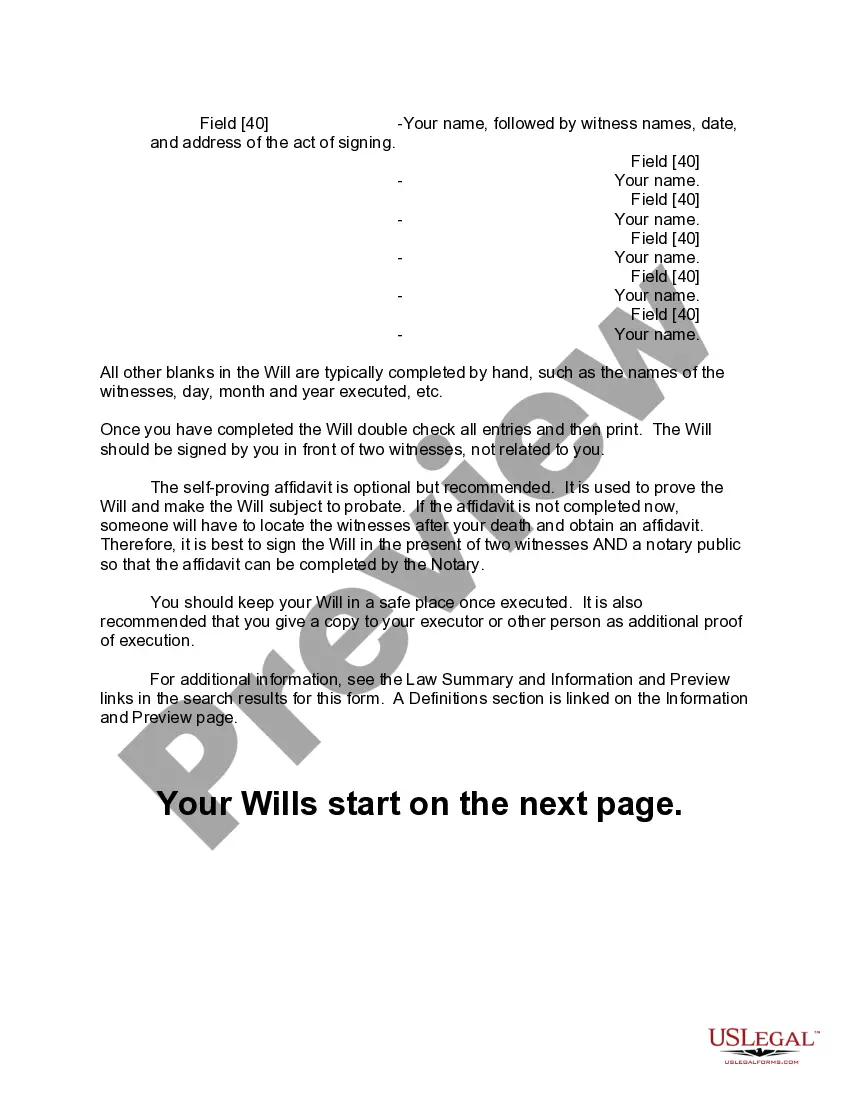
- Self-proving affidavit for notarization, if applicable
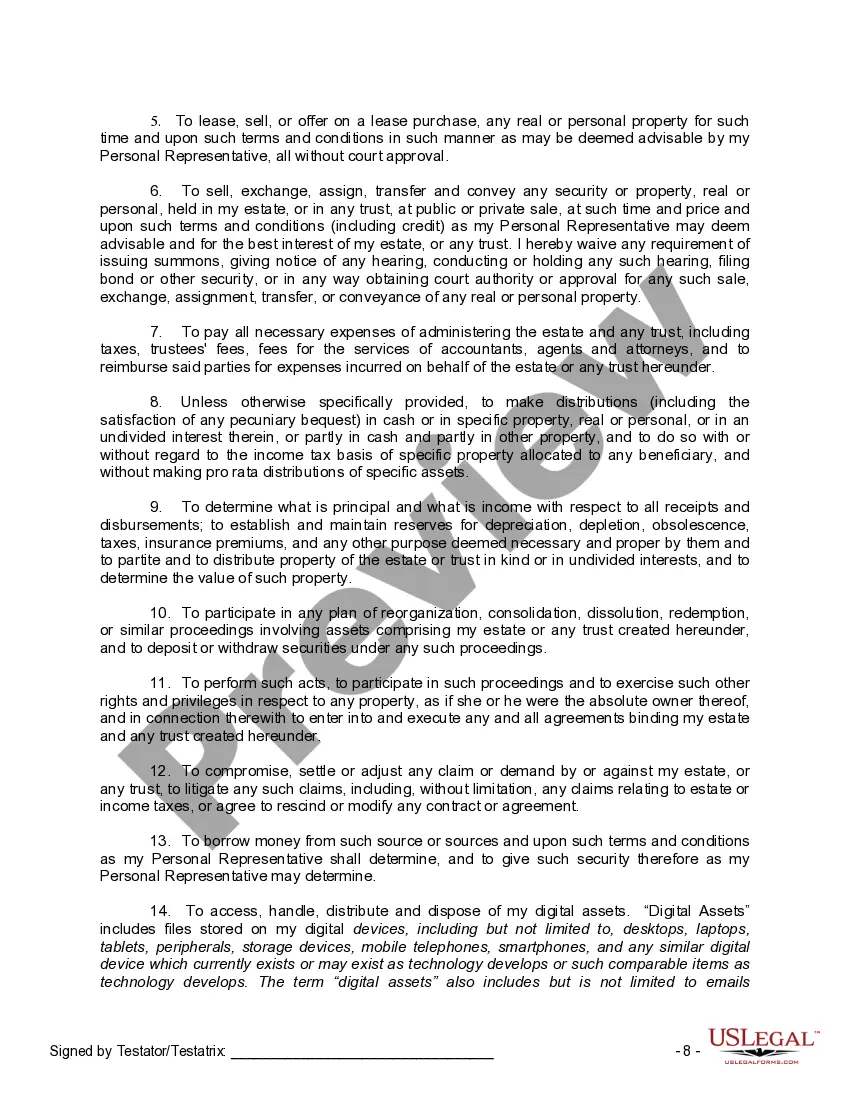
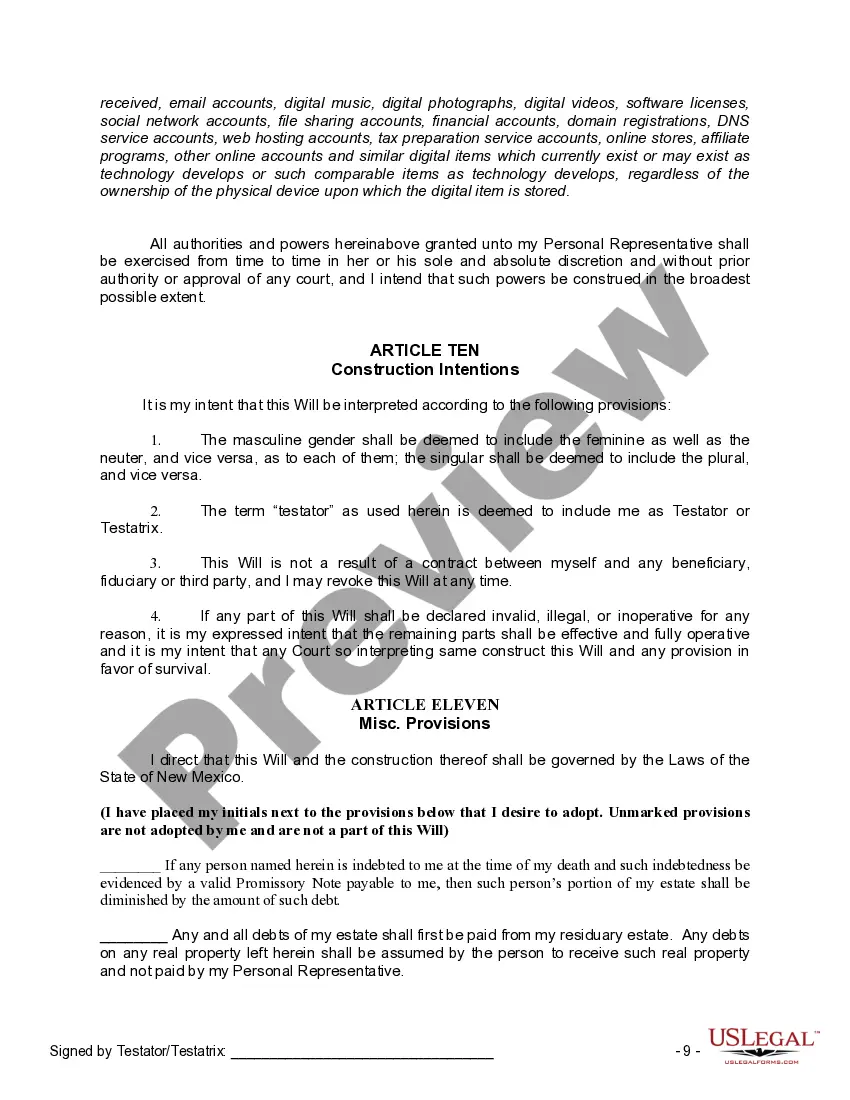
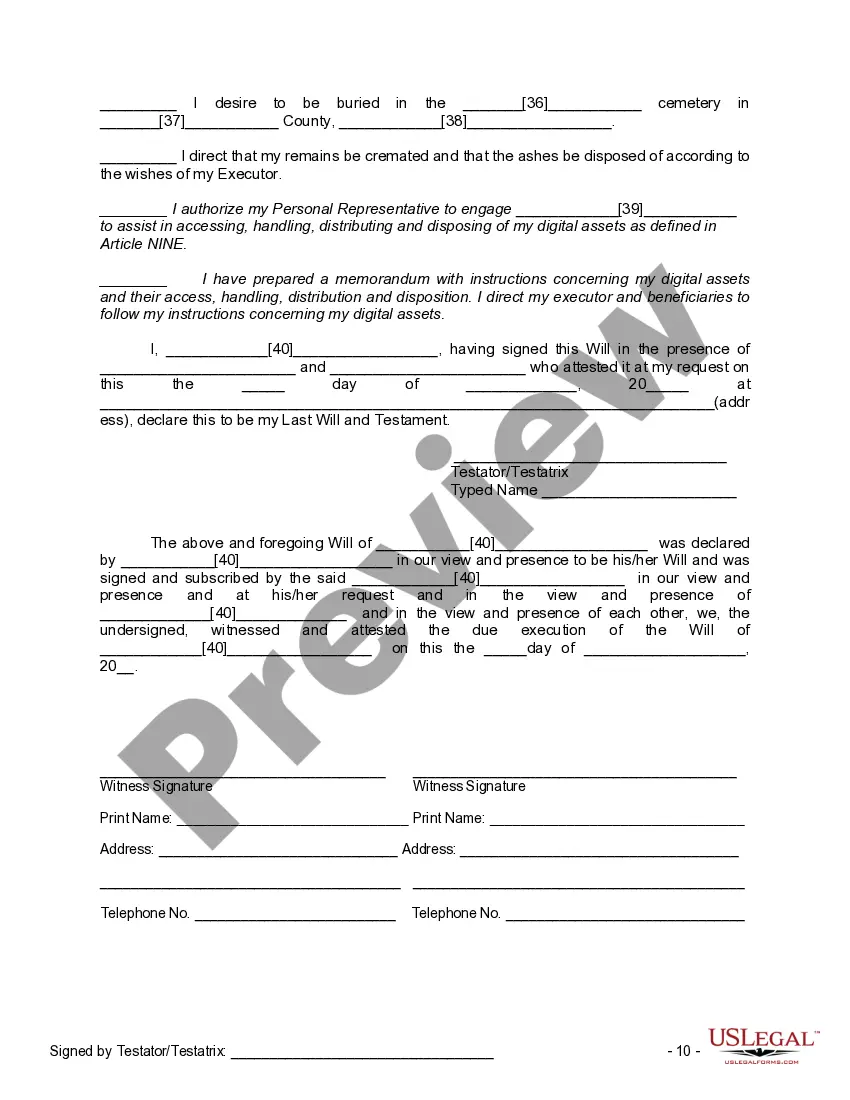




This form is ideal for individuals or couples living together in a committed relationship without a legal marriage. You should use this wills package when you want to ensure that your partner inherits your property and assets upon your passing, while also making provisions for your adult children. It is particularly useful if you wish to avoid intestacy laws that could complicate the distribution of your estate.
This form is suitable for:
- Unmarried couples living together with adult children
- Individuals looking to secure their partnerâs inheritance rights
- Those wishing to dictate terms for the distribution of their estate
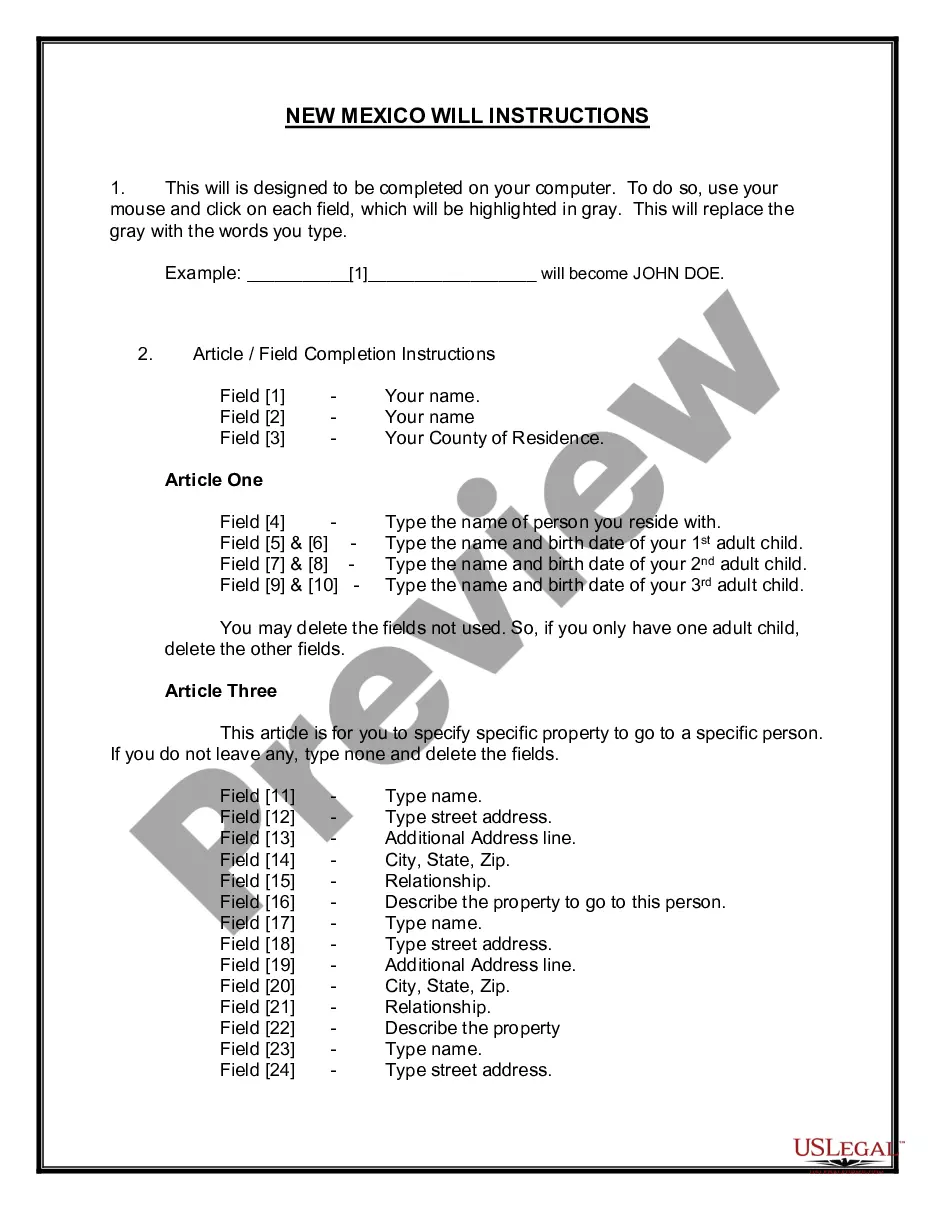
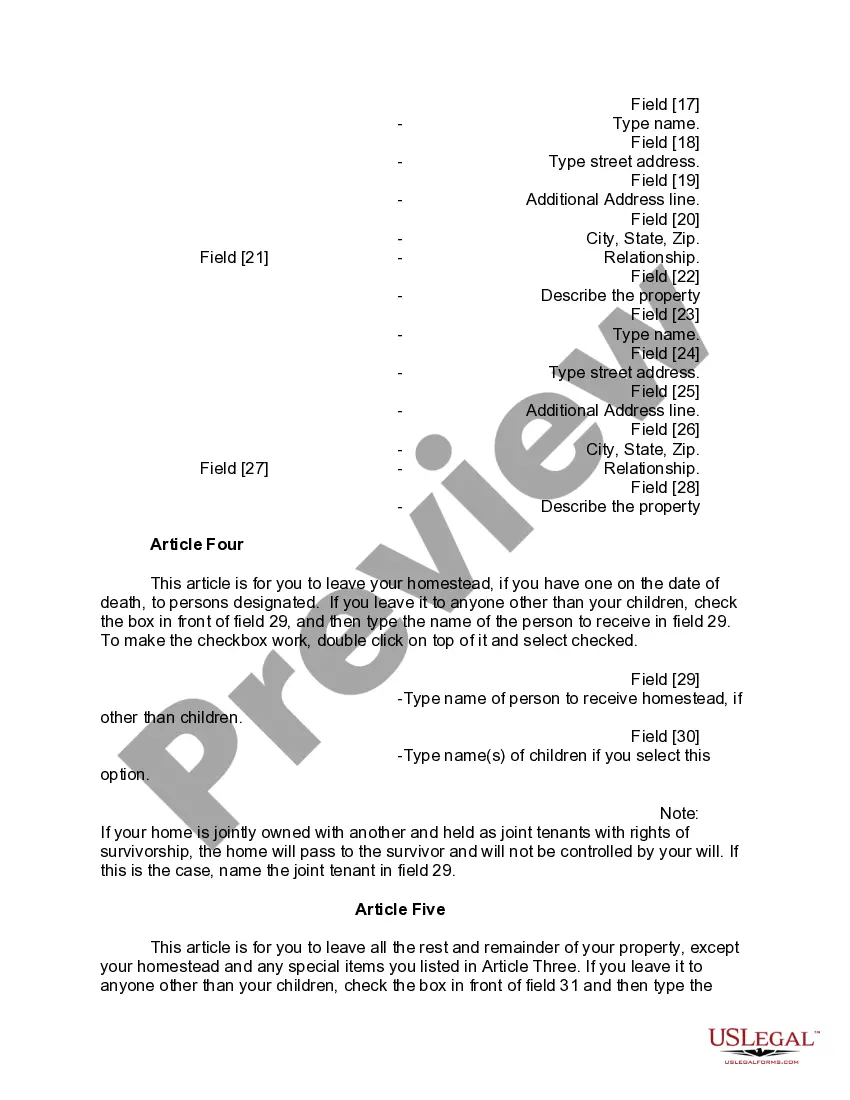
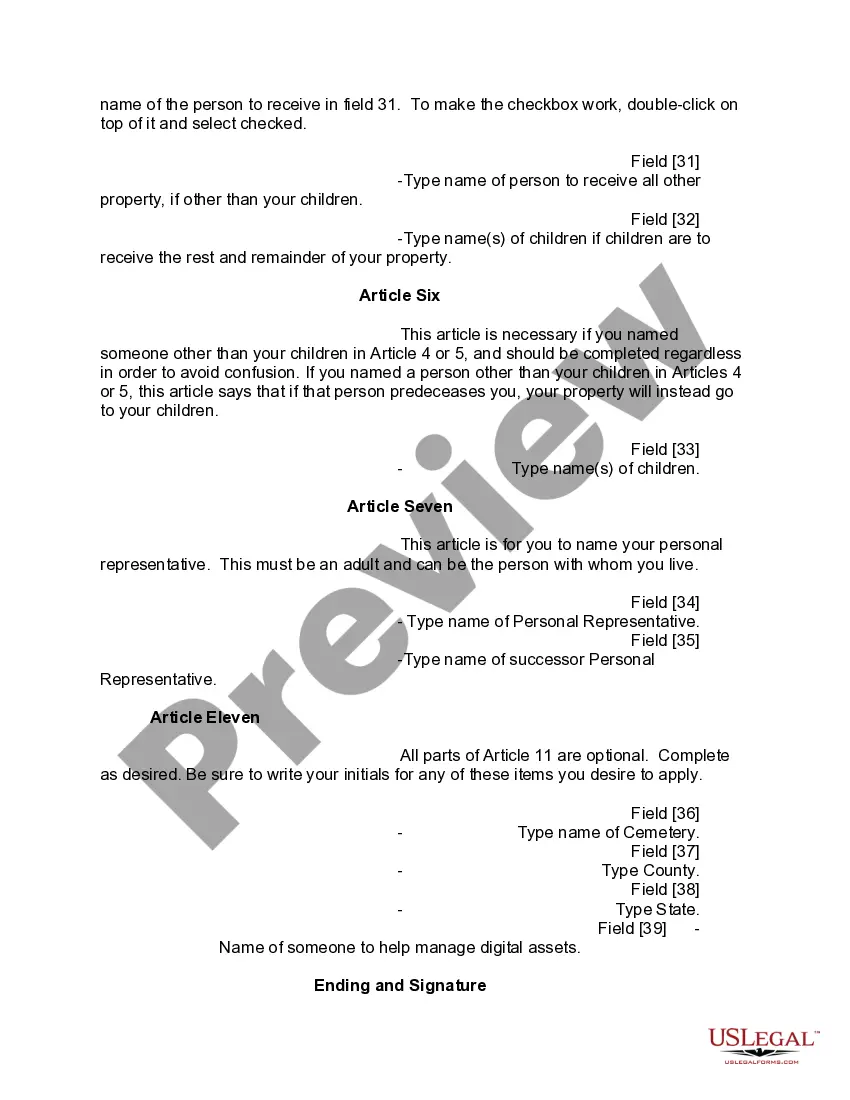
To complete this Mutual Wills Package, follow these steps:
- Identify the parties by entering the names and addresses of both individuals creating the will.
- List the adult children, including their names and birthdates.
- Specify any debts, expenses, or funeral costs to be addressed by the personal representative.
- Detail any specific bequests, naming the recipients and the property being bequeathed.
- Designate a personal representative who will manage the estate's distribution.
- Sign the wills in the presence of the required witnesses and, if applicable, notarize the documents.
Yes, this form must be notarized to be legally valid, particularly for the self-proving affidavit included in the package. US Legal Forms provides an online notarization service that is available 24/7, allowing you to securely notarize your document via video call without the need for travel.
Get your form ready online
Our built-in tools help you complete, sign, share, and store your documents in one place.
Make edits, fill in missing information, and update formatting in US Legal Forms—just like you would in MS Word.
Download a copy, print it, send it by email, or mail it via USPS—whatever works best for your next step.
Sign and collect signatures with our SignNow integration. Send to multiple recipients, set reminders, and more. Go Premium to unlock E-Sign.
If this form requires notarization, complete it online through a secure video call—no need to meet a notary in person or wait for an appointment.
We protect your documents and personal data by following strict security and privacy standards.

Make edits, fill in missing information, and update formatting in US Legal Forms—just like you would in MS Word.

Download a copy, print it, send it by email, or mail it via USPS—whatever works best for your next step.

Sign and collect signatures with our SignNow integration. Send to multiple recipients, set reminders, and more. Go Premium to unlock E-Sign.

If this form requires notarization, complete it online through a secure video call—no need to meet a notary in person or wait for an appointment.

We protect your documents and personal data by following strict security and privacy standards.
- Failing to have the wills signed in the presence of two witnesses.
- Not appropriately specifying how debts and funeral expenses should be handled.
- Omitting the names of adult children or significant bequests.
- Neglecting to notarize the self-proving affidavit where required.
- Convenient online access to legally formatted wills created by attorneys.
- Editability allows customization to fit personal circumstances easily.
- Immediate download for prompt completion without the need for lengthy appointments.
- Integrated notarization simplifies the process and ensures all legal standards are met.
- This Mutual Wills Package is ideal for cohabiting partners without marriage who have adult children.
- Proper completion of the wills ensures both partners' wishes are formally recognized.
- Key actions include witnessing the signing of the documents and utilizing notary services for confirmation.
- Making specific bequests can help avoid potential disputes and clarify your intentions.
Looking for another form?
Form popularity
FAQ
The primary benefit of a living will is that it allows you to voice your desires regarding what treatments should be administered or withheld at the end of life. Physicians are required to comply with your wishes within the reasonable scope of medical practice.
You do not need a lawyer to make a living will, although you can get one from a lawyer if you prefer to. Every state has its own requirements for making a living will, so if you make one on your own, make sure you find a form that meets your state's requirements.
Although both terms contain the word will," a living will and a last will and testament are two separate documents that serve entirely different purposes: A living will concerns health care preferences while you are alive, whereas a last will expresses your wishes for the distribution of your property after your death
A living will is a legal document that tells others what your personal choices are about end-of-life medical treatment. It lays out the procedures or medications you wantor don't wantto prolong your life if you can't talk with the doctors yourself.