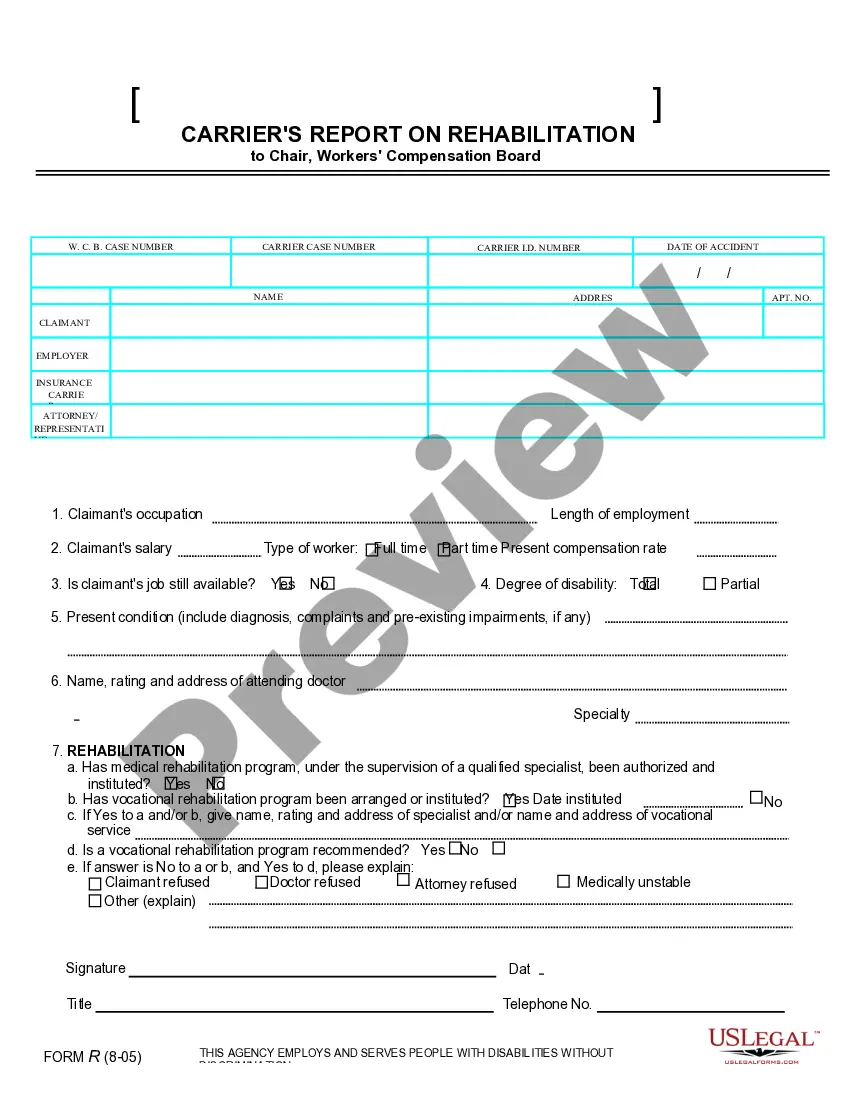
South Dakota 30 Day Notice to Terminate Tenancy at Will
What this document covers
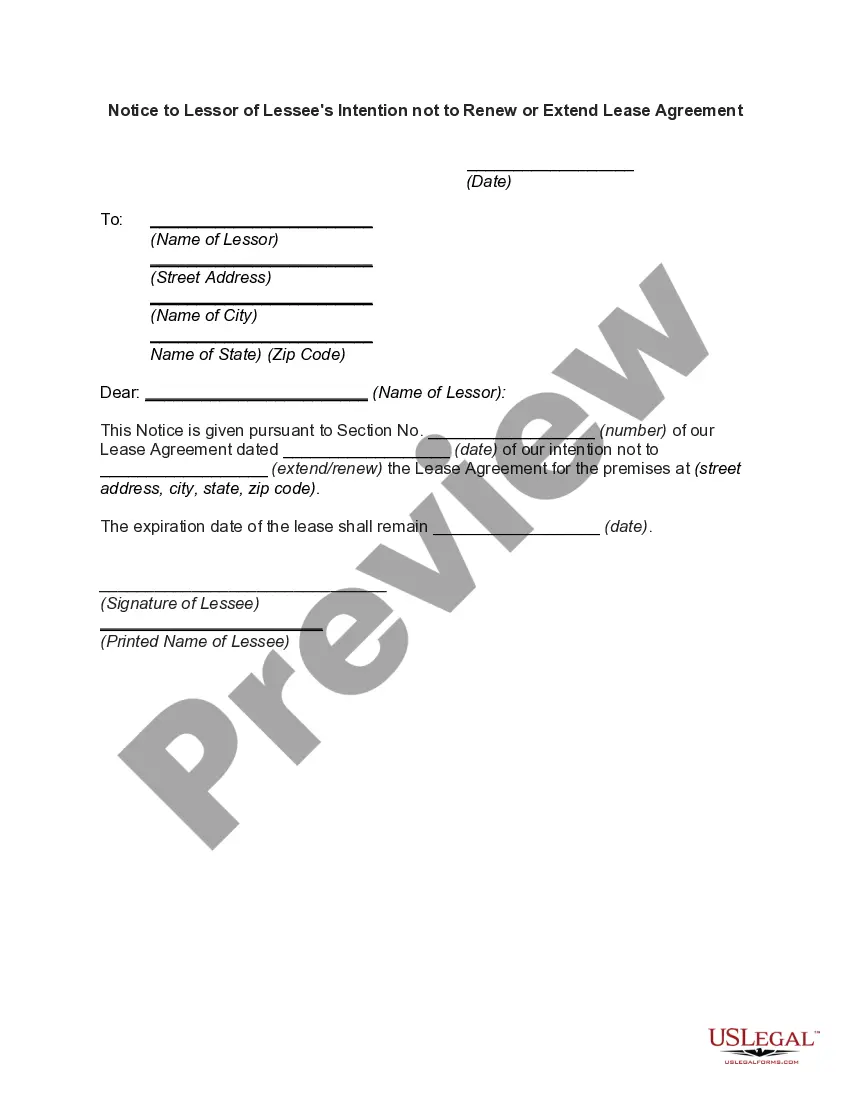
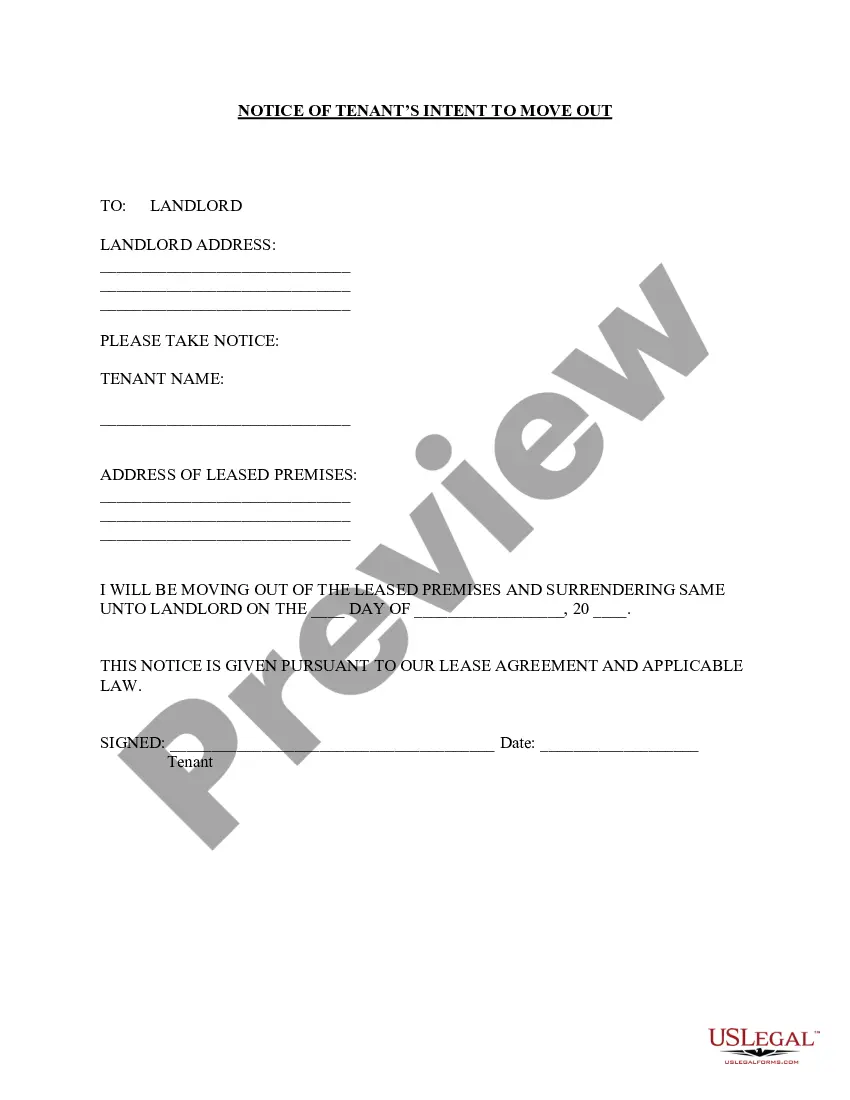
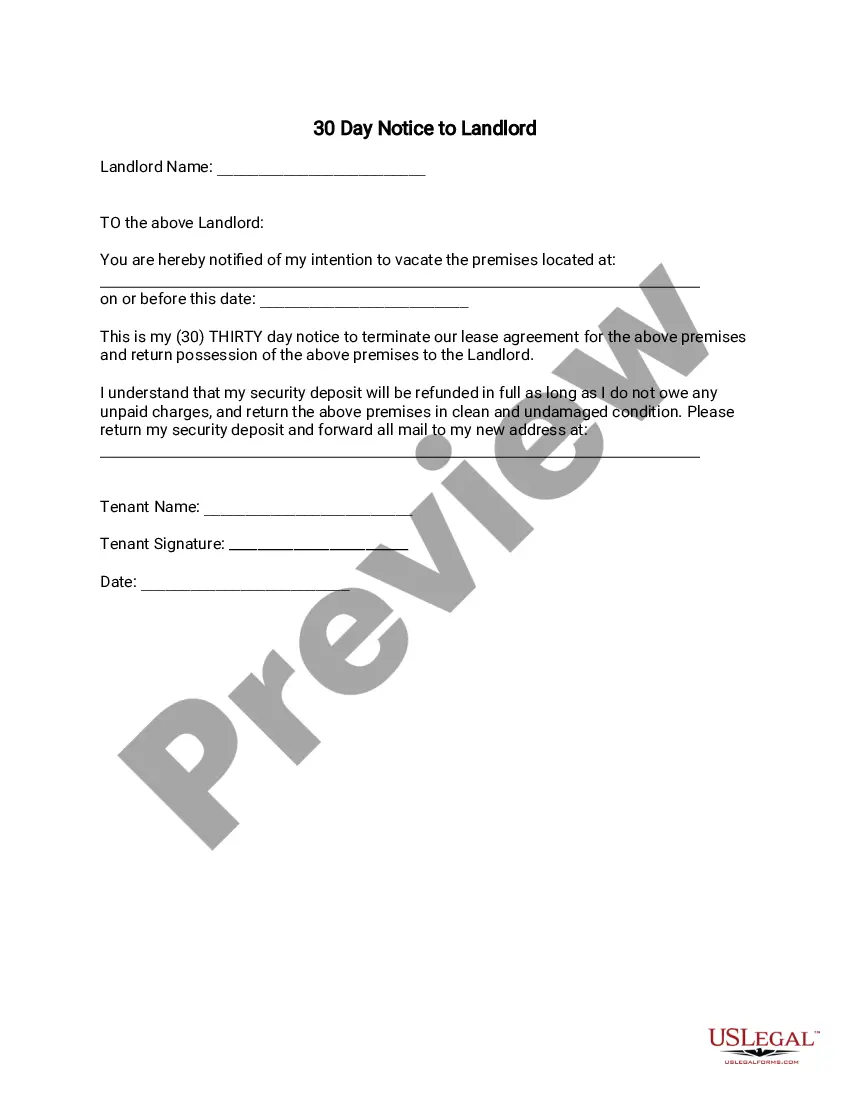
The 30 Day Notice to Terminate Tenancy at Will is a legal document used by landlords to formally notify tenants that their at-will residential lease will be terminated. This form gives the tenant a 30-day notice to vacate the property, allowing for a smooth transition for both the landlord and tenant. Unlike standard lease terminations, this form applies to at-will tenancies, which can be terminated at any time by either party without cause, but with proper notification as specified in the lease agreement.
Form components explained
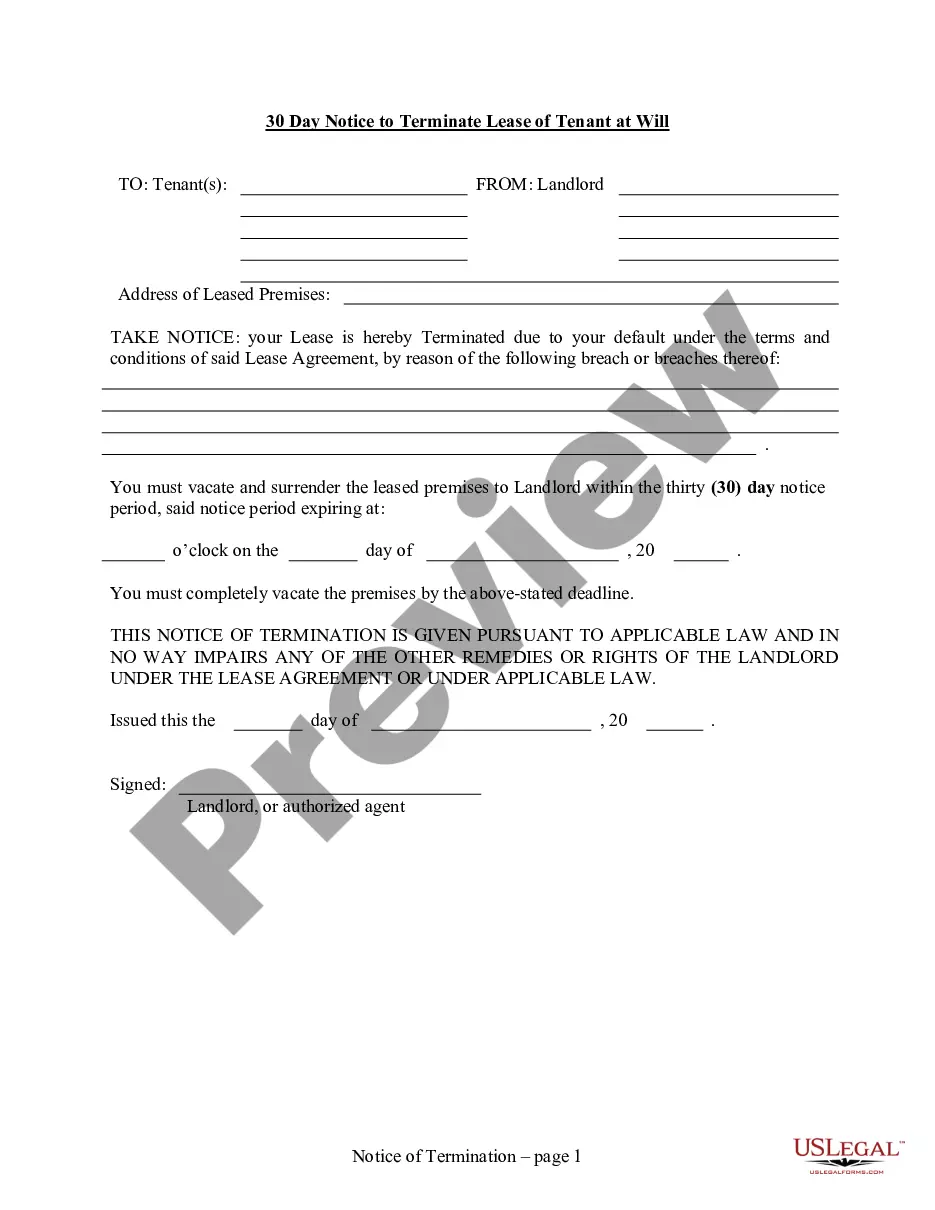
- Identification of the tenant(s) and landlord
- Description of the leased premises
- Notice period, stating the deadline to vacate
- Reason for termination, if necessary
- Signature of the landlord or authorized agent
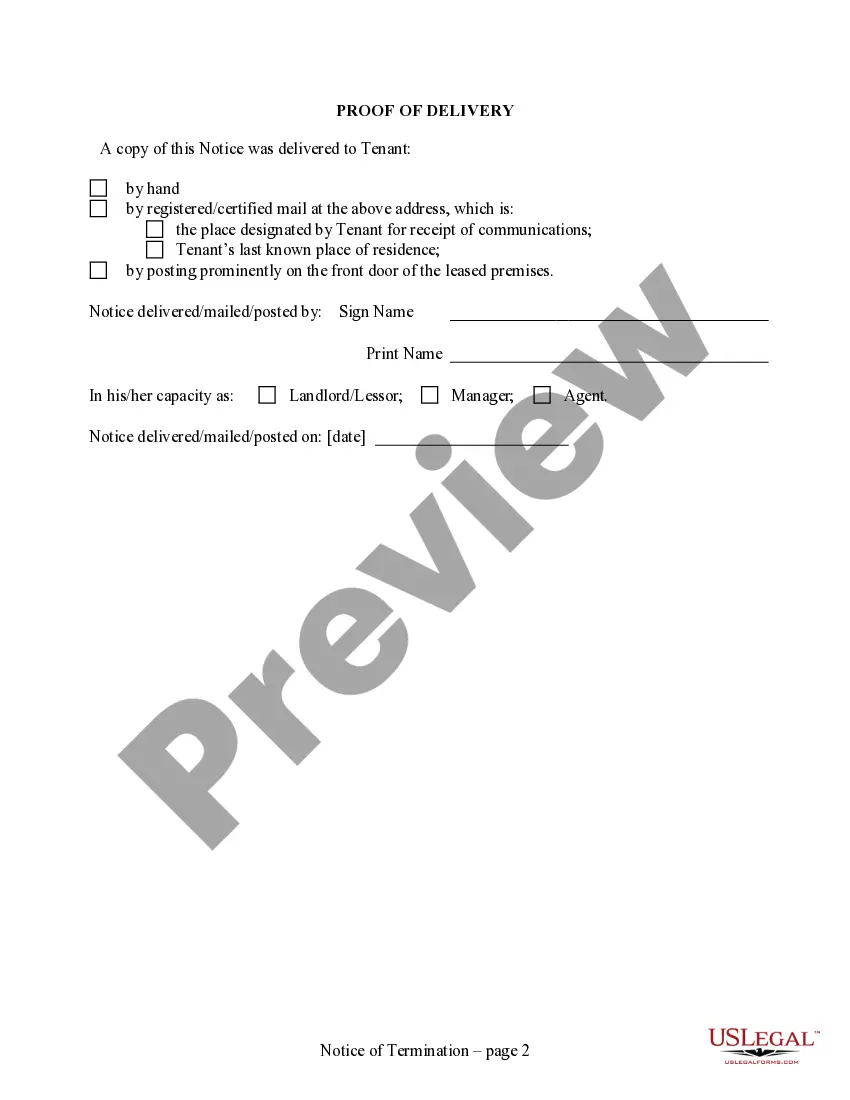
- Proof of delivery section detailing how notice was delivered
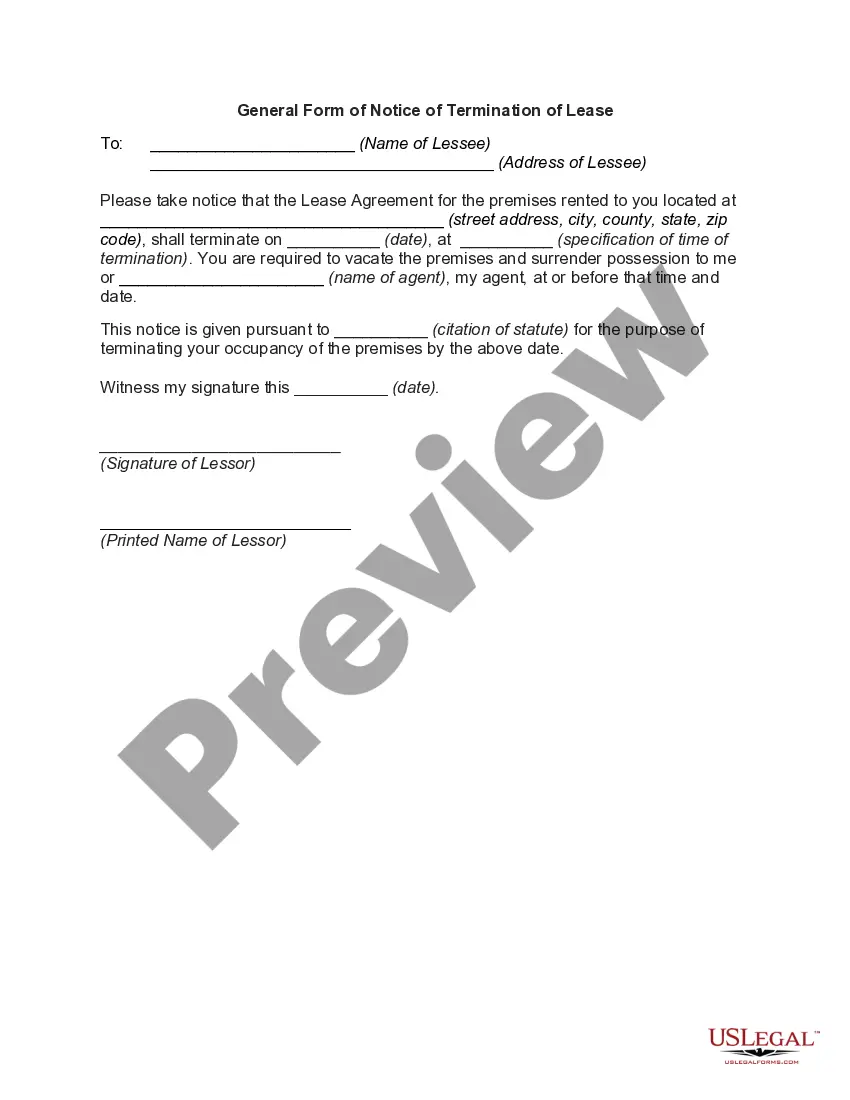

When this form is needed
This form is necessary when a landlord wants to terminate an at-will tenancy, which typically includes residential situations like houses, apartments, or condos. Use this form if the landlord has decided to terminate the lease for any reason, whether contractual violations have occurred or simply to end the rental relationship after a period of tenancy.
Intended users of this form
- Landlords who are terminating a tenancy at will
- Property managers acting on behalf of landlords
- Residential landlords requiring documentation of the termination process
Completing this form step by step
- Identify the tenant(s) and landlord clearly on the form.
- Provide the address of the leased premises being vacated.
- Enter the date by which the tenant must vacate the premises.
- Include any specific reasons for termination, if applicable.
- Sign the form to validate the notice.
- Properly document the delivery method of the notice to the tenant.
Notarization guidance
This form usually doesn’t need to be notarized. However, local laws or specific transactions may require it. Our online notarization service, powered by Notarize, lets you complete it remotely through a secure video session, available 24/7.
Get your form ready online
Our built-in tools help you complete, sign, share, and store your documents in one place.
Make edits, fill in missing information, and update formatting in US Legal Forms—just like you would in MS Word.
Download a copy, print it, send it by email, or mail it via USPS—whatever works best for your next step.
Sign and collect signatures with our SignNow integration. Send to multiple recipients, set reminders, and more. Go Premium to unlock E-Sign.
If this form requires notarization, complete it online through a secure video call—no need to meet a notary in person or wait for an appointment.
We protect your documents and personal data by following strict security and privacy standards.

Make edits, fill in missing information, and update formatting in US Legal Forms—just like you would in MS Word.

Download a copy, print it, send it by email, or mail it via USPS—whatever works best for your next step.

Sign and collect signatures with our SignNow integration. Send to multiple recipients, set reminders, and more. Go Premium to unlock E-Sign.

If this form requires notarization, complete it online through a secure video call—no need to meet a notary in person or wait for an appointment.

We protect your documents and personal data by following strict security and privacy standards.
Mistakes to watch out for
- Failing to provide the full notice period required by law.
- Not signing the notice, which can invalidate it.
- Using improper delivery methods that do not meet local legal requirements.
Advantages of online completion
- Convenient download and completion from home.
- Editable fields allow for personalization based on specific details.
- Access to attorney-drafted templates ensures legal reliability.
Looking for another form?


Form popularity
FAQ
Notice Requirements for Illinois Tenants It is equally easy for tenants in Illinois to get out of a month-to-month rental agreement. You must provide the same amount of notice (30 days) as the landlord (unless your rental agreement provides for a shorter amount of notice).
Substantial Violation If the landlord is evicting the tenant for any of these reasons, the landlord must give the tenant a three-day notice to quit. (Colo. Rev.If the tenant does not move out of the rental unit by the end of three days, then the landlord can file an eviction lawsuit against the tenant.
A. In a month-to-month tenancy, the landlord may raise the rent after giving the tenant 45 days' written notice.
When the tenancy is month-to-month, the tenant must give the landlord 15 days' notice before the end of any monthly period. (In Miami, the tenant must give the landlord 30 days' notice before the end of the monthly period).
Unlike the estate for years or the periodic estate, an estate at will automatically terminates when either the landlord or tenant dies.A landlord is not required to give a tenant at sufferancesometimes called a holdover tenantnotice of termination.
The landlord can voluntarily agree to let you take back the notice, but would typically only do so if they either had not yet rented your rental unit, or could reach an agreement with the incoming tenant to accept an alternative rental unit.
They must give the landlord at least 21 days notice of termination. Landlord Breaches the Agreement - the tenant can terminate the tenancy if the landlord breaches the agreement. If the landlord challenges the termination in the Tribunal, the breach must be serious enough to justify termination.
In Colorado, evictions are sometimes referred to as forcible entry & detainer (FED). Before you can file for eviction, you must generally provide 10 days' notice (increased from 3 days prior) for tenants to correct a deficiency or leave the property, except in certain circumstances.