New Mexico 24 Hour Notice of Intention to Enter Dwelling for Residential from Landlord to Tenant
Understanding this form
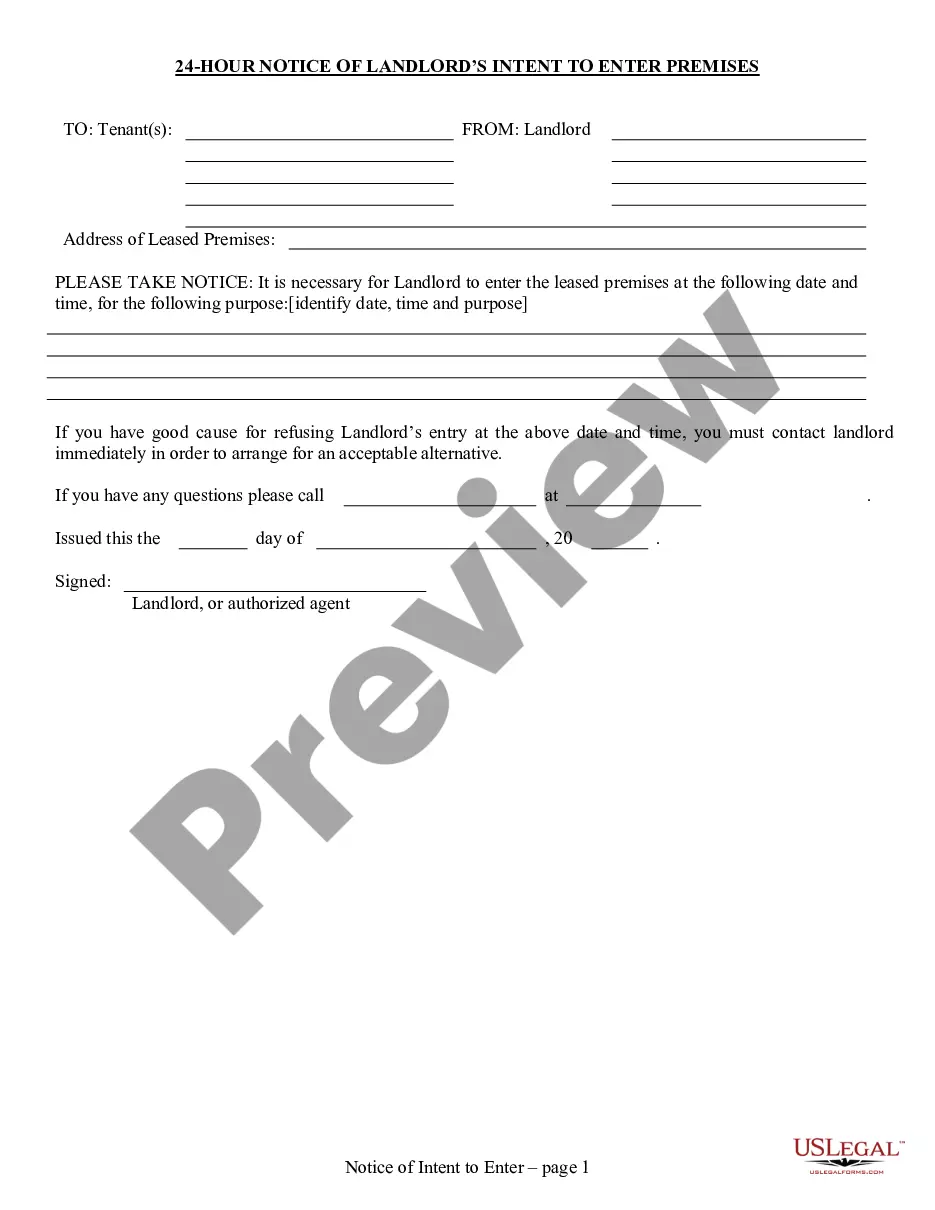
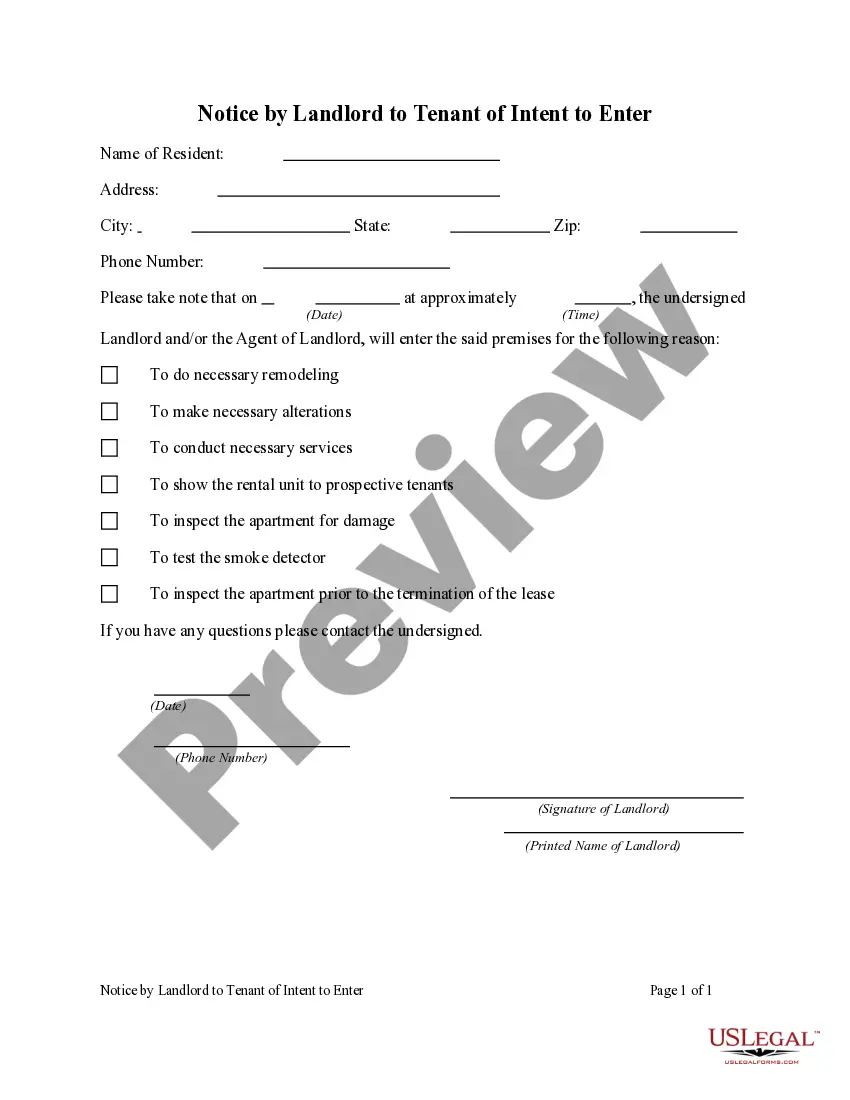
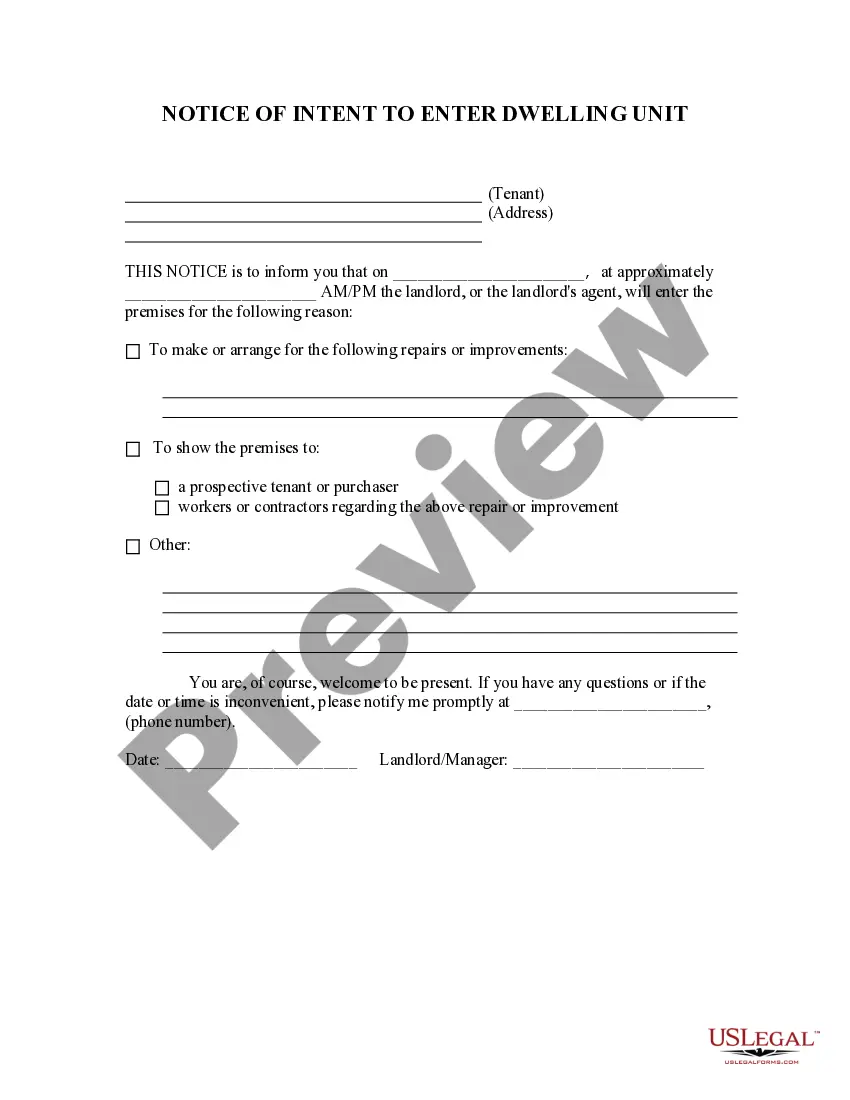
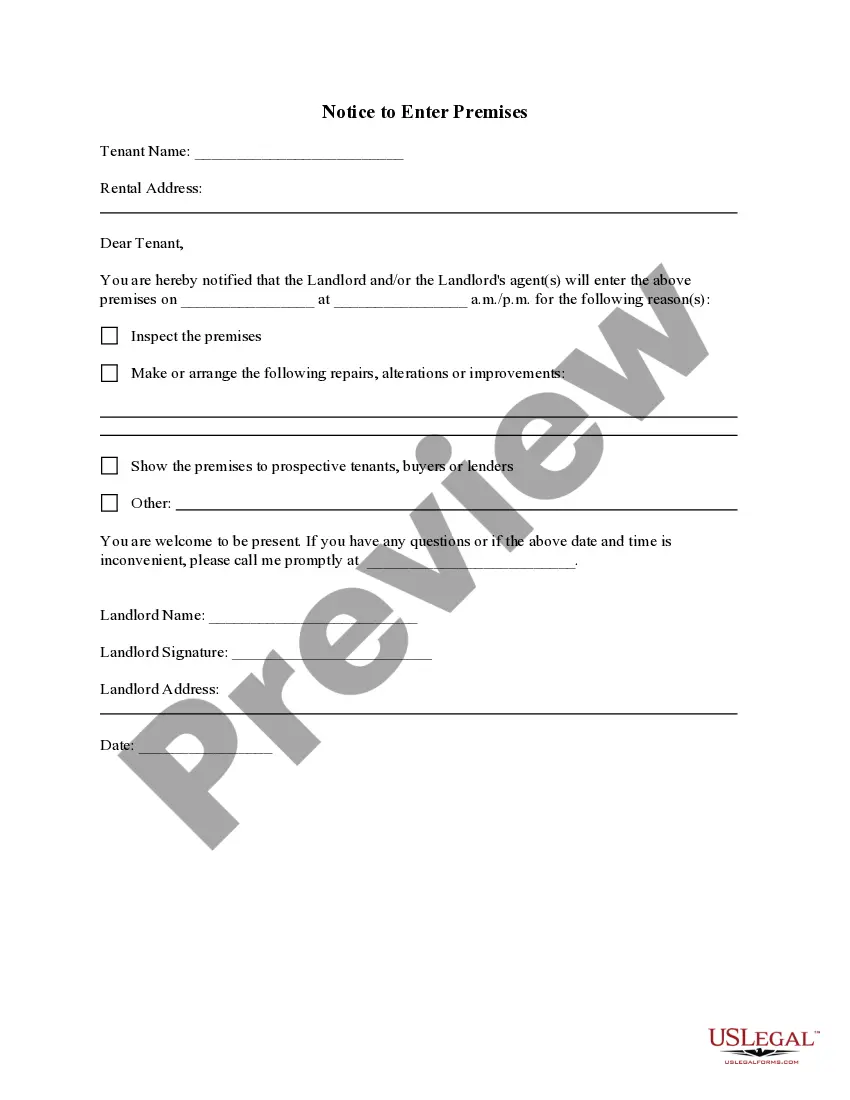
This 24 Hour Notice of Intention to Enter Dwelling is a legal document used by landlords to inform tenants of the necessity to enter the rented premises. The notice allows landlords to conduct inspections, make repairs, or show the unit to potential buyers or contractors, provided that the tenant receives a 24-hour notice as mandated by local law. This form is specifically for residential properties, such as houses, apartments, or condominiums, distinguishing it from commercial property forms.
Main sections of this form
- Identification of Tenant(s) and Landlord
- Address of the leased premises
- Date and time of entry
- Purpose of the entry
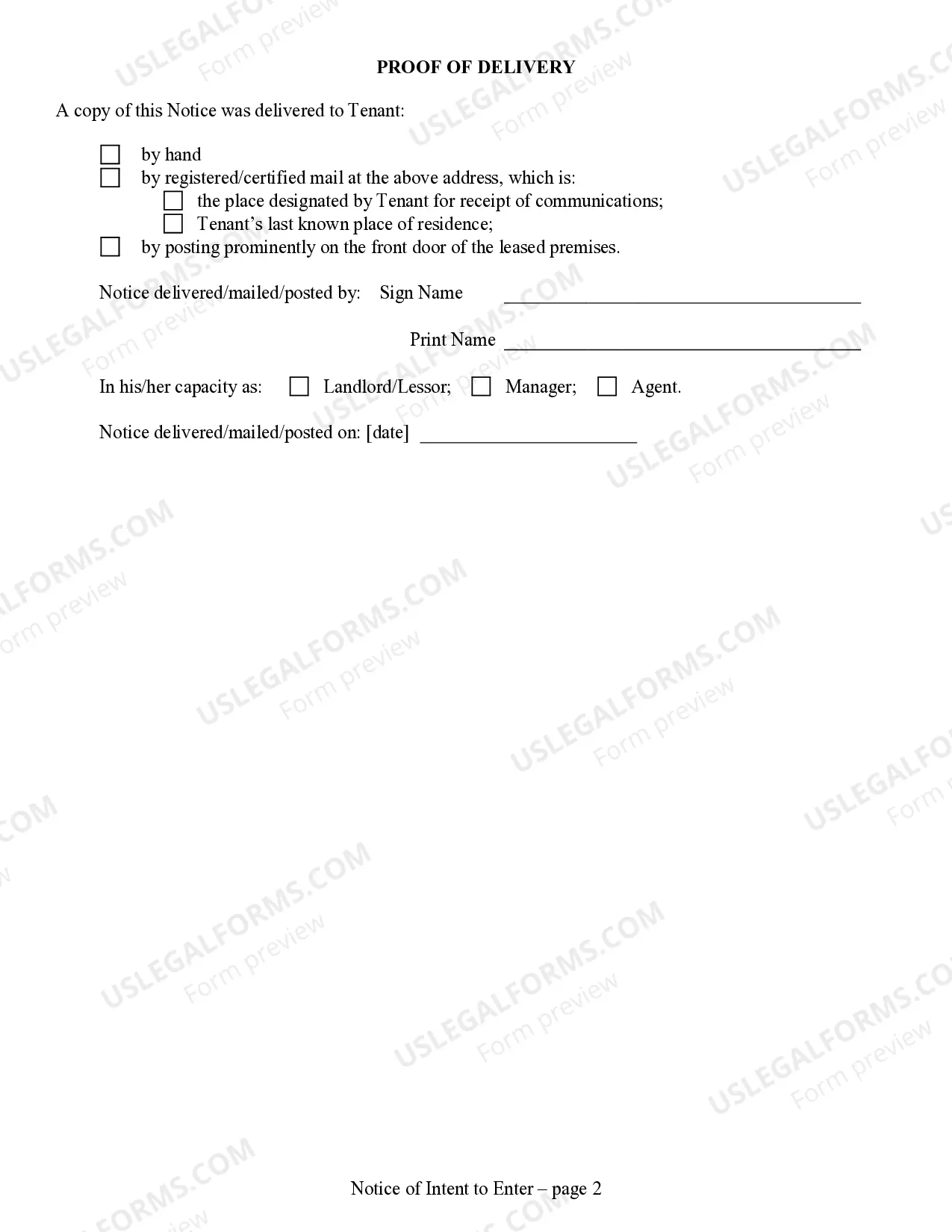
- Proof of delivery options
- Signature of the landlord or authorized agent

When this form is needed
This form is utilized when a landlord needs to enter a tenant's dwelling for specific reasons such as performing repairs, making inspections, or showing the unit to prospective tenants or buyers. It's essential when the landlord aims to comply with legal notice requirements before entry.
Who this form is for
- Landlords who wish to enter their rental properties
- Property managers acting on behalf of landlords
- Tenants needing official communication regarding entry
Completing this form step by step
- Identify the tenant(s) and landlord in the designated sections.
- Clearly state the address of the leased premises.
- Specify the date and time of the intended entry.
- Explain the purpose for entering the property.
- Ensure the form is signed and dated by the landlord or authorized agent.
- Choose the delivery method for the notice and complete the proof of delivery section.
Does this form need to be notarized?
This form usually doesn’t need to be notarized. However, local laws or specific transactions may require it. Our online notarization service, powered by Notarize, lets you complete it remotely through a secure video session, available 24/7.
Get your form ready online
Our built-in tools help you complete, sign, share, and store your documents in one place.
Make edits, fill in missing information, and update formatting in US Legal Forms—just like you would in MS Word.
Download a copy, print it, send it by email, or mail it via USPS—whatever works best for your next step.
Sign and collect signatures with our SignNow integration. Send to multiple recipients, set reminders, and more. Go Premium to unlock E-Sign.
If this form requires notarization, complete it online through a secure video call—no need to meet a notary in person or wait for an appointment.
We protect your documents and personal data by following strict security and privacy standards.

Make edits, fill in missing information, and update formatting in US Legal Forms—just like you would in MS Word.

Download a copy, print it, send it by email, or mail it via USPS—whatever works best for your next step.

Sign and collect signatures with our SignNow integration. Send to multiple recipients, set reminders, and more. Go Premium to unlock E-Sign.

If this form requires notarization, complete it online through a secure video call—no need to meet a notary in person or wait for an appointment.

We protect your documents and personal data by following strict security and privacy standards.
Common mistakes to avoid
- Failing to provide the full 24-hour notice period.
- Not including a clear purpose for entry.
- Neglecting to deliver the notice properly, leading to disputes.
- Leaving out essential signatures or dates.
Why use this form online
- Easy to download and fill out from anywhere.
- Editable templates that can be customized to fit specific needs.
- Ensures compliance with legal standards set by licensed attorneys.
- Convenient access to legal forms without the need for in-person visits.
Legal use & context
- This notice serves as a record of communication between the landlord and tenant.
- It helps to establish the landlord's right to enter the property as per agreed terms in the lease.
- Failure to comply with notice requirements may result in legal consequences for landlords.
What to keep in mind
- The 24 Hour Notice of Intention to Enter Dwelling is essential for landlords planning to enter a rental unit.
- Properly completing and delivering this form protects the rights of both landlords and tenants.
- Always ensure compliance with your specific state's notice laws.
Looking for another form?

Form popularity
FAQ
The police. The police can enter your home (by force if required) if they have a search warrant. The fire service. Local authority housing officers. Private landlords. Gas and electricity companies. Water companies. Planning officers. Rating officers.
If you think your landlord is violating the Fair Housing Act, you can get that landlord in trouble by filing a complaint at HUD.gov. Your remedy for breach of quiet enjoyment is to terminate the lease and move or sue in small claims court.
If you don't want your landlord or letting agent to organise viewings you can refuse and they may not enter without your permission.
In all states, a landlord can enter the property in an emergency without notice or permission.Even if your landlord gives you notice, he or she must have a good reason to enter the property. In most cases, your landlord can enter your home: In an emergency.
A landlord can only enter a tenant's unit for specific reasons, unless: the tenant has given the landlord permission to enter; there is an emergency that requires the landlord to enter the unit; or. the tenant has abandoned the property.
What is a Notice to Enter? A Notice to Enter is a formal letter a property manager or landlord gives to the tenant of a rental property to inform the tenant of the landlord or property manager's intent to enter the residence on a given date at a specific time.
A landlord can only enter a rented property with the tenants' permission and after explaining why they need to get in.Remember landlords have a legal obligation to keep a property in good repair, and its appliances and services in good working order.
When you rent a property from a landlord it becomes your home. They should only enter the property without you being present, if you have given permission for them to do so, or in a genuine emergency.