Mississippi Order Directing Dist. of Proceeds of Writ of Execution
What this document covers
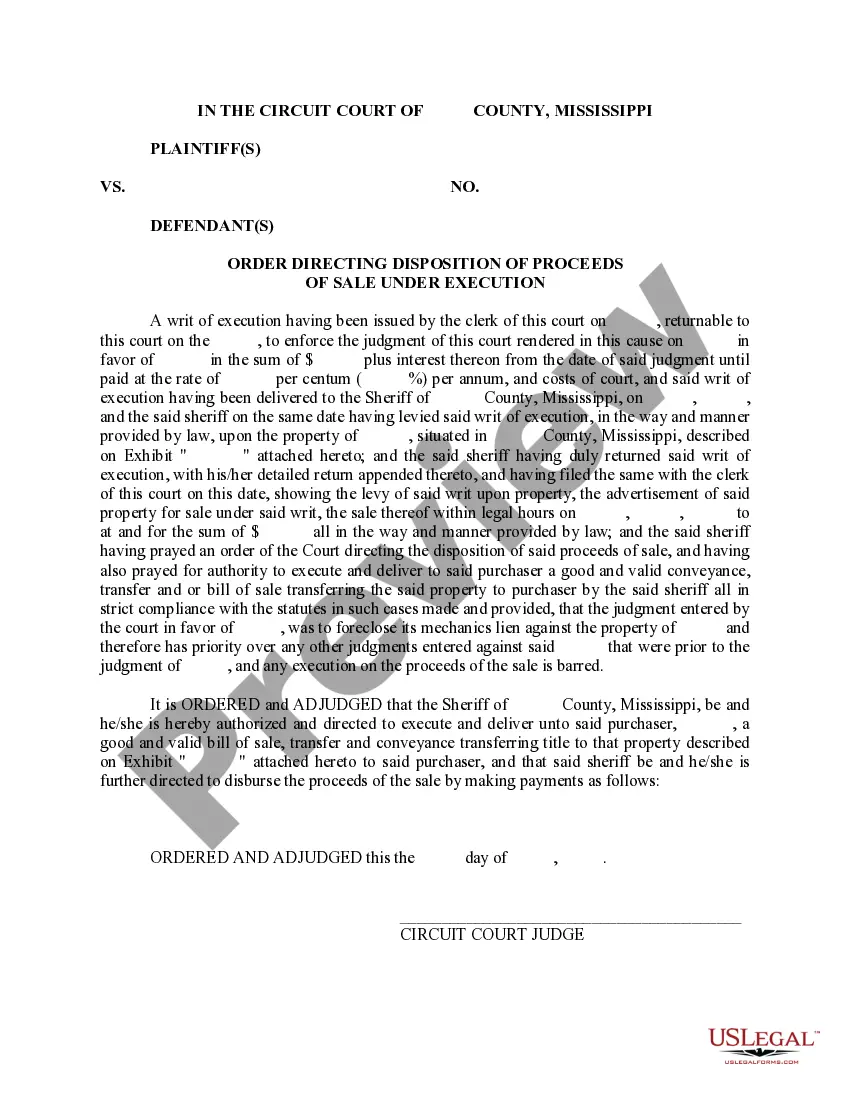
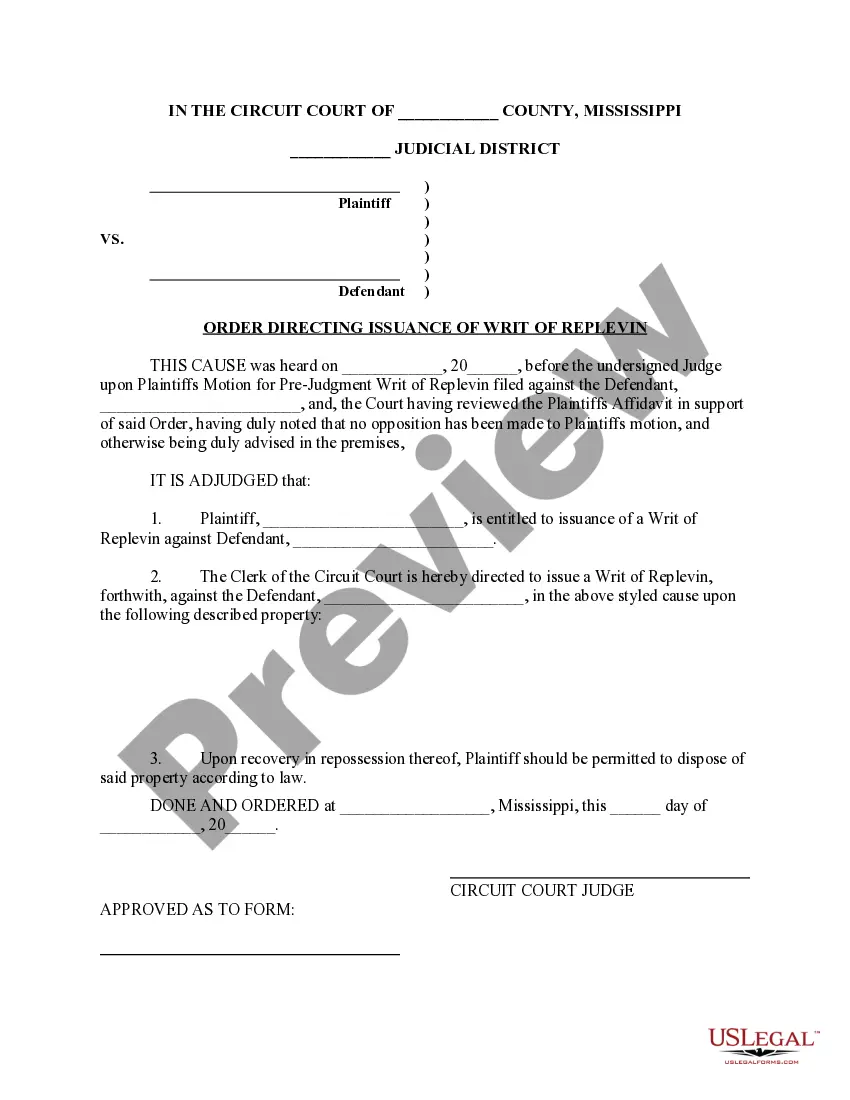
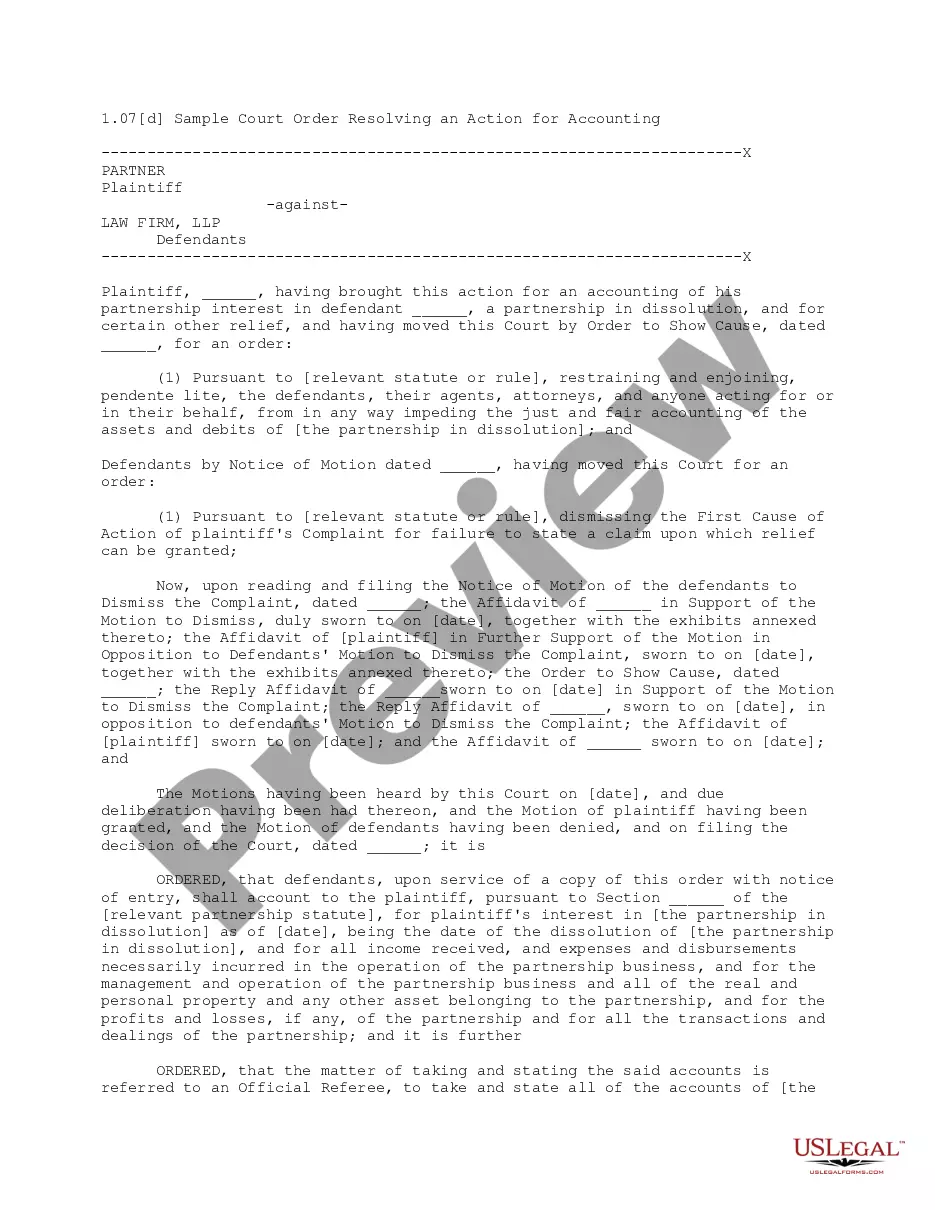
The Order Directing Dist. of Proceeds of Writ of Execution is a formal court document that instructs how the proceeds from a writ of execution should be distributed. This order is issued by a judge to ensure compliance with a court ruling. It serves a distinct function compared to other legal orders, specifically tailored for the management of proceeds stemming from executed judgments. Users can adapt this form to fit the particulars of their cases, following the provided template as a guide.
Key components of this form
- Title and Case Identification: Clearly states the title of the order and identifies the parties involved in the case.
- Judgeâs Directive: Contains the judgeâs instructions regarding the distribution of proceeds.
- Recipient Information: Specifies who will receive the proceeds from the writ of execution.
- Signature Line: Provides space for the judge's signature, affirming the order's legitimacy.
- Date of Issue: Includes the date when the order is signed and issued by the court.
When to use this form
This form is applicable when there has been a court ruling that results in a writ of execution, typically in cases of debt recovery or enforcement of judgment. It is necessary to use this order to legally direct how the recovered funds should be distributed among the parties involved, ensuring that compliance with the courtâs directives is maintained.
Who this form is for
- Judges or court personnel responsible for drafting orders based on legal proceedings.
- Parties involved in litigation who need to execute the court's judgment on distributed proceeds.
- Attorneys representing clients seeking enforcement of a court's monetary judgment.
How to complete this form
- Identify the case by entering the relevant title and names of the parties involved.
- Specify the judgeâs directions regarding the distribution of the proceeds.
- Fill out the names and details of the recipients entitled to the proceeds.
- Sign the order once all necessary fields are completed and reviewed.
- Provide the date of issuance for the order to ensure it is properly filed.
Does this form need to be notarized?
This form does not typically require notarization unless specified by local law, allowing for easier processing in most jurisdictions.
Get your form ready online
Our built-in tools help you complete, sign, share, and store your documents in one place.
Make edits, fill in missing information, and update formatting in US Legal Forms—just like you would in MS Word.
Download a copy, print it, send it by email, or mail it via USPS—whatever works best for your next step.
Sign and collect signatures with our SignNow integration. Send to multiple recipients, set reminders, and more. Go Premium to unlock E-Sign.
If this form requires notarization, complete it online through a secure video call—no need to meet a notary in person or wait for an appointment.
We protect your documents and personal data by following strict security and privacy standards.

Make edits, fill in missing information, and update formatting in US Legal Forms—just like you would in MS Word.

Download a copy, print it, send it by email, or mail it via USPS—whatever works best for your next step.

Sign and collect signatures with our SignNow integration. Send to multiple recipients, set reminders, and more. Go Premium to unlock E-Sign.

If this form requires notarization, complete it online through a secure video call—no need to meet a notary in person or wait for an appointment.

We protect your documents and personal data by following strict security and privacy standards.
Common mistakes
- Failing to accurately identify all parties involved in the case.
- Omitting the judgeâs signature, which is essential for the order's validity.
- Not specifying the distribution method or amounts for the proceeds.
- Using outdated language or formats that do not comply with current court standards.
Why use this form online
- Convenience: Downloadable and available anytime, allowing efficient preparation.
- Editability: Customize the form to fit your specific case requirements quickly.
- Reliability: Drafted by licensed attorneys to ensure legal accuracy and compliance.
Looking for another form?


Form popularity
FAQ
It means the debt is paid, and some of the money collected was an overpayment.
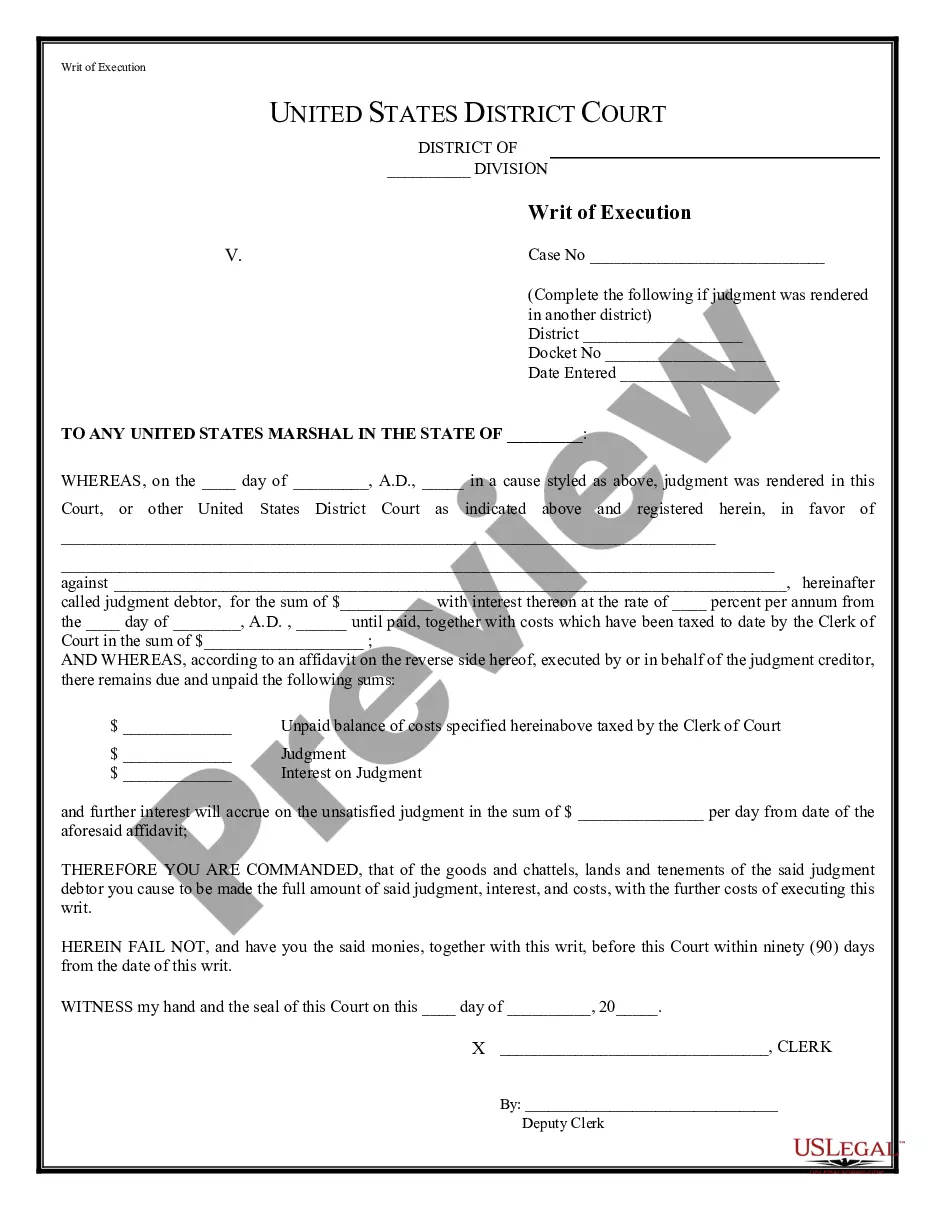
A writ of execution is a court order that puts in force a judgment of possession and directs law enforcement personnel to begin the transfer of property as the result of a legal judgment. Property may include assets, money, or real property.
A writ of execution (also known as an execution) is a court order granted to put in force a judgment of possession obtained by a plaintiff from a court. When issuing a writ of execution, a court typically will order a sheriff or other similar official to take possession of property owned by a judgment debtor.
The writ gives the Sheriff the authority to seize property of the judgment debtor and is valid for 180 days after its issuance. You must give the Sheriff signed, written instructions to levy on (seize) and sell, if necessary, specific property belonging to the debtor to satisfy your judgment.
Served By: The writ is served by the U.S. Marshal or other person, presumably a law enforcement officer, specially appointed by the court pursuant to Federal Rule of Civil Procedure 4.1(a).
The writ gives the Sheriff the authority to seize property of the judgment debtor and is valid for 180 days after its issuance. You must give the Sheriff signed, written instructions to levy on (seize) and sell, if necessary, specific property belonging to the debtor to satisfy your judgment.
You do not appeal, you must file a claim of exemption sheriff/marshal.Sheriff will mail a copy of the judgment creditor to stop a writ of Execution in California, court note!
A judgment of possession is a court order that determines who is entitled to property.The judgment for possession states the plaintiff has a right to the property; the writ of execution actually begins the transfer process from a judgment debtor to a plaintiff.