Minnesota 14 Day Notice to Pay Rent or Lease Terminates for Nonresidential or Commercial Property
Overview of this form
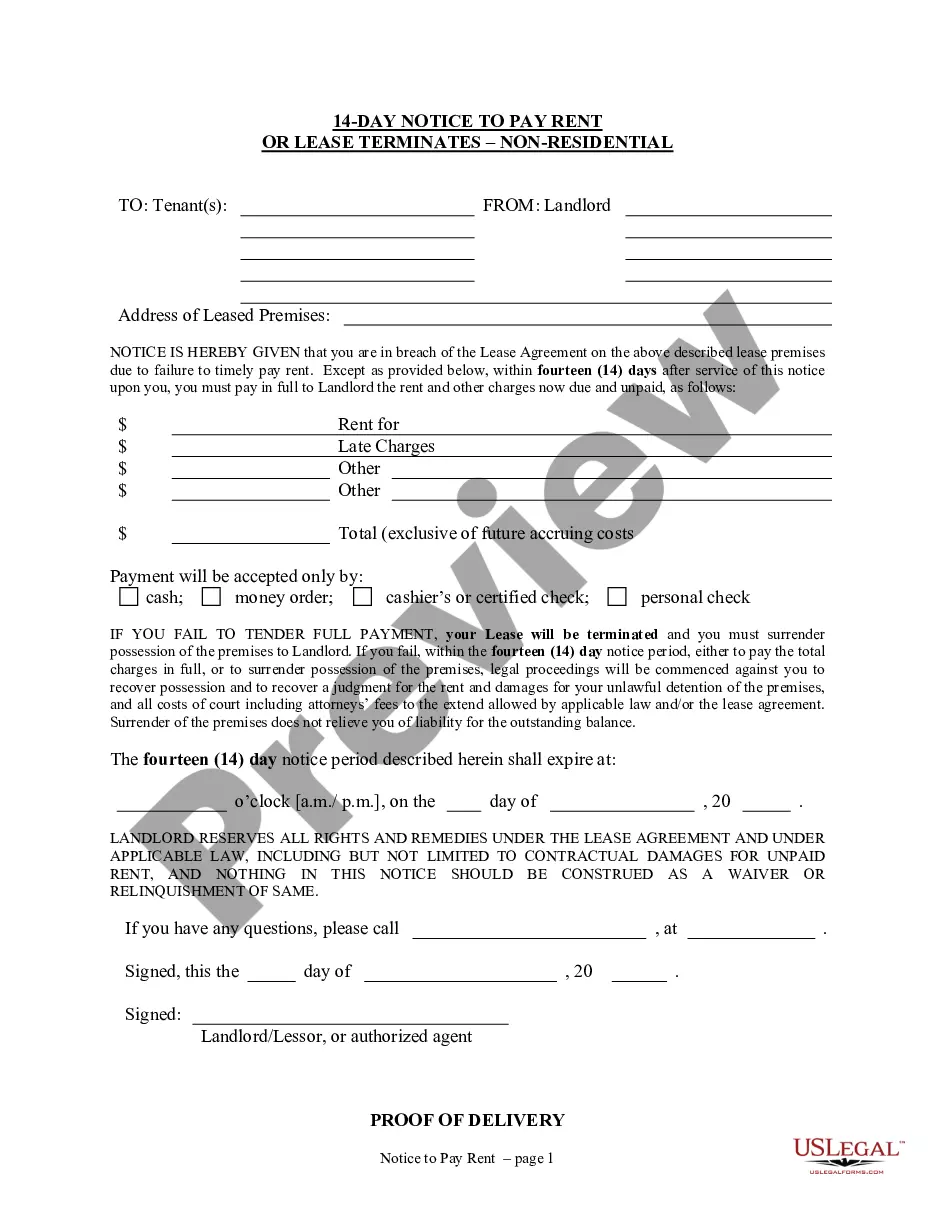
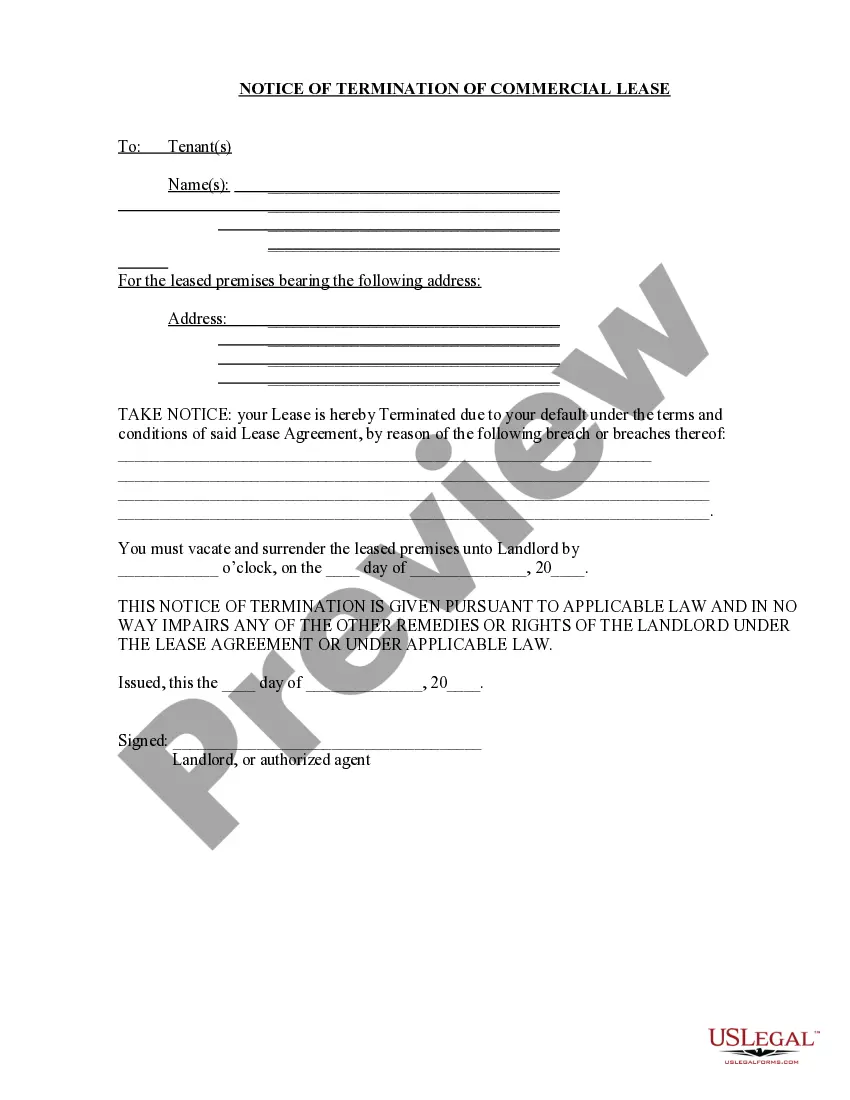
The 14 Day Notice to Pay Rent or Lease Terminates for Nonresidential or Commercial Property is a legal document used by landlords to demand overdue rent from non-residential tenants. This form enables landlords to notify tenants of their failure to pay rent and provides a 14-day period to rectify the situation. If the tenant does not comply by paying the rent, the landlord may terminate the lease and begin eviction proceedings. Unlike residential forms, this document specifically addresses non-residential properties such as commercial or industrial spaces.
Key components of this form
- Identification of the landlord and tenant(s)
- Description of the leased premises
- Details of overdue rent and any additional charges
- Deadline for payment (14 days)
- Consequences of non-payment, including lease termination
- Proof of delivery options for the notice


Situations where this form applies
This form should be used when a landlord has a non-residential tenant who has not paid rent and needs to formally notify them of their breach of lease terms. It is applicable in scenarios where the landlord must comply with state laws requiring a written notice before taking further action, such as eviction or lease termination.
Who this form is for
- Landlords of non-residential properties such as offices, retail spaces, or industrial units.
- Property managers responsible for overseeing compliance with lease agreements.
- Legal representatives of landlords needing to enforce lease terms.
- Anyone managing commercial rentals who requires an official demand for overdue rent.
Steps to complete this form
- Identify the parties involved, including the landlord and tenant(s).
- Specify the address of the leased premises clearly.
- Detail the specific overdue rent and any late charges owed.
- Clearly state the payment deadline of 14 days.
- Include the method of payment accepted by the landlord.
- Sign and date the notice, ensuring a copy is delivered according to the options provided.
Does this document require notarization?
This form does not typically require notarization unless specified by local law. It serves as a formal notification between landlord and tenant regarding overdue rent and potential lease termination.
Get your form ready online
Our built-in tools help you complete, sign, share, and store your documents in one place.
Make edits, fill in missing information, and update formatting in US Legal Forms—just like you would in MS Word.
Download a copy, print it, send it by email, or mail it via USPS—whatever works best for your next step.
Sign and collect signatures with our SignNow integration. Send to multiple recipients, set reminders, and more. Go Premium to unlock E-Sign.
If this form requires notarization, complete it online through a secure video call—no need to meet a notary in person or wait for an appointment.
We protect your documents and personal data by following strict security and privacy standards.

Make edits, fill in missing information, and update formatting in US Legal Forms—just like you would in MS Word.

Download a copy, print it, send it by email, or mail it via USPS—whatever works best for your next step.

Sign and collect signatures with our SignNow integration. Send to multiple recipients, set reminders, and more. Go Premium to unlock E-Sign.

If this form requires notarization, complete it online through a secure video call—no need to meet a notary in person or wait for an appointment.

We protect your documents and personal data by following strict security and privacy standards.
Avoid these common issues
- Failing to provide accurate details of the overdue rent and charges.
- Not specifying the method of payment, which can lead to confusion.
- Ignoring local laws that may require longer notice periods.
- Not delivering the notice as per the legal requirements, which may jeopardize enforcement.
Advantages of online completion
- Easy access to a professionally drafted legal document.
- Convenient download and customization options to fit specific needs.
- Time-efficient process without the need for appointments or waiting periods.
- Secure versioning, reducing risks of discrepancies in legal documents.
Summary of main points
- This notice serves as an official demand for overdue rent from non-residential tenants.
- Landlords must follow state-specific laws regarding notice periods.
- Failure to comply may result in lease termination and eviction.
- The form can be customized and downloaded quickly and efficiently.
Looking for another form?
Form popularity
FAQ
In Mississippi, eviction rules require landlords to provide a written notice to tenants before initiating legal proceedings. For nonresidential or commercial properties, referencing the Minnesota 14 Day Notice to Pay Rent or Lease Terminates for Nonresidential or Commercial Property can be beneficial for understanding the necessary elements of such a notice. Following proper legal protocols ensures that you respect the tenant's rights while enforcing your own. Consulting with a legal expert can help clarify the specific requirements in your situation.
A 14-day eviction notice serves as a formal request for a tenant to pay overdue rent or vacate the property within 14 days. Specifically for commercial properties, the Minnesota 14 Day Notice to Pay Rent or Lease Terminates for Nonresidential or Commercial Property outlines these requirements. If the tenant does not comply, the landlord can proceed with eviction proceedings. This notice is a crucial step in protecting your rights as a landlord while ensuring the tenant is fully aware of their obligations.
To evict a commercial tenant for non-payment of rent, start by providing a written notice that complies with state laws, such as the Minnesota 14 Day Notice to Pay Rent or Lease Terminates for Nonresidential or Commercial Property. This notice should detail the amount owed and the timeline for payment. If the tenant fails to respond, you may need to file an eviction lawsuit in a local court. Always document communications and seek legal advice to ensure you follow all necessary procedures.
A simple eviction notice should include the tenant’s name, the property address, and a clear statement of the reason for eviction. Utilize the Minnesota 14 Day Notice to Pay Rent or Lease Terminates for Nonresidential or Commercial Property as a reference to ensure you cover all necessary details concisely. Keep the language straightforward and direct, while ensuring compliance with local laws. This approach helps prevent misunderstandings and paves the way for a smoother eviction process.
Writing a 14-day eviction notice involves stating the reason for the eviction clearly and specifying the date by which the tenant must vacate the property. For commercial properties, you may reference the Minnesota 14 Day Notice to Pay Rent or Lease Terminates for Nonresidential or Commercial Property as a standard format. Include essential details such as the property address, the amount owed, and any consequences of not complying. Ensure the notice is delivered according to state regulations to avoid potential disputes.
In Arkansas, the eviction process typically involves providing a written notice to tenants, which can vary depending on the lease agreement. If you are dealing with a nonresidential or commercial property, the Minnesota 14 Day Notice to Pay Rent or Lease Terminates for Nonresidential or Commercial Property can serve as a useful guideline. It's essential to follow state laws regarding notice periods and court procedures. Always consider legal advice to navigate the complexities of eviction effectively.
Evicting a commercial tenant without a lease agreement in Minnesota can be challenging. You still need to provide a Minnesota 14 Day Notice to Pay Rent or Lease Terminates for Nonresidential or Commercial Property if there are outstanding payments. If there's no lease, establish the terms of your agreement, and then follow the eviction process through the courts. Using platforms like US Legal Forms can help you navigate these legal requirements effectively.
The 14 day eviction notice in Minnesota is a formal document that informs tenants of their failure to pay rent. Specifically, it is known as the Minnesota 14 Day Notice to Pay Rent or Lease Terminates for Nonresidential or Commercial Property. This notice provides the tenant 14 days to settle their rent arrears before the lease is terminated. Understanding this process can help landlords effectively manage their rental agreements.
After issuing a Minnesota 14 Day Notice to Pay Rent or Lease Terminates for Nonresidential or Commercial Property, you must wait 14 days for the tenant to respond. If the tenant pays the overdue rent within this period, the lease continues. However, if they do not pay, you can proceed with filing for eviction in court. This step is crucial to reclaim your property legally.
To evict a commercial tenant in Minnesota, you must first provide a Minnesota 14 Day Notice to Pay Rent or Lease Terminates for Nonresidential or Commercial Property. This notice informs the tenant of their overdue rent and gives them 14 days to pay. If the tenant fails to pay, you can file an eviction action in court. Following the legal process ensures that you protect your rights as a property owner.