Michigan 7 Day Notice to Pay Rent or Lease Terminates - Nonresidential or Commercial
Understanding this form
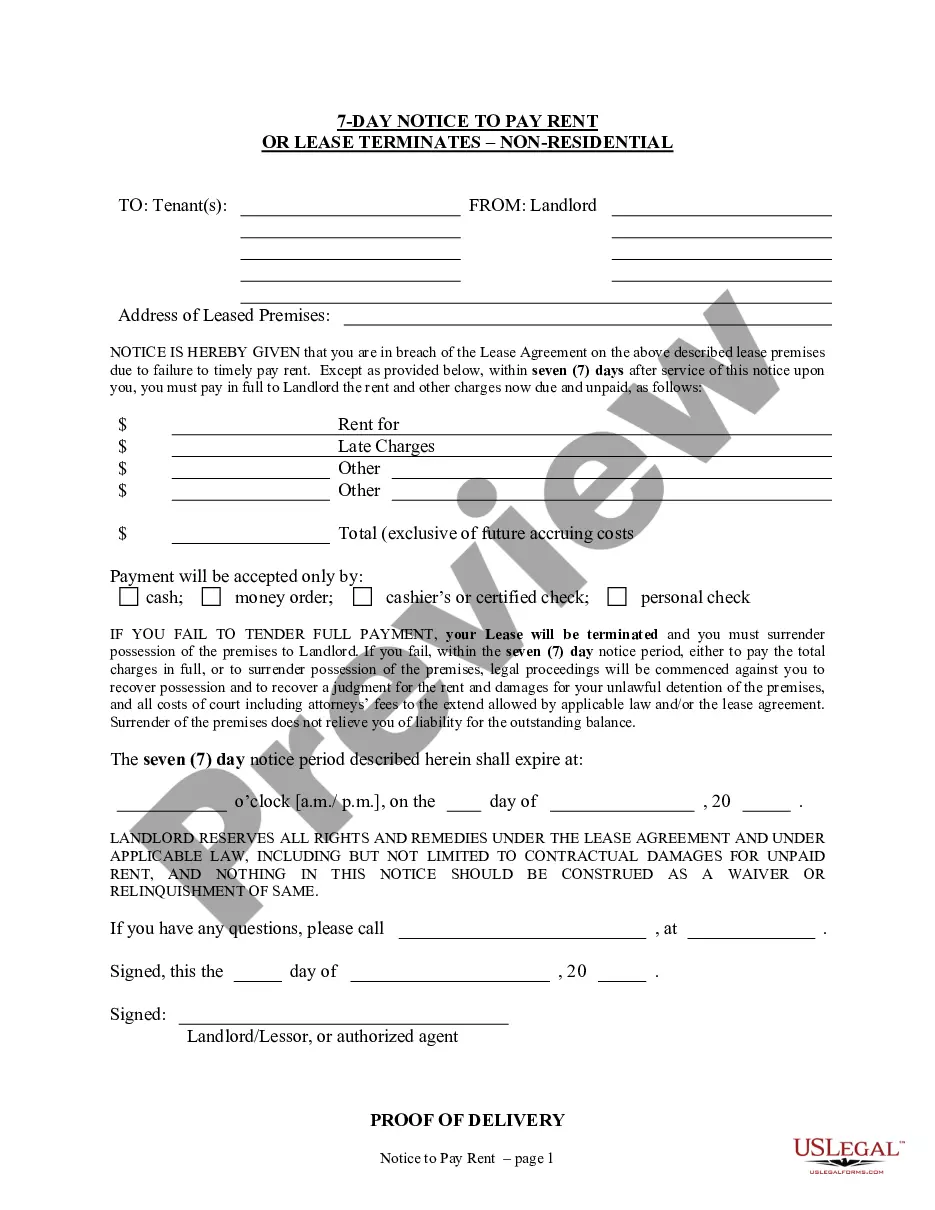
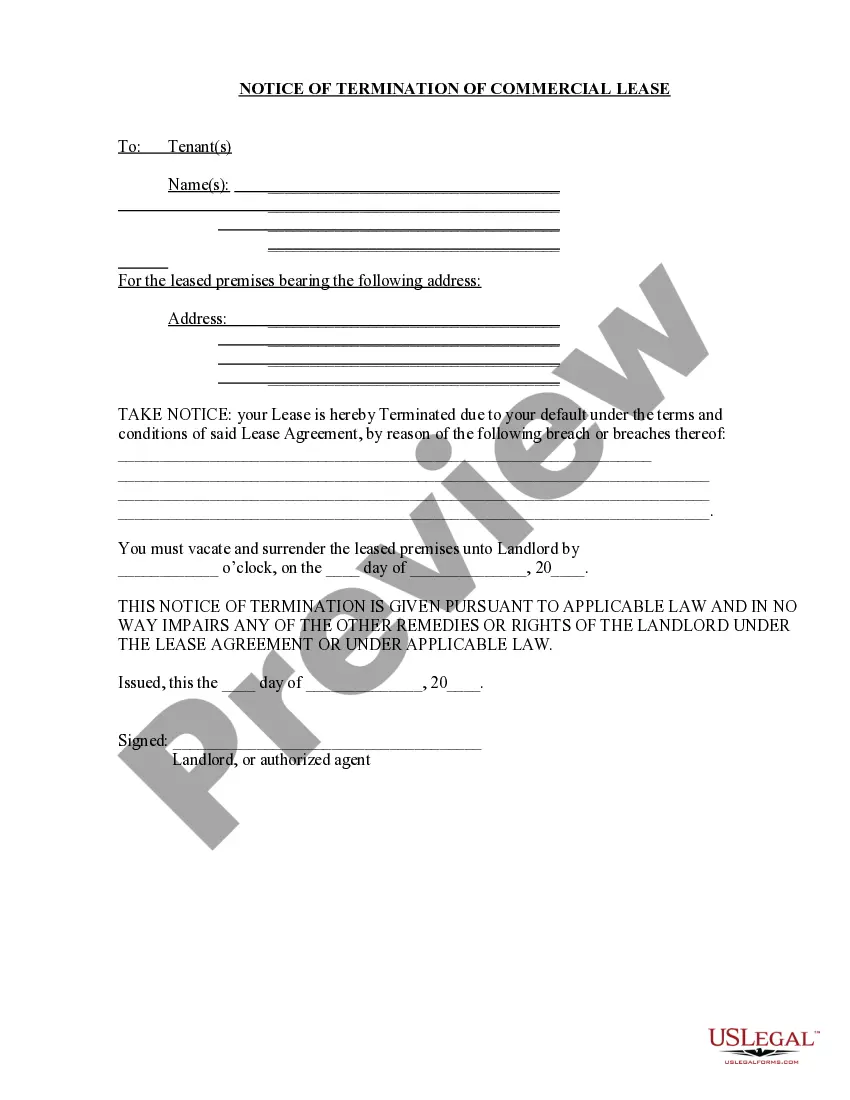
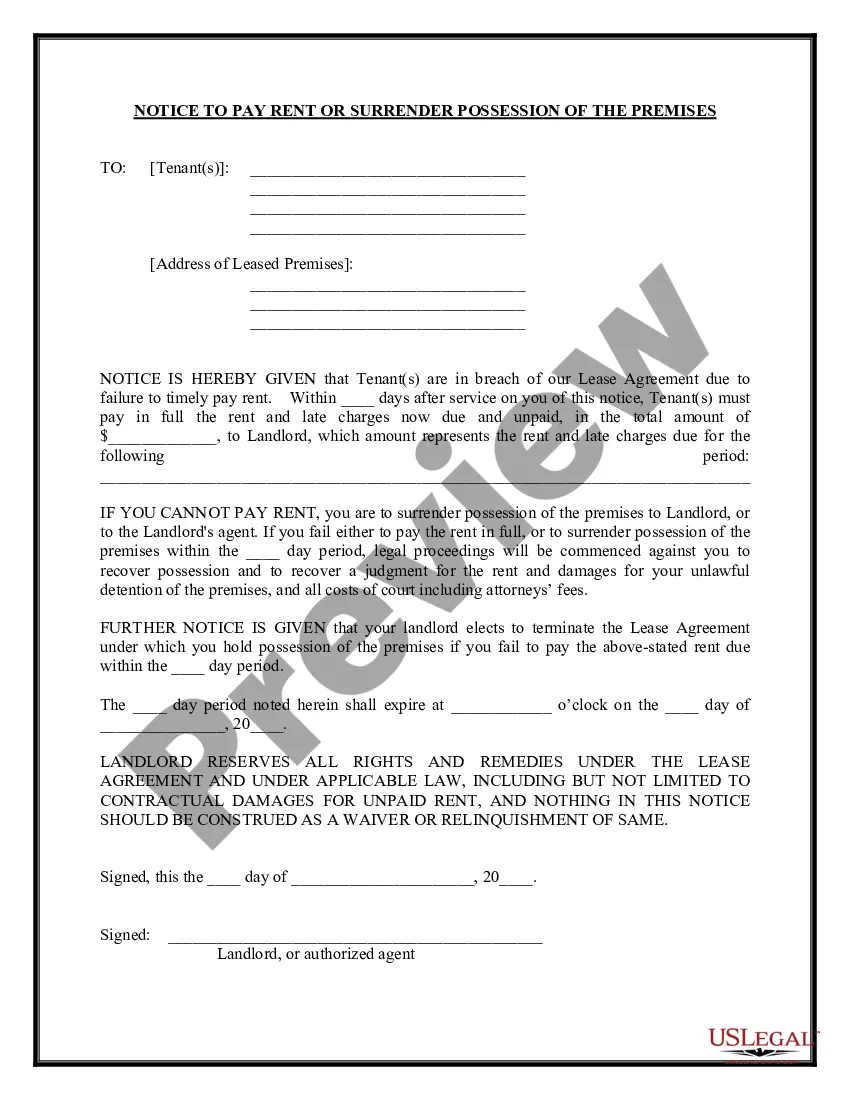
The 7 Day Notice to Pay Rent or Lease Terminates - Nonresidential or Commercial is a legal document used by landlords to inform non-residential tenants of overdue rent. This form serves as a formal demand for payment, allowing the tenant seven days to pay or face termination of the lease agreement. Unlike residential notices, this version specifically addresses commercial and industrial properties, making it essential for landlords managing such spaces.
What’s included in this form
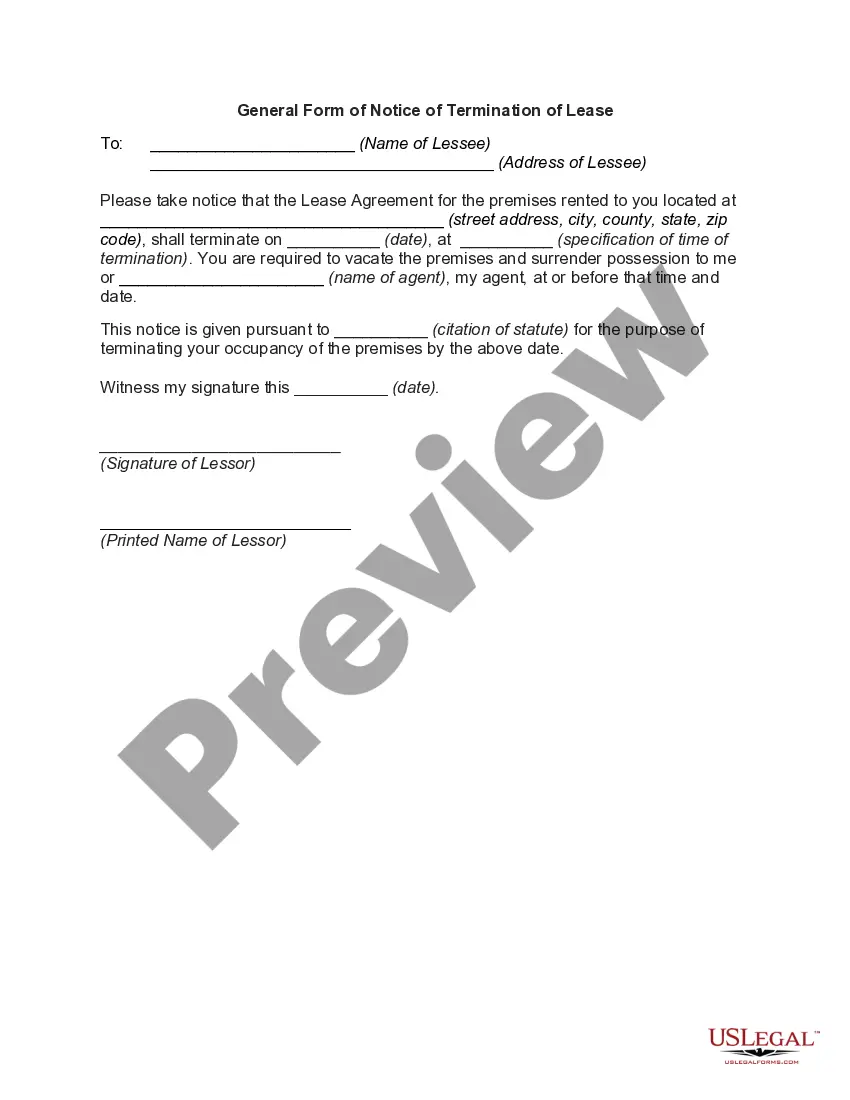
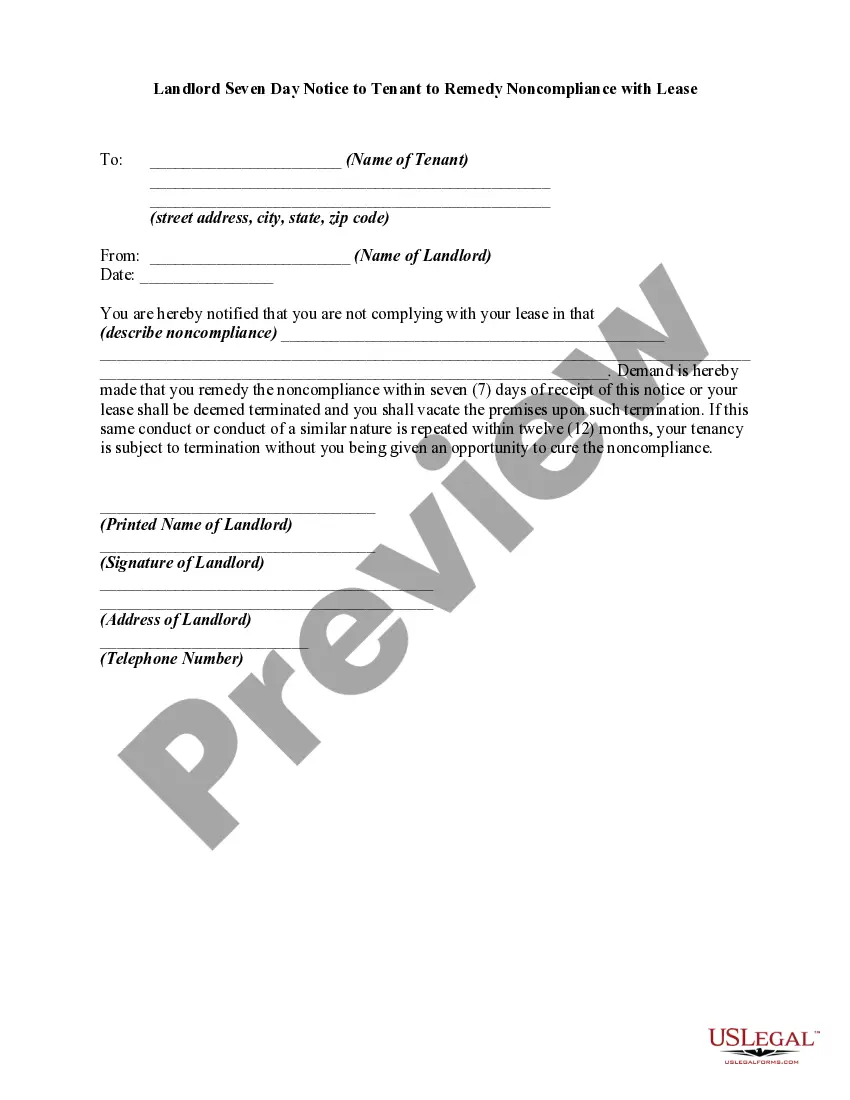
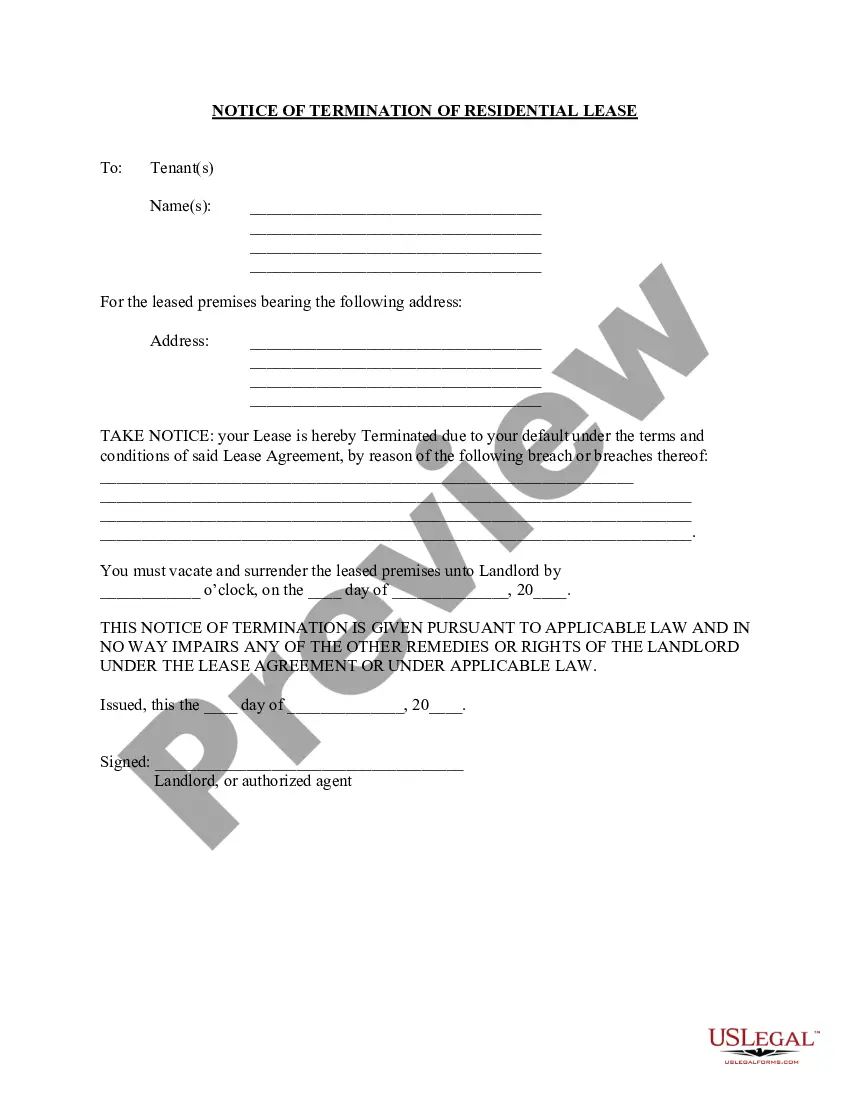
- Identification of the tenant and landlord.
- Address and description of the leased premises.
- Details of due rent, late charges, and total amount owed.
- Instructions regarding payment methods accepted by the landlord.
- Consequences of failing to pay, including lease termination and potential eviction.
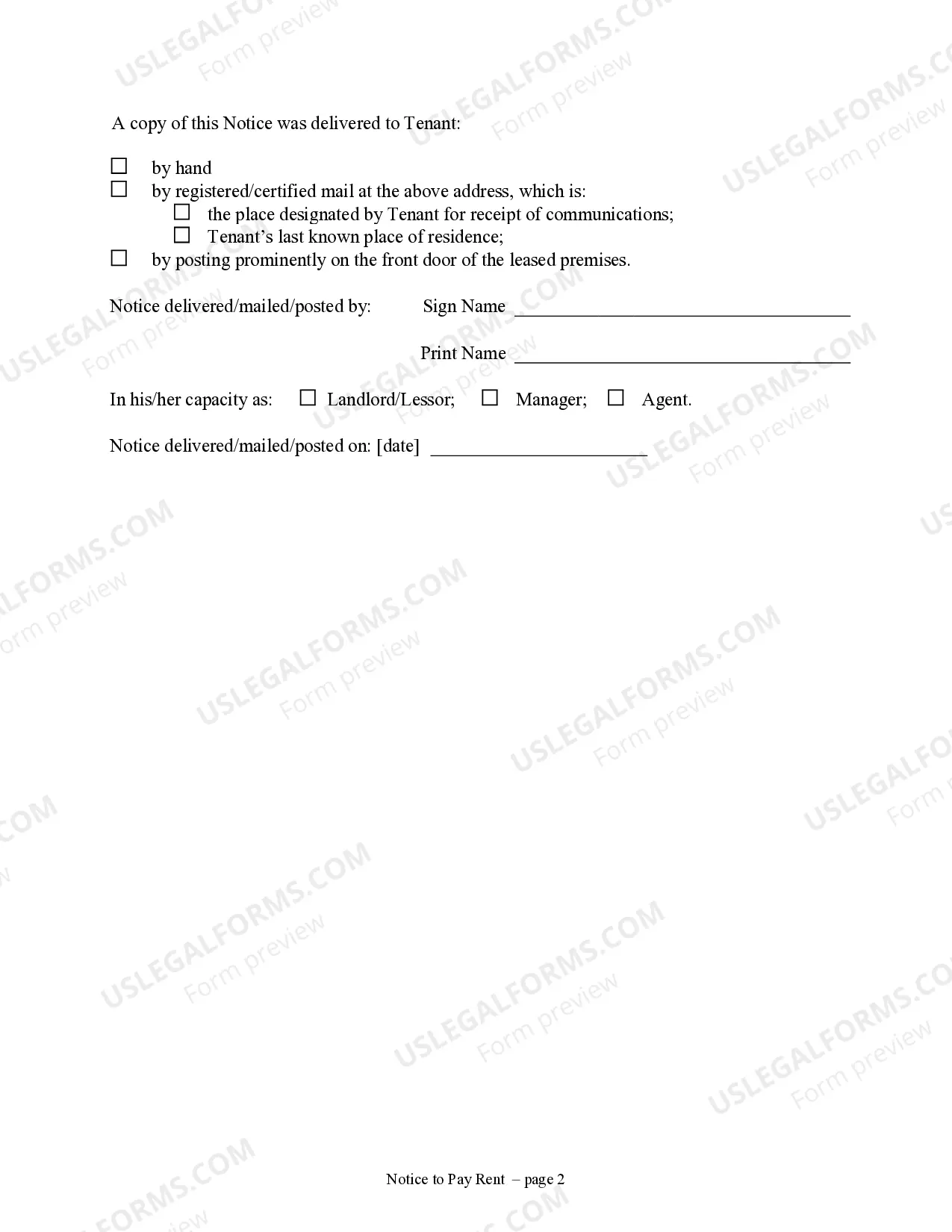
- Proof of delivery section for documentation of the notice sent to the tenant.
When to use this form
This form should be used when a landlord has non-residential tenants who have failed to pay rent on time. If rent remains unpaid despite prior reminders, the landlord can issue this notice to initiate the legal process for lease termination or eviction. This action is crucial for landlords looking to enforce payment and protect their properties from financial losses.
Who can use this document
This form is intended for:
- Landlords of commercial and industrial properties.
- Property managers representing landlords in non-residential leases.
- Real estate professionals managing rental agreements for commercial spaces.
How to complete this form
- Identify the landlord and tenant by entering their names and addresses.
- Specify the address of the leased premises and the relevant lease agreement.
- Detail the amount of overdue rent, including any late fees or other charges.
- Clearly state the methods of payment accepted and the deadline for submission.
- Complete the proof of delivery section after delivering the notice to the tenant.
Does this form need to be notarized?
This form does not typically require notarization unless specified by local law. Make sure to verify requirements based on your jurisdiction.
Get your form ready online
Our built-in tools help you complete, sign, share, and store your documents in one place.
Make edits, fill in missing information, and update formatting in US Legal Forms—just like you would in MS Word.
Download a copy, print it, send it by email, or mail it via USPS—whatever works best for your next step.
Sign and collect signatures with our SignNow integration. Send to multiple recipients, set reminders, and more. Go Premium to unlock E-Sign.
If this form requires notarization, complete it online through a secure video call—no need to meet a notary in person or wait for an appointment.
We protect your documents and personal data by following strict security and privacy standards.

Make edits, fill in missing information, and update formatting in US Legal Forms—just like you would in MS Word.

Download a copy, print it, send it by email, or mail it via USPS—whatever works best for your next step.

Sign and collect signatures with our SignNow integration. Send to multiple recipients, set reminders, and more. Go Premium to unlock E-Sign.

If this form requires notarization, complete it online through a secure video call—no need to meet a notary in person or wait for an appointment.

We protect your documents and personal data by following strict security and privacy standards.
Avoid these common issues
- Failing to provide the correct payment methods in the notice.
- Not delivering the notice properly, which may affect enforcement.
- Using incorrect dates or amounts due, leading to confusion.
- Neglecting to keep a copy of the notice for personal records.
Why complete this form online
- Immediate access to a legally vetted template, ensuring compliance.
- Easy customization to fit specific tenant situations.
- Convenient download for immediate use without the need for waiting periods.
Legal use & context
- This form serves as a critical step in the eviction process, establishing a formal record of the demand for payment.
- Failure to properly complete and deliver this notice may impact the landlord's ability to legally terminate the lease.
- The language used in the form is designed to align with state laws governing commercial lease agreements.
Summary of main points
- The form initiates action against tenants who have not paid rent for non-residential properties.
- Landlords can use this template to ensure legal compliance and protect their rights.
- Understanding the form's components and proper completion is crucial for effective execution.
Looking for another form?
Form popularity
FAQ
In Michigan, the timeline to receive an eviction notice can vary based on the circumstances. After providing the Michigan 7 Day Notice to Pay Rent or Lease Terminates - Nonresidential or Commercial, you must wait the full seven days for the tenant to address the unpaid rent. If the tenant does not respond, you can file for eviction, and the court process typically takes an additional few weeks. Being prepared with proper documentation can expedite the process significantly.
To remove a commercial tenant, you need to follow several steps in accordance with Michigan law. First, you must issue a Michigan 7 Day Notice to Pay Rent or Lease Terminates - Nonresidential or Commercial, notifying the tenant of their overdue rent. If the tenant does not pay within this period, you can proceed with the eviction process in court. It is essential to ensure that you document all communications and follow legal procedures for a smoother experience.
The 7-day notice to vacate in Michigan is a written notice typically given to tenants when they fail to comply with lease terms, such as non-payment of rent. It serves as a Michigan 7 Day Notice to Pay Rent or Lease Terminates - Nonresidential or Commercial and provides the tenant with seven days to either rectify the situation or vacate. Following this process is crucial for both landlords and tenants to ensure legality in the eviction process.
In Michigan, tenants should not expect to go without paying rent for long. If rent is unpaid, landlords typically issue a Michigan 7 Day Notice to Pay Rent or Lease Terminates - Nonresidential or Commercial. Failing to pay within that week will likely result in eviction proceedings to regain possession of the property.
The 7-day notice to quit is a legal document that informs a tenant about non-payment of rent. In Michigan, if you fail to pay rent, the landlord can issue a Michigan 7 Day Notice to Pay Rent or Lease Terminates - Nonresidential or Commercial, allowing you a week to either pay or vacate the property. Ignoring this notice can lead to eviction proceedings.
The quickest way to get someone out of your house is to follow the legal eviction process. In Michigan, this often starts by issuing a Michigan 7 Day Notice to Pay Rent or Lease Terminates - Nonresidential or Commercial. Following proper legal procedures helps you avoid complications and ensures that you act within the law.
In Michigan, the timeframe for a landlord to give you to move out depends on the type of lease agreement you have. Typically, after serving a Michigan 7 Day Notice to Pay Rent or Lease Terminates - Nonresidential or Commercial, you will have seven days to pay your rent. If you do not comply, the landlord can begin eviction proceedings, which may lead to court involvement.
In Michigan, a landlord cannot evict you immediately. They must follow legal procedures which include providing the appropriate notice. If you receive a Michigan 7 Day Notice to Pay Rent or Lease Terminates - Nonresidential or Commercial, it indicates you have seven days to pay your rent. If you do not pay, the landlord can then initiate the eviction process.
A 7 day eviction notice means that a landlord has initiated the process to evict a tenant for failing to pay rent or violating lease terms within seven days. This falls under the Michigan 7 Day Notice to Pay Rent or Lease Terminates - Nonresidential or Commercial protocol. The notice acts as both a warning and a formal request for compliance or departure from the property.
To give notice on a commercial lease, the landlord must prepare a written notice that identifies the lease, outlines the reasons for the notice, and states the action required. It is important to ensure that you follow the rules specific to the Michigan 7 Day Notice to Pay Rent or Lease Terminates - Nonresidential or Commercial. Typically, delivering the notice via certified mail or personally handing it to the tenant provides a record of notification.