Kentucky 14 Day Notice of Material Noncompliance with Lease or Rental Agreement - Residential - 15 days to Cure
What this document covers
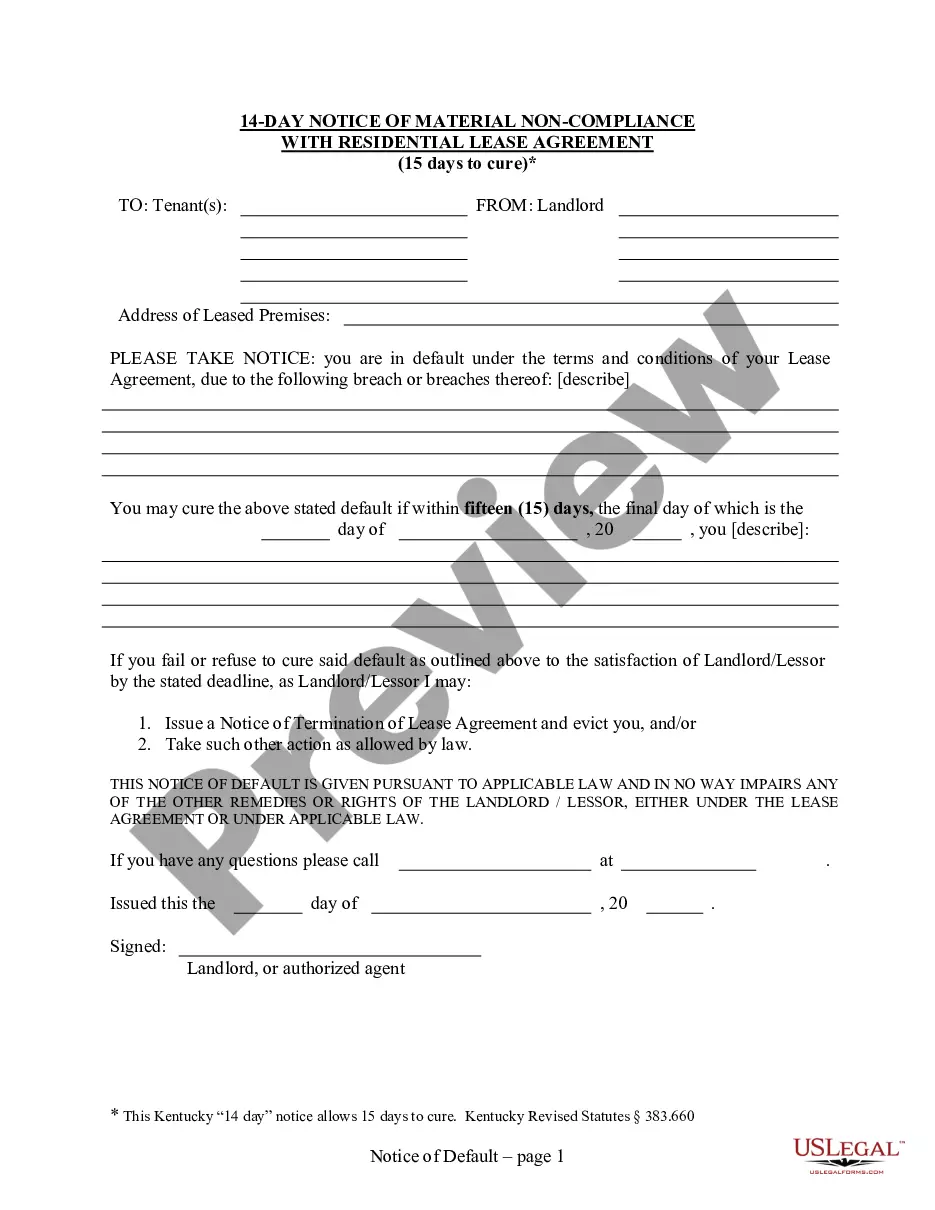
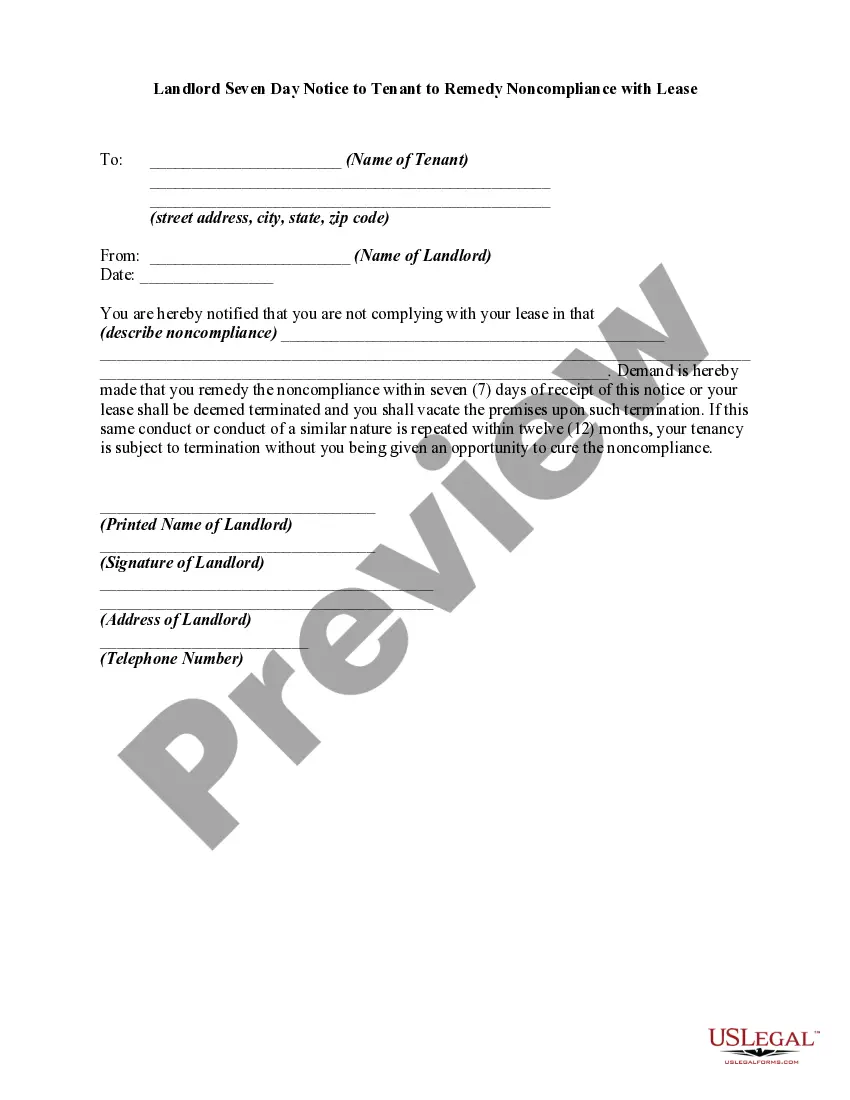
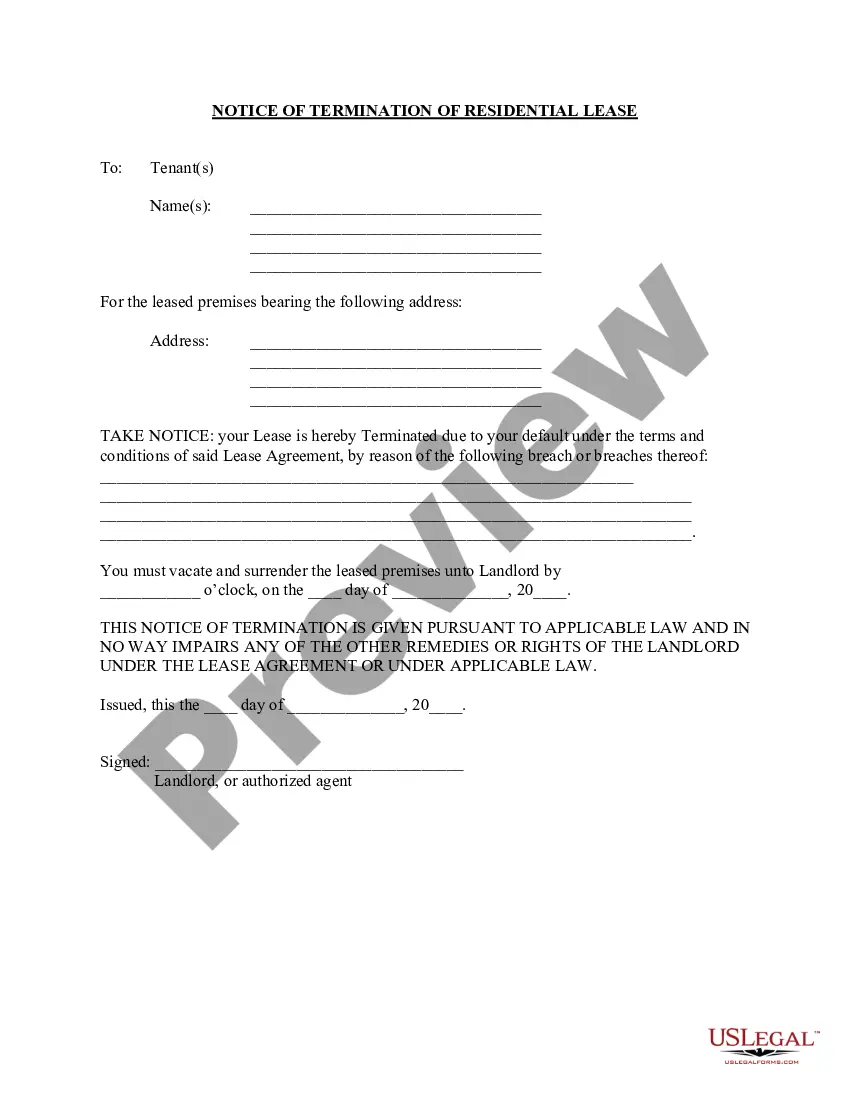
The 14 Day Notice of Material Noncompliance with Lease or Rental Agreement is a legal document used by landlords to officially notify tenants of a breach of their residential lease. This form specifically addresses situations where the tenant has materially failed to comply with the lease terms. Unlike other forms, this document allows tenants a 15-day period to rectify the issue before facing potential eviction.
What’s included in this form
- Identification of the landlord and tenant involved in the lease agreement.
- Specific description of the material non-compliance that has occurred.
- Clearly stated deadline of 15 days for the tenant to cure the breach.
- Consequences of failing to rectify the issue, including potential eviction.
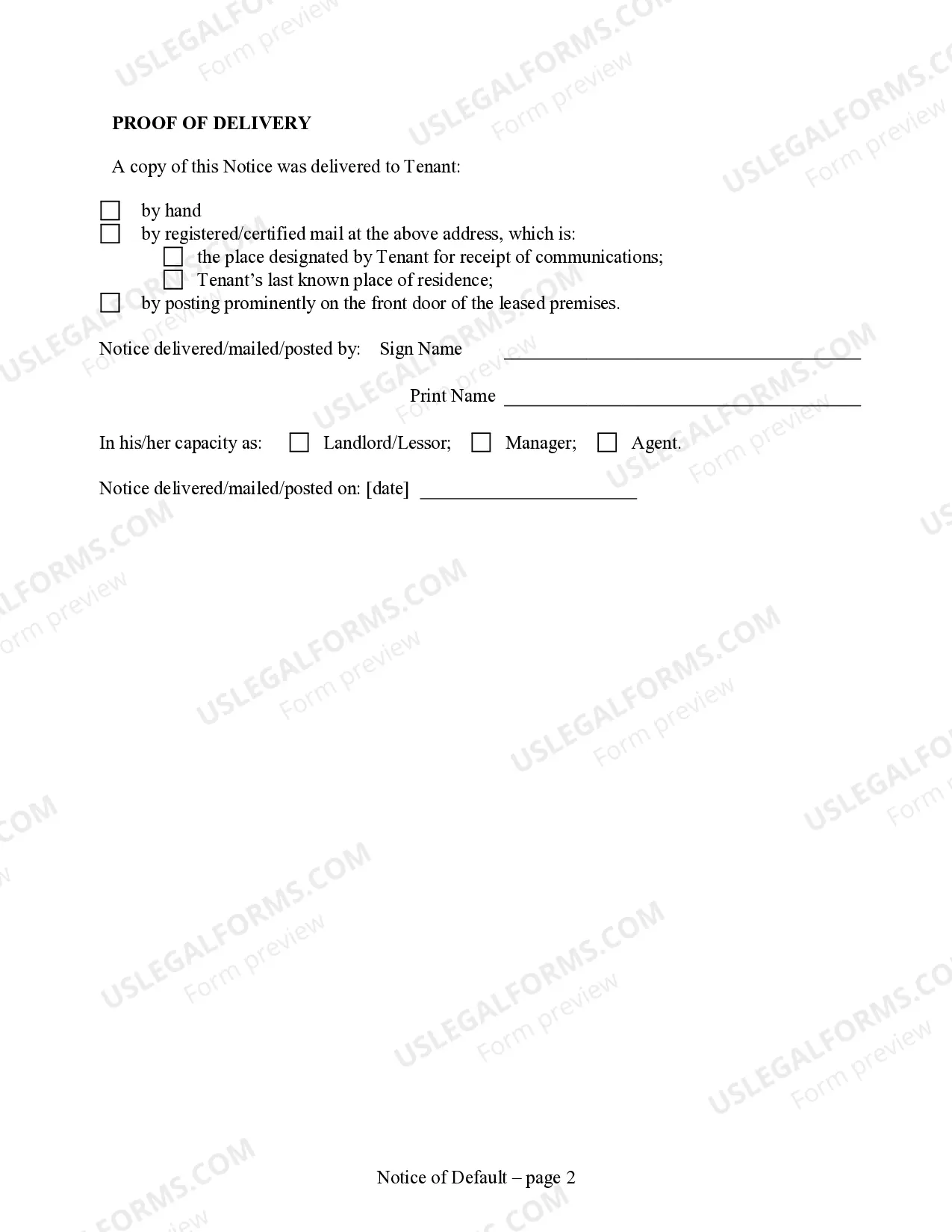
- Proof of delivery methods used for notifying the tenant.
Situations where this form applies
This form should be used when a landlord identifies a substantial violation of the lease agreement by the tenant. Common scenarios include failure to pay rent, unauthorized alterations to the property, or violating agreed-upon rules such as noise regulations. Utilizing this notice is essential to give the tenant a legal opportunity to correct their behavior before any eviction proceedings are initiated.
Intended users of this form
This form is intended for:
- Landlords managing residential properties, including houses, apartments, or condos.
- Property managers acting on behalf of landlords.
- Individuals involved in rental agreements where lease compliance issues have arisen.
How to complete this form
- Identify all parties involved by entering the landlord and tenant's full names.
- Describe the specific breach of the lease agreement that has occurred.
- Clearly state the 15-day period for remedying the breach.
- Include the date the notice is issued and the due date for correction.
- Specify the method of delivery for the notice to ensure it is properly served to the tenant.
- Sign the notice with the landlord's or authorized agent's name and title.
Does this document require notarization?
Notarization is generally not required for this form. However, certain states or situations might demand it. You can complete notarization online through US Legal Forms, powered by Notarize, using a verified video call available anytime.
Get your form ready online
Our built-in tools help you complete, sign, share, and store your documents in one place.
Make edits, fill in missing information, and update formatting in US Legal Forms—just like you would in MS Word.
Download a copy, print it, send it by email, or mail it via USPS—whatever works best for your next step.
Sign and collect signatures with our SignNow integration. Send to multiple recipients, set reminders, and more. Go Premium to unlock E-Sign.
If this form requires notarization, complete it online through a secure video call—no need to meet a notary in person or wait for an appointment.
We protect your documents and personal data by following strict security and privacy standards.
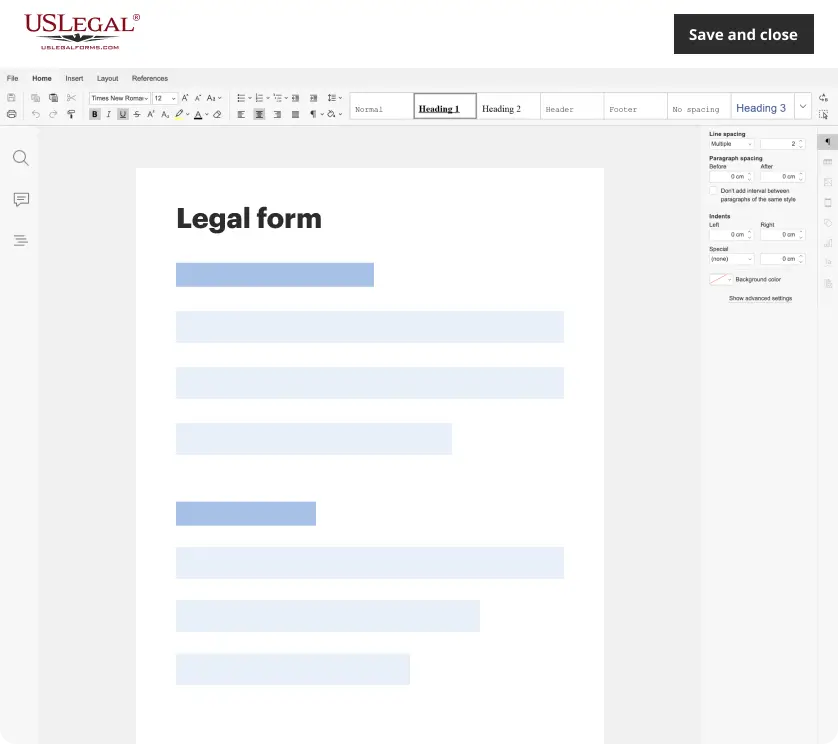
Make edits, fill in missing information, and update formatting in US Legal Forms—just like you would in MS Word.
Download a copy, print it, send it by email, or mail it via USPS—whatever works best for your next step.
Sign and collect signatures with our SignNow integration. Send to multiple recipients, set reminders, and more. Go Premium to unlock E-Sign.
If this form requires notarization, complete it online through a secure video call—no need to meet a notary in person or wait for an appointment.
We protect your documents and personal data by following strict security and privacy standards.
Avoid these common issues
- Failing to provide a clear description of the lease breach.
- Not including the correct dates for issuing the notice and for when the cure period ends.
- Improperly serving the notice to the tenant, leading to potential disputes.
- Neglecting to keep a copy of the notice for records and proof of delivery.
Benefits of using this form online
- Convenience of downloading and printing the form immediately.
- Editability to tailor the notice to specific circumstances before saving.
- Access to documents that have been drafted by licensed attorneys for reliability.
Legal use & context
This notice serves as a preliminary step before any eviction proceedings. It must be properly documented and delivered as prescribed by law to be enforceable in court. The form reflects the tenant's rights and obligations under their lease agreement and applicable state laws.
Quick recap
- The form provides a formal notice to tenants regarding lease violations.
- Tenants have a 15-day period to remedy the breach to avoid eviction.
- This notice must be served correctly to ensure compliance with legal requirements.
Looking for another form?
Form popularity
FAQ
You can immediately file an eviction if the tenant refuses to leave the property.If you took a rental payment from the tenant after their lease expired, you'll need to provide all the normal notices. When your tenant overstays their lease, you will still, however, be required to go through the normal eviction process.
A holdover tenant is a tenant who stays in the rental unit after the lease expires. If the tenant continues to pay rent, the tenancy essentially becomes a month-to-month tenancy. A holdover tenant is legally allowed to stay in the rental unit as long as the landlord takes no action to remove them.
Approach The Court Of Law You will have to send a legal notice to your tenant asking him/her to pay the arrears of rent or else to vacate within a month. The tenant has to pay rent in the court once it is assessed by the court and in case he/she fails, it invites immediate eviction.
If a tenant breaches a tenancy agreement it is possible that their landlord will try and evict them from the property. The sort of breaches of tenancy which result in a landlord seeking a court order for possession include:Damage to the property (eg broken windows)
Sue the landlord and whoever for up to $10,000 in small claims court for trespassing, breach of contract, invasion of privacy, and breach of quiet enjoyment; if you are two or more tenants, each can separately sue them for up to $10,000, and a joint action is not required.
Month to Month Agreements: For month to month agreements, it is generally accepted for the tenant to notify the landlord at least 30 days in advance of their desire to move. For example, if the lease ends on October 31, then the tenant should let the landlord know they want to move by October 1, at the latest.
If a tenant breaches a tenancy agreement it is possible that their landlord will try and evict them from the property. The sort of breaches of tenancy which result in a landlord seeking a court order for possession include:Damage to the property (eg broken windows)
When a landlord fails to meet these standards despite reasonable requests by the tenant, he or she may be sued for "material noncompliance." This article covers the basics of material noncompliance, which is essentially a breach of contract in the context of landlord tenant law.
A breach of lease occurs when one of the party breaks one of the agreements in the lease document. A breach of lease does not mean that the tenant and landlord waive their respective rights. Tenants enjoy the rights of safety, privacy, binding terms, and in some cases the right to withhold rent.