Iowa Renunciation and Disclaimer of Property received by Intestate Succession
Overview of this form
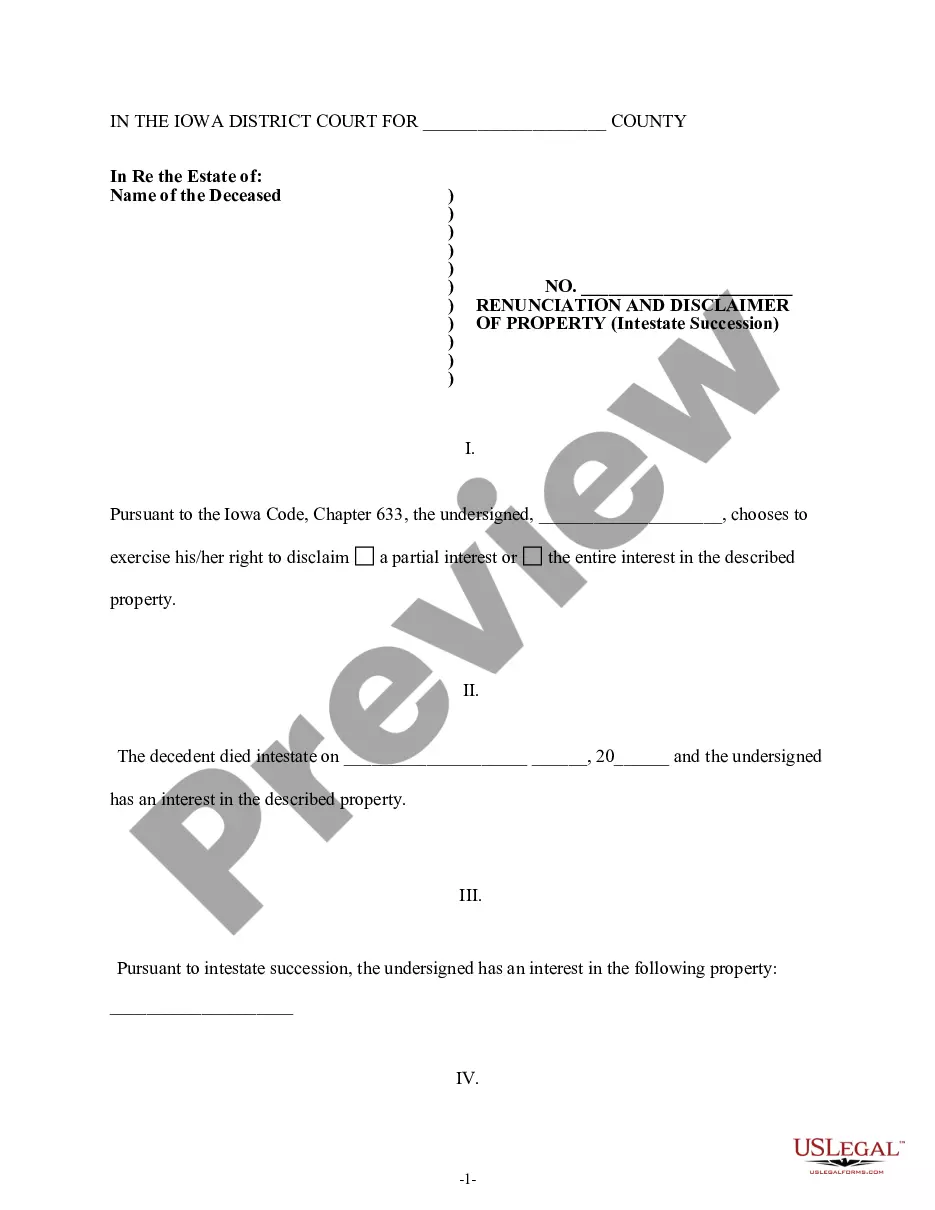
The Iowa Renunciation and Disclaimer of Property Received by Intestate Succession allows a beneficiary to refuse an inheritance received from a deceased person who died without a will. This legal document enables the beneficiary to officially disclaim their interest in the decedent's property, ensuring that it passes to other heirs as if the beneficiary had predeceased the decedent. This form is crucial for individuals who want to opt-out of property they are entitled to through intestate succession.
What’s included in this form
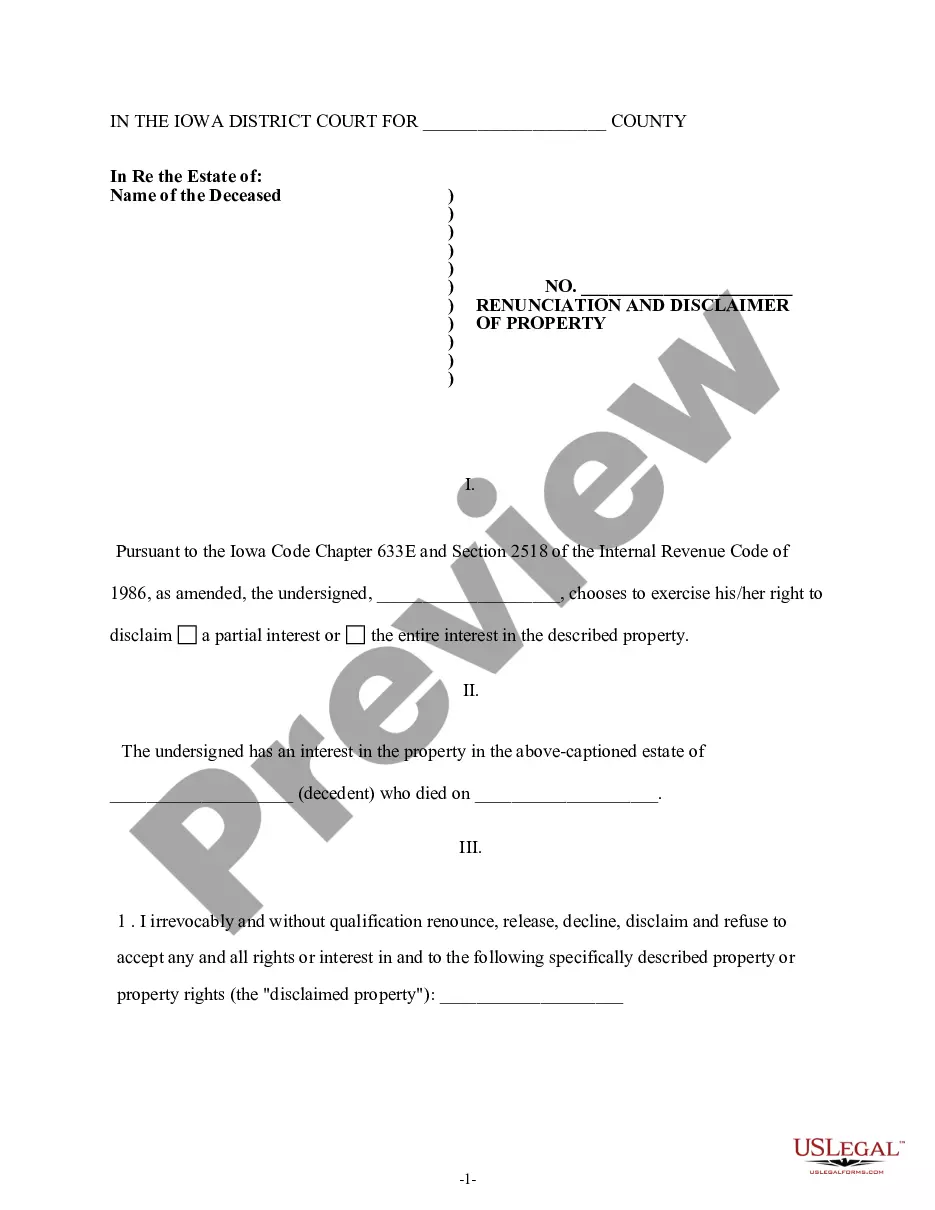
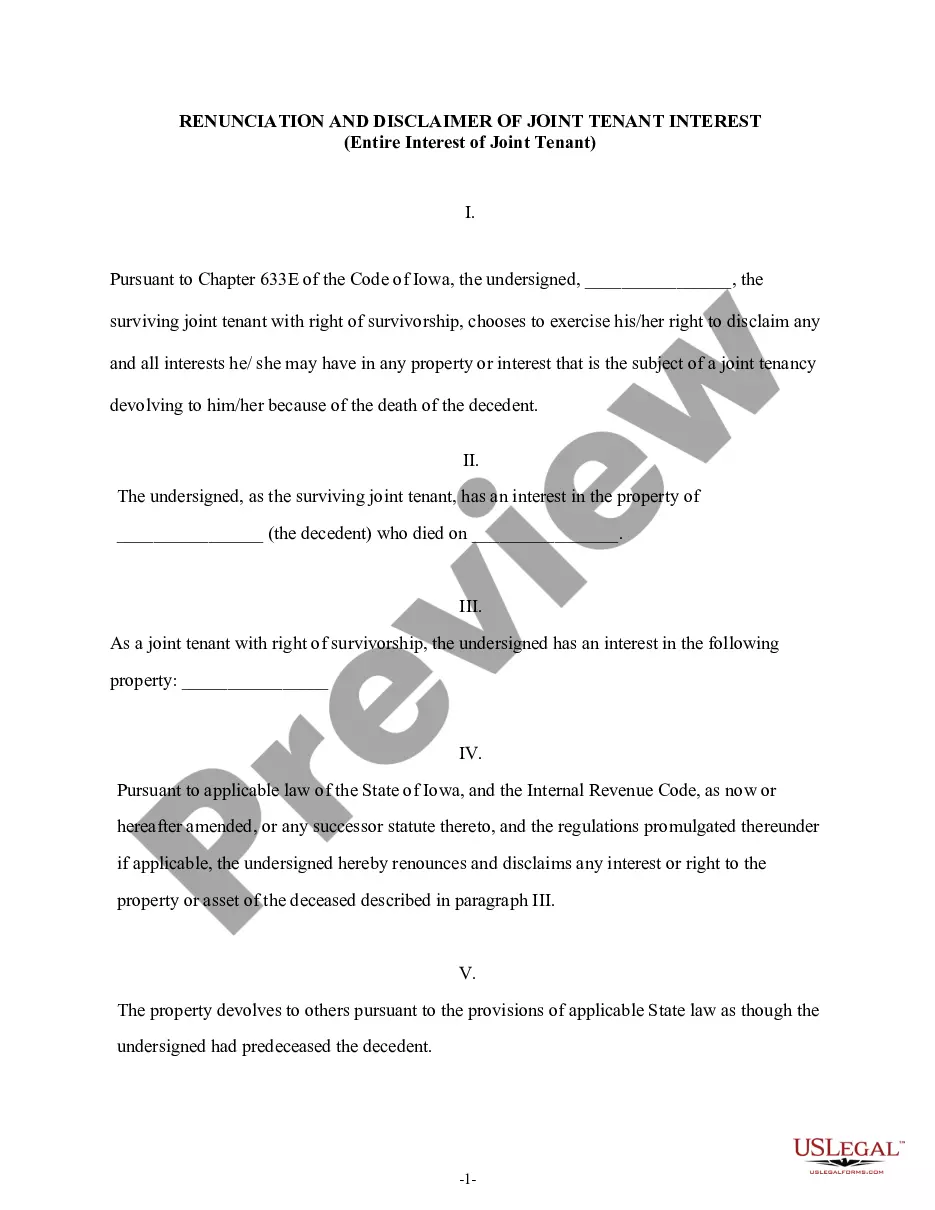
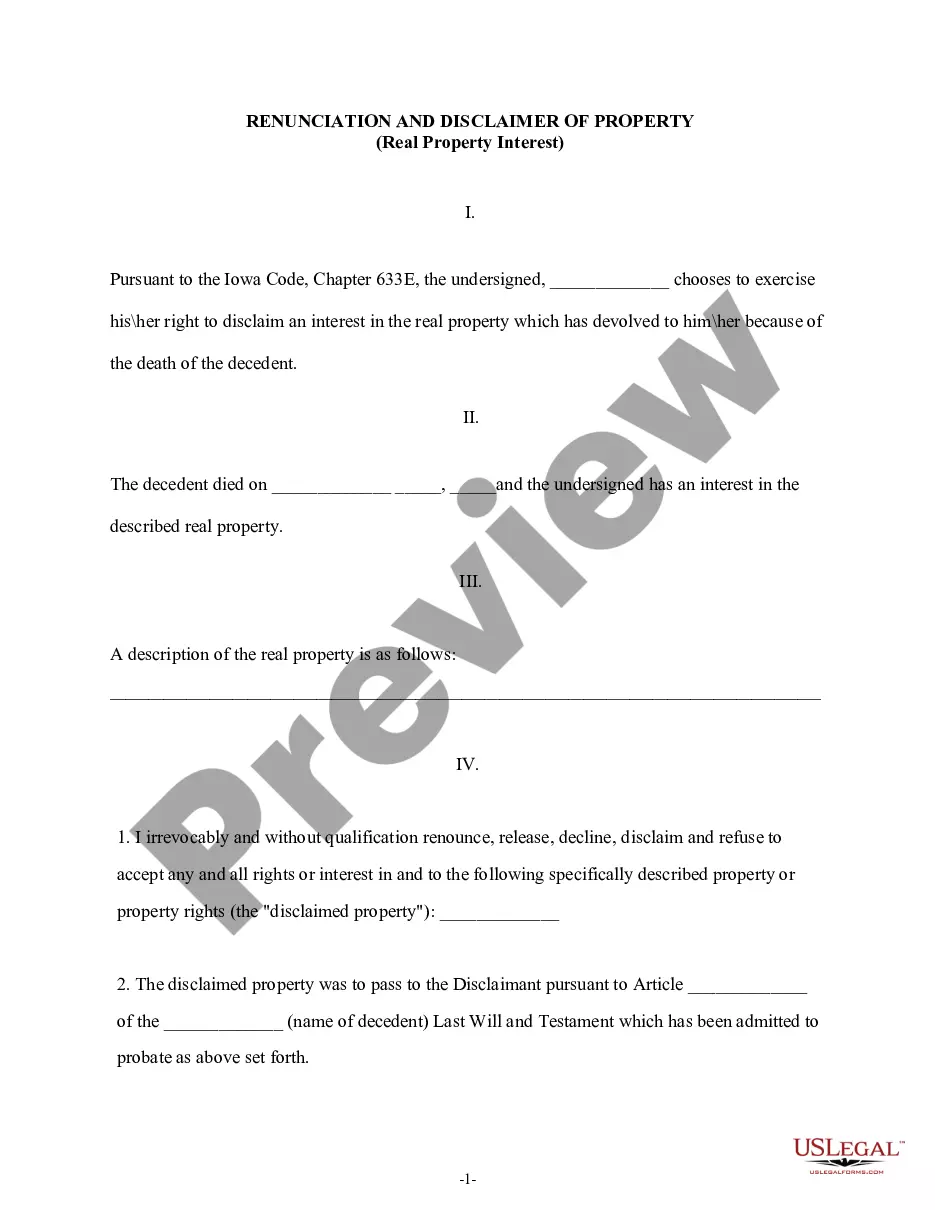
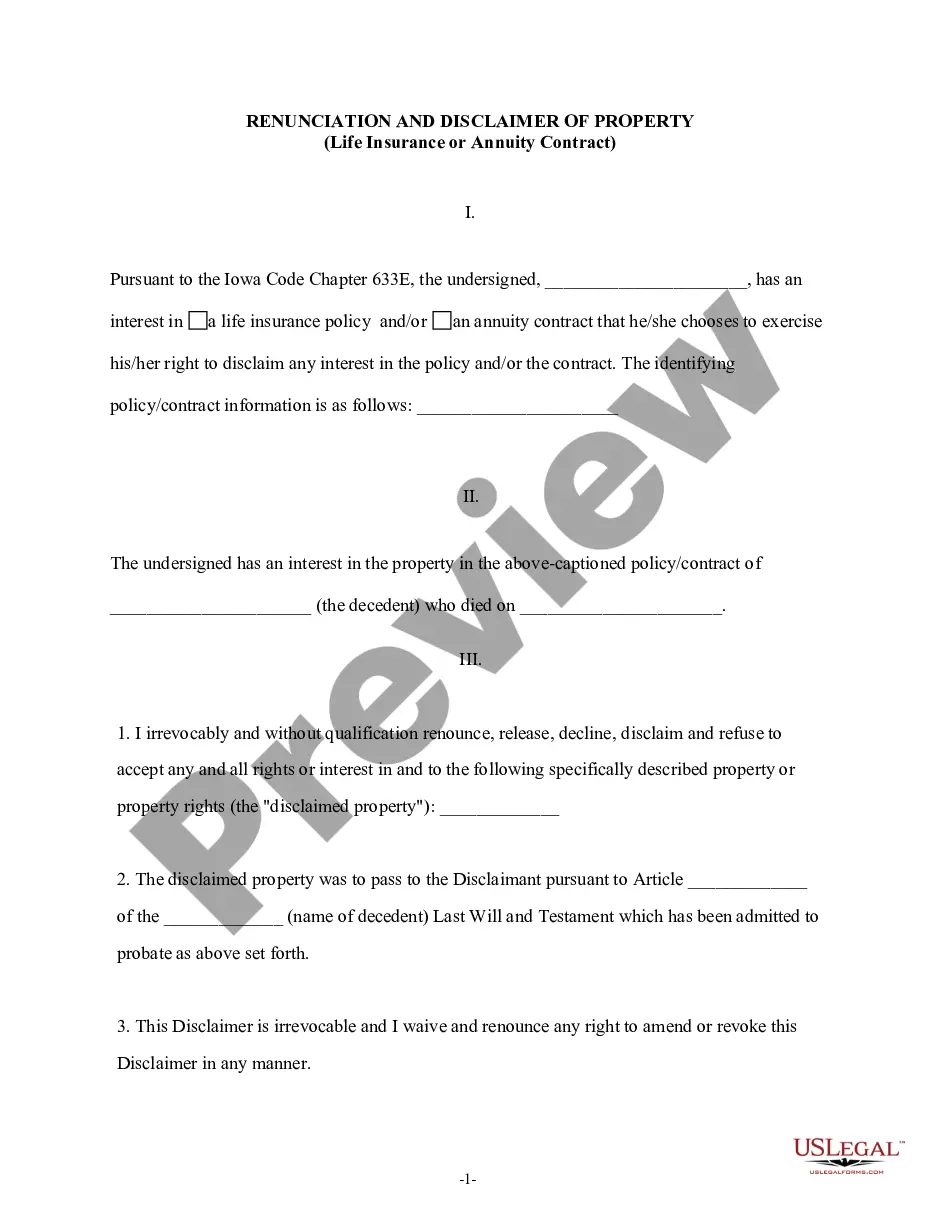
- Identification of the beneficiary and the decedent.
- Declaration of the beneficiary's intent to disclaim a partial or entire interest in the specified property.
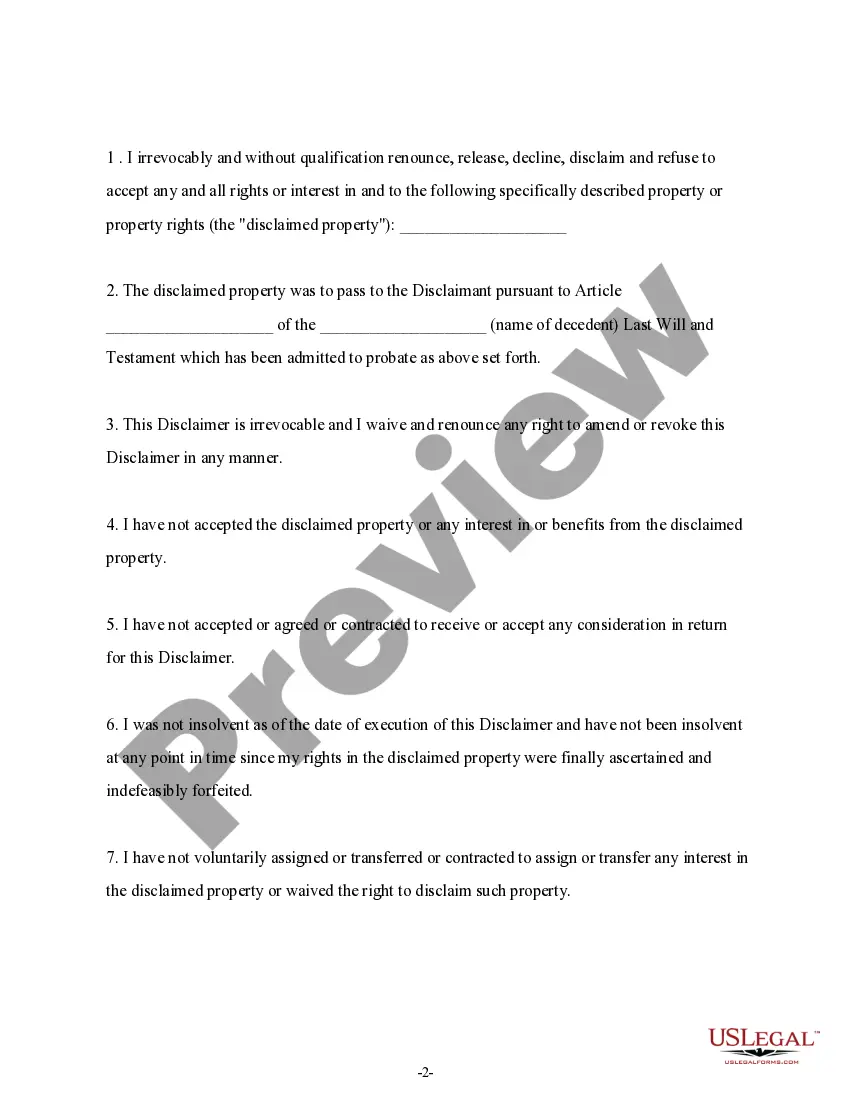
- Irrevocable disclaimer statement confirming no acceptance of property or benefits.
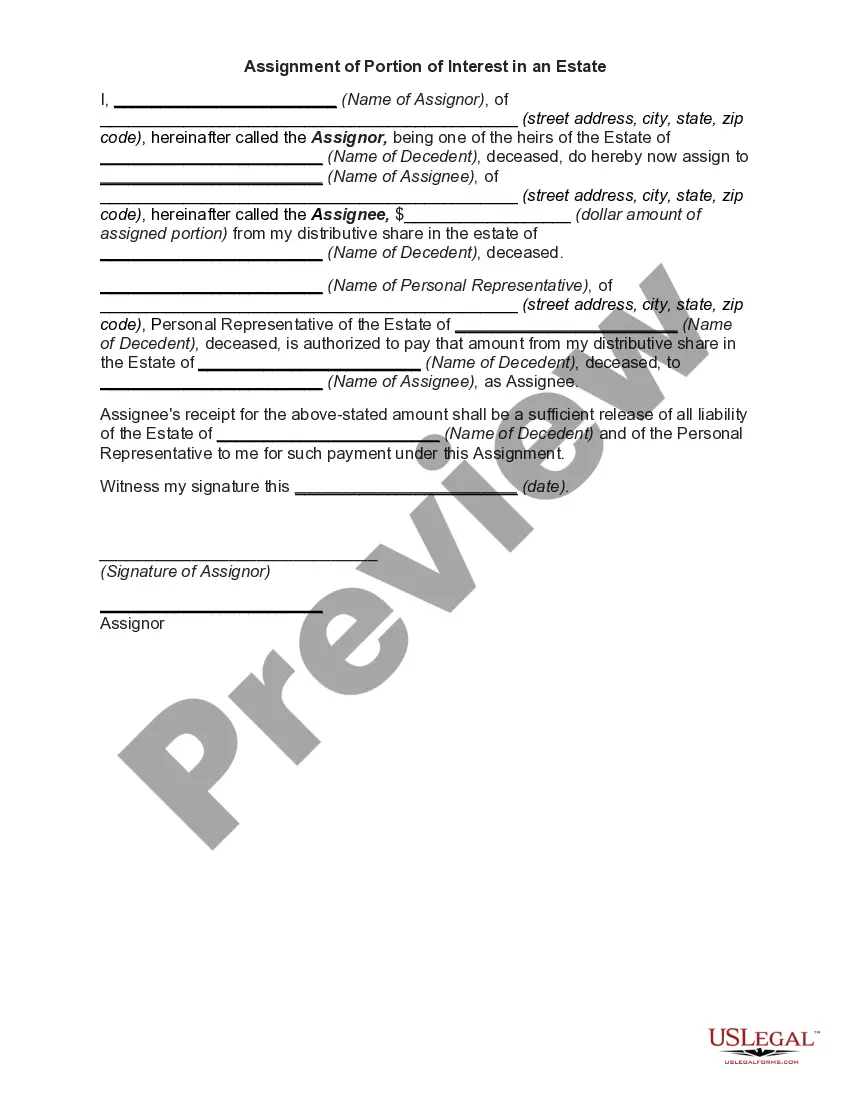
- Certification of no prior assignment or transfer of interest in the disclaimed property.
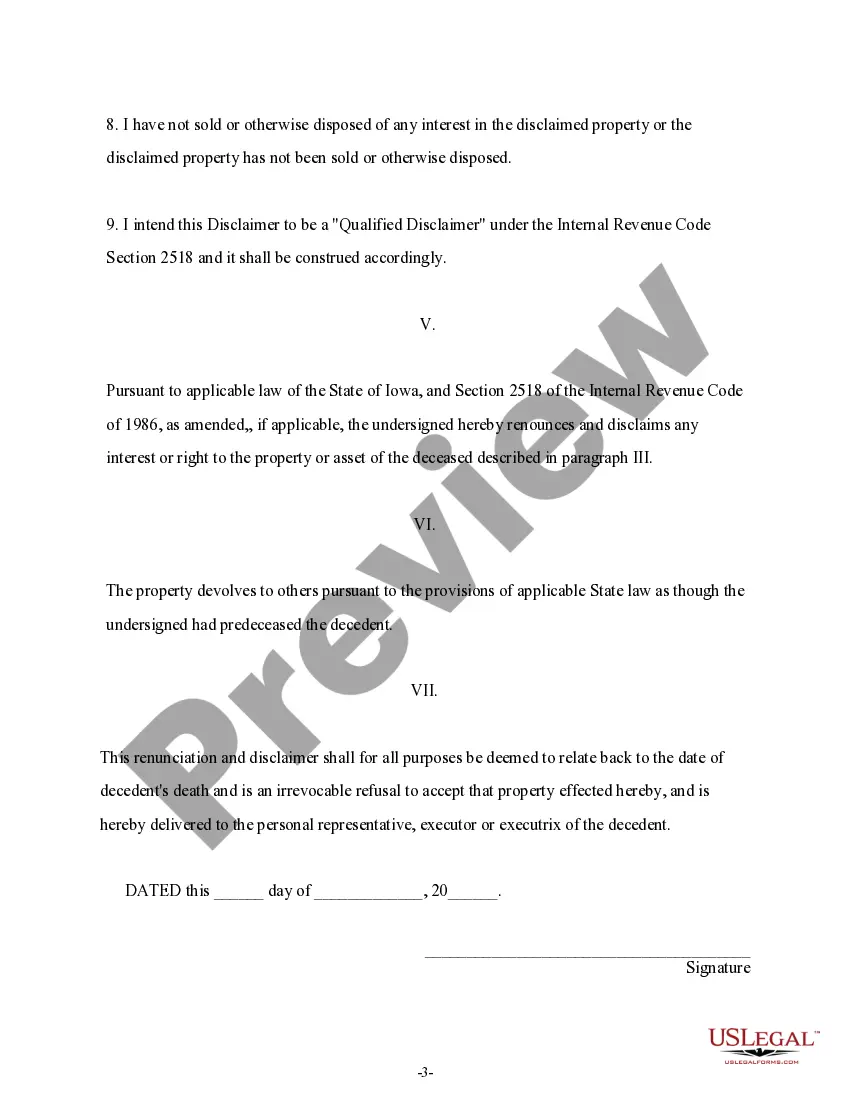
- Statement regarding the property devolving to other heirs per Iowa law.
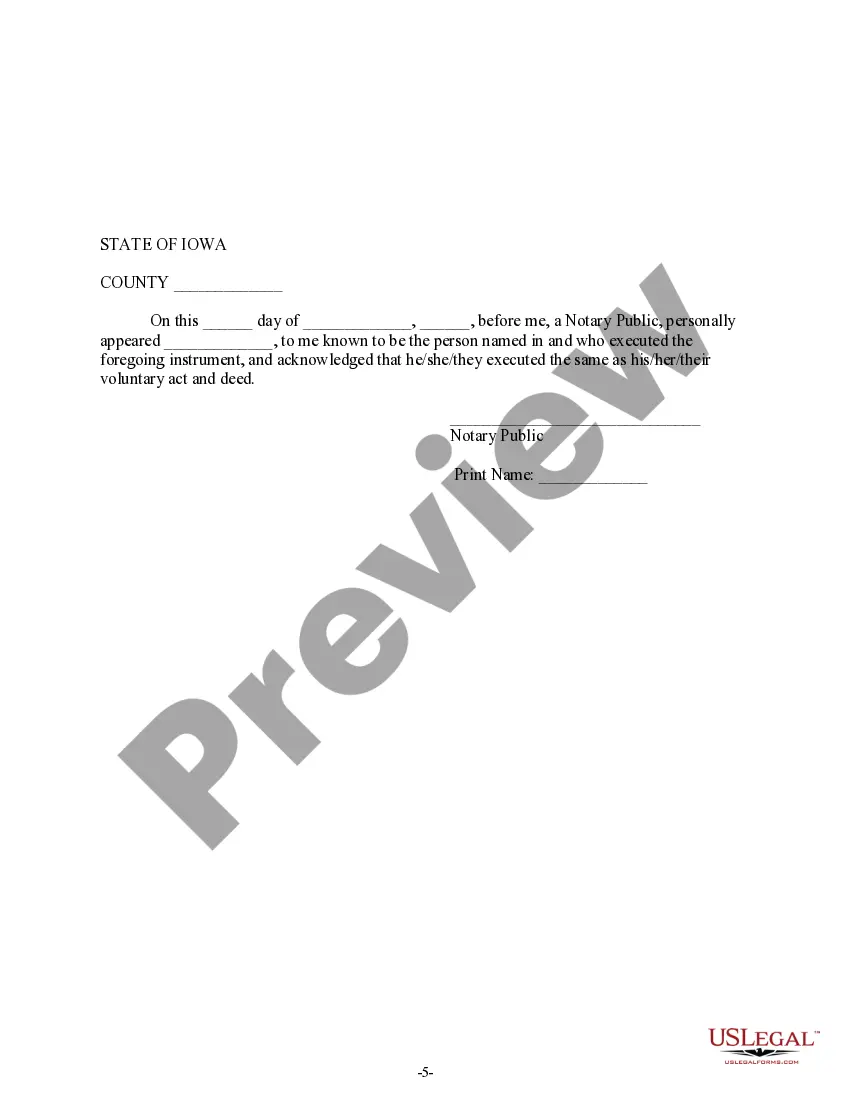
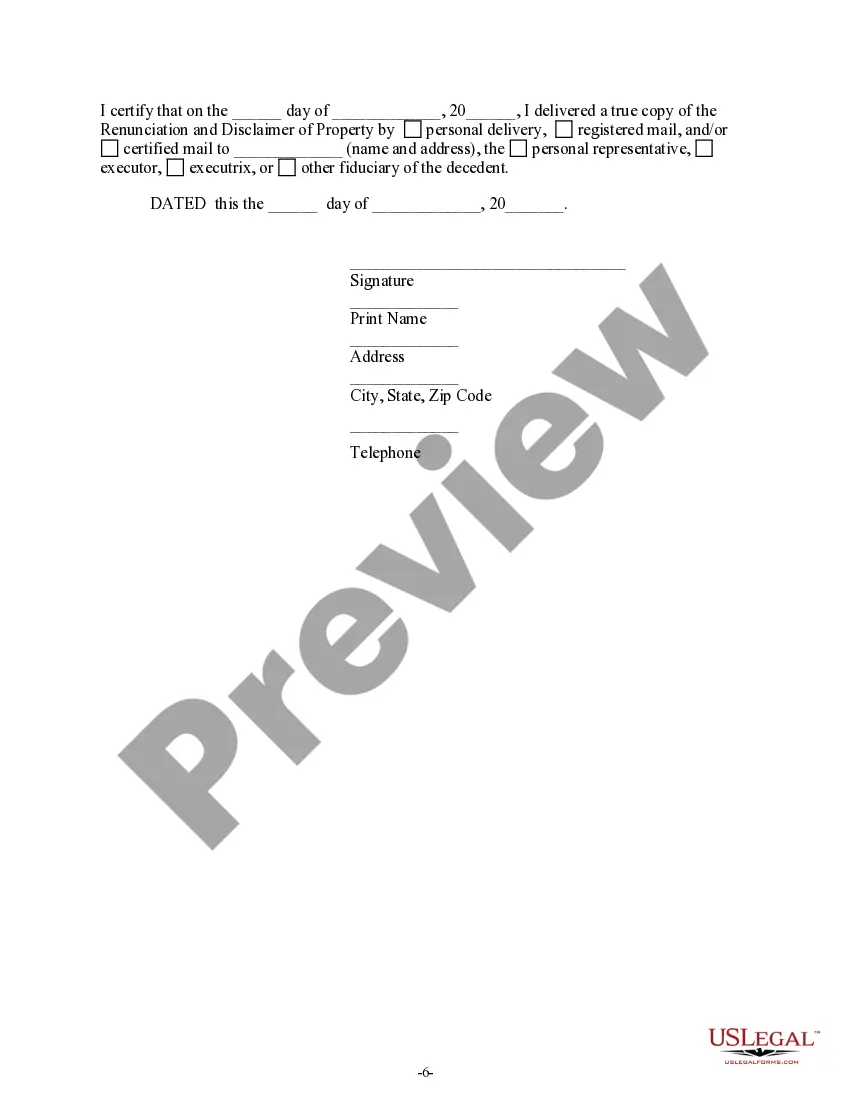
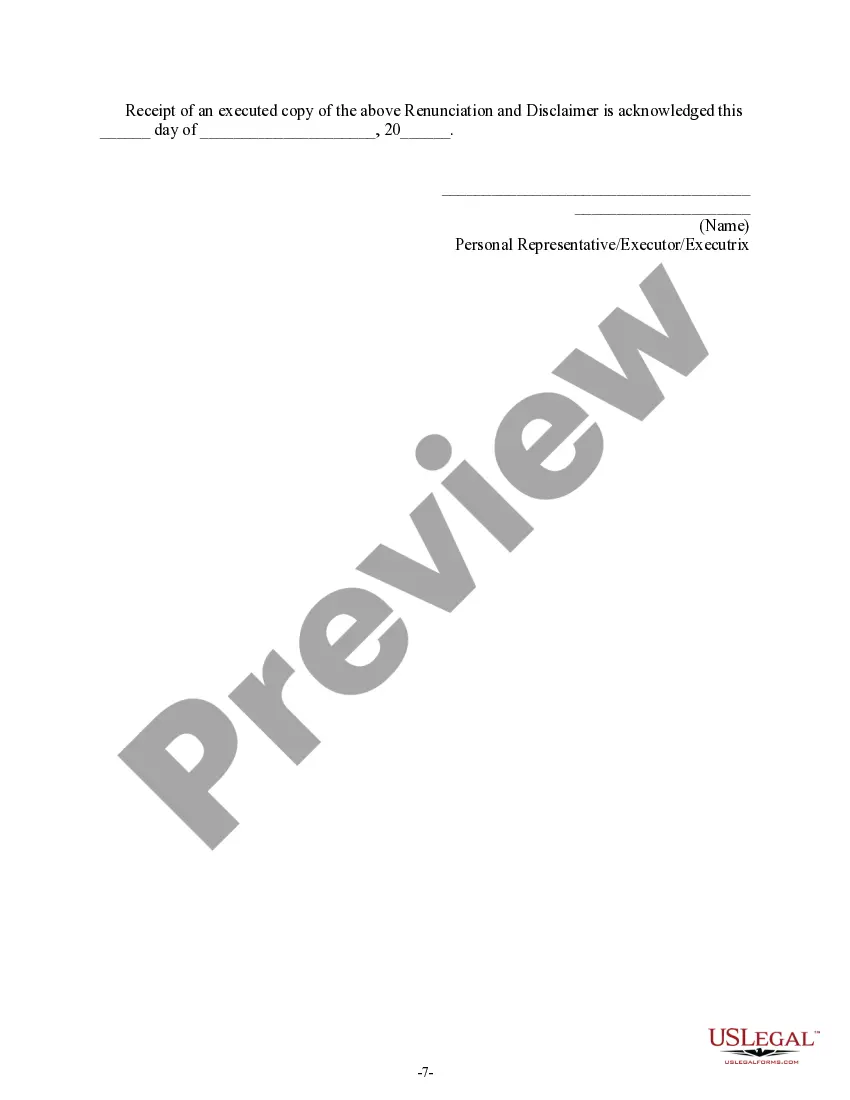
- Acknowledgment and signature section, including notarization and delivery verification.
When to use this form
This form should be used when a beneficiary learns that they have inherited property under intestate succession and wishes to disclaim their rights. Common scenarios include when the beneficiary does not want the financial burden of maintaining the property, wishes to allocate inheritance to other family members, or when accepting the property could lead to negative tax implications.
Who can use this document
- Beneficiaries who inherited property from a decedent dying intestate.
- Individuals wishing to refuse their right to property they do not wish to accept.
- Those seeking to ensure that property is distributed according to state laws rather than being held by them.
How to complete this form
- Identify the beneficiary by entering their name in the designated section.
- Insert the date of the decedent's death and any relevant details regarding the decedent.
- Clearly specify the property that the beneficiary is disclaiming in the provided fields.
- Sign the document in the presence of a notary public to verify your identity and intention.
- Deliver a true copy of the signed form to the personal representative of the decedent.
Is notarization required?
This form must be notarized to be legally valid. US Legal Forms provides secure online notarization powered by Notarize, allowing you to complete the process through a verified video call.
Get your form ready online
Our built-in tools help you complete, sign, share, and store your documents in one place.
Make edits, fill in missing information, and update formatting in US Legal Forms—just like you would in MS Word.
Download a copy, print it, send it by email, or mail it via USPS—whatever works best for your next step.
Sign and collect signatures with our SignNow integration. Send to multiple recipients, set reminders, and more. Go Premium to unlock E-Sign.
If this form requires notarization, complete it online through a secure video call—no need to meet a notary in person or wait for an appointment.
We protect your documents and personal data by following strict security and privacy standards.

Make edits, fill in missing information, and update formatting in US Legal Forms—just like you would in MS Word.

Download a copy, print it, send it by email, or mail it via USPS—whatever works best for your next step.

Sign and collect signatures with our SignNow integration. Send to multiple recipients, set reminders, and more. Go Premium to unlock E-Sign.

If this form requires notarization, complete it online through a secure video call—no need to meet a notary in person or wait for an appointment.

We protect your documents and personal data by following strict security and privacy standards.
Common mistakes to avoid
- Failing to complete all required fields, which may lead to an invalid disclaimer.
- Not obtaining notarization when required, affecting the legal standing of the document.
- Disclaiming property after having accepted any benefits from it, which can invalidate the disclaimer.
Why complete this form online
- Convenient access to legal forms that can be downloaded and completed online.
- Editable format allows for easy customization and accuracy.
- Secure process for preparing legal documents without the need for a visit to a lawyer.
Looking for another form?
Form popularity
FAQ
When you disclaim an inheritance, you must inform the IRS of your decision, especially if the property involves credit or tax implications. The IRS allows people to disclaim property without incurring tax liabilities under certain conditions. Ensure that you comply with Iowa's intestate succession laws and file any necessary forms to confirm your disclaimer, as recognized under the Iowa Renunciation and Disclaimer of Property received by Intestate Succession. Consulting experts or using platforms like US Legal Forms can help navigate IRS requirements related to disclaiming an inheritance.
Disclaiming inherited property involves signing a formal statement that indicates your decision to renounce the inheritance. Under Iowa's intestate succession law, you must file this statement with the probate court within a specified time frame. It's important to note that disclaiming property must be done voluntarily and without any conditions attached. By properly executing this process through resources like US Legal Forms, you can ensure your disclaimer adheres to the requirements of the Iowa Renunciation and Disclaimer of Property received by Intestate Succession.
To create a sample disclaimer of inheritance, clearly state your intent to renounce the property you received under Iowa's intestate succession law. Include your name, the decedent's name, and a statement expressing your decision to disclaim the inheritance. It is essential to follow specific legal formats to ensure your disclaimer is valid under the Iowa Renunciation and Disclaimer of Property received by Intestate Succession. Utilizing templates from platforms like US Legal Forms can simplify this process and provide peace of mind.
In Iowa, the intestate succession law governs how a person's property is distributed when they pass away without a valid will. The Iowa Renunciation and Disclaimer of Property received by Intestate Succession allows heirs to decline their inheritance, which can affect how the estate is settled. Typically, the property will transfer to the deceased's spouse or children, depending on the family's structure. Understanding this law helps you navigate your options when dealing with inheritance.
To disclaim an inheritance in Iowa, you should submit a written disclaimer to the appropriate parties within a set period after the decedent's death. Familiarizing yourself with the Iowa Renunciation and Disclaimer of Property received by Intestate Succession process is essential, as it outlines the necessary steps. Utilizing resources like USLegalForms can assist greatly in navigating this process smoothly.
In Iowa, a disclaimer of inheritance does not require notarization, but it must adhere to specific legal criteria. Understanding the Iowa Renunciation and Disclaimer of Property received by Intestate Succession can clarify any questions about documentation standards. Consulting with a legal professional ensures you meet all necessary requirements.
To write a disclaimer letter for inheritance, you should clearly state your intent to renounce the inheritance. Include your full name, the deceased's information, and the property details, following the Iowa Renunciation and Disclaimer of Property received by Intestate Succession format. Platforms like USLegalForms can provide templates that simplify crafting this document accurately.
In Iowa, a disclaimer typically does not need to be notarized, but it should be in writing and comply with specific legal standards. Following the Iowa Renunciation and Disclaimer of Property received by Intestate Succession practices can help ensure your disclaimer is valid. Always verify with legal resources or professionals for any additional requirements.
To disclaim an inherited property in Iowa, you must file a written disclaimer. This document should comply with the Iowa Renunciation and Disclaimer of Property received by Intestate Succession requirements. Using platforms like USLegalForms can make this process easier by providing templates and guidance for drafting your disclaimer correctly.
In Iowa, the rules for disclaiming inheritance involve a formal process outlined by state law. You must follow the Iowa Renunciation and Disclaimer of Property received by Intestate Succession procedures to ensure your disclaimer is legally recognized. It's important to act promptly and within a specific timeframe to effectively renounce your share.