Florida 12 Hour Notice of Landlord's Intent to Enter Premises for Residential from Landlord to Tenant
Overview of this form
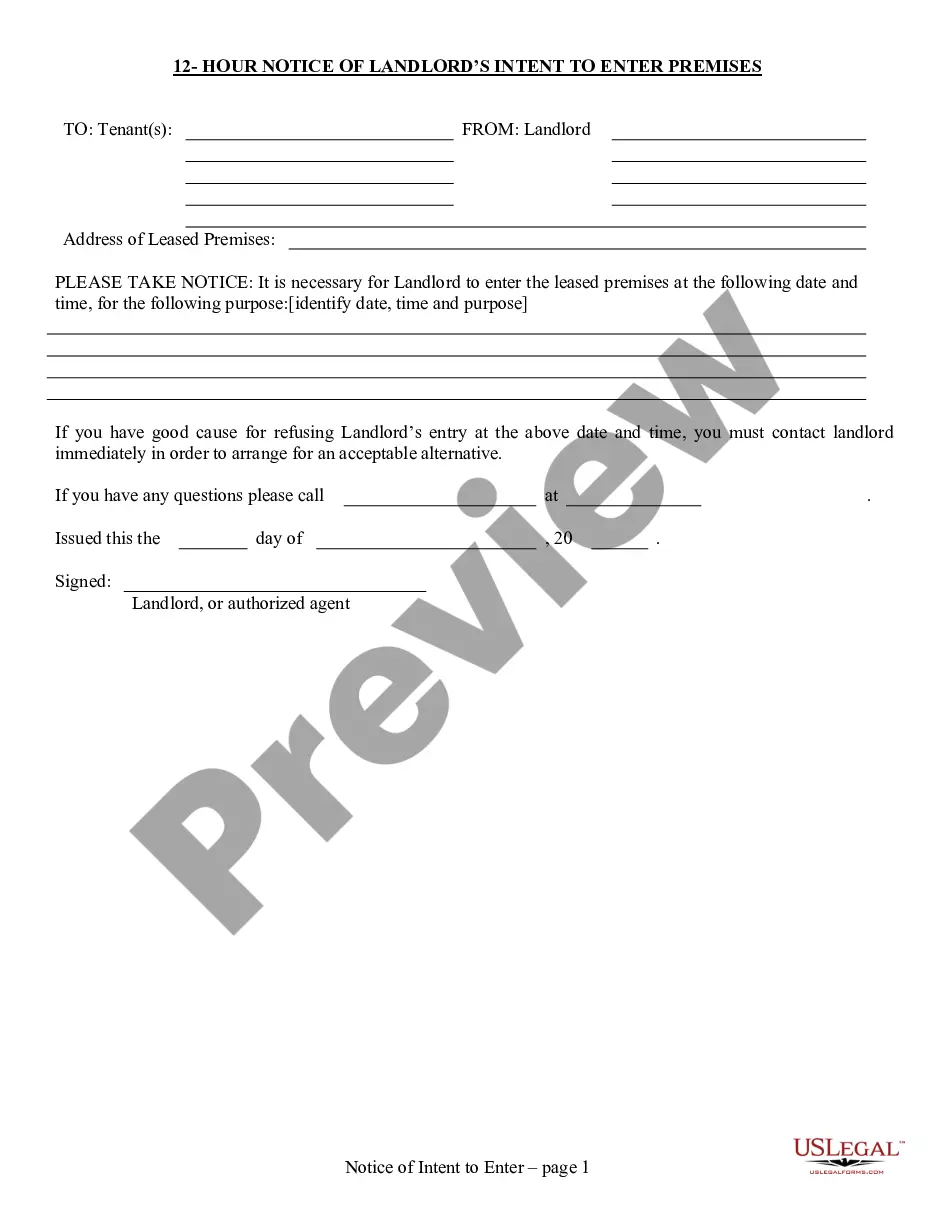
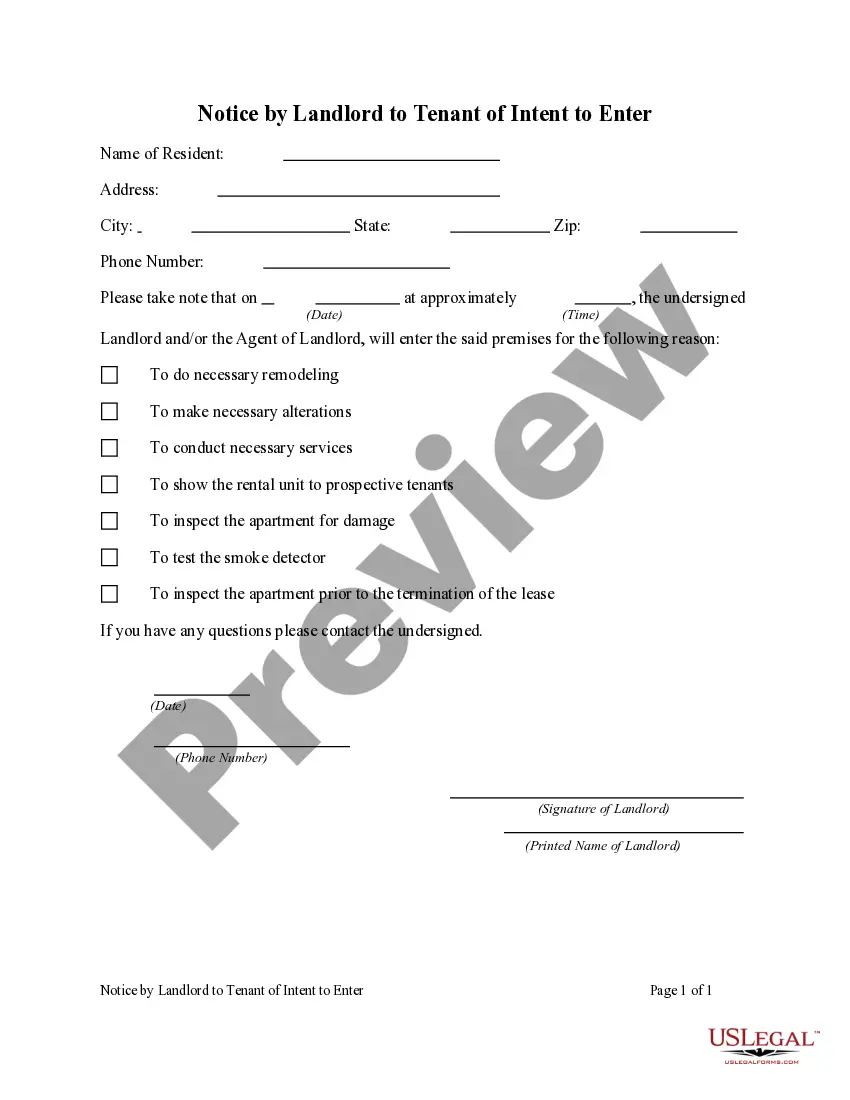
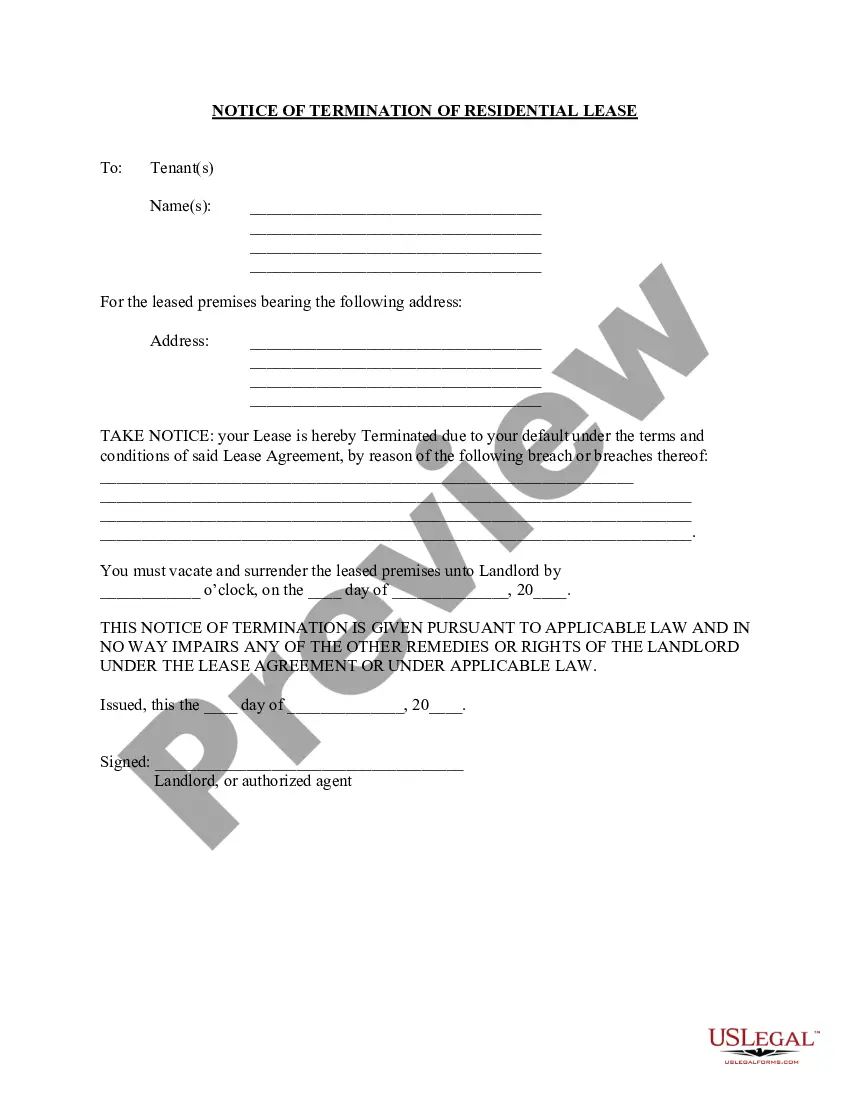
The 12 Hour Notice of Landlord's Intent to Enter Premises for Residential is a legal document used by landlords to inform tenants of the landlord's intention to enter the leased property with at least 12 hours of notice. This form is essential in ensuring that both parties understand the legal grounds and timing for such entry, differentiating itself from other notices which may require different notice periods or purposes. By using this form, landlords uphold their right to inspect or enter the rental unit while respecting the tenant's rights regarding privacy and consent.
Form components explained
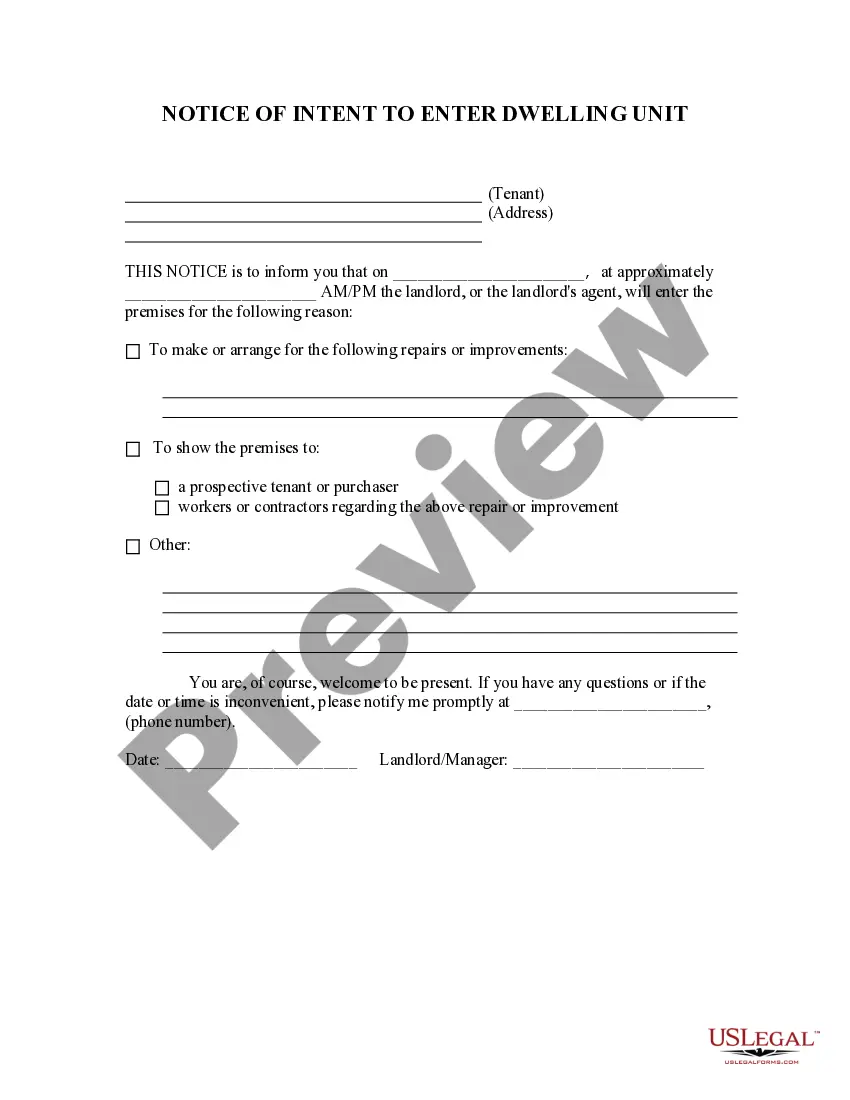
- Identification of the parties involved (Landlord and Tenant).
- Address of the leased premises.
- Date and time of intended entry.
- Purpose for the landlord's entry.
- Instructions for the tenant if they have objections.
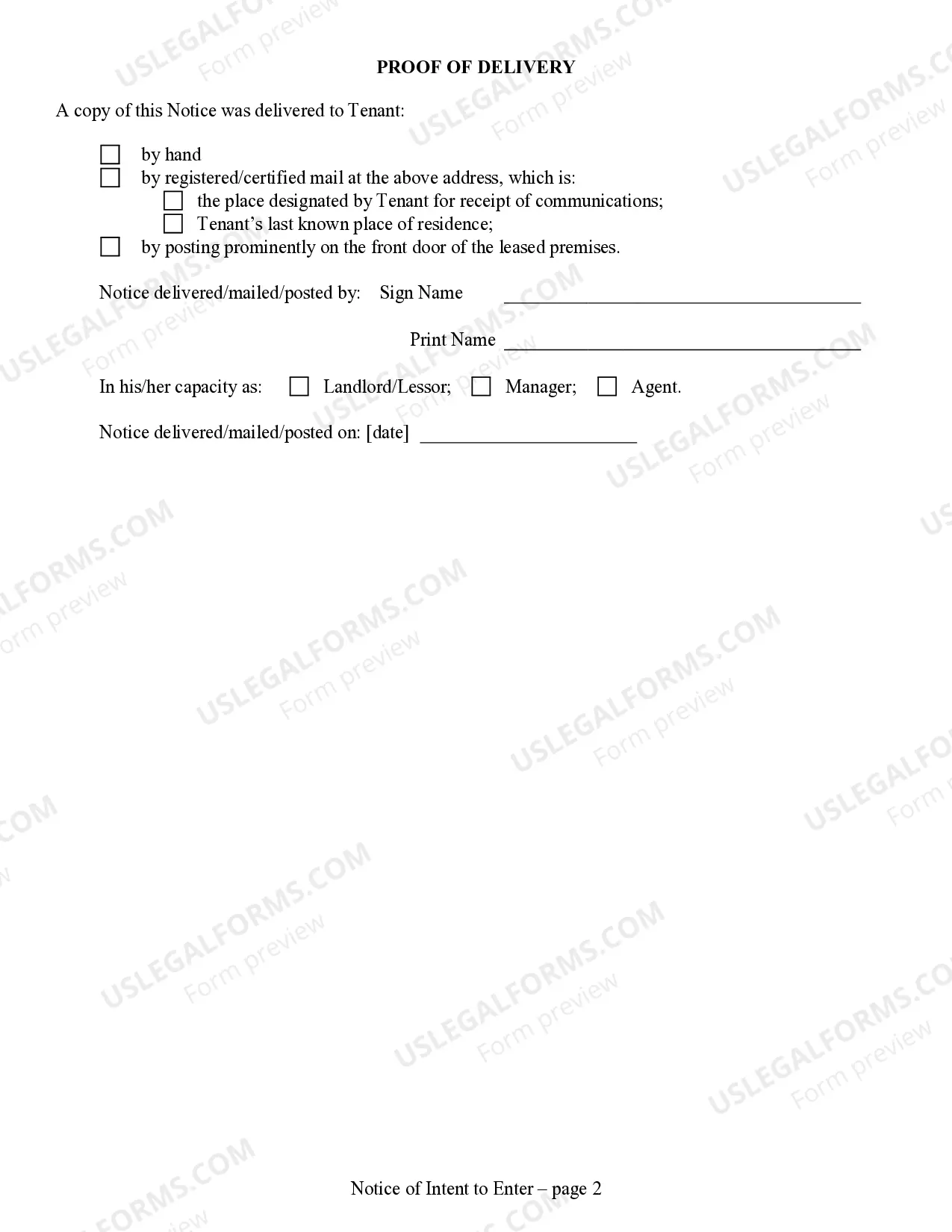
- Proof of delivery options (hand delivery, mail, or posting).
When this form is needed
This form should be used when a landlord needs to enter a rented property for valid reasons such as inspections, repairs, maintenance, or showings. It ensures tenants are given proper notice as required by law and allows them to voice any reasonable concerns or objections regarding the entry.
Intended users of this form
- Landlords planning to enter rental properties for inspections or repairs.
- Property managers acting on behalf of landlords.
- Tenants who require knowledge of their rights regarding landlords' entry.
How to complete this form
- Identify the tenant(s) and landlord.
- Provide the exact address of the leased premises.
- Specify the date and time of entry.
- Describe the purpose for entering the property.
- Include contact information for any questions.
- Sign and date the notice before delivering it to the tenant.
Is notarization required?
This form does not typically require notarization unless specified by local law. It is sufficient to deliver the notice as indicated in the form to ensure that tenants receive proper notification of the landlord's intent to enter the premises.
Get your form ready online
Our built-in tools help you complete, sign, share, and store your documents in one place.
Make edits, fill in missing information, and update formatting in US Legal Forms—just like you would in MS Word.
Download a copy, print it, send it by email, or mail it via USPS—whatever works best for your next step.
Sign and collect signatures with our SignNow integration. Send to multiple recipients, set reminders, and more. Go Premium to unlock E-Sign.
If this form requires notarization, complete it online through a secure video call—no need to meet a notary in person or wait for an appointment.
We protect your documents and personal data by following strict security and privacy standards.

Make edits, fill in missing information, and update formatting in US Legal Forms—just like you would in MS Word.

Download a copy, print it, send it by email, or mail it via USPS—whatever works best for your next step.

Sign and collect signatures with our SignNow integration. Send to multiple recipients, set reminders, and more. Go Premium to unlock E-Sign.

If this form requires notarization, complete it online through a secure video call—no need to meet a notary in person or wait for an appointment.

We protect your documents and personal data by following strict security and privacy standards.
Mistakes to watch out for
- Failing to provide adequate notice as required by law.
- Not specifying the purpose for entry clearly.
- Ineffective delivery of the notice, leading to disputes.
- Neglecting to sign the notice before delivery.
Why complete this form online
- Instant access to a legally vetted template tailored for your needs.
- Convenience of downloading and customizing the form as needed.
- Time-saving compared to drafting a notice from scratch.
- Ensures compliance with legal standards for tenant notification.
Legal use & context
- This notice serves as legal documentation of a landlord's intent to enter.
- Compliance with the notice requirement helps avoid disputes with tenants.
- Both landlords and tenants are obliged to adhere to local landlord-tenant laws.
Main things to remember
- The 12 Hour Notice of Landlordâs Intent to Enter is important for ensuring proper communication between landlords and tenants.
- Timely delivery of this notice is crucial to protect landlords' rights while respecting tenants' privacy.
- Utilizing this form can facilitate smoother landlord-tenant interactions and help prevent misunderstandings.
Looking for another form?
Form popularity
FAQ
Florida law also gives the residential tenant rights in defending against any lawsuit filed by the landlord. The tenant, for instance, has five days (where the landlord asks for possession or asks to evict the tenant) to twenty days (where the landlord asks for rent damages) to file an answer to the complaint.
In Florida, a landlord can terminate a tenancy early and evict a tenant for a number of different reasons, including not paying rent, violating the lease or rental agreement, or committing an illegal act. To terminate the tenancy, the landlord must first give the tenant written notice.
In most situations your landlord does not need to give you a reason (although acting on discriminatory or retaliatory motives is illegal). A landlord can simply give you a written notice to move, allowing you 15 days as required by Florida law and specifying the date on which your tenancy will end.
A landlord can only enter a tenant's unit for specific reasons, unless: the tenant has given the landlord permission to enter; there is an emergency that requires the landlord to enter the unit; or. the tenant has abandoned the property.
Let's be clear, other than in emergency it's illegal for a landlord or agent to enter a property without agreement from the tenant. The golden rule to abide by is always to provide your tenants with written notice at least 24 hours before any planned visits.
Your landlord or their representatives may be allowed reasonable access to carry out inspections or repairs, but must first get your permission. According to Section 11, from The Landlord and Tenant Act 1985, your landlord needs to give you at least 24 hour notice before they come around and visit for any reason.
When you rent a property from a landlord it becomes your home. They should only enter the property without you being present, if you have given permission for them to do so, or in a genuine emergency.
When the tenancy is month-to-month, the tenant must give the landlord 15 days' notice before the end of any monthly period. (In Miami, the tenant must give the landlord 30 days' notice before the end of the monthly period).
A landlord can only enter a rented property with the tenants' permission and after explaining why they need to get in.Remember landlords have a legal obligation to keep a property in good repair, and its appliances and services in good working order.