Connecticut Revocation of General Durable Power of Attorney
What this document covers
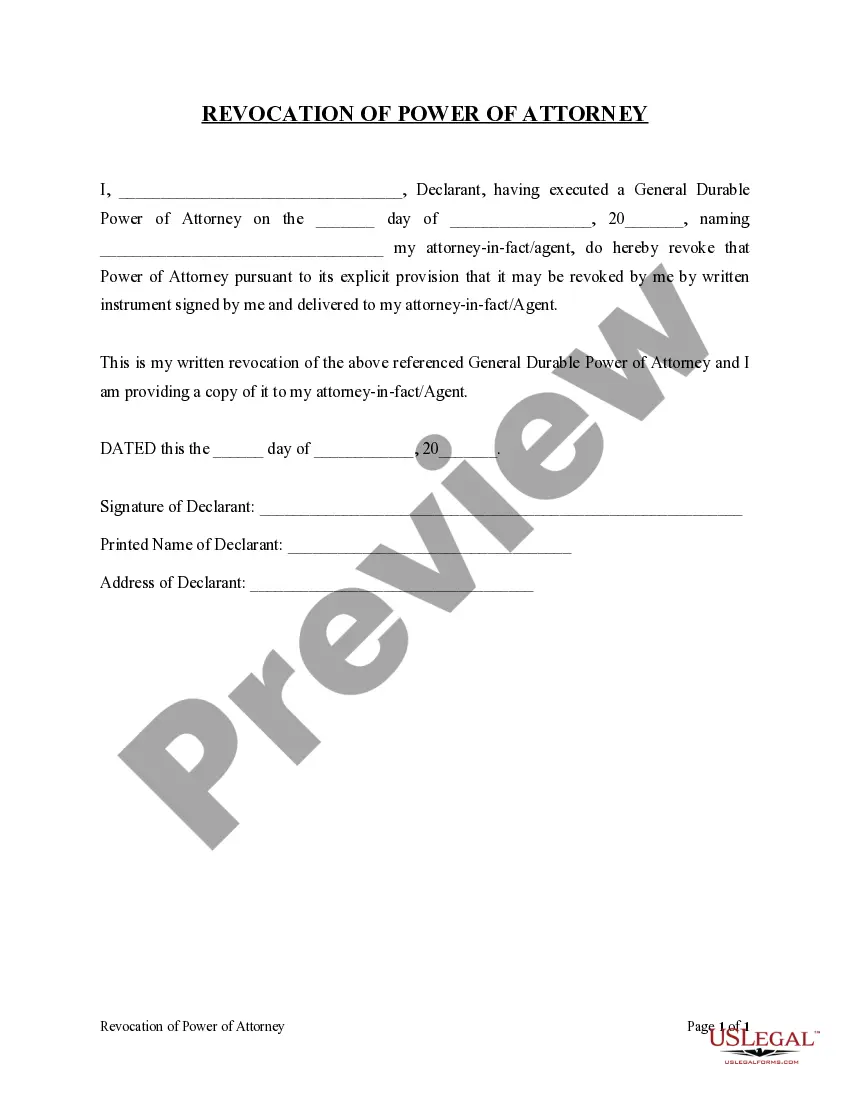
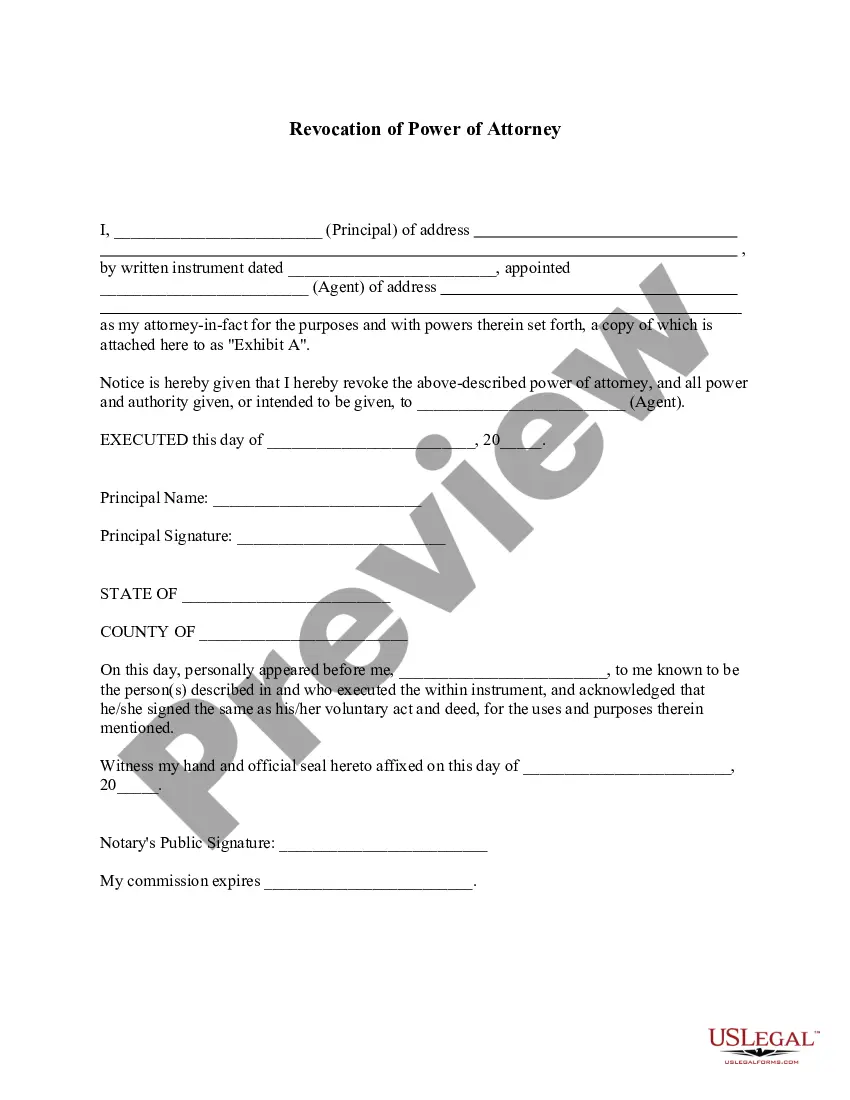
The Revocation of General Durable Power of Attorney is a legal document that allows a declarant to formally cancel a previously made General Durable Power of Attorney. This form is essential for individuals wishing to revoke authority granted to an attorney-in-fact to manage their financial or property matters. It ensures that any prior power of attorney is no longer valid, safeguarding your rights and interests.
Key components of this form
- Declarant's name and statement of revocation.
- Date the original General Durable Power of Attorney was executed.
- Name of the attorney-in-fact being revoked.
- Signature of the declarant, affirming the revocation.
- Date of signing the revocation document.
Common use cases
This form should be used when you want to revoke a previously executed General Durable Power of Attorney. Scenarios include situations where the appointed attorney-in-fact can no longer fulfill their duties, a change in trust or relationship with the attorney-in-fact, or when you simply wish to take back control over your financial or property decisions.
Who needs this form
- Individuals who have previously appointed an attorney-in-fact through a General Durable Power of Attorney.
- Persons who wish to cancel the powers granted to their attorney-in-fact.
- Anyone seeking to ensure that any prior power of attorney is formally invalidated.
Steps to complete this form
- Enter your full name as the declarant at the beginning of the form.
- Indicate the date on which the original General Durable Power of Attorney was executed.
- Fill in the name of the attorney-in-fact whose authority you are revoking.
- Sign and date the revocation document to validate it.
- Provide a copy of this revocation to the former attorney-in-fact.
Notarization requirements for this form
This document requires notarization to meet legal standards. US Legal Forms provides secure online notarization powered by Notarize, allowing you to complete the process through a verified video call, available 24/7.
Get your form ready online
Our built-in tools help you complete, sign, share, and store your documents in one place.
Make edits, fill in missing information, and update formatting in US Legal Forms—just like you would in MS Word.
Download a copy, print it, send it by email, or mail it via USPS—whatever works best for your next step.
Sign and collect signatures with our SignNow integration. Send to multiple recipients, set reminders, and more. Go Premium to unlock E-Sign.
If this form requires notarization, complete it online through a secure video call—no need to meet a notary in person or wait for an appointment.
We protect your documents and personal data by following strict security and privacy standards.

Make edits, fill in missing information, and update formatting in US Legal Forms—just like you would in MS Word.

Download a copy, print it, send it by email, or mail it via USPS—whatever works best for your next step.

Sign and collect signatures with our SignNow integration. Send to multiple recipients, set reminders, and more. Go Premium to unlock E-Sign.

If this form requires notarization, complete it online through a secure video call—no need to meet a notary in person or wait for an appointment.

We protect your documents and personal data by following strict security and privacy standards.
Avoid these common issues
- Failing to provide the correct date of the original power of attorney.
- Not signing the form, which can invalidate the revocation.
- Forgetting to provide a copy to the attorney-in-fact being revoked.
Benefits of completing this form online
- Convenient downloadable format, allowing you to complete your form at your own pace.
- Easily editable to suit your specific situation.
- Access to forms drafted by licensed attorneys for reliability.
Looking for another form?
Form popularity
FAQ
An example of a revocation in Connecticut could be when a principal decides to terminate a durable power of attorney due to a change in circumstances or trust. For instance, if the principal has concerns about the agent's actions or no longer requires their assistance, they may formally revoke the document. It is advisable to document this decision clearly and provide a copy of the revocation to all parties involved. Using USLegalForms can simplify this task by offering templates tailored for the Connecticut revocation of general durable power of attorney.
A sample sentence for revocation could be, 'I hereby revoke the General Durable Power of Attorney granted to Agent's Name as of Date.' This clear statement effectively communicates your intent to cancel the authority previously granted. In the context of Connecticut revocation of general durable power of attorney, it is crucial to express the date to avoid any confusion regarding the power exercised by your agent.
Resigning as a durable power of attorney in Connecticut requires a formal process. You need to draft a resignation letter and deliver it to the principal, informing them of your decision. It's also essential to notify any relevant third parties, such as banks or medical facilities, to ensure they recognize the change. For a seamless process, consider using a trustworthy platform like USLegalForms, which can provide the necessary templates and guidance.
Yes, a new power of attorney typically automatically revokes any previous power of attorney documents unless stated otherwise. This means that if you create a new document and specify it as your current directive, the older authority becomes void. It's crucial to understand this during the Connecticut Revocation of General Durable Power of Attorney process, as maintaining clarity about your wishes can prevent confusion and potential conflict.
Taking on the role of a power of attorney carries significant responsibility and potential liability. You must act in the best interest of the principal, and any mismanagement can lead to legal challenges or claims of abuse. Additionally, if the principal revokes the power of attorney in Connecticut, it can lead to personal feelings of betrayal or conflict within family dynamics, highlighting the complexities involved in the Connecticut Revocation of General Durable Power of Attorney.
A power of attorney generally cannot make or modify a will, nor can it change your beneficiaries on life insurance policies or retirement accounts. Additionally, the appointed agent cannot act beyond the authority granted in the document, such as engaging in illegal activities. This is particularly important to keep in mind when discussing the Connecticut Revocation of General Durable Power of Attorney, as some actions may not be covered under this authority.
If there are two power of attorneys, it can lead to disputes regarding which document holds authority. Typically, the most recent power of attorney is considered valid unless it explicitly states otherwise. In Connecticut, resolving these conflicts often requires a Connecticut Revocation of General Durable Power of Attorney for the outdated document. To avoid such issues, consider using USLegalForms, which can help you create clear and definitive documents.
Yes, a new power of attorney generally overrides any prior documents unless specified otherwise. When you create a new power of attorney, it's wise to explicitly revoke any previous agreements to prevent confusion. This is particularly important in Connecticut to ensure that your current wishes are executed. For those looking to manage this process effectively, USLegalForms offers valuable templates and guidance.
In Connecticut, a power of attorney can remain valid indefinitely unless specified otherwise in the document. However, if the principal becomes incapacitated, the power of attorney may require a Connecticut Revocation of General Durable Power of Attorney to be terminated. It’s essential to regularly review your power of attorney to ensure it aligns with your current intentions. If you need assistance, USLegalForms provides resources to help navigate these concerns.
A revocation form is a legal document that formally cancels any existing power of attorney. This form is essential to ensure that all parties, including your agent and any third parties, are aware that the authority granted has ended. Using the right template for your Connecticut Revocation of General Durable Power of Attorney makes this process straightforward and legally binding.