Connecticut 3 Day Notice to Quit for Failure to Pay Rent Prior to Eviction - Chance to Cure Not Required - Nonresidential
About this form
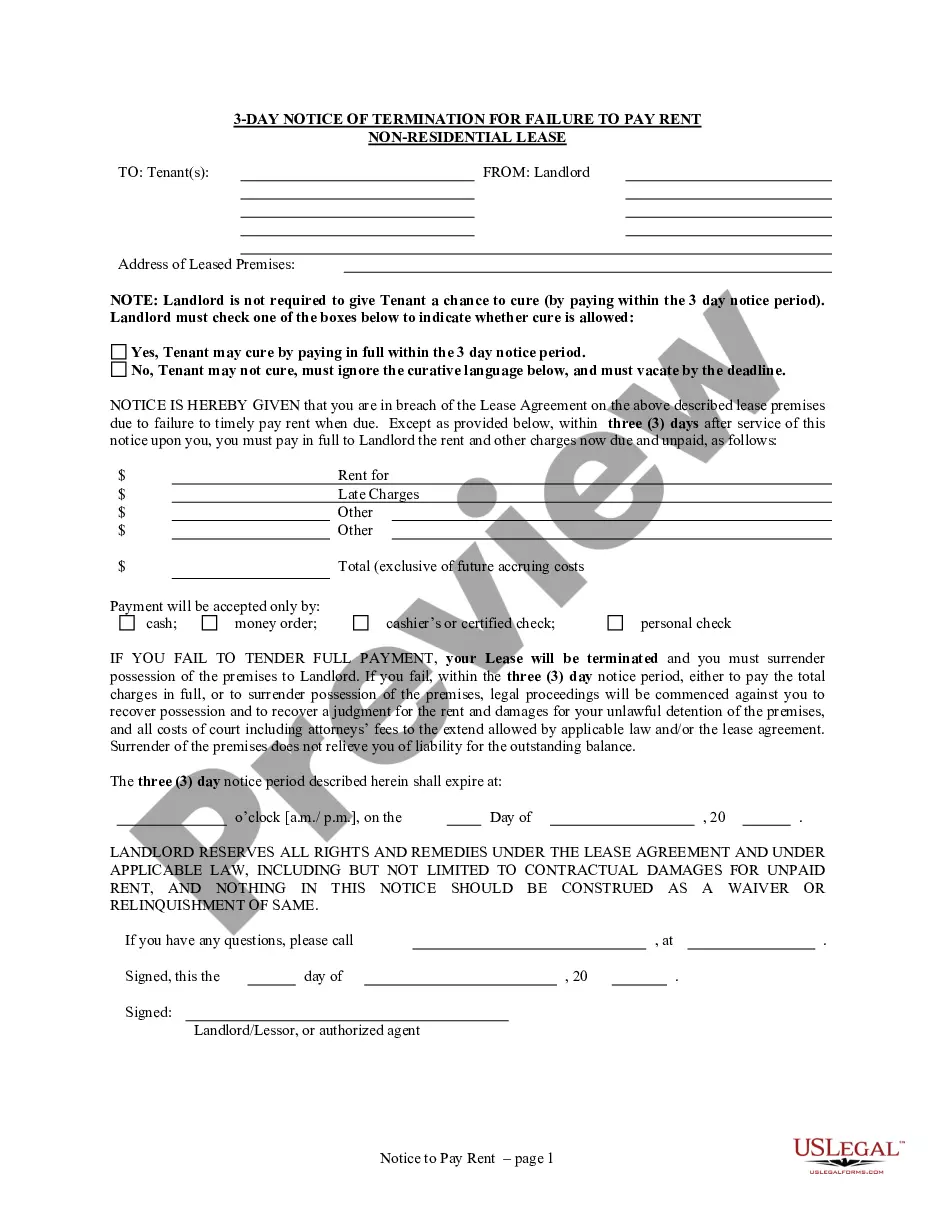
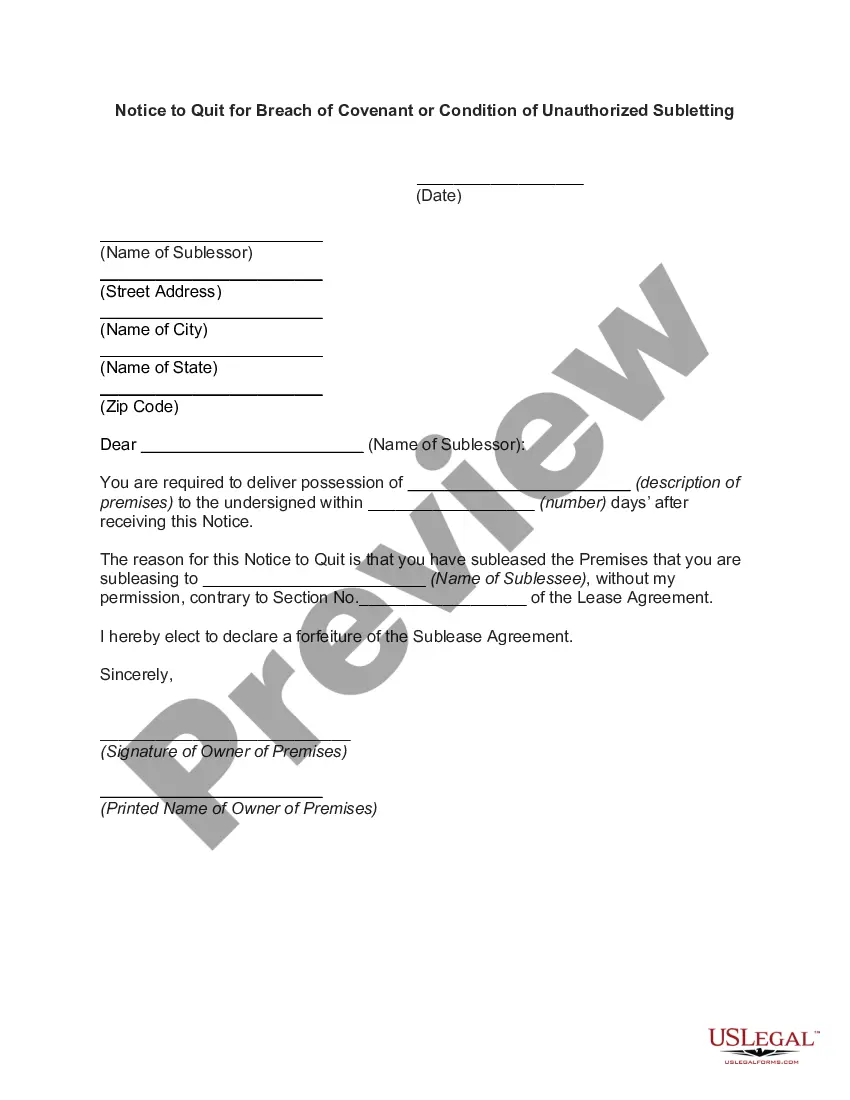
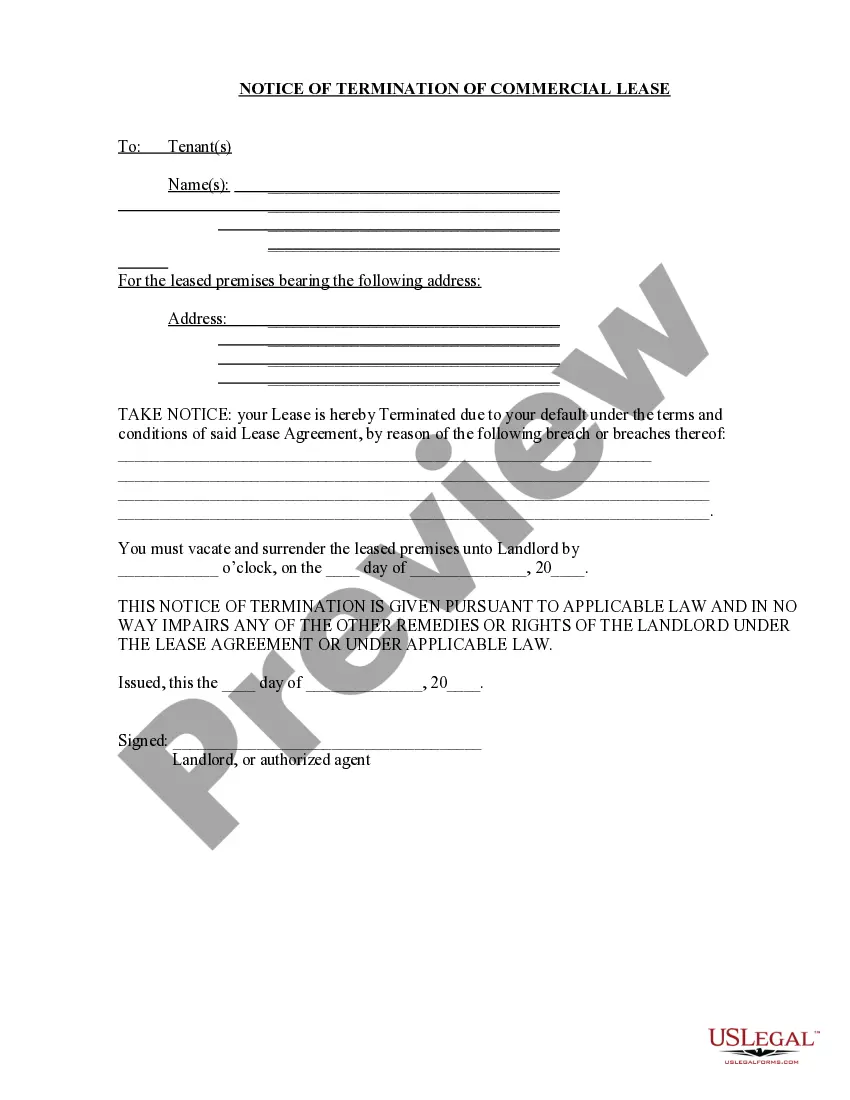
This 3 Day Notice to Quit for Failure to Pay Rent Prior to Eviction is a legal document used by landlords to terminate a non-residential lease when a tenant has not paid rent. Unlike some housing laws, Connecticut does not require landlords to provide tenants with the opportunity to correct their payment default within the three-day notice period. This form allows landlords to indicate if they are willing to let the tenant cure the non-payment during this timeframe, thus giving them a chance to pay and avoid eviction.
Form components explained
- Landlord and tenant information, including addresses
- Clear statement regarding the breach of the lease due to non-payment
- Options for allowing the tenant to cure the payment default
- Detailed financial breakdown of unpaid rent and charges
- Consequences of not paying or vacating the premises
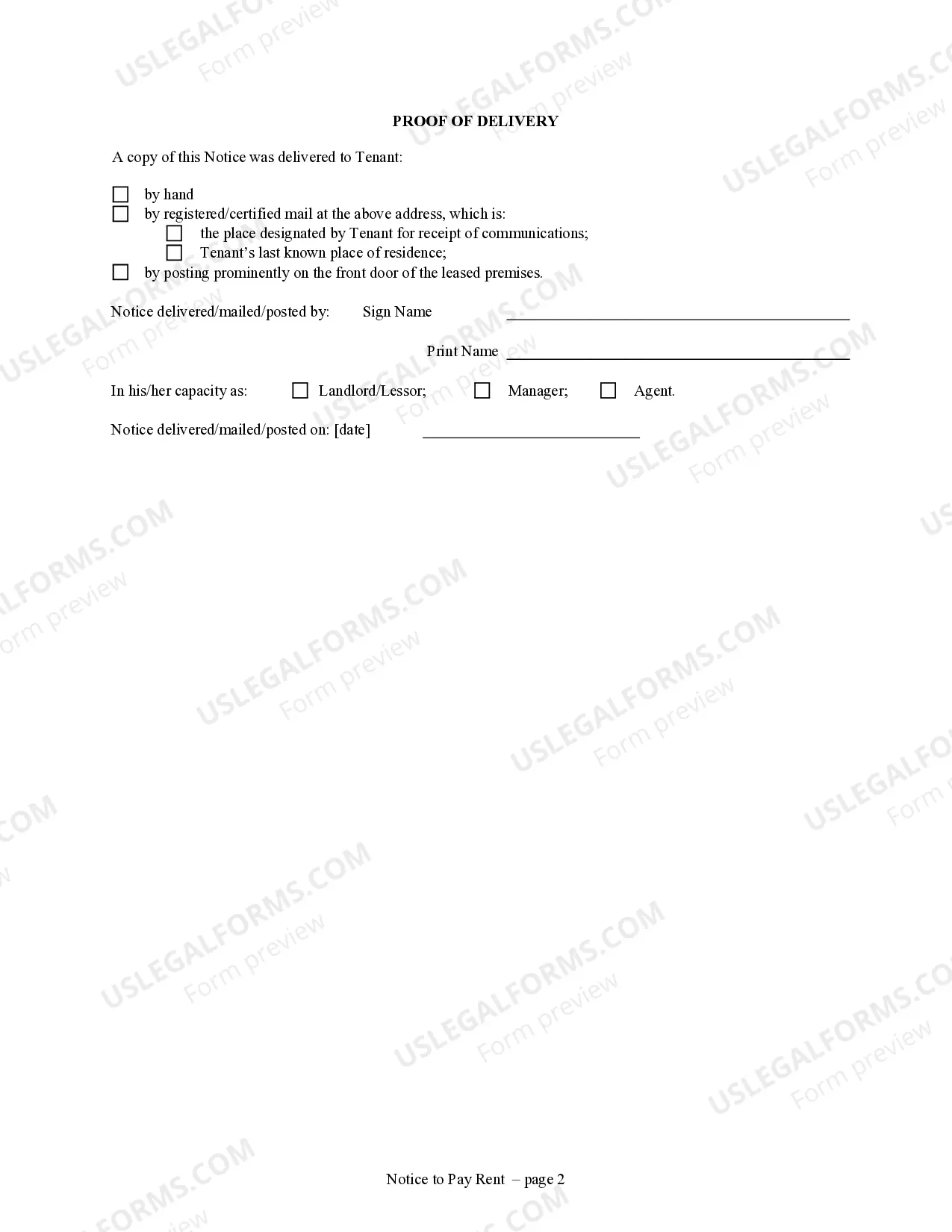
- Proof of delivery section to confirm notification to the tenant

When to use this document
This form is applicable when a landlord needs to act swiftly to recover unpaid rent from a tenant in a non-residential lease. It should be utilized when the landlord has determined that immediate action is necessary to commence eviction proceedings without the requirement of offering a chance to cure the payment default, aligning with Connecticut law.
Intended users of this form
- Landlords of non-residential properties in Connecticut
- Property management professionals responsible for managing commercial leases
- Business rental property owners seeking legal recourse due to tenant default
Instructions for completing this form
- Identify the parties involved by filling in the landlord's and tenant's names and addresses.
- Specify the address of the leased premises where the tenant is located.
- Check the appropriate box to indicate whether the tenant is allowed to cure the payment issue.
- Detail the amounts due, including rent, late charges, and other applicable fees.
- Fill in the deadline for payment and sign the document with the date.
- Deliver the notice as specified to ensure it is legally binding.
Notarization requirements for this form
This form does not typically require notarization to be legally valid. However, some jurisdictions or document types may still require it. US Legal Forms provides secure online notarization powered by Notarize, available 24/7 for added convenience.
Get your form ready online
Our built-in tools help you complete, sign, share, and store your documents in one place.
Make edits, fill in missing information, and update formatting in US Legal Forms—just like you would in MS Word.
Download a copy, print it, send it by email, or mail it via USPS—whatever works best for your next step.
Sign and collect signatures with our SignNow integration. Send to multiple recipients, set reminders, and more. Go Premium to unlock E-Sign.
If this form requires notarization, complete it online through a secure video call—no need to meet a notary in person or wait for an appointment.
We protect your documents and personal data by following strict security and privacy standards.

Make edits, fill in missing information, and update formatting in US Legal Forms—just like you would in MS Word.

Download a copy, print it, send it by email, or mail it via USPS—whatever works best for your next step.

Sign and collect signatures with our SignNow integration. Send to multiple recipients, set reminders, and more. Go Premium to unlock E-Sign.

If this form requires notarization, complete it online through a secure video call—no need to meet a notary in person or wait for an appointment.

We protect your documents and personal data by following strict security and privacy standards.
Avoid these common issues
- Failing to provide accurate tenant or property information.
- Not indicating whether the tenant can cure the payment default.
- Missing the signature or date on the notice, which may render it unenforceable.
- Neglecting to properly deliver the notice according to legal requirements.
Benefits of completing this form online
- Convenient access to professionally drafted templates that meet legal standards.
- Edit and customize the form quickly to fit your specific needs.
- Instant download for immediate use, saving time compared to traditional methods.
Legal use & context
- Requires strict adherence to local laws regarding eviction notices.
- Can be used as evidence in legal proceedings if the tenant fails to comply.
- Failure to properly complete or deliver the notice may delay eviction efforts.
Summary of main points
- The form is specifically for non-residential leases in Connecticut.
- Landlords are not required to provide a chance to cure the rent deficiency.
- Carefully following the required procedures can help prevent future legal issues.
Looking for another form?
Form popularity
FAQ
Using a Section 8 notice By failing to pay their rent, your tenant has broken the terms of their tenancy agreement, meaning you can serve them a Section 8 notice at any point in the tenancy. Your tenant may dispute the eviction, so you need to be ready with evidence of unpaid rent and your efforts to resolve the issue.
Call up the occupant. Send a breach of contract letter if there is a default. You can send an intention to cancel the lease agreement. If the notice is absconded, seek legal assistance.
When your tenant still can't pay... Let them leave, if they simply can't pay it may be your best option. Simply let them break their contract (if you're still within the fixed term period) and leave your property. Then you can get a new tenant in and not waste any more time.
Grace periods are quite common, usually varying between three and five days. Grace periods provide tenants extra time to pay rent before the landlord can legally charge a late fee.
1 Keep a record of rent payments. 2 Talk to your tenants. 3 Write to your tenant. 4 Send a letter to the guarantor. 5 Claim possession of your property. 6 Go to court. 7 Rent arrears and court action.
Step 1: Check Your Lease Documents and Payment Records. Step 2: Send a Late Rent Notice. Step 3: Make a Phone Call. Step 4: Send a Pay or Quit Notice. Step 5: Take Legal Action.
Failure to pay rental promptly and in full will usually constitute a breach of the lease, which in turn could entitle the landowner to cancel the lease, evict the tenant and claim arrear rental and damages from the tenant.
Under normal circumstances, when tenants don't pay rent, landlords have the option of terminating the tenancy (by serving the tenant with either a pay rent or quit notice or an unconditional quit notice, depending on the applicable laws).