California Notice of Pendency of Action filed against Real Property
What is this form?
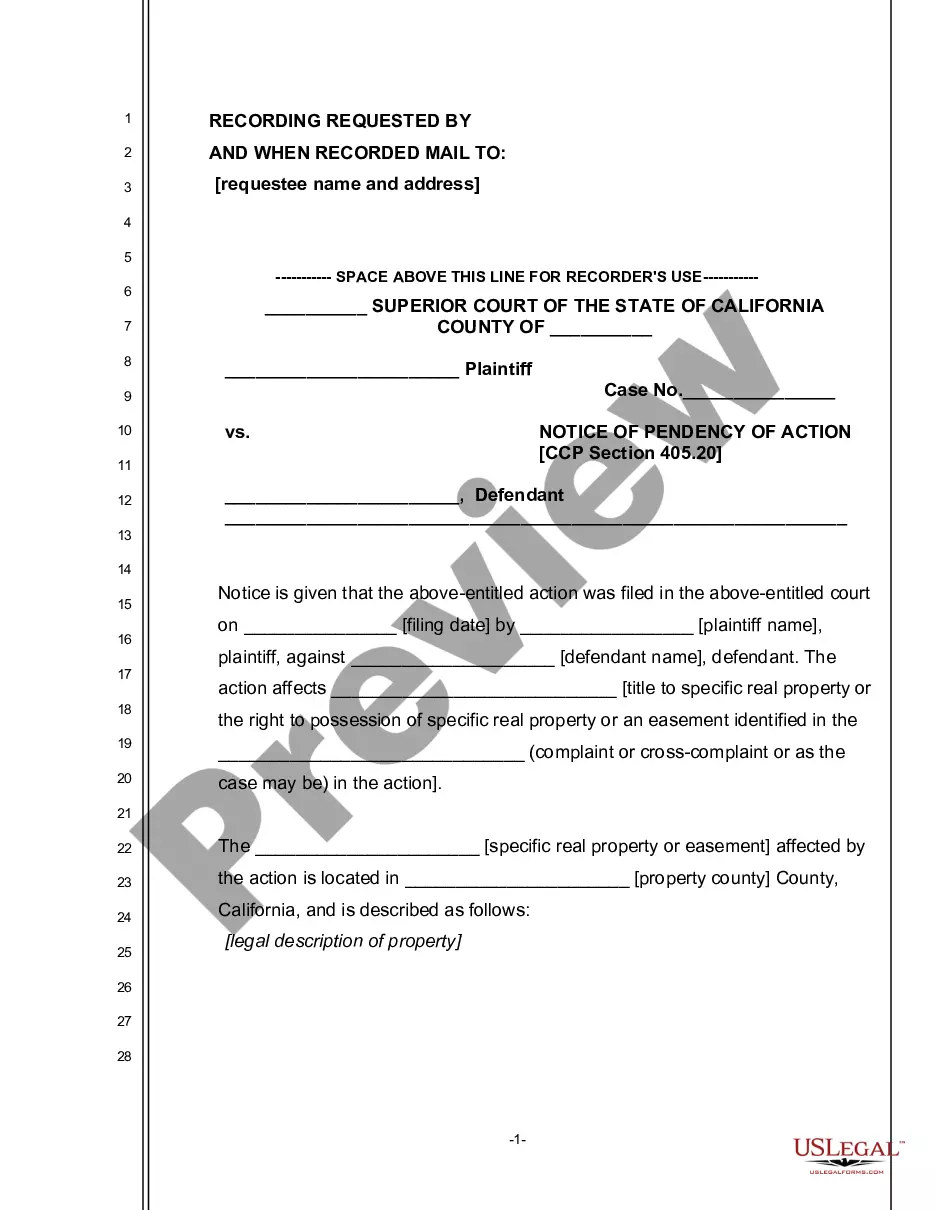
The Notice of Pendency of Action filed against Real Property is a legal document that notifies interested parties about a pending lawsuit affecting specific real property rights. This form is crucial for establishing a public record of the legal dispute, which can help prevent transactions involving the property until the case is resolved. It ensures that potential buyers or lenders are aware of any claims or litigation tied to the property's title or possession.
Form components explained
- Case information: Names of the plaintiff and defendant, along with the case number.
- Date of filing: Indicates when the lawsuit was officially filed.
- Description of the property: Legal description or identification of the affected property or easement.
- Signature line: An area for the attorney of the plaintiff to sign, verifying the notice.
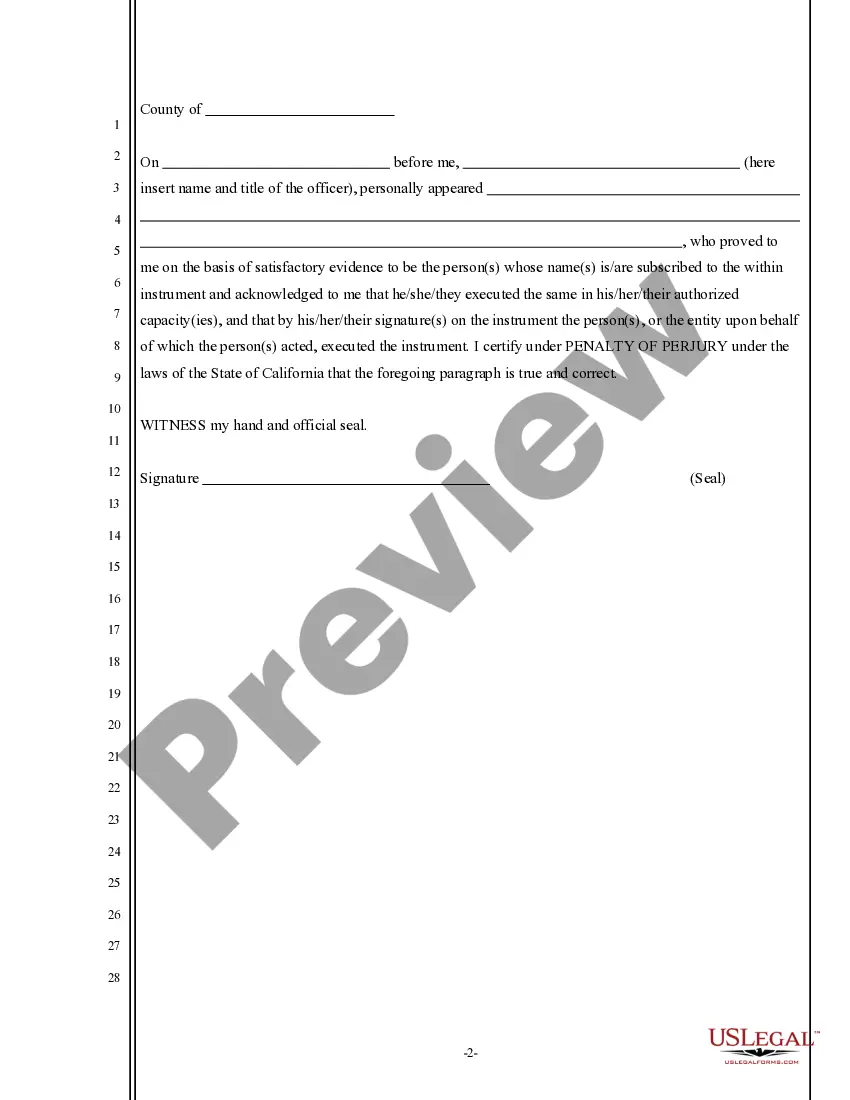
- Acknowledgment section: This section requires notarization to certify the authenticity of the signatures.
Common use cases
This form should be used when a plaintiff files a lawsuit that affects the ownership or possession of real property. It serves as a public notice to inform potential buyers, lenders, or other interested parties of the ongoing litigation, effectively putting them on notice before any property transactions that could complicate the case proceed.
Who can use this document
- Property owners engaging in a legal dispute regarding ownership or rights to possession of real estate.
- Litigants who intend to notify others about legal claims against a specific property.
- Attorneys representing plaintiffs in real property disputes.
Completing this form step by step
- Identify the parties involved: Enter the names of the plaintiff and defendant, with corresponding case numbers.
- Specify the filing date: Include the exact date the lawsuit was filed.
- Describe the property: Provide the legal description of the real property or easement affected by the action.
- Have the plaintiff's attorney sign: Complete the signature line for the attorney certifying the notice.
- Obtain notarization: Ensure the acknowledgment section is signed in front of a notary public.
Is notarization required?
This document requires notarization to meet legal standards. US Legal Forms provides secure online notarization powered by Notarize, allowing you to complete the process through a verified video call, available 24/7.
Get your form ready online
Our built-in tools help you complete, sign, share, and store your documents in one place.
Make edits, fill in missing information, and update formatting in US Legal Forms—just like you would in MS Word.
Download a copy, print it, send it by email, or mail it via USPS—whatever works best for your next step.
Sign and collect signatures with our SignNow integration. Send to multiple recipients, set reminders, and more. Go Premium to unlock E-Sign.
If this form requires notarization, complete it online through a secure video call—no need to meet a notary in person or wait for an appointment.
We protect your documents and personal data by following strict security and privacy standards.

Make edits, fill in missing information, and update formatting in US Legal Forms—just like you would in MS Word.

Download a copy, print it, send it by email, or mail it via USPS—whatever works best for your next step.

Sign and collect signatures with our SignNow integration. Send to multiple recipients, set reminders, and more. Go Premium to unlock E-Sign.

If this form requires notarization, complete it online through a secure video call—no need to meet a notary in person or wait for an appointment.

We protect your documents and personal data by following strict security and privacy standards.
Typical mistakes to avoid
- Omitting property description or legal identifiers.
- Failing to sign or improperly completing the acknowledgment section.
- Leaving out the filing date, which is critical to establish the timeline of the action.
Why use this form online
- Access to legally vetted forms drafted by licensed attorneys, ensuring accuracy.
- Convenient downloading options for immediate use, without waiting for physical paperwork.
- Editability to accommodate your specific details before finalizing the document.
Key takeaways
- The Notice of Pendency of Action is essential for notifying interested parties of a pending lawsuit affecting real property.
- It is crucial for establishing a public record which can influence future property transactions.
- Ensure all sections are filled correctly and that the form is notarized to maintain its legal validity.
Looking for another form?
Form popularity
FAQ
Filling out a lis pendens involves providing specific information about the pending litigation and the property in question. You must include details like the names of the parties involved, the case number, and a description of the property. It's important to ensure accuracy to avoid complications in future transactions. For guidance on completing real estate legal forms, you can use platforms like US Legal Forms, which offers resources tailored for the California Notice of Pendency of Action filed against Real Property.
In New York, a notice of pendency is typically effective for a maximum of three years. However, it can be extended through a court order if the lawsuit remains unresolved. Understanding the time limits associated with a notice of pendency can help you navigate real estate transactions more effectively. If you're dealing with properties in California, familiarize yourself with the California Notice of Pendency of Action filed against Real Property to know your rights.
The term 'lis pendens' refers to a legal notice indicating that a lawsuit has been filed concerning a particular piece of real estate. It essentially means 'litigation pending' and serves as a warning to anyone considering purchasing the property. The lis pendens attaches to the property, helping to preserve the rights of parties involved in the litigation. If you're involved in a dispute, knowing about the California Notice of Pendency of Action filed against Real Property is essential for protecting your interests.
A notice of pendency in New York is a legal document that establishes a claim on real property involved in a pending lawsuit. It serves to inform potential buyers or lenders that there is a serious legal matter concerning the property. This action can significantly impact property transactions, as it alerts interested parties to the dispute. If you are dealing with similar issues, understanding the California Notice of Pendency of Action filed against Real Property can provide key insights.
To release a lis pendens in California, you must file a request with the court where the original California Notice of Pendency of Action filed against Real Property was recorded. This request typically involves filing a notice of withdrawal of lis pendens. After submission, ensure that a copy of the filed notice reaches the parties involved, as it officially marks the removal of the claim. For a smoother process, consider using US Legal Forms, which provides templates and guidance to assist you in handling your legal documents effectively.
The California Notice of Pendency of Action filed against Real Property serves as the public notice that a property is engaged in pending legal actions. By filing this notice, the concerned party ensures that potential buyers and other interested individuals are made aware of the legal claims on the property. Using resources such as US Legal Forms can help streamline the process of understanding and filing such notices, providing clarity on any ongoing litigation.
A notice of pendency in California is a legal document that signals that there is a pending lawsuit affecting a specific piece of real property. This notice alerts potential buyers or interested parties that the property is involved in legal proceedings, protecting the interests of the party that filed the action. Understanding the implications of the California Notice of Pendency of Action filed against Real Property is crucial for anyone considering transactions related to the affected property.
To file a lis pendens in California, you must prepare a notice that clearly states the legal action and its relationship to the property. After completing the necessary paperwork, you will file it with the county recorder's office where the property is located. Using platforms like US Legal Forms can simplify this process for you, ensuring proper compliance with the requirements associated with the California Notice of Pendency of Action filed against Real Property.
Typically, the party initiating a lawsuit will file the notice of pending litigation against the real property. This is often a plaintiff or their legal representative aiming to inform the public and potential buyers about the California Notice of Pendency of Action filed against Real Property. The filing serves as a warning that the property is subject to legal claims, allowing interested parties to take notice before proceeding with any transactions.
To find a lis pendens on a property, you can start by visiting the local county recorder's office, where such documents are usually filed. Additionally, online databases or platforms like US Legal Forms can help you locate relevant information about the California Notice of Pendency of Action filed against Real Property. Furthermore, verifying the property records through a title company can also provide you with necessary details regarding any pending legal actions.