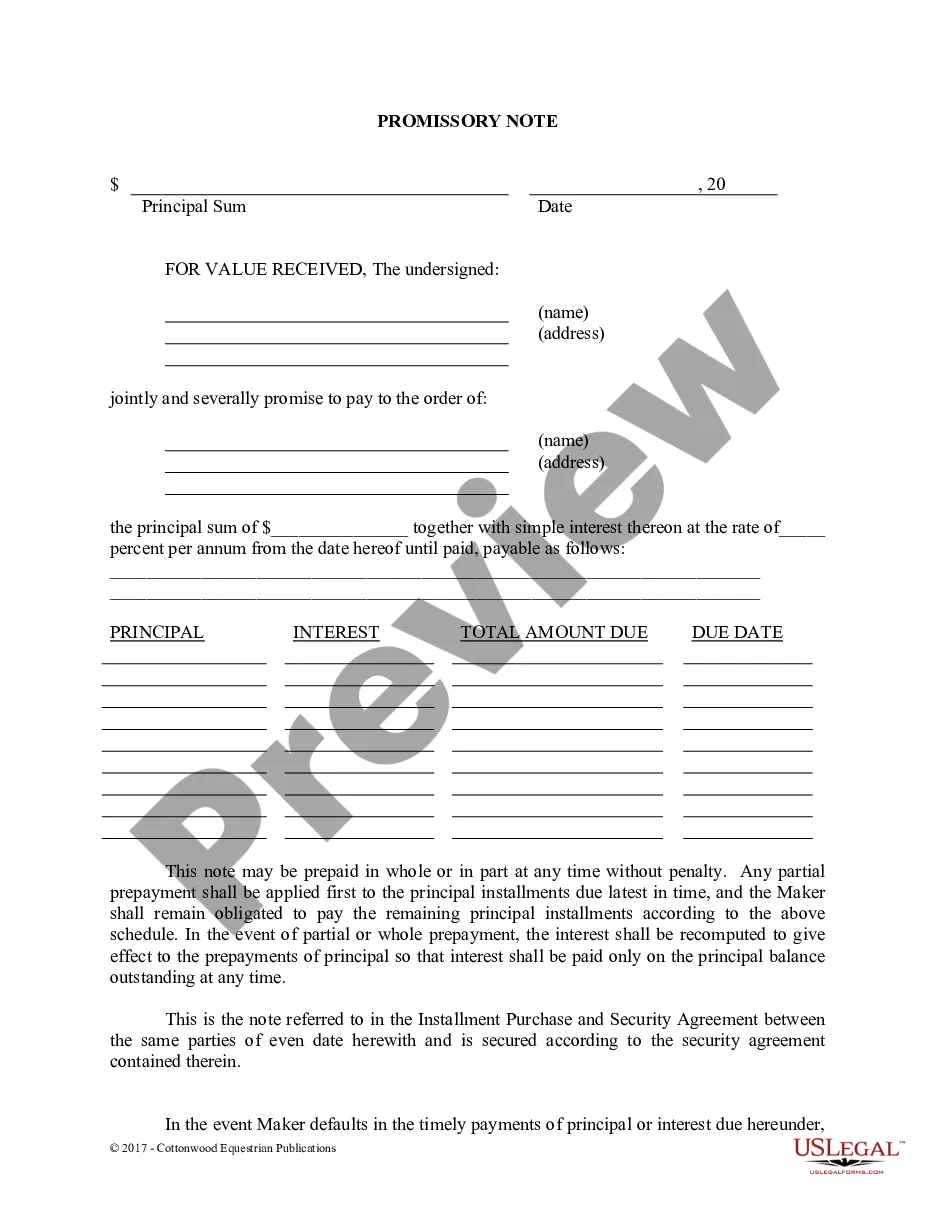
Wisconsin Letter from Landlord to Tenant for Failure to use electrical, plumbing, sanitary, heating, ventilating, air conditioning and other facilities in a reasonable manner
About this form
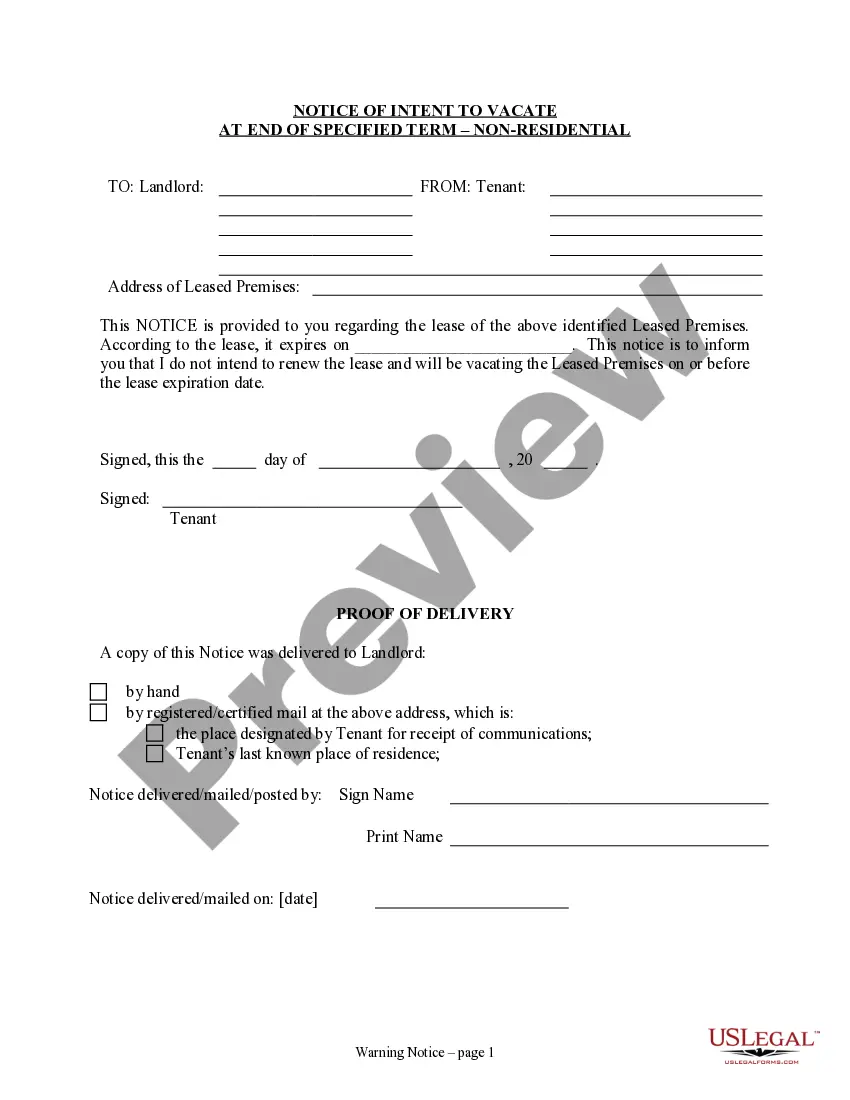
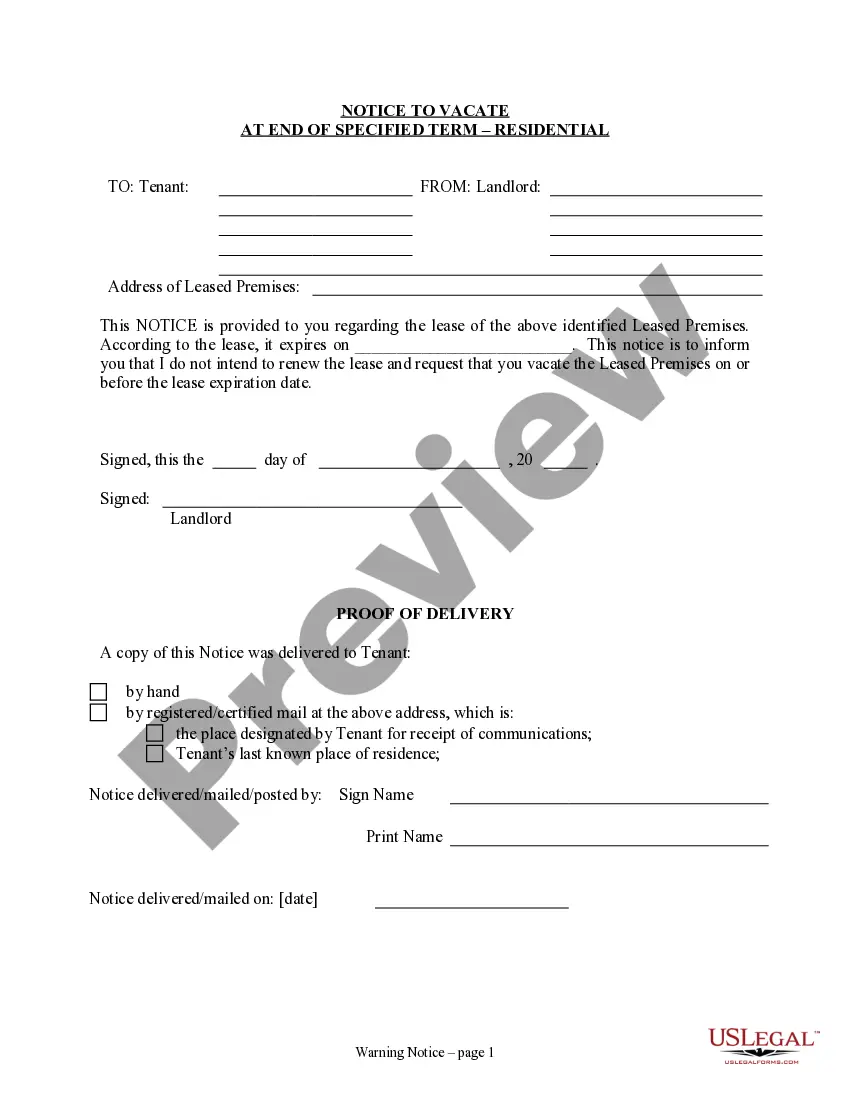
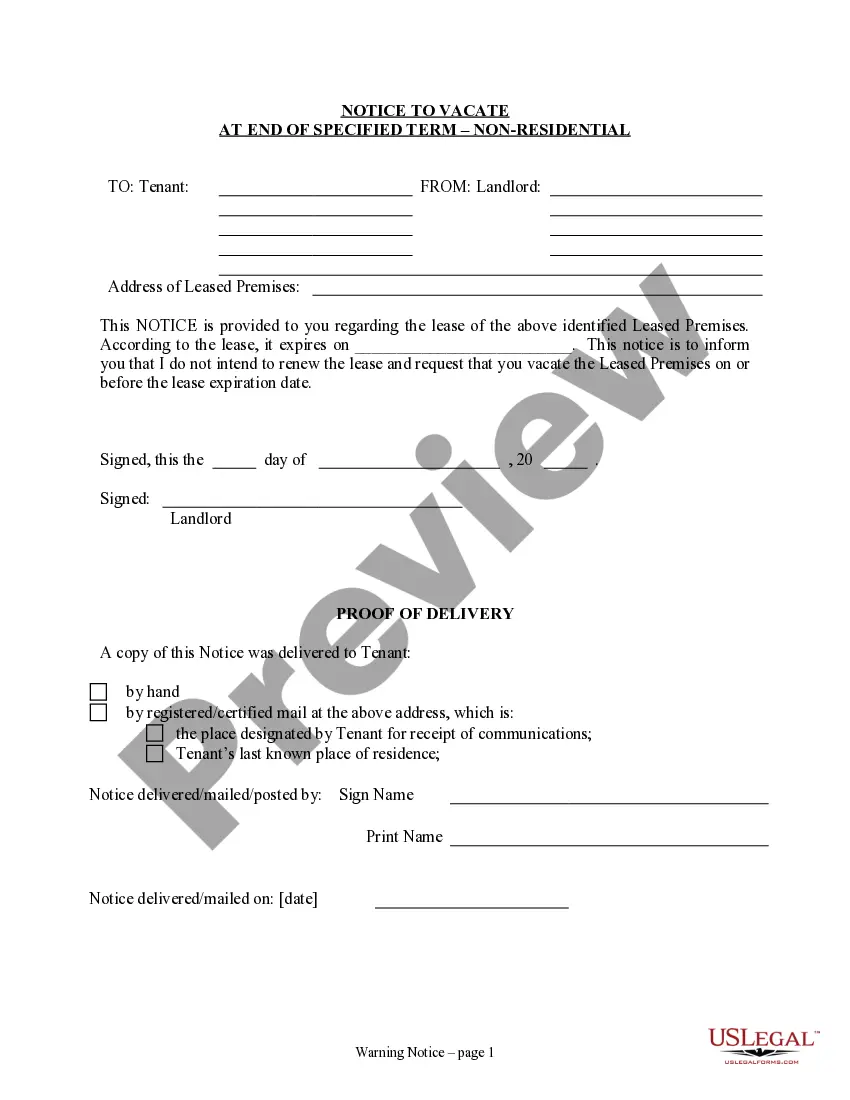
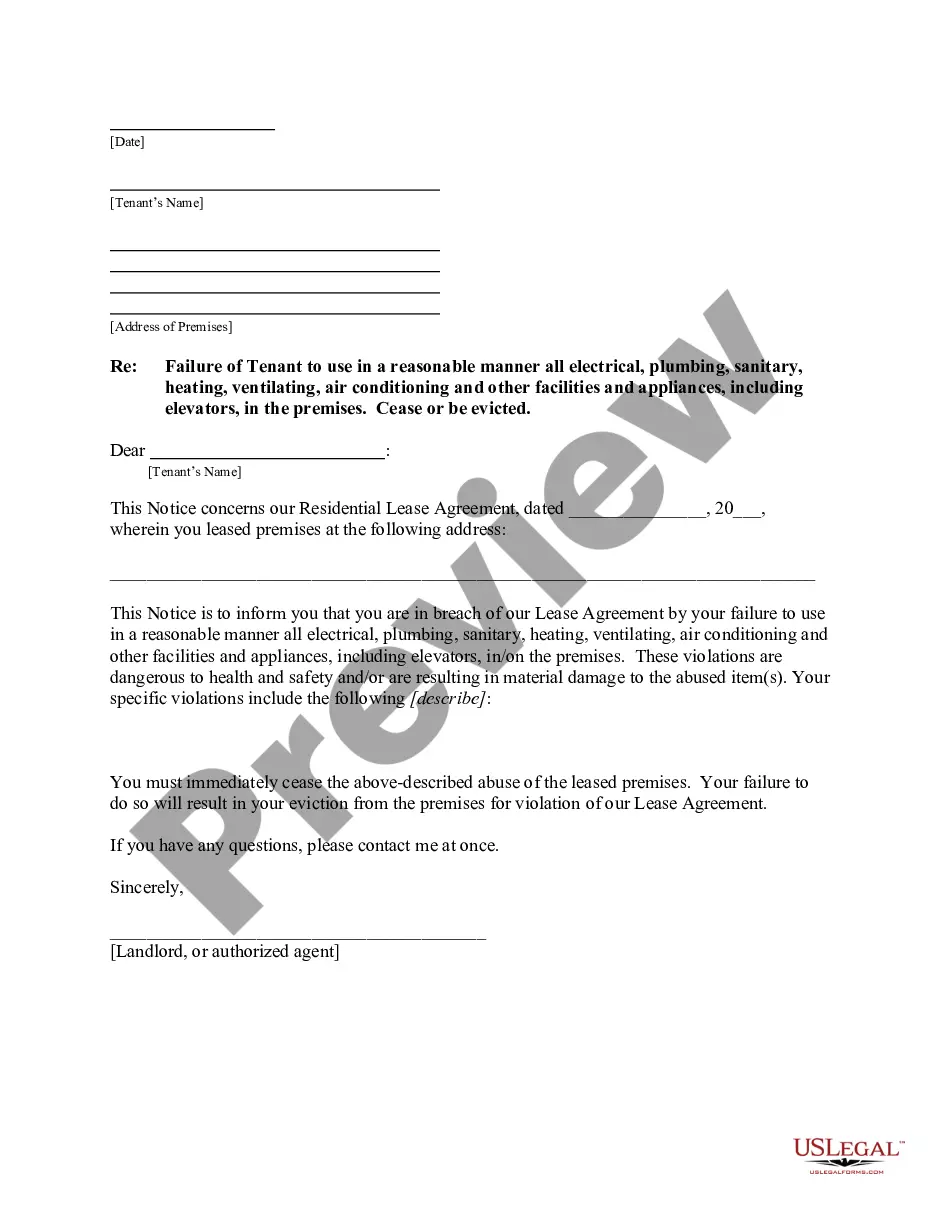
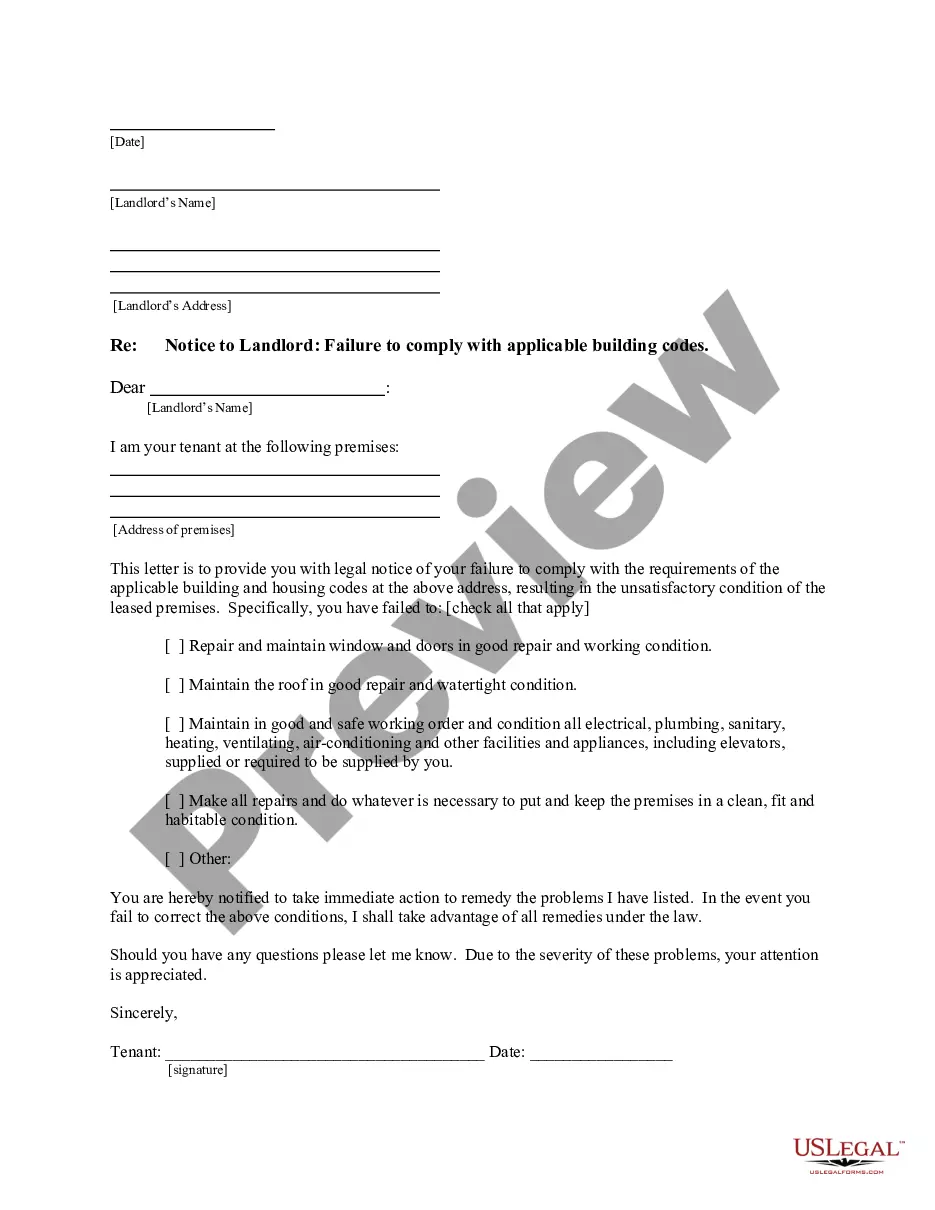
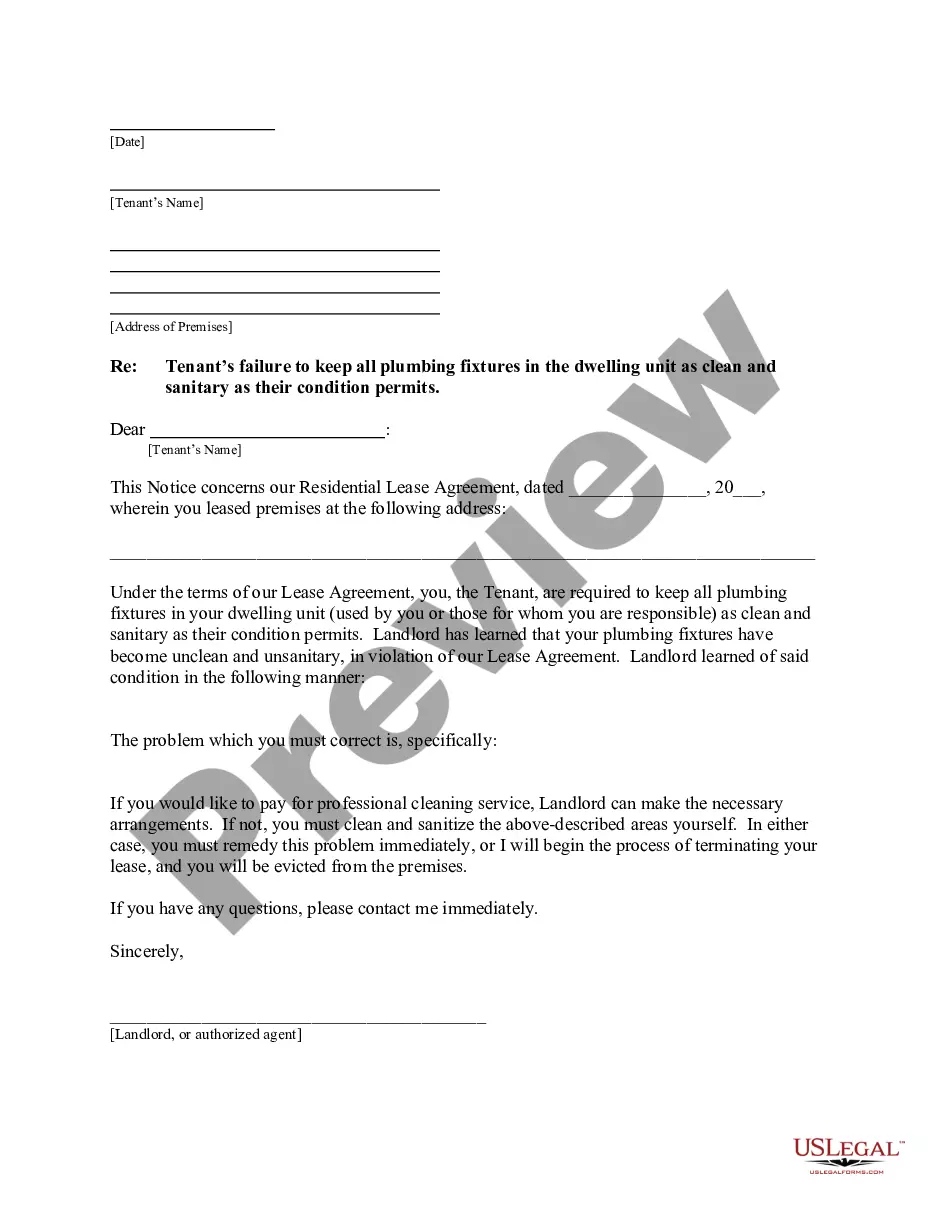
This form is a notice from a landlord to a tenant regarding the tenant's failure to properly use electrical, plumbing, sanitary, heating, ventilating, air conditioning, and other facilities. Its main purpose is to address misuse of these essential services and appliances as outlined in the lease agreement. Unlike general eviction notices, this form specifically targets issues of improper usage, allowing for a corrective action before potential eviction.
Key parts of this document
- Landlord and tenant information
- Details of the issue regarding the misuse of facilities
- Consequences of continued misuse, including potential eviction
- Signature of the landlord or authorized agent
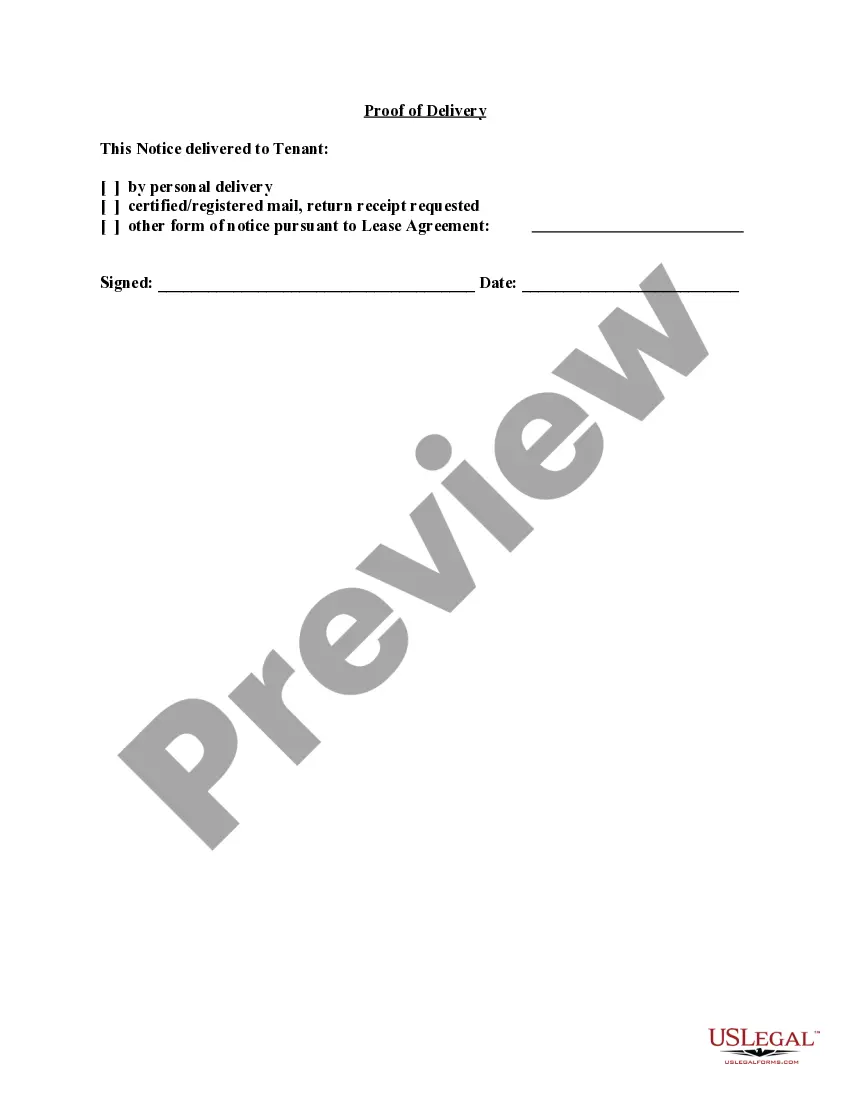
- Proof of delivery method (personal delivery or certified/registered mail)


When to use this form
This form should be used when a landlord needs to formally notify a tenant that they are not using the lease-provided facilities and appliances in a reasonable manner. It serves as an important warning before proceeding with eviction. For instance, if a tenant is repeatedly overloading electrical outlets or misusing plumbing fixtures, this notice provides an opportunity for the tenant to correct their behavior.
Who can use this document
This form is intended for:
- Landlords managing rental properties
- Property managers handling tenant relations
- Real estate professionals involved in tenancy agreements
Completing this form step by step
- Identify the landlord and tenant's names and addresses.
- Clearly detail the misuses of the electrical, plumbing, or other facilities.
- Specify the consequences of continued misuse, including potential eviction.
- Sign the notice to validate it, either as the landlord or an authorized agent.
- Deliver the notice by the specified method (personal delivery or certified mail) and document proof of delivery.
Does this document require notarization?
This form does not typically require notarization to be legally valid. However, some jurisdictions or document types may still require it. US Legal Forms provides secure online notarization powered by Notarize, available 24/7 for added convenience.
Get your form ready online
Our built-in tools help you complete, sign, share, and store your documents in one place.
Make edits, fill in missing information, and update formatting in US Legal Forms—just like you would in MS Word.
Download a copy, print it, send it by email, or mail it via USPS—whatever works best for your next step.
Sign and collect signatures with our SignNow integration. Send to multiple recipients, set reminders, and more. Go Premium to unlock E-Sign.
If this form requires notarization, complete it online through a secure video call—no need to meet a notary in person or wait for an appointment.
We protect your documents and personal data by following strict security and privacy standards.

Make edits, fill in missing information, and update formatting in US Legal Forms—just like you would in MS Word.

Download a copy, print it, send it by email, or mail it via USPS—whatever works best for your next step.

Sign and collect signatures with our SignNow integration. Send to multiple recipients, set reminders, and more. Go Premium to unlock E-Sign.

If this form requires notarization, complete it online through a secure video call—no need to meet a notary in person or wait for an appointment.

We protect your documents and personal data by following strict security and privacy standards.
Common mistakes to avoid
- Failing to provide specific examples of misuse.
- Neglecting to include signatures, which may invalidate the notice.
- Using informal delivery methods that do not provide proof of receipt.
Advantages of online completion
- Easy access to templates drafted by licensed attorneys.
- Editability to customize the form for your specific needs.
- Quick download for immediate use, saving time and effort.
Legal use & context
- This notice serves as a formal communication between the landlord and tenant.
- It may be used in legal proceedings if eviction becomes necessary.
Quick recap
- This form addresses tenant misuse of essential facilities.
- It reflects the landlord's need to communicate serious issues formally.
- Proper completion and delivery are crucial for compliance and potential legal actions.
Looking for another form?






Form popularity
FAQ
Wear and tear If your landlord has supplied an appliance such as a cooker or a washing machine that was working as the beginning of the tenancy, they have a responsibility to repair or replace it if it breaks down, unless this is the result of your negligence.
Fundamental responsibilities of landlords include: providing and maintaining the property in a clean and reasonable standard; giving proper receipts and maintaining records of all transactions pertaining to the tenancy; paying council rates and taxes; maintaining locks to ensure the property's security; and lodging the
Landlords are responsible for providing a habitable and safe living environment for their tenants. They should be prepared to address repairsparticularly those that affect habitability or safetyin a timely manner.
White goods provided by the landlord must be in a reasonable state of repair and in proper working order.There is no statutory obligation on landlords or agents to have professional checks carried out on the electrical system or appliances.
By law, a landlord must make sure the electrics in a property are safe and in good working order, for example, sockets and light fittings and all appliances they supply such as cookers and kettles. Usually, any repairs will be the landlord's responsibility unless otherwise stated in the tenancy agreement.
Unless your lease specifically places maintenance duties as the responsibility of the tenant, your landlord is bound to maintain all parts of your unit, even appliances that aren't required to be included in a rental property. California law allows landlords to ignore repairs to items damaged by renters, their guests
Refrigerator. Stove/oven. Dishwasher. Clothes washer. Clothes dryer. Microwave.
White Goods are not mentioned and so a landlord is not responsible for repairing any White Goods supplied to a tenant under Section 11.However, any electrical appliances that are supplied by the landlord must be safe pursuant to the Electrical Equipment (Safety) Regulations 1994.
As a landlord you must: keep your rented properties safe and free from health hazards. make sure all gas and electrical equipment is safely installed and maintained. provide an Energy Performance Certificate for the property.