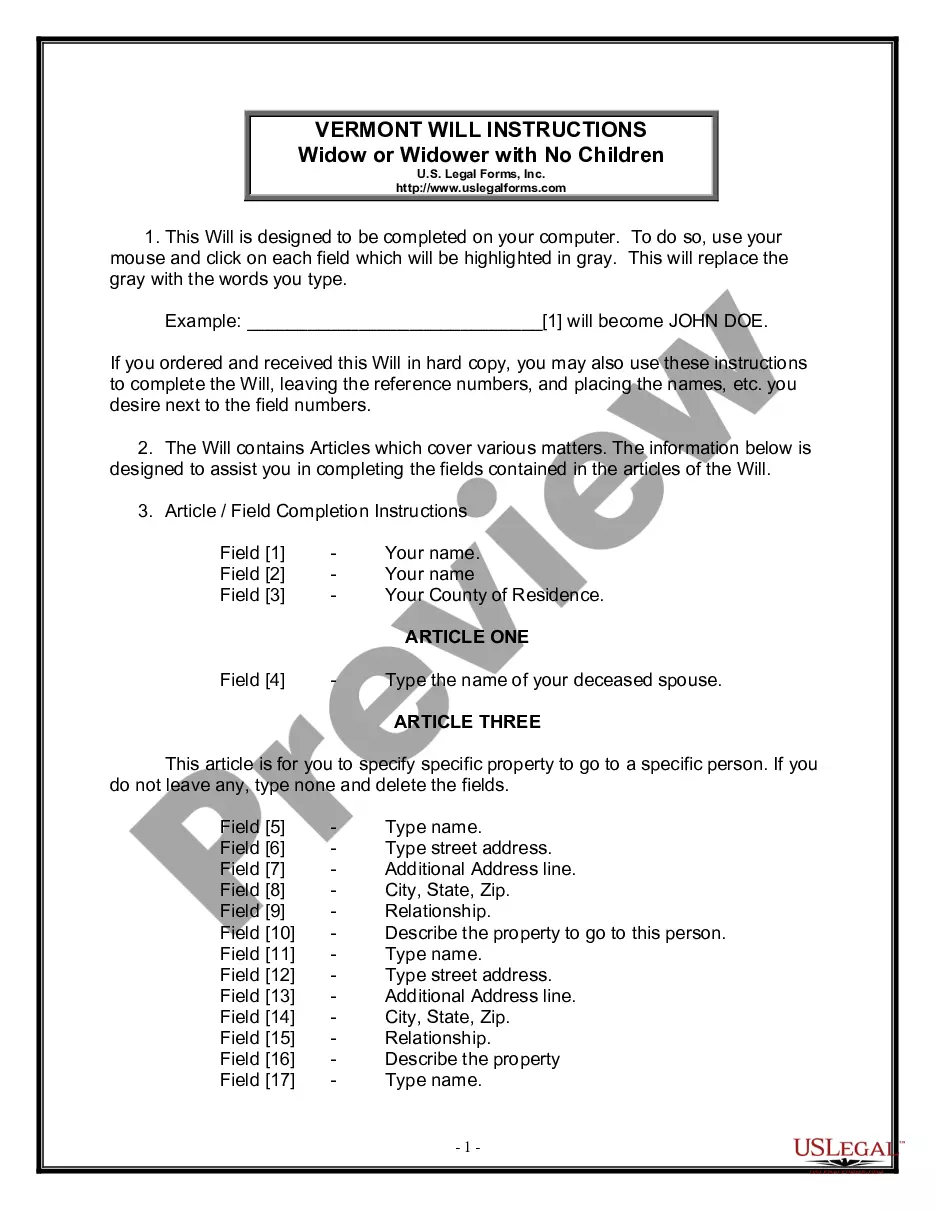
Washington Revocation of Anatomical Gift Donation
What is this form?
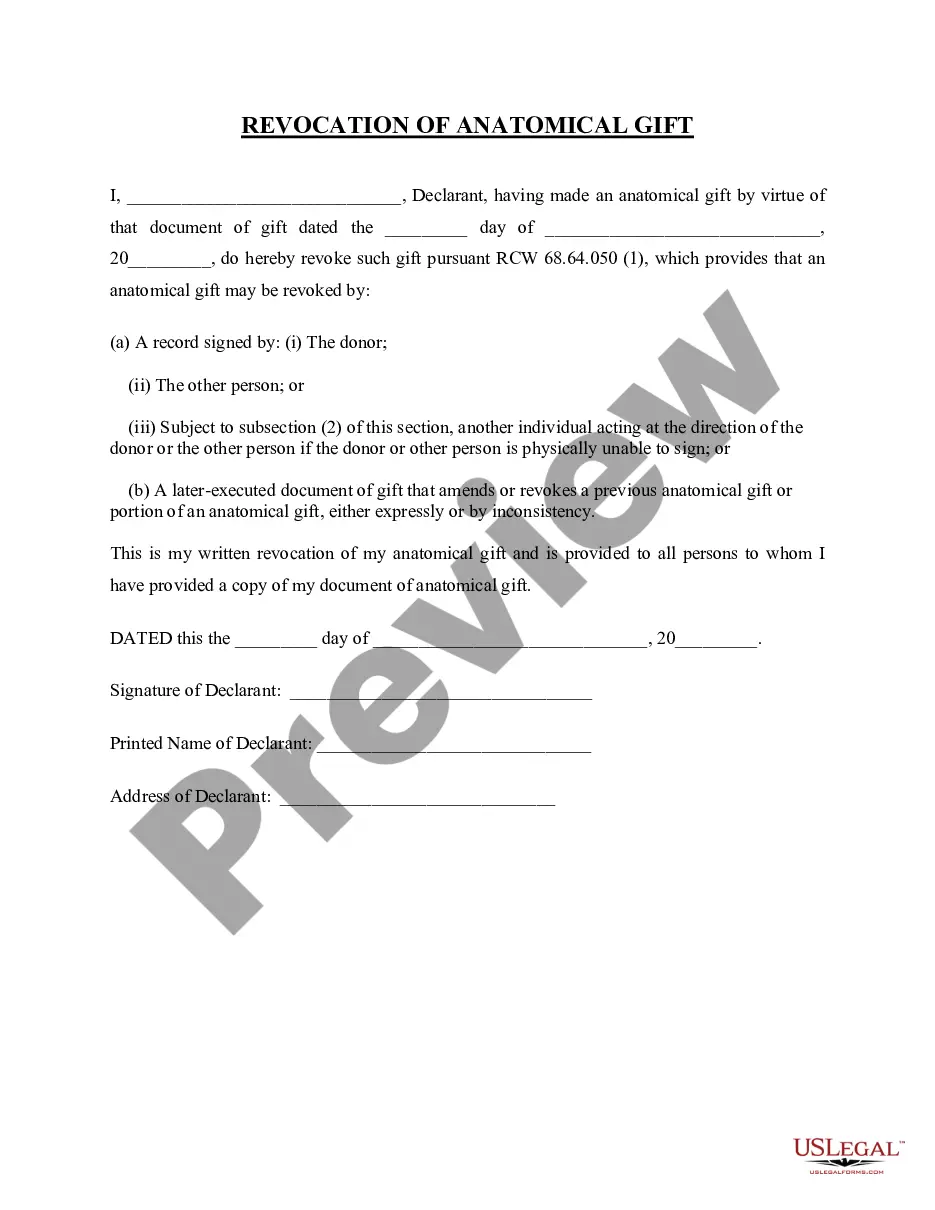
The Revocation of Anatomical Gift Donation form is a legal document that allows an individual to officially revoke previously made anatomical gifts, such as organ donations, as specified in earlier documents. This form differs from the original anatomical gift forms by facilitating the withdrawal of the consent to donate body parts or organs at the time of death, ensuring that the individual's wishes are respected in all circumstances.
Main sections of this form
- Declarant's identification: Includes the full name of the individual revoking the anatomical gift.
- Previous donation details: Specifies the date and reference to the earlier document of anatomical gift.
- Clear statement of revocation: A formal declaration revoking the previously made anatomical gift.
- Signature of declarant: Requires the signature of the individual revoking the gift.
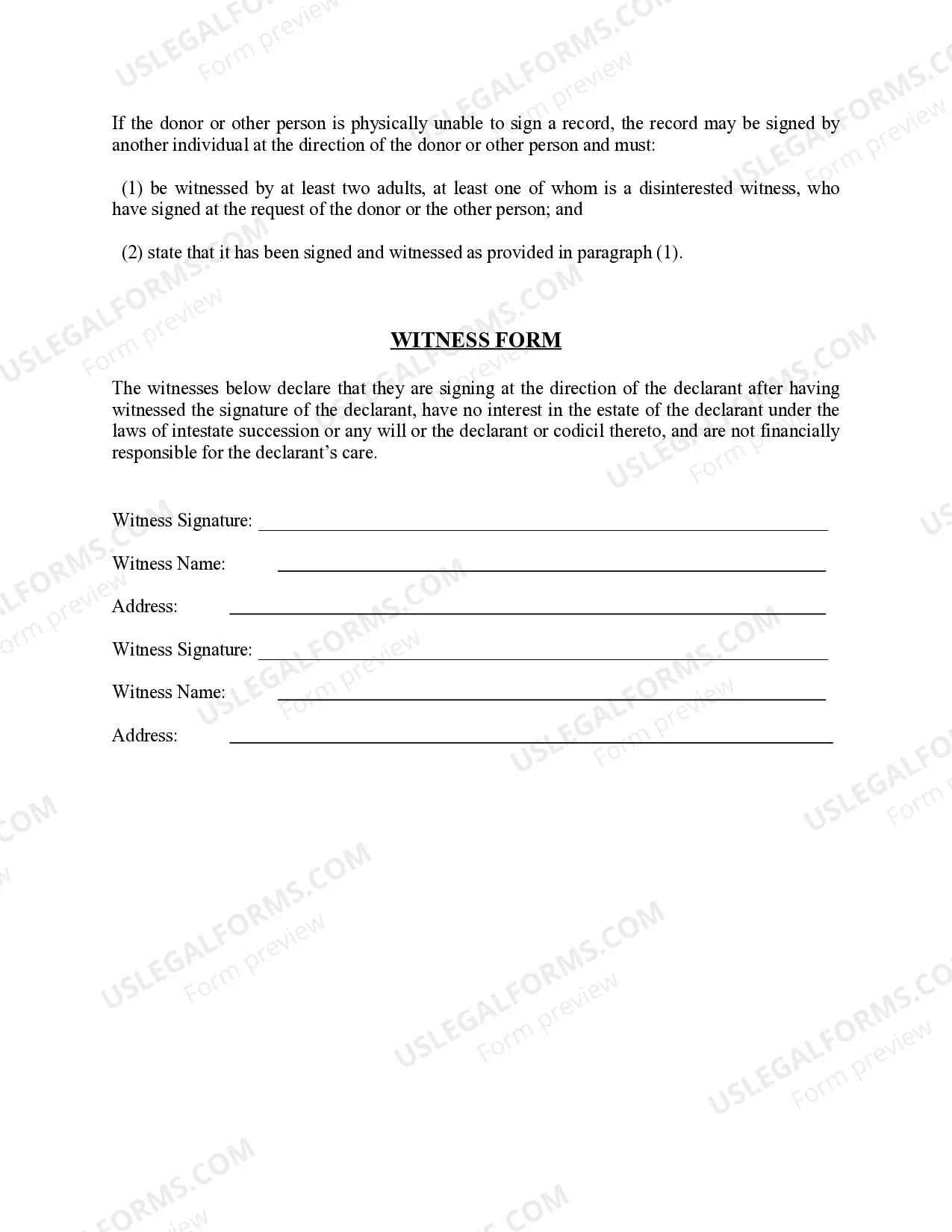
- Witness requirements: Must be witnessed by two adults, one of whom must be disinterested.
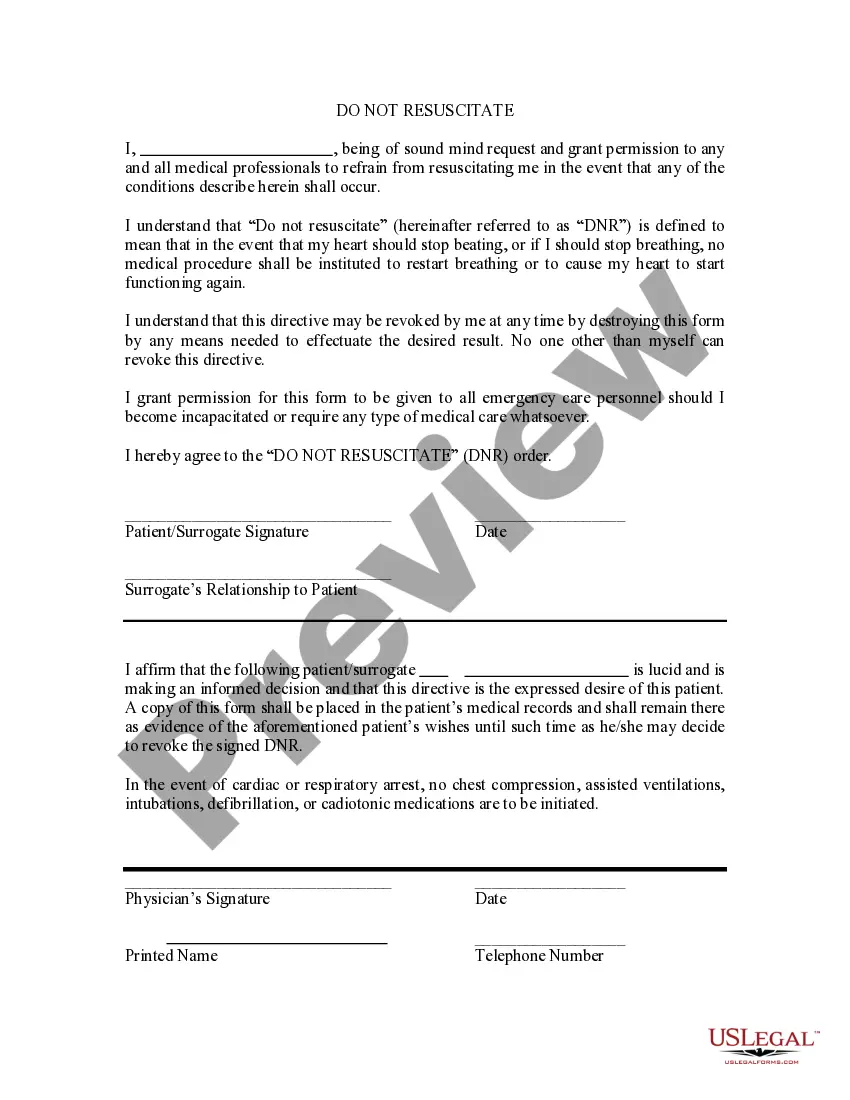
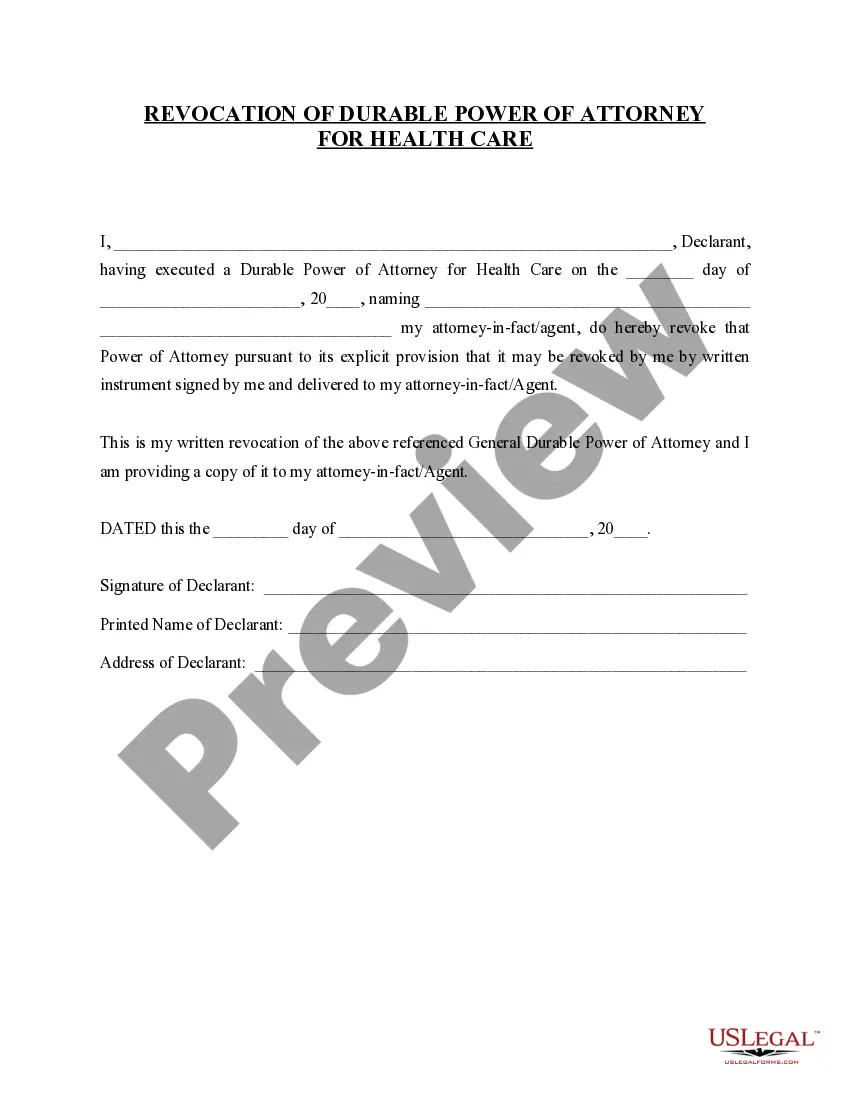
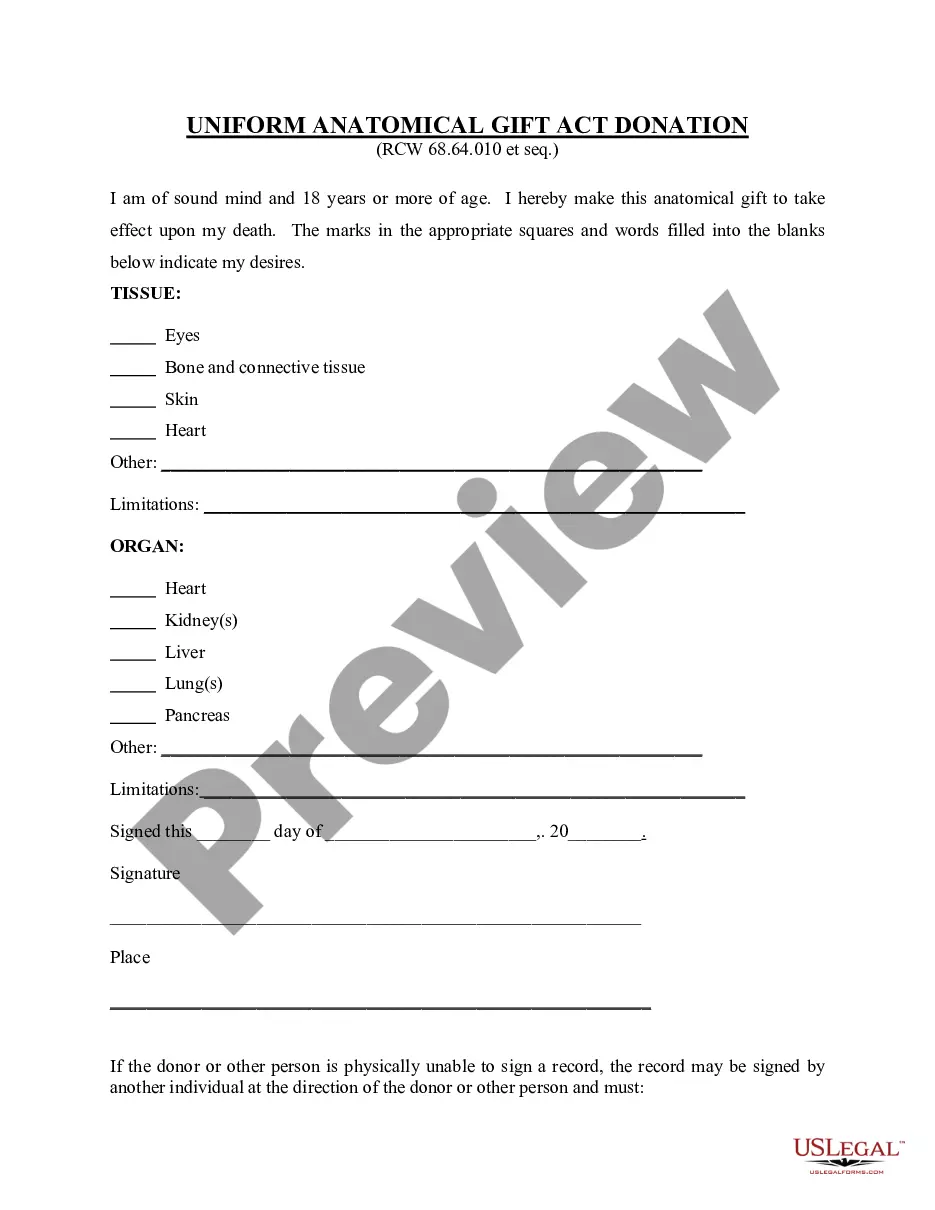
Situations where this form applies
This form is necessary when an individual wishes to withdraw their consent for anatomical donations made prior to their decision. Situations may include a change in personal beliefs, health status, or family circumstances that prompt a reconsideration of organ donation. It is also applicable when the individual needs to amend their prior donation decisions.
Who this form is for
- Individuals who have previously signed an anatomical gift donation form and wish to revoke it.
- Donors looking to update their medical directives in light of new relationships or personal convictions.
- Family members who want to ensure that a loved one's decision regarding anatomical gifts aligns with their current wishes.
Steps to complete this form
- Fill in your full name as the declarant at the designated line.
- Provide the date of your original anatomical gift as stated in the earlier document.
- Sign the form to officially revoke your anatomical gift.
- Ensure the presence of at least two disinterested adults to witness the signing.
- Complete all sections to validate your revocation and maintain copies for personal records.
Does this document require notarization?
This form does not typically require notarization unless specified by local law. It requires the presence and signatures of two witnesses to be legally binding.
Get your form ready online
Our built-in tools help you complete, sign, share, and store your documents in one place.
Make edits, fill in missing information, and update formatting in US Legal Forms—just like you would in MS Word.
Download a copy, print it, send it by email, or mail it via USPS—whatever works best for your next step.
Sign and collect signatures with our SignNow integration. Send to multiple recipients, set reminders, and more. Go Premium to unlock E-Sign.
If this form requires notarization, complete it online through a secure video call—no need to meet a notary in person or wait for an appointment.
We protect your documents and personal data by following strict security and privacy standards.

Make edits, fill in missing information, and update formatting in US Legal Forms—just like you would in MS Word.

Download a copy, print it, send it by email, or mail it via USPS—whatever works best for your next step.

Sign and collect signatures with our SignNow integration. Send to multiple recipients, set reminders, and more. Go Premium to unlock E-Sign.

If this form requires notarization, complete it online through a secure video call—no need to meet a notary in person or wait for an appointment.

We protect your documents and personal data by following strict security and privacy standards.
Common mistakes to avoid
- Not having the required number of witnesses present during signing.
- Failing to update all necessary information from the original anatomical gift forms.
- Not keeping a signed copy for personal records after revocation.
Benefits of using this form online
- Convenience of accessing and completing the form from anywhere at any time.
- Editability allows users to customize the form to their specific needs easily.
- Reliability of obtaining a legally sound document prepared by licensed attorneys.
Legal use & context
- The form serves as a legally binding declaration of the revocation of an anatomical gift.
- It helps clarify the donorâs intent in the event of disputes after their death.
- Any revocation must be executed following state laws to be enforceable.
Summary of main points
- The Revocation of Anatomical Gift Donation form is essential for individuals who wish to update or cancel their anatomical gift.
- Proper completion and witnessing are vital for the revocation to be legally effective.
- Familiarize yourself with state-specific regulations regarding anatomical gifts and revocations.
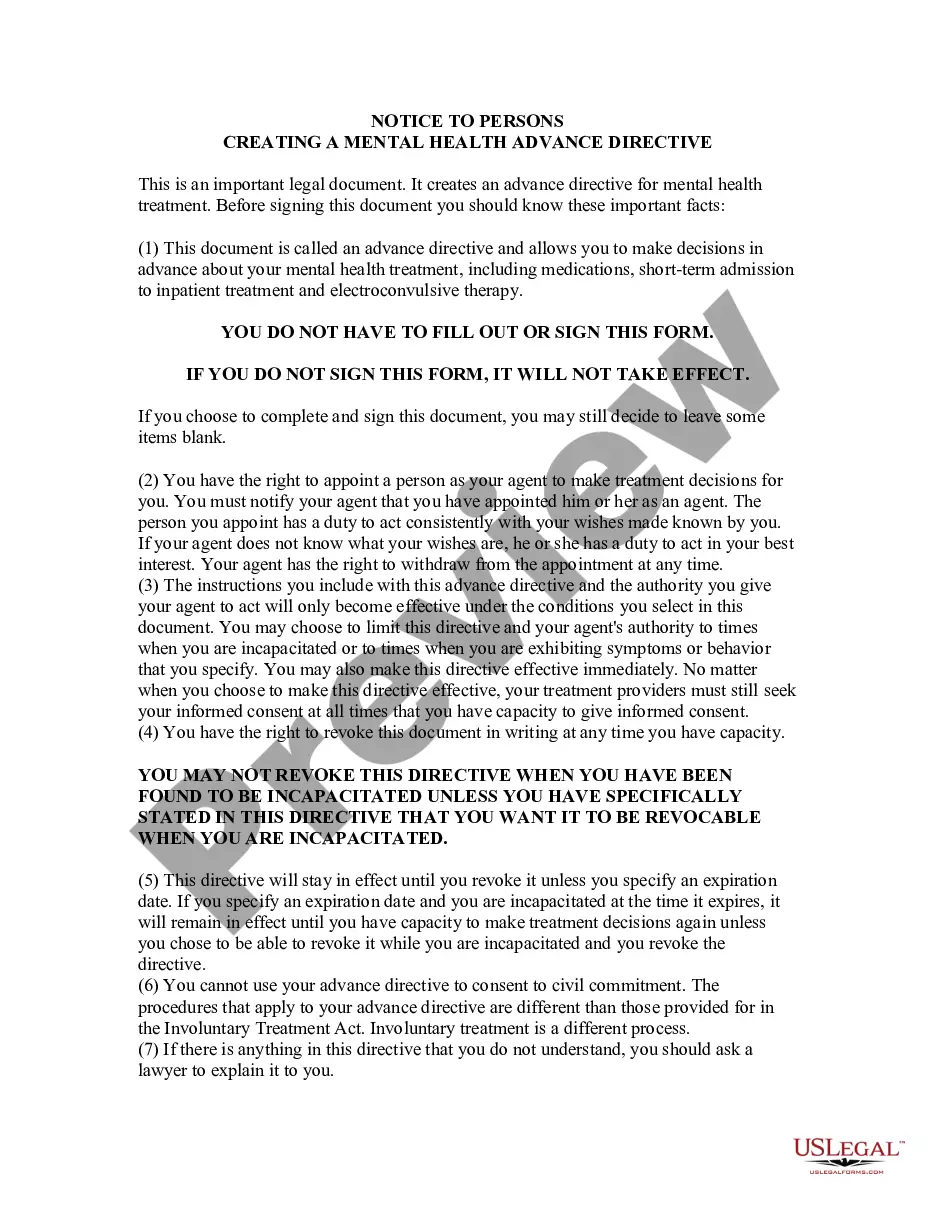
Looking for another form?

Form popularity
FAQ
The Uniform Anatomical Gift Act of 1987 The provisions of the UAGA of 1968 would ban the purchase and sale of body parts, facilitate the simplified process of obtaining authorization to retrieve organs, and ensure that medical staff establish procedures and guidelines to identify organ donors while under hospital care.
If an individual is registered, there is legally binding permission for donation at the time of the donor's death under the UAGA, and family members do not have the right to override this decision (1). This is not only the law, as in current practice most donations proceed even over family objection (3).
The Uniform Anatomical Gift Act (UAGA) has been revised in 2006 to permit the use of life support systems at or near death for the purpose of maximizing procurement opportunities of organs medically suitable for transplantation.
Organ donation is now the default choice.Donation is now the default, and if a person wishes not to donate, they must say so.Californians register their choice with the California Department of Motor Vehicles, which may indicate it on their driver's license or ID card.
If you have registered that you don't want to donate any of your organs or tissue, this may not be overruled by anyone. If you have registered that you want to be a donor, your relatives may overrule this only if they have compelling reasons to do so.
What mandates that hospitals must work with a designated organ procurement organization? Federal law, specifically the National Organ Transplant Act passed by the U.S. Congress in 1984, mandates that hospitals must work with a designated organ procurement organization.
What organs and tissues can be donated? Eight vital organs can be donated: heart, kidneys (2), pancreas, lungs (2), liver, and intestines. Hands and faces have also recently been added to the list.
Can I remove myself from the registered donors list? Yes, you can change your donor status at any time. Look for an option such as "updating your status" on your state's site. If you have a donor designation on your driver's license, removing yourself from the registry will not change that.
Deciding to donate your organs is an enormous gift.If you are in an accident and are declared legally dead, a member of the organ procurement organization (OPO) must obtain consent from your family to donate your organs.