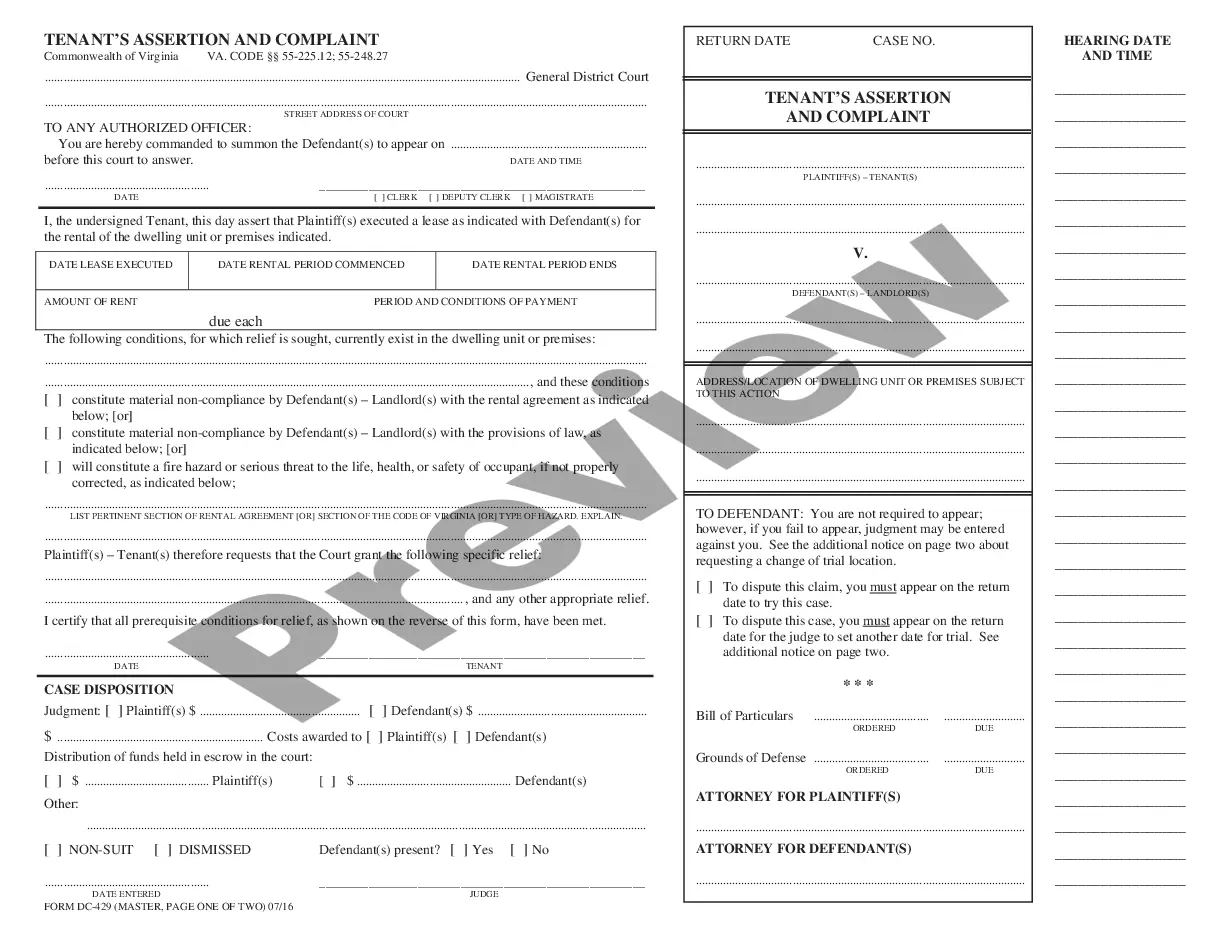
Washington Letter from Landlord to Tenant as Notice to remove unauthorized inhabitants
What is this form?
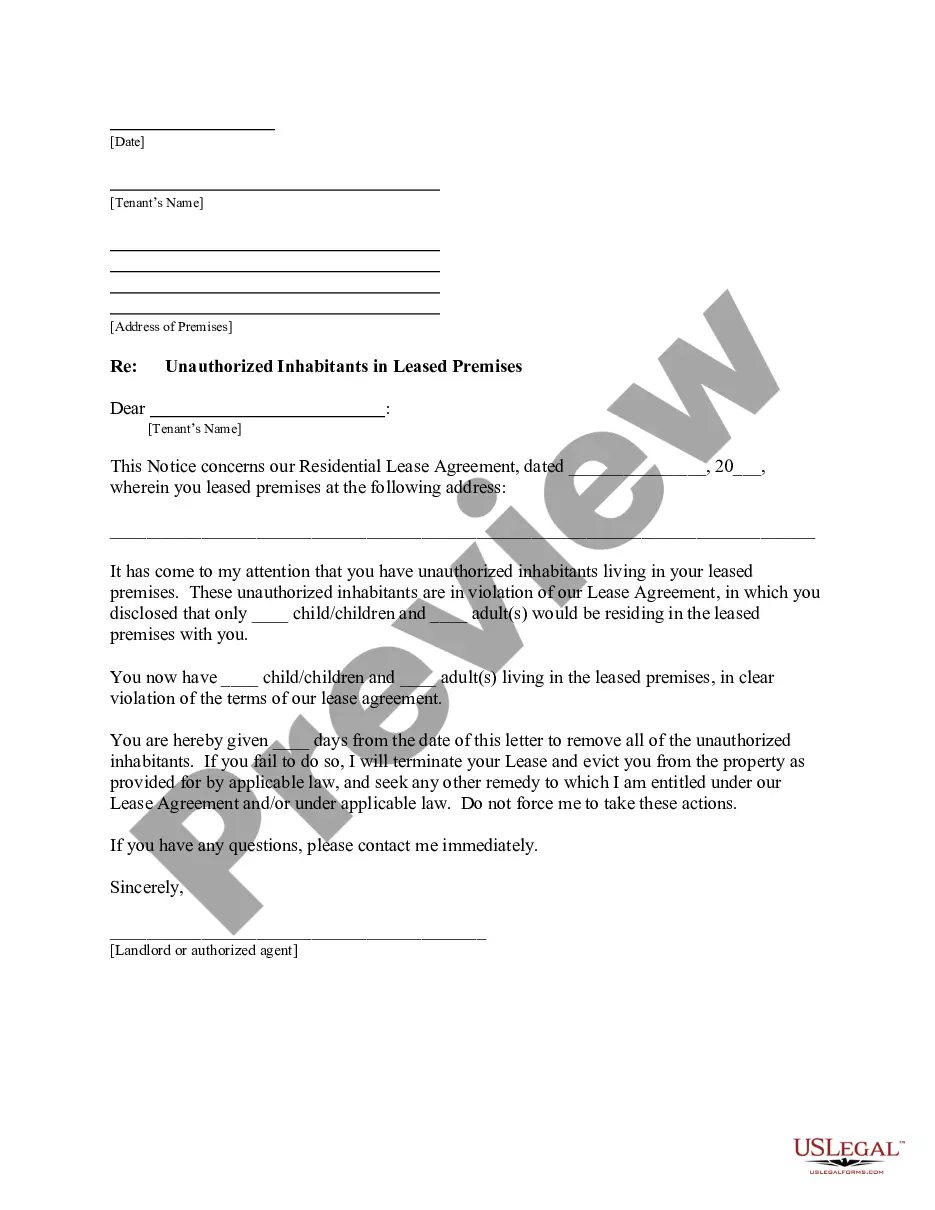
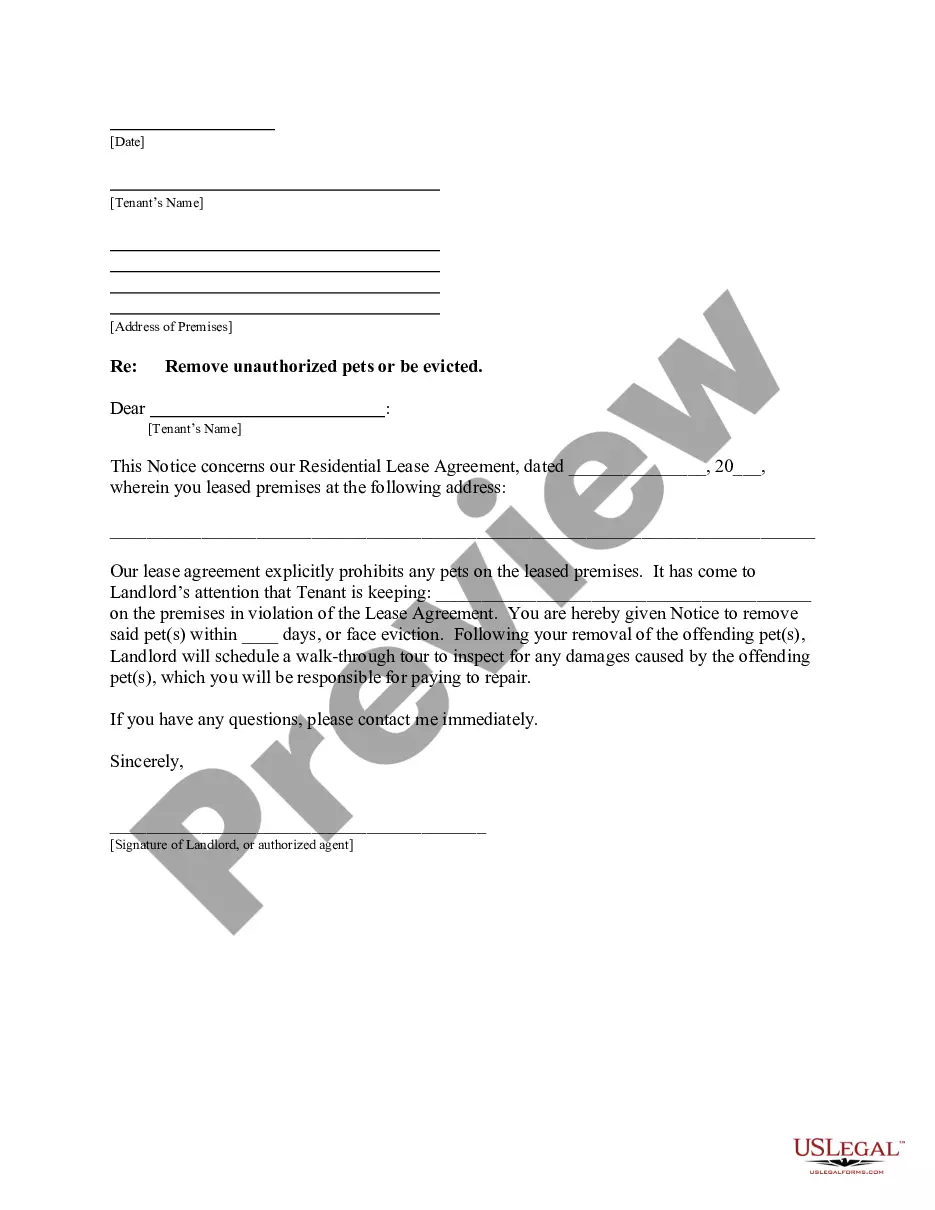
This form is a Letter from Landlord to Tenant as a Notice to remove unauthorized inhabitants. It serves as a formal communication outlining the landlord's demand that tenants remove any individuals not authorized to reside in the rental property. This form differs from general eviction notices by specifically addressing the issue of unauthorized tenants without immediately initiating eviction proceedings. It establishes a timeframe for compliance and warns of potential legal actions if the situation is not resolved.
What’s included in this form
- Identification of the lease agreement with relevant date and property address
- Description of unauthorized inhabitants and the violation of the lease terms
- Notice period given for the removal of unauthorized individuals
- Disclaimer regarding the potential lease termination and eviction
- Contact information for further discussion or clarification
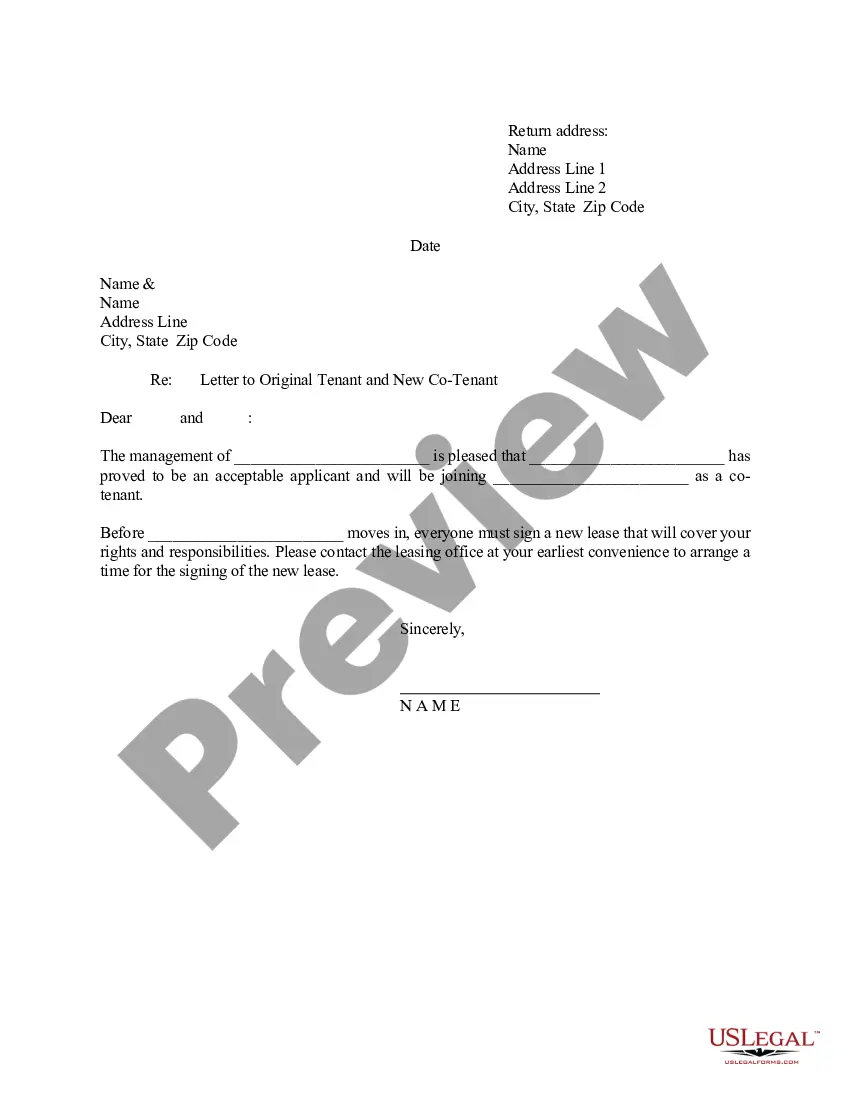
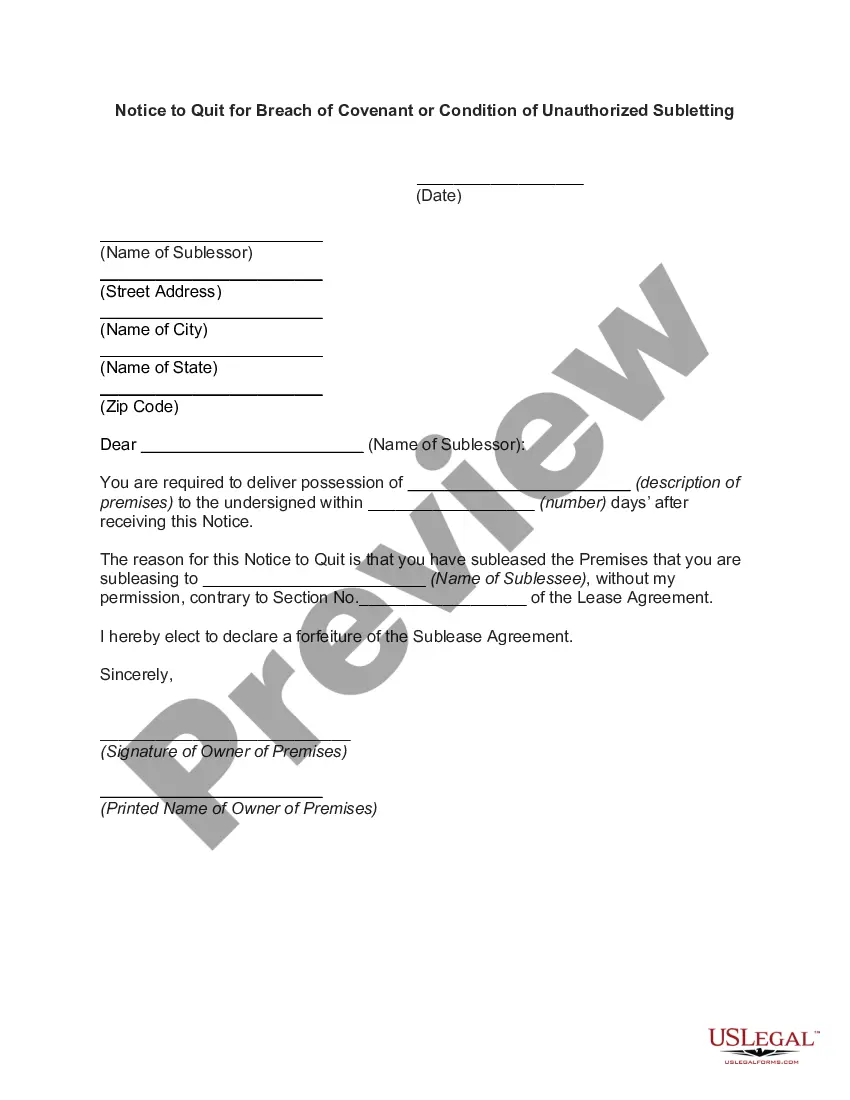

Situations where this form applies
This form is useful when a landlord discovers that a tenant has allowed unauthorized occupants to reside in their rental unit. It is appropriate to use this letter in situations where the lease agreement specifies limits on who may live in the property. Sending this notice provides tenants an opportunity to rectify the situation before further legal actions, such as eviction, are considered.
Who can use this document
- Landlords who have tenants violating lease terms by allowing unauthorized residents
- Property managers acting on behalf of landlords to enforce lease compliance
- Real estate professionals involved in rental agreements and landlord-tenant relationships
Instructions for completing this form
- Identify the parties involved by entering the names of the landlord and tenant.
- Specify the property address where the rental agreement applies.
- Detail the original lease agreement date and any violation concerning unauthorized inhabitants.
- State the number of unauthorized adults and children currently residing in the unit.
- Provide a clear deadline for tenants to comply with the notice.
- Sign and date the letter, indicating the landlord or authorized agent.
Notarization guidance
This form does not typically require notarization unless specified by local law. It's important to check local regulations to ensure compliance. Using US Legal Forms simplifies the process by providing clear guidance through state-specific requirements.
Get your form ready online
Our built-in tools help you complete, sign, share, and store your documents in one place.
Make edits, fill in missing information, and update formatting in US Legal Forms—just like you would in MS Word.
Download a copy, print it, send it by email, or mail it via USPS—whatever works best for your next step.
Sign and collect signatures with our SignNow integration. Send to multiple recipients, set reminders, and more. Go Premium to unlock E-Sign.
If this form requires notarization, complete it online through a secure video call—no need to meet a notary in person or wait for an appointment.
We protect your documents and personal data by following strict security and privacy standards.

Make edits, fill in missing information, and update formatting in US Legal Forms—just like you would in MS Word.

Download a copy, print it, send it by email, or mail it via USPS—whatever works best for your next step.

Sign and collect signatures with our SignNow integration. Send to multiple recipients, set reminders, and more. Go Premium to unlock E-Sign.

If this form requires notarization, complete it online through a secure video call—no need to meet a notary in person or wait for an appointment.

We protect your documents and personal data by following strict security and privacy standards.
Avoid these common issues
- Failing to specify the exact number of unauthorized inhabitants.
- Not including the correct lease agreement date or property address.
- Neglecting to provide a clear deadline for tenants to respond.
- Using language that may not comply with state-specific landlord-tenant laws.
Advantages of online completion
- Easy access to professionally drafted legal documents.
- Editability allows landlords to customize the notice to their specific needs.
- Quick downloads save time compared to drafting from scratch.
- Reliable templates ensure compliance with legal standards.
Legal use & context
- This notice is a crucial step in the process of addressing unauthorized occupants.
- It should be used in accordance with local lease agreements and tenant laws.
- Failure to follow proper notice protocols may impede eviction actions.
Key takeaways
- Use this form to formally notify tenants of unauthorized residents.
- Include precise details about the violation and actions required.
- Adhere to state laws regarding notice periods and eviction processes.
Looking for another form?








Form popularity
FAQ
1) Eviction Notices An eviction notice must first be served properly and the tenant must have failed to comply, pay, or vacate within the specified timeframe. This must happen before the landlord can begin the eviction court process by serving you an unlawful detainer eviction lawsuit, called a Summons & Complaint.
1) Give your landlord at least 20 days written notice. The landlord must receive written notice of your move-out date 20 days before the end of the rental period.
1Gather documents relating to your home and the person you wish to evict.2Give written notice to the family member, informing him or her that you wish them to leave.3Wait out the notice period.If you want a family member to leave your home NationalEvictions\nnationalevictions.com > BLOG: Industry Articles > Eviction Information
1Give a Three-Day Notice.2Obtain an Order to Show Cause.3Eviction Complaint and Summons.4Optional Registry Notice.5Serving the Tenant.6Attending the Court Hearing.How to Evict a Tenant in Washington State Vancouver Property\nwww.zenithpro.com > how-to-evict-a-tenant-in-washington-state
Month-to-month tenants must be given written notice that their landlord is terminating their tenancy before the end of the rental period. In most cities in Washington State, the landlord must give the tenant at least 20 days' notice before termination.
Evictions in Washington State generally take around three weeks from start to finish, but this can vary. There are many variables that impact the length of time the eviction process will take. Below is a sample timeline for eviction due to non-payment of rent.
In the state of Washington, if tenants hold over, or stay in the rental unit after the rental term has expired, then the landlord must give tenants notice before evicting them. This can include tenants without a written lease and week-to-week and month-to-month tenants.
1Give these tenants notice to move with the proper waiting period (30 day notice).2If the tenants don't want to move, the landlords can file for eviction with the courts.3The landlord can prepare documents explaining they acquired the property without plans to keep the tenants or why they must leave.
If your family member or friend fails to leave by the requested date, you can then file an eviction petition. Once you file your petition, you must request an unlawful detainer hearing. This is a short court hearing in which you explain the reason for the eviction and present evidence of the prior notices to vacate.