Washington Letter from Landlord to Tenant about time of intent to enter premises
Understanding this form
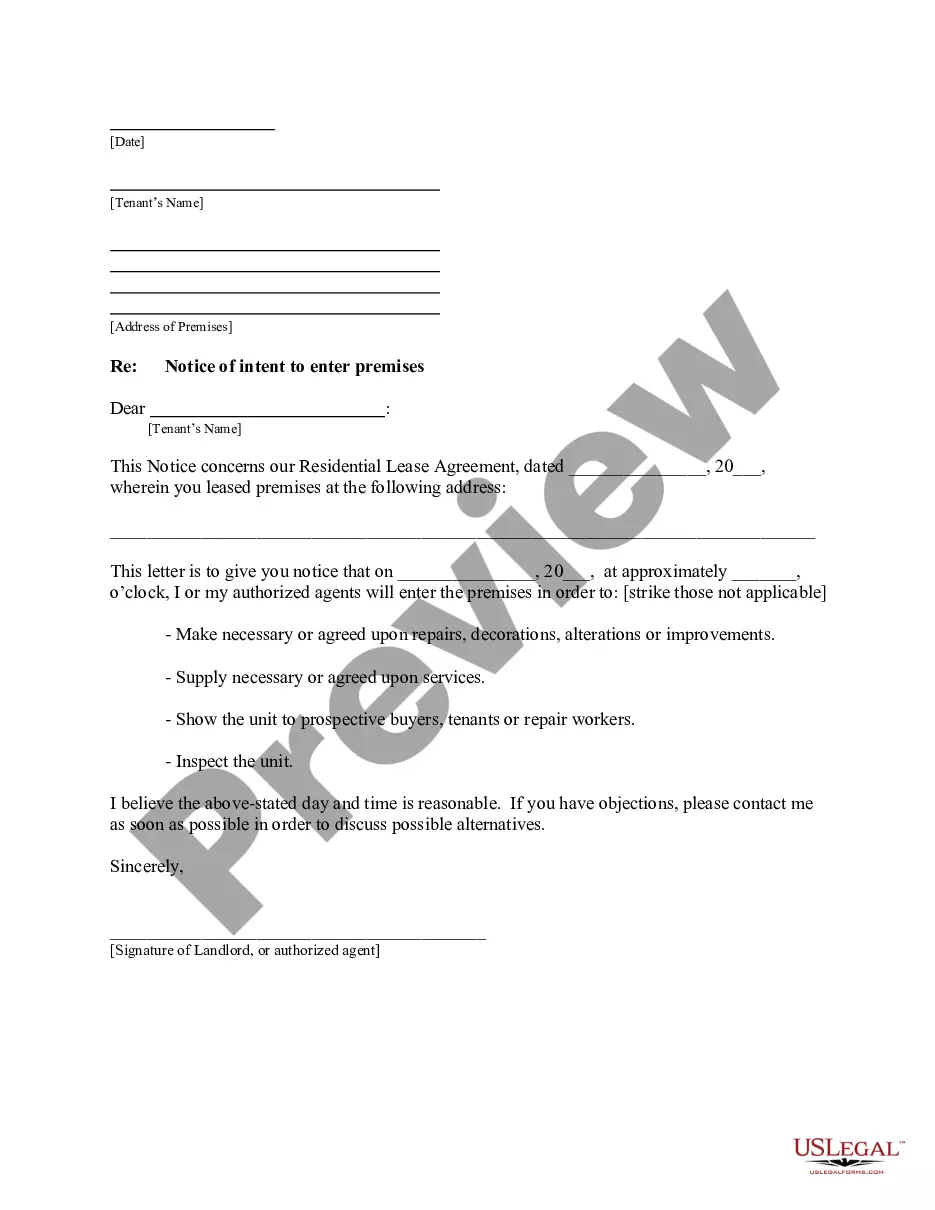
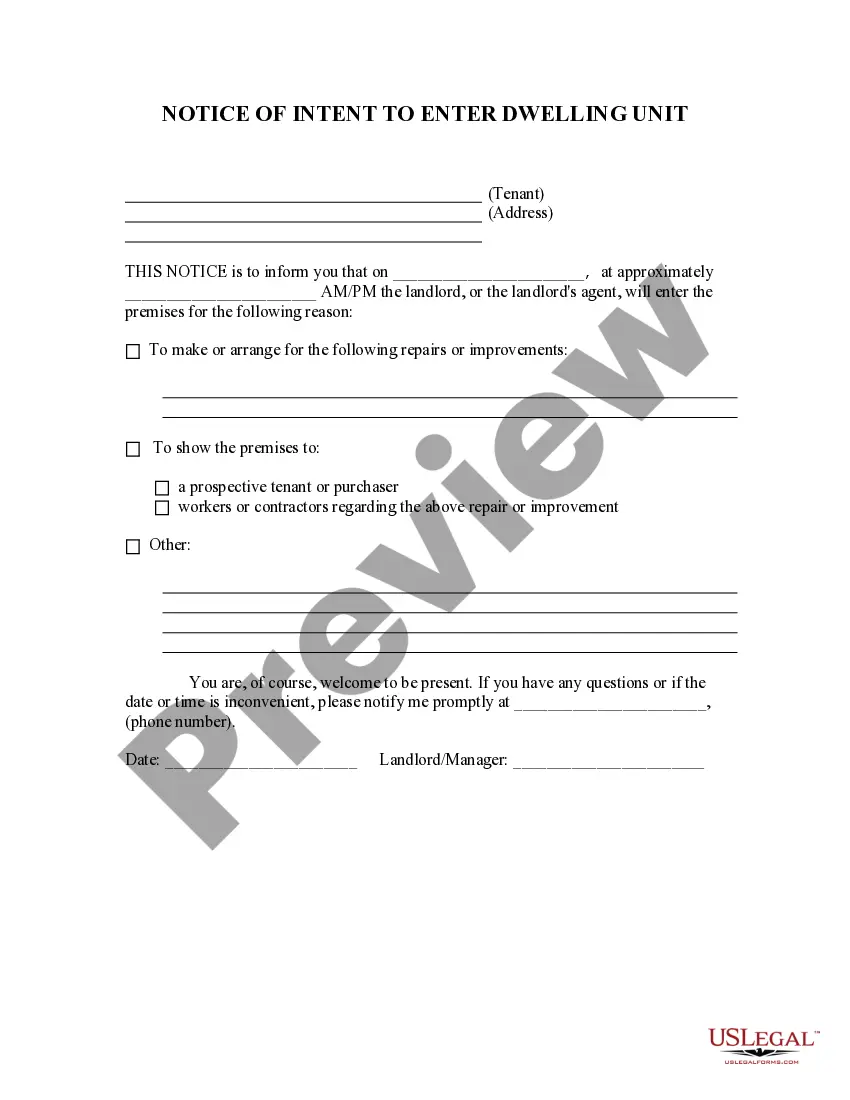
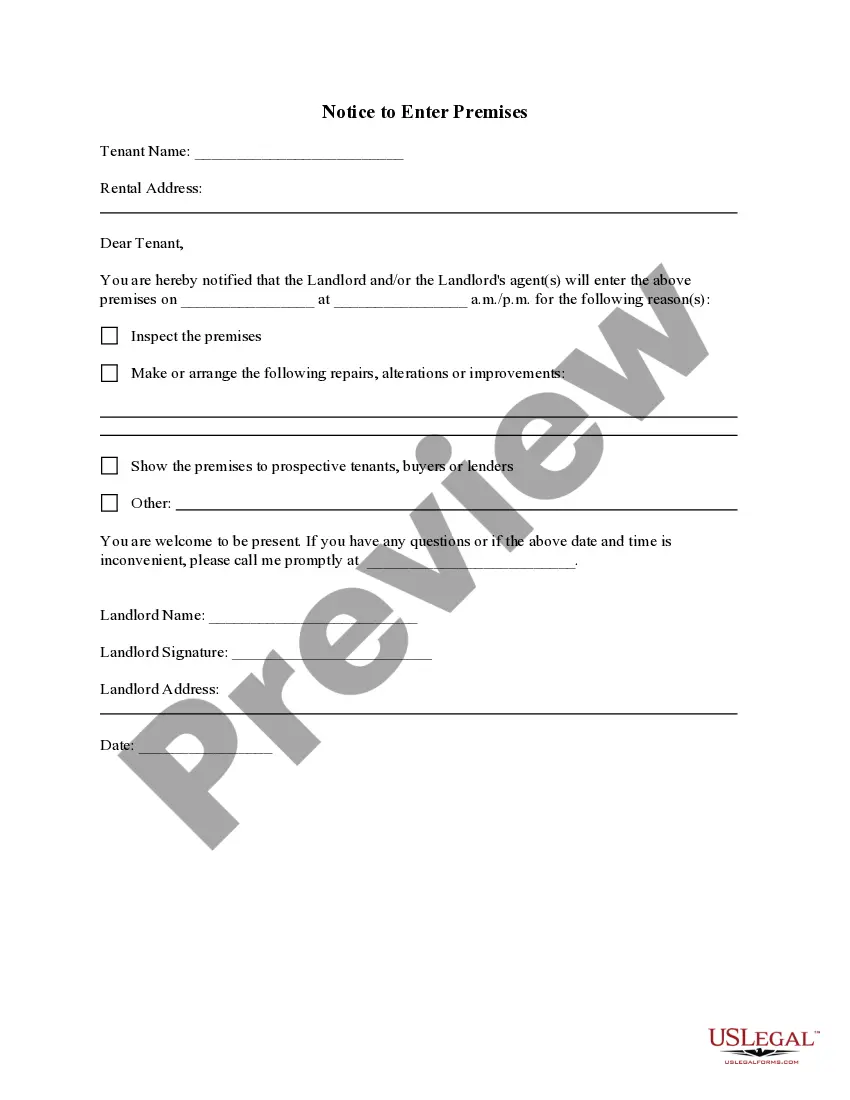
This form is a letter from a landlord to a tenant, issued to notify the tenant about the landlord's intention to enter the leased premises. It serves as an official notice outlining the reasons for entry, which may include repairs, inspections, or showings. This Letter from Landlord to Tenant about time of intent to enter premises helps ensure clear communication and compliance with lease agreements, distinguishing itself from other notices related to tenancy and property management.
Key components of this form
- Date of the residential lease agreement.
- Address of the leased premises.
- Date and time of the intended entry.
- Reasons for the entry (repairs, inspections, etc.).
- Landlord's contact information for any objections.
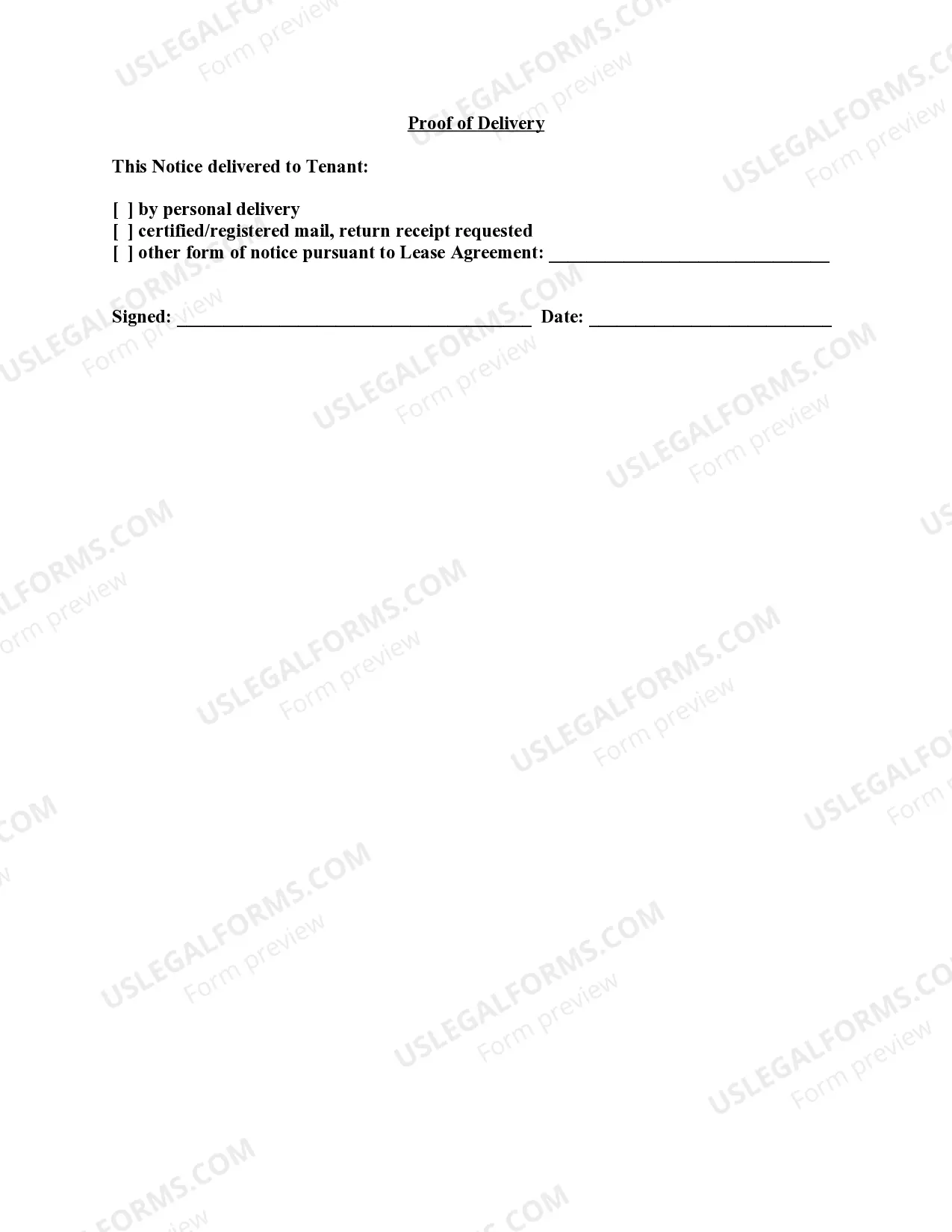
- Proof of delivery methods, such as personal delivery or certified mail.
Common use cases
This form is useful when a landlord needs to inform a tenant about upcoming entries into the rental property. Common scenarios include scheduling maintenance or repairs, conducting inspections, or showing the property to prospective renters or buyers. Using this notice helps prevent misunderstandings and ensures that tenants are given adequate notice as required by law.
Who should use this form
- Landlords managing residential properties.
- Property managers acting on behalf of landlords.
- Real estate agents involved in property showings.
- Tenants tracking notification of property access.
How to complete this form
- Identify the date of the lease agreement.
- Provide the full address of the leased premises.
- Enter the specific date and time you intend to enter the property.
- Indicate the reasons for entering the premises by striking out those that do not apply.
- Sign the letter as the landlord or authorized agent.
- Deliver the notice to the tenant, documenting the method of delivery.
Notarization guidance
Notarization is not commonly needed for this form. However, certain documents or local rules may make it necessary. Our notarization service, powered by Notarize, allows you to finalize it securely online anytime, day or night.
Get your form ready online
Our built-in tools help you complete, sign, share, and store your documents in one place.
Make edits, fill in missing information, and update formatting in US Legal Forms—just like you would in MS Word.
Download a copy, print it, send it by email, or mail it via USPS—whatever works best for your next step.
Sign and collect signatures with our SignNow integration. Send to multiple recipients, set reminders, and more. Go Premium to unlock E-Sign.
If this form requires notarization, complete it online through a secure video call—no need to meet a notary in person or wait for an appointment.
We protect your documents and personal data by following strict security and privacy standards.

Make edits, fill in missing information, and update formatting in US Legal Forms—just like you would in MS Word.

Download a copy, print it, send it by email, or mail it via USPS—whatever works best for your next step.

Sign and collect signatures with our SignNow integration. Send to multiple recipients, set reminders, and more. Go Premium to unlock E-Sign.

If this form requires notarization, complete it online through a secure video call—no need to meet a notary in person or wait for an appointment.

We protect your documents and personal data by following strict security and privacy standards.
Common mistakes
- Failing to provide adequate notice as required by state law.
- Not including all necessary information, such as reasons for entry.
- Neglecting to document proof of delivery properly.
- Using vague language that may lead to misunderstandings.
Why complete this form online
- Easy to download and customize according to your needs.
- Drafted by licensed attorneys to ensure legality and compliance.
- Convenient access to templates anytime, anywhere.
- Editable format allows for quick adjustments before sending.
Summary of main points
- This form officially notifies tenants of the landlord's intent to enter the premises.
- Used for various valid reasons such as repairs and inspections.
- Must be filled out with specific details for clarity.
- Important for maintaining good landlord-tenant relationships.
Looking for another form?

Form popularity
FAQ
Your landlord or their representatives may be allowed reasonable access to carry out inspections or repairs, but must first get your permission. According to Section 11, from The Landlord and Tenant Act 1985, your landlord needs to give you at least 24 hour notice before they come around and visit for any reason.
Your landlord or their representatives may be allowed reasonable access to carry out inspections or repairs, but must first get your permission. According to Section 11, from The Landlord and Tenant Act 1985, your landlord needs to give you at least 24 hour notice before they come around and visit for any reason.
Unless there is a term in your tenancy agreement which allows you to schedule viewings during the last month of a tenancy, your sitting tenants are entitled to refuse any agent or viewers access to the property.
Apply to the Tribunal for orders: to stop the landlord/agent entering the premises. (Apply within 3 months after you become aware of the landlord's/agent's breach.) report trespass to the police. complain to NSW Fair Trading.
State law requires both landlords and renters to be reasonable about seeking and granting access to a rental unit (RCW 59.18.A landlord cannot enter a renter's home without the occupant's consent. A landlord has a right to enter the renter's home for necessary or agreed repairs and inspections.
When you rent a property from a landlord it becomes your home. They should only enter the property without you being present, if you have given permission for them to do so, or in a genuine emergency.
The landlord must give at least 7 days notice. Show to Prospective Tenants: reasonable notice - the landlord can access the premises a reasonable number of times during the 14 days before the end of the tenancy agreement to show the premises to prospective tenants.
Dear (Name of landlord or manager), This letter constitutes my written (number of days' notice that you need to give based on your lease agreement)-day notice that I will be moving out of my apartment on (date), the end of my current lease. I am leaving because (new job, rent increase, etc.)
In all states, a landlord can enter the property in an emergency without notice or permission.Even if your landlord gives you notice, he or she must have a good reason to enter the property. In most cases, your landlord can enter your home: In an emergency.