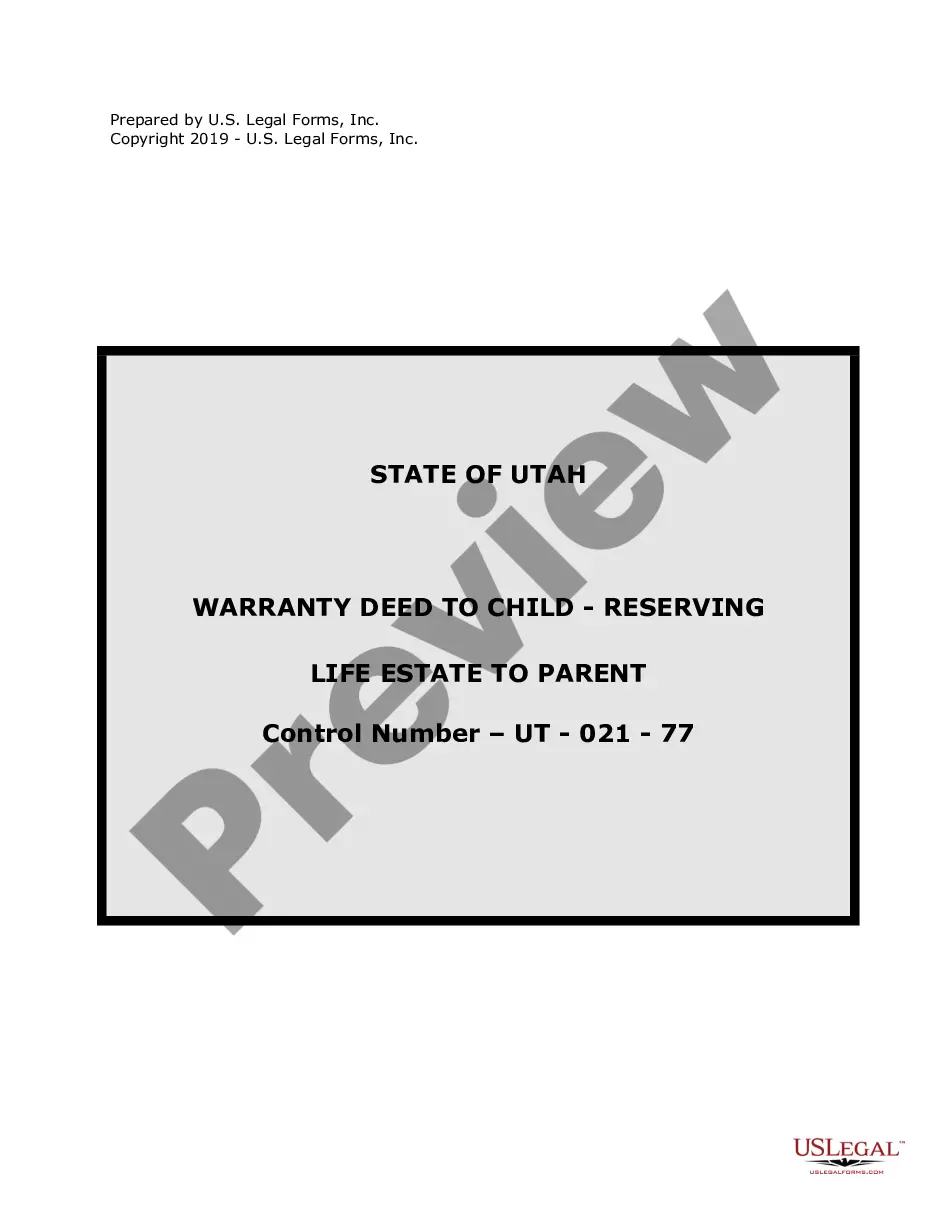
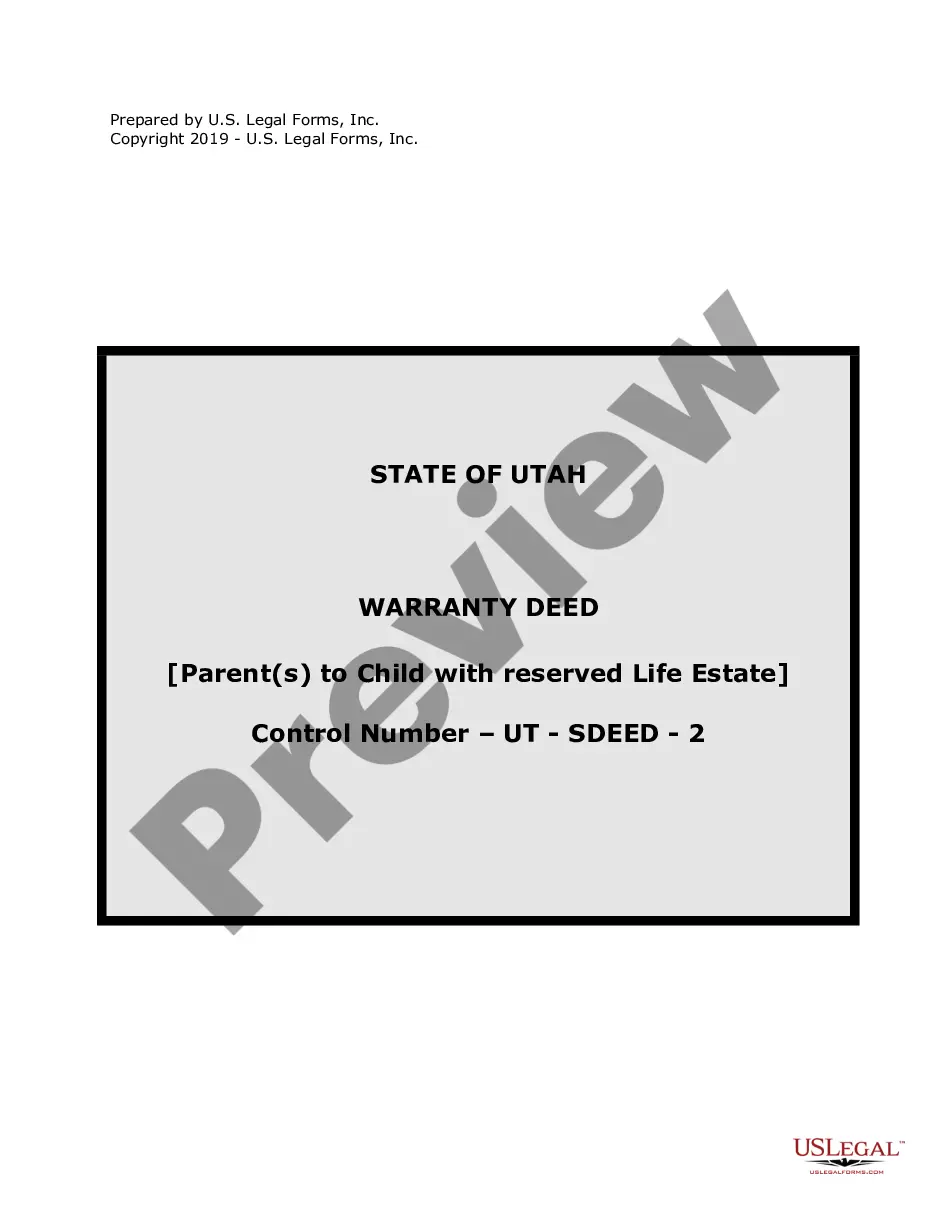
Utah Warranty Deed to Child Reserving a Life Estate in the Parents

About this form
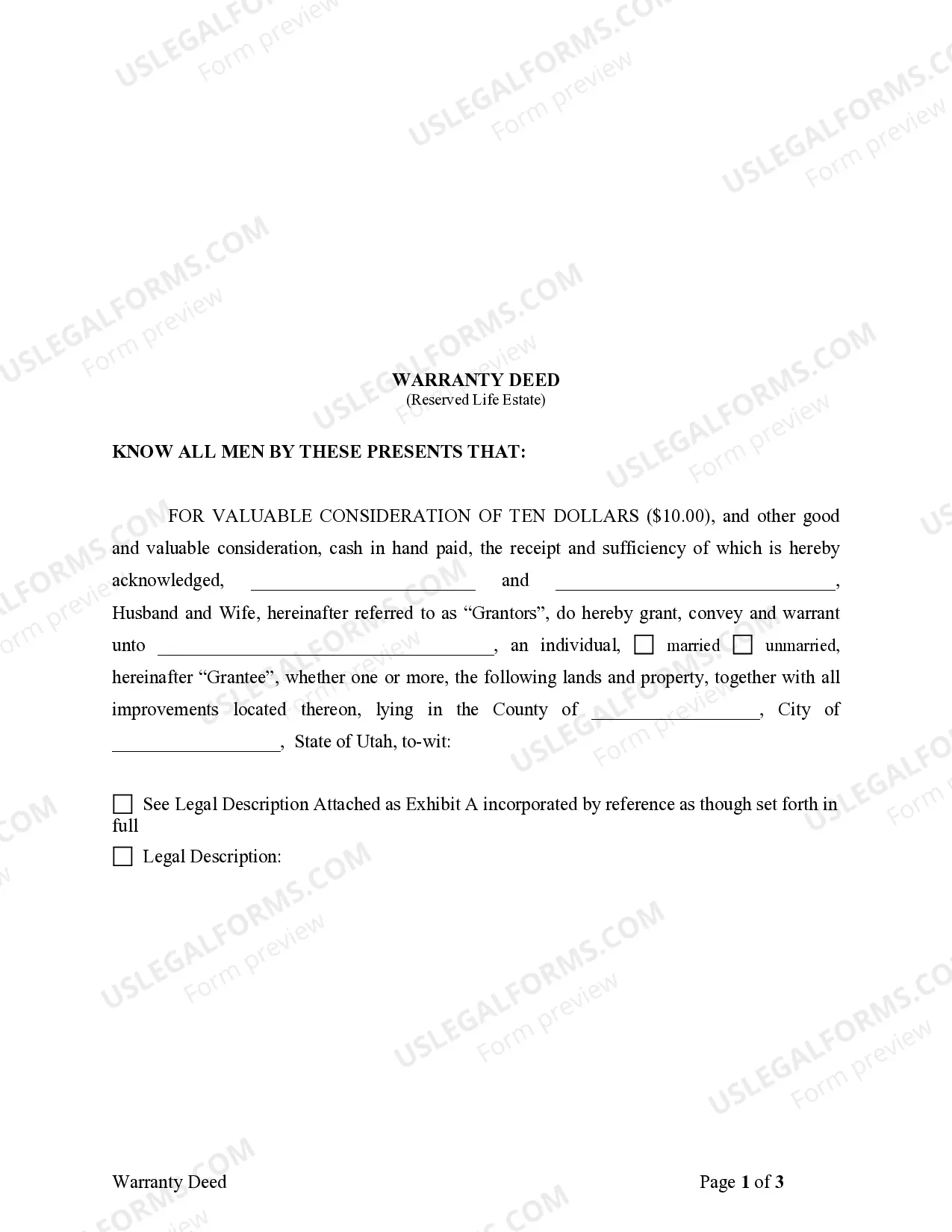
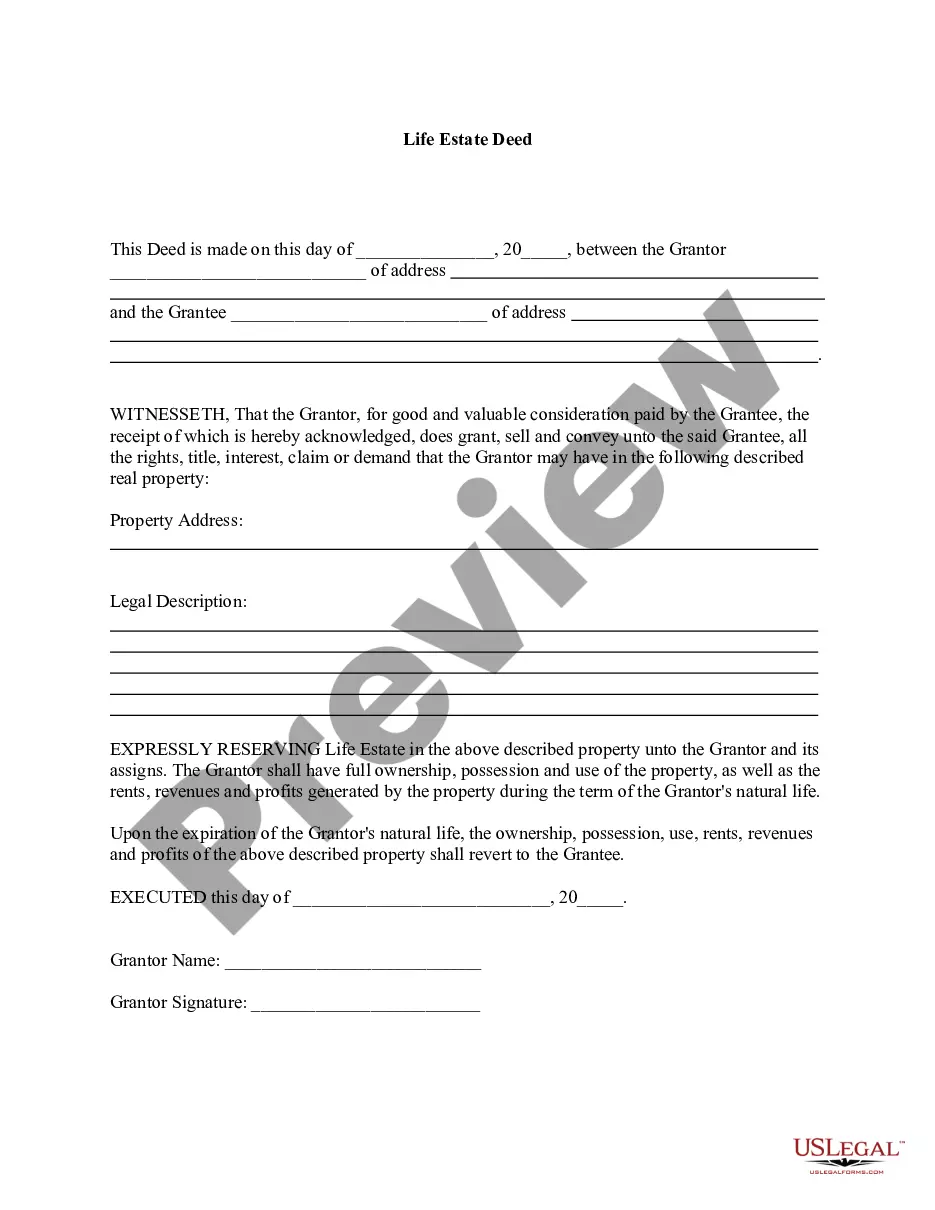
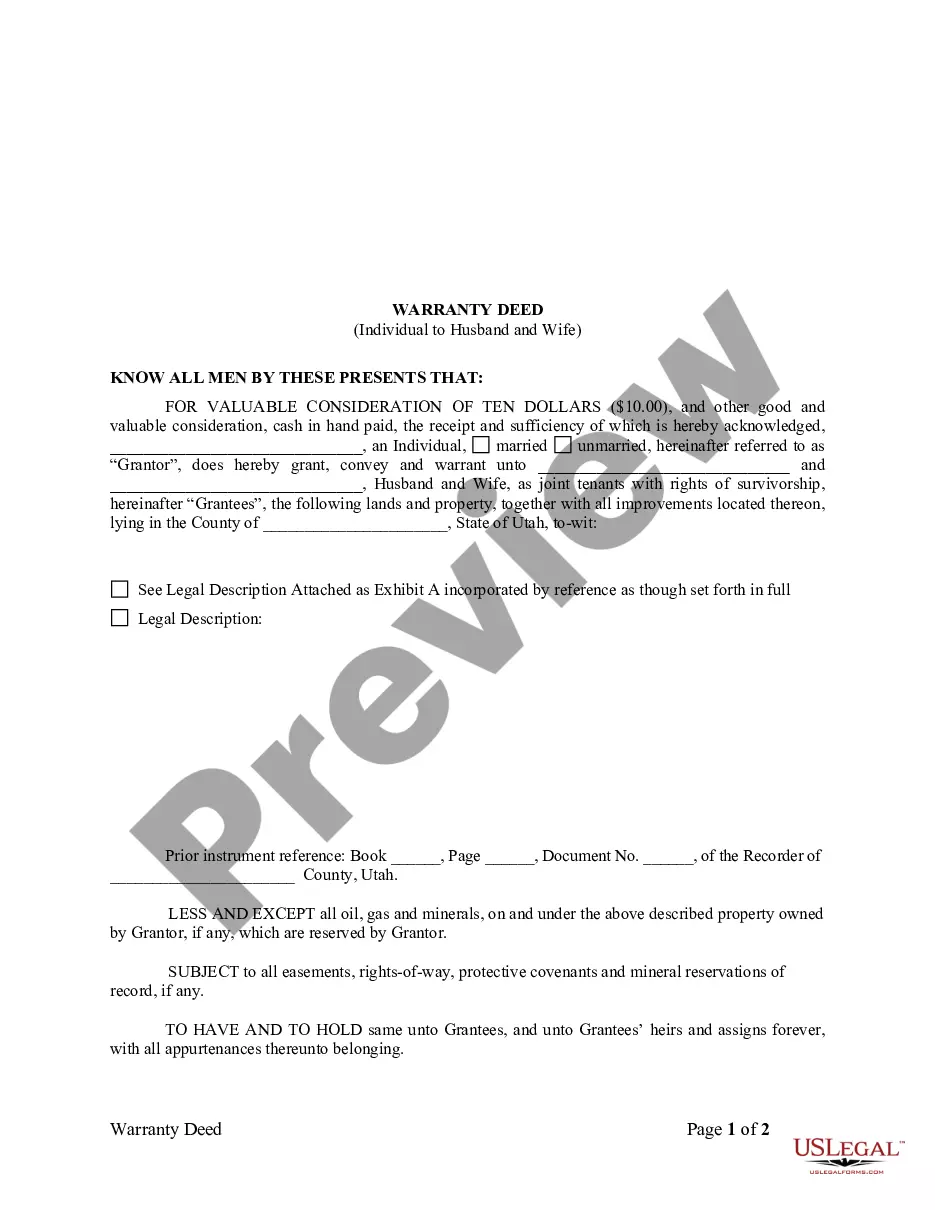
This Warranty Deed to Child Reserving a Life Estate in the Parents is a legal document that allows parents to transfer property ownership to their child while retaining the right to use the property for their lifetime. This type of deed differs from other forms of conveyance as it maintains a life estate for the grantors, meaning they can live on and enjoy the property until their passing, after which the child gains full ownership. This legal mechanism is commonly used to facilitate estate planning while minimizing tax implications and ensuring asset protection for the family.
Main sections of this form
- Identification of the grantors (parents) and grantee (child).
- Description of the property being conveyed.
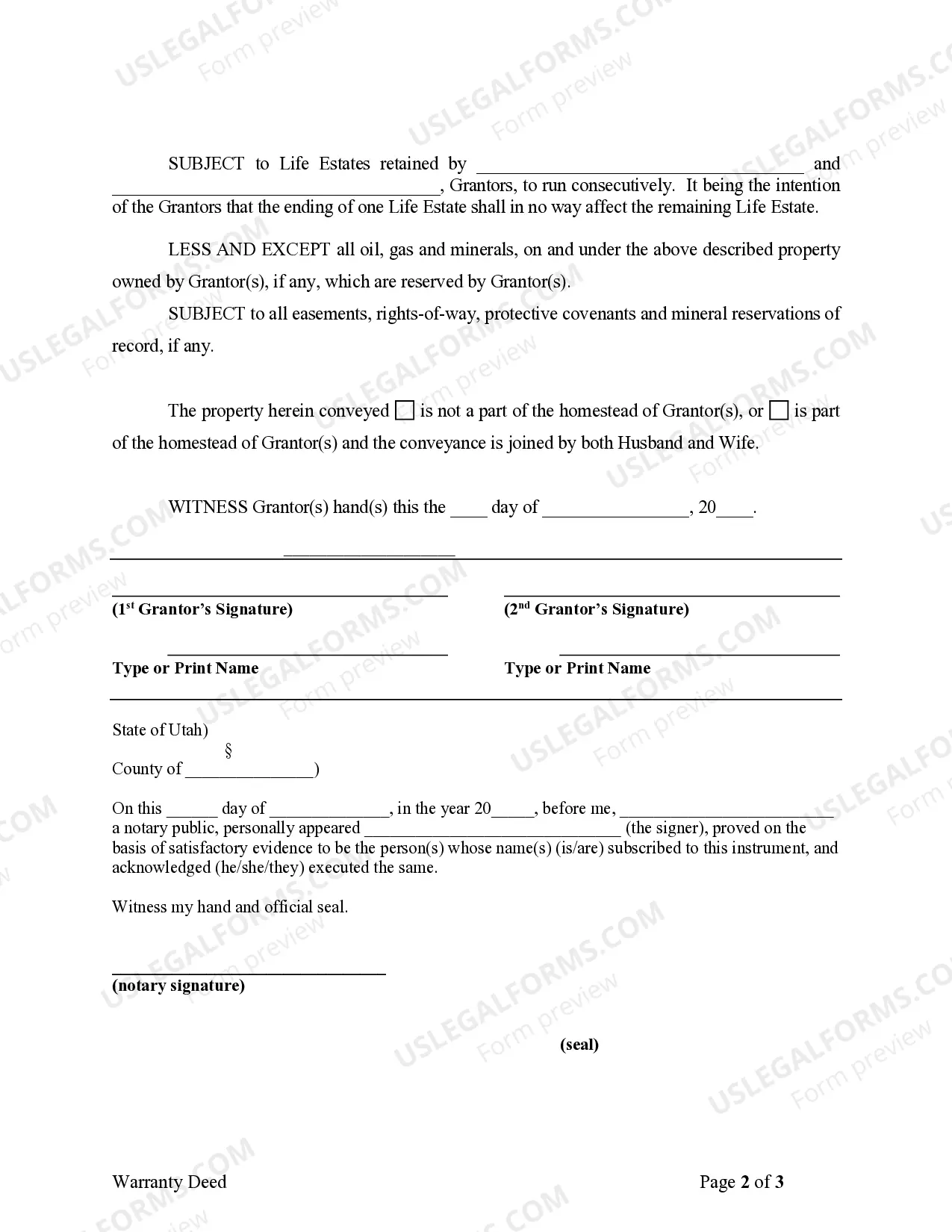
- Reservation of a life estate for the grantors.
- Provisions regarding any encumbrances on the property.
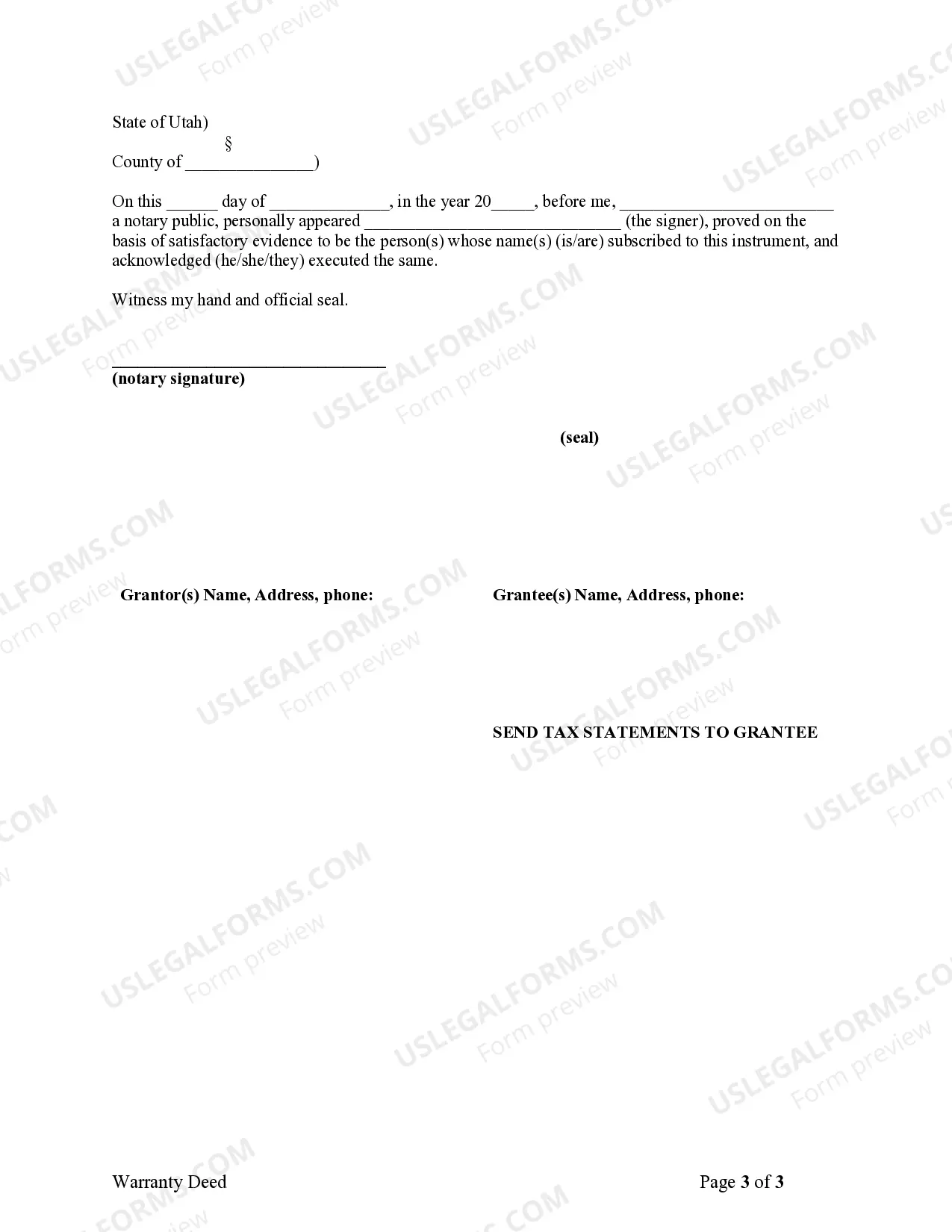
- Signatures of the grantors required for validity.
Common use cases
Use this Warranty Deed to Child when you, as a parent, want to transfer real estate to your child while ensuring you retain the right to live in and utilize the property during your lifetime. This form is useful in estate planning as it can help avoid probate, reduce estate taxes, and clarify property ownership among family members.
Who needs this form
- Parents who wish to transfer property to their child while reserving a right to live in it.
- Individuals involved in estate planning who want to manage their assets effectively.
- Homeowners looking to simplify inheritance procedures for their children.
How to complete this form
- Identify the grantors (parents) by entering their names and relevant details.
- Specify the grantee (child) by entering their name and marital status.
- Provide a clear legal description of the property being conveyed.
- Indicate whether the property is part of a homestead and include any encumbrances.
- Have both grantors sign the document on the designated lines provided.
Notarization guidance
This form must be notarized to be legally valid. US Legal Forms provides secure online notarization powered by Notarize, allowing you to complete the process through a verified video call.
Get your form ready online
Our built-in tools help you complete, sign, share, and store your documents in one place.
Make edits, fill in missing information, and update formatting in US Legal Forms—just like you would in MS Word.
Download a copy, print it, send it by email, or mail it via USPS—whatever works best for your next step.
Sign and collect signatures with our SignNow integration. Send to multiple recipients, set reminders, and more. Go Premium to unlock E-Sign.
If this form requires notarization, complete it online through a secure video call—no need to meet a notary in person or wait for an appointment.
We protect your documents and personal data by following strict security and privacy standards.

Make edits, fill in missing information, and update formatting in US Legal Forms—just like you would in MS Word.

Download a copy, print it, send it by email, or mail it via USPS—whatever works best for your next step.

Sign and collect signatures with our SignNow integration. Send to multiple recipients, set reminders, and more. Go Premium to unlock E-Sign.

If this form requires notarization, complete it online through a secure video call—no need to meet a notary in person or wait for an appointment.

We protect your documents and personal data by following strict security and privacy standards.
Common mistakes
- Failing to provide a clear legal description of the property.
- Not having both grantors sign the deed.
- Omitting to specify any existing liens or encumbrances on the property.
- Neglecting to review state-specific requirements for legal validity.
Advantages of online completion
- Convenience: Download and complete the form at your own pace.
- Editability: Easily fill out the form using a computer, ensuring accuracy.
- Reliability: Forms are based on current laws and drafted by licensed attorneys.
Quick recap
- The Warranty Deed to Child allows parents to transfer property while retaining a life estate.
- This deed simplifies estate management and can help avoid probate issues.
- Completing the form requires accurate details regarding the property and signatures from both grantors.
Looking for another form?
Form popularity
FAQ
Quitclaim Deeds are used when the transfer of ownership in the property does not occur as the result of a traditional sale.Under a warranty deed, if it turns out that the property is not what the seller promised or there's an uncleared lien or other block to the title, the buyer can sue the seller and recover damages.
The date the deed was made; The name of the party granting the life estate and their address; The name of the grantee and their address; The address and a legal description of the property that is subject to the life estate;
Quitclaim deeds are most often used to transfer property between family members. Examples include when an owner gets married and wants to add a spouse's name to the title or deed, or when the owners get divorced and one spouse's name is removed from the title or deed.
A life estate deed permits the property owner to have full use of their property until their death, at which point the ownership of the property is automatically transferred to the beneficiary.
This life estate deed is a document that transfers ownership of real property, while reserving access and use of the property for the duration of the grantor's life. It allows the original owner (grantor) to remain on the premises with full access to and benefits from the property.
With a life estate deed, the remainderman's ownership interest vests when the deed is signed and delivered (or recorded in the public record). Accordingly, the children's ownership interest in the property vested upon their father signing the deed and recording it in the public records, or the year 2000.
Example of creation of a life estate: I grant to my mother, Molly McCree, the right to live in and/or receive rents from my real property, until her death, or I give my daughter, Sadie Hawkins, my real property, subject to a life estate to my mother, Molly McCree. This means a woman's mother, Molly, gets to live in
A person owns property in a life estate only throughout their lifetime. Beneficiaries cannot sell property in a life estate before the beneficiary's death. One benefit of a life estate is that property can pass when the life tenant dies without being part of the tenant's estate.
This life estate deed is a document that transfers ownership of real property, while reserving access and use of the property for the duration of the grantor's life. It allows the original owner (grantor) to remain on the premises with full access to and benefits from the property.