Confidential Information and Invention Assignment Agreement for Employee
What is this form?
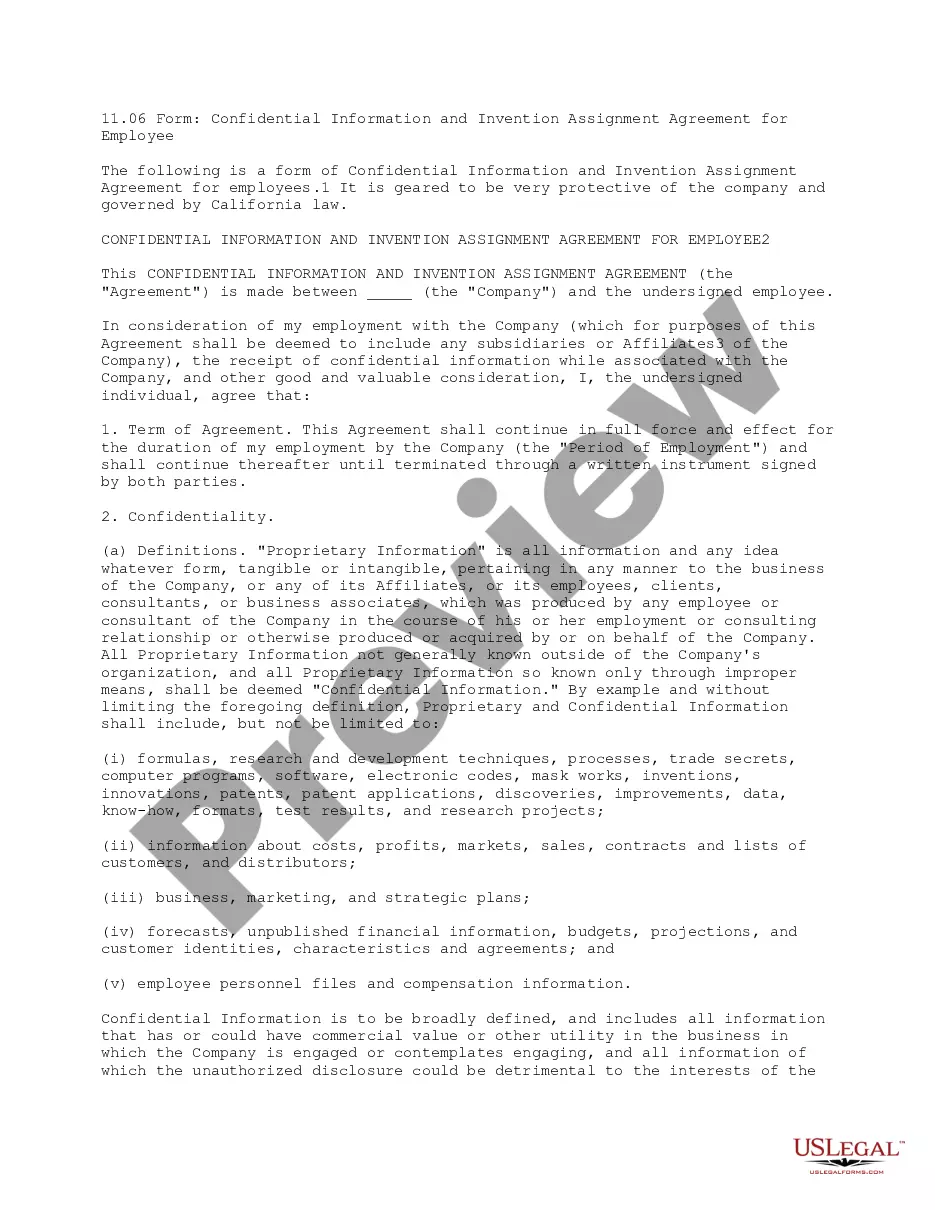
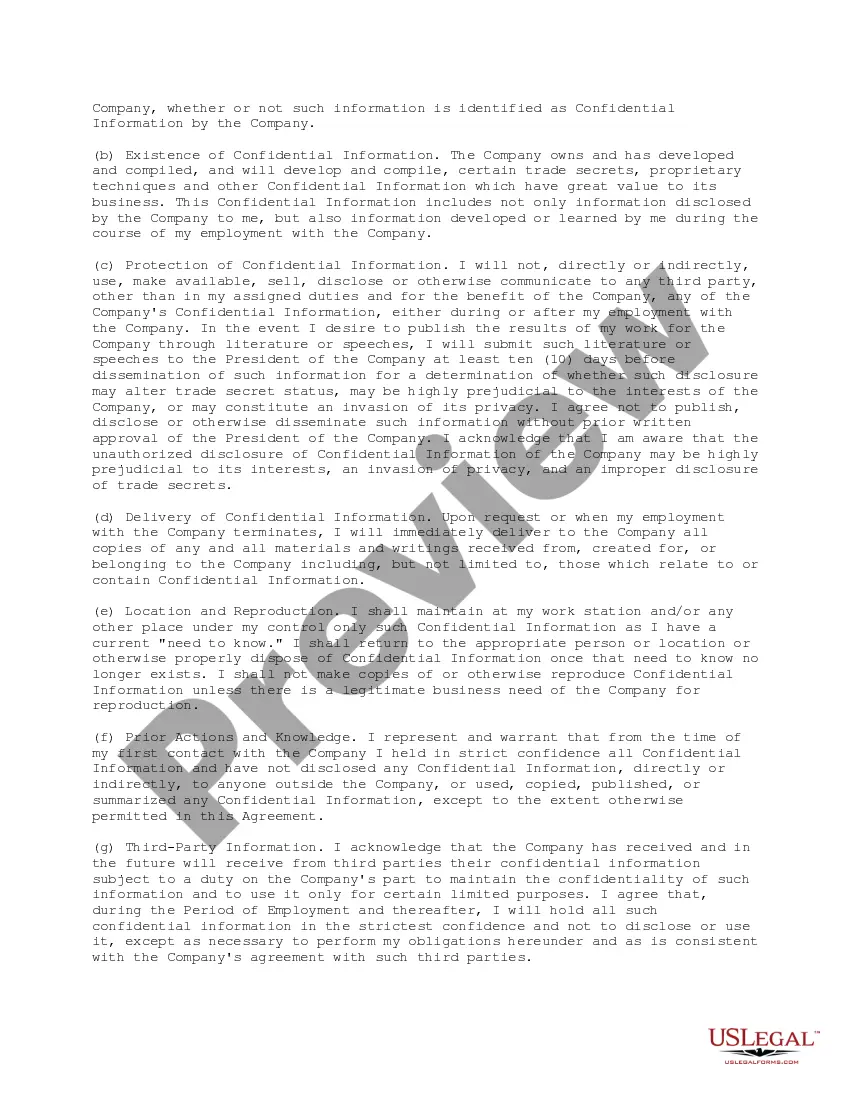
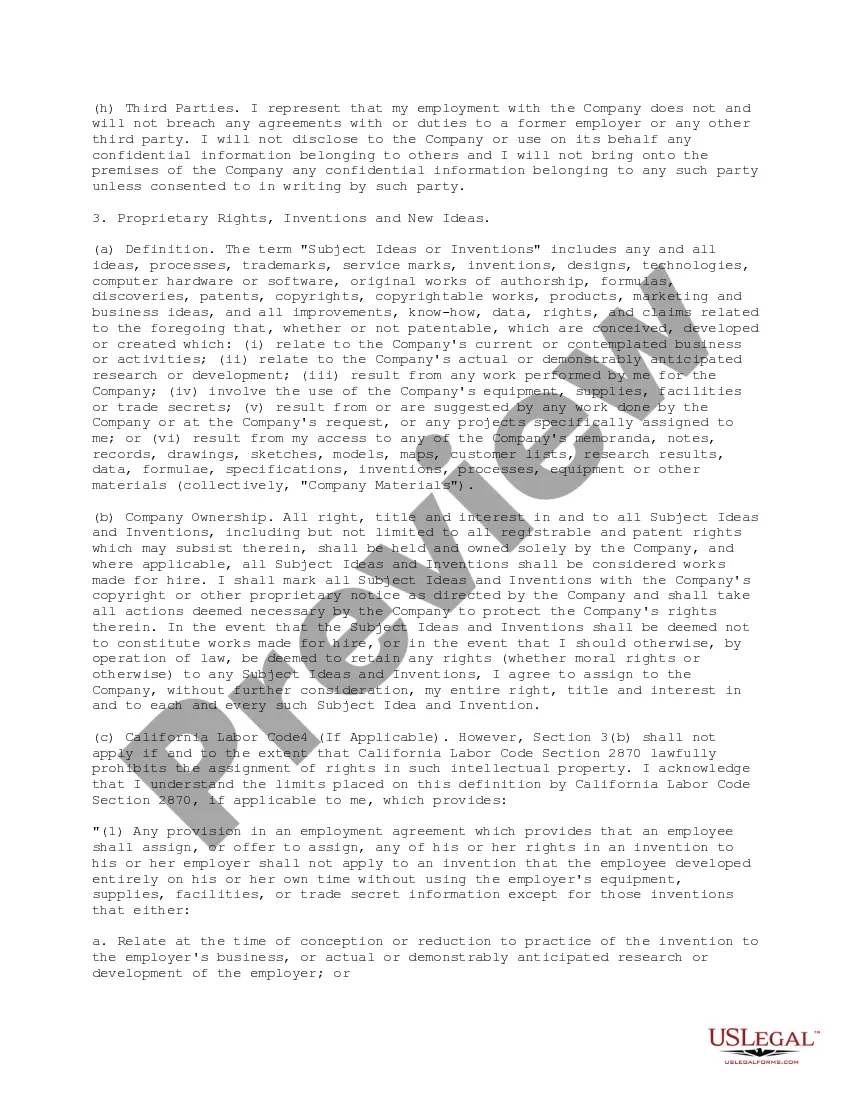
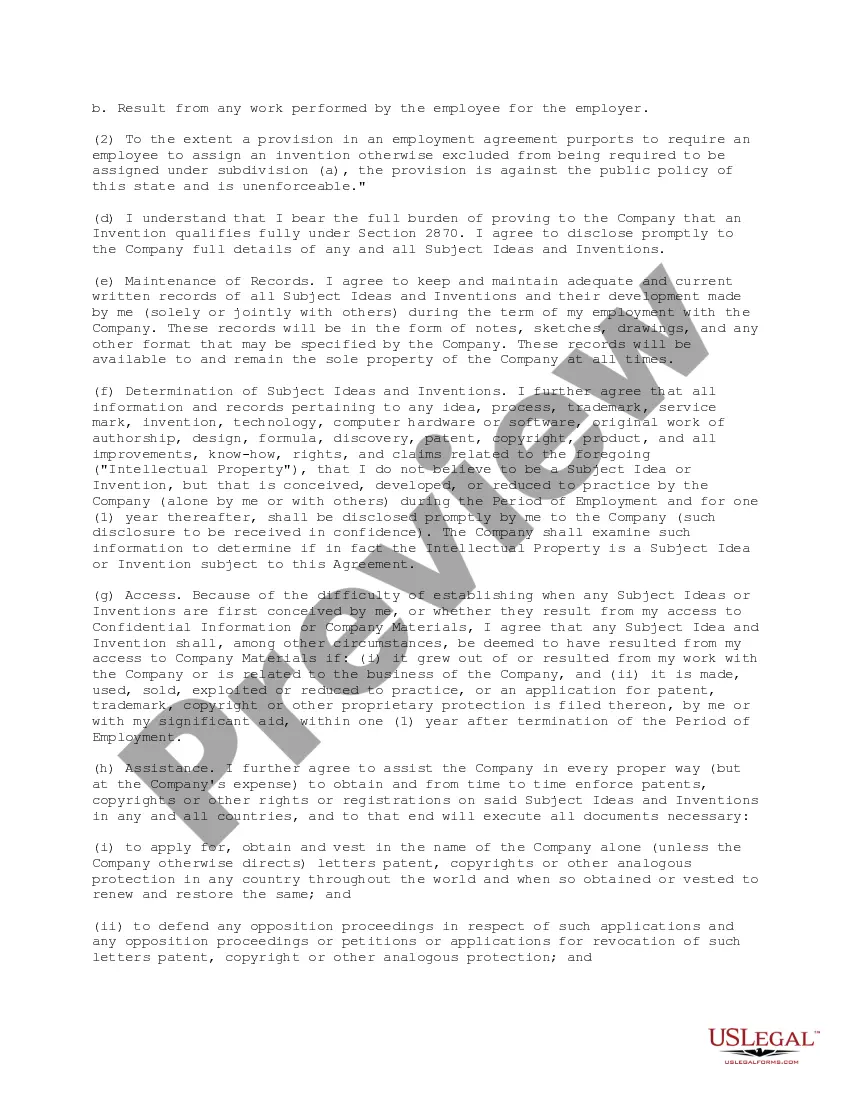
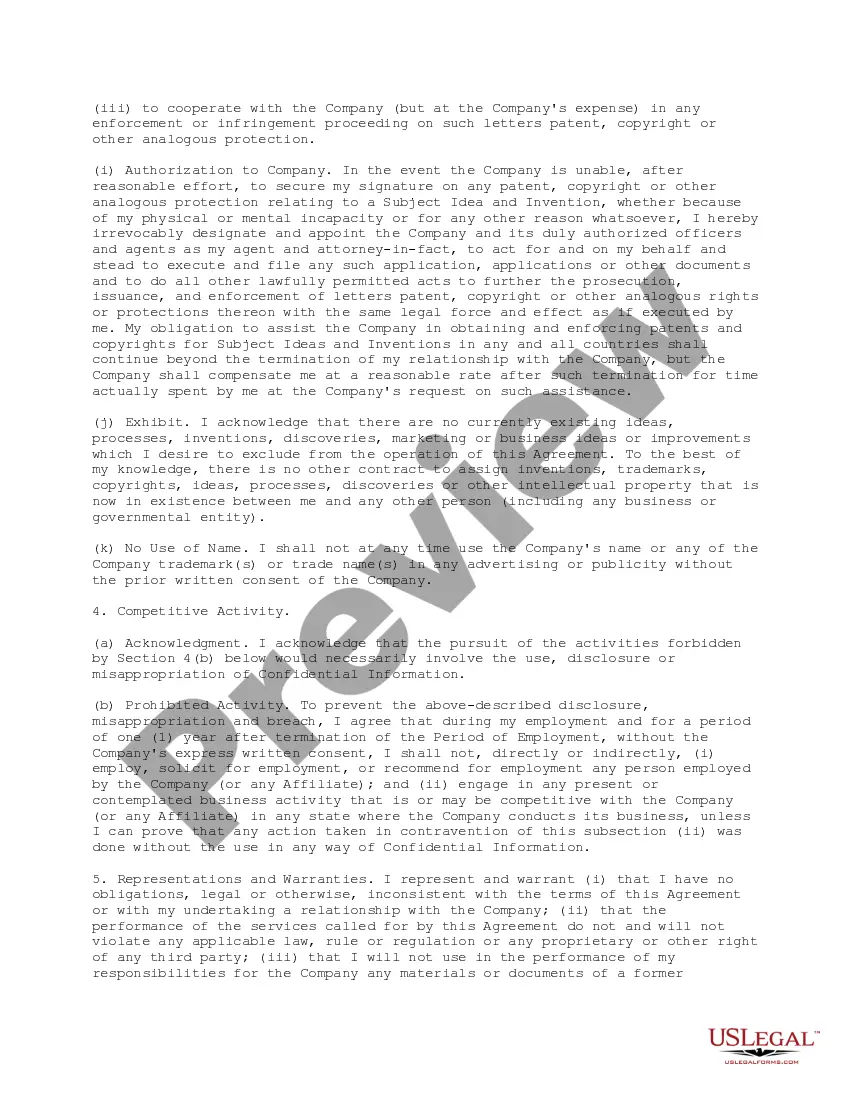
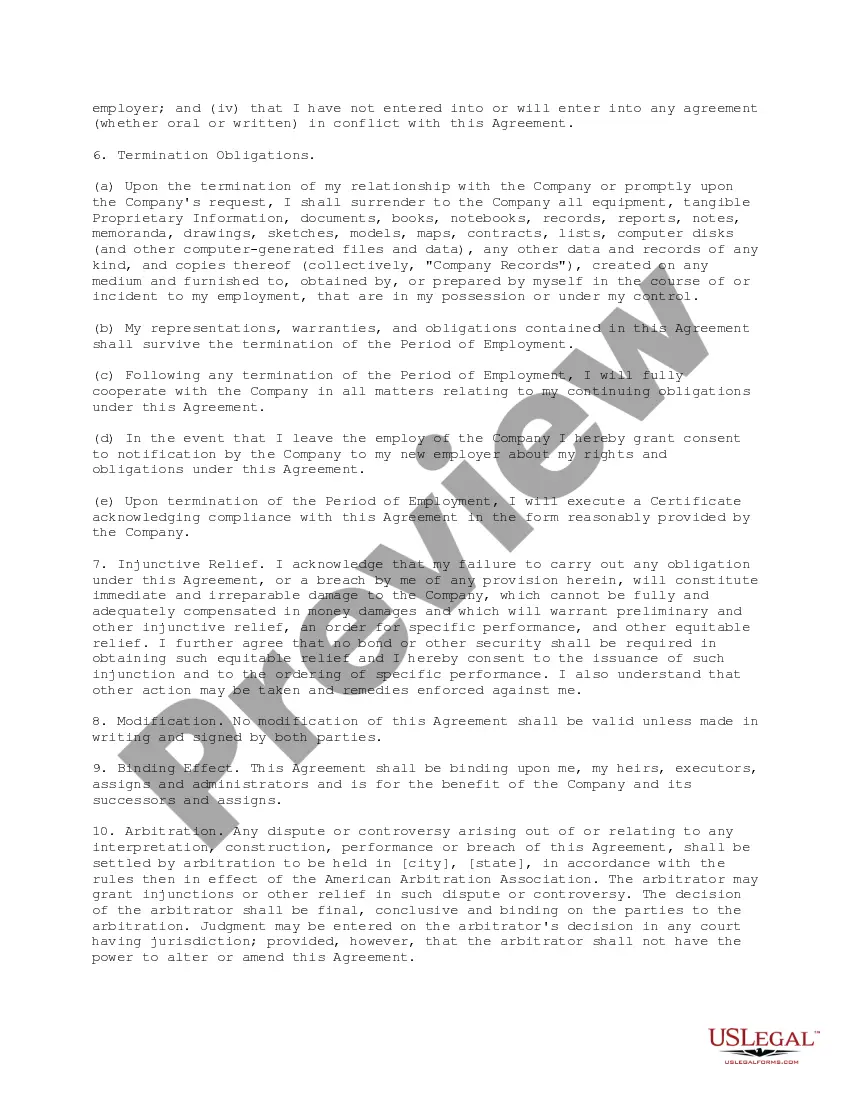
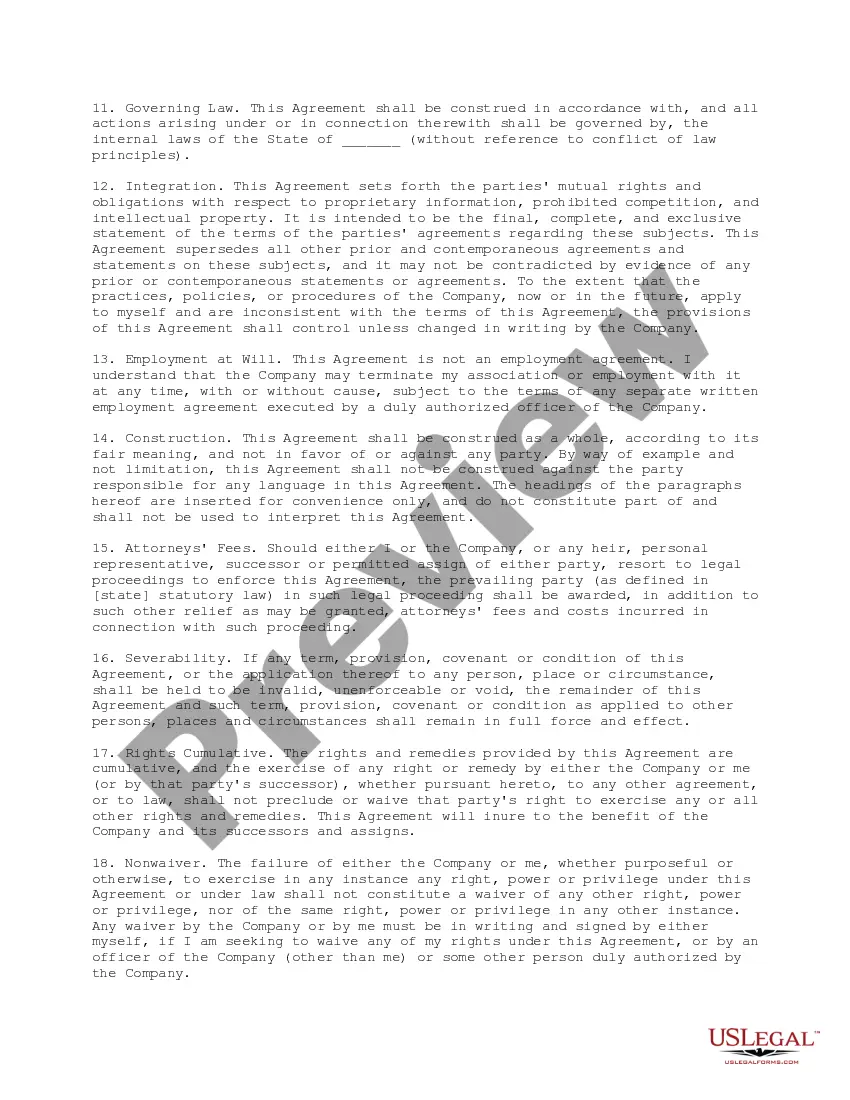
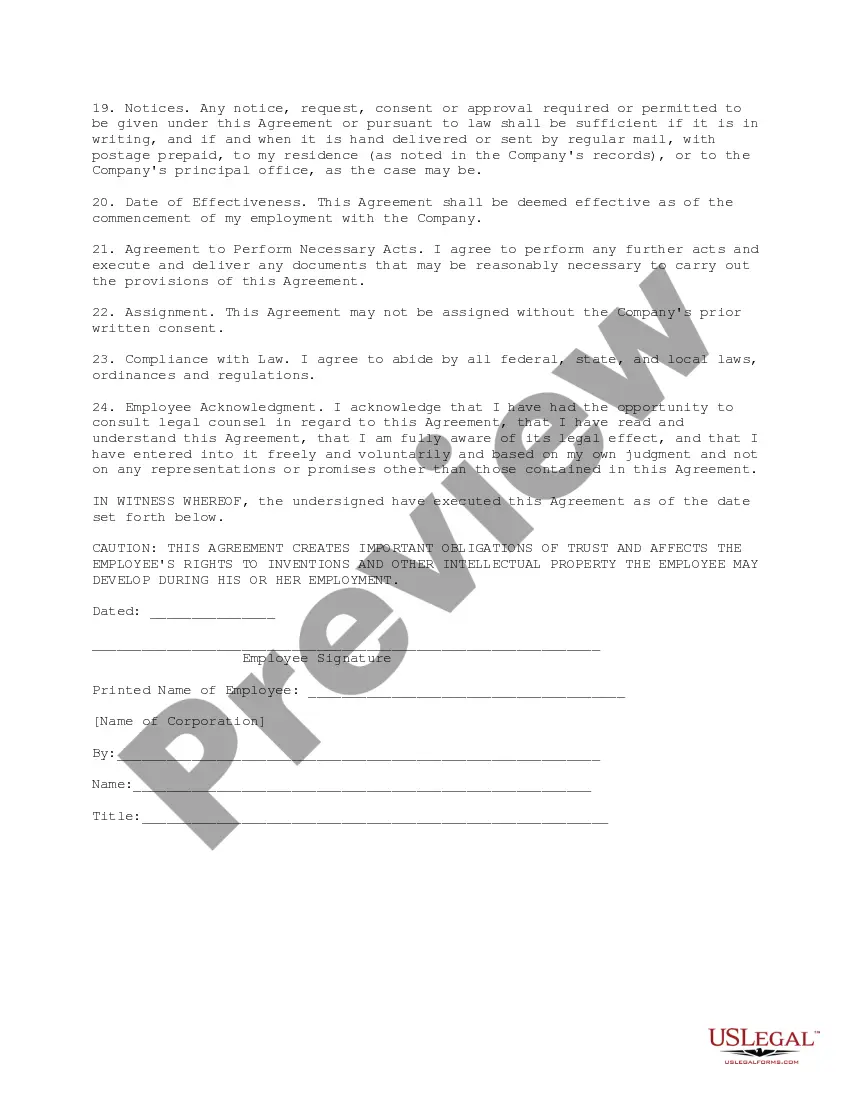
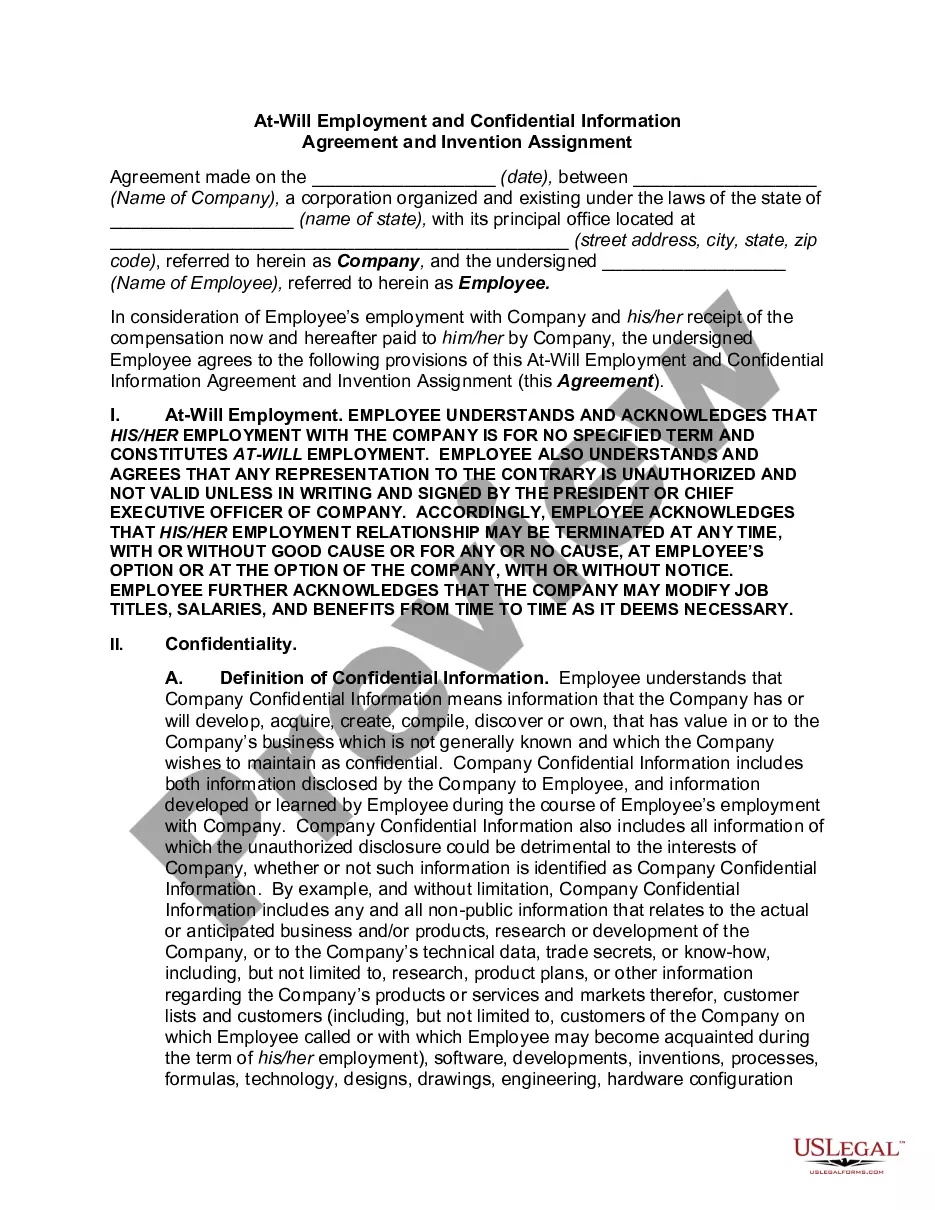
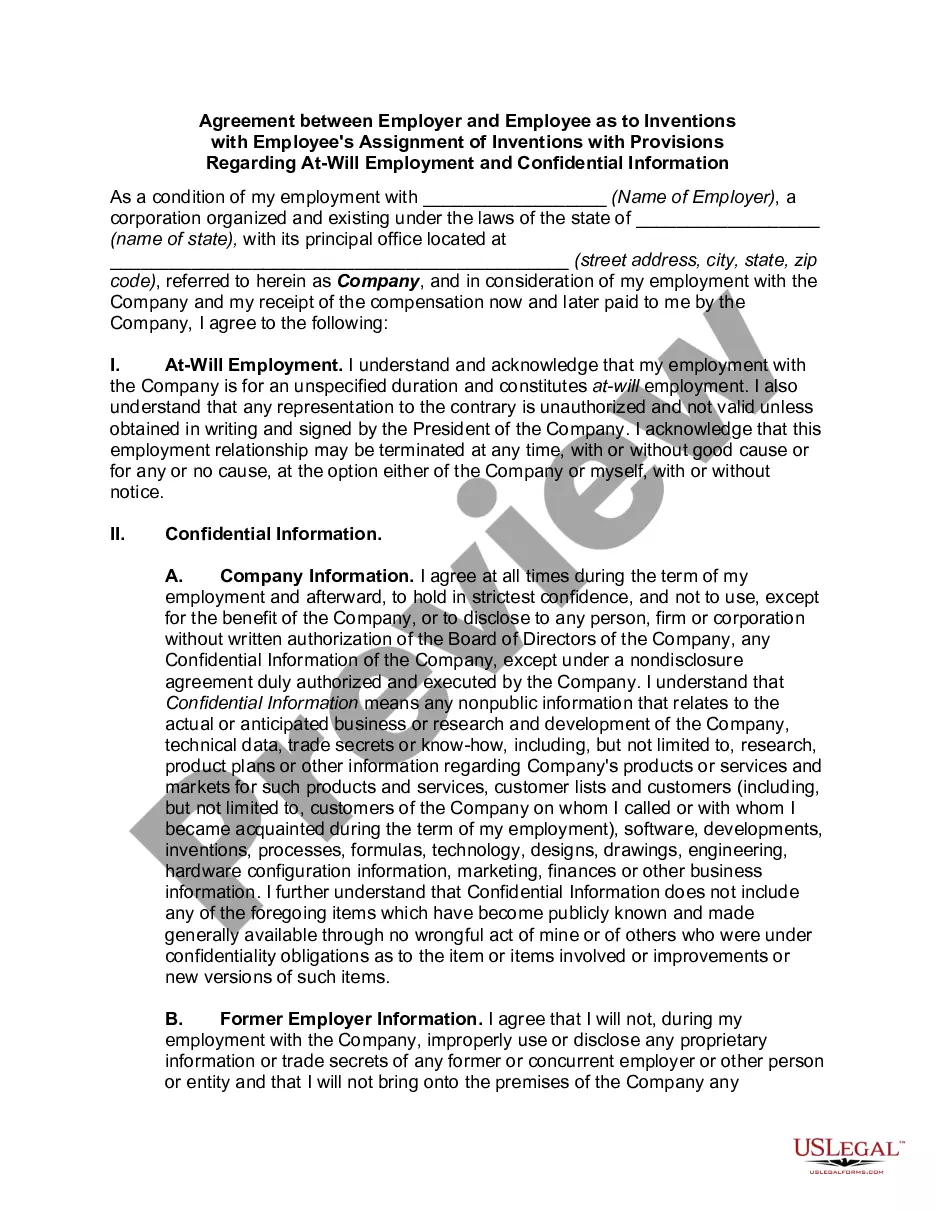
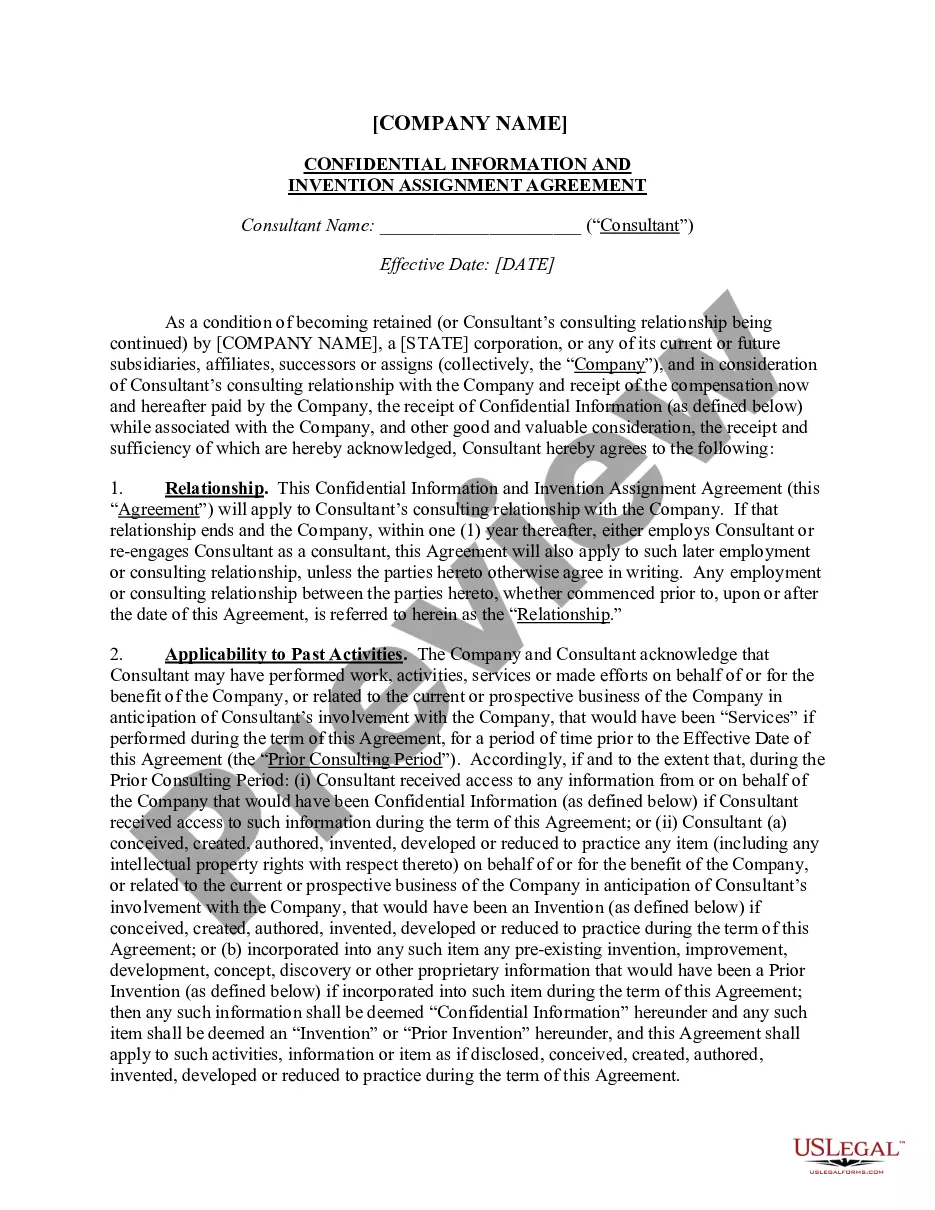
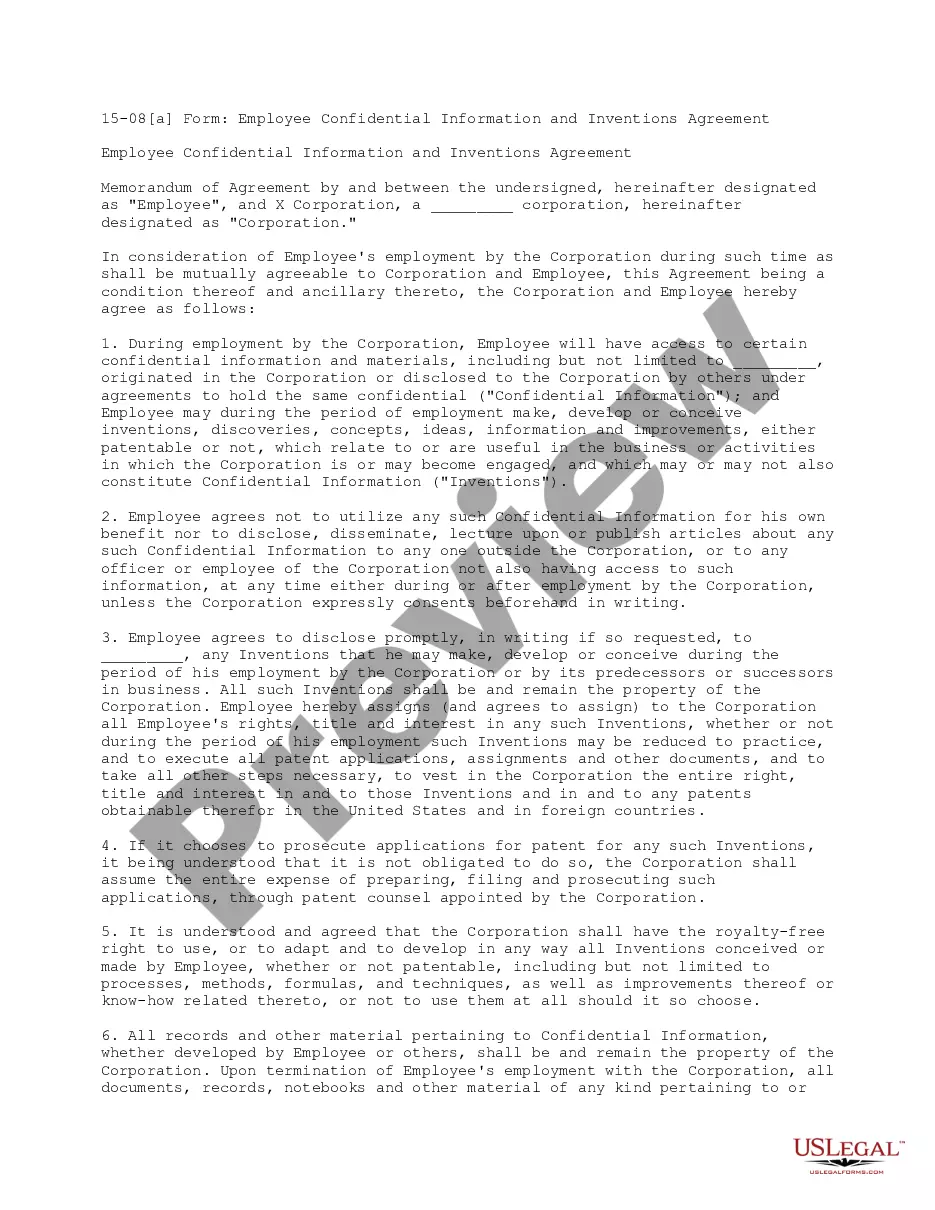
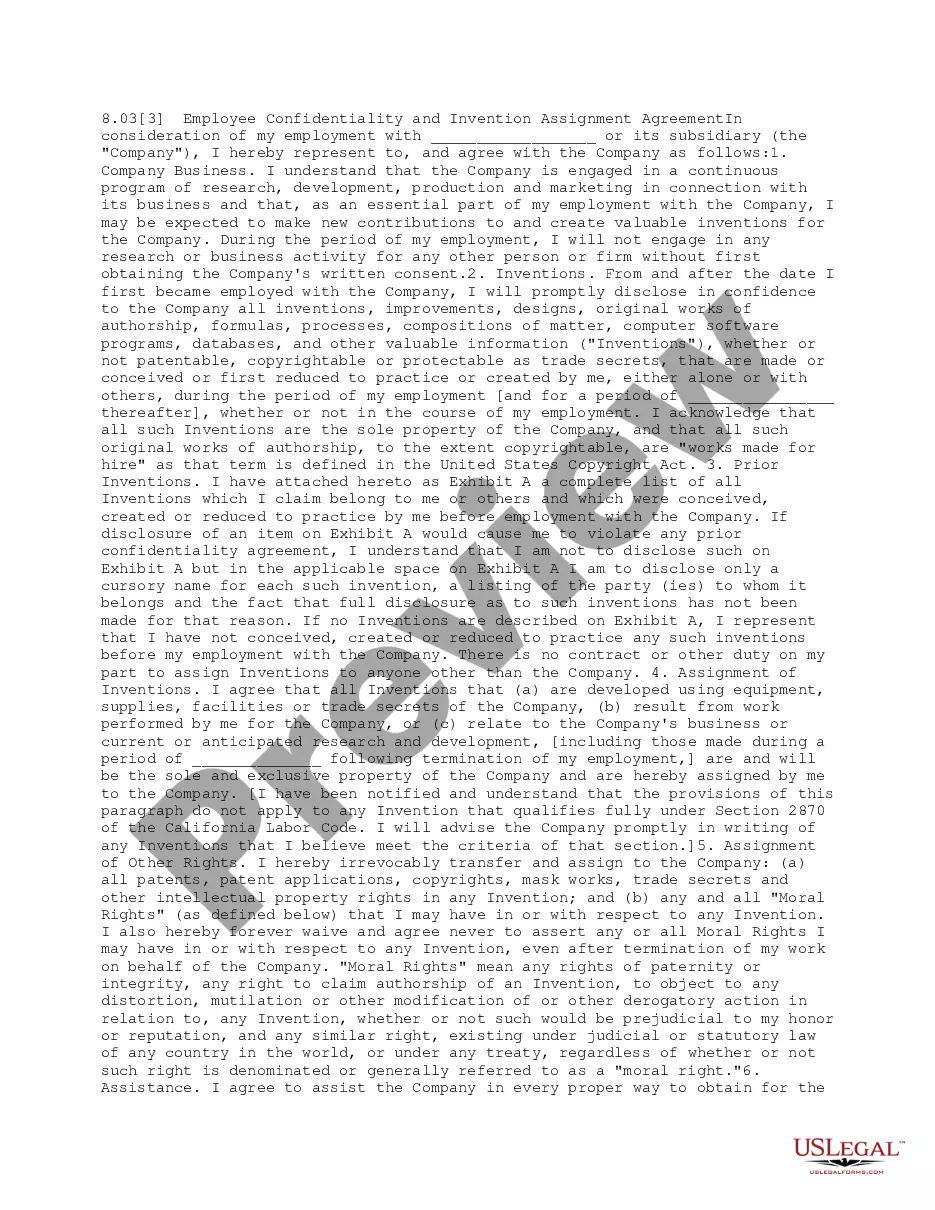
The Confidential Information and Invention Assignment Agreement for Employee is a legal document designed to protect a company's proprietary information and inventions. This form establishes the obligations of the employee regarding confidentiality and the ownership of inventions created during their employment. Unlike general employment contracts, this agreement specifically addresses intellectual property rights and trade secrets, ensuring that a company retains the rights to any innovations or confidential information developed by its employees.
Key components of this form
- Term of Agreement: Specifies the duration of the agreement and its ongoing applicability post-employment.
- Confidentiality: Defines what constitutes confidential information and the employee's obligations to protect it.
- Proprietary Rights: Outlines the ownership rights of any inventions or ideas developed by the employee during their employment.
- Competitive Activity: Restricts the employee from engaging in competitive activities for a specified duration after termination.
- Termination Obligations: Describes the employee's responsibilities upon leaving the company regarding company property and confidential information.
When to use this document
This agreement should be used when hiring new employees who will have access to confidential information or will be involved in the development of new inventions. It is particularly relevant for startups and businesses in innovative sectors, where protecting intellectual property and trade secrets is crucial for maintaining competitive advantages. Additionally, existing employees may need to sign this form if their role evolves to include access to such sensitive information.
Who can use this document
Employers and companies should use this agreement to:
- Startups looking to safeguard their confidential information and innovations.
- Established businesses wanting to clarify ownership of intellectual property developed by employees.
- Organizations in competitive industries needing a legally binding mechanism to protect trade secrets.
Instructions for completing this form
- Identify the parties involved: fill in the company name and employee name at the beginning of the agreement.
- Specify the effective date: include the date the employee will commence employment.
- Review and understand key obligations: the employee should read and acknowledge their responsibilities regarding confidentiality and intellectual property.
- Sign and date the document: both the employee and an authorized company representative must sign the agreement.
- Retain copies: make sure both parties keep a signed copy for their records.
Notarization guidance
In most cases, this form does not require notarization. However, some jurisdictions or signing circumstances might. US Legal Forms offers online notarization powered by Notarize, accessible 24/7 for a quick, remote process.
Get your form ready online
Our built-in tools help you complete, sign, share, and store your documents in one place.
Make edits, fill in missing information, and update formatting in US Legal Forms—just like you would in MS Word.
Download a copy, print it, send it by email, or mail it via USPS—whatever works best for your next step.
Sign and collect signatures with our SignNow integration. Send to multiple recipients, set reminders, and more. Go Premium to unlock E-Sign.
If this form requires notarization, complete it online through a secure video call—no need to meet a notary in person or wait for an appointment.
We protect your documents and personal data by following strict security and privacy standards.

Make edits, fill in missing information, and update formatting in US Legal Forms—just like you would in MS Word.

Download a copy, print it, send it by email, or mail it via USPS—whatever works best for your next step.

Sign and collect signatures with our SignNow integration. Send to multiple recipients, set reminders, and more. Go Premium to unlock E-Sign.

If this form requires notarization, complete it online through a secure video call—no need to meet a notary in person or wait for an appointment.

We protect your documents and personal data by following strict security and privacy standards.
Typical mistakes to avoid
- Failing to clearly define confidential information, leading to potential disputes.
- Not specifying the duration of the confidentiality obligations.
- Neglecting to include necessary explanations regarding rights to inventions.
- Forgetting to have both parties sign and date the agreement.
- Ignoring state-specific laws on intellectual property rights.
Advantages of online completion
- Convenience: access the form anytime and download it instantly.
- Editability: customize the agreement to meet specific company needs.
- Cost-effective: save on legal fees by using a pre-drafted, professionally designed form.
- Secure storage: keep electronic copies safe and easily shareable.
- Comprehensive: ensures compliance with relevant legal standards and best practices.
Summary of main points
- The agreement is crucial for protecting company secrets and inventions developed by employees.
- Clear identification of both parties and defined terms is essential for enforceability.
- Employers should ensure employees understand their obligations regarding confidentiality.
- The form is particularly tailored for compliance with California law, making it suitable for businesses operating in that jurisdiction.
Looking for another form?
Form popularity
FAQ
Employee confidentiality agreements are generally one sided, unless you are also obtaining confidential information from the employee.Each state sets its own law regarding confidentiality agreement enforcement. Check with your state for more information.
Confidentiality agreements usually allow the recipient to disclose confidential information if required to do so by court order or other legal process.
Employees can void any non-competes that require a court outside of California to decide disputes. In other words, the company cannot enforce an employee's non-compete agreement in a state that allows these agreements. Employees are able to void contracts with illegal non-compete terms.
Insurance and benefit enrollment forms and claims information. Medical exam information. Workers' compensation records. FMLA leave certifications and medical documentation; leave information (e.g. dates)
PIIA is the acronym for the most common name for these agreements, ''proprietary information and invention assignment'' agreements.The agreement also requires that the employee agree that whatever the employee creates, discovers, develops or invents while employed with the company is owned by the company.
A Proprietary Information Agreement is a legally binding contract that stipulates that a number of parties must not disclose confidential supplies, data, or information as outlined by the contract to a different third party.
Personnel information is confidential, and information in an employee's file, such as social security number, salary, health records, disciplinary actions and termination reason can't be discussed with other employees. Most of this information can't be discussed with potential employers who call for a reference.
Examples of confidential information include, but are not limited to: Information about the Company's operations, results, earnings projections, strategies, clients or client relationships, proprietary products or employee records.
An invention assignment agreement is a contract that gives the employer certain rights to inventions created or conceptualized by the employee during the employment relationship.