Resume for Studio Musician
Overview of this form
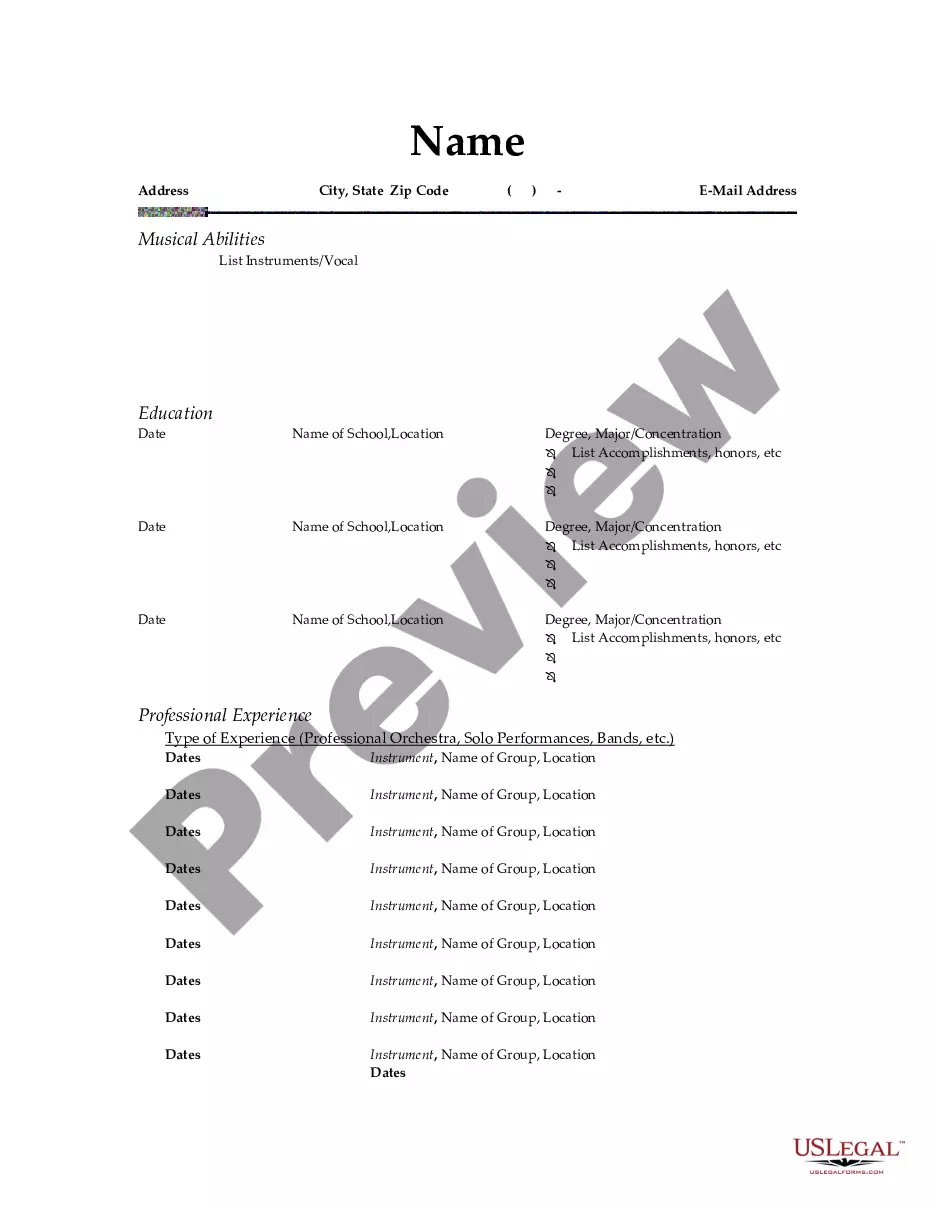
The Resume for Studio Musician is a professional document used by musicians seeking positions in recording studios. This form helps you showcase your experience, skills, and background in a clear and organized manner, distinguishing you from other candidates in the highly competitive music industry.
Form components explained
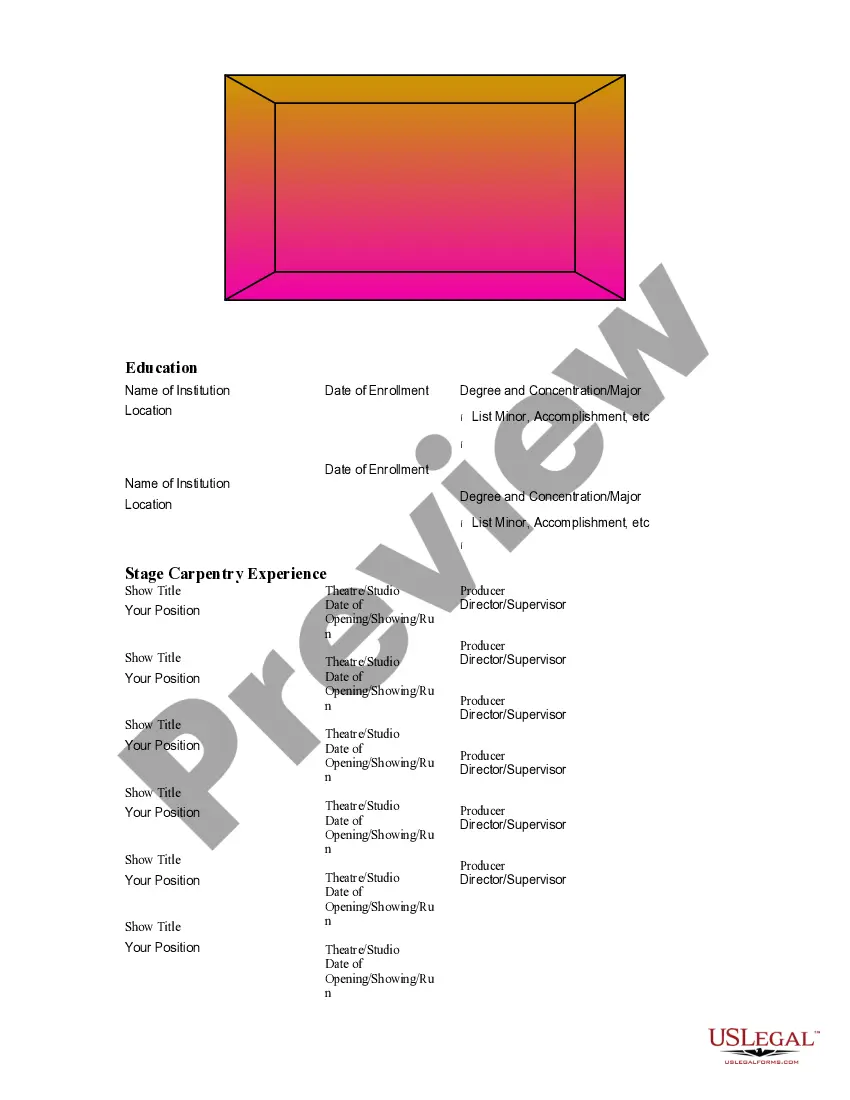
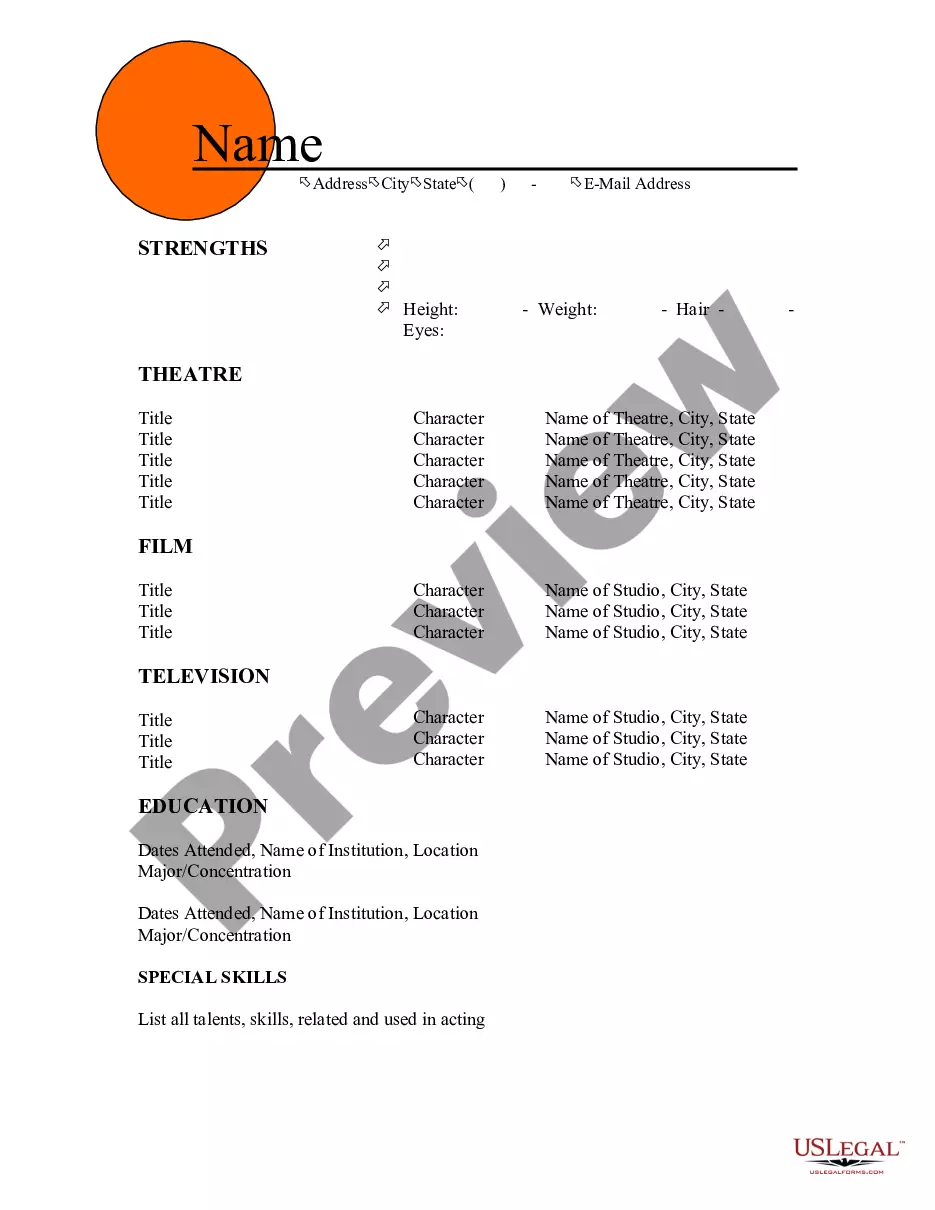
- Dates of experience to demonstrate your career timeline.
- Types of instruments played, highlighting your versatility.
- Name of groups or bands you've worked with, establishing your network and experience.
- Locations of performances, providing geographical context to your experience.
- Professional organizations to showcase your affiliations and credibility within the music industry.

When to use this document
This form is beneficial when applying for studio musician positions, whether in recording studios, live performances, or music production roles. Use it when you need to present your musical qualifications effectively to potential employers, especially if you have diverse experiences across various genres or groups.
Intended users of this form
- Musicians seeking opportunities as studio musicians.
- Performers transitioning from live performances to studio work.
- Individuals with varied musical experiences looking to consolidate their credentials.
- Anyone aiming to connect with recording studios or music producers.
Steps to complete this form
- Enter your personal information at the top of the form.
- List the dates and names of the groups you have performed with.
- Specify the instruments you play for each entry.
- Indicate the location of each performance.
- Include any relevant professional organizations you are part of.
Is notarization required?
In most cases, this form does not require notarization. However, some jurisdictions or signing circumstances might. US Legal Forms offers online notarization powered by Notarize, accessible 24/7 for a quick, remote process.
Get your form ready online
Our built-in tools help you complete, sign, share, and store your documents in one place.
Make edits, fill in missing information, and update formatting in US Legal Forms—just like you would in MS Word.
Download a copy, print it, send it by email, or mail it via USPS—whatever works best for your next step.
Sign and collect signatures with our SignNow integration. Send to multiple recipients, set reminders, and more. Go Premium to unlock E-Sign.
If this form requires notarization, complete it online through a secure video call—no need to meet a notary in person or wait for an appointment.
We protect your documents and personal data by following strict security and privacy standards.

Make edits, fill in missing information, and update formatting in US Legal Forms—just like you would in MS Word.

Download a copy, print it, send it by email, or mail it via USPS—whatever works best for your next step.

Sign and collect signatures with our SignNow integration. Send to multiple recipients, set reminders, and more. Go Premium to unlock E-Sign.

If this form requires notarization, complete it online through a secure video call—no need to meet a notary in person or wait for an appointment.

We protect your documents and personal data by following strict security and privacy standards.
Mistakes to watch out for
- Failing to tailor your resume for specific job applications.
- Omitting important performance experiences or credentials.
- Not updating the dates and information for accuracy.
- Using overly complex language or professional jargon.
Advantages of online completion
- Convenient download and completion from your device.
- Editable format allows you to customize for different applications.
- Prepared by licensed professionals, ensuring legal and industry standards are met.
Legal use & context
- Your resume serves as a critical tool in documenting your professional experience, which can support applications and contracts.
- Using a well-structured resume can enhance your employability in the competitive music industry.
Main things to remember
- A Resume for Studio Musician effectively presents your skills and experiences.
- Ensure the resume is tailored to the job you are applying for.
- Your performances, affiliations, and skills are key components to highlight.
Looking for another form?





Form popularity
FAQ
A session musician is someone who performs music in a recording session. He's hired by the music contractor, the music producer, the band or the record, film or video production company to play whatever music is going to be recorded at that session.
Your Name And Contact Details. Your Experiences In The Music Industry. Any Relevant Skills You Have. Your Education. A Cover Letter.
Include your contact details. Include your name and contact details at the top of your resume. Include a professional profile. Include your key skills. Include your performance experience. Include your awards & honours. Include your education and training details. Include your recordings (if necessary)
Contact details. Start your CV with your name in bold and slightly larger than the font size you use elsewhere in your CV. Personal profile. Employment history. Education history. Additional information. Hobbies and interests. References.
A music curriculum vitaeworks just like a resume, but with a few differences.The CV provides a more in-depth look at your experience and qualifications, which can be particularly useful for those pursuing music careers in academia. Music CVs are similar to other CVs, except that they focus specifically on music.
Music performance. Music reading. Music theory. People skills. Strong communication. Playing by ear. Adaptability & flexibility.
There is more than meets the eye when it comes to being a studio musician. For example, did you know that they make an average of $33.45 an hour? That's $69,571 a year! Between 2018 and 2028, the career is expected to grow 0% and produce 300 job opportunities across the U.S.
Studio musicians need to be able to learn the song quickly and play it as though they were part of the band. It helps to have a great hear, excellent sight-reading skills, or both. It also helps if you can read charts.
How do you write a music CV? You begin with a professional summary that describes who you are and what you do. Follow that with a list of your skills, including hard and soft skills. List your work experience in reverse chronological order.