Military Advance Medical Directive
What is this form?
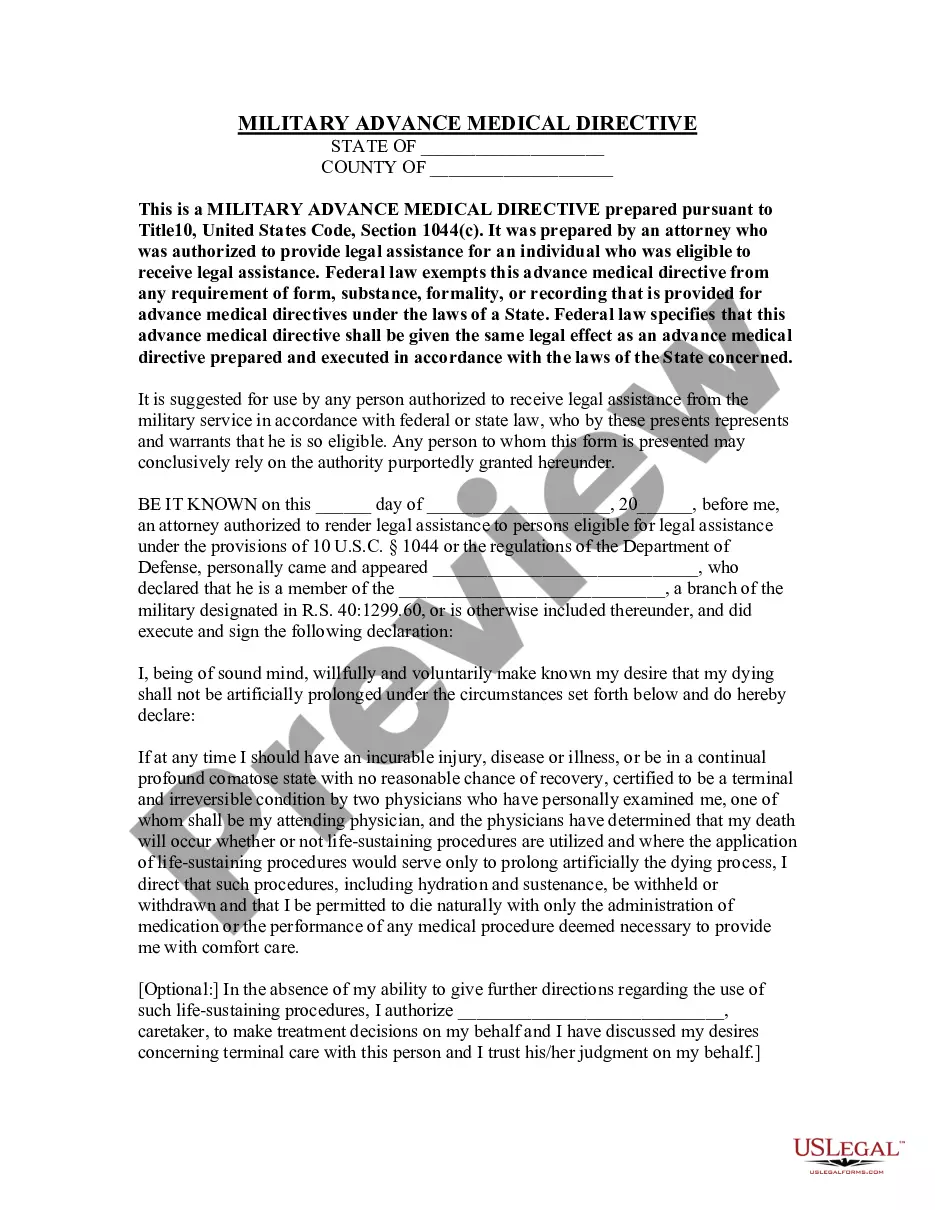
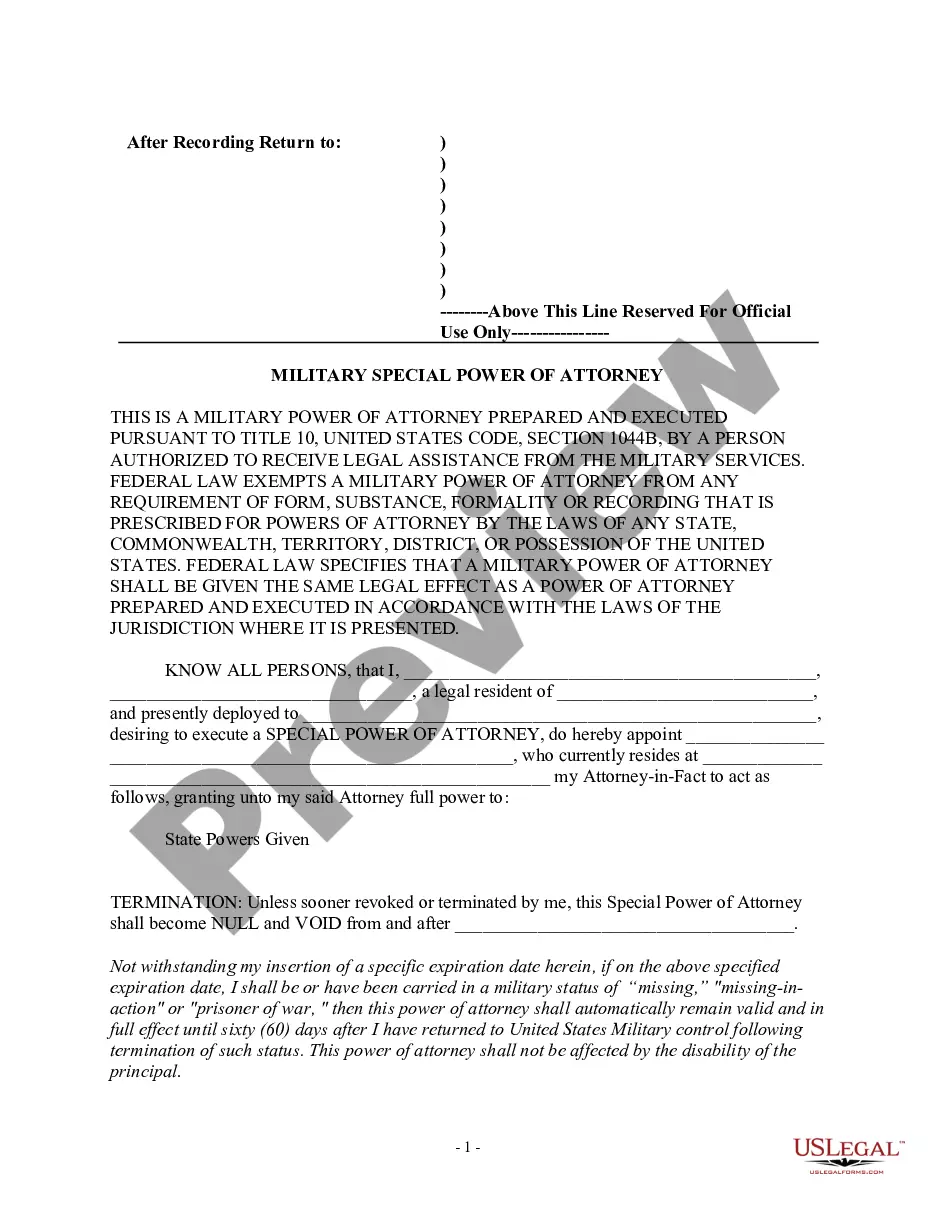
The Military Advance Medical Directive is a legal document specifically designed for military service members. This form allows individuals to communicate their wishes regarding end-of-life medical care, particularly in scenarios where life-sustaining procedures would only prolong the dying process. Unlike typical advance medical directives, this form is governed by federal law, providing exemption from state formality requirements while ensuring the same legal weight as documents prepared in accordance with state laws. It serves as an essential tool for military personnel to ensure their medical preferences are honored when they are unable to voice them.
Key parts of this document
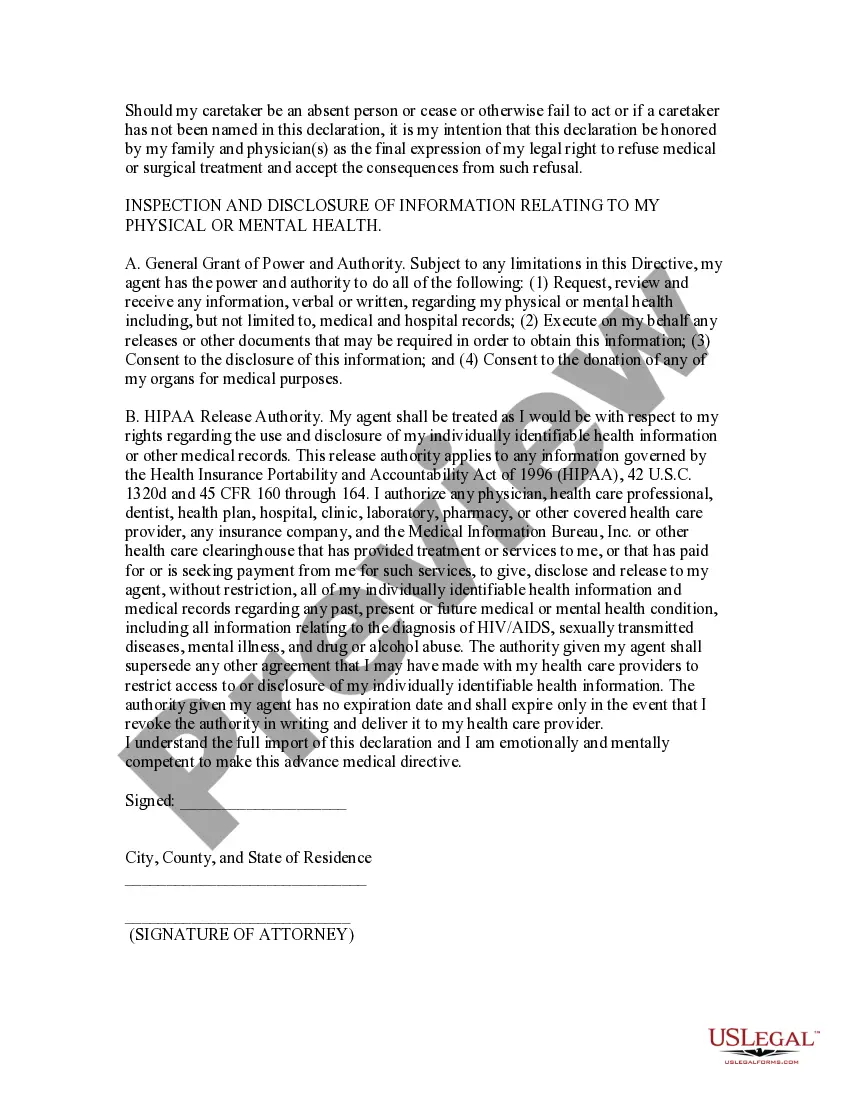
- Identification of the service member and legal assistance provider.
- Declaration of the individual's wishes regarding life-sustaining procedures.
- Optional appointment of a caretaker for treatment decisions.
- General grant of authority for the agent to access health information.
- HIPAA release authority for disclosing medical records and information.
Common use cases
Use the Military Advance Medical Directive in situations where a military member wishes to establish or clarify their healthcare preferences in the event of a terminal illness or irreversible condition. This form is crucial when individuals want to ensure they are not subjected to unnecessary medical interventions that may prolong suffering. It is especially relevant when undergoing military deployment or in situations where the service member may not be able to communicate their wishes due to medical incapacitation.
Who this form is for
- Active duty military personnel and reservists.
- Retired military members seeking to establish medical preferences.
- Military family members who wish to formalize medical directives.
- Individuals who qualify for legal assistance under military regulations.
How to complete this form
- Provide the state and county information in the designated fields.
- Identify your name and military branch in the initial declaration.
- Specify your wishes regarding life-sustaining procedures.
- Designate an optional caretaker who will make medical decisions if you are unable.
- Sign and date the form in the presence of an authorized attorney.
Notarization requirements for this form
To make this form legally binding, it must be notarized. Our online notarization service, powered by Notarize, lets you verify and sign documents remotely through an encrypted video session.
Get your form ready online
Our built-in tools help you complete, sign, share, and store your documents in one place.
Make edits, fill in missing information, and update formatting in US Legal Forms—just like you would in MS Word.
Download a copy, print it, send it by email, or mail it via USPS—whatever works best for your next step.
Sign and collect signatures with our SignNow integration. Send to multiple recipients, set reminders, and more. Go Premium to unlock E-Sign.
If this form requires notarization, complete it online through a secure video call—no need to meet a notary in person or wait for an appointment.
We protect your documents and personal data by following strict security and privacy standards.

Make edits, fill in missing information, and update formatting in US Legal Forms—just like you would in MS Word.

Download a copy, print it, send it by email, or mail it via USPS—whatever works best for your next step.

Sign and collect signatures with our SignNow integration. Send to multiple recipients, set reminders, and more. Go Premium to unlock E-Sign.

If this form requires notarization, complete it online through a secure video call—no need to meet a notary in person or wait for an appointment.

We protect your documents and personal data by following strict security and privacy standards.
Common mistakes to avoid
- Failing to specify wishes clearly regarding life-sustaining treatments.
- Not discussing preferences with the appointed caretaker beforehand.
- Overlooking the need for signatures from an authorized attorney.
- Neglecting to update the directive if personal circumstances change.
Why complete this form online
- Convenient access to the form from any location.
- Editability allows for easy updates as circumstances change.
- Reliable legal language drafted by licensed attorneys.
- Instant download availability for immediate use.
Legal use & context
- This directive is valid under federal law and carries the same weight as state-prepared advance medical directives.
- It allows the service member to refuse medical treatment, which is protected by federal law.
- Compliance with HIPAA ensures proper handling of health information.
Looking for another form?
Form popularity
FAQ
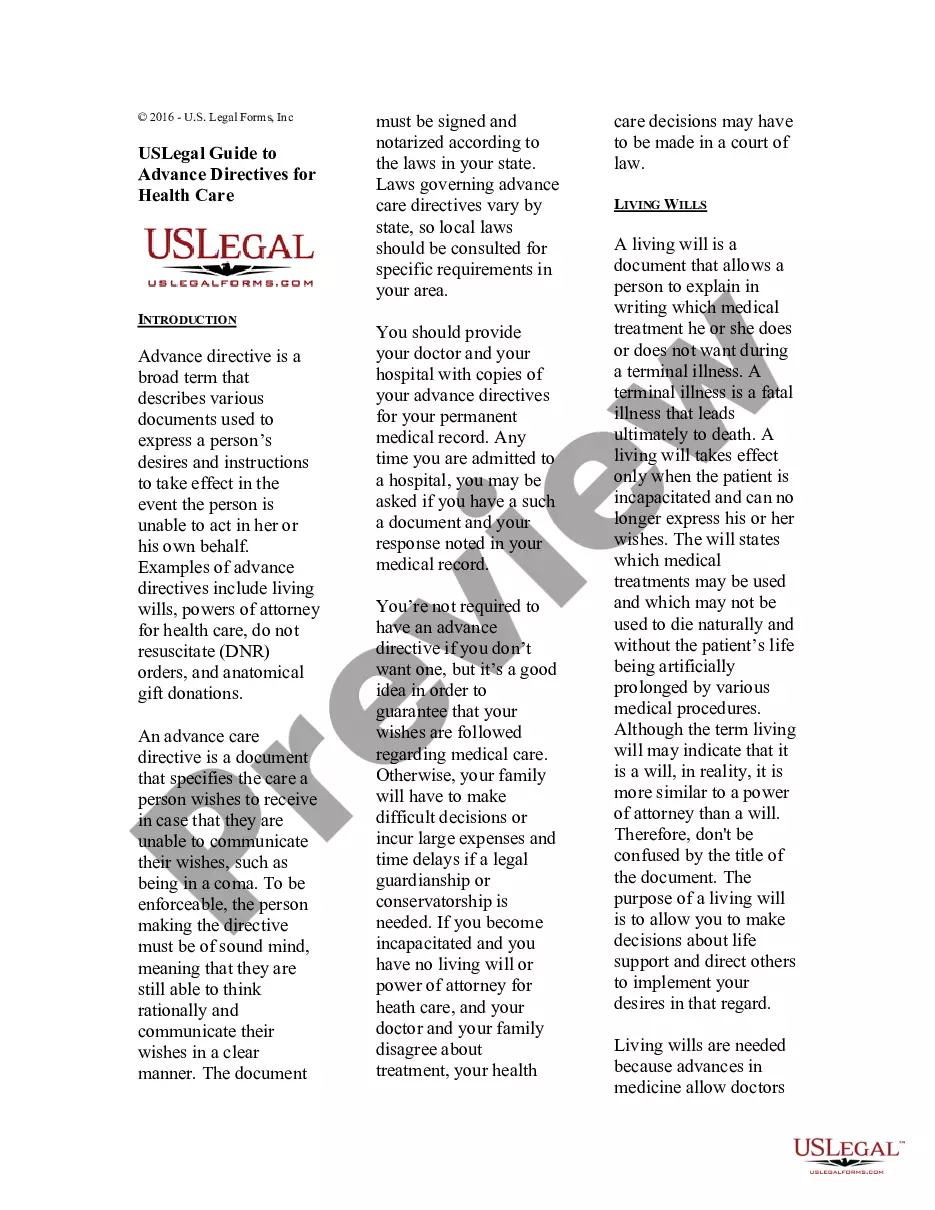
An advance directive is a set of instructions someone prepares in advance of ill health that determines his healthcare wishes. A living will is one type of advance directive that becomes effective when a person is terminally ill.
An advance directive isn't the same as a DNR DNRs, like POLST forms, require a physician's sign-off and are medical orders, instructing emergency personnel to withhold resuscitation efforts. If you don't want to receive resuscitation, including that information in an advance care directive is not enough.
Advance directives generally fall into three categories: living will, power of attorney, and health care proxy.
The name and contact information of your healthcare agent/proxy. Answers to specific questions about your preferences for care if you become unable to speak for yourself. Names and signatures of individuals who witness your signing your advance directive, if required.
They do this with cardiopulmonary resuscitation (CPR). A DNR is a request not to have CPR if your heart stops or if you stop breathing. You can use an advance directive form or tell your doctor that you don't want to be resuscitated. Your doctor will put the DNR order in your medical chart.
Is the Five Wishes advance directive a legal document? Yes. It was written with the help of the American Bar Association's Commission on Law & Aging. It meets the legal requirements of 44 states, but is used widely in all 50, and a federal law requires medical care providers to honor patient wishes as expressed.
An advance directive, alone, may not be sufficient to stop all forms of life-saving treatment. You may also need specific do not resuscitate, or DNR orders.You retain the right to override the decisions or your representative, change the terms of your living will or POA, or completely revoke an advance directive.
The living will. Durable power of attorney for health care/Medical power of attorney. POLST (Physician Orders for Life-Sustaining Treatment) Do not resuscitate (DNR) orders. Organ and tissue donation.
Advance directives are legally binding, so doctors have to follow them. False. Advance directives are legally recognized documents and doctors must respect your known wishes, but doctors can always refuse to comply with your wishes if they have an objection of conscience or consider your wishes medically inappropriate.