Special Military Power of Attorney for Banking
What this document covers
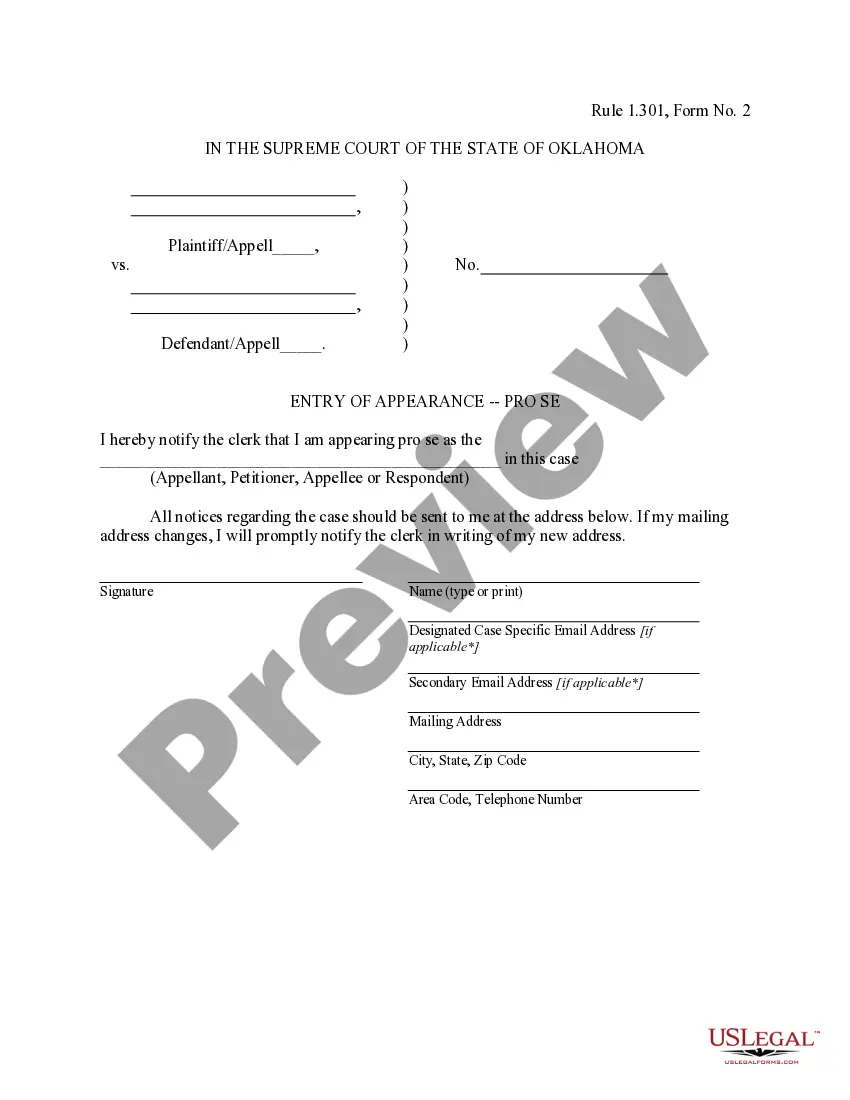
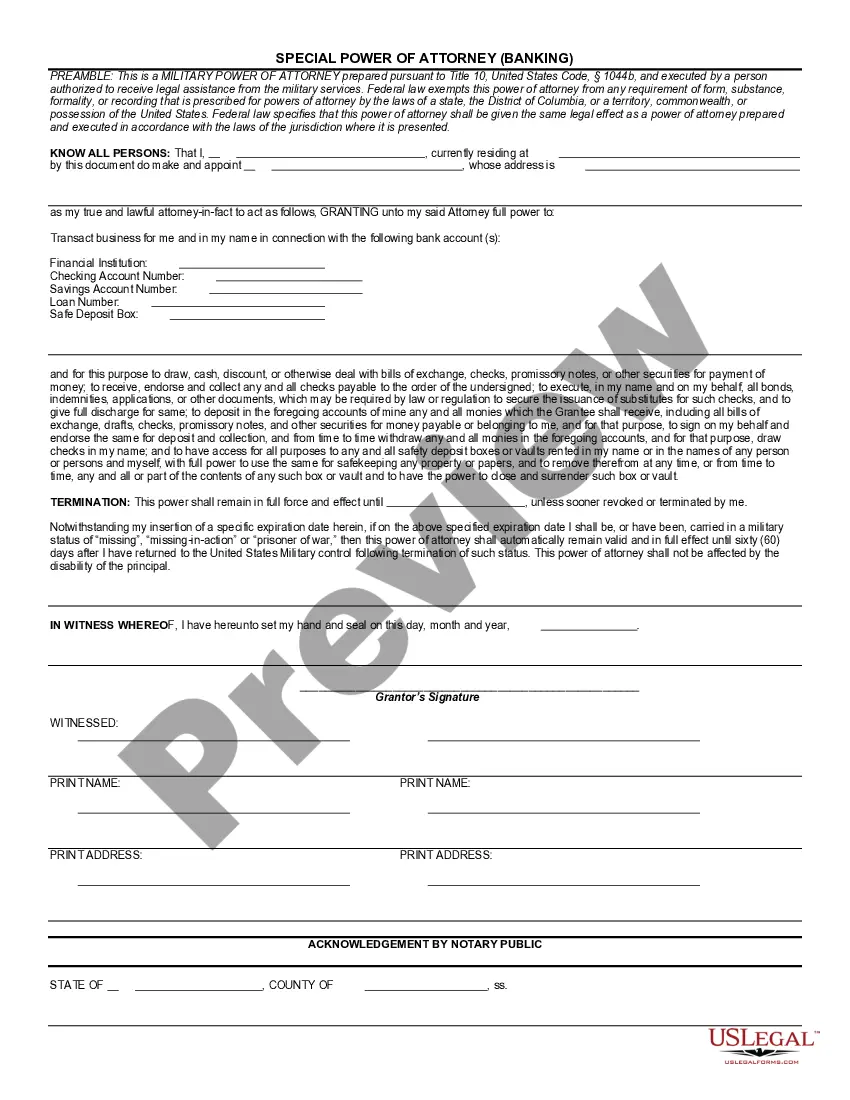
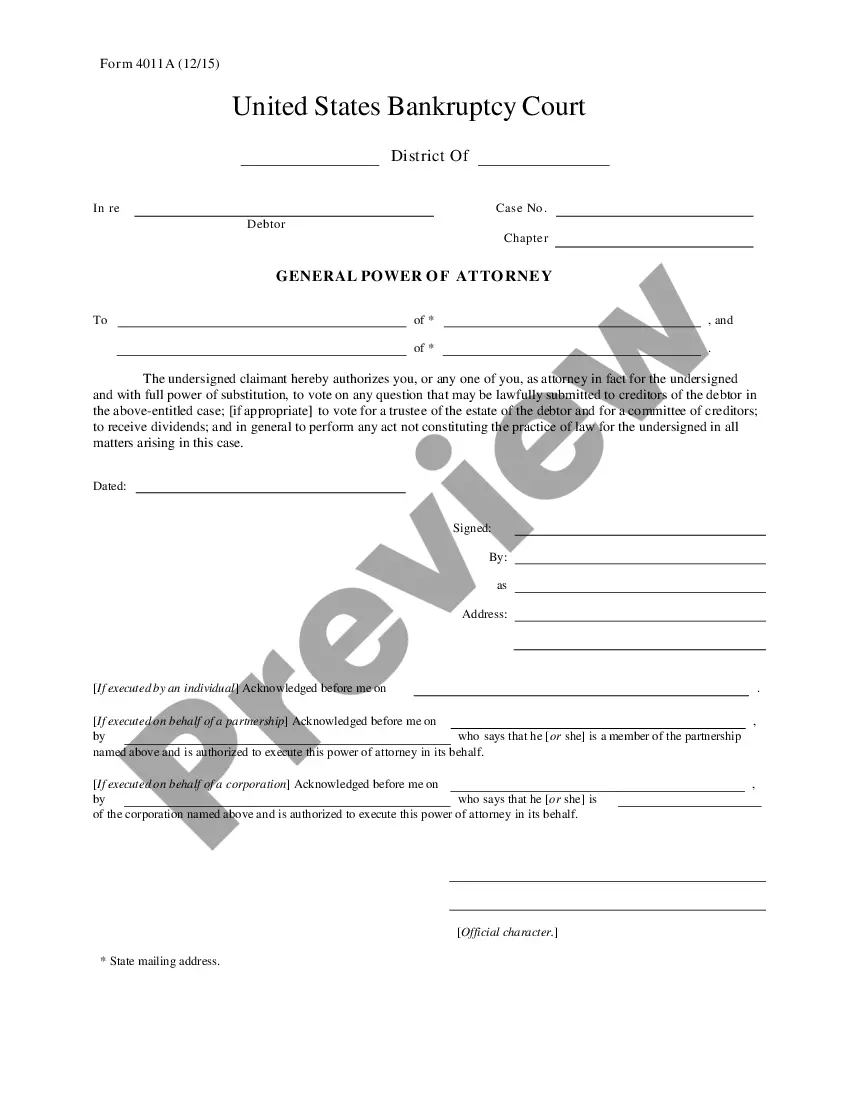
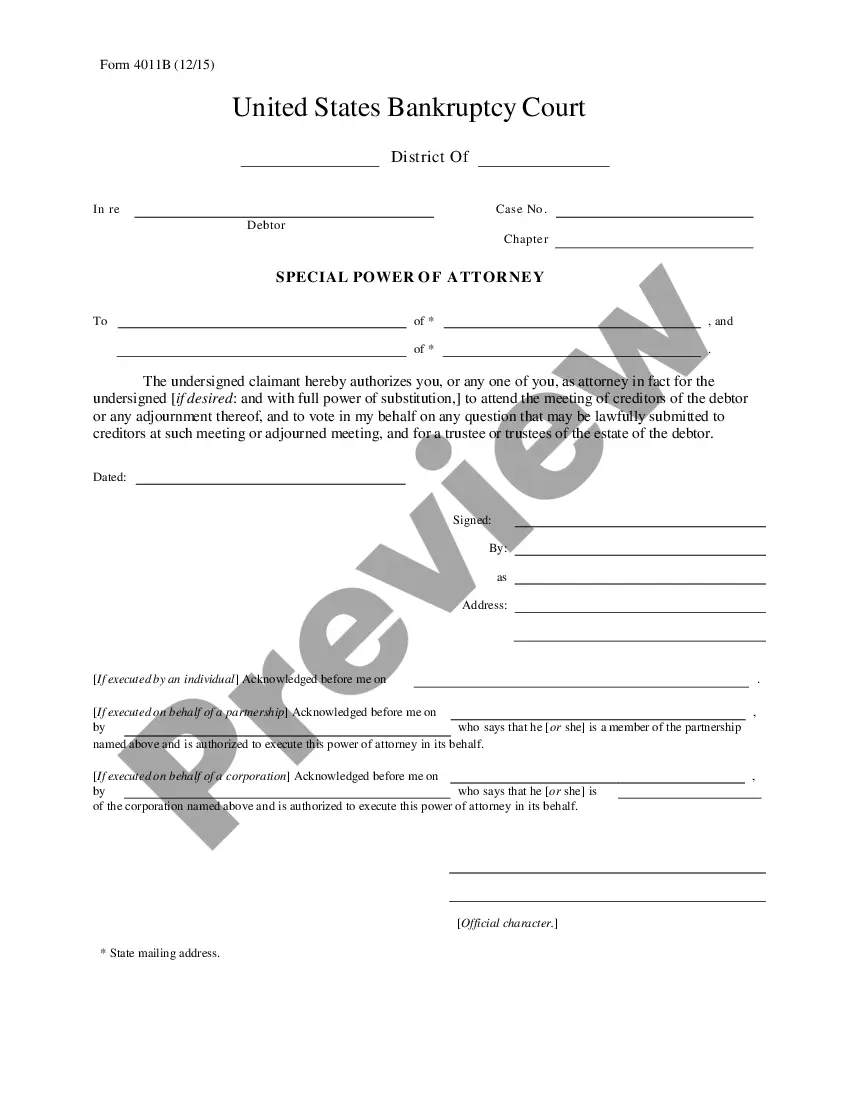
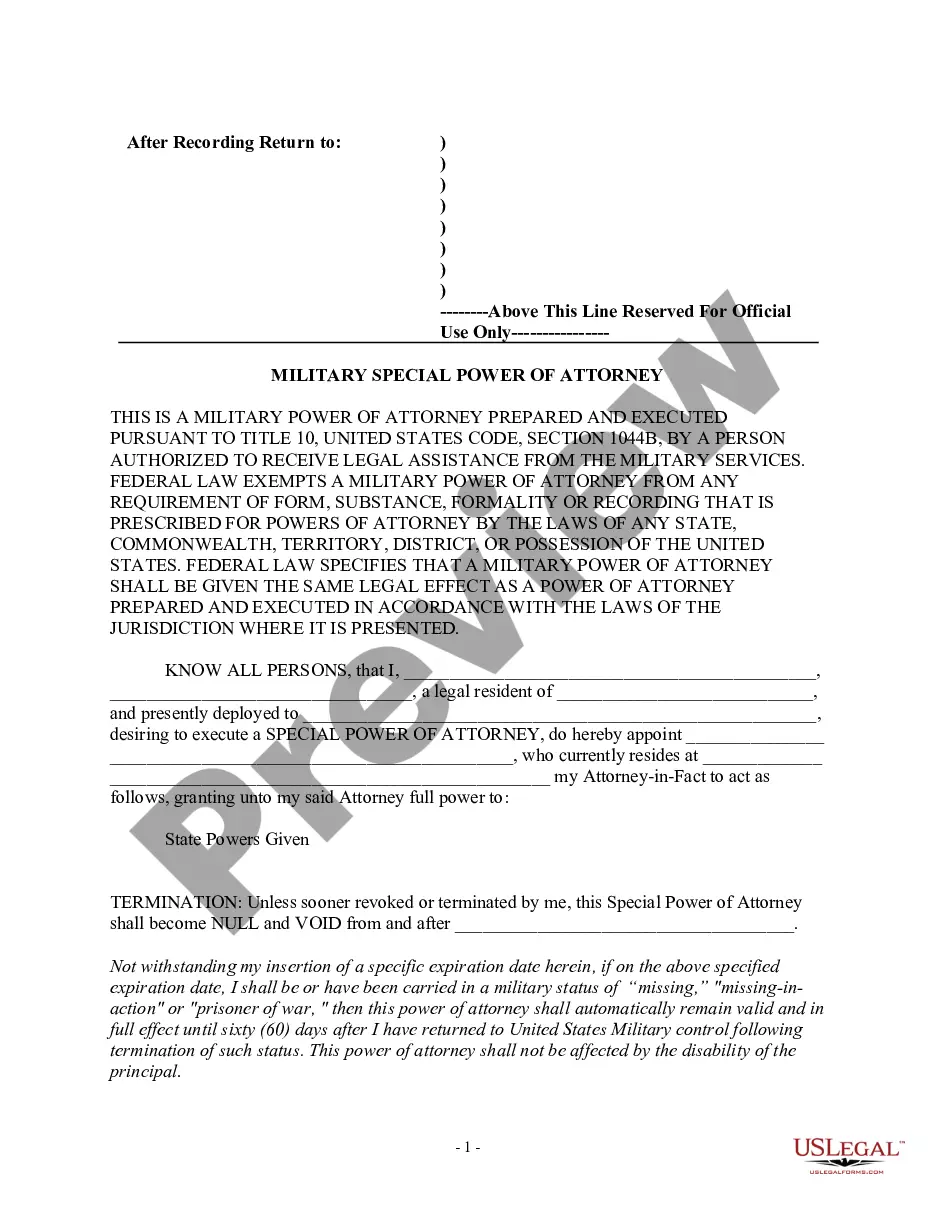
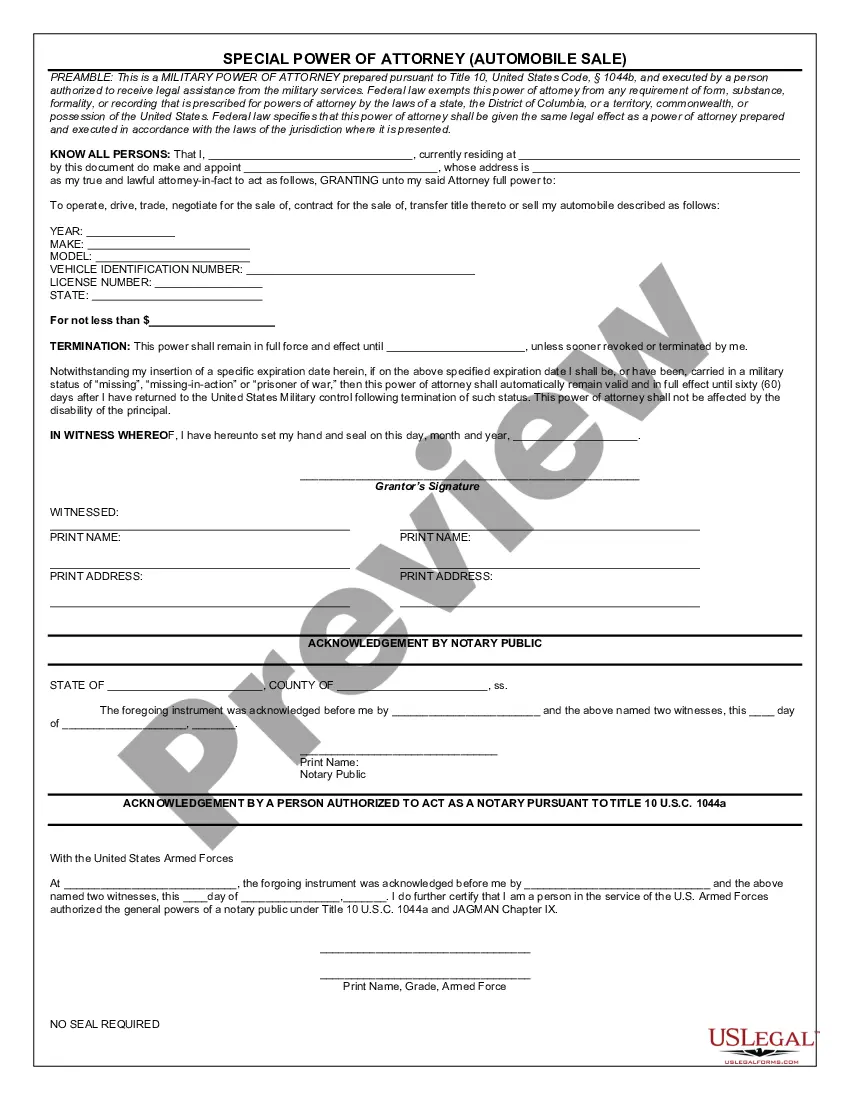
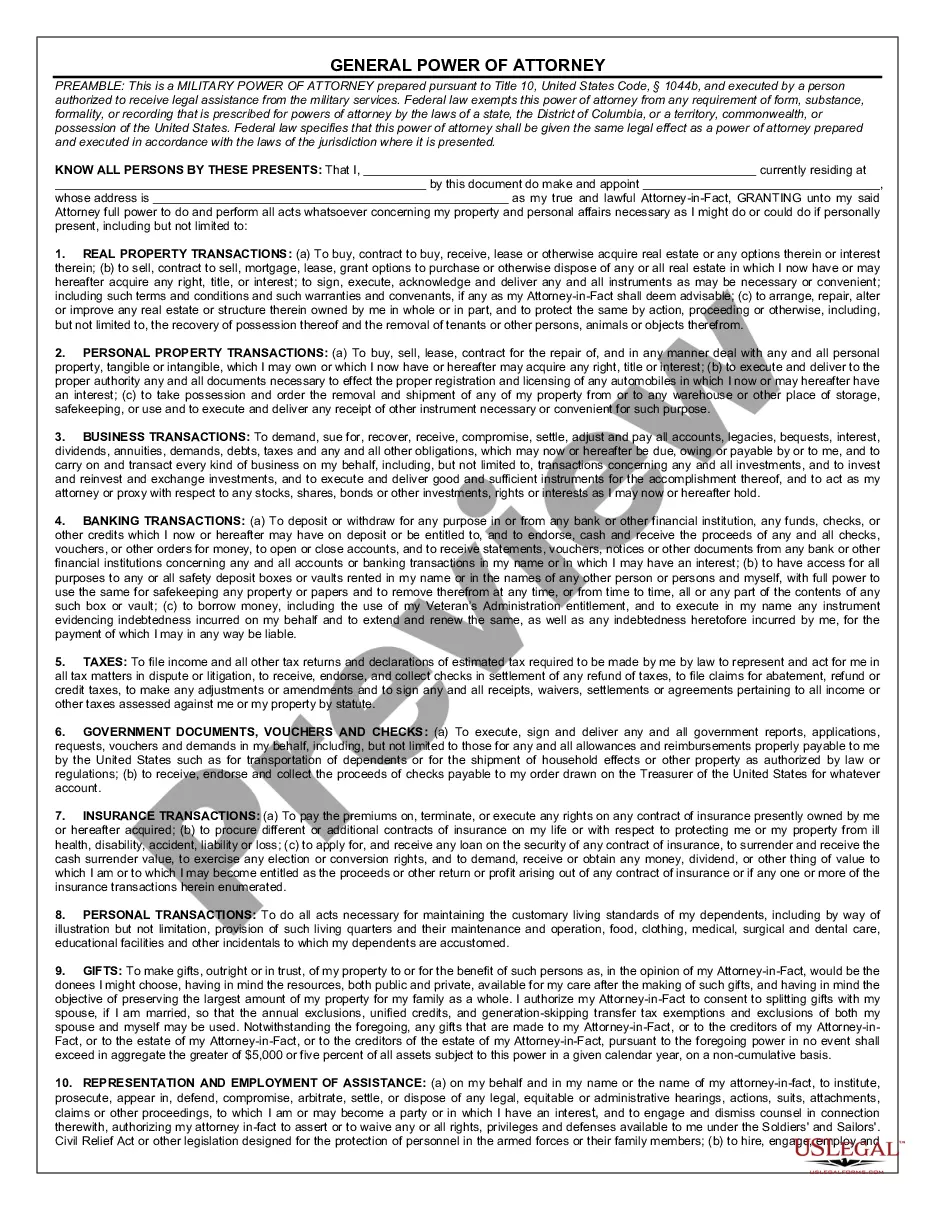
The Special Military Power of Attorney for Banking is a legal document that allows military personnel to designate a third party to manage their property, such as a residence used as rental property. This form is specifically tailored for the needs of military members, distinguishing it from general power of attorney forms by incorporating provisions that accommodate their unique circumstances and requirements.
What’s included in this form
- Identification of the military person granting the power of attorney.
- Name and title of the third party receiving the authority.
- Specification of the property being managed.
- Signature and printed name of the military person.
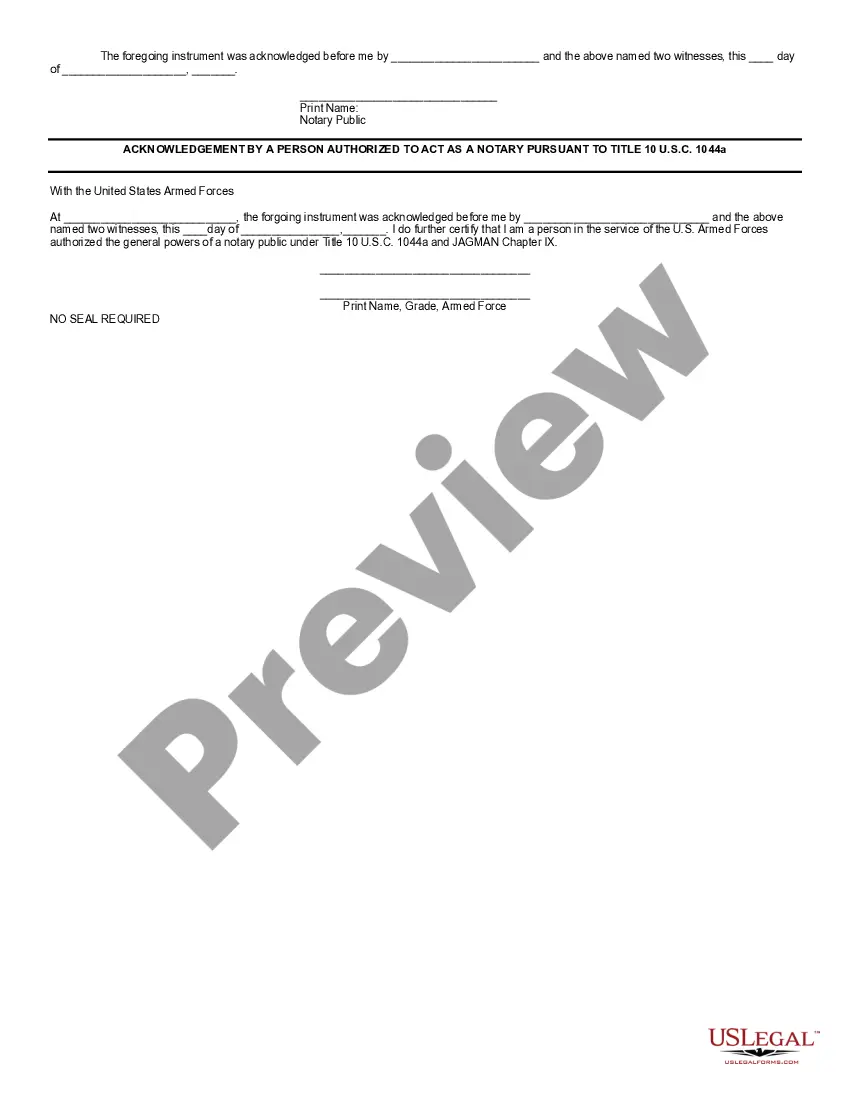
- Acknowledgment section for a notary public under Title 10 U.S.C. 1044a.
When to use this document
This form is useful when a military member needs to authorize someone else to handle their banking and property management, especially during deployment or when stationed away from their residence. It can ensure that financial and legal matters are managed in their absence, particularly related to rental properties.
Intended users of this form
- Active duty military personnel.
- Reservists or National Guard members.
- Military members who are deploying or stationed away from home.
Completing this form step by step
- Identify and enter the name of the military person granting the power of attorney.
- Designate the third party who will act on behalf of the military member.
- Clearly specify the property to be managed.
- Print and sign the military person's name and title.
- Have the acknowledgment section completed by a notary public.
Does this form need to be notarized?
This document requires notarization to meet legal standards. US Legal Forms provides secure online notarization powered by Notarize, allowing you to complete the process through a verified video call, available 24/7.
Get your form ready online
Our built-in tools help you complete, sign, share, and store your documents in one place.
Make edits, fill in missing information, and update formatting in US Legal Forms—just like you would in MS Word.
Download a copy, print it, send it by email, or mail it via USPS—whatever works best for your next step.
Sign and collect signatures with our SignNow integration. Send to multiple recipients, set reminders, and more. Go Premium to unlock E-Sign.
If this form requires notarization, complete it online through a secure video call—no need to meet a notary in person or wait for an appointment.
We protect your documents and personal data by following strict security and privacy standards.

Make edits, fill in missing information, and update formatting in US Legal Forms—just like you would in MS Word.

Download a copy, print it, send it by email, or mail it via USPS—whatever works best for your next step.

Sign and collect signatures with our SignNow integration. Send to multiple recipients, set reminders, and more. Go Premium to unlock E-Sign.

If this form requires notarization, complete it online through a secure video call—no need to meet a notary in person or wait for an appointment.

We protect your documents and personal data by following strict security and privacy standards.
Common mistakes to avoid
- Not correctly identifying the property to be managed.
- Failing to complete the notarization process.
- Leaving out crucial identifying information for the parties involved.
Why use this form online
- Convenience of downloading and completing the form at your own pace.
- Access to templates drafted by licensed attorneys to ensure legal compliance.
- Easy editing to tailor the document to specific needs before finalizing.
Looking for another form?
Form popularity
FAQ
While almost any document can be notarized, some of the most common ones include sworn statements, powers of attorney, deeds of trust, rental agreements, copy certifications, beneficiary designations for retirement accounts, promissory notes, and motor vehicle bills of sale.
If you want your attorney to deal with any real estate you own in NSW, then the Power of Attorney document must be registered with the NSW Land Registry Services. Otherwise, there is no requirement for your Power of Attorney to be registered.
Determine if one is needed. Under a few circumstances, a power of attorney isn't necessary. Identify an agent. Take a look at the standard forms. Notarize the written POA, keep it stored safely, and provide copies to important people. Review the POA periodically.
Contact the bank before having a financial power of attorney drafted by a lawyer. Send or deliver your previously drafted financial power of attorney document to the bank. Provide identification and a copy of the financial power of attorney to the bank teller when you ready to complete a transaction.
Draft a list of special powers. Decide what powers are springing. Pick an agent and a successor agent. Note the expiration date. Compile the information into one document. Execute the power of attorney letter.
Please note: Online banking access can only be granted to one party at a time (either donor or attorney). Online and mobile banking cannot be provided if you have a general power of attorney.
While laws vary between states, a POA can't typically add or remove signers from your bank account unless you include this responsibility in the POA document.If you don't include a clause giving the POA this authority, then financial institutions won't allow your POA to make ownership changes to your accounts.
Before you can manage the donor's account, you must show the bank the original registered lasting power of attorney ( LPA ) or a copy of it signed on every page by the donor, a solicitor or notary.