Video Gram License and Distribution Agreement
What is this form?
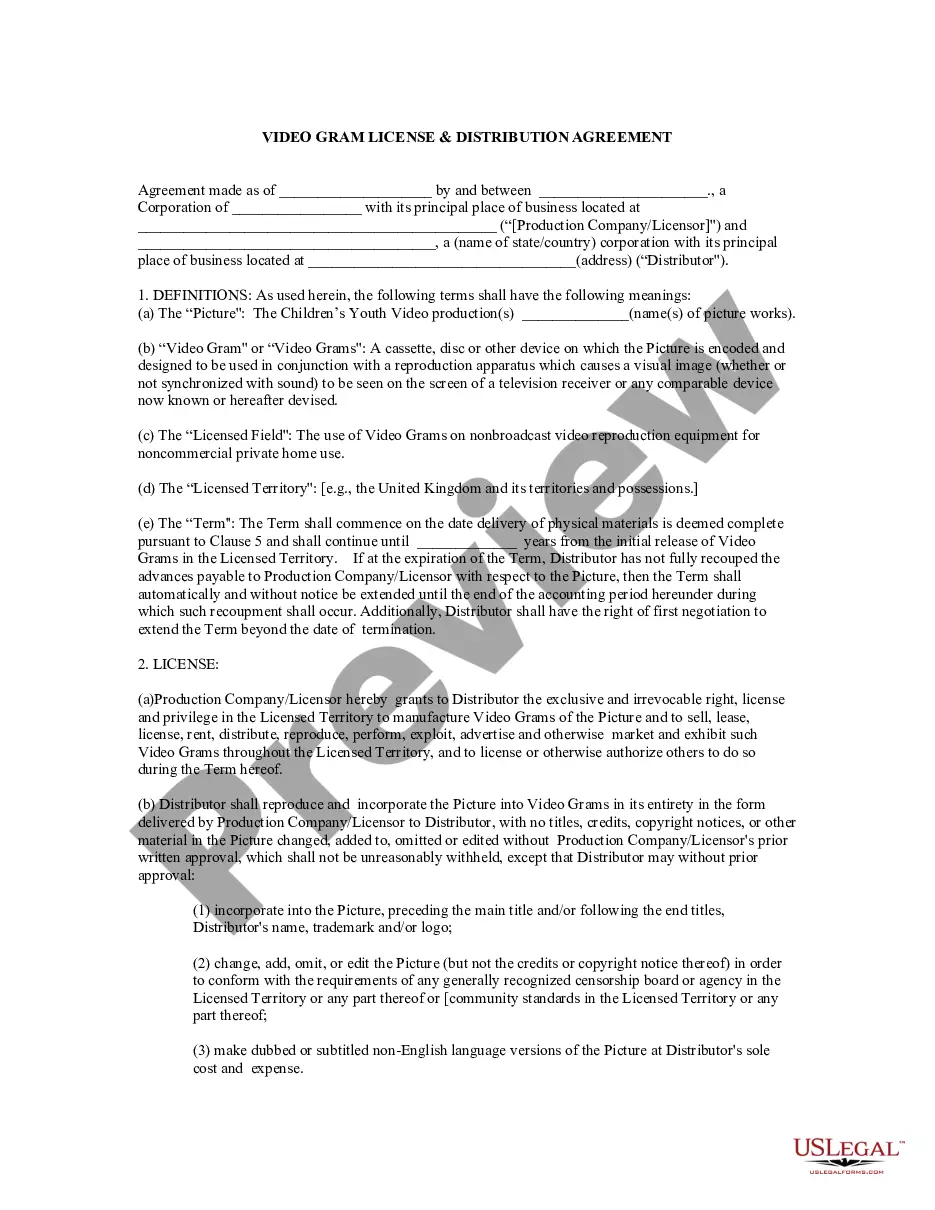
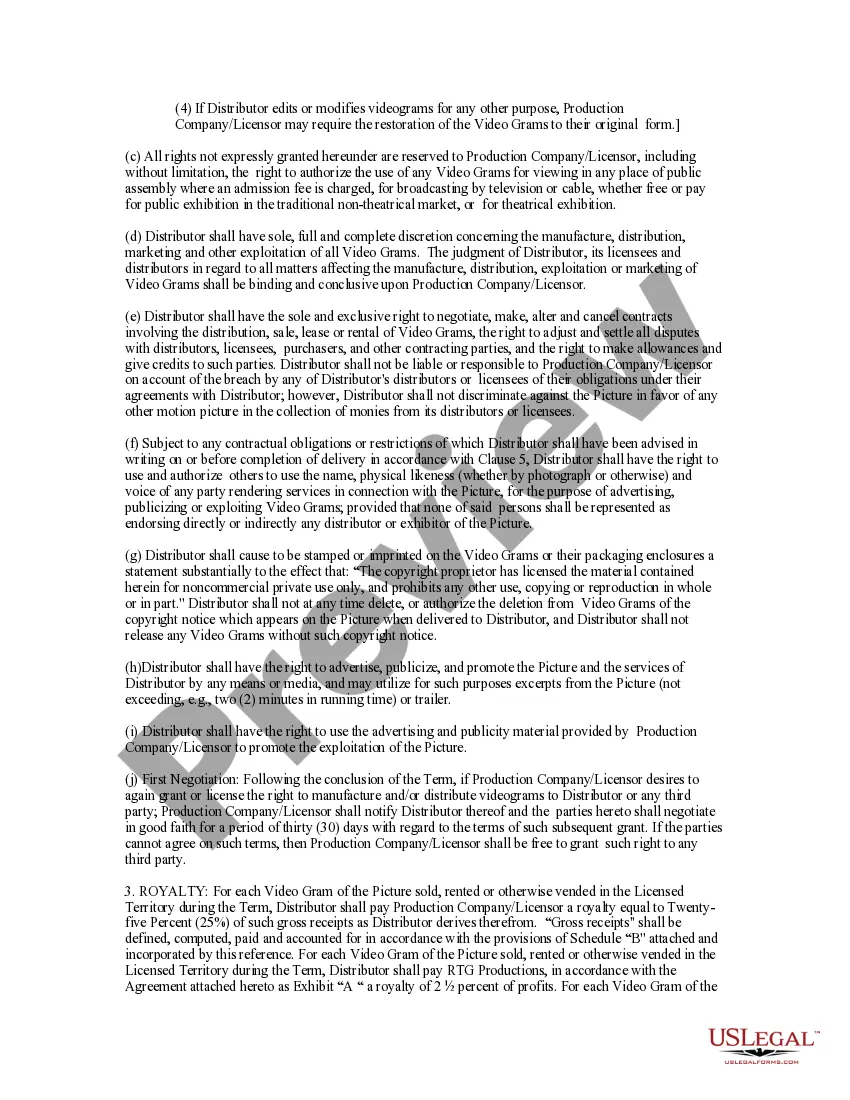
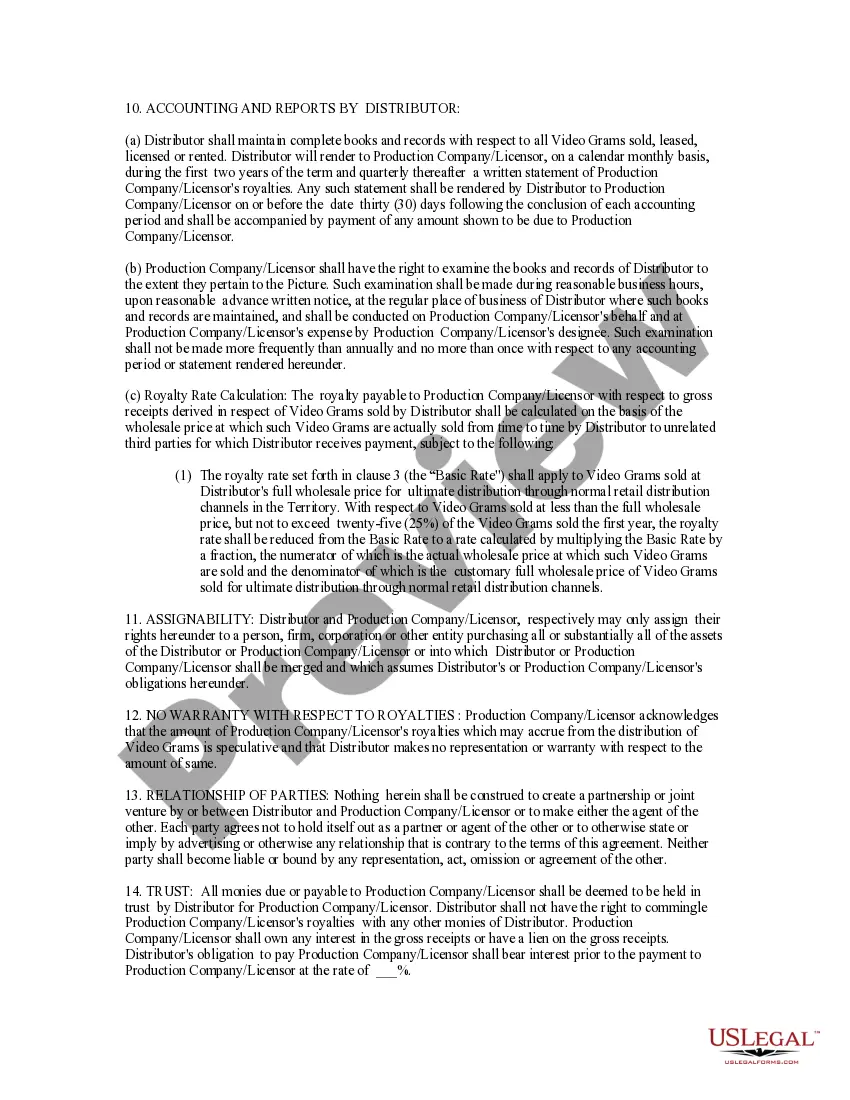
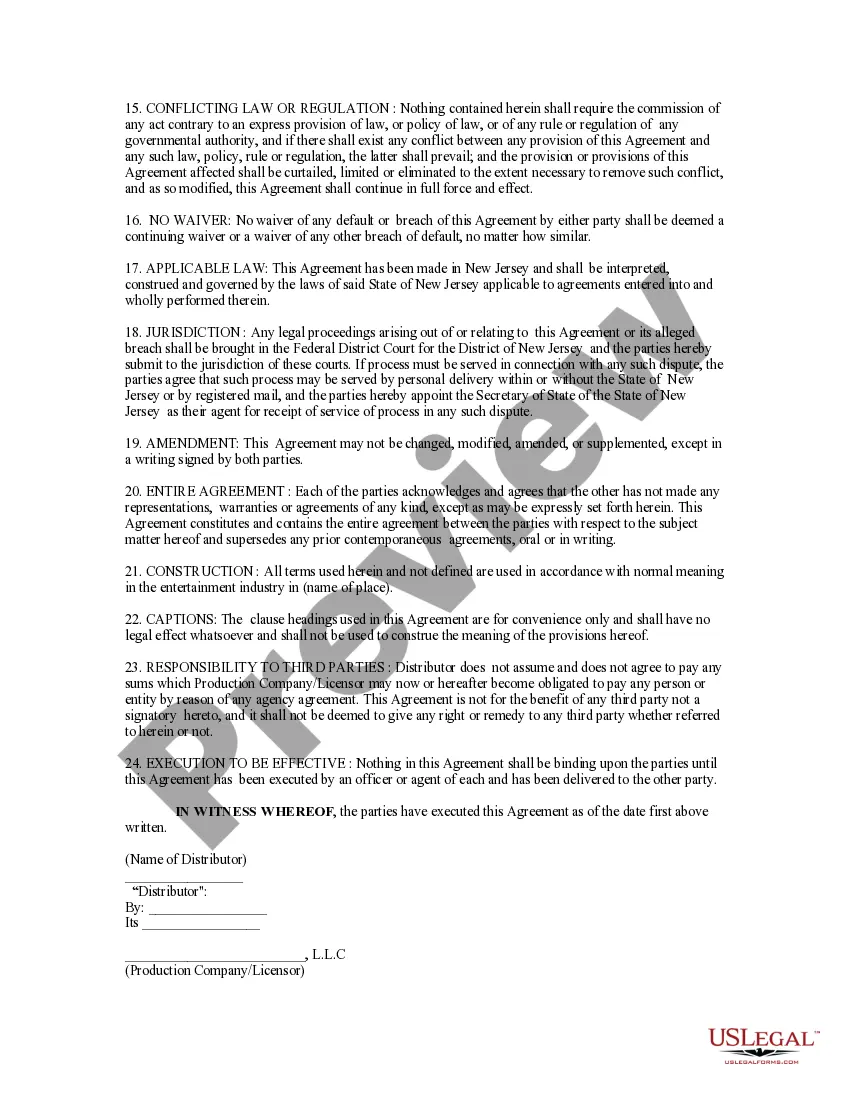
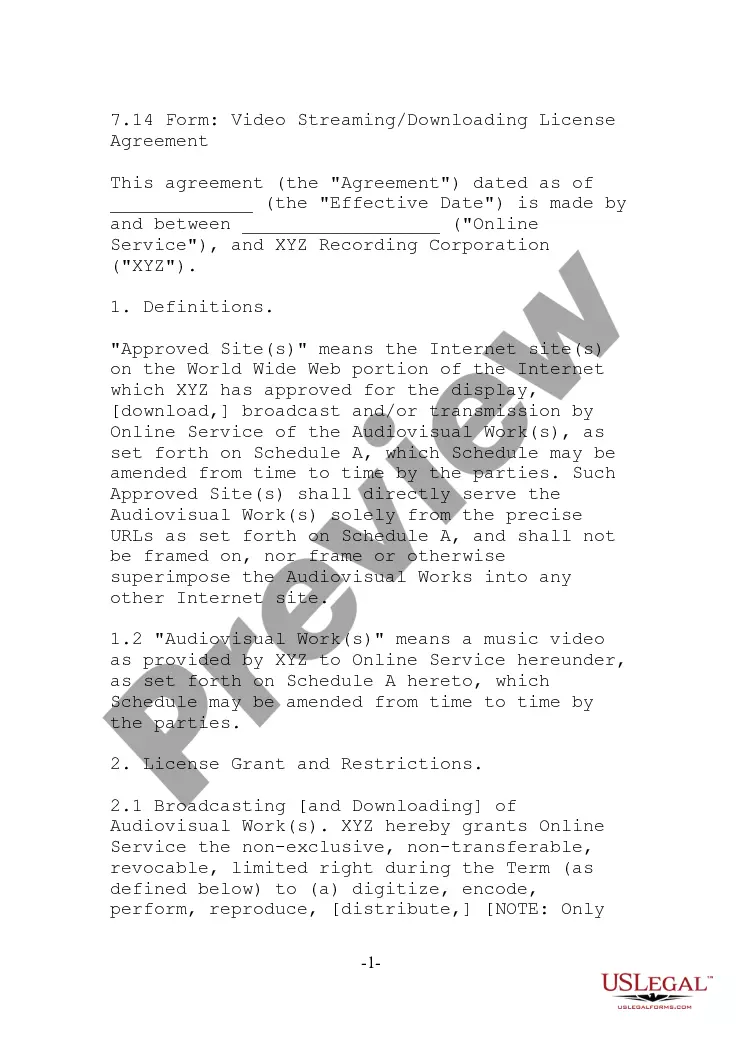
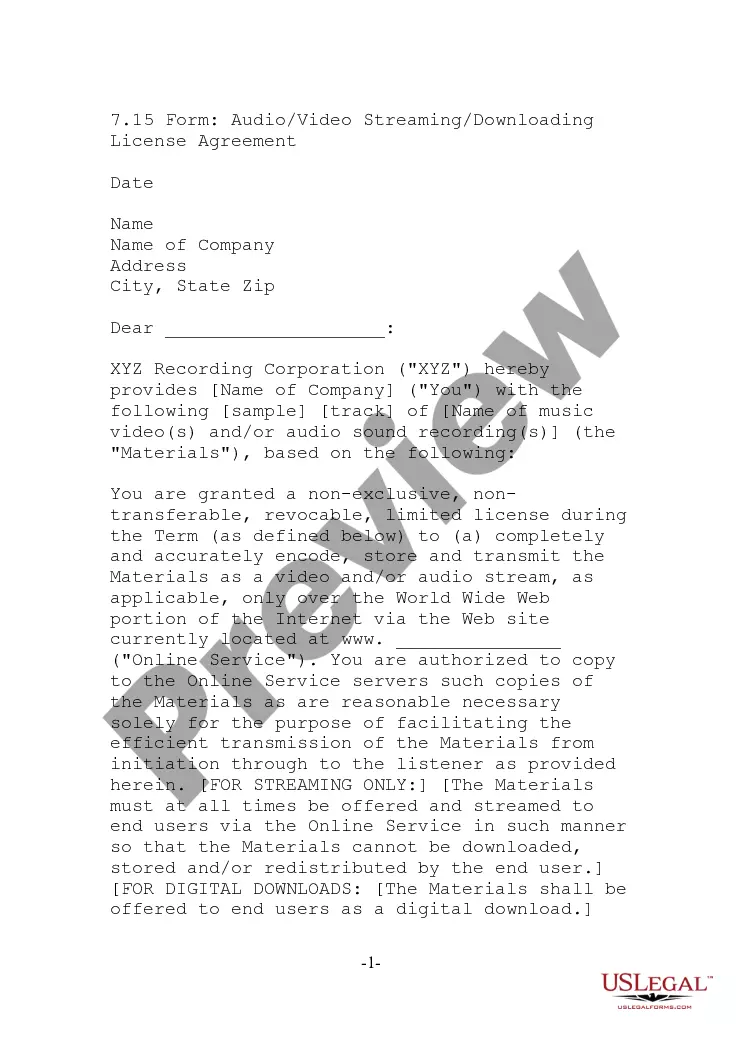
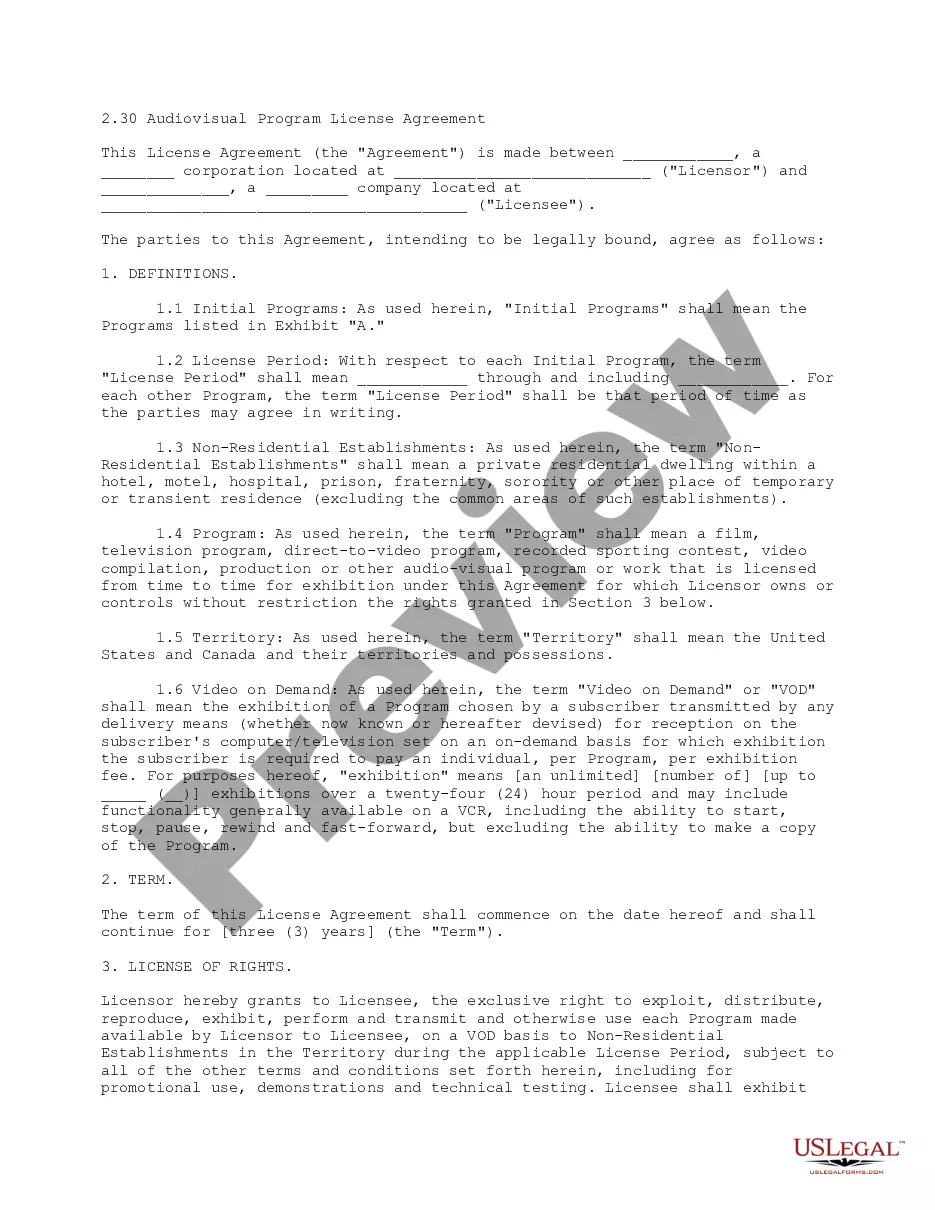
The Video Gram License and Distribution Agreement is a legally binding contract between a production company and a distributor. This agreement outlines the terms under which a distributor can manufacture, market, and distribute video products based on the production company's works. Unlike generic distribution agreements, this form is tailored specifically for video content, ensuring that both parties understand their rights and obligations regarding the distribution of video grams.
Key components of this form
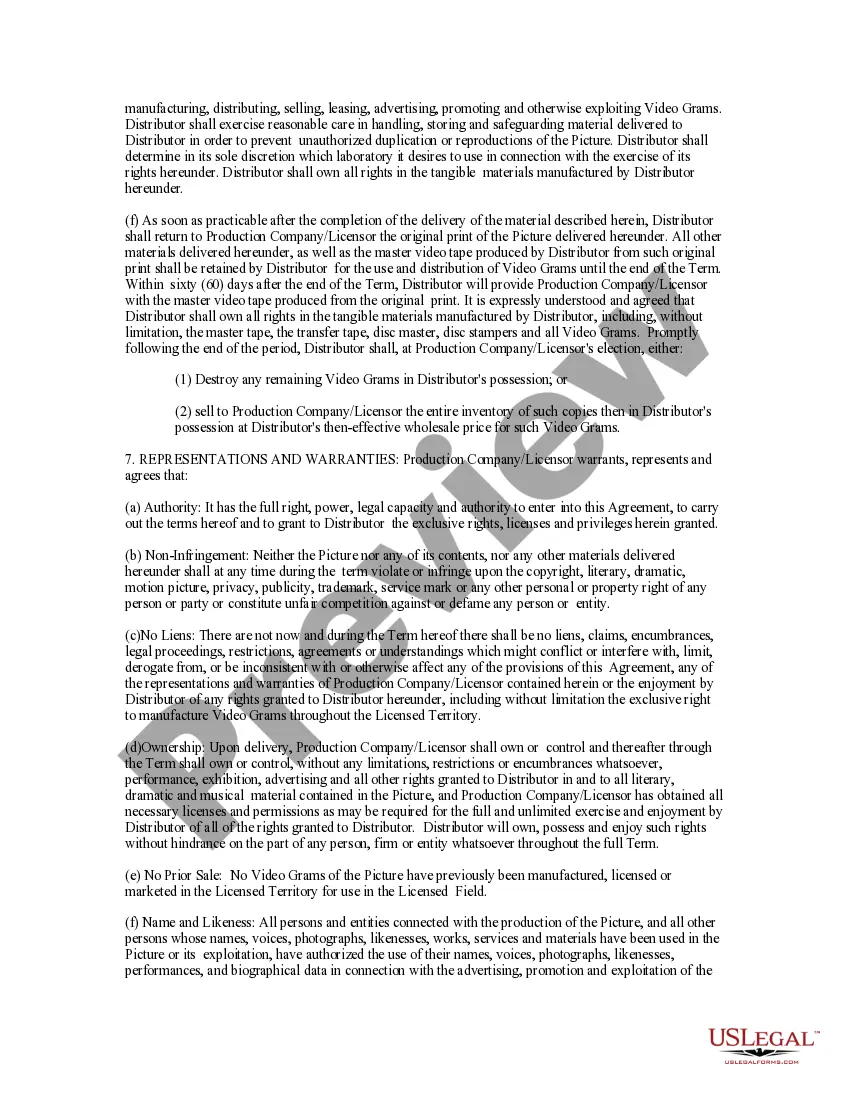
- Definitions: Clarifies key terms such as "Video Gram", "Licensed Field", and "Term".
- License: Grants the distributor exclusive rights to manufacture and distribute the video grams within the specified territory.
- Royalty Terms: Specifies the percentage of gross receipts payable to the production company for each video gram sold.
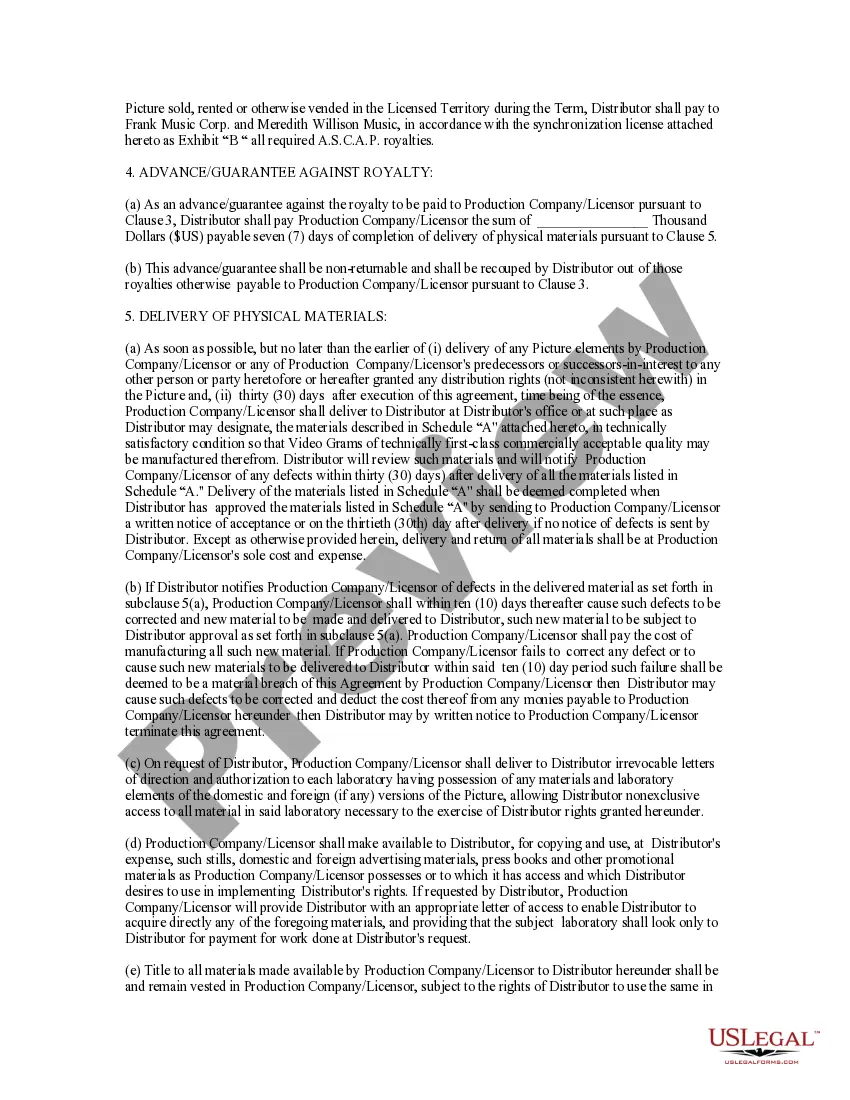
- Delivery Obligations: Details the responsibilities of the production company regarding the delivery of physical materials necessary for distribution.
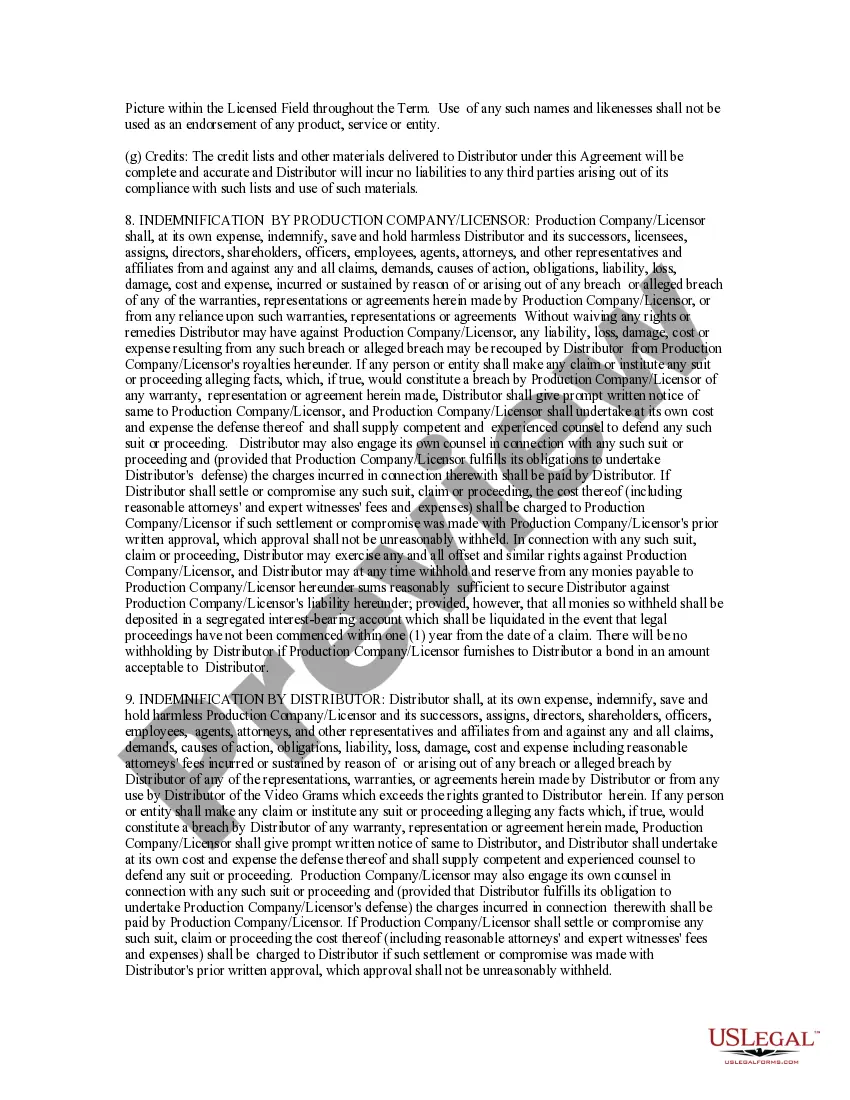
- Indemnification Clauses: Outlines the responsibilities of both parties in the event of legal claims regarding the content covered by the agreement.

When to use this document
This agreement should be used when a production company wants to license its video content to a distributor for commercial purposes. It is essential in situations where the producer seeks to retain certain rights while granting a distributor the ability to sell or license the video content in defined territories. This is commonly used in the film and television industry for the distribution of video materials.
Who should use this form
- Production companies looking to distribute their video content.
- Distributors seeking the rights to market and sell video grams.
- Legal professionals advising clients in the entertainment industry on distribution agreements.
- Anyone involved in licensing or distributing visual media products.
Instructions for completing this form
- Identify the parties: Fill in the names and addresses of the production company and the distributor.
- Define the video content: Specify the title(s) of the video production(s) being licensed.
- Set the terms: Clearly enter the license duration and payment details, including the royalty percentage.
- Detail the delivery of materials: Indicate the obligations for delivering physical materials necessary for distribution.
- Include signatures: Ensure that authorized representatives from both parties sign the agreement to make it legally valid.
Does this form need to be notarized?
This form usually doesn’t need to be notarized. However, local laws or specific transactions may require it. Our online notarization service, powered by Notarize, lets you complete it remotely through a secure video session, available 24/7.
Get your form ready online
Our built-in tools help you complete, sign, share, and store your documents in one place.
Make edits, fill in missing information, and update formatting in US Legal Forms—just like you would in MS Word.
Download a copy, print it, send it by email, or mail it via USPS—whatever works best for your next step.
Sign and collect signatures with our SignNow integration. Send to multiple recipients, set reminders, and more. Go Premium to unlock E-Sign.
If this form requires notarization, complete it online through a secure video call—no need to meet a notary in person or wait for an appointment.
We protect your documents and personal data by following strict security and privacy standards.

Make edits, fill in missing information, and update formatting in US Legal Forms—just like you would in MS Word.

Download a copy, print it, send it by email, or mail it via USPS—whatever works best for your next step.

Sign and collect signatures with our SignNow integration. Send to multiple recipients, set reminders, and more. Go Premium to unlock E-Sign.

If this form requires notarization, complete it online through a secure video call—no need to meet a notary in person or wait for an appointment.

We protect your documents and personal data by following strict security and privacy standards.
Common mistakes to avoid
- Not specifying the Licensed Territory, which can lead to unauthorized distribution.
- Failing to clearly define terms related to royalties and payments.
- Omitting necessary signatures or not having authorized individuals sign the document.
- Not delivering physical materials promptly, which may breach the contract.
Benefits of completing this form online
- Convenient access: Download the agreement at any time without the need for in-person meetings.
- Editability: Customize the form to fit your specific legal needs before finalizing it.
- Reliability: Use forms drafted by licensed attorneys to ensure that your legal documents meet necessary standards.
Looking for another form?

Form popularity
FAQ
Licensed games are video games that are based on an existing intellectual property licensed by the game's publisher. They have existed as early as 1976, when Sega released the arcade game Fonz, a rebranded version of the game Moto-Cross featuring the character Fonzie from the TV show Happy Days.
The 3 P's of collegiate licensing are protection, promotion, and profit.
A licensing agreement is a legal contract between two parties, known as the licensor and the licensee. In a typical licensing agreement, the licensor grants the licensee the right to produce and sell goods, apply a brand name or trademark, or use patented technology owned by the licensor.
An example of a licensing agreement is a contract between the copyright holders of software and another company, allowing the latter to use the computer software for their daily business operations.
Exclusive or non-exclusive. In an exclusive license, the intellectual property holder is licensing the work only to one person, for that particular use/territory. Territory. Use. Attribution. Derivative works. Confidentiality. Time frame. Termination.
What is a Licensing Agreement? A licensing agreement is a contract between two parties (the licensor and licensee) in which the licensor grants the licensee the right to use the brand name, trademark, patented technology, or ability to produce and sell goods owned by the licensor.
A license agreement is a business contract between two parties. The licensor (the seller of the license) owns the asset being licensed and the licensee (the buyer) pays for the right to use the license. The licensee pays royalties to the owner in exchange for the right to sell the product or use the technology.
A copyright gives you ownership of your video game. As the legally recognized owner of the game, you can initiate licensing contracts to distribute and sell your work. Licenses must be executed in compliance with various laws and drafted to ensure that the developer's rights and interests are protected.