USLegal Guide to Sale of a Business
Overview of this form
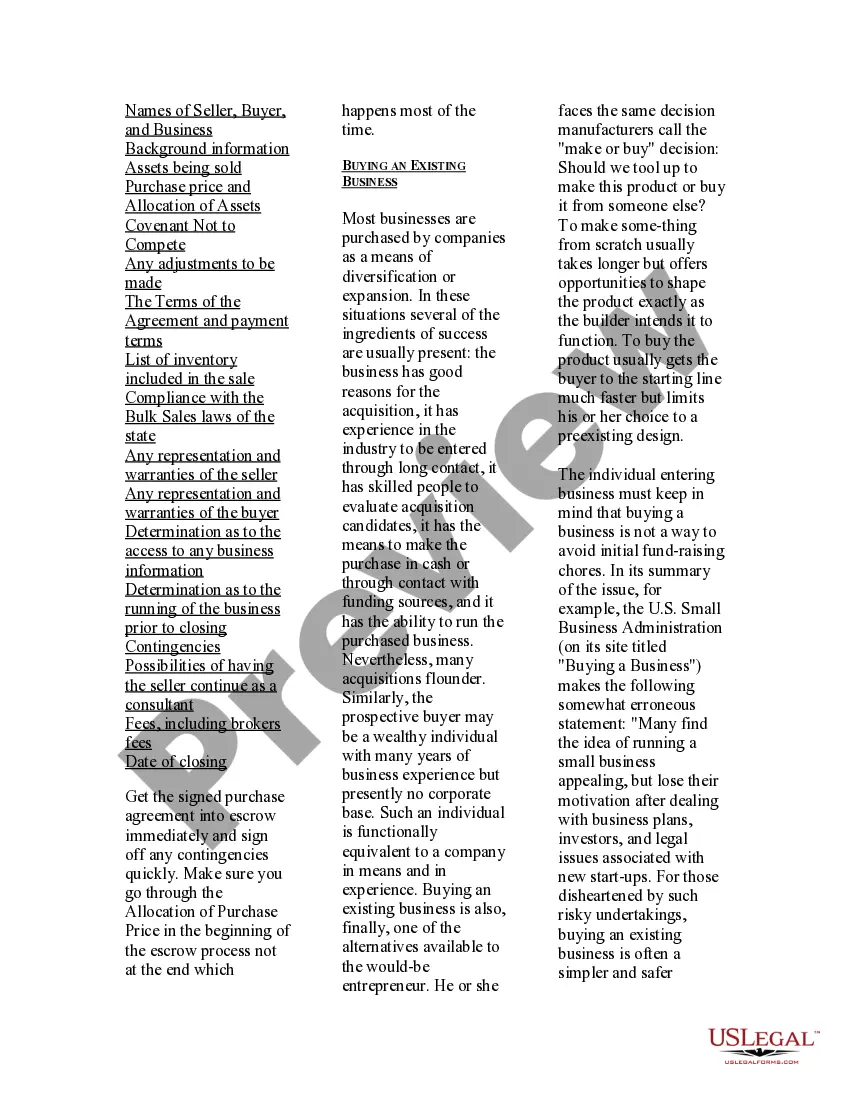
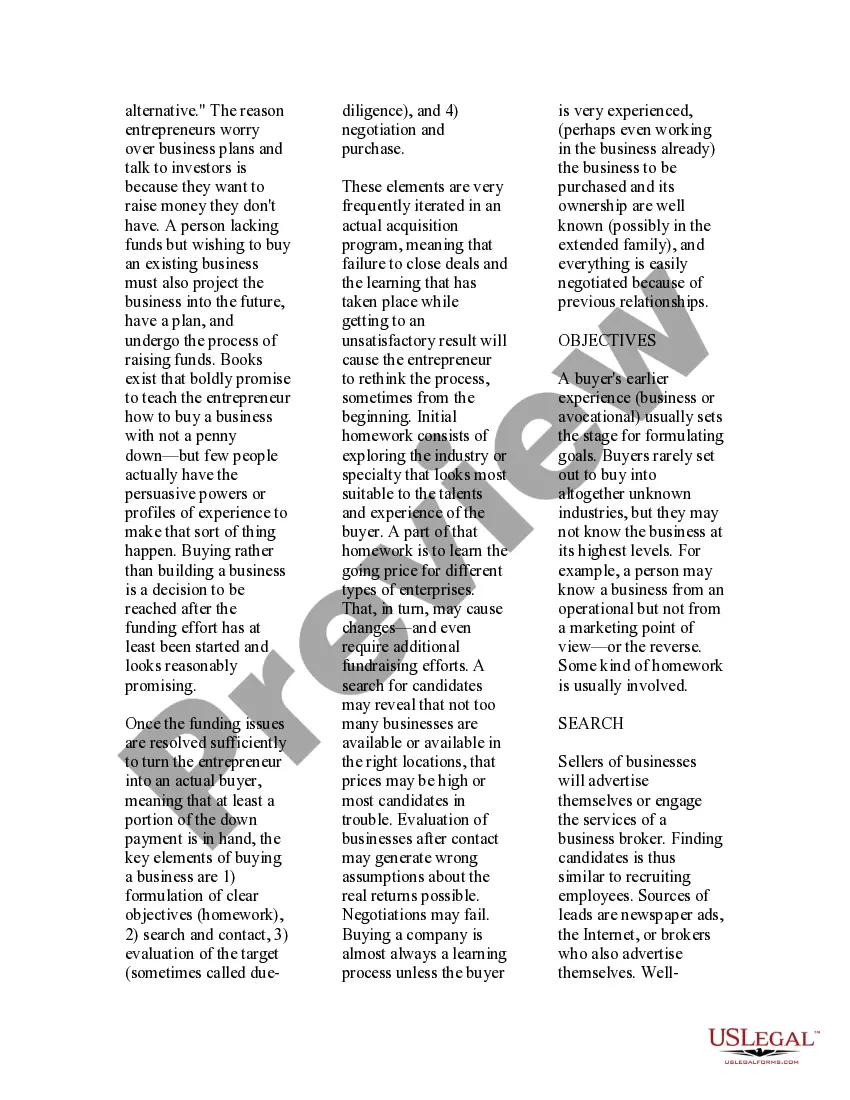
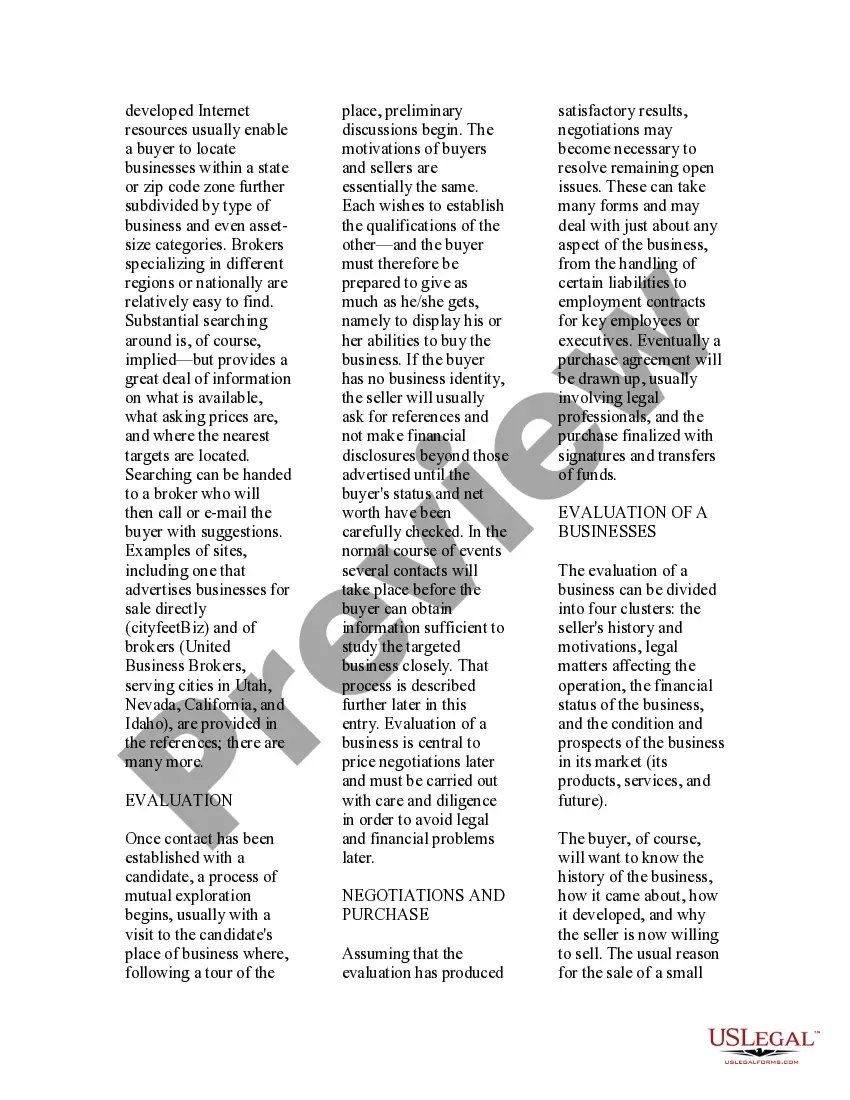
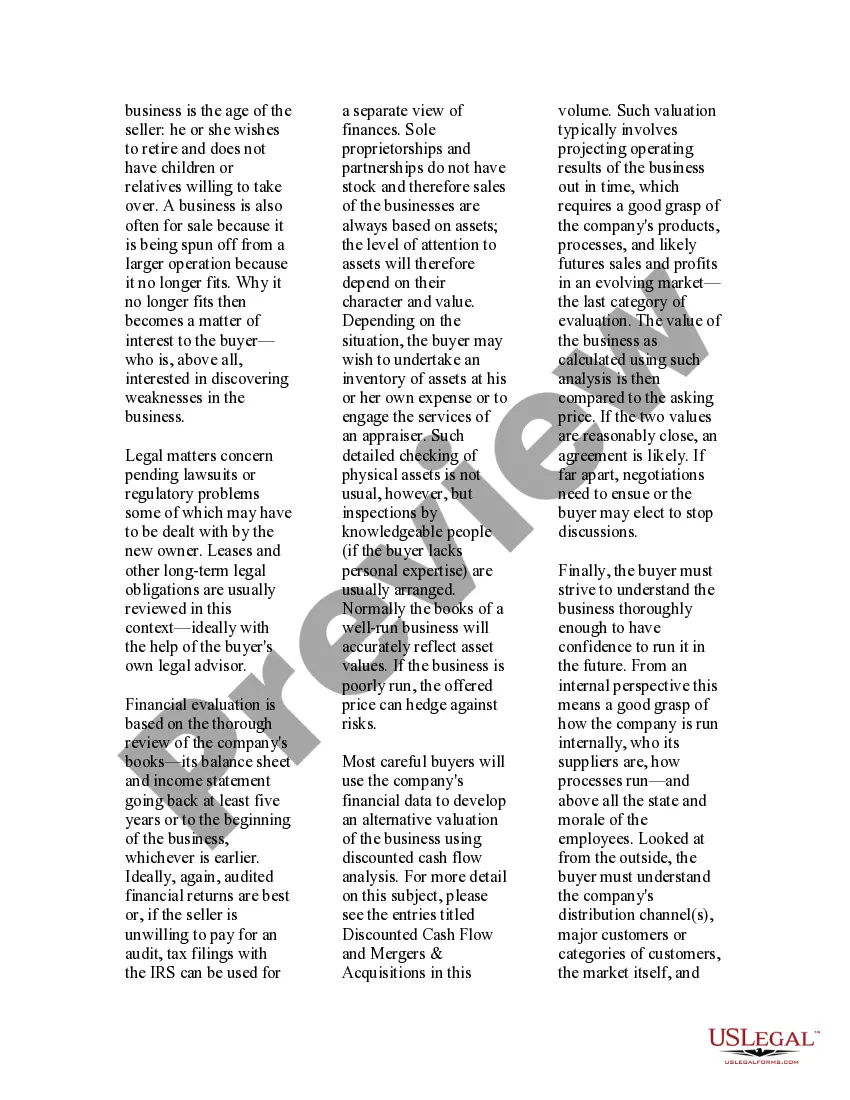
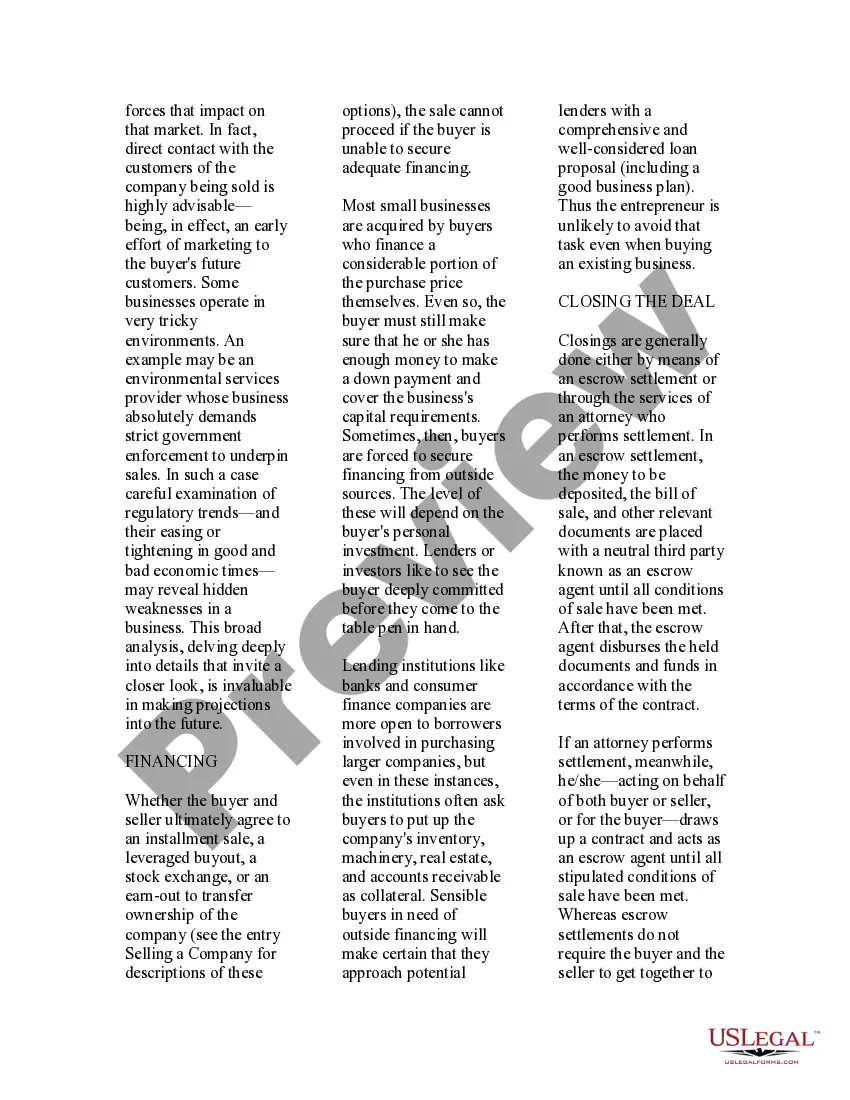
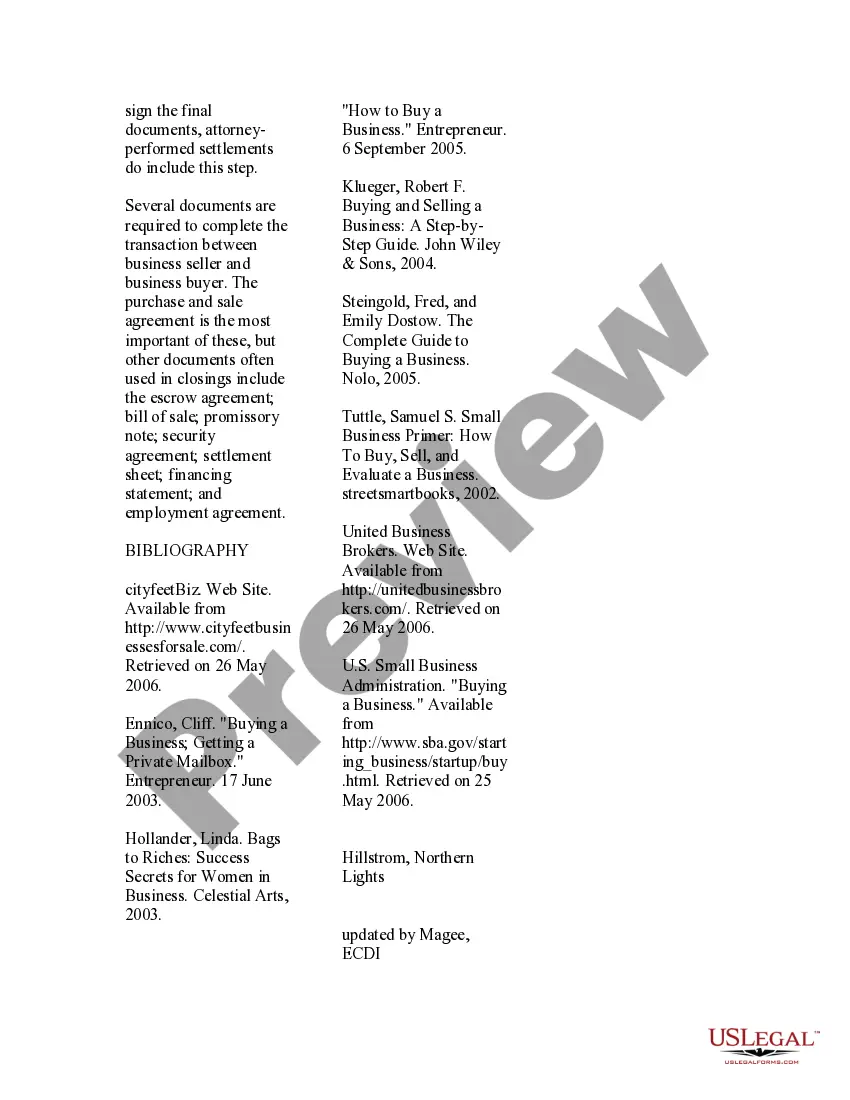
The USLegal Guide to Sale of a Business is a comprehensive resource designed to help business owners navigate the complexities of selling their business. This guide covers essential topics such as buy-sell agreements, selling memorandums, purchase contracts, disclosures, valuation, and financing. Unlike generic sales templates, this guide offers tailored advice from licensed attorneys, ensuring all aspects of the legal sale process are addressed effectively.
Key parts of this document
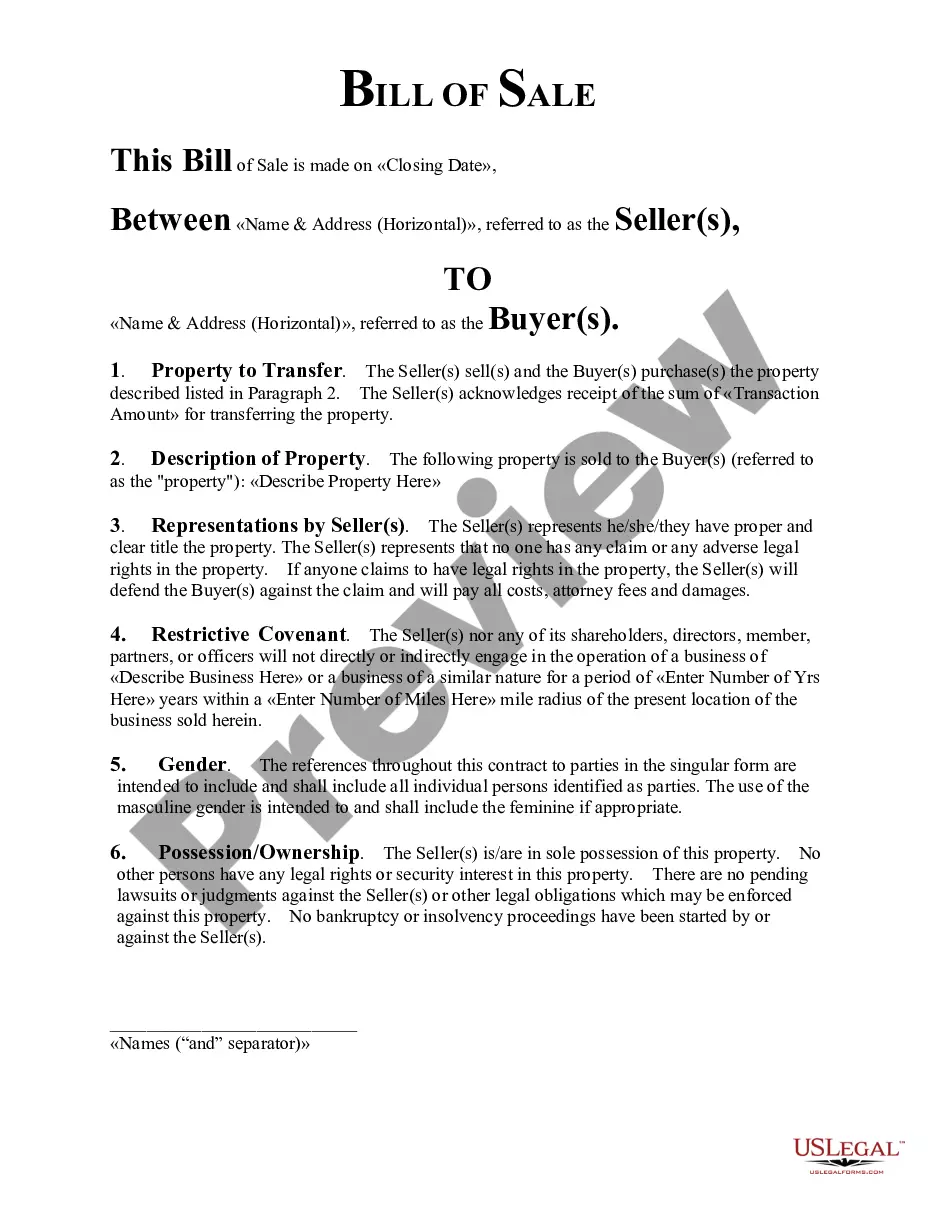
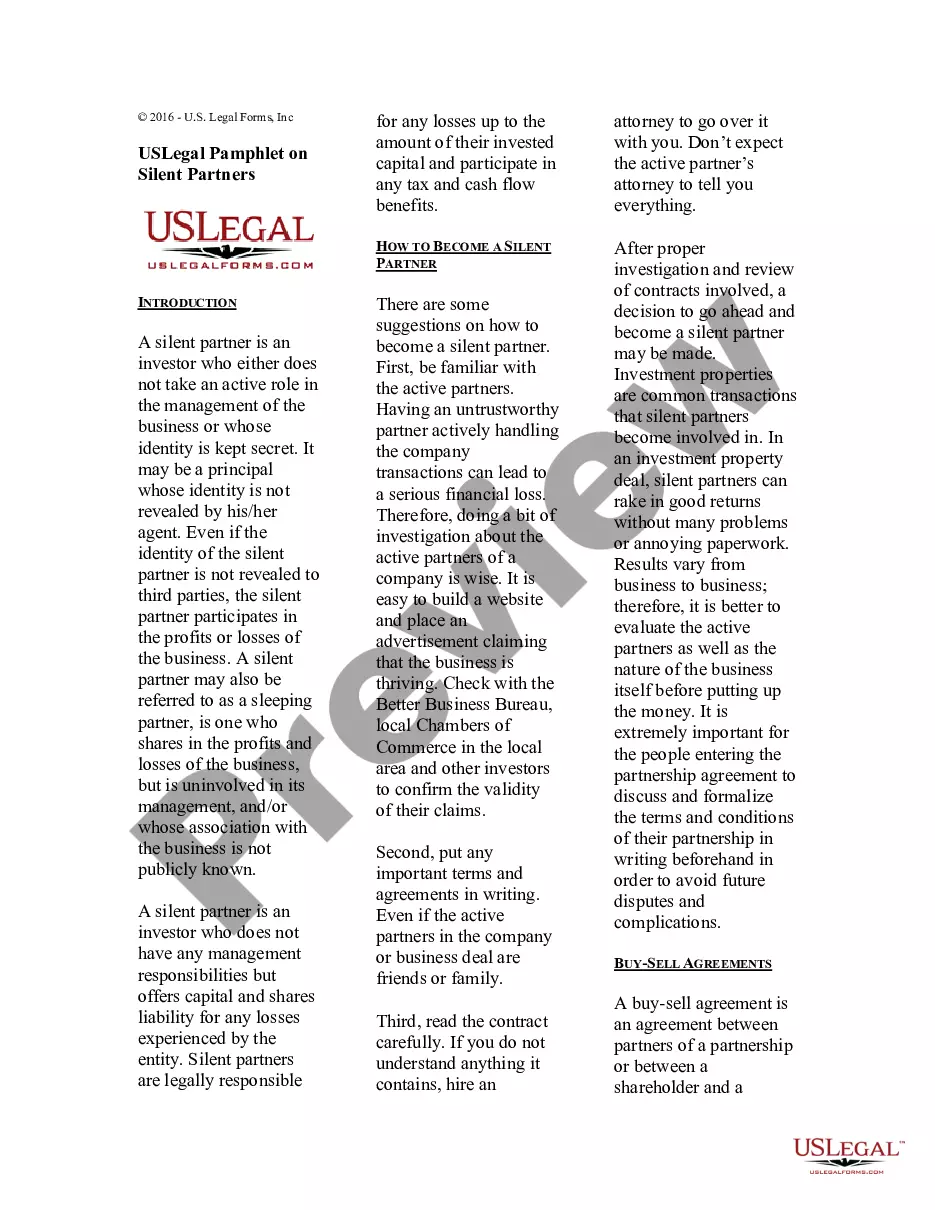
- Buy-Sell Agreements: Legal contracts that dictate the terms for selling a partnerâs or shareholderâs interest in the business.
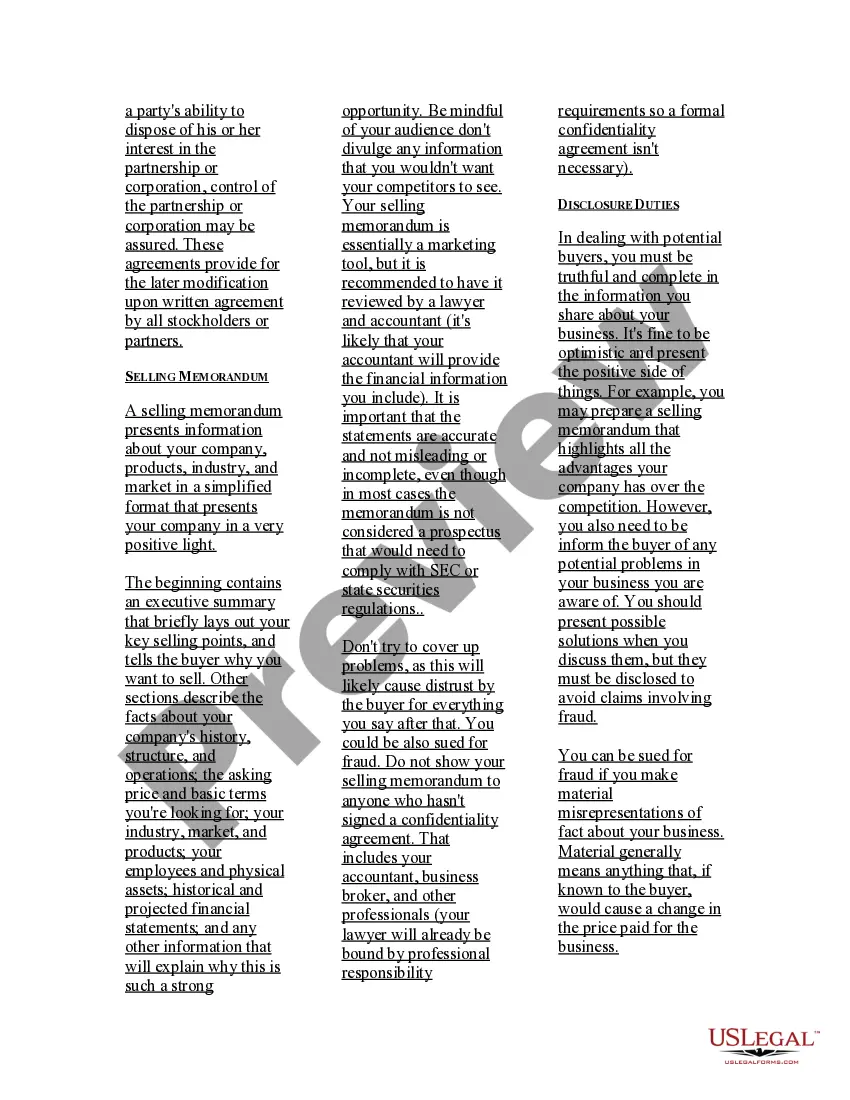
- Selling Memorandum: A document that outlines key information about the business to attract potential buyers without revealing sensitive information.
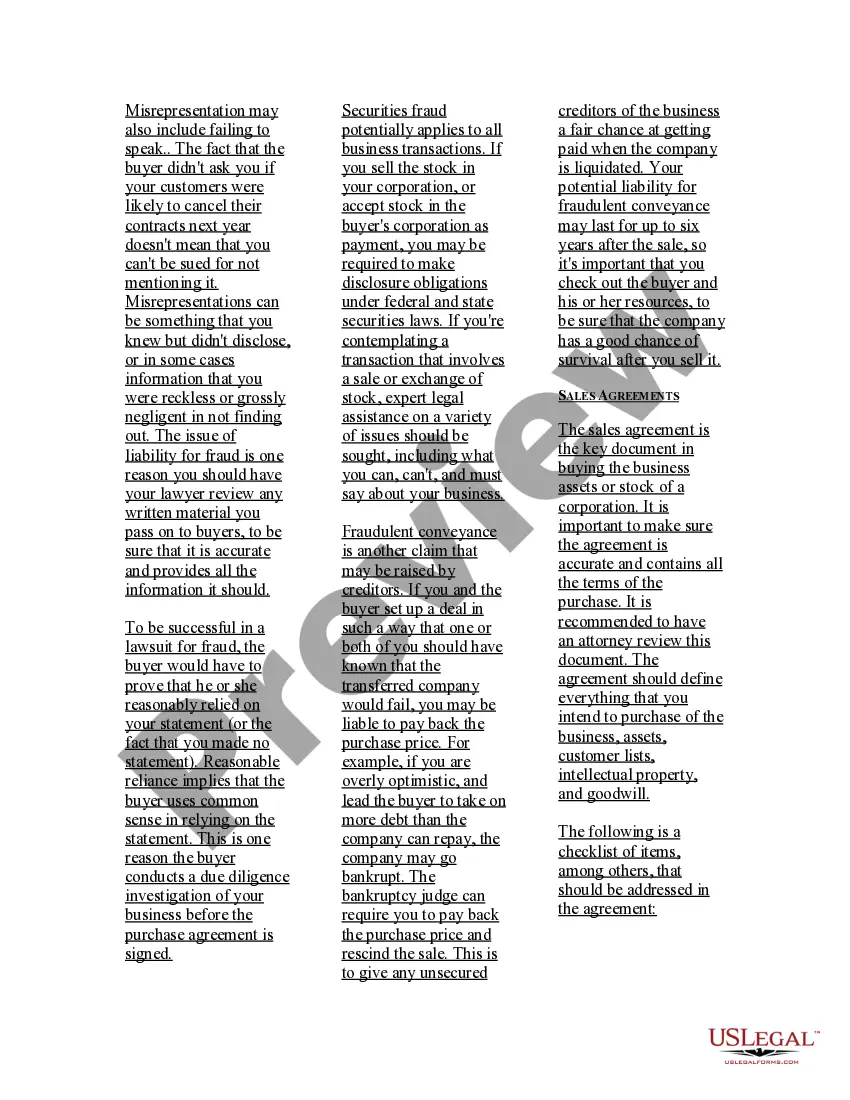
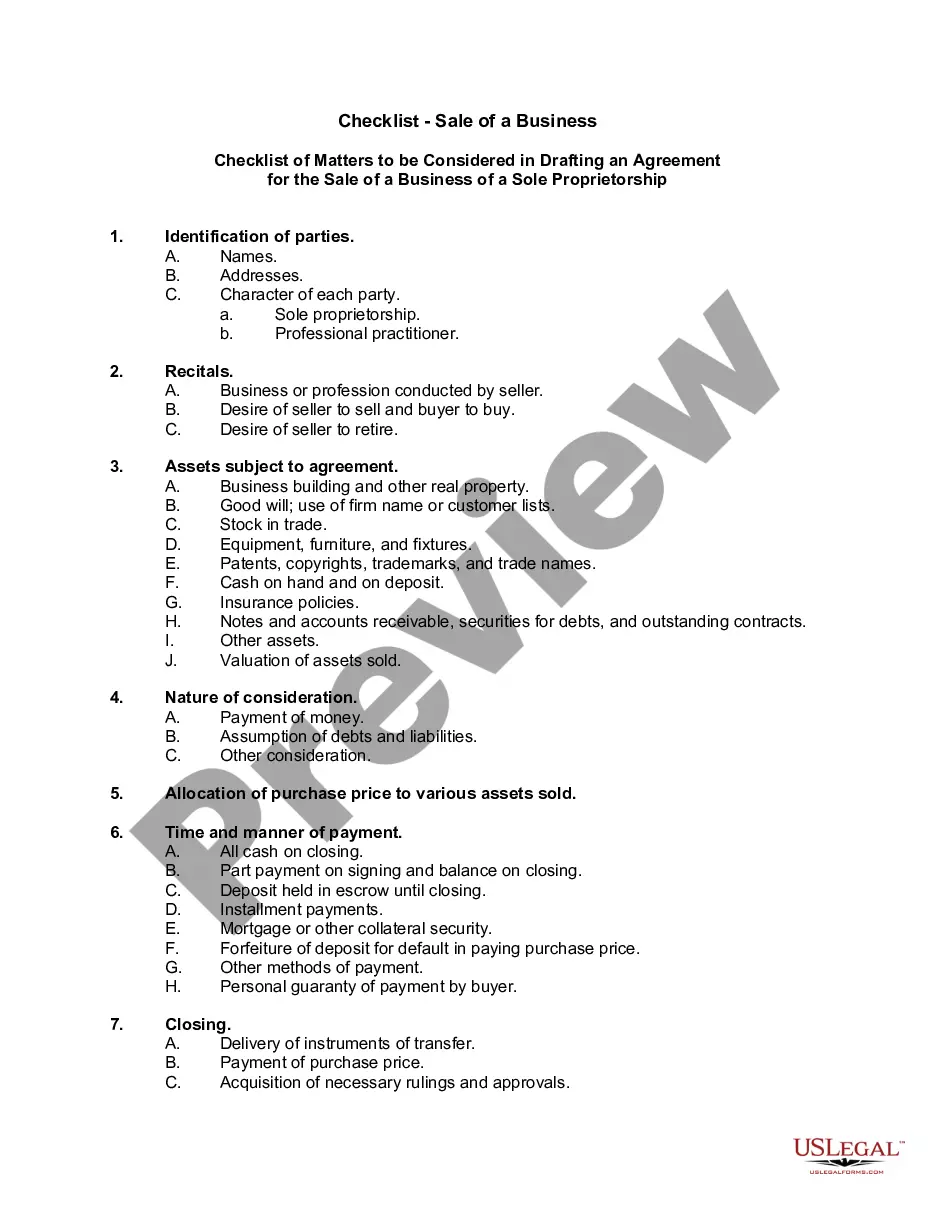
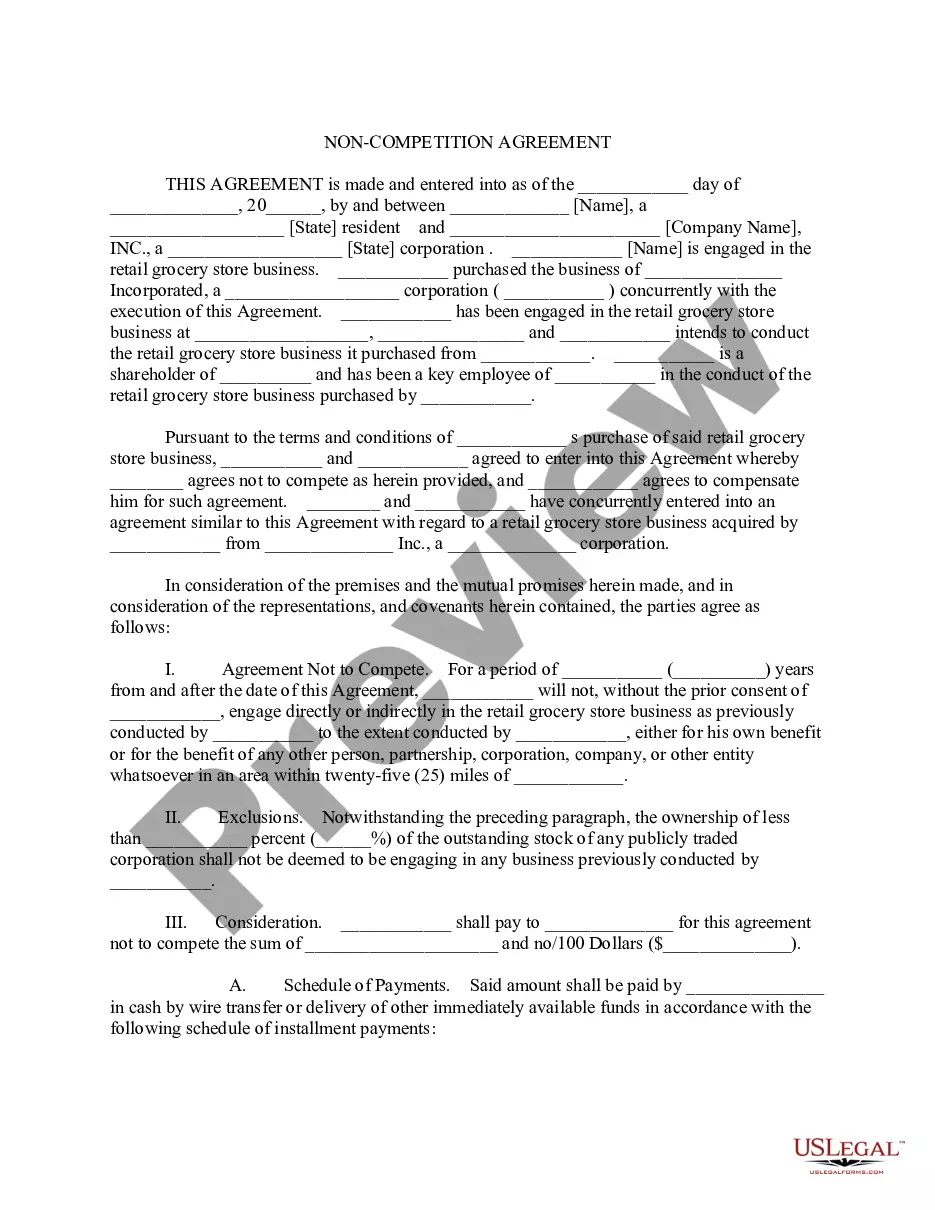
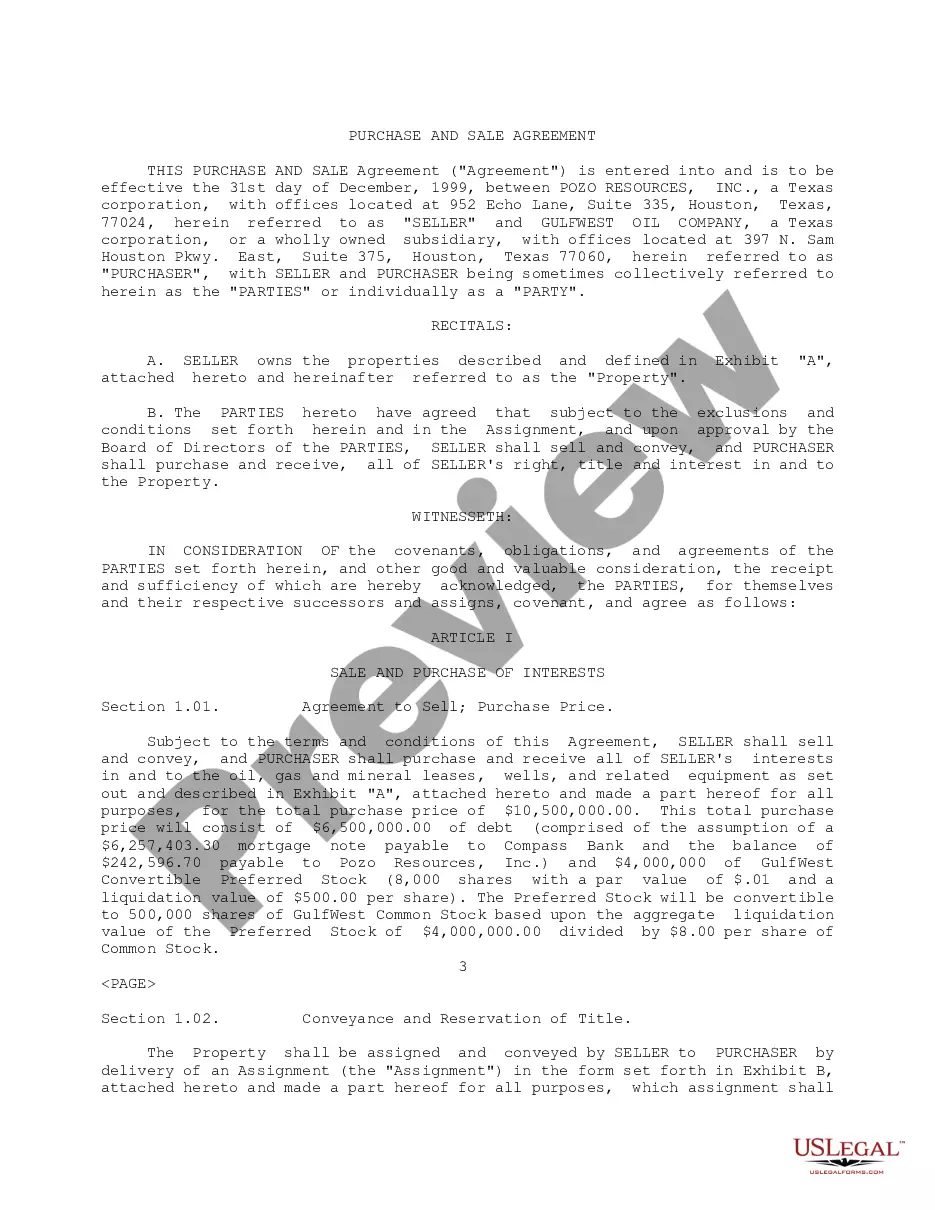
- Sales Agreements: The primary document that outlines the transaction details, including assets, purchase price, and terms.
- Disclosure Duties: Legal obligations to provide truthful and complete information to potential buyers about the business's condition.
- Valuation Considerations: Factors that impact the assessment of the business's worth, which is crucial in negotiations.
Situations where this form applies
This guide is essential when you plan to sell your business, whether fully or partially. It is particularly useful in situations where business owners need structured advice on how to prepare, negotiate, and finalize the sale while complying with legal requirements. If you are considering retirement, transitioning to a different venture, or simply looking to capitalize on the value built in your business, this guide will assist you in making informed decisions throughout the selling process.
Who should use this form
This guide is intended for:
- Business owners looking to sell all or part of their business.
- Shareholders or partners needing clarity on the sale of their interests.
- Entrepreneurs interested in understanding the sales process before purchasing a business.
- Business advisors and consultants who support clients in business transition.
How to complete this form
Follow these steps to effectively utilize the guide:
- Review the key components to understand the legal framework surrounding the sale of your business.
- Gather relevant financial and operational information needed for the selling memorandum.
- Draft or consult on buy-sell agreements and sales agreements based on the guideâs recommendations.
- Ensure full compliance with disclosure duties to prevent future legal complications.
- Evaluate your businessâs worth and prepare negotiation strategies using the valuation considerations outlined.
Notarization requirements for this form
In most cases, this form does not require notarization. However, some jurisdictions or signing circumstances might. US Legal Forms offers online notarization powered by Notarize, accessible 24/7 for a quick, remote process.
Get your form ready online
Our built-in tools help you complete, sign, share, and store your documents in one place.
Make edits, fill in missing information, and update formatting in US Legal Forms—just like you would in MS Word.
Download a copy, print it, send it by email, or mail it via USPS—whatever works best for your next step.
Sign and collect signatures with our SignNow integration. Send to multiple recipients, set reminders, and more. Go Premium to unlock E-Sign.
If this form requires notarization, complete it online through a secure video call—no need to meet a notary in person or wait for an appointment.
We protect your documents and personal data by following strict security and privacy standards.

Make edits, fill in missing information, and update formatting in US Legal Forms—just like you would in MS Word.

Download a copy, print it, send it by email, or mail it via USPS—whatever works best for your next step.

Sign and collect signatures with our SignNow integration. Send to multiple recipients, set reminders, and more. Go Premium to unlock E-Sign.

If this form requires notarization, complete it online through a secure video call—no need to meet a notary in person or wait for an appointment.

We protect your documents and personal data by following strict security and privacy standards.
Typical mistakes to avoid
- Failing to keep the sale confidential, which can lead to employee and customer distrust.
- Underestimating the importance of proper disclosures, risking fraud claims post-sale.
- Poorly drafted sales agreements that do not accurately reflect the terms of the sale.
- Neglecting to evaluate the business thoroughly before the sale, which can impact negotiations.
Advantages of online completion
- Convenient access: Download the guide anytime you need it, avoiding long wait times for consultations.
- Editability: Make personalized adjustments to the templates provided in the guide.
- Reliability: The content is drafted by licensed attorneys, ensuring it meets legal standards.
- This guide serves as an informative tool but does not replace professional legal advice.
- Enforceability of agreements depends on compliance with state laws and the completeness of documentation.
What to keep in mind
- The USLegal Guide to Sale of a Business is essential for understanding the complexities of business sales.
- Accurate documentation and legal compliance are critical for successful transactions.
- Utilizing this guide can help you avoid common pitfalls in the sales process.
- Preparation and transparency with buyers can significantly enhance transaction success.
Looking for another form?

Form popularity
FAQ
Determine what your business is worth. Prepare your financials with your accountant. Find a broker or investment banker. Develop the executive summary of your business. Put your business on the market. Field offers from potential buyers. Let the buyer perform due diligence.
Non-Disclosure Confidentiality Agreement. Personal Financial Statement Form for Buyer to Complete. Offer-to-Purchase Agreement. Note for Seller Financing. Financial Statements for the Current and Past 2-3 Years. Statement of Seller's Discretionary Earnings or Cash Flow. Financial Ratios and Trends.
Prepare a Business Summary. Market your business aggressively. Screen buyers and email them your Business Summary. Meet with qualified buyers and screen them appropriately. Accept an offer. Manage the due diligence process. Handle the closing.
Yes. It is possible to sell a business without a broker, just as it is possible to sue someone without the help of an attorney. Although a broker is not always necessary, brokers are useful and helpful in many instances, but there may be times when you can sell without the help of a broker.
Delays Kills Deals. First, understand that delays kill deals. Market Small Businesses on the Web. Most small businesses these days are marketed on the Internet. Manage the Process. Keep on it Through Due Diligence. Pay Attention To Taxes. Use an Attorney.
Step 1: Define the Owner's Goals and Potential Exit Strategies. Step 2: Determine a Range of Value. Step 3: Enhancing Value Prior to the Sale. Step 4: Gather Financial Information; Present Financials. Step 5: Compile Due Diligence Information. Step 6: Target Buyers. Step 7: Qualify Potential Buyers. Step 8: Negotiate the Deal.
Get a business valuation. Get your books in order. Understand the true profitability of your business. Consult your financial advisor. Make a good first impression. Organize your legal paperwork. Consider management succession. Know your reason for selling.
Determine what your business is worth. Prepare your financials with your accountant. Find a broker or investment banker. Develop the executive summary of your business. Put your business on the market. Field offers from potential buyers. Let the buyer perform due diligence.