Services Agreement between The University of Memphis and UTEK Corp. regarding commercial development of specific intellectual property and technology
Overview of this form
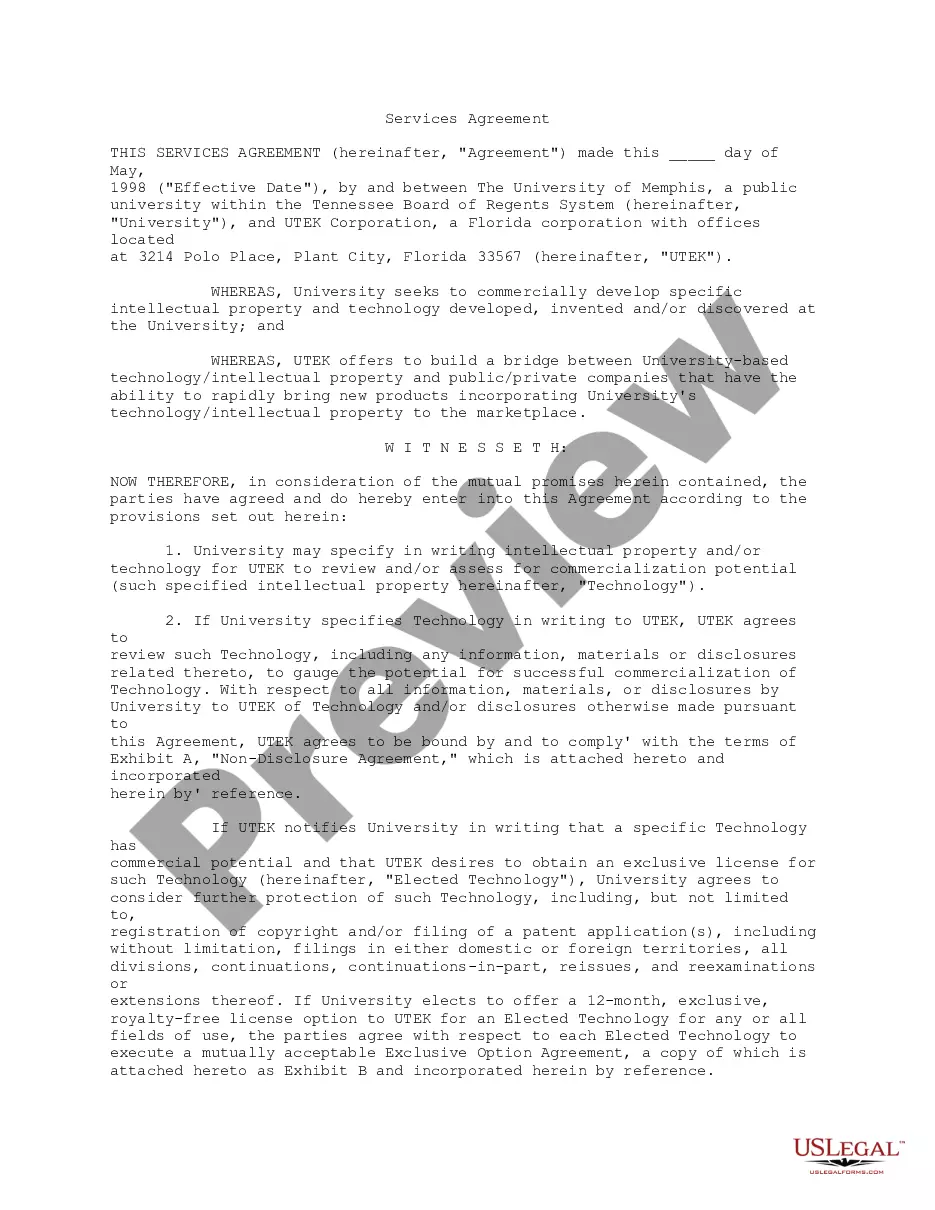
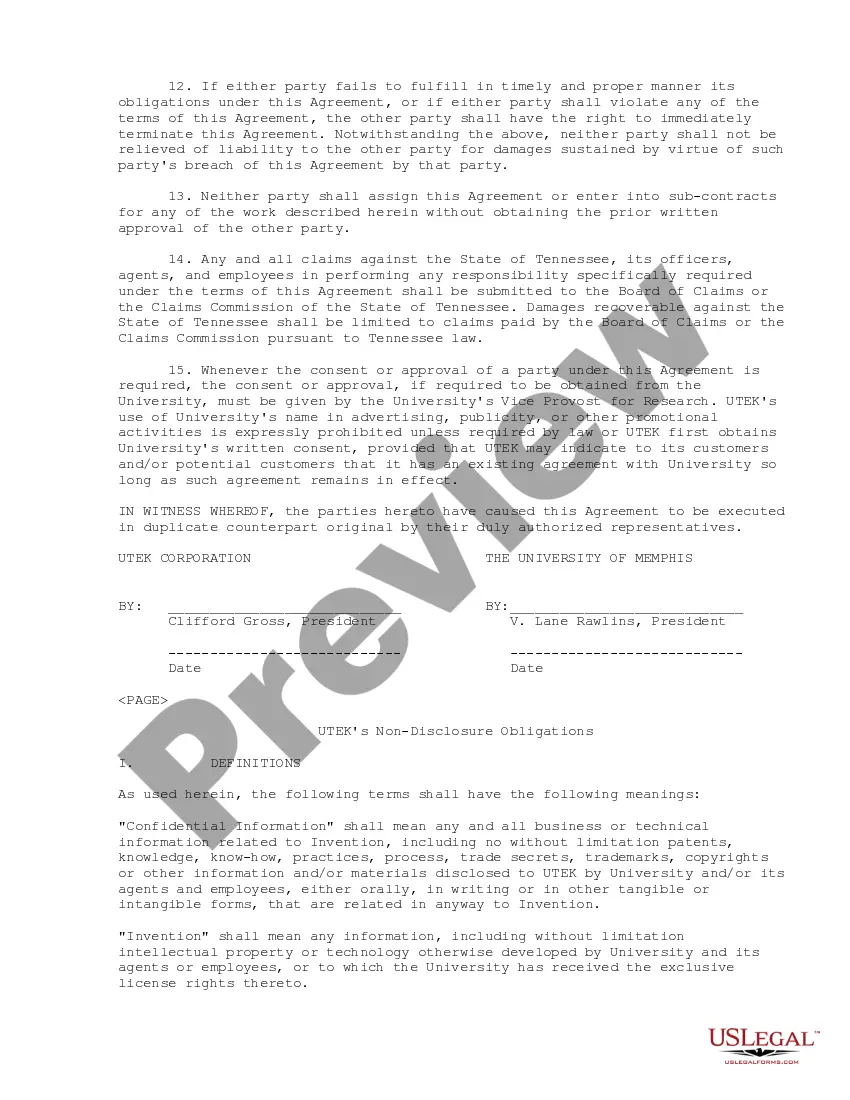
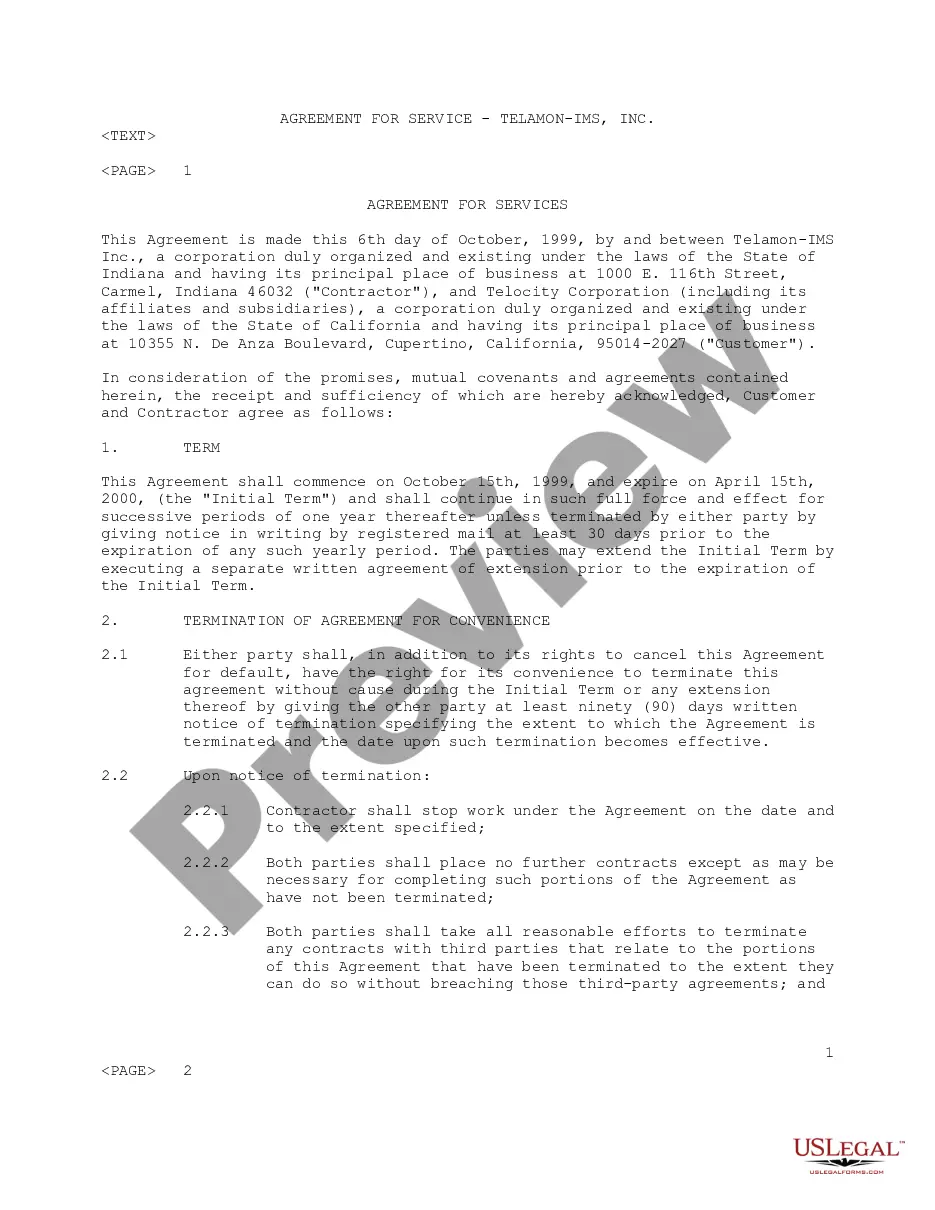
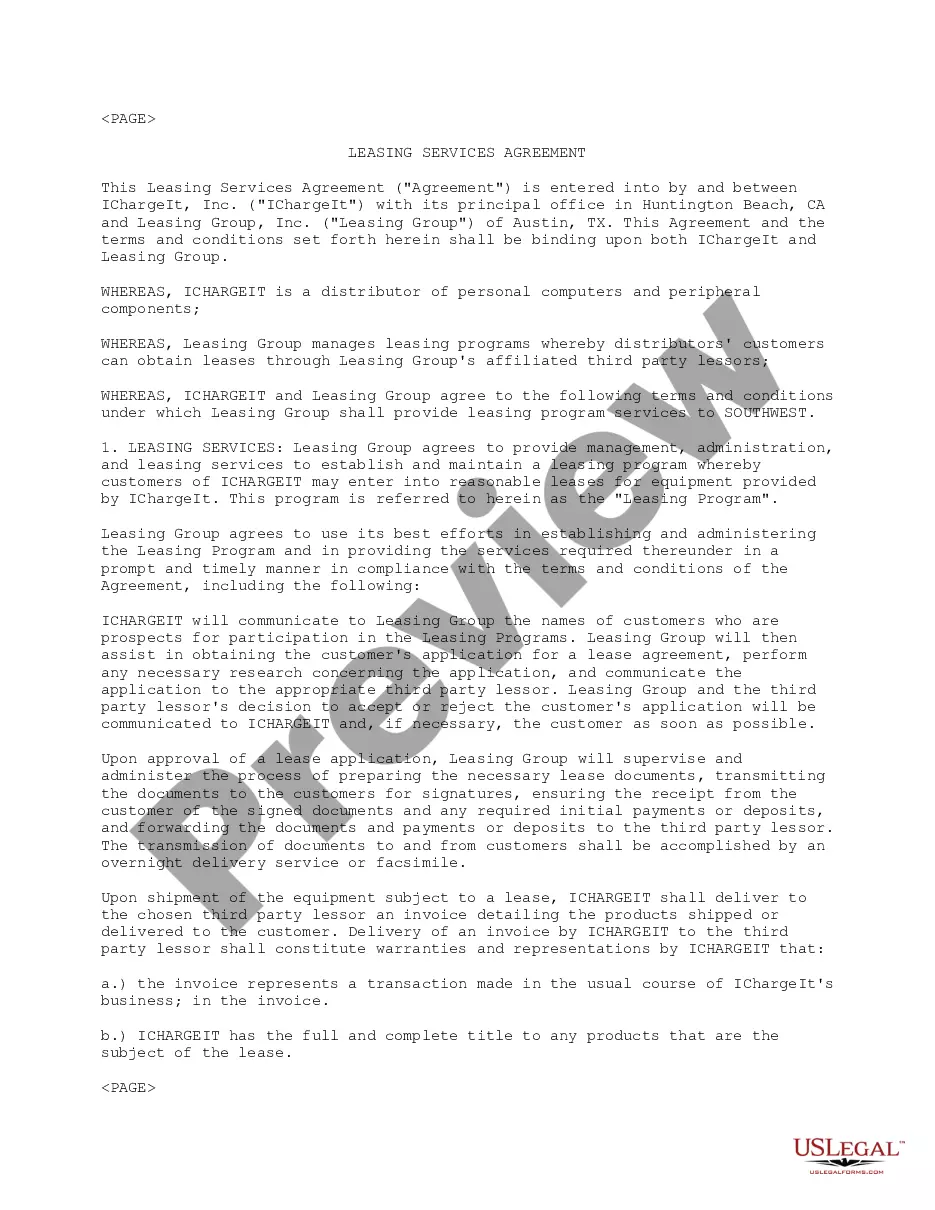
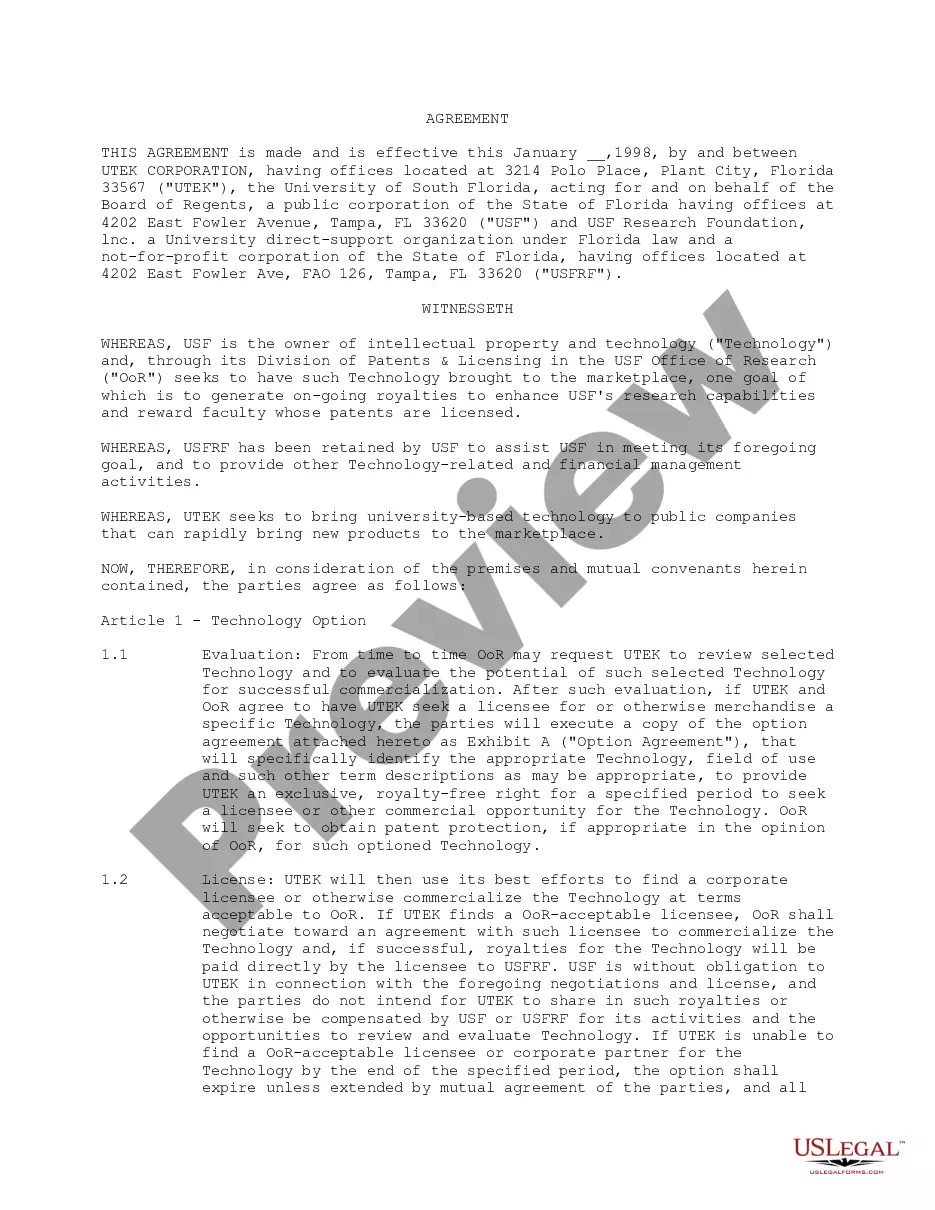
This Services Agreement outlines the terms under which The University of Memphis and UTEK Corporation collaborate on the commercialization of specific intellectual property and technology developed at the University. This agreement helps to facilitate the transfer of university-based innovations to the market, distinguishing it from standard contracts by its focus on intellectual property rights and commercialization efforts.
Key parts of this document
- Effective Date: The date the agreement officially begins.
- Identification of Parties: Clearly states the parties involved in the agreement.
- Technology Review Process: Details how UTEK will assess the commercial potential of the specified technologies.
- Exclusive License Option: Outlines conditions under which UTEK can obtain an exclusive license for patents or technologies deemed commercially viable.
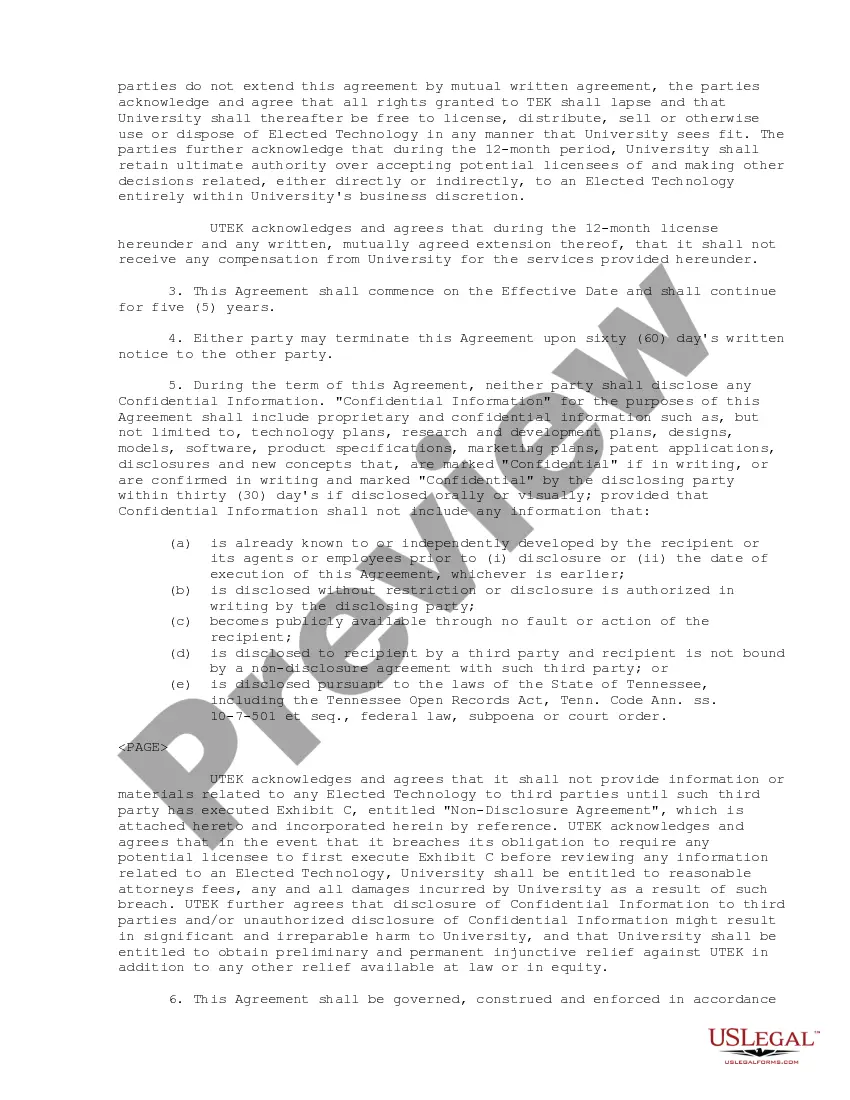
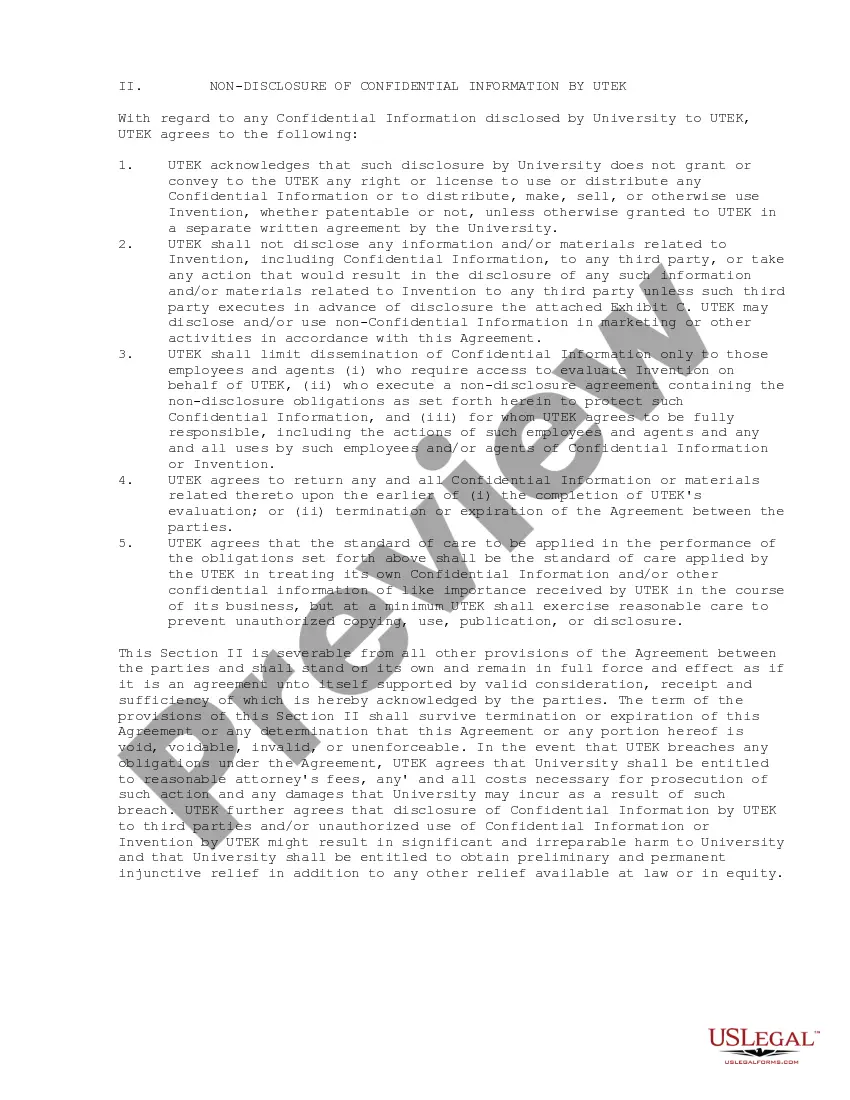
- Confidential Information: Defines what constitutes confidential information and the obligations to protect it.
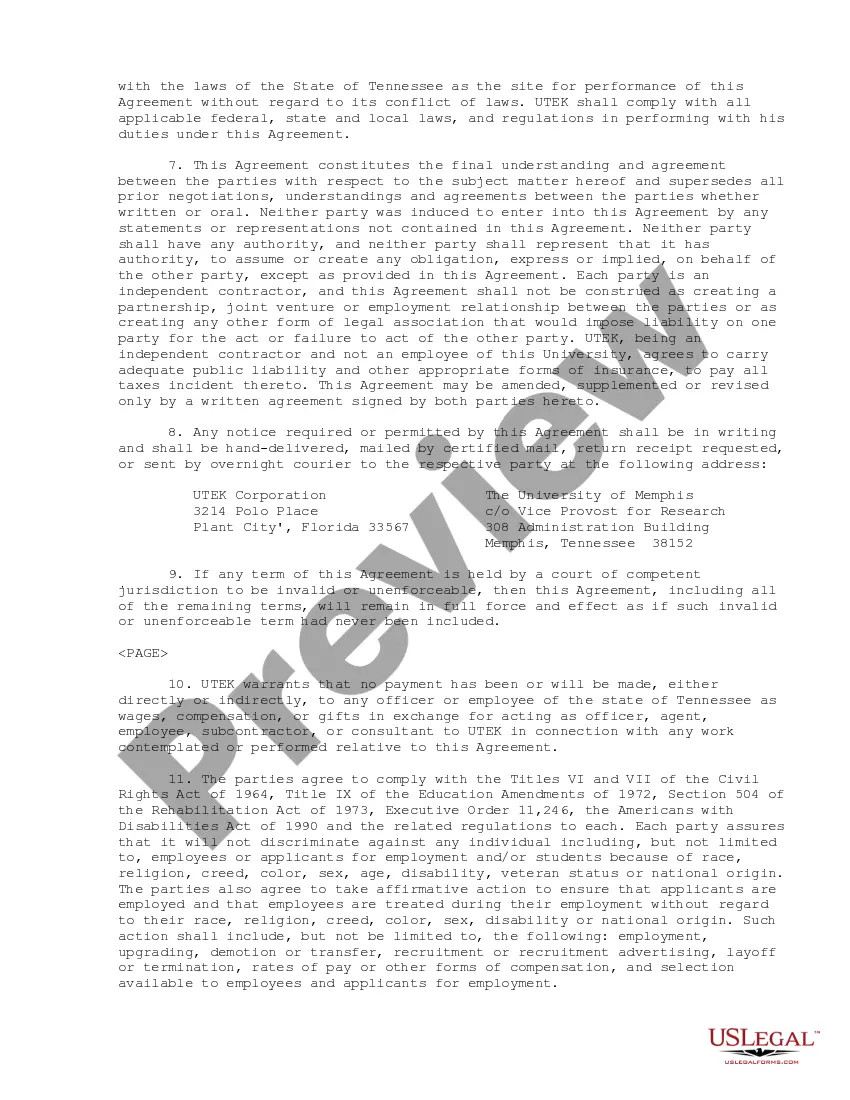
- Term and Termination: Specifies the duration of the agreement and conditions for termination by either party.
When to use this form
This form is useful when The University of Memphis seeks to partner with UTEK Corporation for the commercialization of technologies developed at the university. It is appropriate in scenarios where there is a need to define roles, responsibilities, and the process for licensing intellectual property between an academic institution and a private corporation.
Intended users of this form
- University administrators seeking to formalize partnerships for technology commercialization.
- Representatives from UTEK Corporation involved in licensing and commercial development.
- Legal teams working on agreements related to intellectual property management.
- Researchers or inventors at The University of Memphis wishing to protect and commercialize their innovations.
Steps to complete this form
- Identify the parties involved by entering their full names and addresses.
- Specify the technologies or intellectual property intended for commercialization within the agreement.
- Outline the terms of the exclusive license, including the duration and scope of the license.
- Include any confidentiality obligations to protect sensitive information.
- Sign and date the agreement in the designated signature areas for both parties.
Is notarization required?
Notarization is generally not required for this form. However, certain states or situations might demand it. You can complete notarization online through US Legal Forms, powered by Notarize, using a verified video call available anytime.
Get your form ready online
Our built-in tools help you complete, sign, share, and store your documents in one place.
Make edits, fill in missing information, and update formatting in US Legal Forms—just like you would in MS Word.
Download a copy, print it, send it by email, or mail it via USPS—whatever works best for your next step.
Sign and collect signatures with our SignNow integration. Send to multiple recipients, set reminders, and more. Go Premium to unlock E-Sign.
If this form requires notarization, complete it online through a secure video call—no need to meet a notary in person or wait for an appointment.
We protect your documents and personal data by following strict security and privacy standards.

Make edits, fill in missing information, and update formatting in US Legal Forms—just like you would in MS Word.

Download a copy, print it, send it by email, or mail it via USPS—whatever works best for your next step.

Sign and collect signatures with our SignNow integration. Send to multiple recipients, set reminders, and more. Go Premium to unlock E-Sign.

If this form requires notarization, complete it online through a secure video call—no need to meet a notary in person or wait for an appointment.

We protect your documents and personal data by following strict security and privacy standards.
Typical mistakes to avoid
- Failing to specify the technologies included in the agreement.
- Not addressing confidentiality obligations adequately.
- Overlooking the necessary signatures and dates.
- Ignoring the termination clauses, which can lead to disputes.
Benefits of using this form online
- Easy access to a professionally drafted agreement tailored for technology commercialization.
- Customizable fields that allow users to adapt the agreement to their specific needs.
- Time-efficient downloading and printing options for immediate use.
- Guidance and support throughout the completion process, ensuring accurate and legally sound submission.
Legal use & context
- This agreement serves as a binding contract that delineates the rights and obligations of each party.
- It provides a legal framework for the commercial development of technologies and ensures proper handling of confidential information.
- Understanding the terms helps prevent disputes related to intellectual property and commercialization efforts.
Looking for another form?

Form popularity
FAQ
Intellectual property (IP) refers to creations of the mind, such as inventions; literary and artistic works; designs; and symbols, names and images used in commerce.
Intellectual property (IP) refers to the ownership of an idea or design by the person who came up with it. It is a term used in property law. It gives a person certain exclusive rights to a distinct type of creative design, meaning that nobody else can copy or reuse that creation without the owner's permission.
Copyrights. Trademarks. Patents. Trade Dress. Trade Secrets.
Under an intellectual property licensing agreement (also known as an intellectual property license or an intellectual property license agreement), you retain ownership of your patent, copyright, or trademark, but you give another party permission to use some or all of your intellectual property rights for a specific
There are four types of intellectual property rights (IP): patents, trademarks, copyrights, and trade secrets.
Examples of intellectual property include an author's copyright on a book or article, a distinctive logo design representing a soft drink company and its products, unique design elements of a web site, or a patent on a particular process to, for example, manufacture chewing gum.
Among the many uses of a Non-Disclosure Agreement (sometimes called an NDA) is the protection of Intellectual Property.By definition, an NDA agreement is a simple contract compelling two or more parties to keep certain pieces of shared information confidential and private.