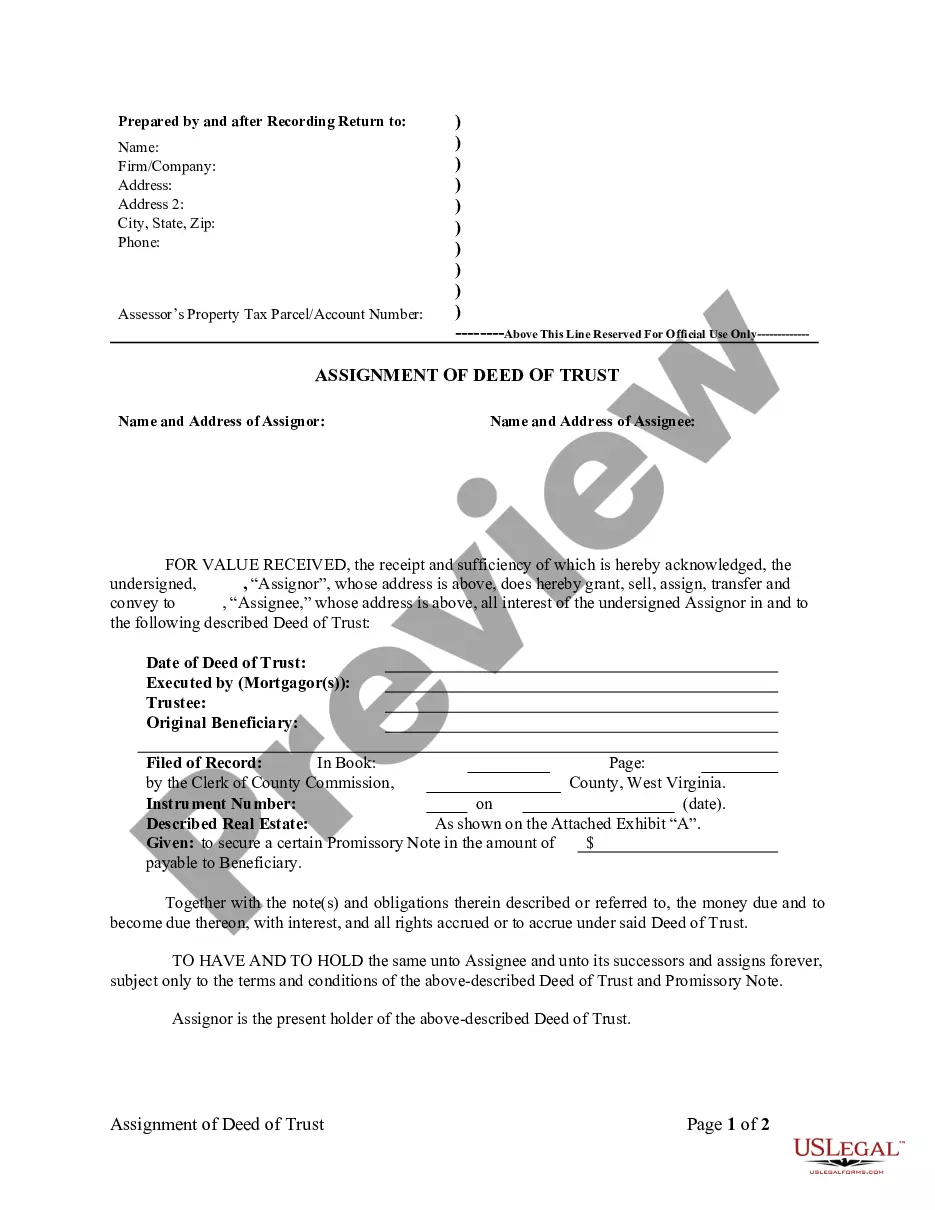
Restated Certificate of Incorporation
What is this form?
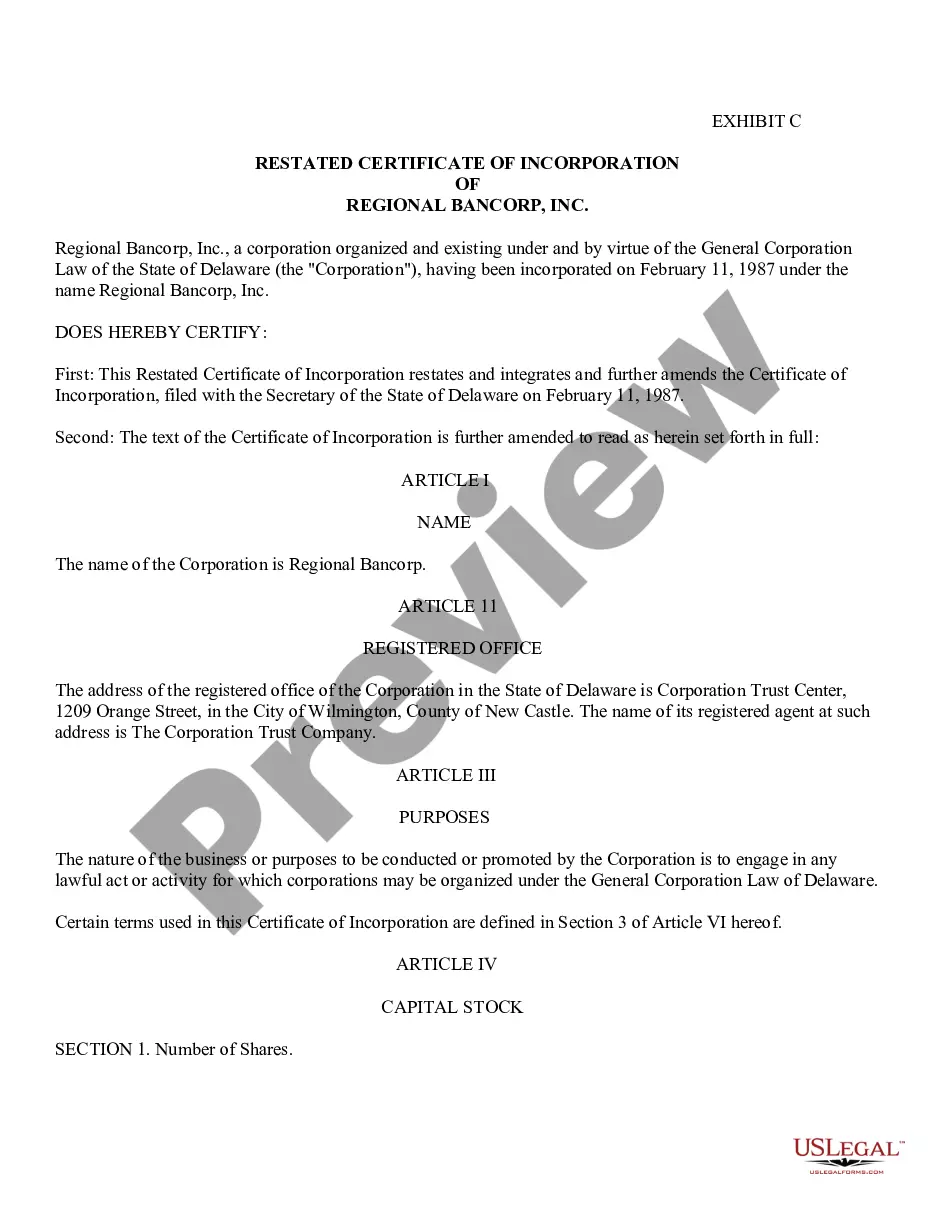
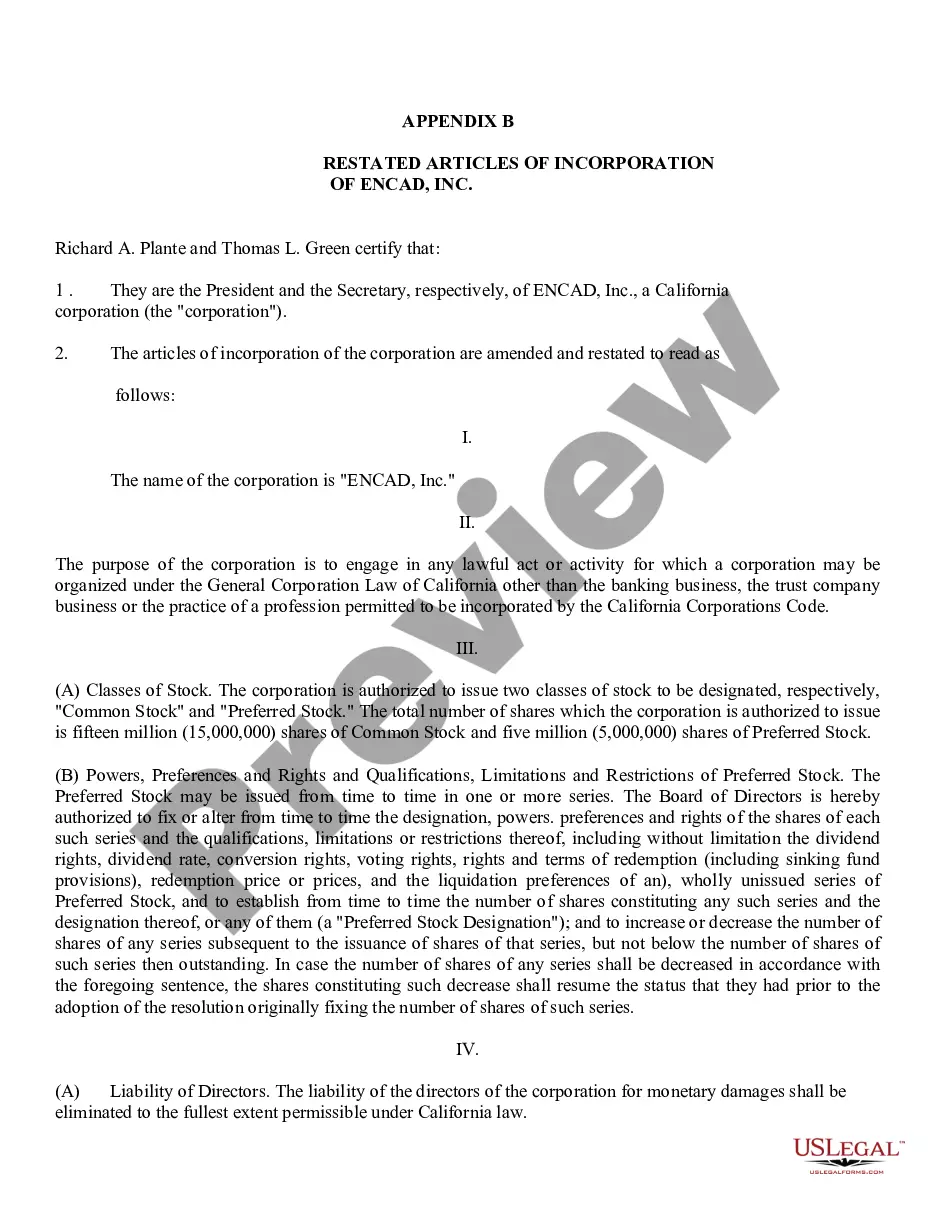
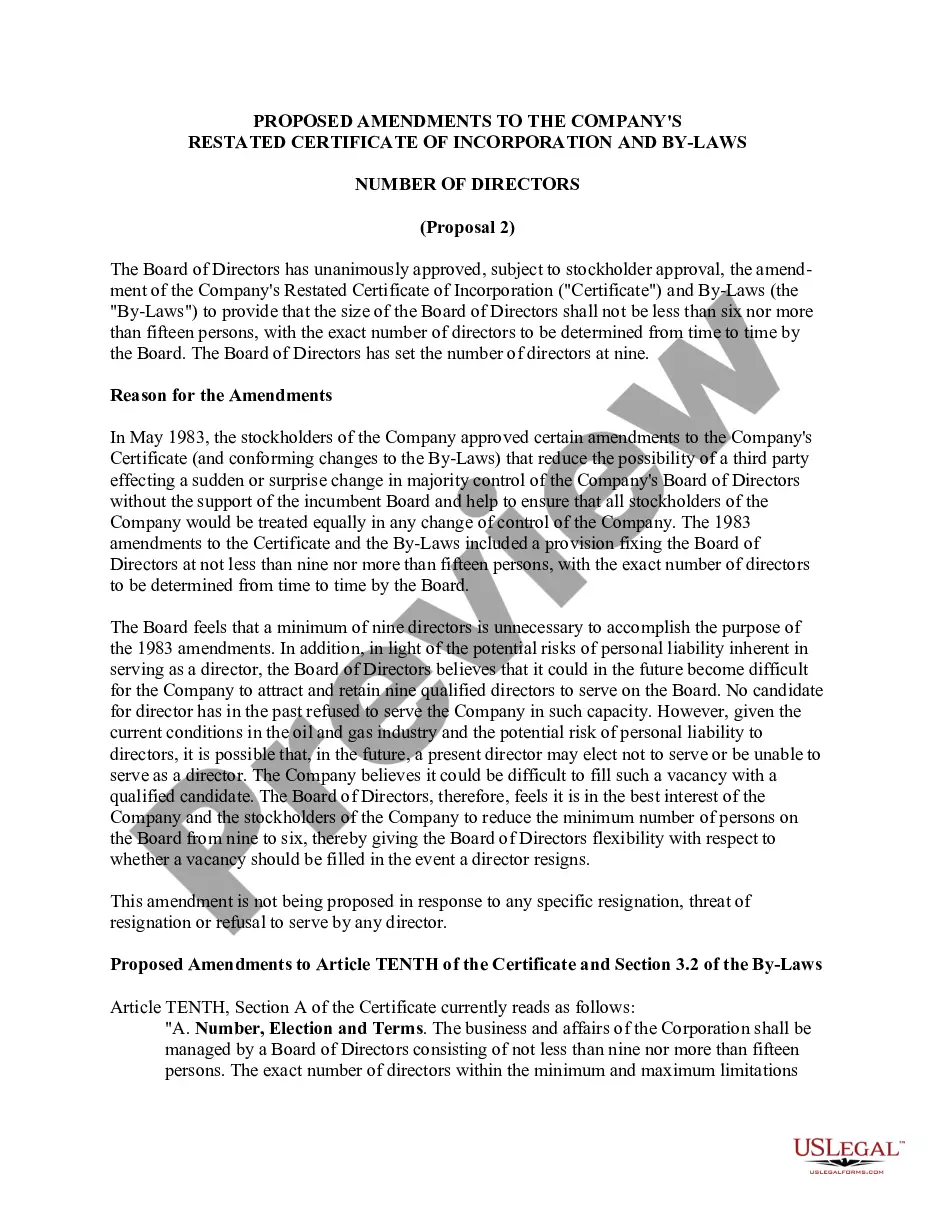
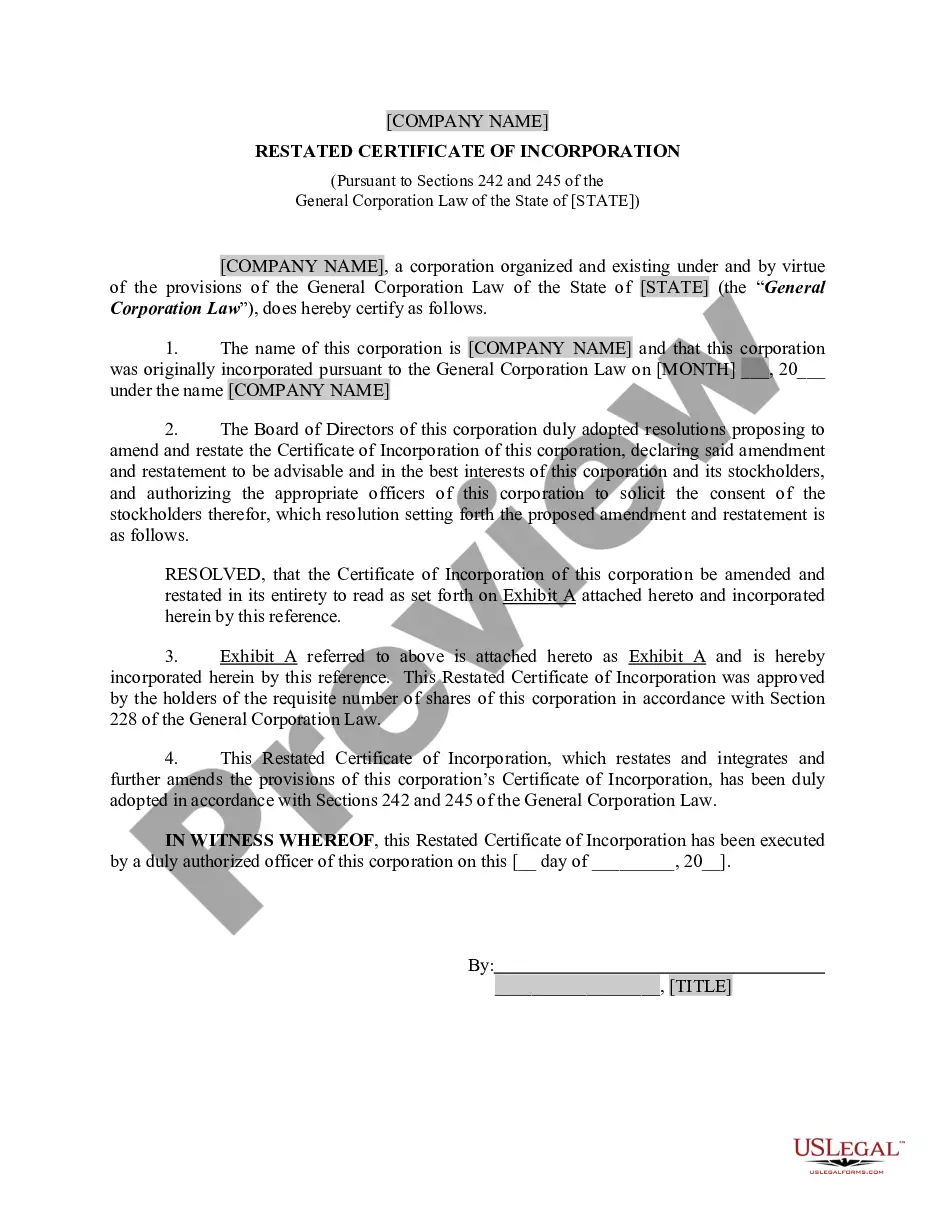
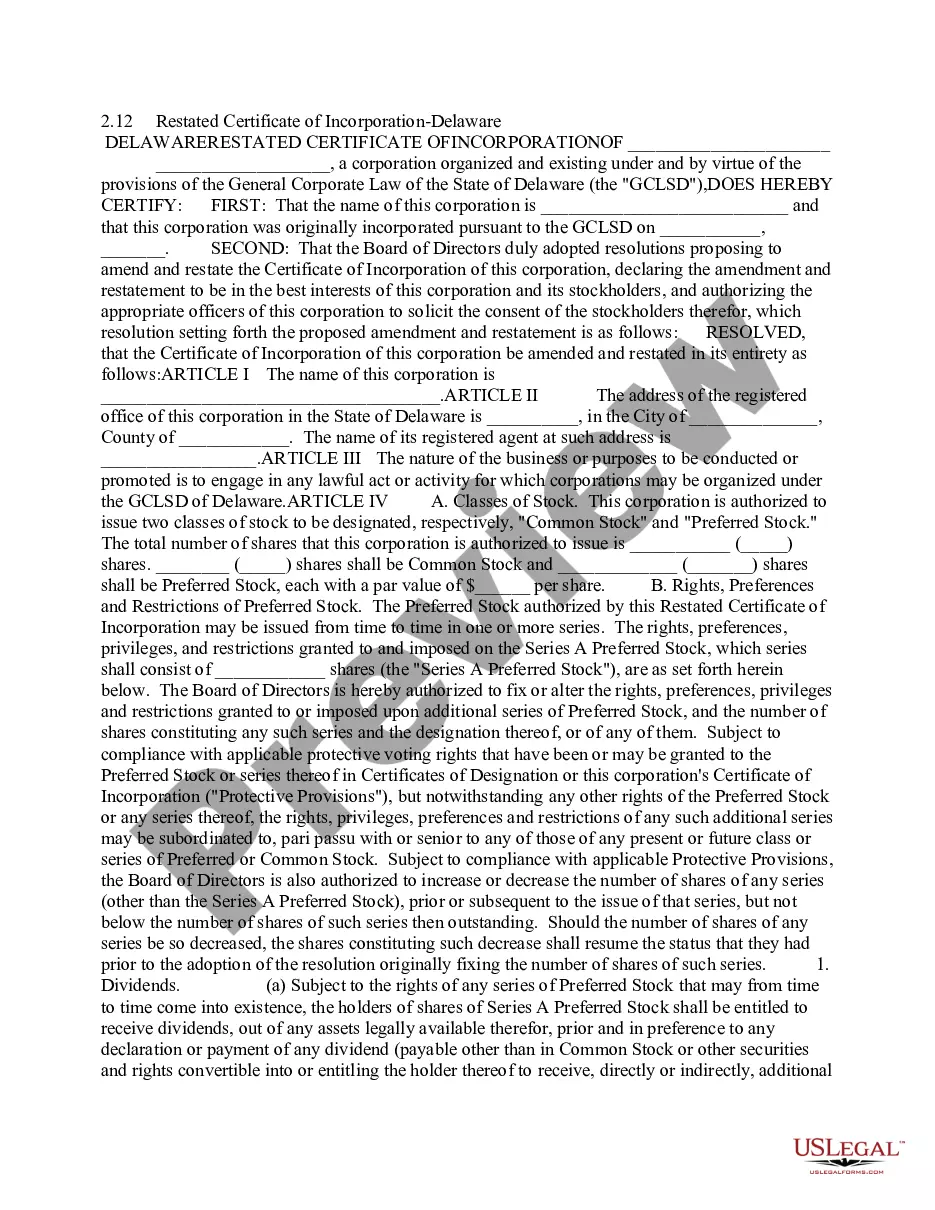
The Restated Certificate of Incorporation is a legal document used by corporations to restate, integrate, and amend their original Certificate of Incorporation. This form serves to clarify the corporation's structure, including its purpose, registered office, and details regarding its stock. It differs from the original certificate by including all amendments in one up-to-date document, enhancing clarity and compliance with state laws.
What’s included in this form
- Article I: Name of the Corporation - States the official name of the corporation.
- Article II: Registered Office - Provides the address of the corporation's registered office in Delaware.
- Article III: Purposes - Describes the nature of the business activities the corporation may engage in.
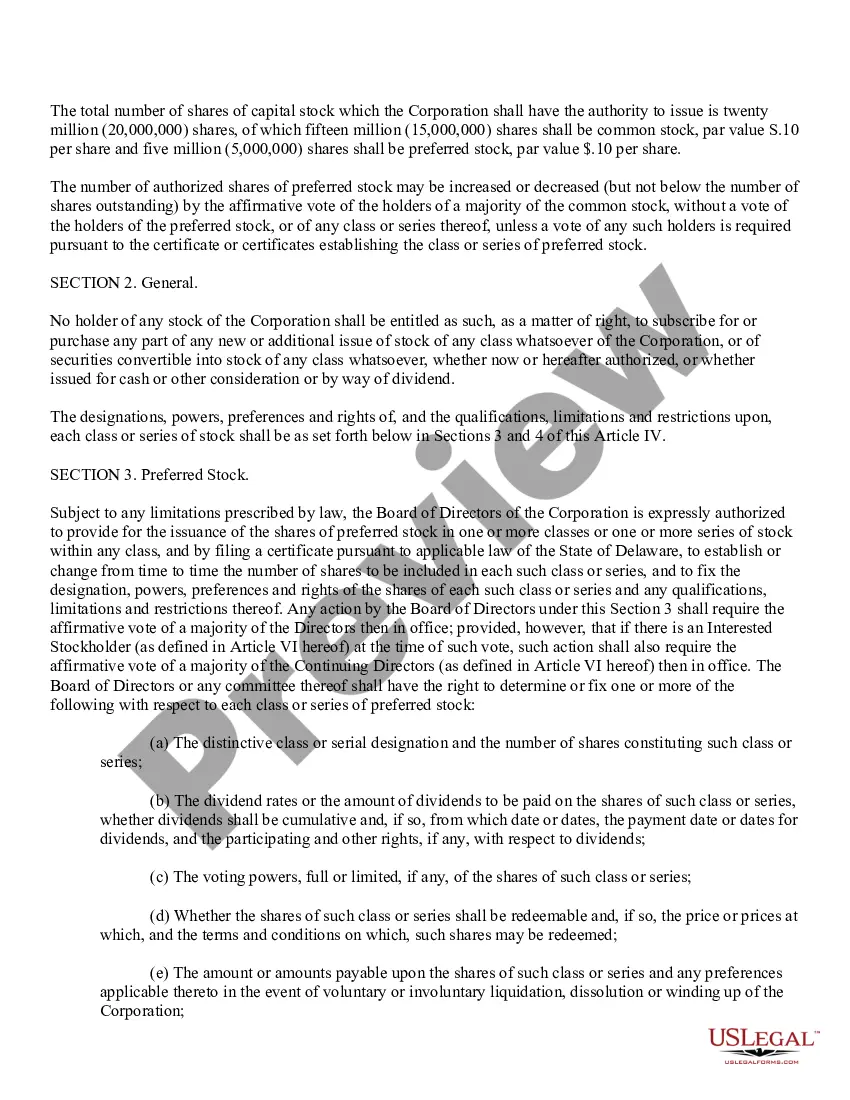
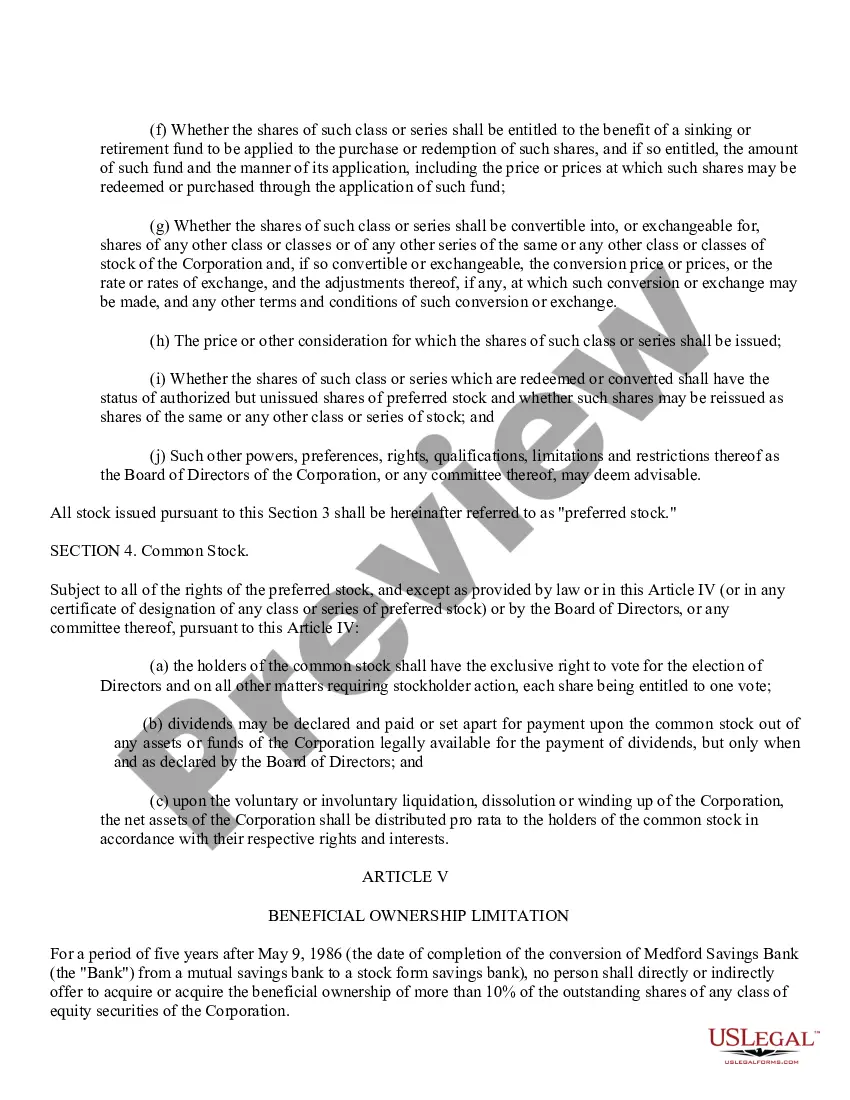
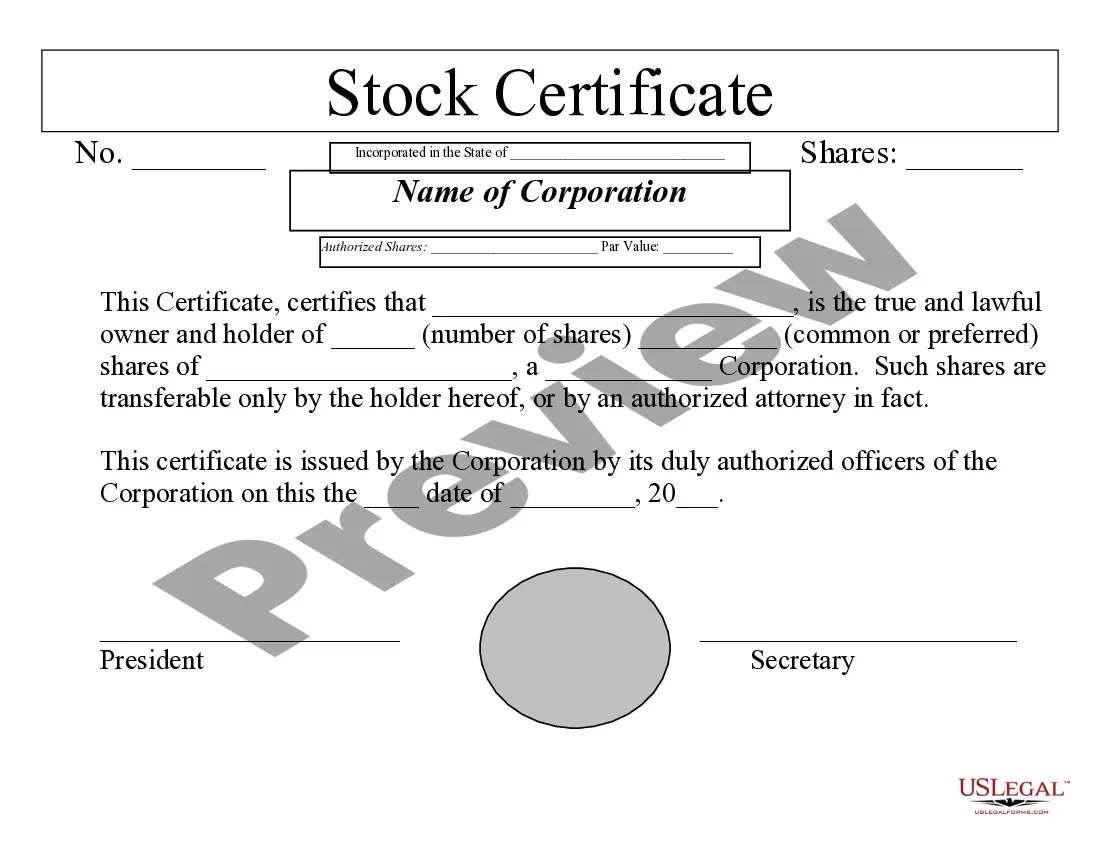
- Article IV: Capital Stock - Specifies the total number of shares and details regarding common and preferred stock.
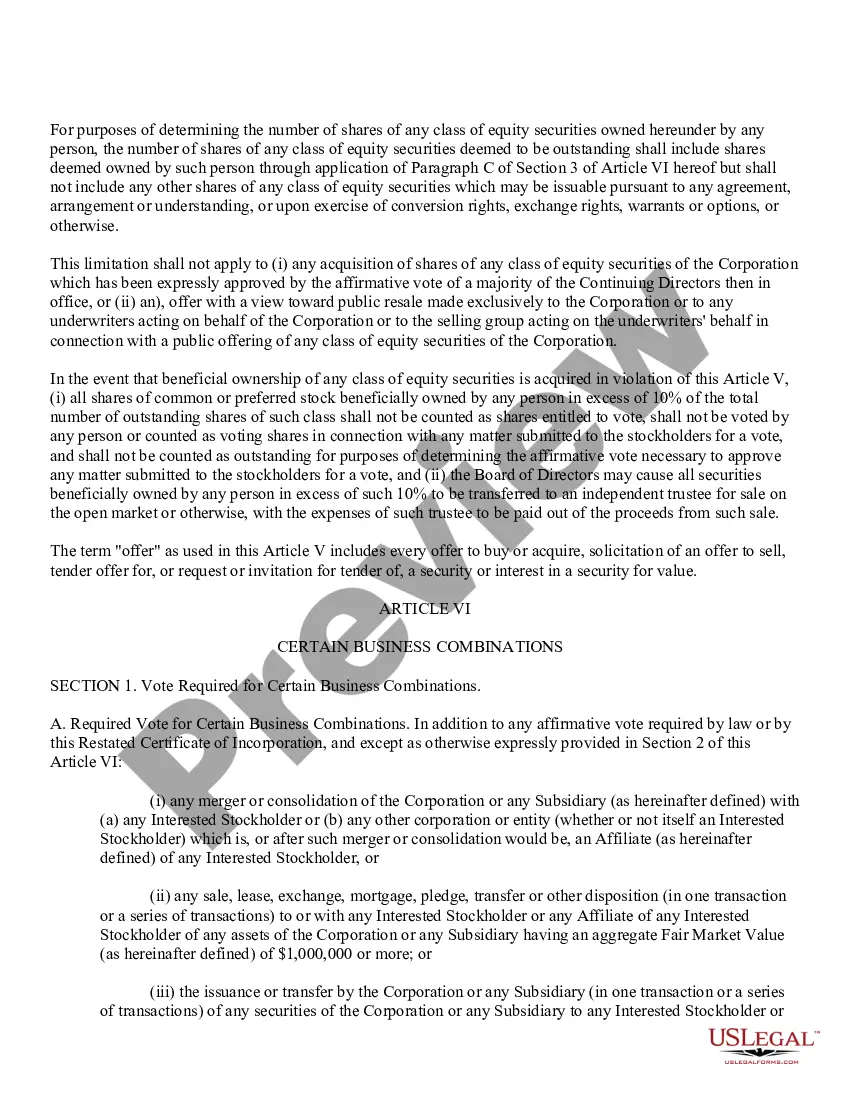
- Article V: Beneficial Ownership Limitation - Sets limits on share ownership to prevent excessive control by a single shareholder.
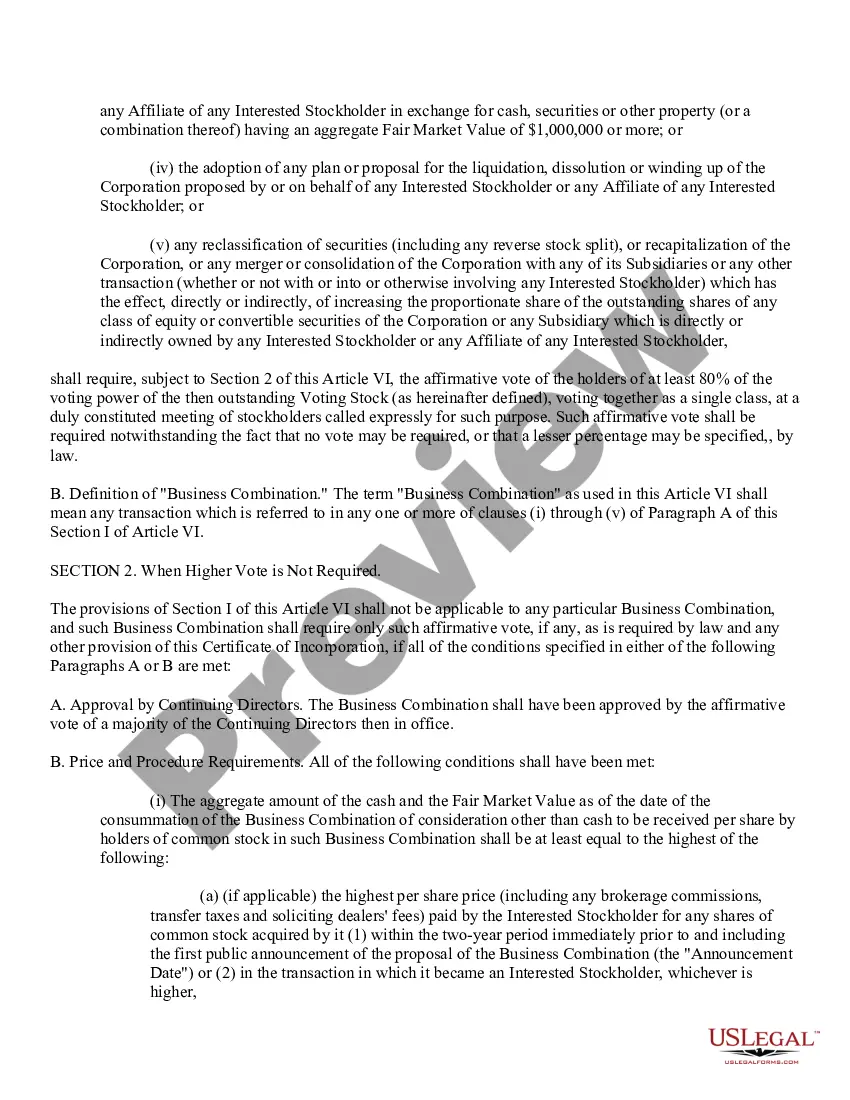
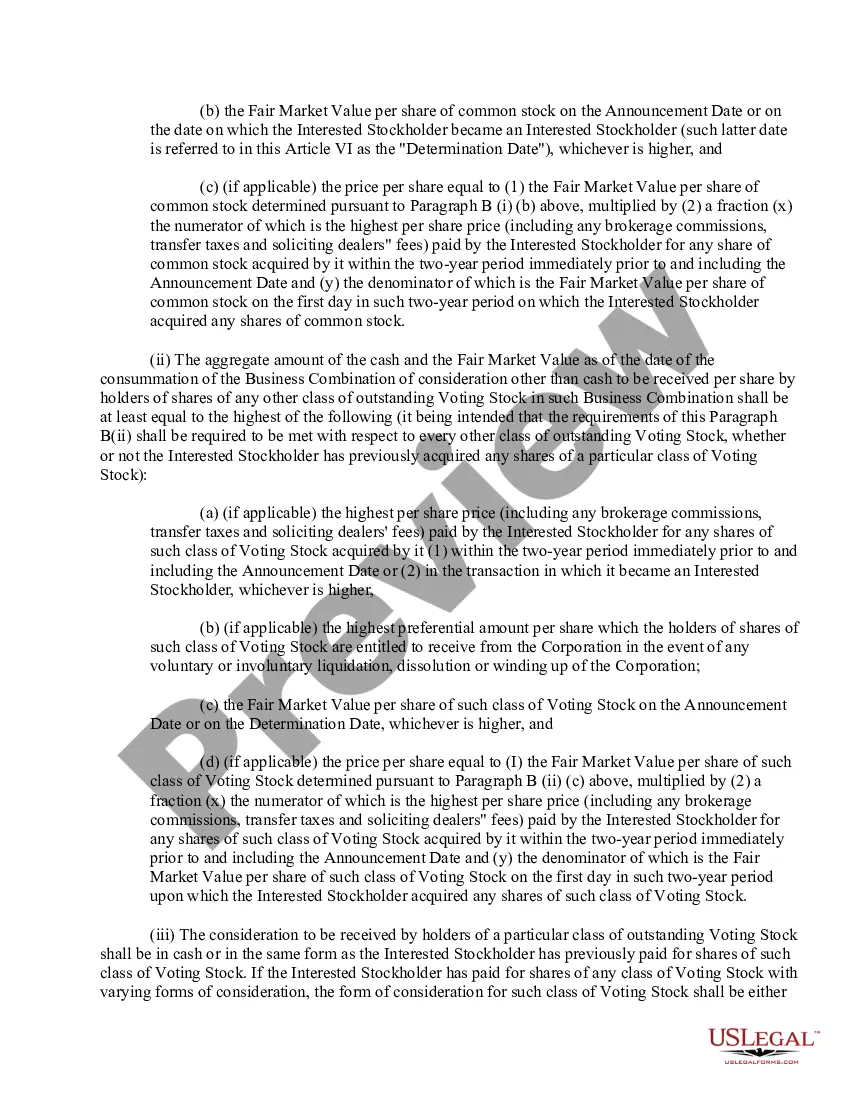
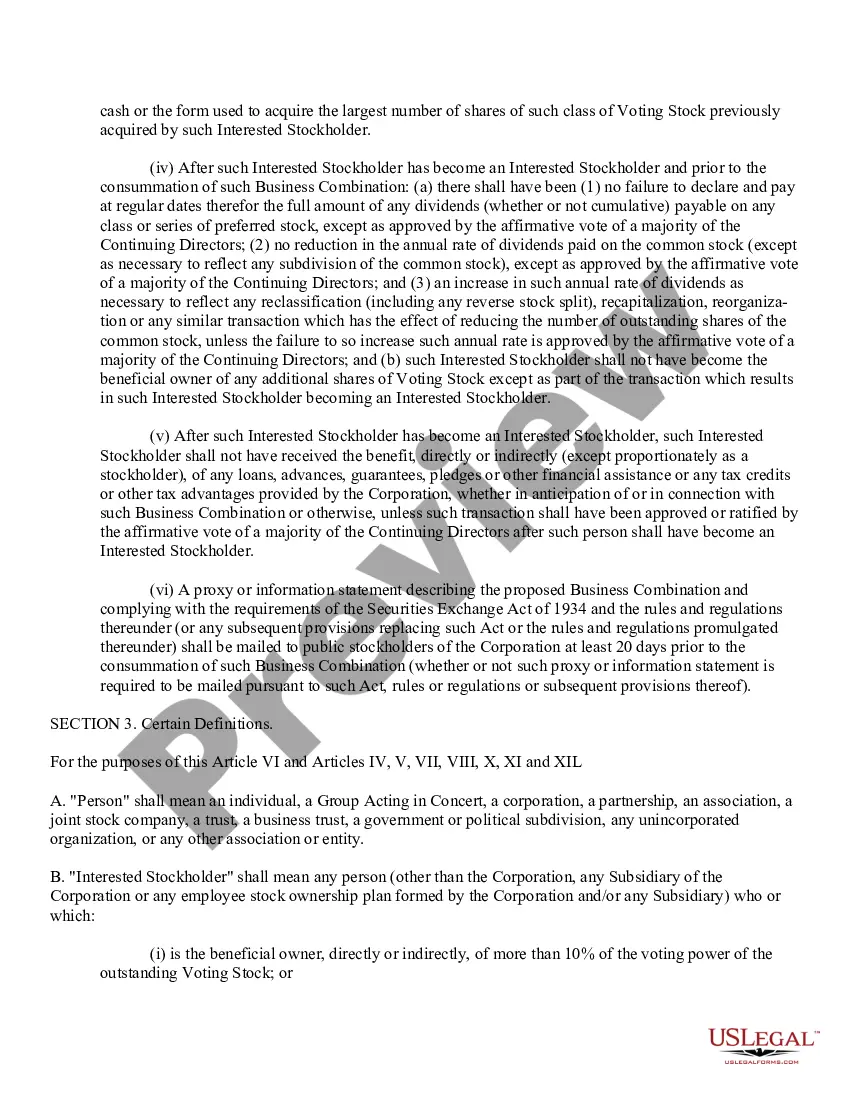
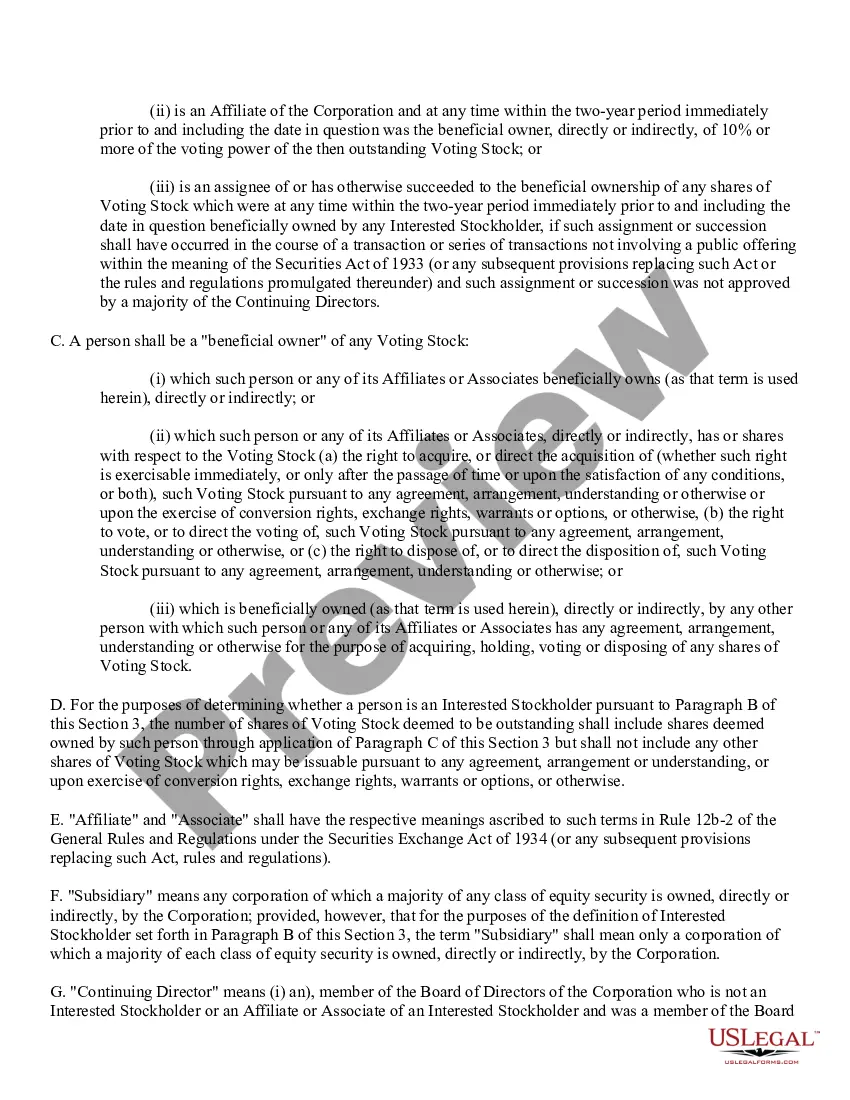
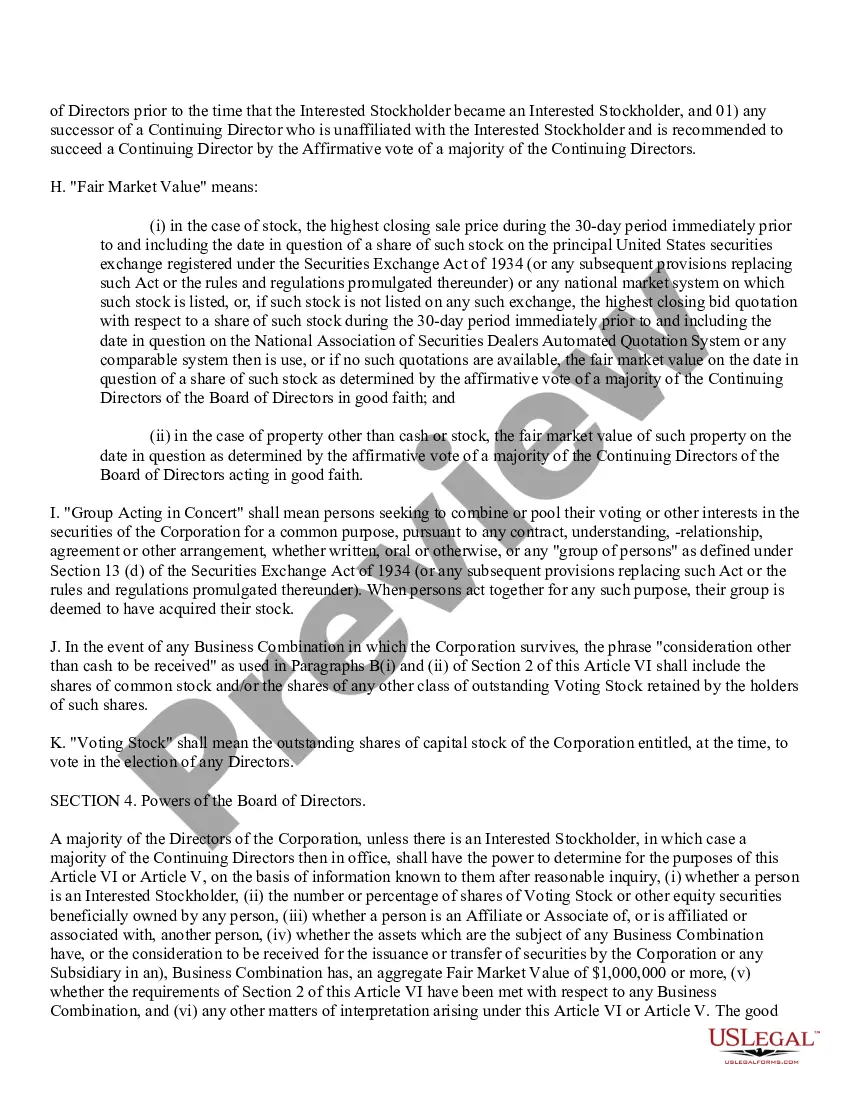
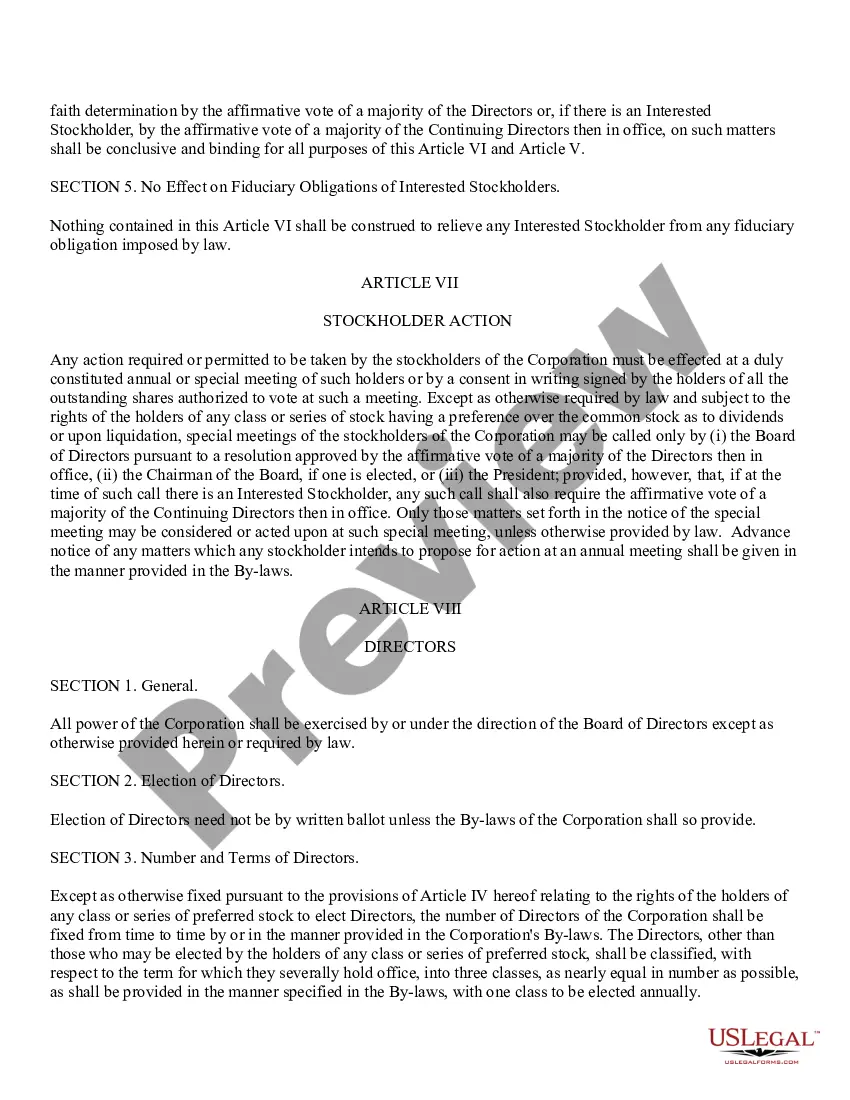
- Article VI: Certain Business Combinations - Outlines voting requirements for major transactions involving the corporation.

Situations where this form applies
This form is needed when a corporation wants to amend and restate its Certificate of Incorporation to reflect changes in its structure, such as adjustments to share capital or clarifications in governance. It is often used during corporate restructuring, mergers, or after significant changes to corporate operations.
Who needs this form
This form is intended for:
- Corporation owners and directors looking to update their incorporation details.
- Legal representatives managing corporate compliance and documentation.
- Shareholders wishing to understand changes in corporate governance.
Instructions for completing this form
To complete this form, follow these steps:
- Identify the corporation's legal name and include it in Article I.
- Provide the registered office address in Article II.
- Define the business purposes in Article III.
- Specify the capital structure in Article IV, stating the number of shares and their classifications.
- Include provisions for business combinations in Article VI, detailing necessary voting requirements.
- Sign and date the document by the authorized corporate officers.
Notarization guidance
This form does not typically require notarization unless specified by local law.
Get your form ready online
Our built-in tools help you complete, sign, share, and store your documents in one place.
Make edits, fill in missing information, and update formatting in US Legal Forms—just like you would in MS Word.
Download a copy, print it, send it by email, or mail it via USPS—whatever works best for your next step.
Sign and collect signatures with our SignNow integration. Send to multiple recipients, set reminders, and more. Go Premium to unlock E-Sign.
If this form requires notarization, complete it online through a secure video call—no need to meet a notary in person or wait for an appointment.
We protect your documents and personal data by following strict security and privacy standards.

Make edits, fill in missing information, and update formatting in US Legal Forms—just like you would in MS Word.

Download a copy, print it, send it by email, or mail it via USPS—whatever works best for your next step.

Sign and collect signatures with our SignNow integration. Send to multiple recipients, set reminders, and more. Go Premium to unlock E-Sign.

If this form requires notarization, complete it online through a secure video call—no need to meet a notary in person or wait for an appointment.

We protect your documents and personal data by following strict security and privacy standards.
Typical mistakes to avoid
- Failing to update the name or address of the corporation.
- Not adhering to the specific requirements for share classifications and total number.
- Omitting important amendments from the previous certificates.
- Inaccurate signatures or missing dates on the completed document.
Advantages of online completion
- Convenience of having all amendments captured in one document.
- Enhances compliance with state regulations, reducing the risk of legal issues.
- Easy to understand and complete for users without legal experience.
- Increases clarity for corporate governance and shareholder rights.
Looking for another form?


Form popularity
FAQ
Sometimes, however, only some shareholders can vote. In some states, officers or directors may change the articles of incorporation even if only these voting shareholders have concluded that they want to make changes. In other states, the shareholders may not even need to approve the change.
Depending on the state in which the business is incorporated, unanimous agreement from all the shareholders may be required to change the articles of incorporation. Most states have changed this older, common law rule, and now only require a majority of shareholders to agree to change the articles of incorporation.
Amended and Restated What Amended means changed, i.e., that someone has revised the document. Restated means presented in its entirety, i.e., as a single, complete document. Accordingly, amended and restated means a complete document into which one or more changes have been incorporated.
Restated articles of organization are simply a modified version of the original. Limited liability companies, also known as LLCs, are permitted to make changes to their articles of organization. When such changes are made, they are referred to as amendments.
When you restating, you are rewriting the entire document, with the amendments incorporated into it.
Obtain articles of amendment of the articles of incorporation (sometimes called the certificate of amendment of articles of incorporation) from your state's Secretary of State. Obtain a copy of the original articles of incorporation. Propose the change in the articles of incorporation to the Board of Directors.
Amendments can be made to a Delaware corporation's original Certificate of Incorporation by filing a Certificate of Amendment with the Division of Corporations. This filing is in accordance with the General Corporation Law of the State of Delaware. There is a fee for the Delaware Corporation Certificate of Amendment.
What is the effect of an amended and restated agreement. When you amend and restate an agreement, typically the legal effect is to replace all prior agreements between the parties and replace them with one single document providing an up-to-date view of the parties' legal obligations.
You will have to pay a fee for the following types of amendments: Amalgamation: $50. Continuance: $50. Name change: $25.