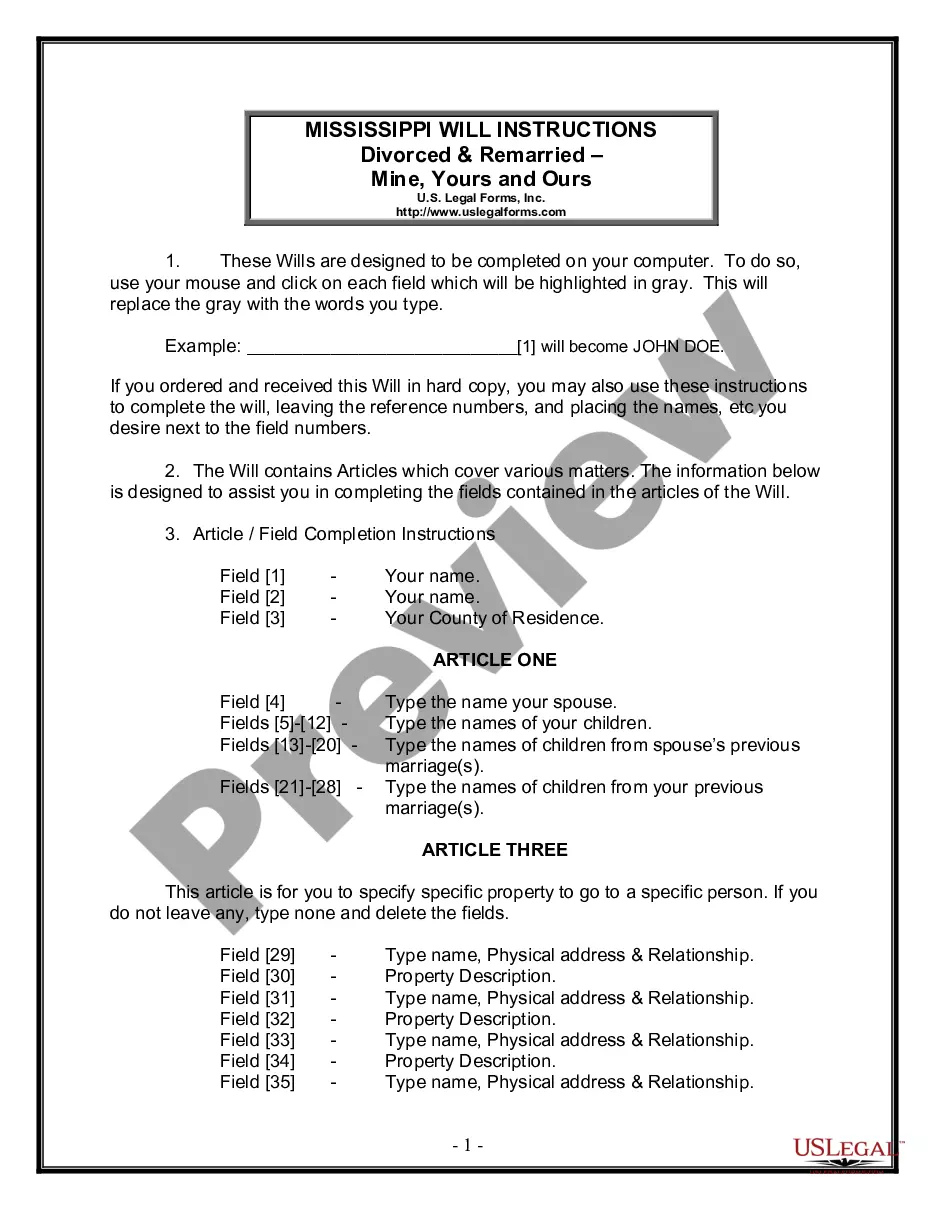
Private placement of Common Stock
Understanding this form
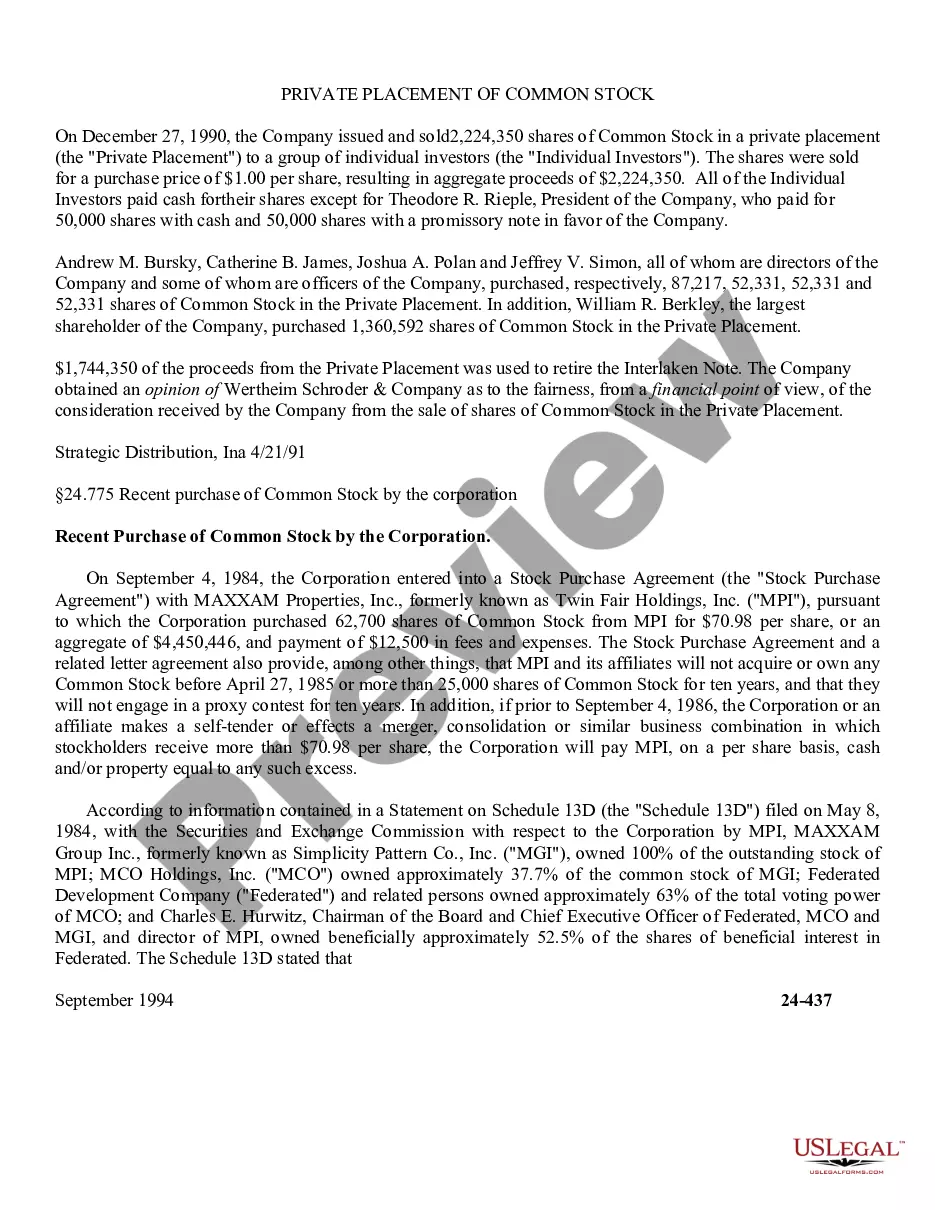
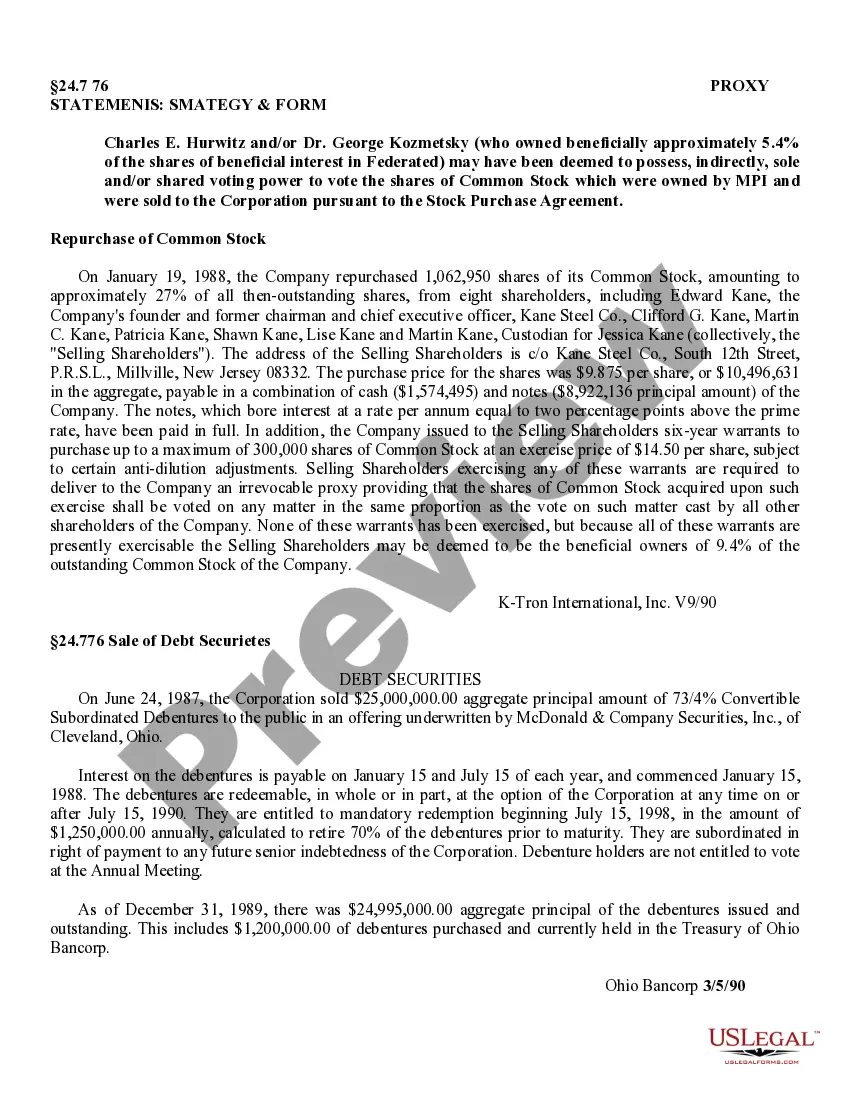
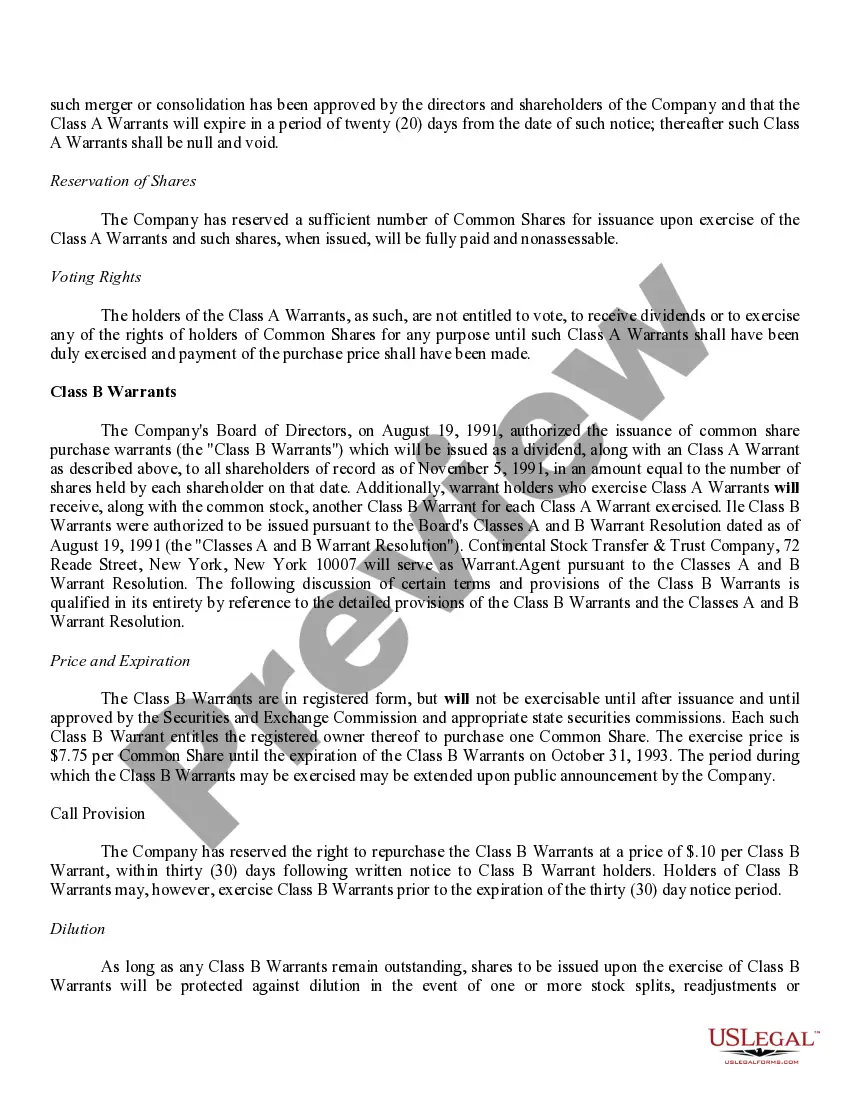
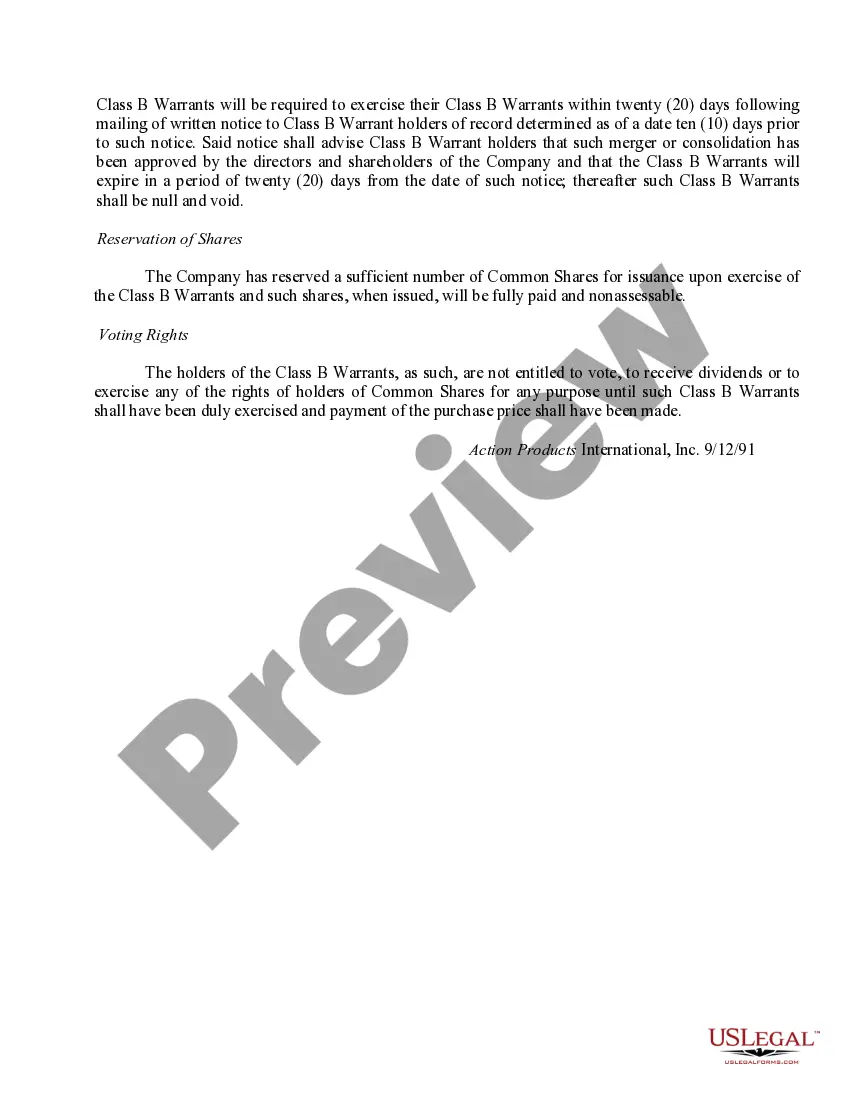
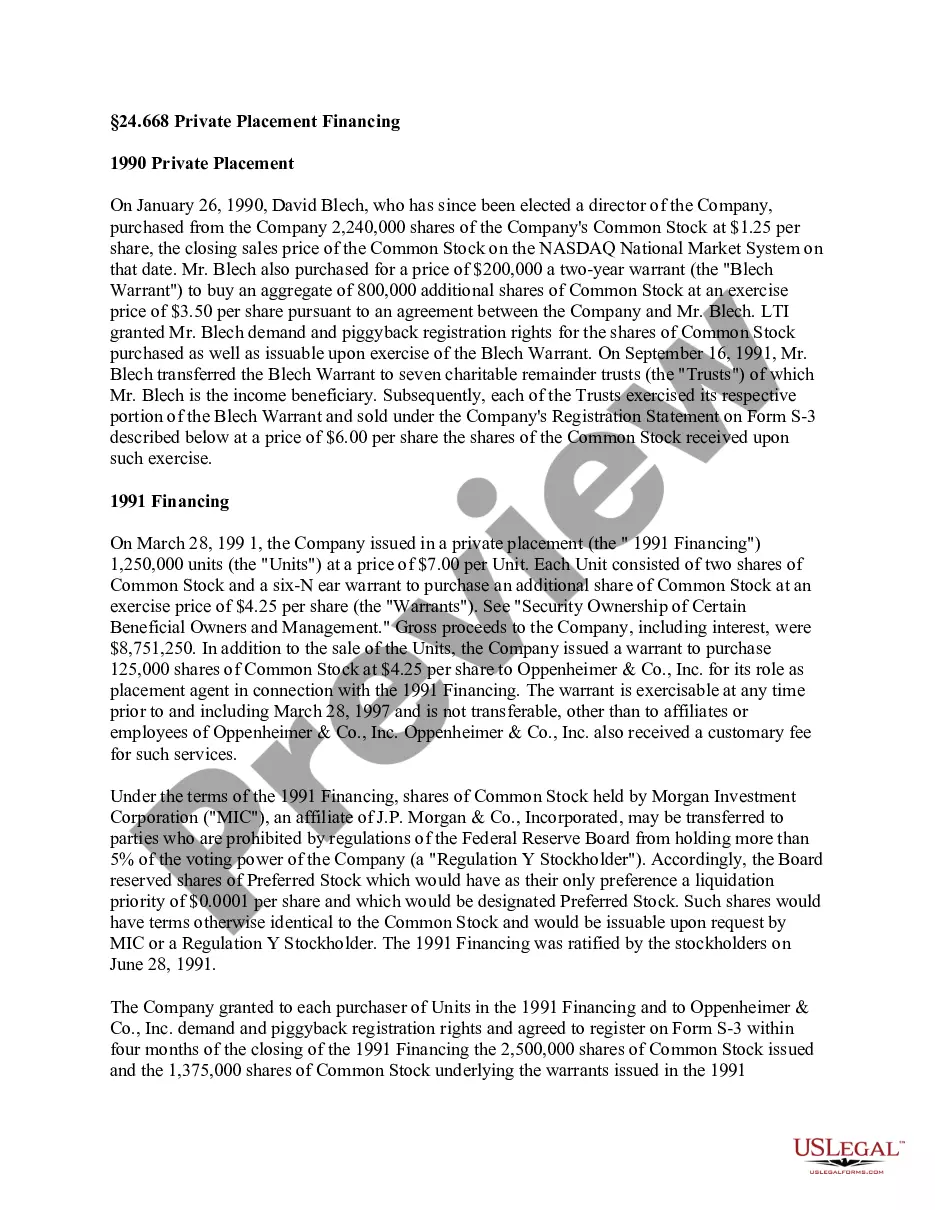
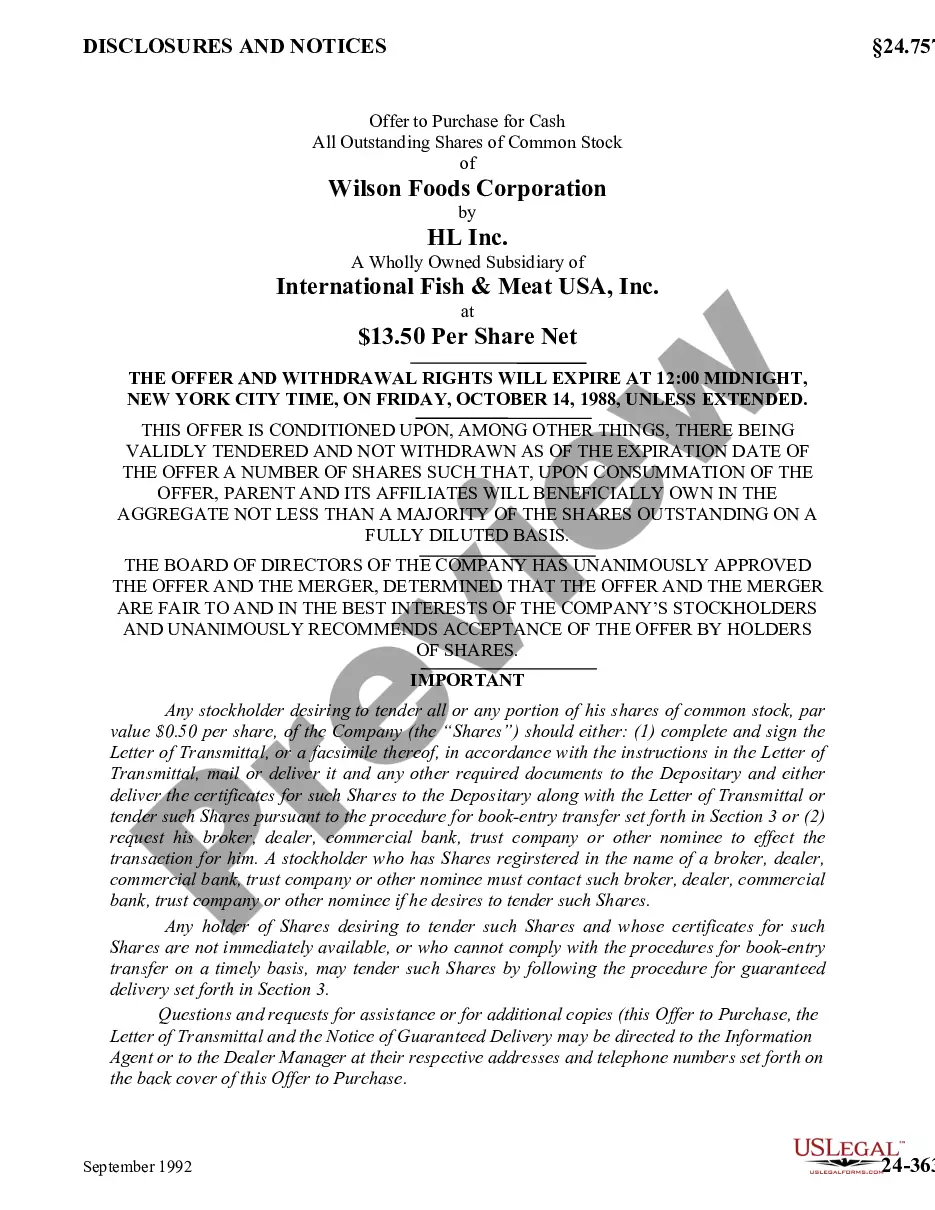
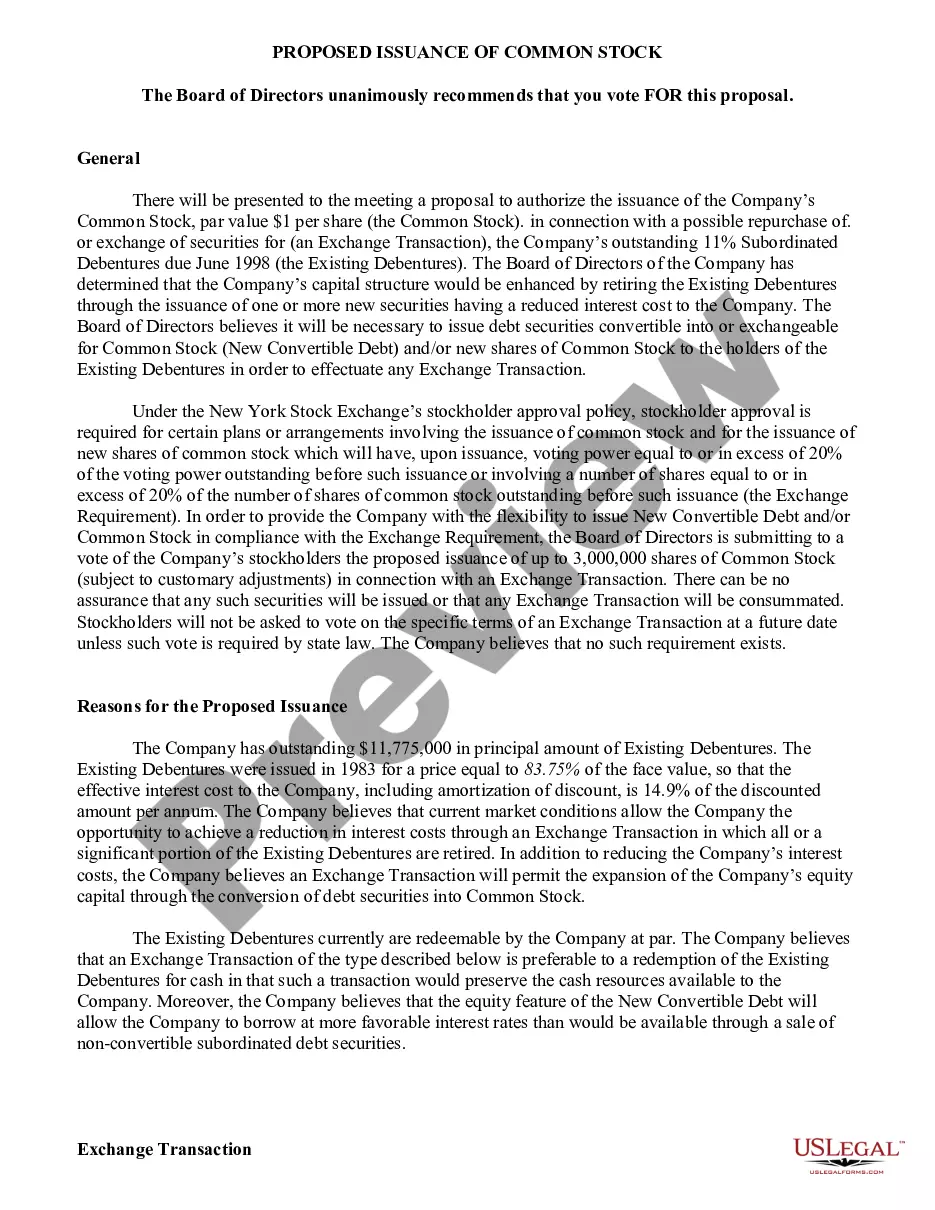
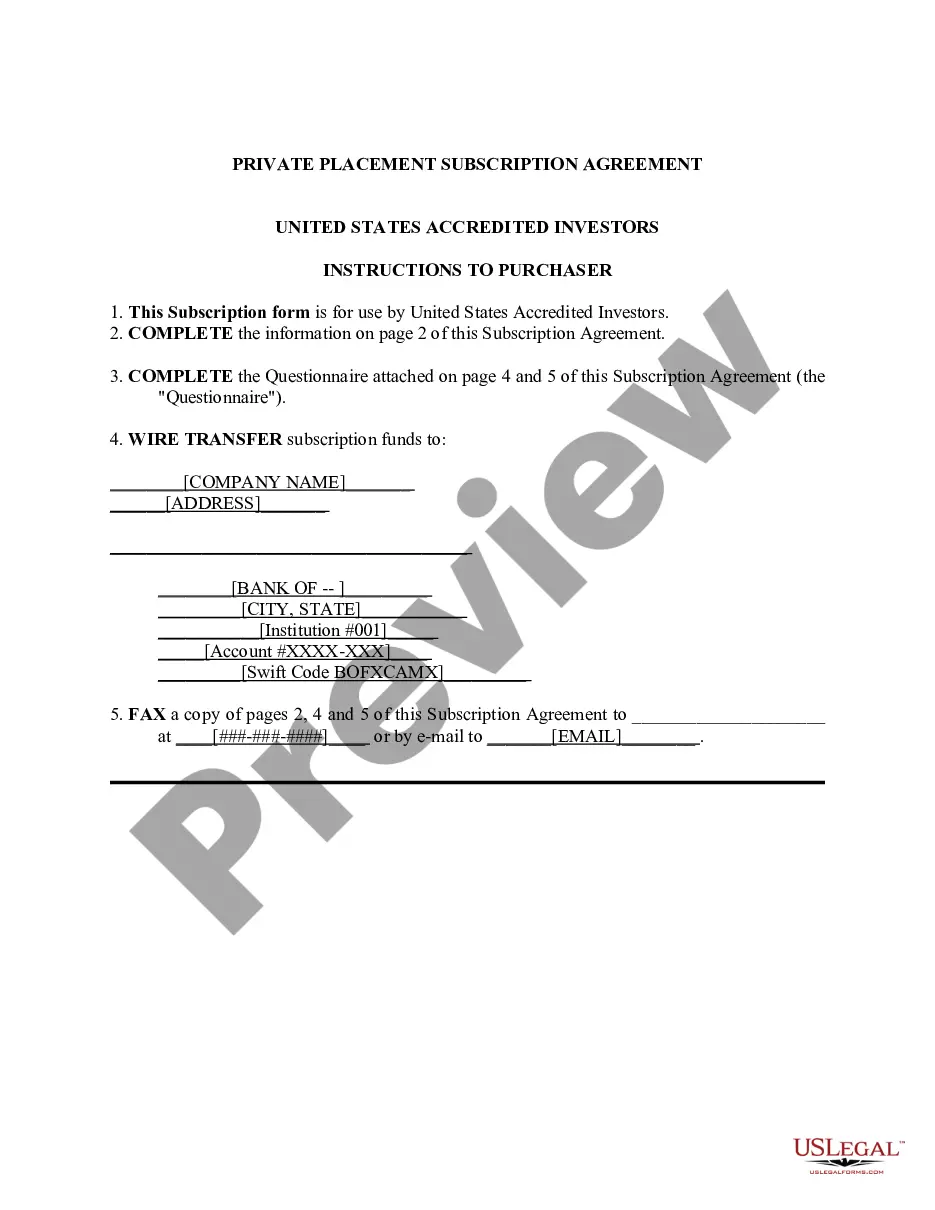
The Private Placement of Common Stock form is a legal document used by corporations to facilitate the sale of shares to selected investors without a public offering. This form outlines the specifics of the transaction, including the number of shares sold, the price per share, and the parties involved. It is distinct from a public offering as it allows companies to raise capital while limiting the number of purchasers and avoiding the complexities of extensive regulatory requirements. By utilizing this form, businesses can efficiently manage their equity financing needs while complying with relevant securities laws.
Form components explained
- Details of the shares issued, including quantity and purchase price.
- Identification of the investors involved in the private placement.
- Use of proceeds from the sale of common stock.
- Conditions and terms related to the sale of shares.
- Compliance statements regarding the fairness of the transaction.




Situations where this form applies
This form is essential when a corporation aims to raise capital through the private sale of common stock. It may be used in scenarios where a business seeks funding from a select group of investors rather than through public channels, such as when a startup needs initial funding, or an established company looks to restructure its finances. It is also relevant when the management wishes to offer shares to employees or individual investors as part of a strategy to incentivize performance.
Who needs this form
- Corporations looking to issue common stock in a private placement.
- Business owners and executives responsible for corporate financing decisions.
- Investors seeking to purchase shares in privately offered stock.
- Legal advisors assisting clients with compliance and documentation for private placements.
How to prepare this document
- Identify the corporation issuing the shares and the date of the transaction.
- Specify the total number of shares being offered along with the price per share.
- List all individual investors participating in the private placement.
- Outline how the proceeds from the sale will be utilized by the corporation.
- Ensure all signatures and necessary approvals are obtained to finalize the document.
Is notarization required?
This form usually doesn’t need to be notarized. However, local laws or specific transactions may require it. Our online notarization service, powered by Notarize, lets you complete it remotely through a secure video session, available 24/7.
Get your form ready online
Our built-in tools help you complete, sign, share, and store your documents in one place.
Make edits, fill in missing information, and update formatting in US Legal Forms—just like you would in MS Word.
Download a copy, print it, send it by email, or mail it via USPS—whatever works best for your next step.
Sign and collect signatures with our SignNow integration. Send to multiple recipients, set reminders, and more. Go Premium to unlock E-Sign.
If this form requires notarization, complete it online through a secure video call—no need to meet a notary in person or wait for an appointment.
We protect your documents and personal data by following strict security and privacy standards.

Make edits, fill in missing information, and update formatting in US Legal Forms—just like you would in MS Word.

Download a copy, print it, send it by email, or mail it via USPS—whatever works best for your next step.

Sign and collect signatures with our SignNow integration. Send to multiple recipients, set reminders, and more. Go Premium to unlock E-Sign.

If this form requires notarization, complete it online through a secure video call—no need to meet a notary in person or wait for an appointment.

We protect your documents and personal data by following strict security and privacy standards.
Mistakes to watch out for
- Failing to properly document all investor details and share quantities.
- Not specifying the intended use of proceeds clearly.
- Overlooking compliance with specific state regulations during the issuance.
- Not obtaining the necessary signatures before finalizing the document.
Why use this form online
- Easy access and downloadable formats tailored by licensed attorneys.
- Editability enables users to customize the form for specific situations.
- Streamlined process for completing forms at any time, without the need for in-person visits.
- Reliability of using standardized documents that meet legal requirements.
Looking for another form?







Form popularity
FAQ
Investment Risk Beyond the risk of giving up your money, buying shares in your private company means you're taking a risk as an investor, and you need to make sure the risk is worth it. Yes, every investment comes with risk built in, but not all investment risks are created equal.meaning you'll lose all your money.
Sell the shares back to the company. The easiest way to sell shares of privately held stock is to get the company that issued them to buy them back. Sell the shares to another investor. Sell the shares on a private-securities market. Get your company to do an IPO.
You can buy shares through a private placement, which requires some paperwork from both you and the seller. You can deal directly with a corporation or go through a broker that specializes in private placements. The seller must submit the SEC's Form D before it can sell you the shares.
A privately held company, private company, or close corporation is a corporation not owned by the government, non-governmental organizations and by a relatively small number of shareholders or company members, which does not offer or trade its company stock (shares) to the general public on the stock market exchanges,
You can buy shares through a private placement, which requires some paperwork from both you and the seller. You can deal directly with a corporation or go through a broker that specializes in private placements. The seller must submit the SEC's Form D before it can sell you the shares.
Private company stock is a type of stock offered exclusively by a private company to its employees and investors. Unlike public stocks, the purchase and sale of private stock must be approved of by the issuing company.
A private stock offeringsometimes called a private placementis when you sell securities in your business without an initial public offeringusually called an IPO.For example, if you run a start-up shopping site, you might offer private stocks to a private investor.
Methods for valuing private companies could include valuation ratios, discounted cash flow (DCF) analysis, or internal rate of return (IRR). The most common method for valuing a private company is comparable company analysis, which compares the valuation ratios of the private company to a comparable public company.