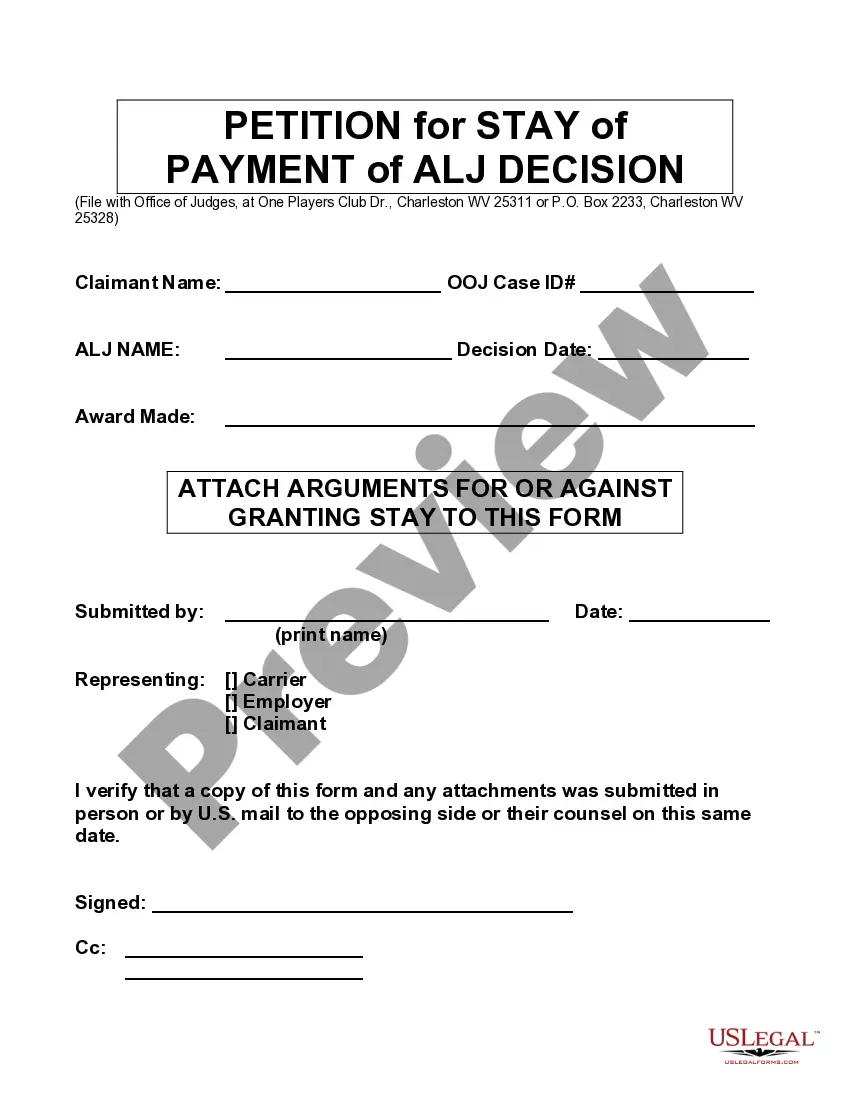
Approval of Indemnification Agreements with article amendment and amendment to bylaws
About this form
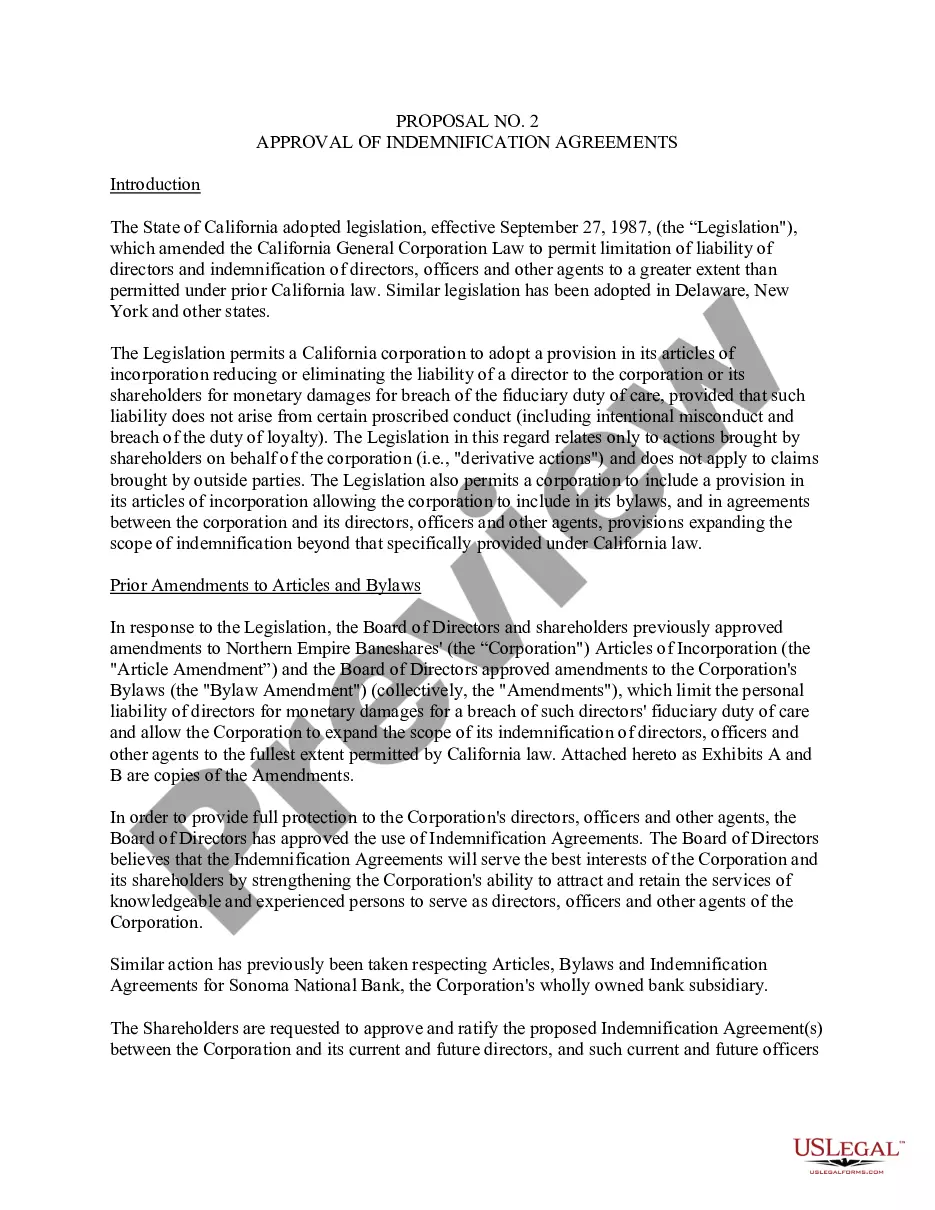
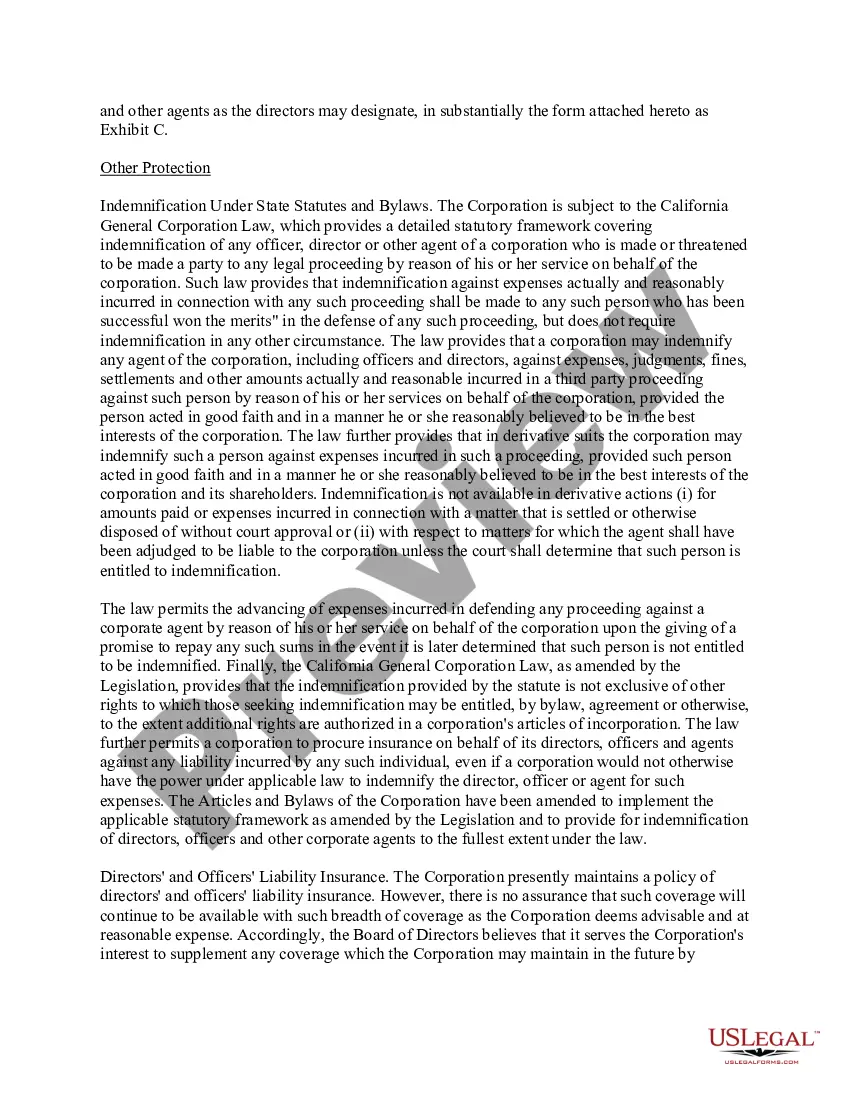
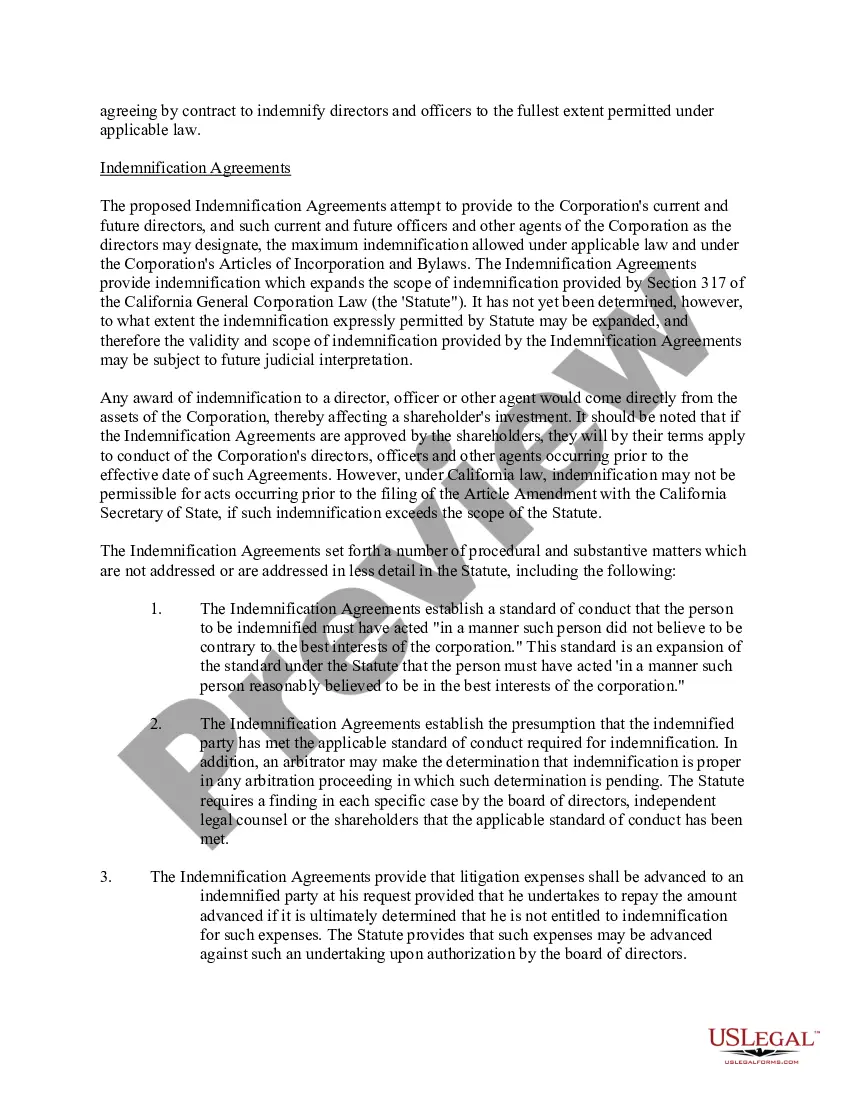
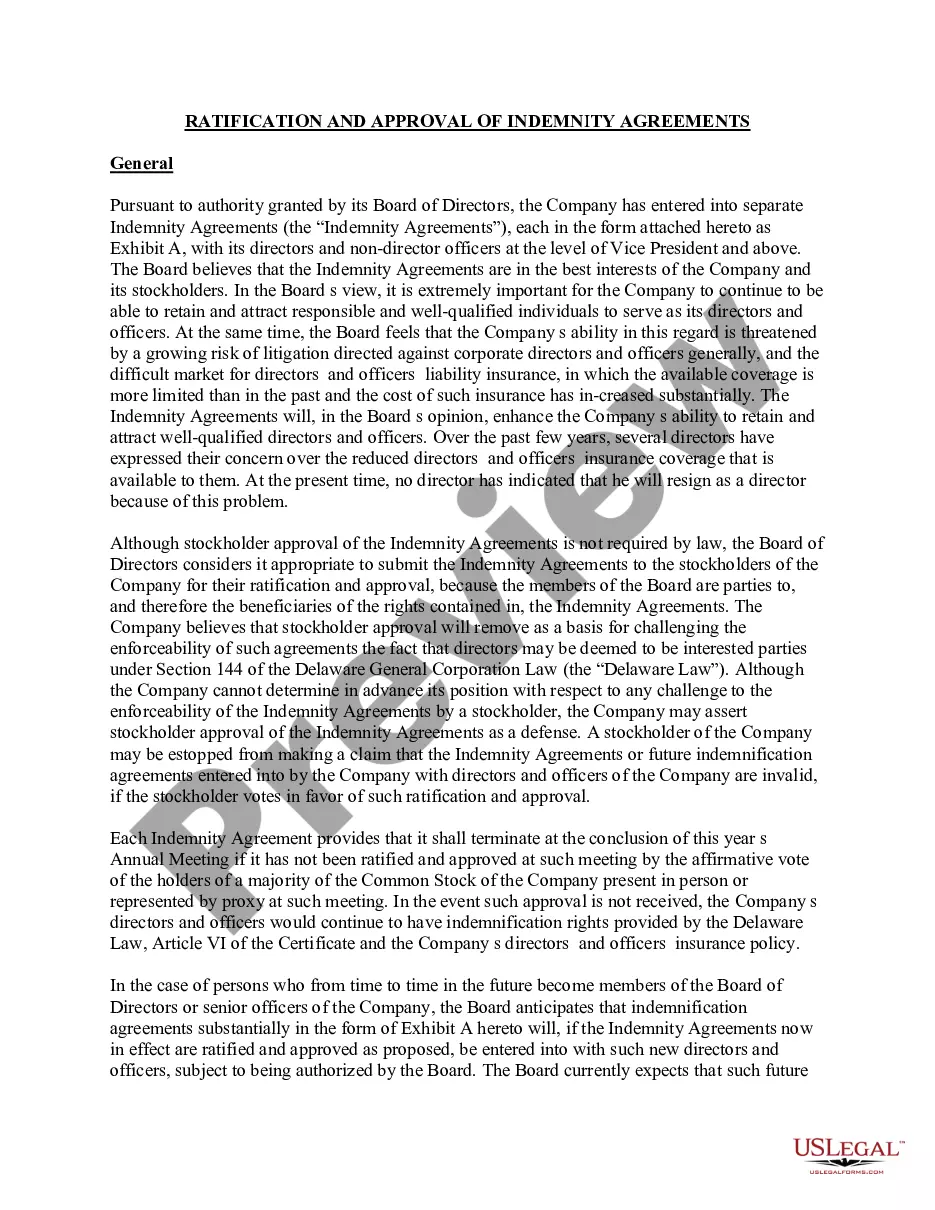
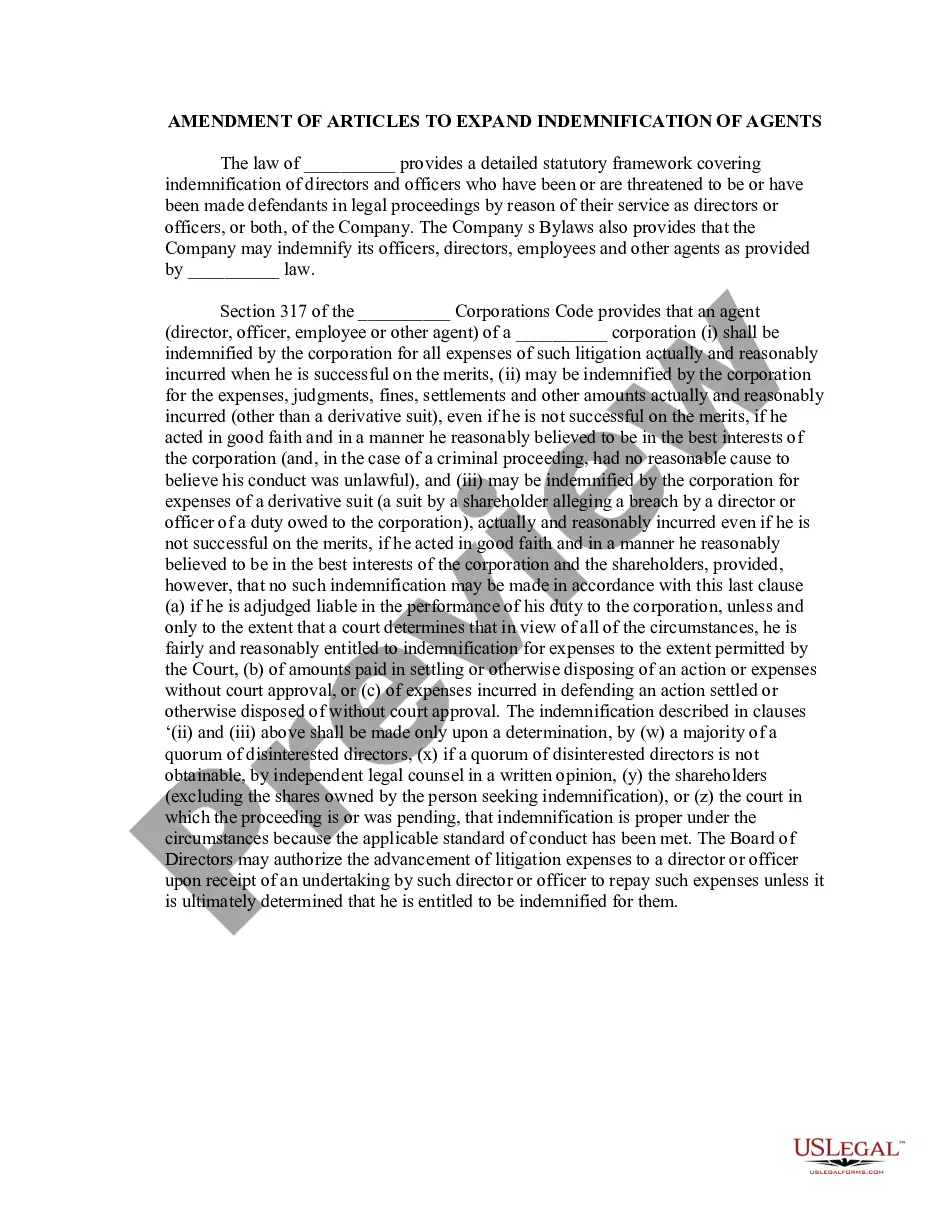
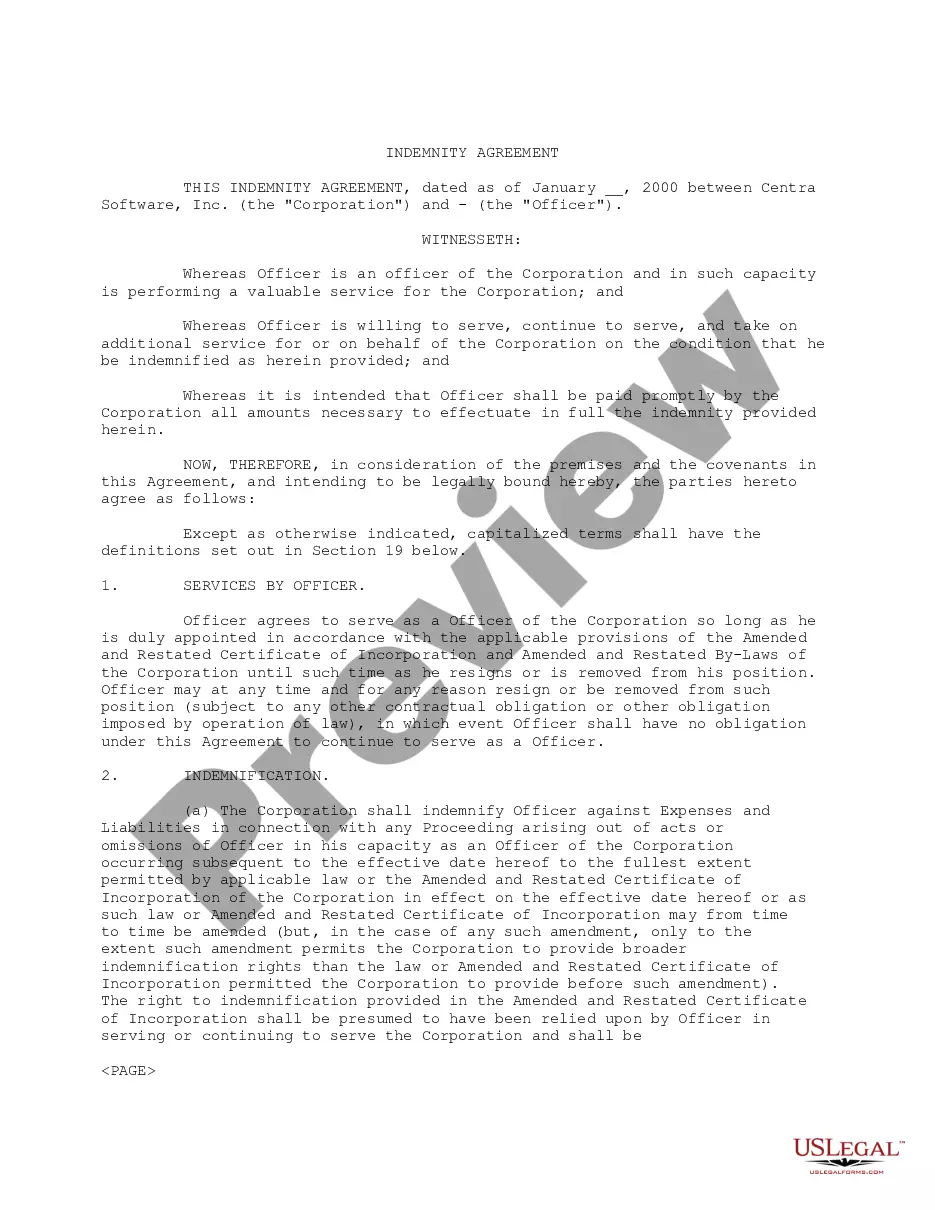
This form is known as the Approval of Indemnification Agreements with article amendment and amendment to bylaws. It is designed to allow a corporation to approve and ratify indemnification agreements that protect its directors, officers, and agents from personal liability in certain circumstances. This form differs from other legal documents by specifically addressing the indemnification provisions that enhance protections under state laws for corporate executives and board members.
Main sections of this form
- Introduction detailing the Legislative background and purpose of indemnification.
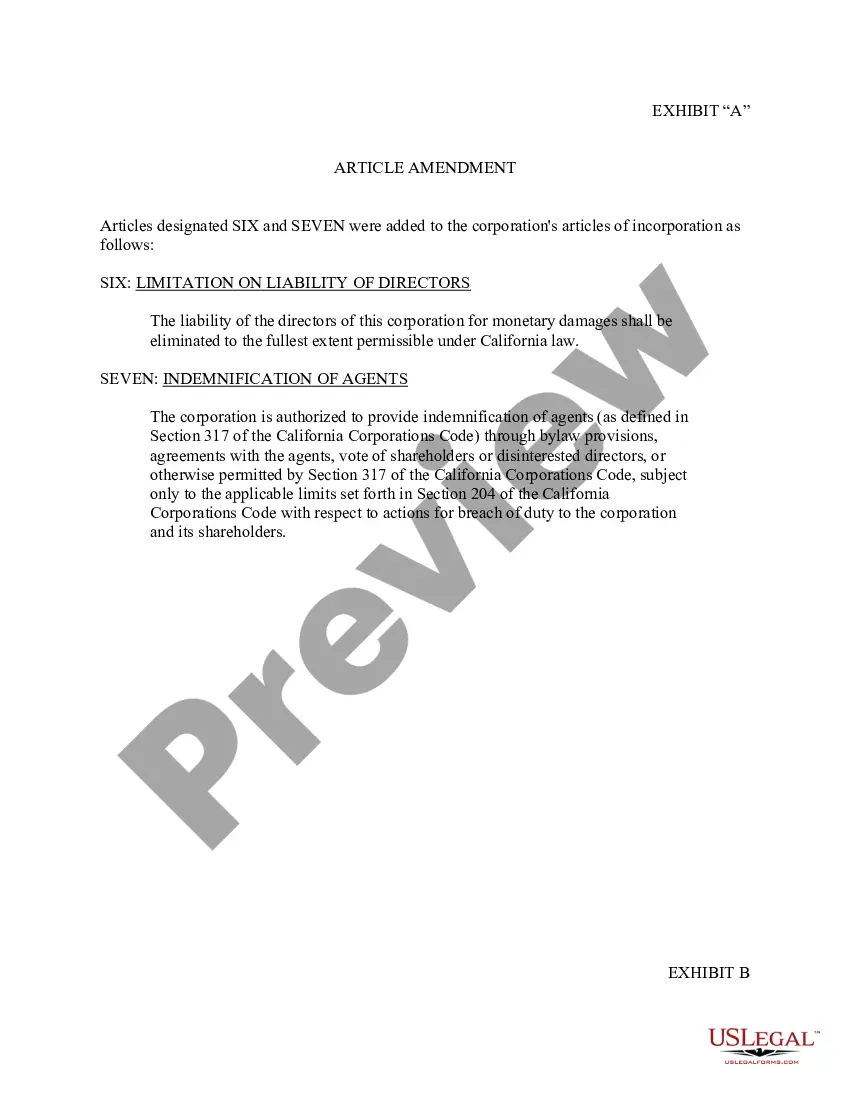
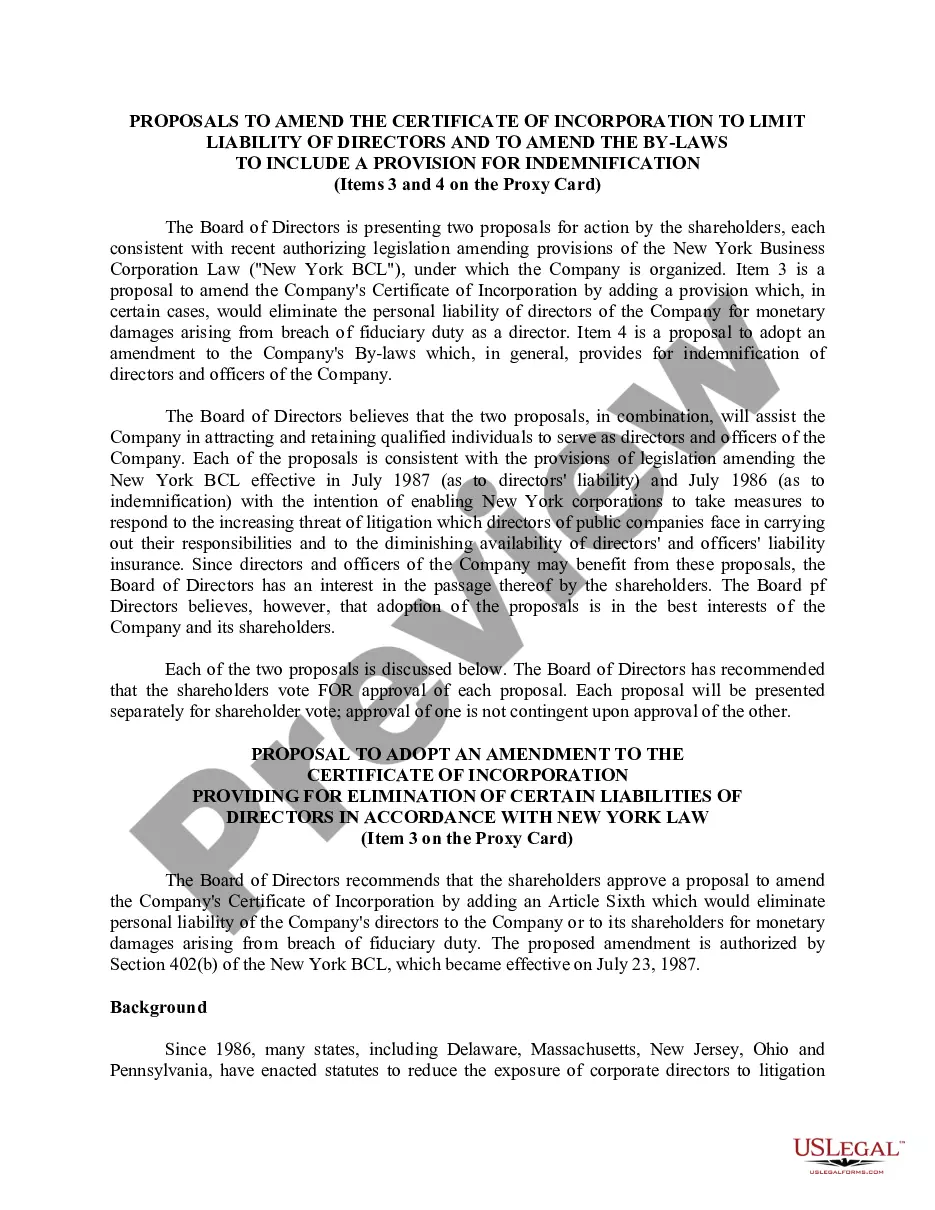
- Amendments to the Articles of Incorporation limiting directors' liability.
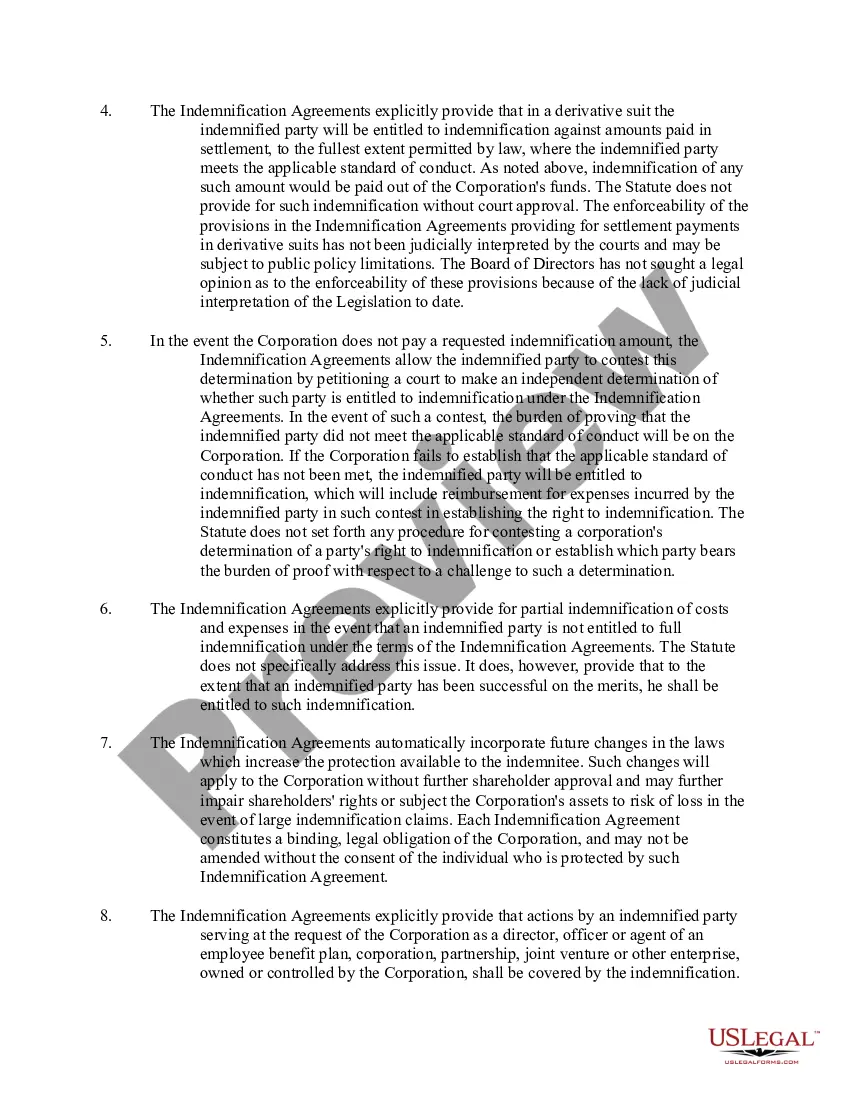
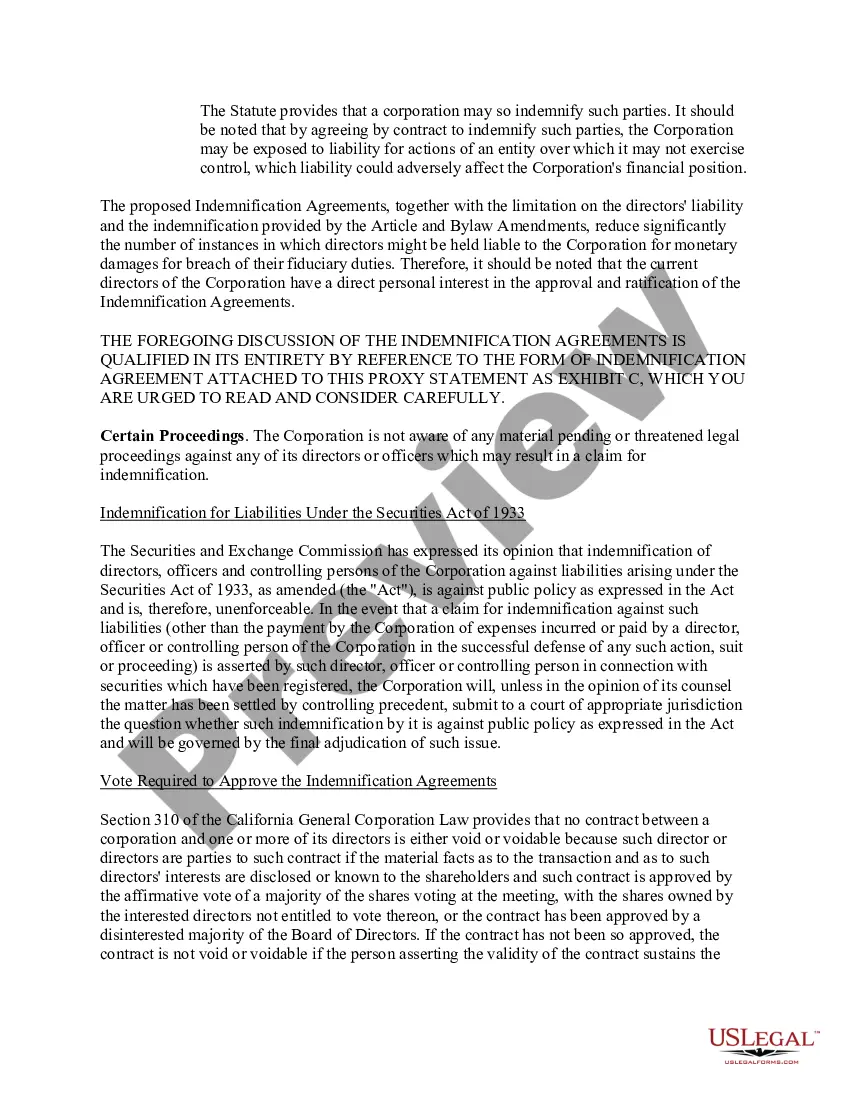
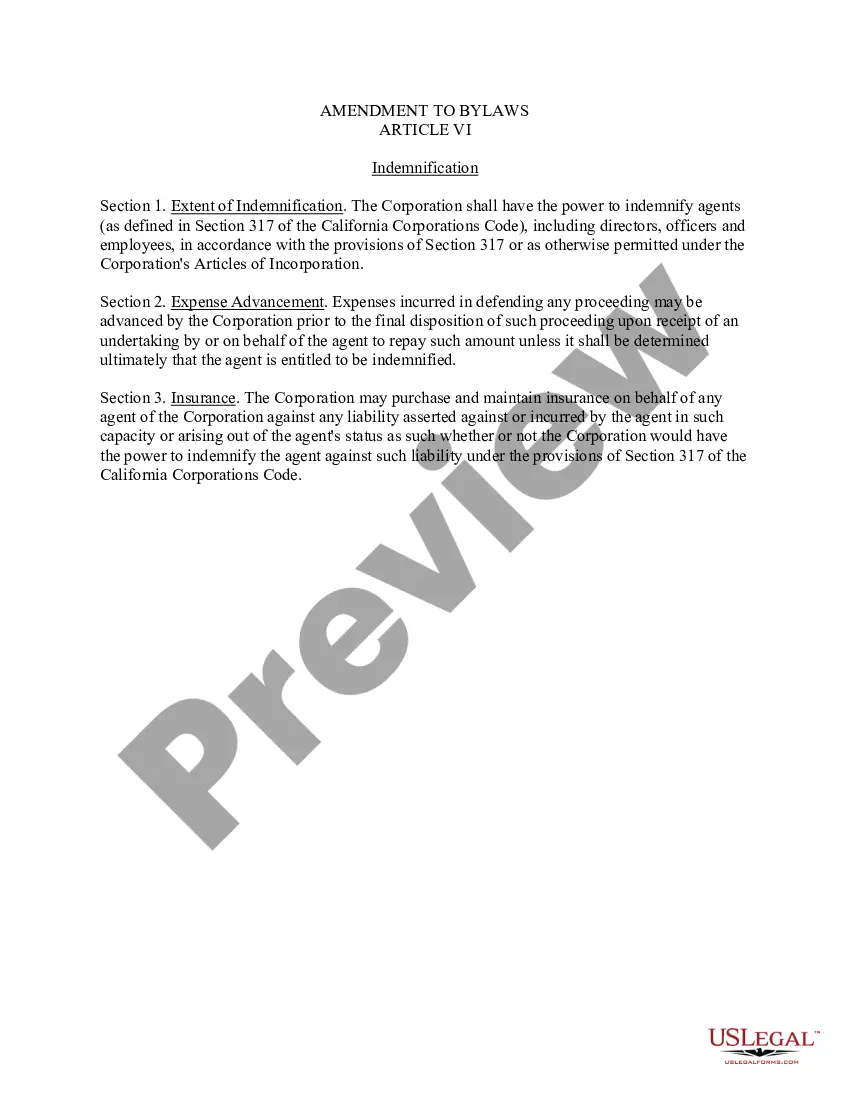
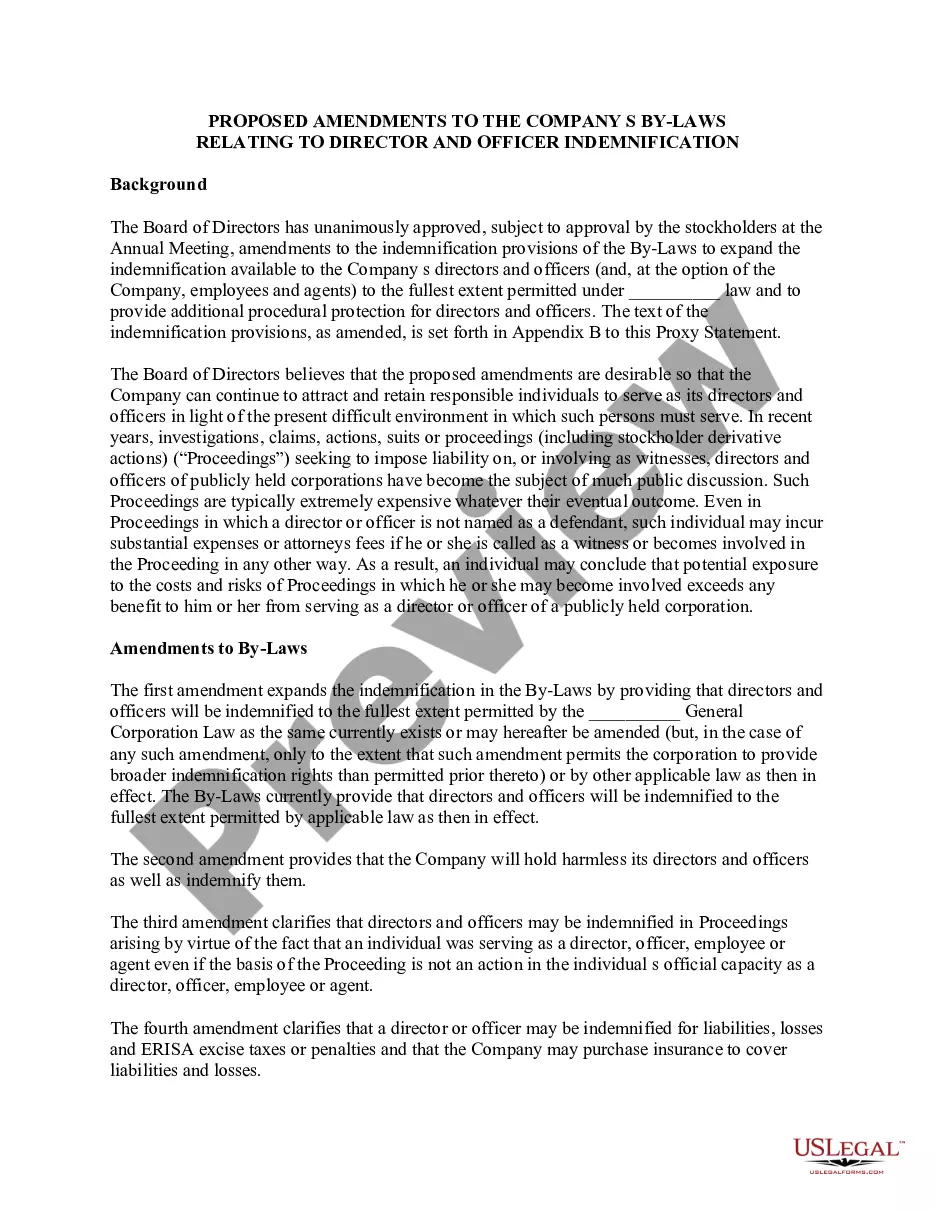
- Provisions for the indemnification of directors, officers, and other agents.
- Requirements for the advancement of litigation expenses.
- Procedural guidelines for contesting indemnification decisions.
Situations where this form applies
This form should be used when a corporation seeks to approve indemnification agreements in order to protect its directors and officers from potential legal liabilities. It is particularly relevant when corporate governance structures or laws have changed, necessitating formal approval by shareholders to ensure compliance and bolster the corporation's defenses against claims.
Who needs this form
- Corporate boards of directors seeking to limit liability for their members.
- Corporations wishing to provide assurance to current and future directors and officers regarding their indemnification rights.
- Shareholders involved in approving significant amendments to corporate bylaws and articles of incorporation.
Steps to complete this form
- Identify the corporation's directors and officers who will be protected by the indemnification agreements.
- Review and attach the amendments to the Articles of Incorporation and Bylaws referenced in the form.
- Outline the provisions of the indemnification agreement as specified in the form.
- Gather the required votes from shareholders for approval during the meeting.
- Maintain documentation of the approval process for corporate records and compliance verification.
Does this form need to be notarized?
In most cases, this form does not require notarization. However, some jurisdictions or signing circumstances might. US Legal Forms offers online notarization powered by Notarize, accessible 24/7 for a quick, remote process.
Get your form ready online
Our built-in tools help you complete, sign, share, and store your documents in one place.
Make edits, fill in missing information, and update formatting in US Legal Forms—just like you would in MS Word.
Download a copy, print it, send it by email, or mail it via USPS—whatever works best for your next step.
Sign and collect signatures with our SignNow integration. Send to multiple recipients, set reminders, and more. Go Premium to unlock E-Sign.
If this form requires notarization, complete it online through a secure video call—no need to meet a notary in person or wait for an appointment.
We protect your documents and personal data by following strict security and privacy standards.

Make edits, fill in missing information, and update formatting in US Legal Forms—just like you would in MS Word.

Download a copy, print it, send it by email, or mail it via USPS—whatever works best for your next step.

Sign and collect signatures with our SignNow integration. Send to multiple recipients, set reminders, and more. Go Premium to unlock E-Sign.

If this form requires notarization, complete it online through a secure video call—no need to meet a notary in person or wait for an appointment.

We protect your documents and personal data by following strict security and privacy standards.
Mistakes to watch out for
- Failing to fully disclose interests of directors when obtaining approvals.
- Not including signatures from all required parties on the form.
- Ignoring state-specific laws regarding indemnification provisions.
- Overlooking necessary amendments to corporate bylaws prior to approval.
Why use this form online
- Convenience of accessing and downloading the form at any time.
- Editable fields mean adjustments can be made easily to suit the corporation's specific needs.
- Reliable templates drafted by licensed attorneys ensure legal compliance and accuracy.
Legal use & context
- Indemnification agreements are enforceable under state laws, provided they comply with statutory requirements.
- Indemnification may not cover acts of willful misconduct or breaches of loyalty.
- It is essential to document and approve the indemnification structure to protect corporate officers effectively.
Quick recap
- The form is essential for establishing indemnification agreements for corporate leaders.
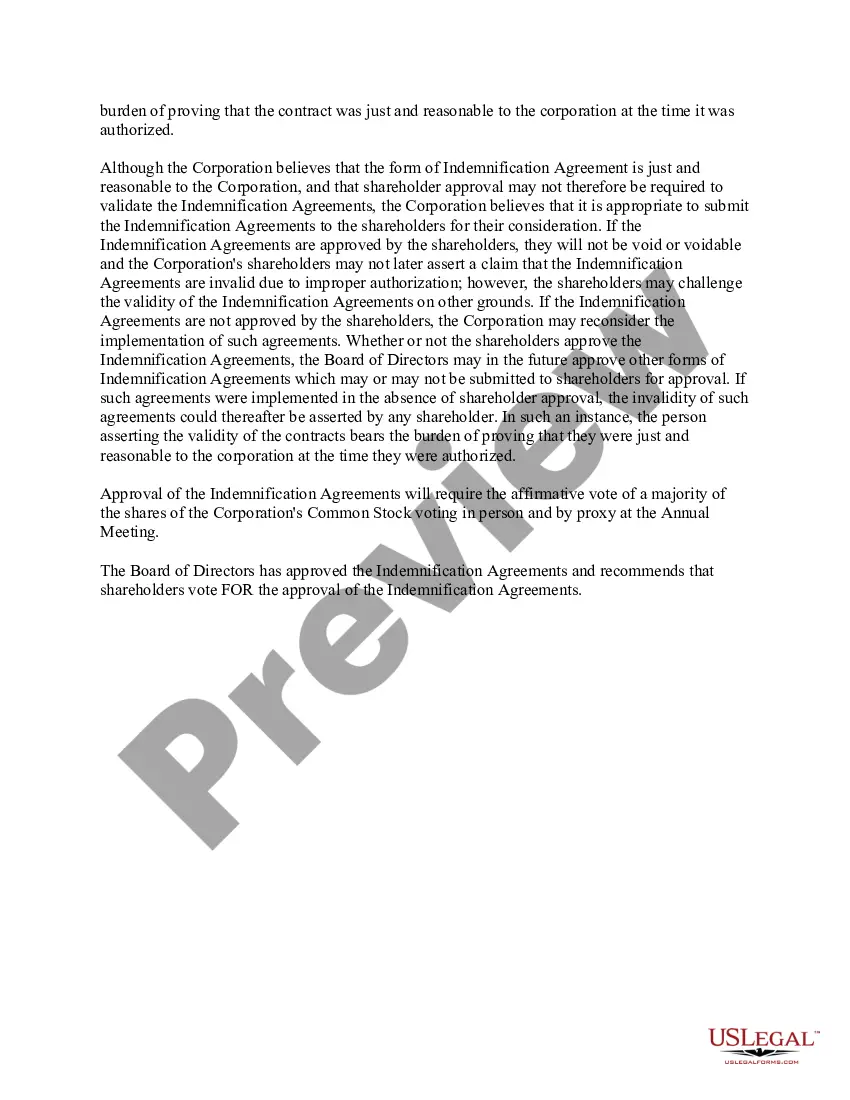
- Approval from shareholders enhances the validity and enforceability of the agreements.
- Adherence to state regulations is crucial for the legality of indemnification provisions.
Looking for another form?








Form popularity
FAQ
Directors and officers who violate a corporation's bylaws run the risk of being removed from office. State law authorizes the directors to remove an officer without cause.If the shareholders are not removing the entire board, an individual director may be protected from removal depending on state law.
Point out to them that bylaws are not a suggestion, they are mandatory. They form the foundation of how the entire organization functions. Failing to follow them puts the board, and the nonprofit, at legal risk. It may also put each director at individual risk, which D&O insurance will not cover.
Article I. Name and purpose of the organization. Article II. Membership. Article III. Officers and decision-making. Article IV. General, special, and annual meetings. Article V. Board of Directors.
Your nonprofit's bylaws are both a legal document and a roadmap for your organization's actions. A required element when forming a corporation, bylaws are a form of agreement or a contract between the corporation and its owners to conduct itself in a certain way.
Bylaws are legally binding. And while your Bylaws aren't a public document (like your IRS Form 990), they also aren't confidential. You can share them, for instance, with a prospective board member who asks to review them before joining your board.
ARTICLE I. NAME OF ORGANIZATION. The name of the corporation is YOUR NONPROFIT NAME HERE. ARTICLE II. CORPORATE PURPOSE. Section 1. ARTICLE III. MEMBERSHIP. ARTICLE IV. MEETINGS OF MEMBERS. ARTICLE V. BOARD OF DIRECTORS. ARTICLE VI. OFFICERS. ARTICLE VII. COMMITTEES. ARTICLE VIII. CORPORATE STAFF.
Bylaws generally define things like the group's official name, purpose, requirements for membership, officers' titles and responsibilities, how offices are to be assigned, how meetings should be conducted, and how often meetings will be held.
By-law: a law or regulation or rule (with force of law) of a local government such as that of a town or city; also a governance rule adopted by a corporation. A word used to denote laws passed and enforceable by a local authority. For example, a zoning by-law.
Like the Constitution, your bylaws should deal with only the highest level of governing issues such as: Organizational purpose, board structure, officer position descriptions and responsibilities, terms of board service, officer/board member succession and removal, official meeting requirements, membership provisions,