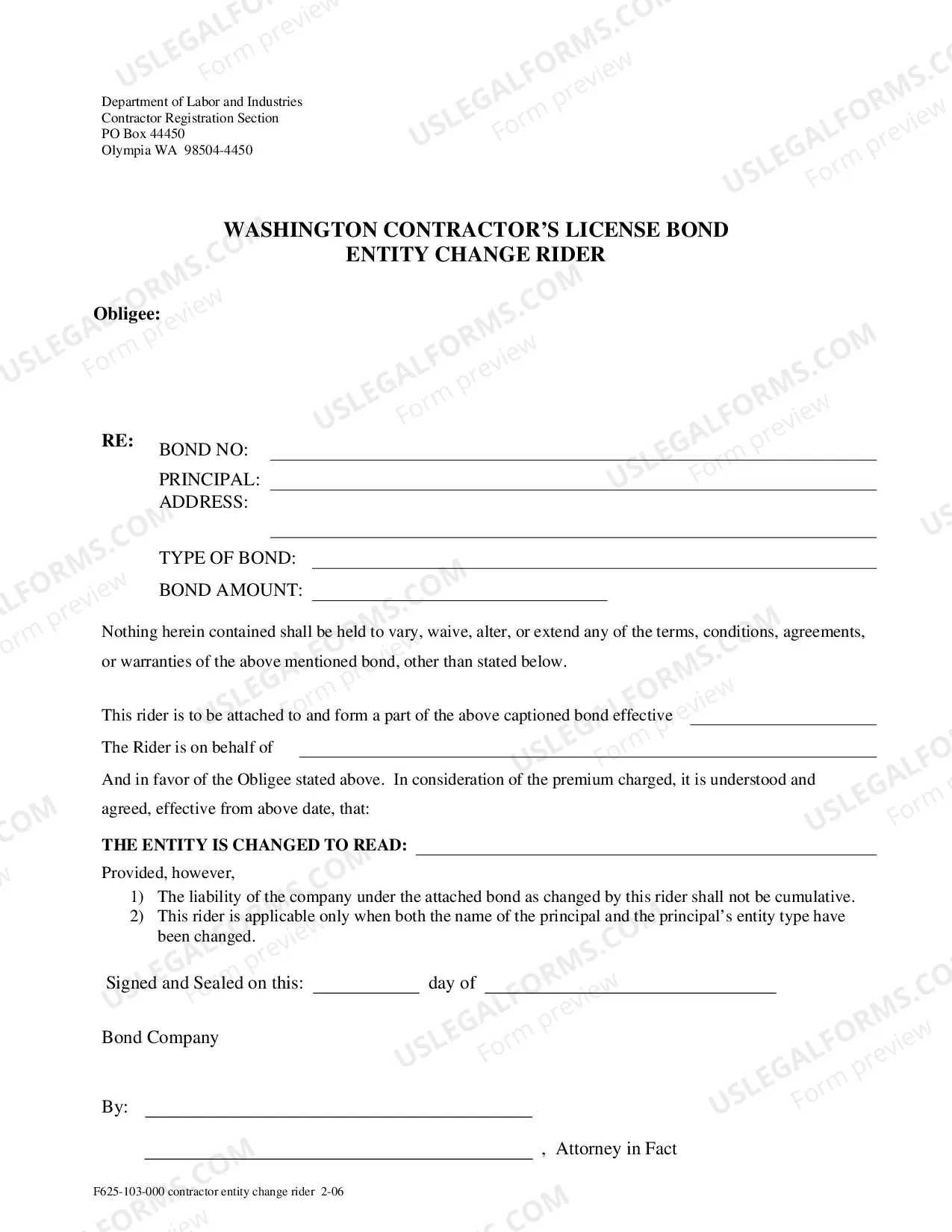
Indemnification Agreement between Corporation and Its Directors and Non-Director Officers at Vice President Level and Above
Overview of this form
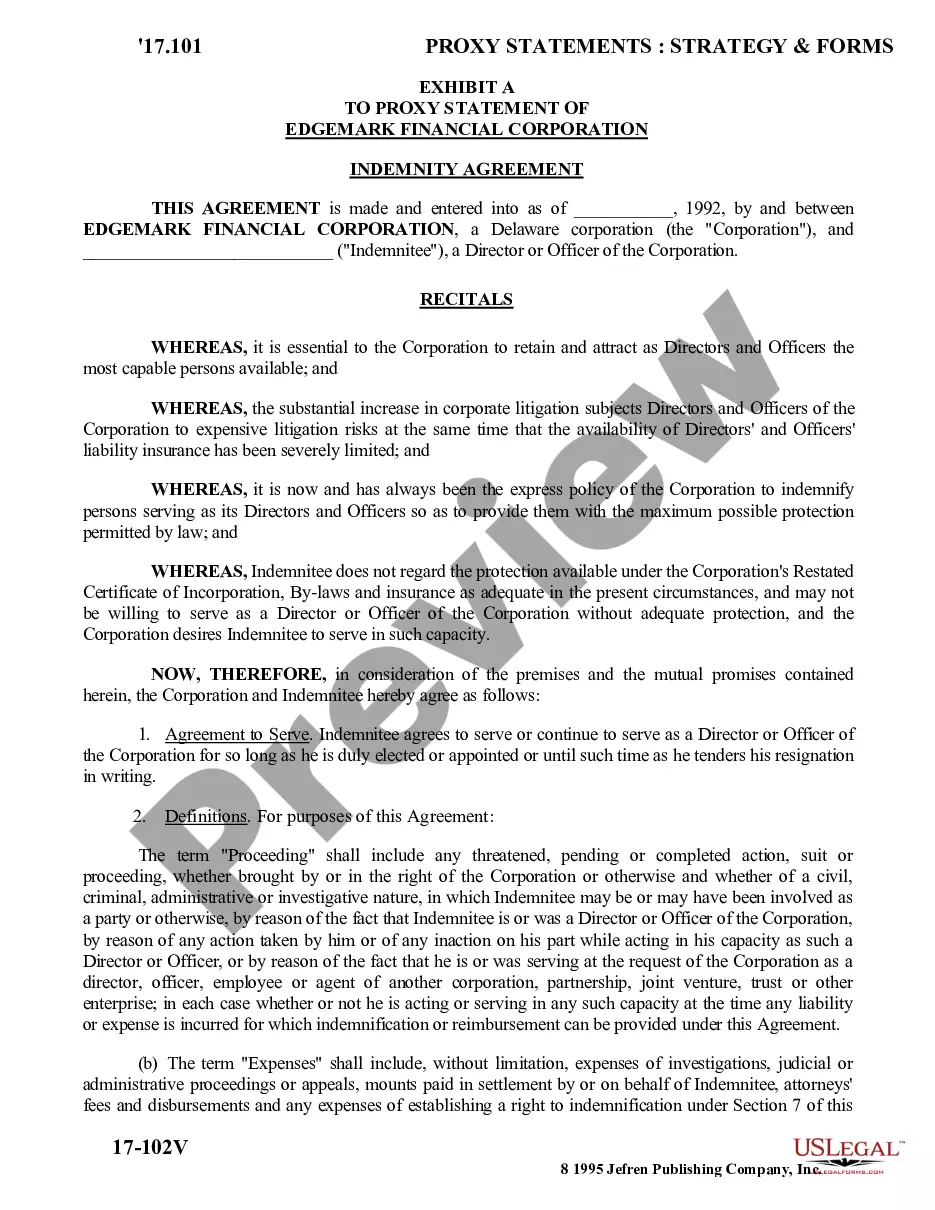
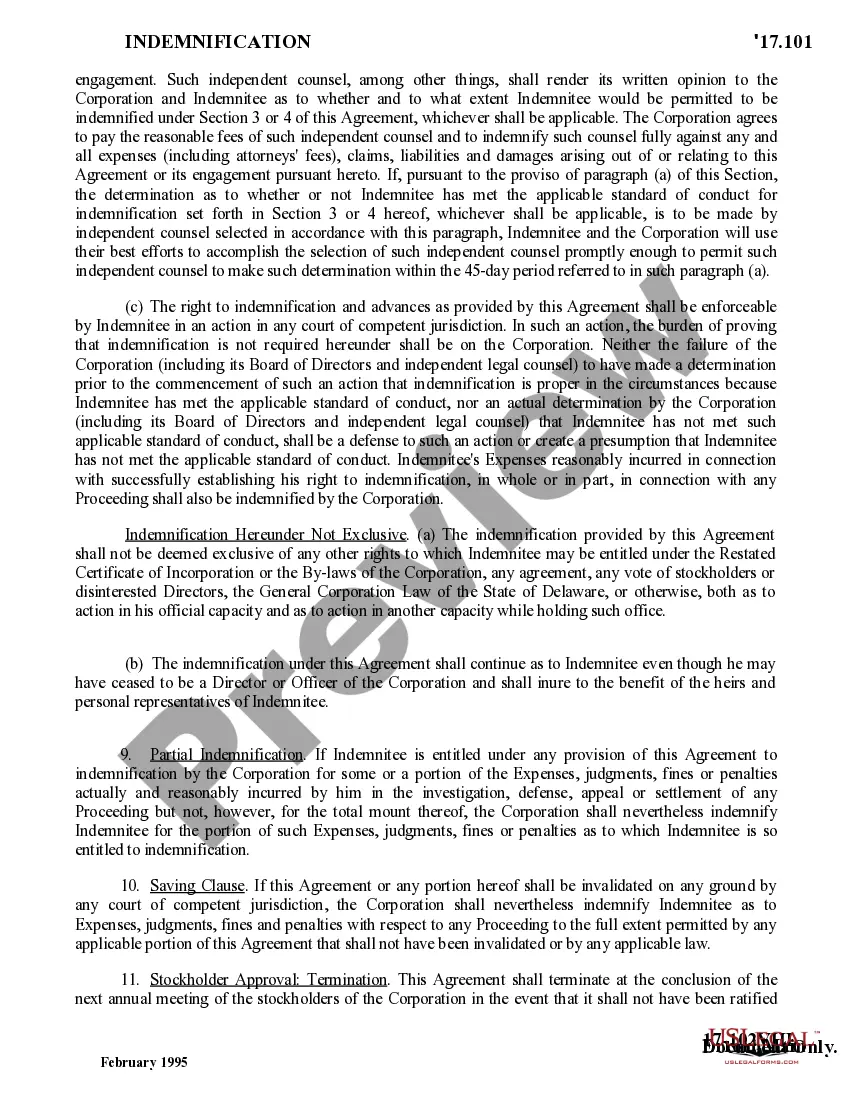
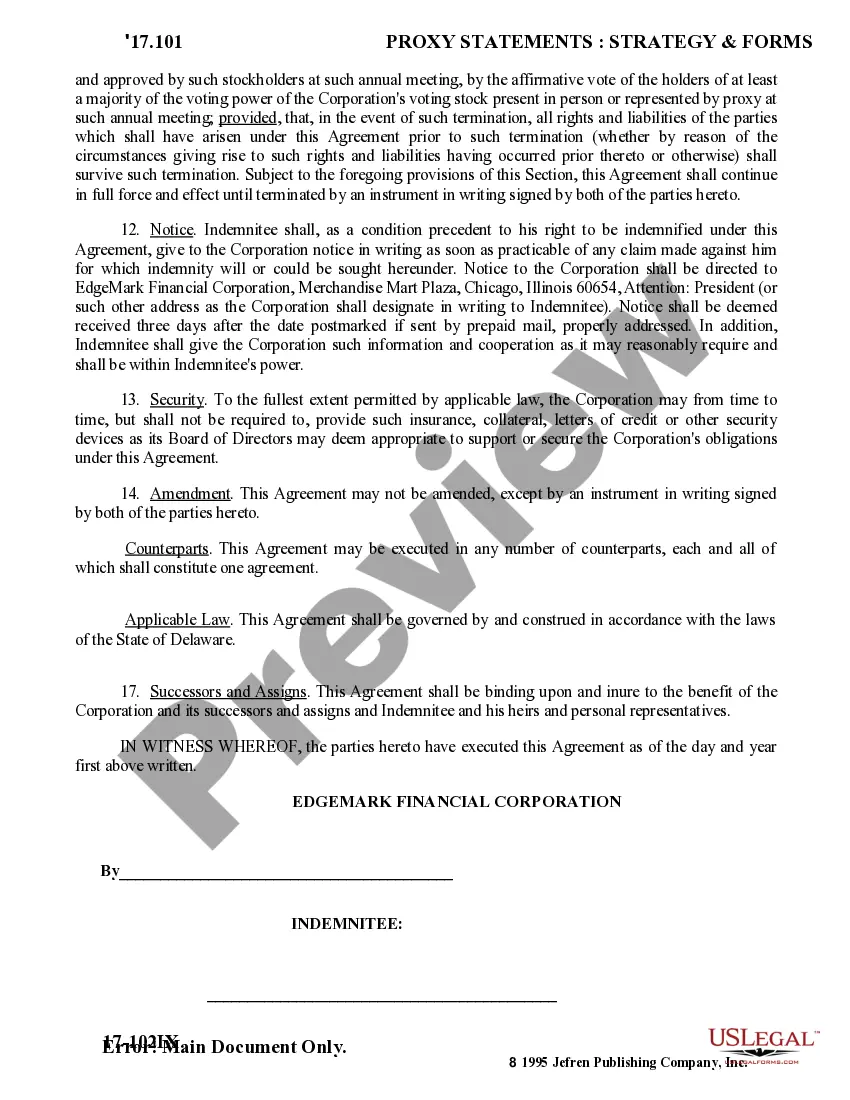
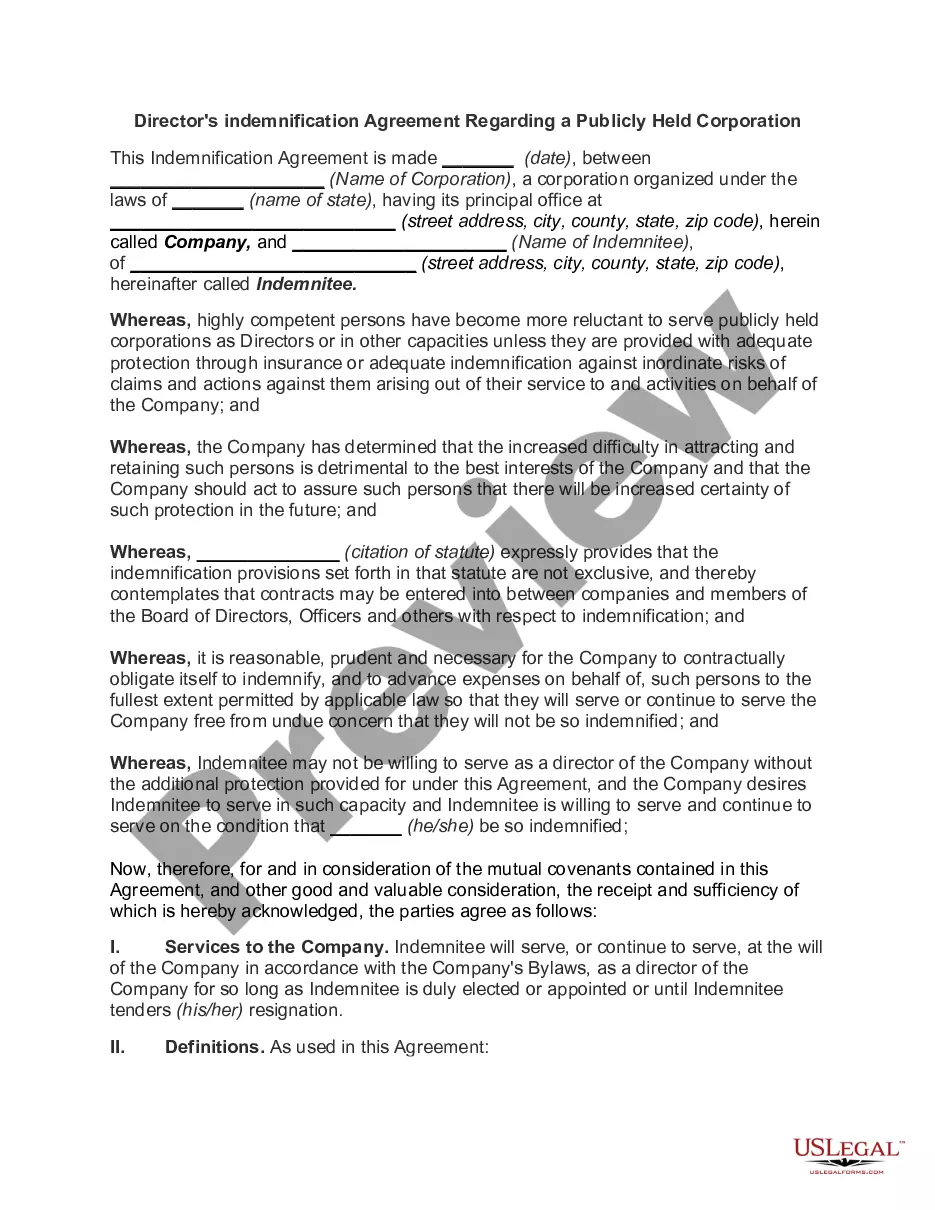
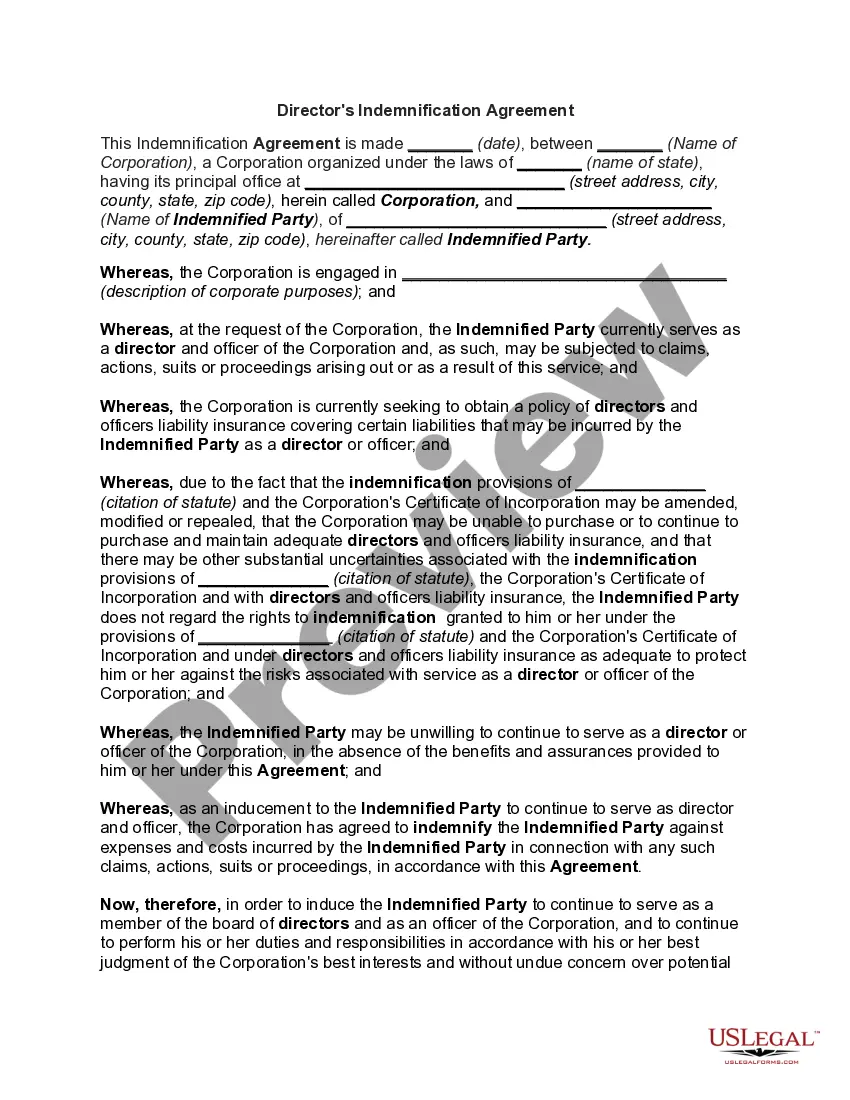
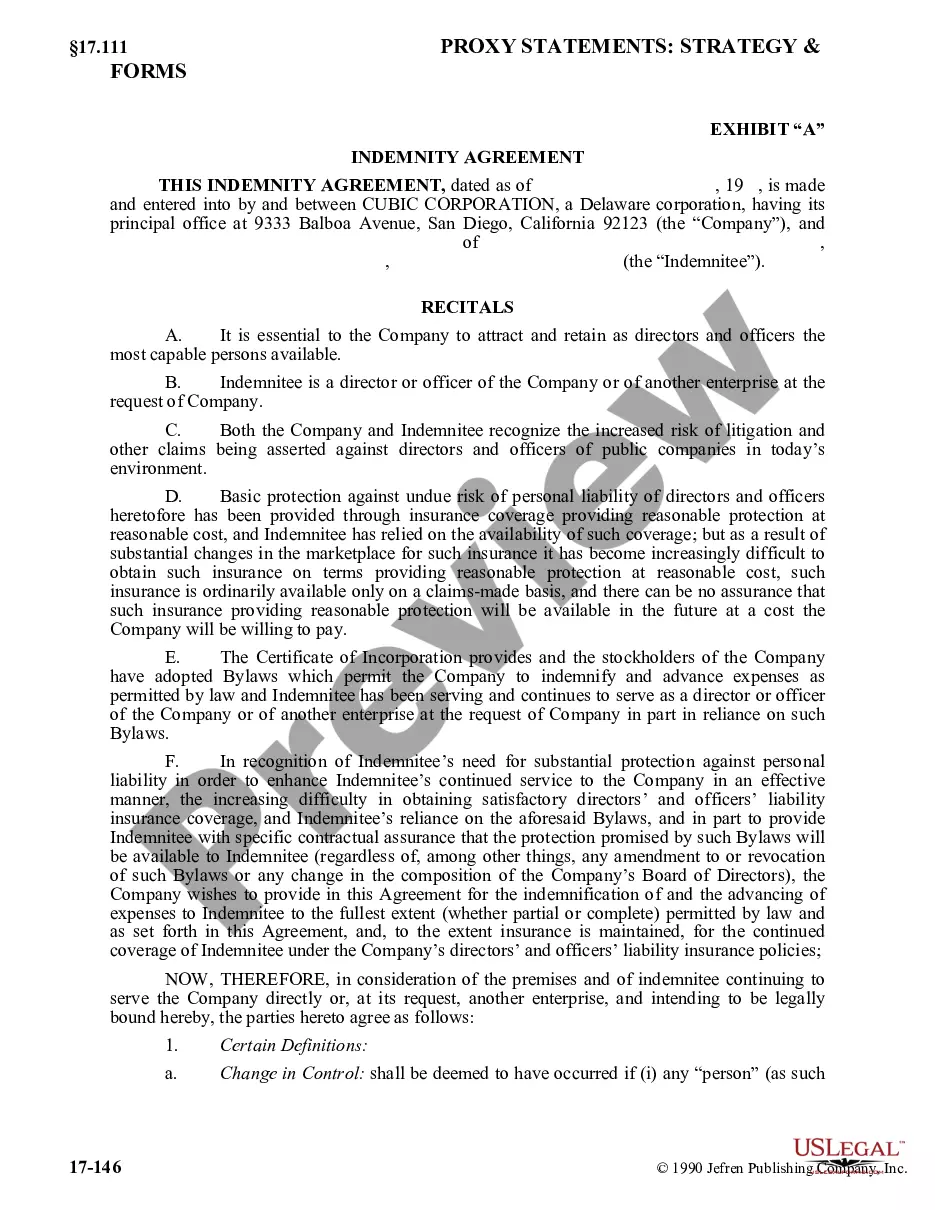
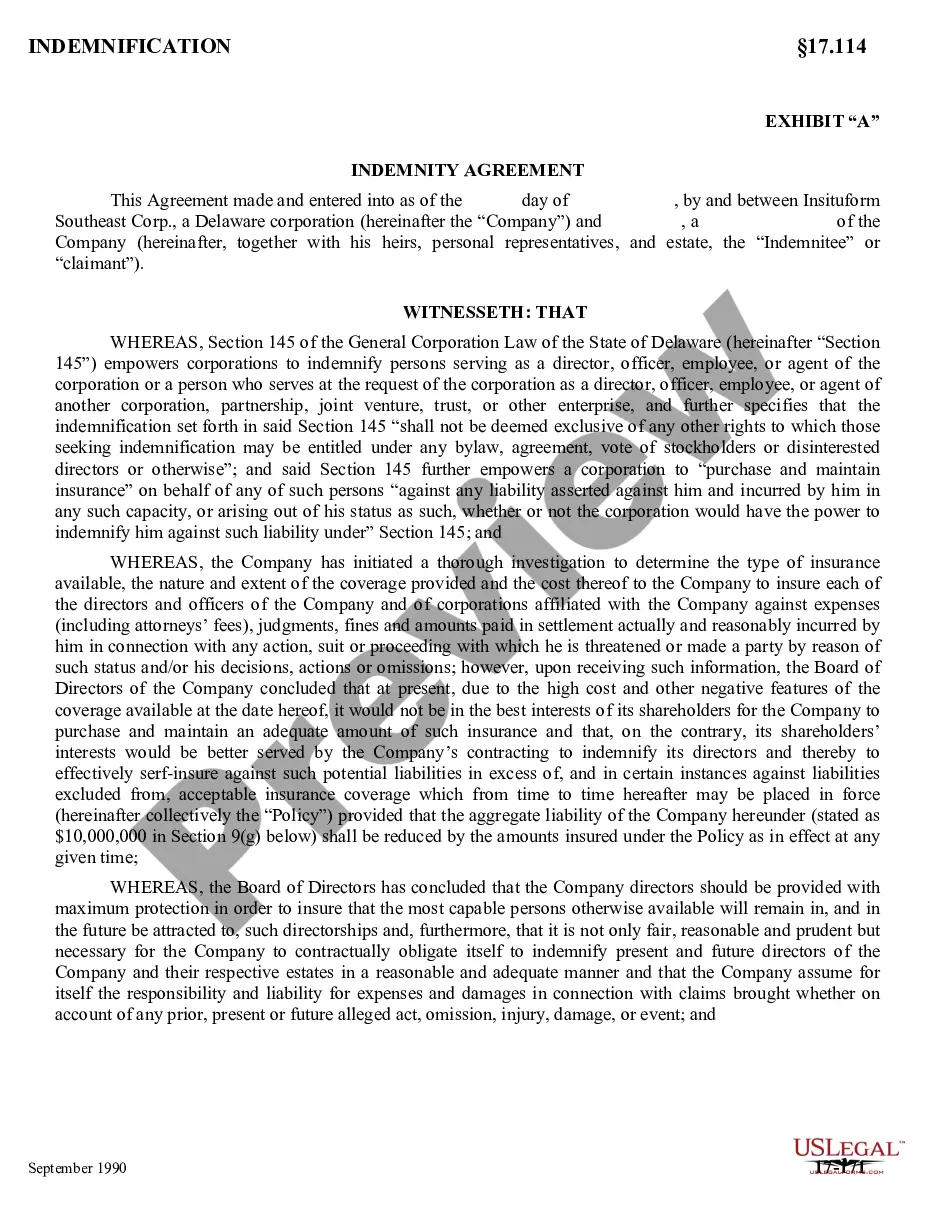
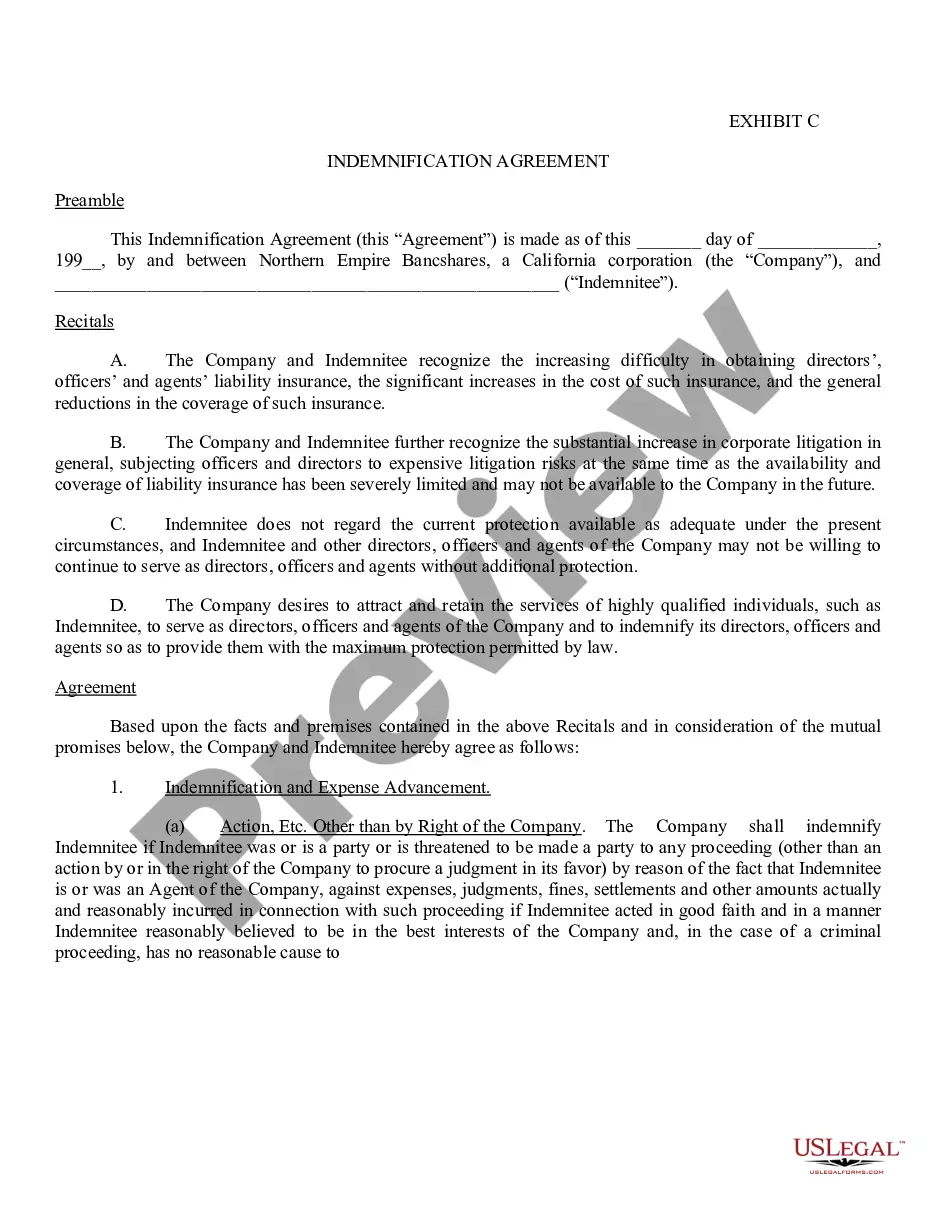
The Indemnification Agreement between Corporation and Its Directors and Non-Director Officers at Vice President Level and Above is a legal document that provides protection for corporate directors and high-level officers against liabilities incurred in the course of their duties. This form differs from similar agreements by specifying the level of officers covered and outlining the corporation's commitment to indemnifying these individuals for legal expenses and liabilities arising from their official actions, provided they acted in good faith and in the best interest of the corporation.
What’s included in this form
- Agreement to serve: Formal commitment of the Indemnitee to serve as a Director or Officer.
- Definitions: Clarifies important terms such as "Proceeding" and "Expenses" to ensure understanding.
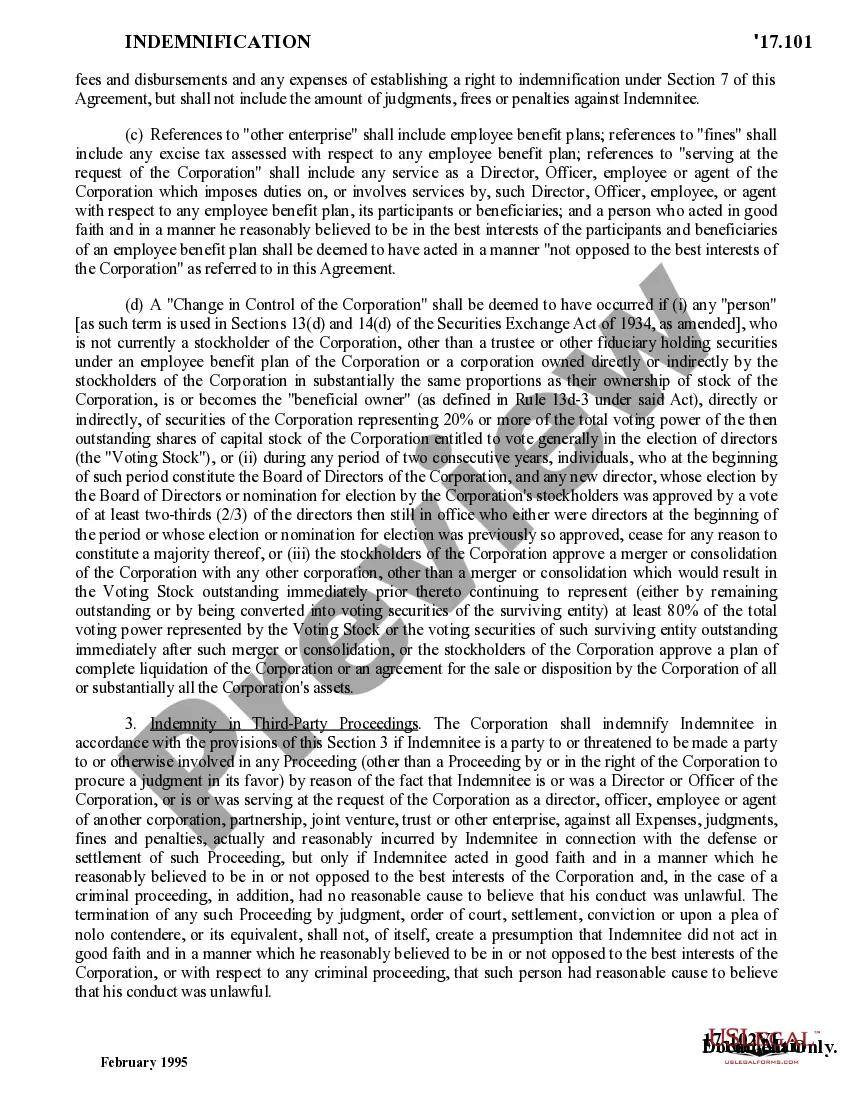
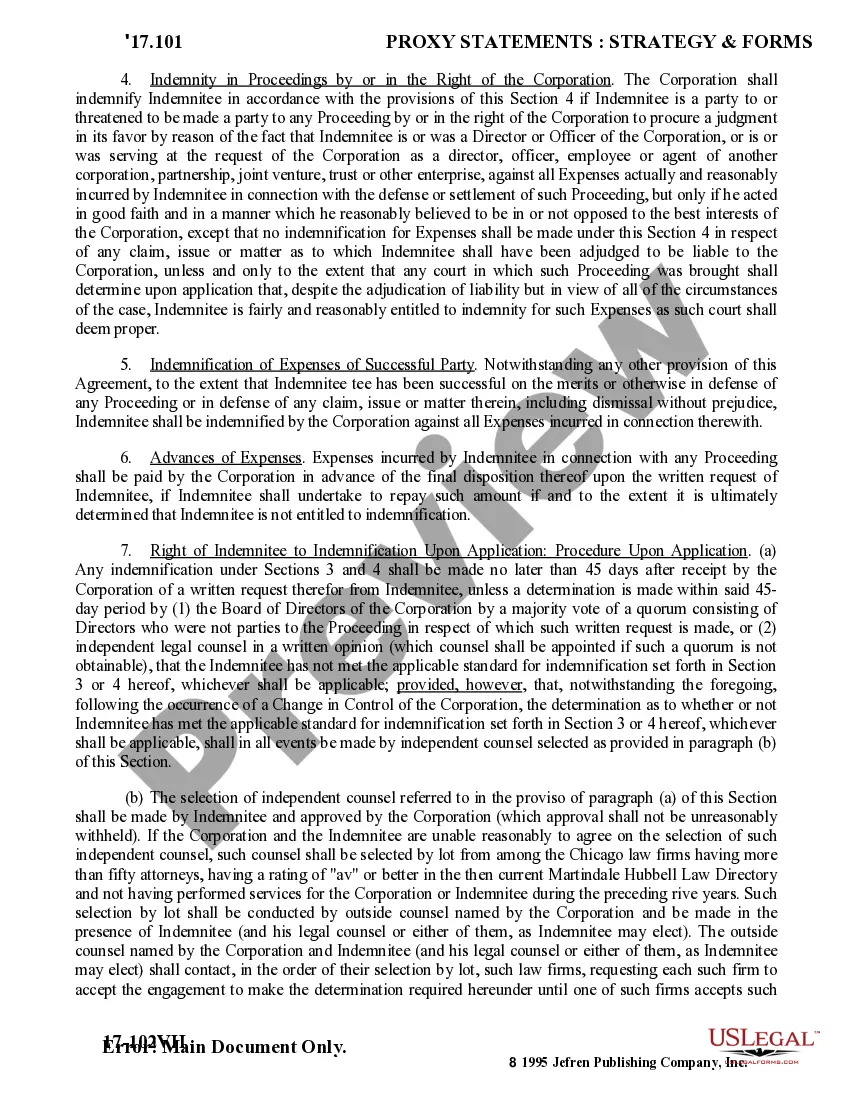
- Indemnity clauses: Outlines the conditions under which the corporation will indemnify the Indemnitee in third-party and direct corporate proceedings.
- Advances of expenses: Details the process for covering legal expenses incurred before the completion of proceedings.
- Application process: Specifies how the Indemnitee can apply for indemnification and the necessary approvals required.
- Termination and notice requirements: Explains how the agreement can be terminated and the notice obligations of the Indemnitee.

Situations where this form applies
This form is used when a corporation seeks to protect its directors and high-level officers from legal liability that may arise from their actions while serving the corporation. It is particularly relevant when corporate litigation risks are high and liability insurance options are limited. Corporations may choose to use this agreement to attract and retain qualified individuals for leadership positions by offering them reduced personal financial risk.
Who should use this form
This form is intended for:
- Corporations seeking to establish indemnification policies for their directors and executive officers.
- Individuals serving or planning to serve as directors or officers at the Vice President level and above who seek protection against potential liabilities.
- Corporate legal counsel advising on governance and risk management strategies related to director and officer liabilities.
Completing this form step by step
- Identify the parties: Enter the names of the corporation and the Indemnitee (the director or officer).
- Specify the effective date: Fill in the date on which the agreement is signed.
- Review definitions: Understand and confirm the definitions provided to ensure clarity on terms used in the agreement.
- Consider the indemnity provisions: Read through the indemnification clauses to understand the scope and limitations of coverage.
- Sign and date: Both the corporation's representative and the Indemnitee must sign and date the agreement to make it binding.
Does this document require notarization?
This form does not typically require notarization unless specified by local law. However, obtaining notarization may add an extra layer of validity and security.
Get your form ready online
Our built-in tools help you complete, sign, share, and store your documents in one place.
Make edits, fill in missing information, and update formatting in US Legal Forms—just like you would in MS Word.
Download a copy, print it, send it by email, or mail it via USPS—whatever works best for your next step.
Sign and collect signatures with our SignNow integration. Send to multiple recipients, set reminders, and more. Go Premium to unlock E-Sign.
If this form requires notarization, complete it online through a secure video call—no need to meet a notary in person or wait for an appointment.
We protect your documents and personal data by following strict security and privacy standards.

Make edits, fill in missing information, and update formatting in US Legal Forms—just like you would in MS Word.

Download a copy, print it, send it by email, or mail it via USPS—whatever works best for your next step.

Sign and collect signatures with our SignNow integration. Send to multiple recipients, set reminders, and more. Go Premium to unlock E-Sign.

If this form requires notarization, complete it online through a secure video call—no need to meet a notary in person or wait for an appointment.

We protect your documents and personal data by following strict security and privacy standards.
Common mistakes
- Failing to specify all relevant terms and definitions, leading to ambiguity.
- Not ensuring signatures and dates are completed, which can invalidate the agreement.
- Overlooking the need for board approval in accordance with corporate policies before executing the agreement.
- Neglecting to update the form if there are changes in corporate governance structure or laws.
Why use this form online
- Convenience: Downloadable format allows for immediate access and use without the need for in-person visits.
- Editability: Easily customizable to fit the specific needs and structures of different corporations.
- Reliability: Forms are drafted by licensed attorneys, ensuring they meet legal standards and requirements.
- Quick updates: Users can access the most current version of the form as legal standards evolve.
Legal use & context
- Indemnification agreements are often enforceable, but their effectiveness can depend on state laws and corporate bylaws.
- It is crucial that the terms comply with the General Corporation Law of the relevant state, particularly regarding liability limits.
- Directors and officers should read and understand their rights and obligations under this agreement before signing.
Looking for another form?
Form popularity
FAQ
Indemnification. Indemnification is an undertaking by the company to defend the director and officer against the cost of certain claims, including legal fees, litigation awards and settlement costs.
It's still your business decision whether you sign them or not, but you should do so only where it is a critical contract that you have no way of modifying or negotiating changes. In contrast, the best kind of Indemnity Agreement is commonly called a Mutual Indemnity Agreement or a Mutual Hold Harmless Provision.
Director, a director is the person who takes part in managing important business affairs, while officers oversee daily aspects of a business. Officers are also directly involved in the daily management affairs of the business.
Indemnity is a comprehensive form of insurance compensation for damages or loss.Indemnity is a contractual agreement between two parties. In this arrangement, one party agrees to pay for potential losses or damages caused by another party.
What does "Corporate Indemnification" mean?In the context of business organizations, a limited liability company or corporation will often indemnify its officers and directors, covering their expenses (including legal fees) and judgment amounts incurred by such persons as a result of their service to the entity.
Directors and officers are expected to comply with the three (3) fundamental areas of legal and fiduciary responsibilities including the duty of care, duty of loyalty, and the duty of obedience. The directors and officers are required to participate in the governance and oversight of the organization's activities.
Typical duties of the board of directors include governing the organization by establishing its mission, policies, and objectives: selecting, appointing, supporting, and reviewing the officers; approving annual budgets; and accounting to the shareholders for the corporation's performance.
Limited liability protects shareholders, directors, officers and employees against personal liability for actions taken in the name of the corporation and corporate debts. Ordinarily, an officer of the corporation, whether also a shareholder, director or employee, cannot be held personally liable.
To indemnify means to compensate someone for his/her harm or loss. In most contracts, an indemnification clause serves to compensate a party for harm or loss arising in connection with the other party's actions or failure to act. The intent is to shift liability away from one party, and on to the indemnifying party.