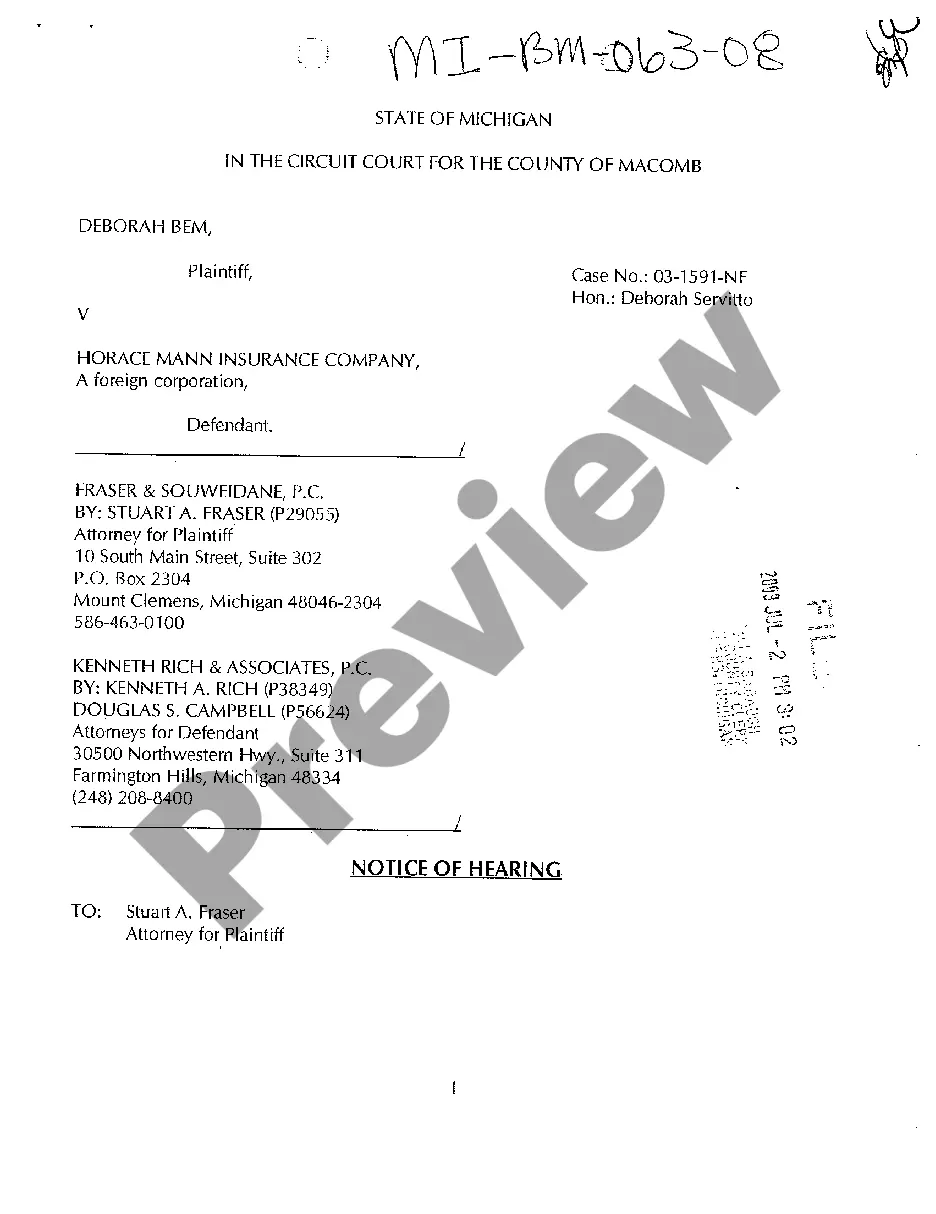
Personal Guaranty of Employment Agreement Between Corporation and Employee
Understanding this form
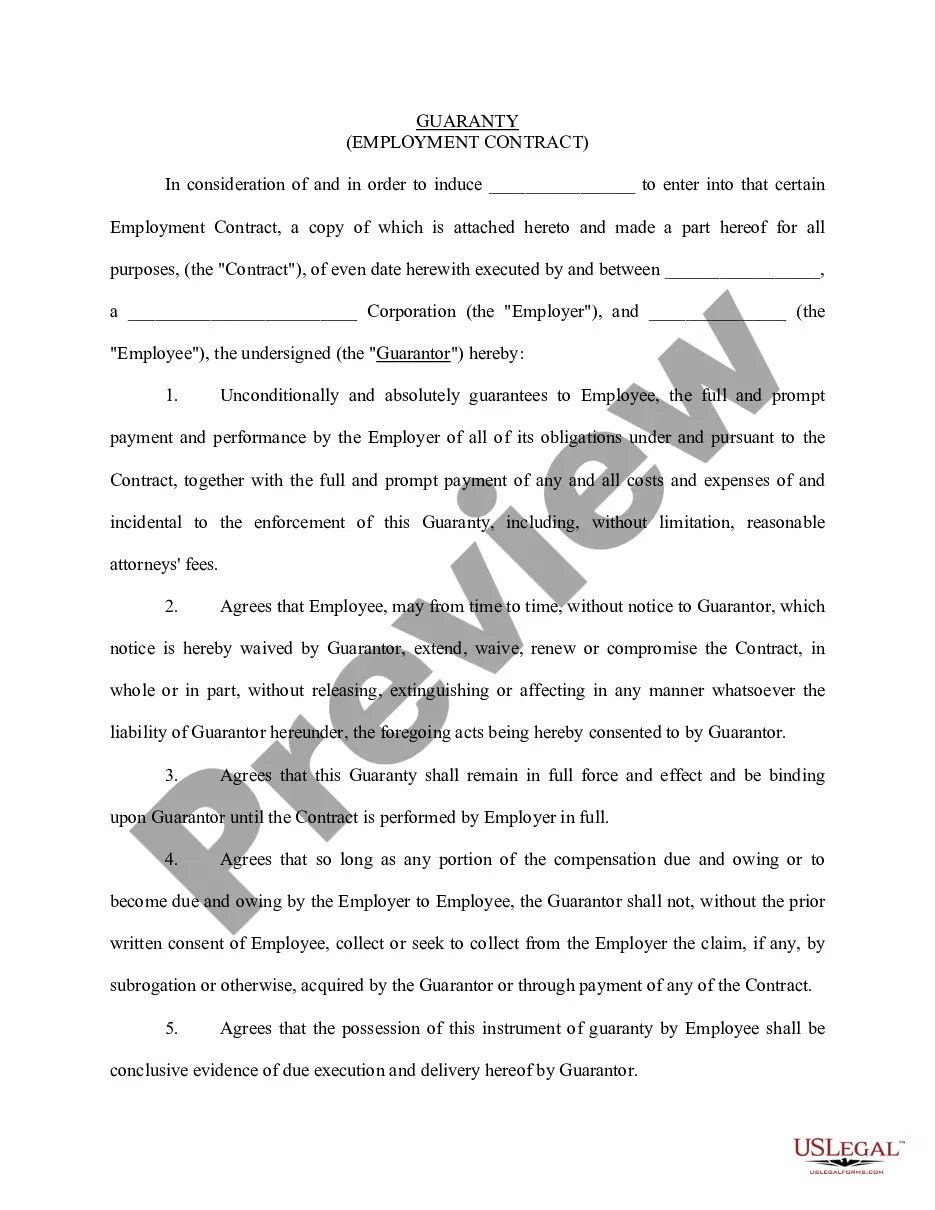
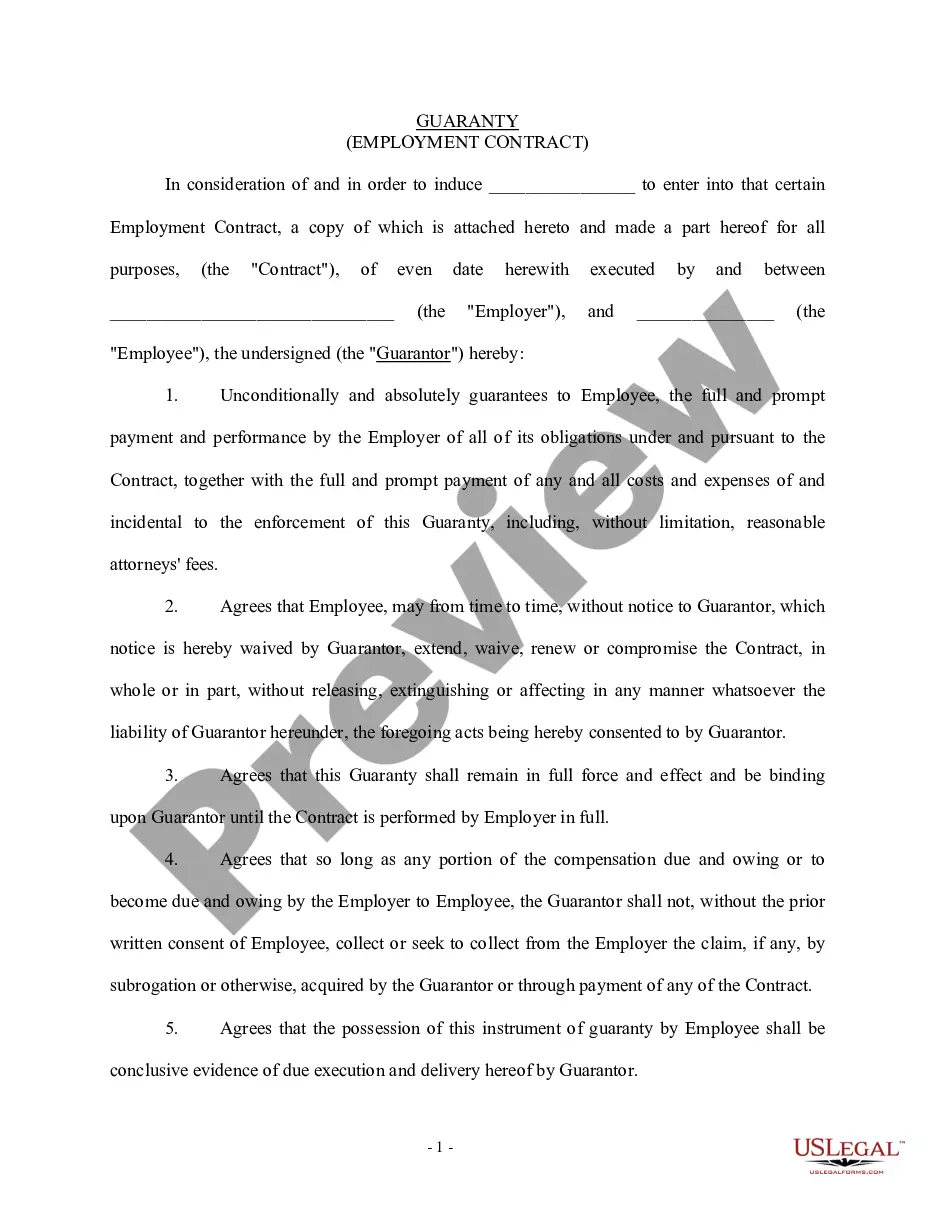
The Personal Guaranty of Employment Agreement Between Corporation and Employee is a legal document in which a guarantor agrees to ensure that an employer fulfills its obligations under an employment contract. This form differs from other employment agreements by incorporating a guarantor, providing an additional layer of security for the employee, ensuring prompt payment and performance from the employer.
Form components explained
- Identification of the parties involved: the Employee, Employer, and Guarantor.
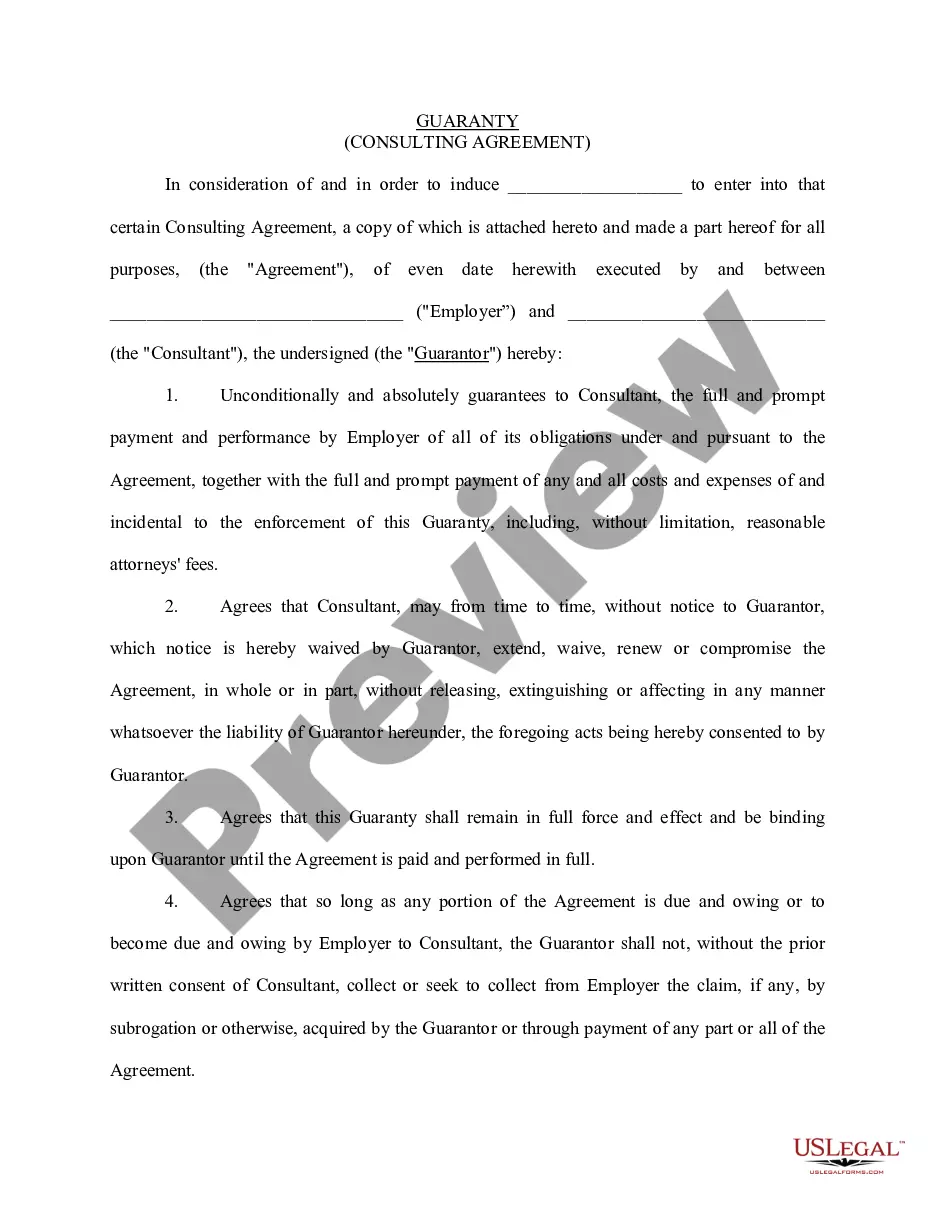
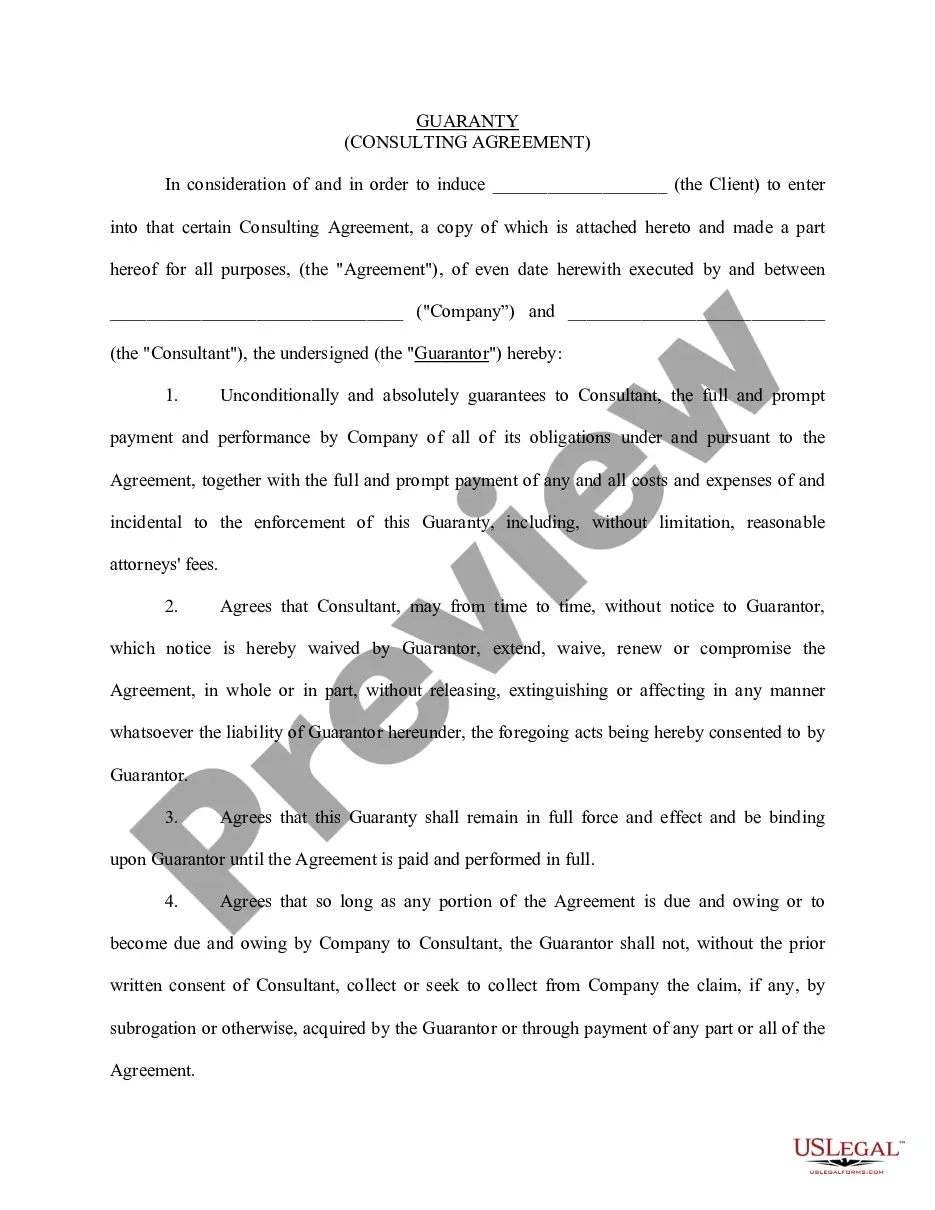
- Unconditional guarantee of payment and performance by the Employer.
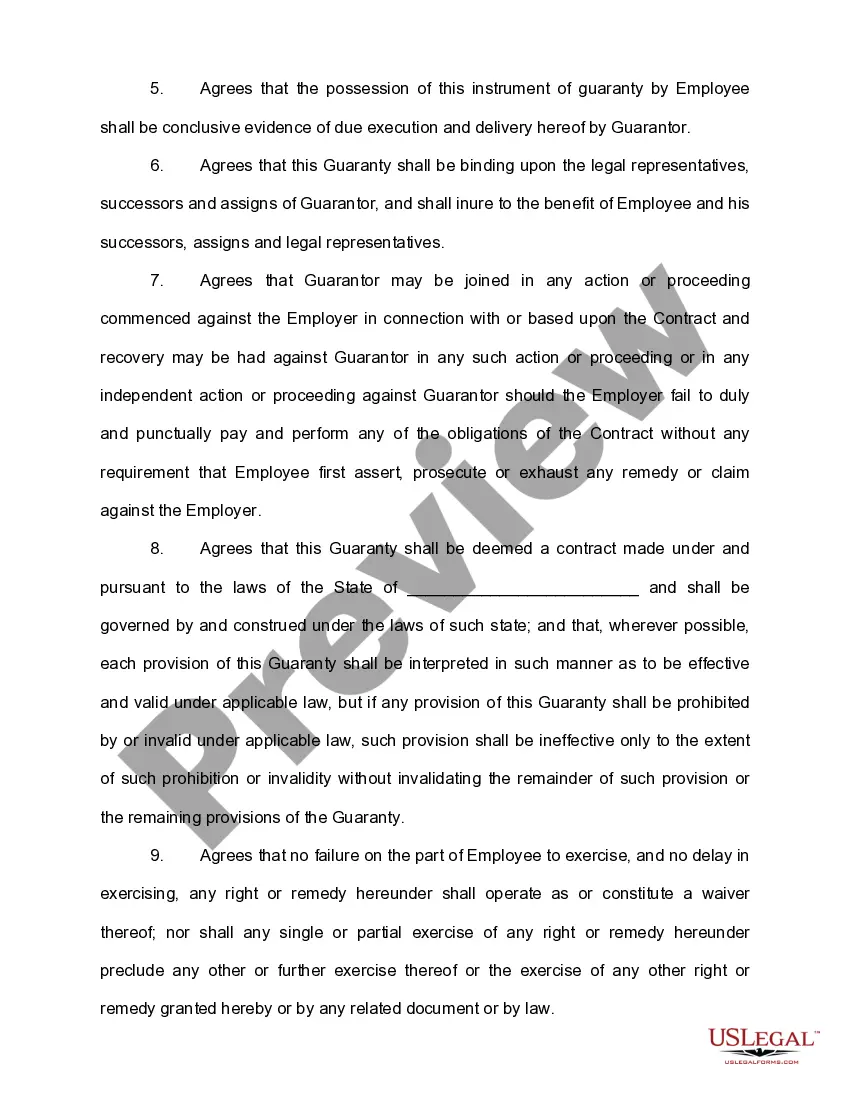
- Clauses regarding the Guarantor's liability and rights.
- Provisions for extending or waiving parts of the contract without affecting the Guarantor's obligations.
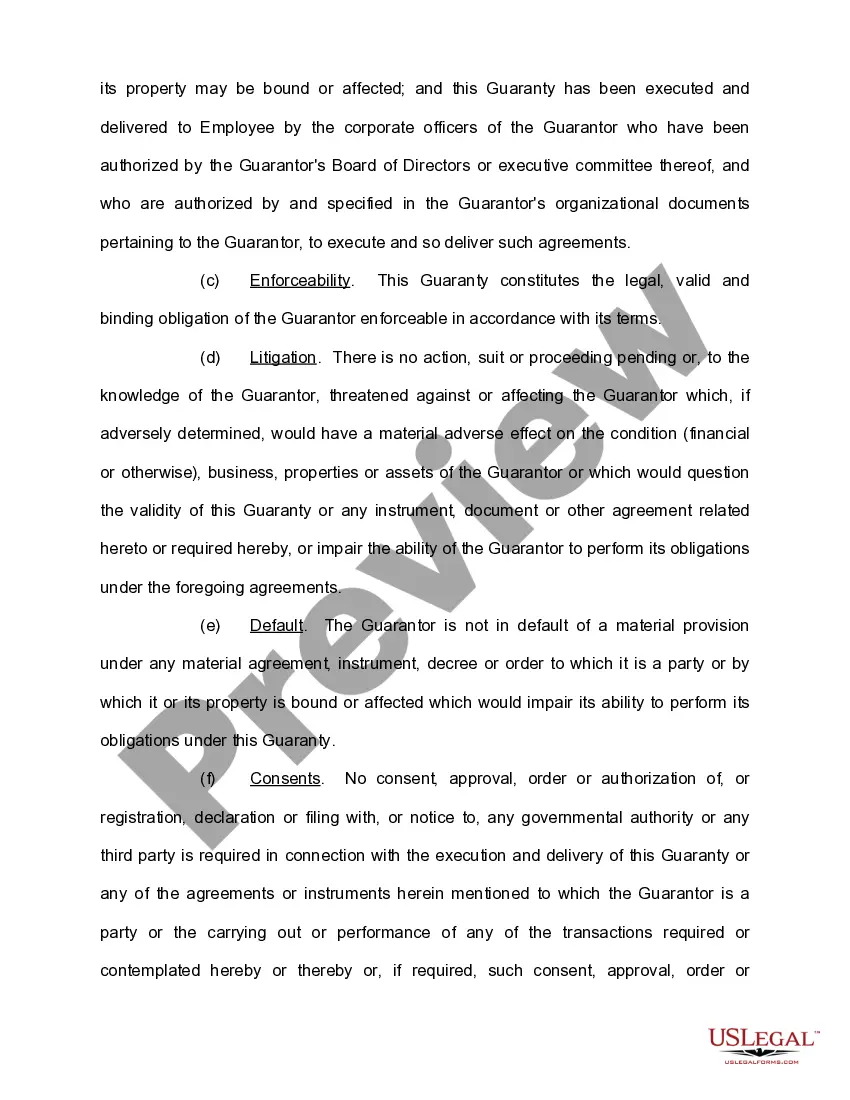
- Assurances of enforceability under state law.
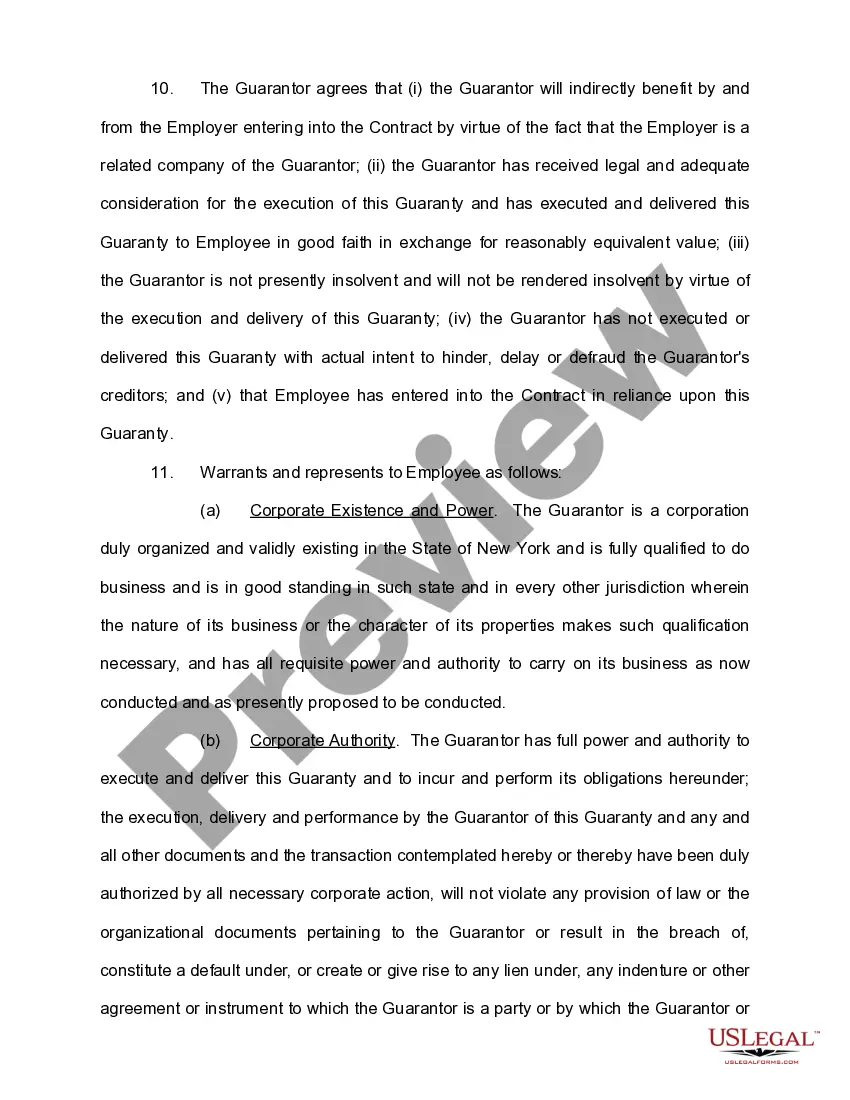
- Warranties and representations by the Guarantor regarding corporate status and authority.
When to use this form
This form is typically used when an employee is entering into an employment contract with a corporation, and there is a need for additional financial security. It is particularly useful in situations where the employer's financial stability may be uncertain, or the employee desires assurance that they will receive due compensation and benefits as outlined in their employment agreement.
Who should use this form
The following individuals or entities should consider using this form:
- Employees who want to ensure payment and performance from their Employers.
- Corporations entering into employment contracts that require a Guarantor.
- Guarantors who are willing to assume responsibility for Employer obligations under the contract.
Completing this form step by step
- Identify and enter the names of all parties involved: the Guarantor, Employee, and Employer.
- Attach the relevant employment contract for reference.
- Clearly outline the terms of the guarantee and any conditions.
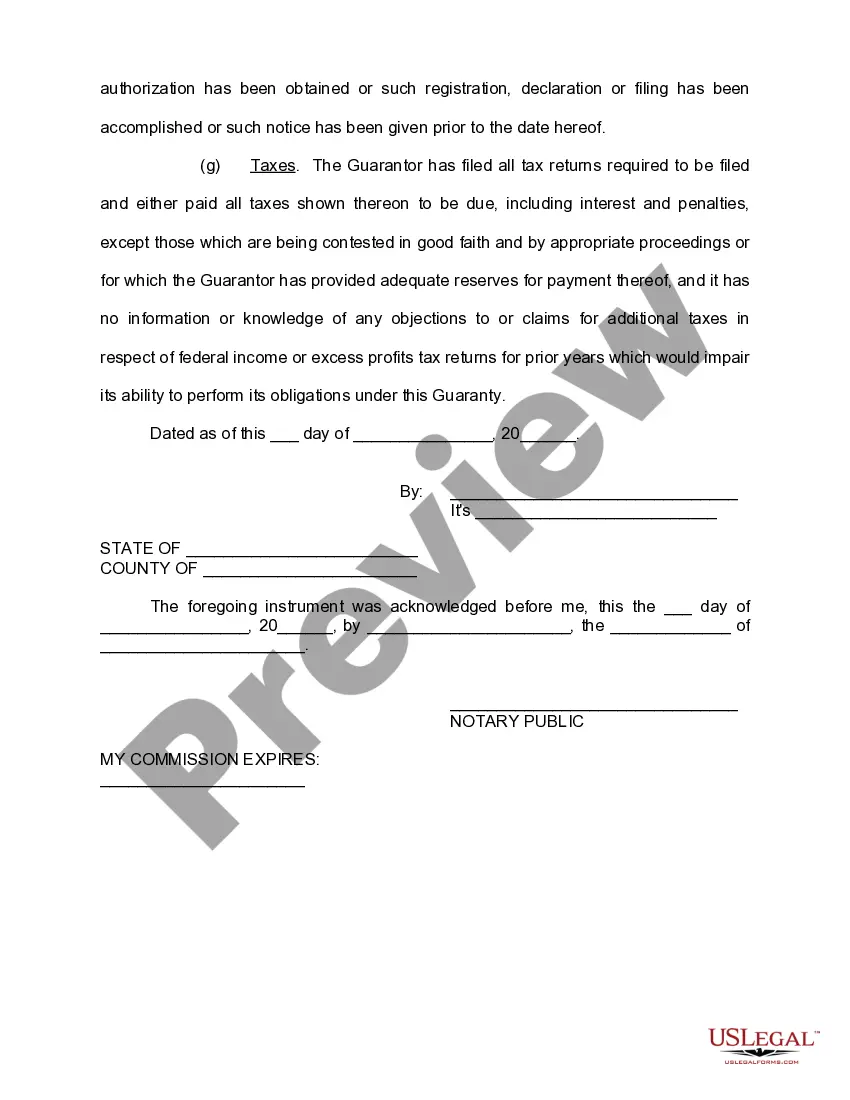
- Include signatures of all parties and the date of execution.
- Consult an attorney if needed to ensure all legal obligations are met.
Does this document require notarization?
This form does not typically require notarization unless specified by local law.
Get your form ready online
Our built-in tools help you complete, sign, share, and store your documents in one place.
Make edits, fill in missing information, and update formatting in US Legal Forms—just like you would in MS Word.
Download a copy, print it, send it by email, or mail it via USPS—whatever works best for your next step.
Sign and collect signatures with our SignNow integration. Send to multiple recipients, set reminders, and more. Go Premium to unlock E-Sign.
If this form requires notarization, complete it online through a secure video call—no need to meet a notary in person or wait for an appointment.
We protect your documents and personal data by following strict security and privacy standards.

Make edits, fill in missing information, and update formatting in US Legal Forms—just like you would in MS Word.

Download a copy, print it, send it by email, or mail it via USPS—whatever works best for your next step.

Sign and collect signatures with our SignNow integration. Send to multiple recipients, set reminders, and more. Go Premium to unlock E-Sign.

If this form requires notarization, complete it online through a secure video call—no need to meet a notary in person or wait for an appointment.

We protect your documents and personal data by following strict security and privacy standards.
Typical mistakes to avoid
- Failing to properly identify the parties involved, leading to ambiguity.
- Neglecting to attach the employment contract, which is essential for context.
- Not signing the document in front of a notary when required.
Why use this form online
- Convenient access to legally vetted templates that are easy to download and use.
- Editable fields allow users to customize the agreement to their specific needs.
- Reliability ensured by the involvement of licensed attorneys in drafting the form.
Legal use & context
- The guaranty creates a binding obligation and is enforceable according to its terms.
- It serves to protect employees if the employer defaults on the employment contract.
- Guarantees must comply with state laws to ensure their validity in legal proceedings.
Looking for another form?

Form popularity
FAQ
An oral employment contract is just as binding as one in a written agreement -- but it's much harder to prove in court. Oral employment contracts (sometimes called "verbal" contracts) are simply contracts that are spoken and agreed to aloud rather than reduced to writing.
There are three types of employment status: employee, worker and self-employed. The three are often not in practice used correctly and the difference is not always known.
An employment contract doesn't always have to be in writing to be enforceable. While that may be the case, written agreements are certainly easier to enforce and not subject to certain limitations that oral agreements are.Similarly, if an employer tells an employee he has a job a life, that promise is not enforceable.
Regardless of your employment status, if you're working, you should have an employment contract. While most employment contracts are in writing, they can also be verbal agreements. Oral contracts have the same legal authority but it can be much harder to prove.employment start date and notice periods.
Verbal agreements between two parties are just as enforceable as a written agreement. Like written contracts, they just need to meet the requirements of a valid contract to be enforced in court. If the agreement meets those requirements, both verbal and written agreements are enforceable.
A legally binding employment agreement between an employer and employee outlines the terms or conditions of employment.No matter what the terms, the purpose of an employment agreement is to assure that the employer's interests are protected and the employee is treated fairly.
Company Name. Nature of Work: Your duty hours will be 40 hours a week. Salary & Benefits: You will be drawing a salary of $8000 per month. Rules & Regulations: The company expects you to stick to all the rules and regulations effective at the time of your employment.
Job information. Compensation and benefits. Time off, sick days, and vacation policy. Employee classification. The schedule and employment period. Confidentiality agreement. A technology privacy policy. Termination terms and conditions.
Types of Employment Contracts: Permanent employment, temporary employment and independent contractors.