Sample Letter for Change of Event Time
What this document covers
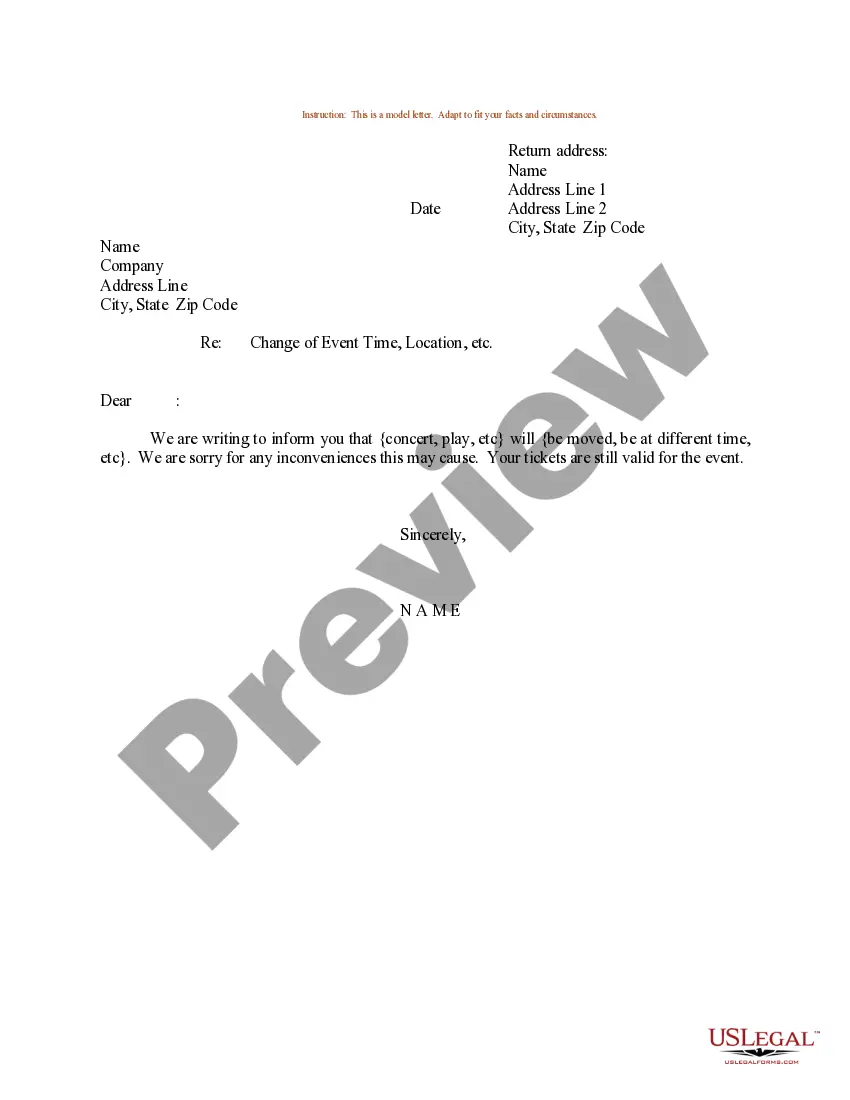
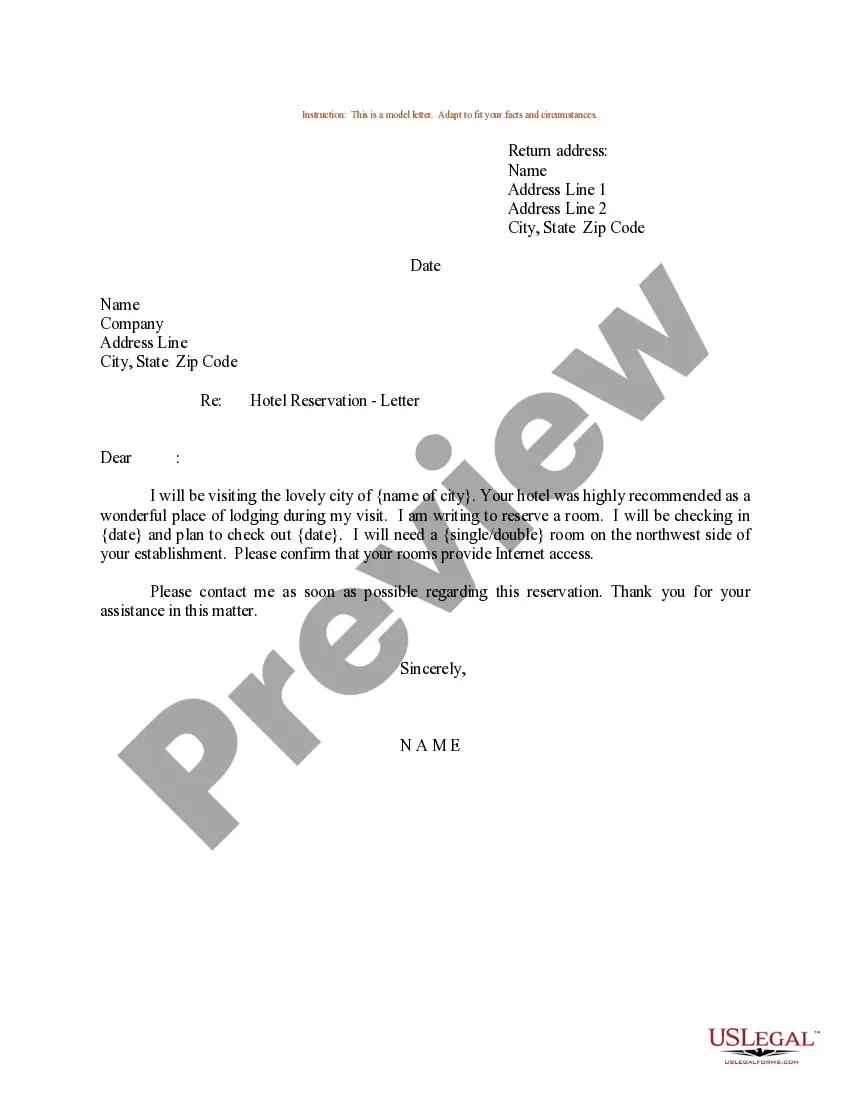
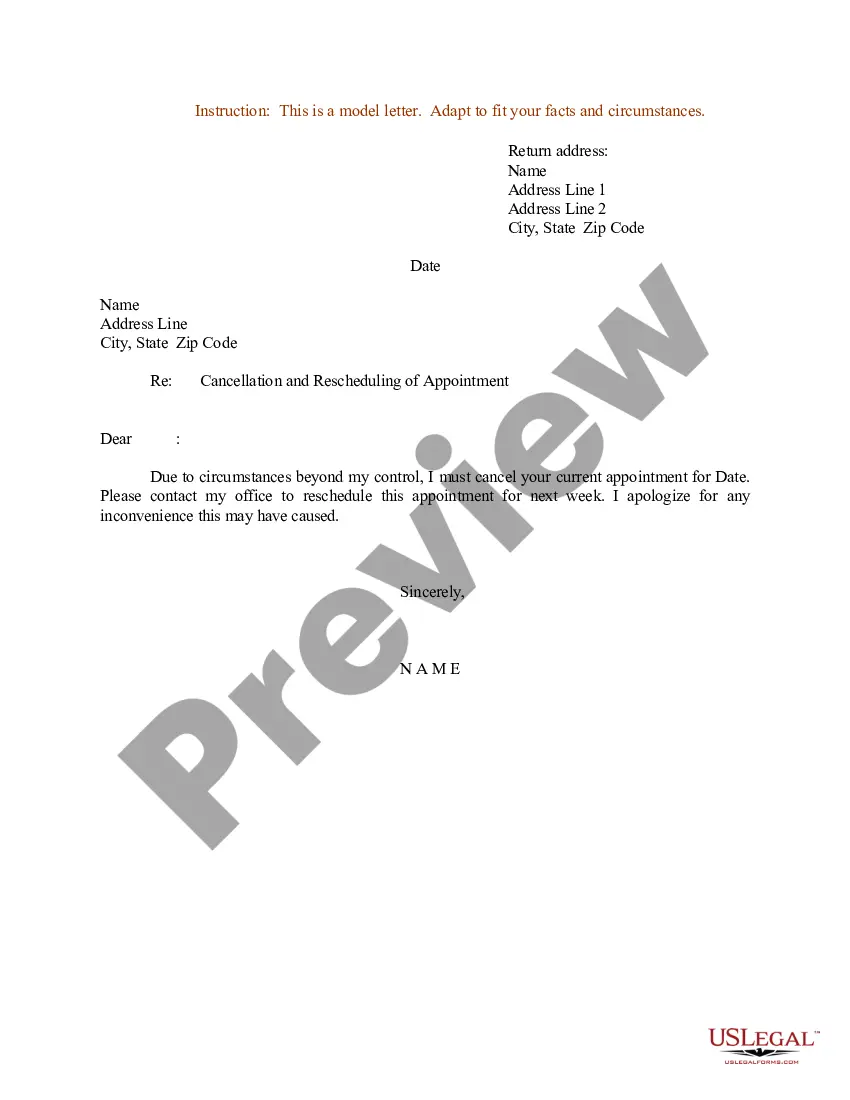
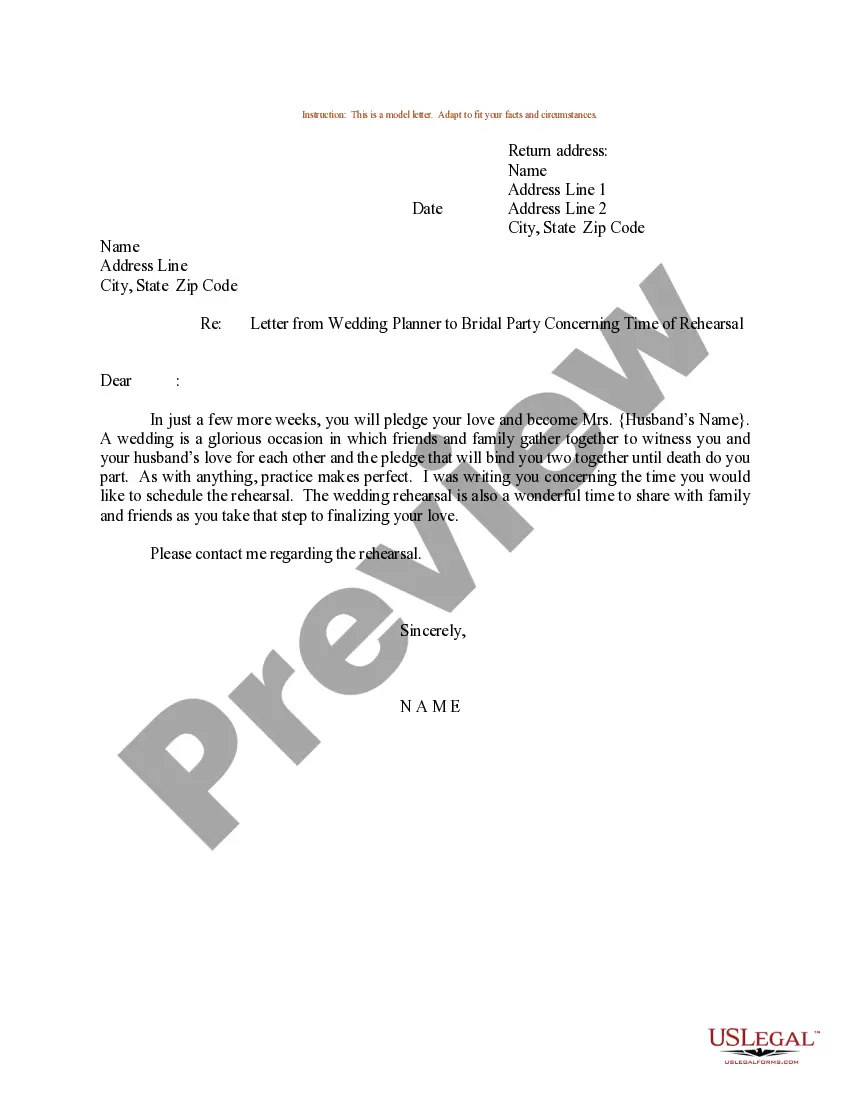
The Sample Letter for Change of Event Time is a template designed to assist you in formally notifying attendees of a change in the timing of an event. This letter is structured to clearly outline the new details while maintaining professionalism. It stands apart from other notification methods, such as emails or informal messages, by providing a formal, documented approach to communicate significant changes regarding events.
Key parts of this document
- Return address: Specify your name and address for correspondence.
- Date: Indicate the date when the letter is being sent.
- Recipient information: Include the name and address of the person or organization receiving the letter.
- Subject line: Clearly state the purpose of the letter as "Change of Event Time".
- Body of the letter: Detail the previous event time and the new time, including any location changes if applicable.
When to use this form
This letter should be used when you need to inform attendees about a rescheduling of an event, whether it is a meeting, party, or any gathering where people are expected to arrive at a specific time. It can be necessary for both formal and informal events where a written record of the change is advisable to maintain clarity and prevent confusion.
Who this form is for
- Event organizers who are responsible for coordinating meetings or presentations.
- Individuals hosting social gatherings or parties.
- Corporate professionals needing to inform colleagues or clients of time changes.
- Anyone needing a formal way to communicate changes in scheduled events.
Completing this form step by step
- Identify the parties: Fill in your name and address at the top, as well as the recipient's details.
- Enter the date: Include the current date when you are sending the letter.
- Write the subject line: Clearly note that this is a notification about a change in event time.
- Detail the changes: Specify the old event time and the new event time, mentioning the venue as applicable.
- Sign the letter: Add your signature at the end of the letter to endorse the communication.
Notarization requirements for this form
This form does not typically require notarization unless specified by local law. Generally, a simple signature from the sender suffices to validate the changes communicated.
Get your form ready online
Our built-in tools help you complete, sign, share, and store your documents in one place.
Make edits, fill in missing information, and update formatting in US Legal Forms—just like you would in MS Word.
Download a copy, print it, send it by email, or mail it via USPS—whatever works best for your next step.
Sign and collect signatures with our SignNow integration. Send to multiple recipients, set reminders, and more. Go Premium to unlock E-Sign.
If this form requires notarization, complete it online through a secure video call—no need to meet a notary in person or wait for an appointment.
We protect your documents and personal data by following strict security and privacy standards.

Make edits, fill in missing information, and update formatting in US Legal Forms—just like you would in MS Word.

Download a copy, print it, send it by email, or mail it via USPS—whatever works best for your next step.

Sign and collect signatures with our SignNow integration. Send to multiple recipients, set reminders, and more. Go Premium to unlock E-Sign.

If this form requires notarization, complete it online through a secure video call—no need to meet a notary in person or wait for an appointment.

We protect your documents and personal data by following strict security and privacy standards.
Avoid these common issues
- Failing to include all relevant details about the time and location change.
- Not addressing the letter correctly, which may lead to confusion.
- Sending the letter too close to the event, limiting attendees' ability to adjust their schedules.
Benefits of completing this form online
- Convenience: Download and customize the letter at your own pace.
- Editability: Easily modify the wording to fit your specific situation.
- Reliability: Use a legally vetted format drafted by licensed attorneys, ensuring compliance with standard communication practices.
Summary of main points
- The Sample Letter for Change of Event Time is essential for formal communication of schedule changes.
- Ensure all details are accurate and clear to avoid confusion among attendees.
- This form is customizable and does not require notarization in most cases.
Looking for another form?



Form popularity
FAQ
Address the letter to the relevant person. Justify the reason for the postponement. Mention the new date, time, and venue that has been arranged. Assure the reader that the event will take place. Apologize for the inconvenience that may result from the postponement.
Please mark your calendars with our new wedding date. We're excited and can't wait to celebrate. We changed our date and can't wait to celebrate. Save our new date!
Craft a clear subject line. Your email contains vital information for your guests, so it's important to make sure your subject line immediately grabs their attention. Keep it short and sweet. Create an FAQs page. Sample email templates. Why postponing events can be a positive thing.
Greeting. Open the email with a brief greeting and address the meeting recipient by name. Request to reschedule. It is important to make your request to reschedule as clear as possible. Availability. Your next step should be finding a new time for the meeting. Conclusion. Signature.
I regret to inform you that we will have to reschedule our upcoming meeting to a later date. While I was very much looking forward to talking with you in person, it is unfortunately not going to be possible on give meeting date. Due to Provide reason for canceling the meeting, I have to be out of town.
Say you know they're busy and you don't take their time lightly. Tell them why you're looking forward to meeting with them. Offer a specific new time. If you just ask, When are you available? you are making them do the work for your mistake.
Write a brief letter about cancelling or postponing the invitation. Make sure you apologize to the reader for doing so. Explain the reason for cancelling or postponing the invite. Mention about an alternate arrangement that you are trying to make. End the letter expressing your gratitude for cancellation.
Address the letter to the relevant person. Justify the reason for the postponement. Mention the new date, time, and venue that has been arranged. Assure the reader that the event will take place. Apologize for the inconvenience that may result from the postponement.
Firstly, write the email correspondence personally. Secondly, give notice well in advance. Thirdly, give a worthy reason and explanation. Next, suggest another meeting time and date. Then, end the letter with an apology and with appreciation. Finally, send the email immediately.