Consulting Agreement with Possible Expert Witness
What this document covers
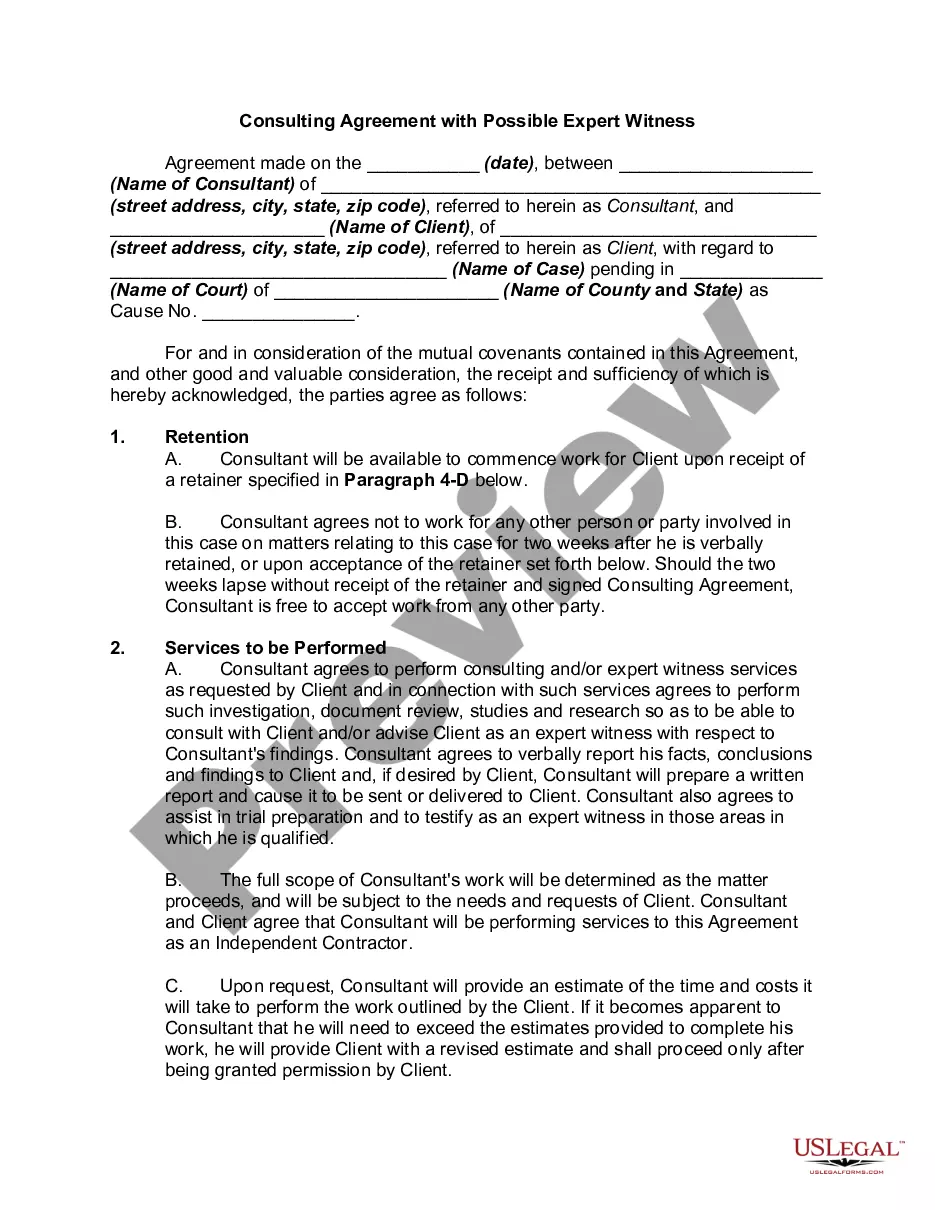
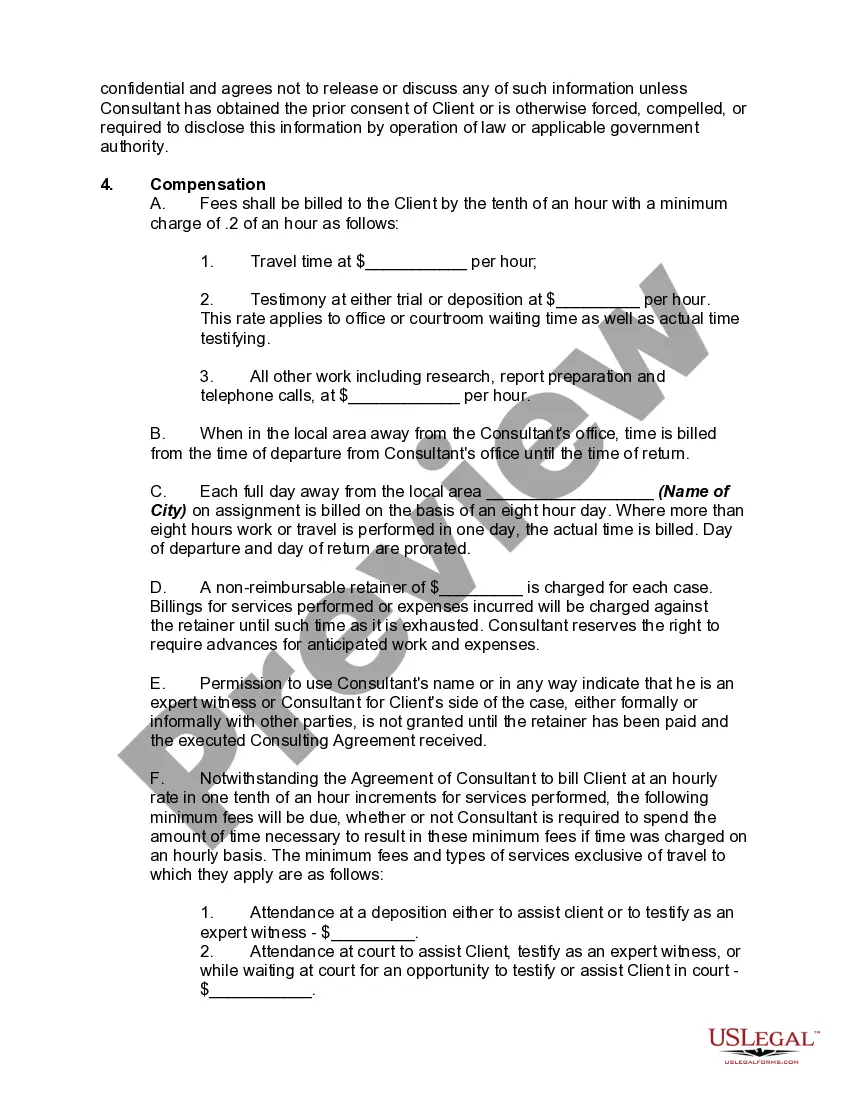
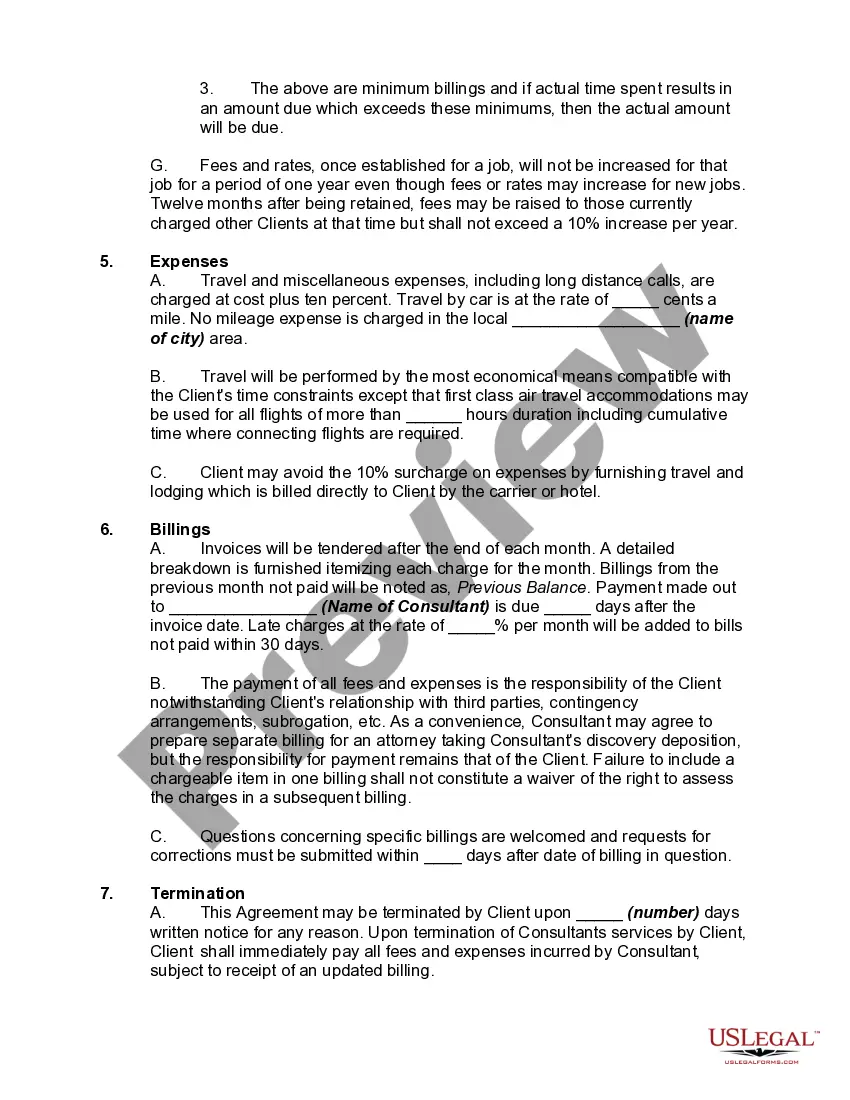
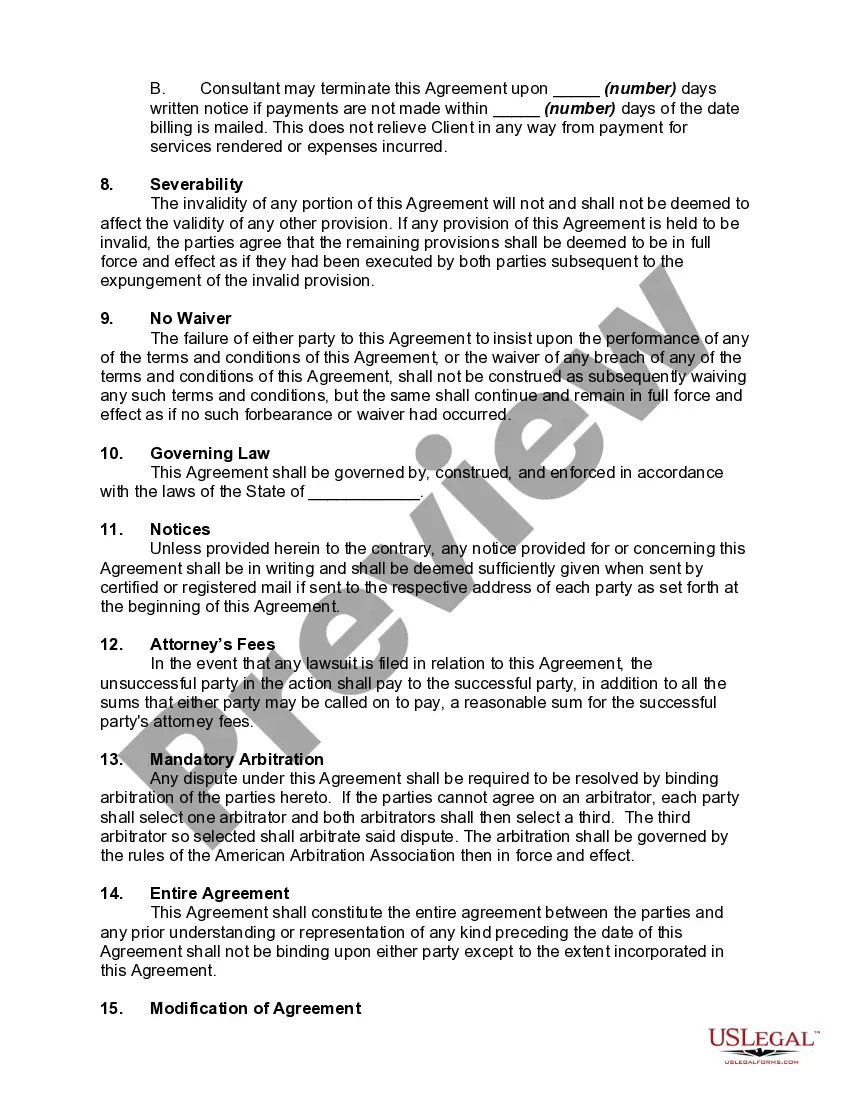
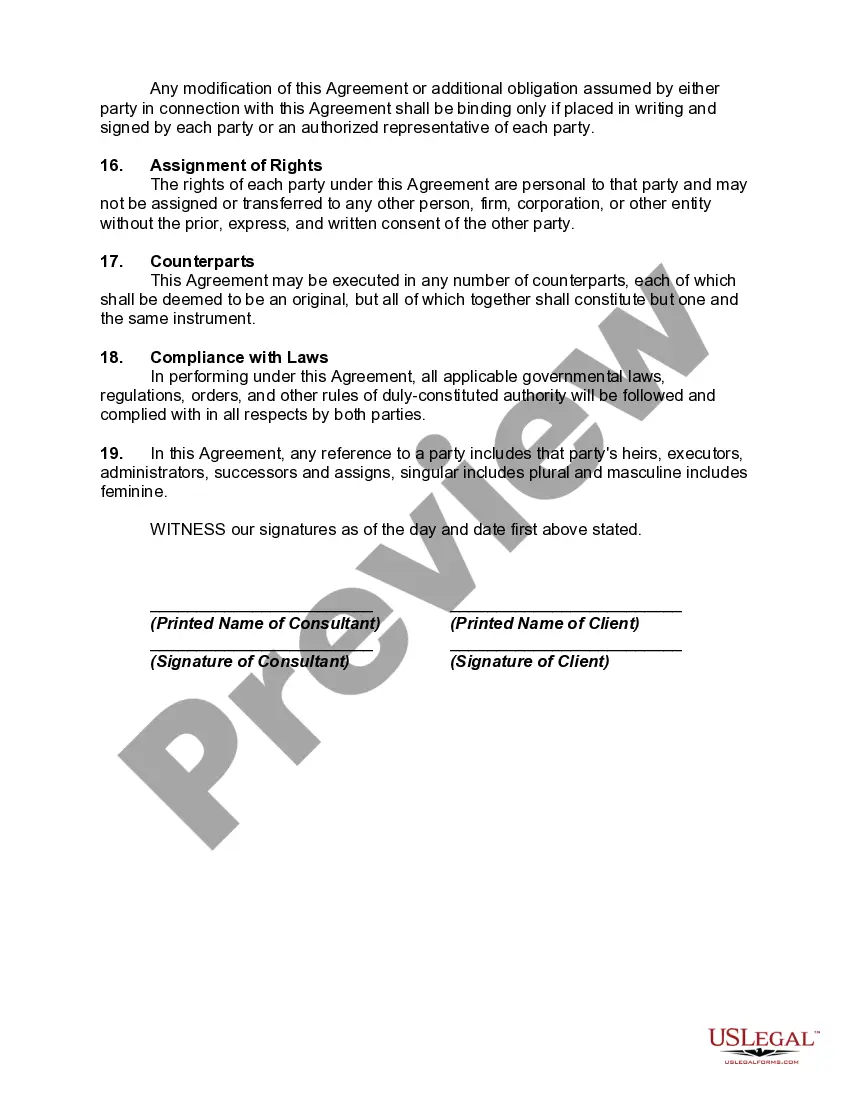
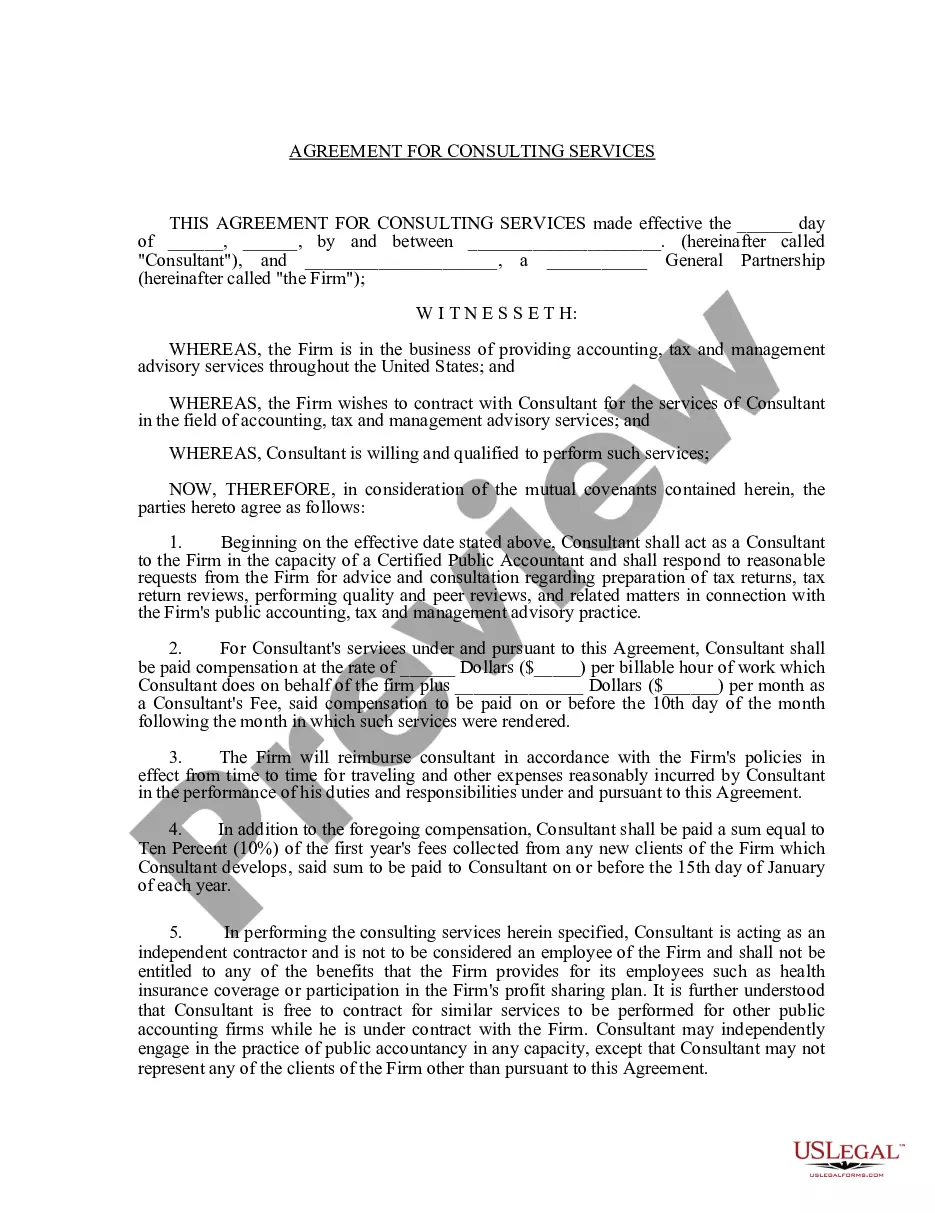
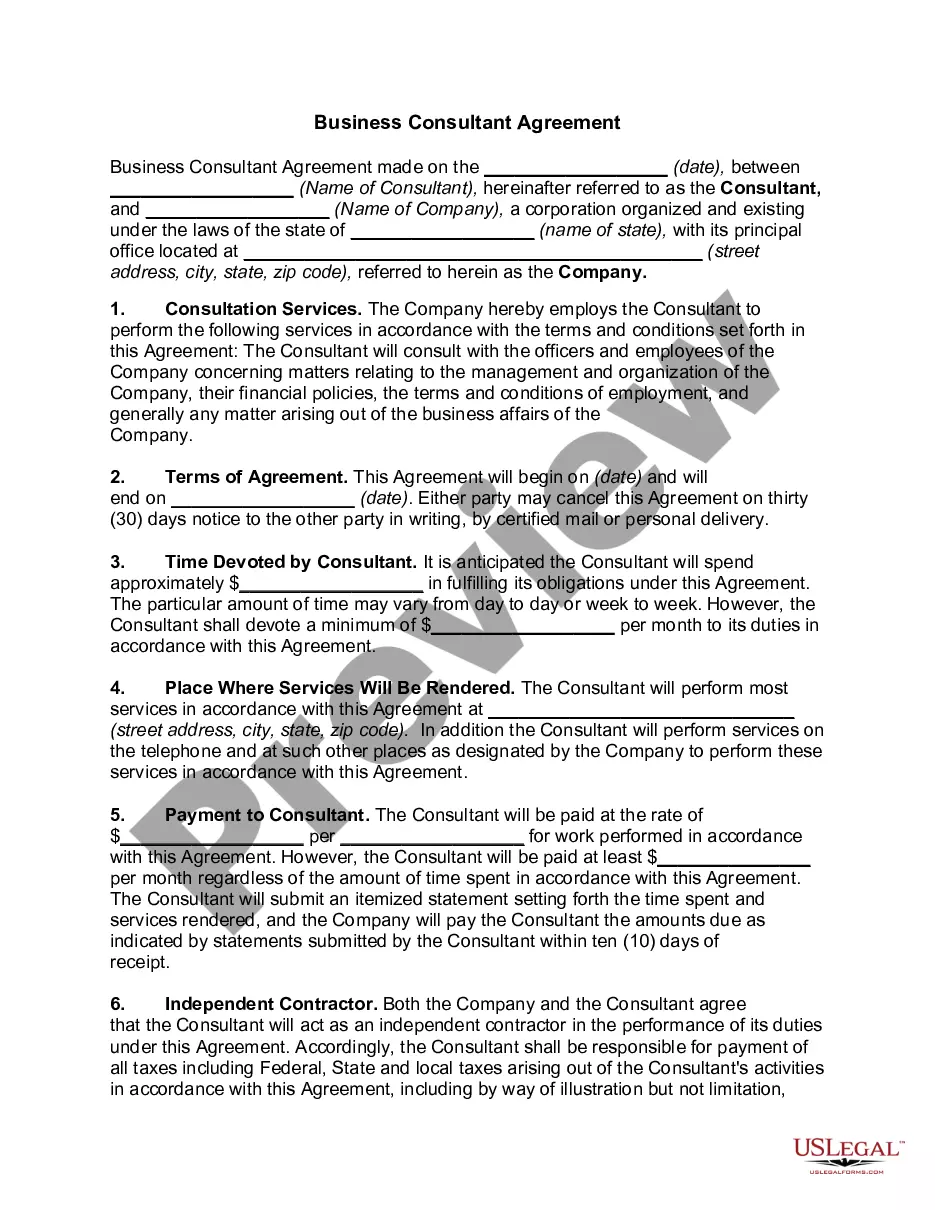
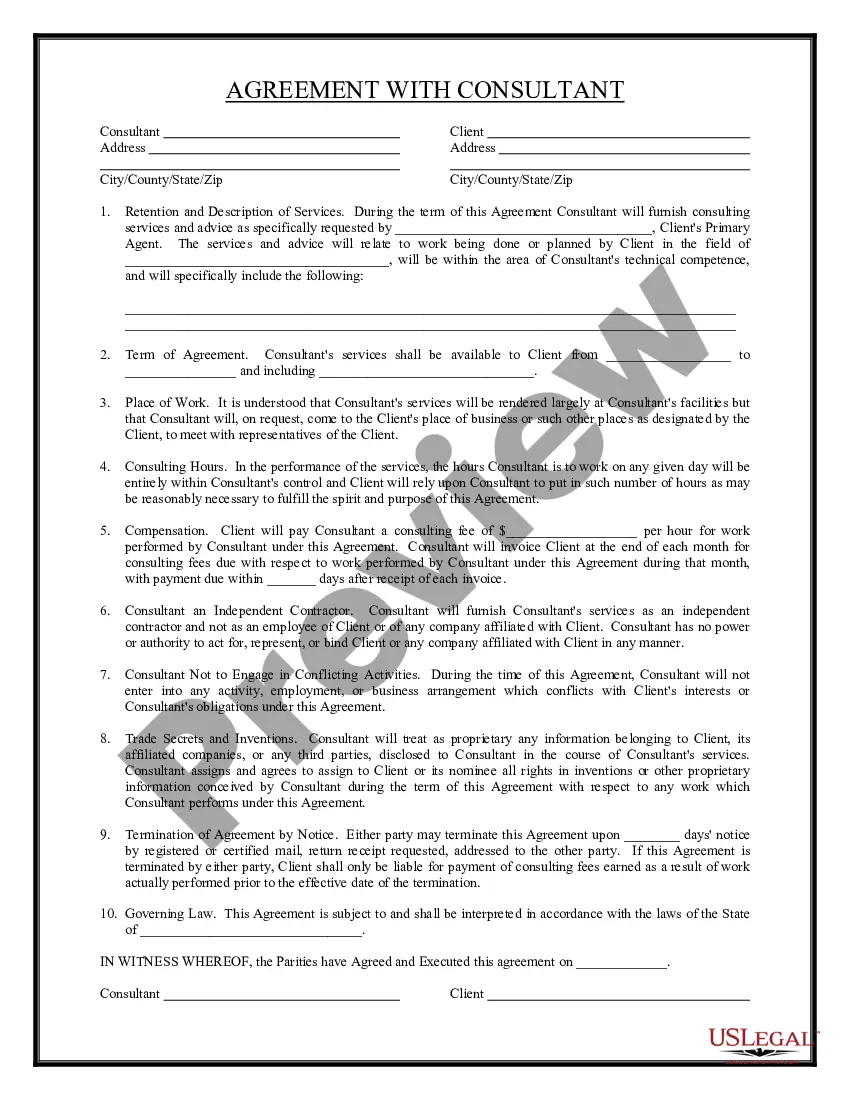
This Consulting Agreement with Possible Expert Witness formalizes the arrangement between a consultant and a client regarding expert witness services. This form is specifically designed for the situations where a consultant possesses specialized knowledge that can help in a legal case, providing not only advice but also potential testimony in court. Unlike general consulting agreements, this form addresses the unique legal considerations applicable to expert witnesses, including confidentiality provisions, compensation structures, and requirements for testimony.
What’s included in this form
- Details about the parties involved, including names and addresses.
- Definition of services to be performed by the consultant as an expert witness.
- Confidentiality clause to protect non-public information.
- Compensation structure including fees for various services.
- Termination notice requirements for both parties.
- Governing law and legal provisions for dispute resolution.
When this form is needed
This form should be used when you require the expertise of a consultant who will also serve as a potential witness in a legal proceeding. It is particularly relevant in cases where specialized knowledge is critical, such as in construction disputes, forensic analysis, or any scenario needing expert testimony. Use this agreement to ensure clear expectations regarding the consultant's role, responsibilities, and compensation.
Who should use this form
- Clients involved in legal disputes requiring expert testimony.
- Consultants with specialized knowledge who may serve as expert witnesses.
- Legal professionals looking for a structured agreement for expert consultancy.
- Parties needing clear terms around compensation and confidentiality with consultants.
How to complete this form
- Identify and fill in the names and addresses of both the consultant and the client.
- Specify the date on which the agreement is made.
- Define the case name and associated court information where applicable.
- Outline the services to be provided, including compensation details and confidentiality obligations.
- Ensure both parties sign and date the agreement to acknowledge acceptance of all terms.
Notarization requirements for this form
This form usually doesn’t need to be notarized. However, local laws or specific transactions may require it. Our online notarization service, powered by Notarize, lets you complete it remotely through a secure video session, available 24/7.
Get your form ready online
Our built-in tools help you complete, sign, share, and store your documents in one place.
Make edits, fill in missing information, and update formatting in US Legal Forms—just like you would in MS Word.
Download a copy, print it, send it by email, or mail it via USPS—whatever works best for your next step.
Sign and collect signatures with our SignNow integration. Send to multiple recipients, set reminders, and more. Go Premium to unlock E-Sign.
If this form requires notarization, complete it online through a secure video call—no need to meet a notary in person or wait for an appointment.
We protect your documents and personal data by following strict security and privacy standards.

Make edits, fill in missing information, and update formatting in US Legal Forms—just like you would in MS Word.

Download a copy, print it, send it by email, or mail it via USPS—whatever works best for your next step.

Sign and collect signatures with our SignNow integration. Send to multiple recipients, set reminders, and more. Go Premium to unlock E-Sign.

If this form requires notarization, complete it online through a secure video call—no need to meet a notary in person or wait for an appointment.

We protect your documents and personal data by following strict security and privacy standards.
Typical mistakes to avoid
- Failing to clearly define the scope of services expected from the consultant.
- Inadequate detail in the compensation section, leading to potential disputes later.
- Not specifying the governing law state, which can lead to enforceability issues.
- Omitting signatures or dates, which may invalidate the agreement.
Advantages of online completion
- Convenient access to essential legal templates anytime, anywhere.
- Editable fields allowing for customization to suit specific needs.
- Assurance that the form is drafted by licensed attorneys, ensuring reliability.
- Quick download and printing options facilitate immediate use.
Looking for another form?



Form popularity
FAQ
See how he reacts and how he explains his expert opinion. Ask the candidate how she would explain a particular related concept to a layman. Then, listen critically to the answer. If the answer is too complicated, the jury and judge will have a difficult time relating to the expert witness and understanding your case.
A good way to begin is to introduce the expert to the judge or jury and go through the expert's resume to establish them as having an extensive background in education and work experience in the subject that you want to qualify them as in expert.
According to Federal Rule of Evidence 702, expert witnesses must have knowledge, skill, experience, training, or education which will help the trier of fact to understand the evidence or to determine a fact in issue. This is a very broad standard.
DON'T SCRIPT YOUR QUESTIONS, BUT USE AN OUTLINE INSTEAD. PRESENT QUALIFICATIONS IN AN INTERESTING MANNER. PROVIDE APPROPRIATE BACKGROUND BEFORE DISCUSSING THE EXPERT'S OPINION. USE SIMPLE LANGUAGE, ANALOGIES, AND/OR EXAMPLES TO EXPLAIN TECHNICAL TERMS OR CONCEPTS. USE SHORT, PRECISE QUESTIONS.
The witness must be competent in the subject matter. They may be qualified through knowledge, skill, practical experience, train- ing, education, or a combination of these factors. Minimally, the expert witness must know underlying methodology and procedures employed and relied upon as a basis for the opinion.
(a) A person is qualified to testify as an expert if he has special knowledge, skill, experience, training, or education sufficient to qualify him as an expert on the subject to which his testimony relates.
In order to be admissible, an expert witness must: Practice in a profession relevant to the issue of the case. Be skilled in their particular profession. Have specialized knowledge through training, education, or practical experience.
The difference between consultants and expert witnesses is that a consultant is not a witness in your case, while an expert witness will testify in court hearings. It's a critical difference, because if an expert is strictly a consultant, all communication and information exchanged with the consultant is privileged.
Introduce the witness and foreshadow the testimony Ask the witness how she became involved in the case and why she is present in court. Then ask the expert to explain how her opinion fits into the case at the very outset of the examination.