Agreement and Assignment of Judgment for Collection to Collection Agency
What this document covers
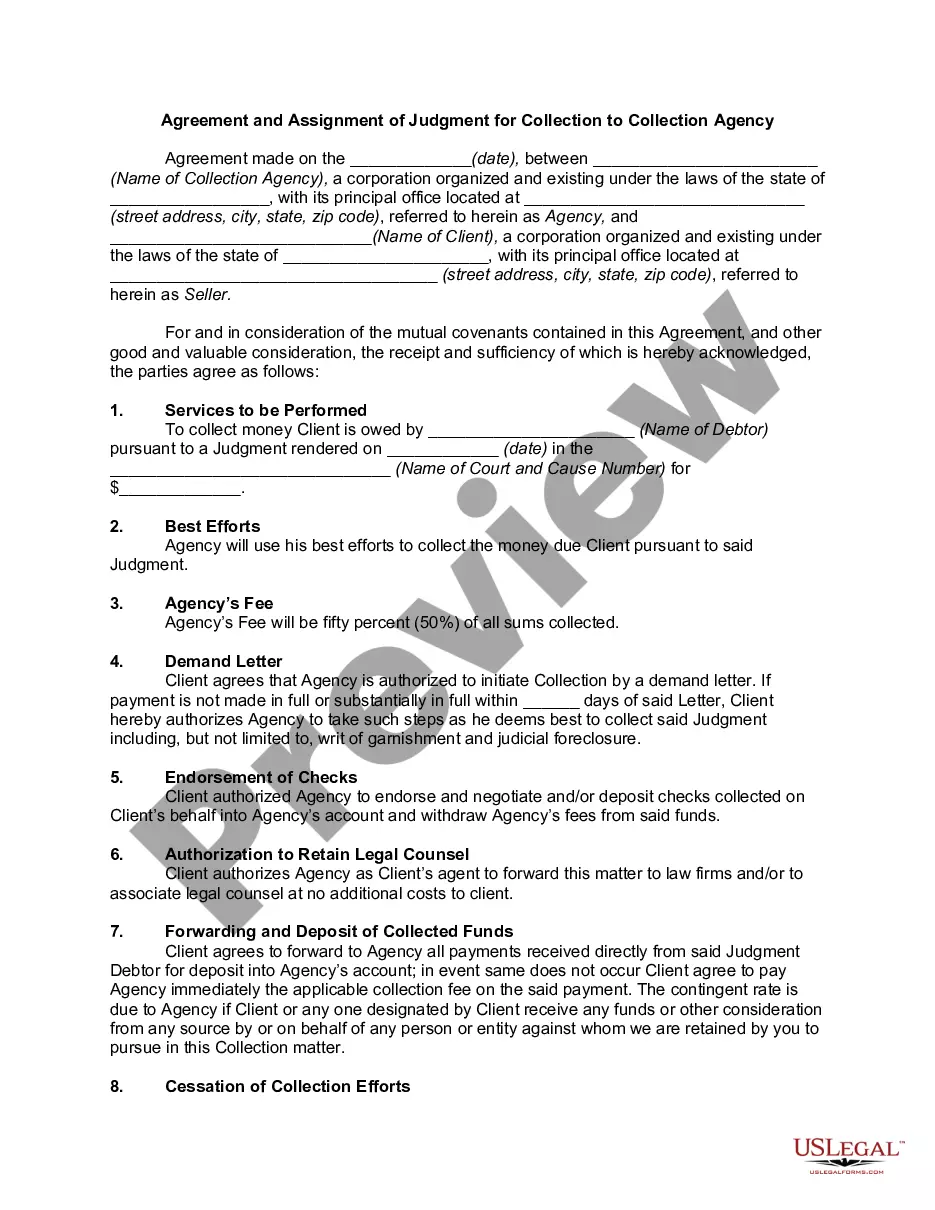
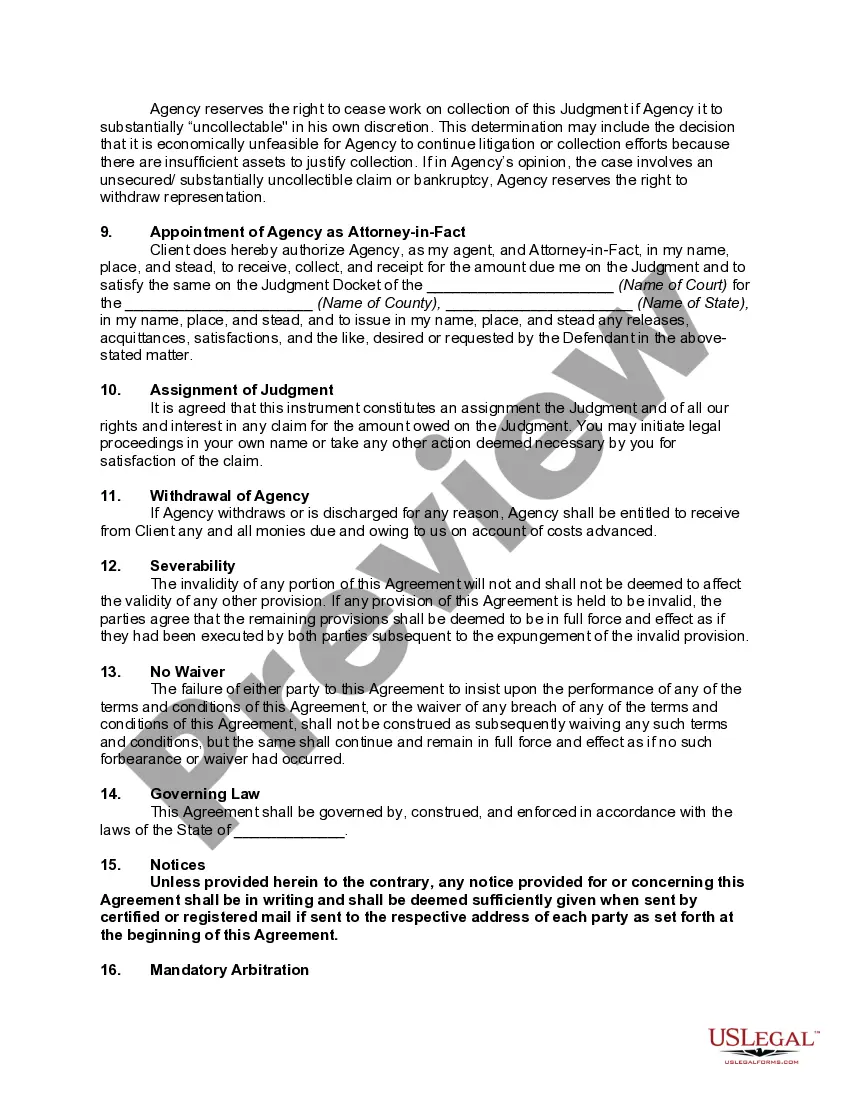
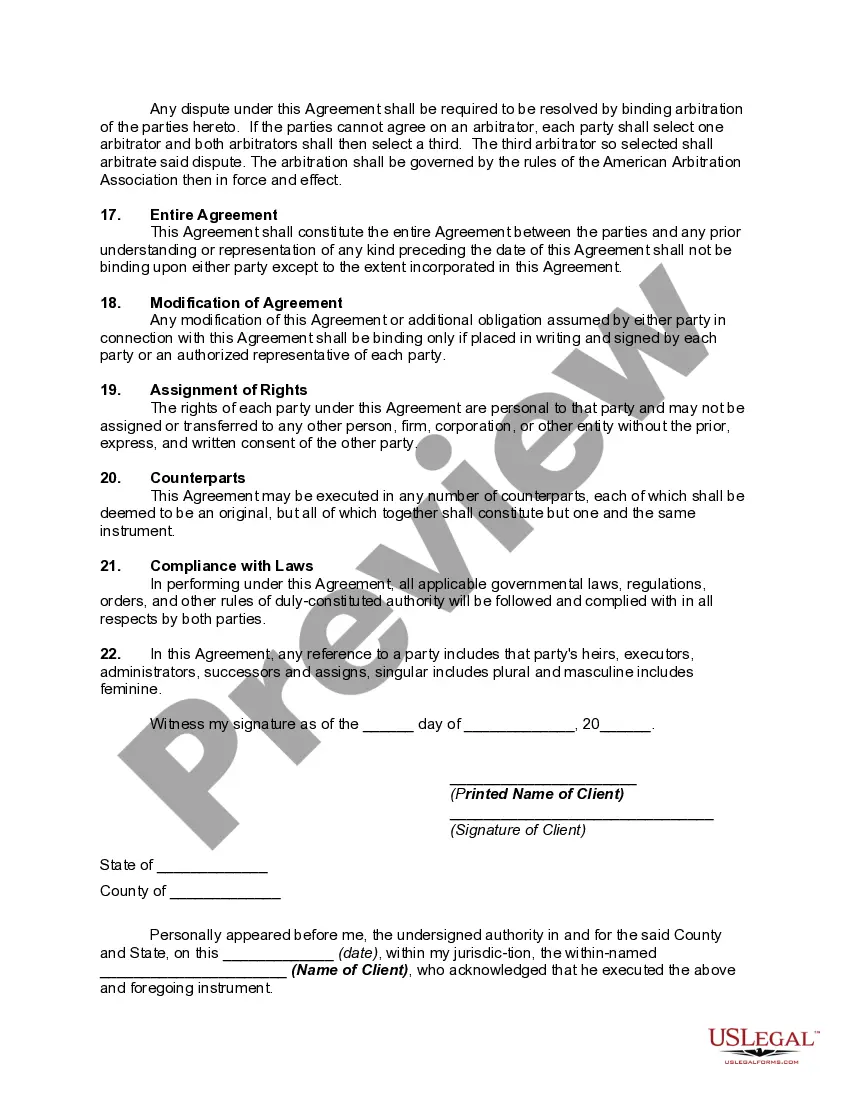
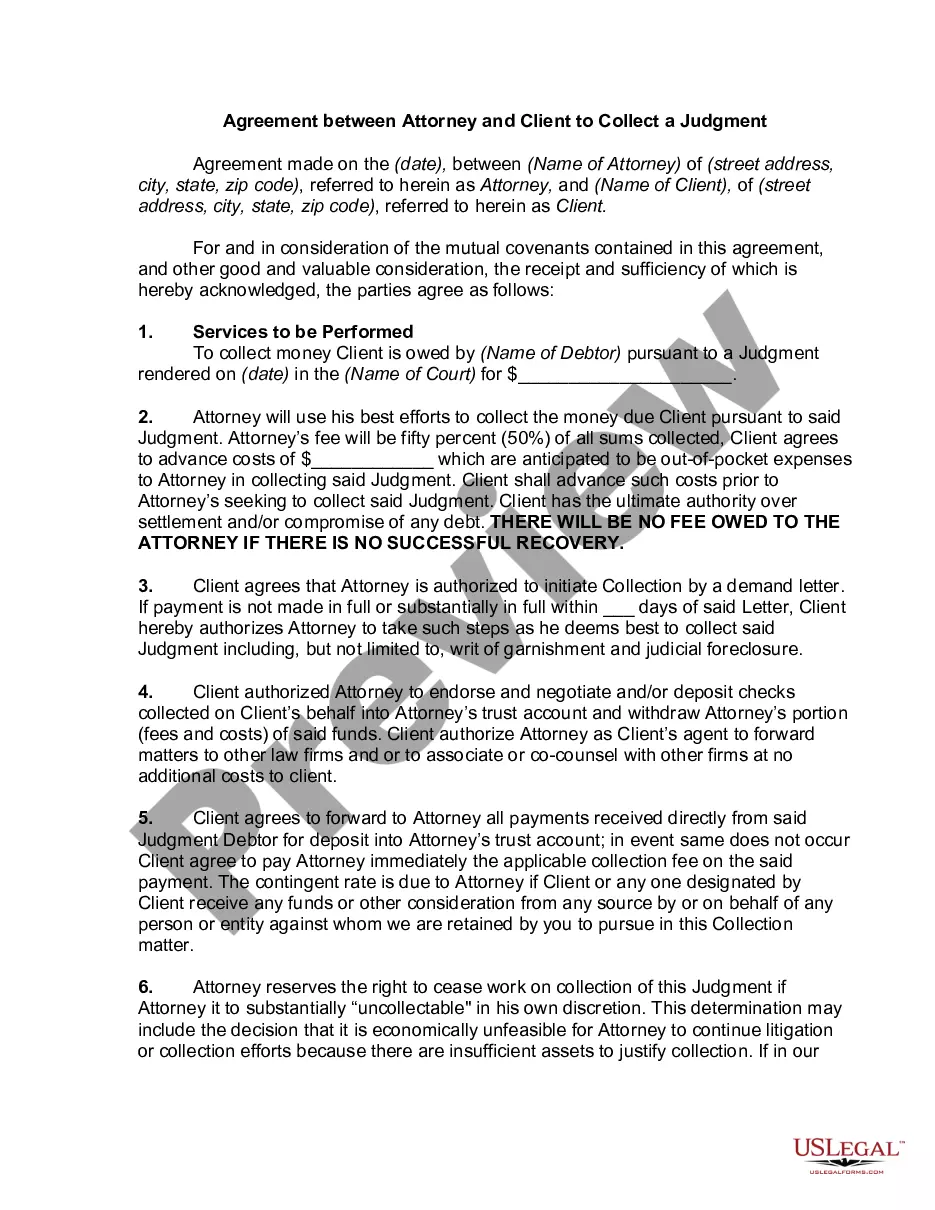
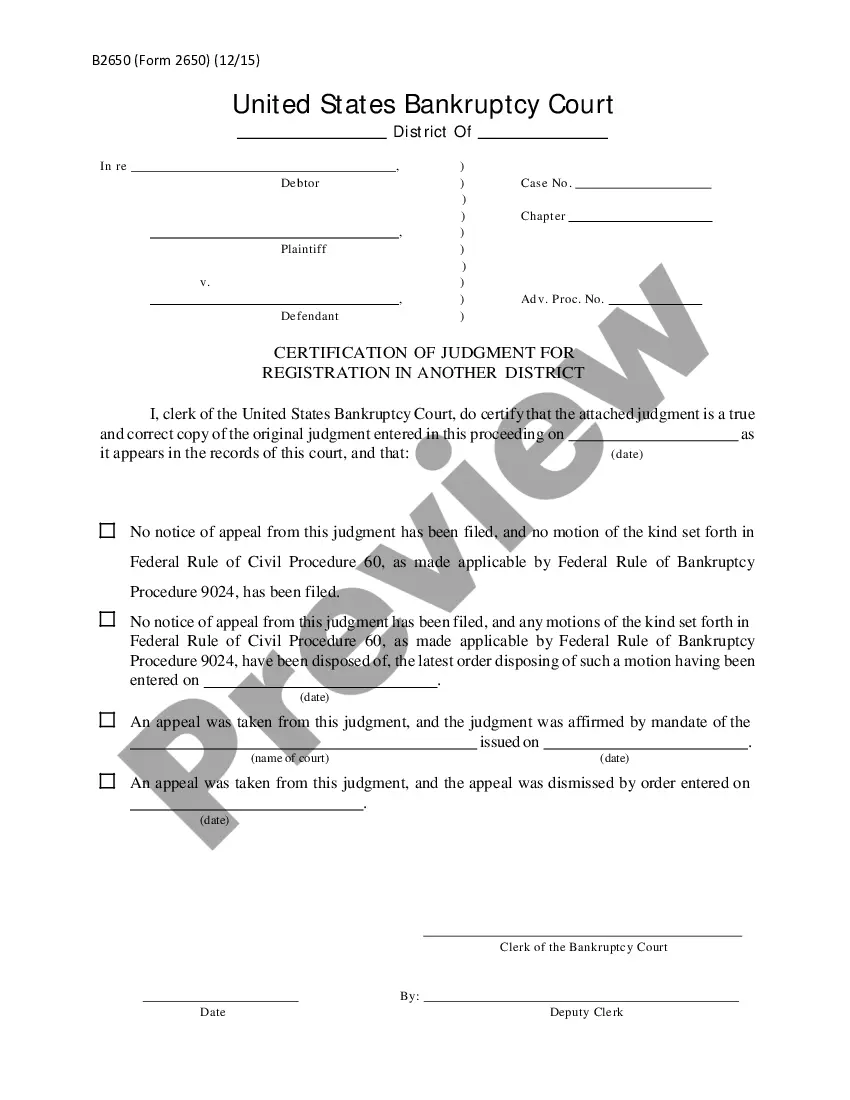
The Agreement and Assignment of Judgment for Collection to Collection Agency is a legal document that allows a client (the Seller) to assign a judgment debt owed to them to a collection agency (the Agency) for collection. This form outlines the responsibilities of both parties in the collection process, including the fees the agency may charge and the authority granted to the agency for actions related to the collection. This form serves a unique purpose compared to traditional debt collection letters as it formally assigns the right to collect on a judgment to a third party, legally enabling the agency to act on behalf of the client.
Key components of this form
- Date of the agreement
- Names and addresses of the collection agency and client
- Description of services the agency will perform
- Fee structure for the agencyâs services
- Authorization for the agency to initiate collection efforts
- Provisions for appointing the agency as attorney-in-fact
- Severability clause ensuring the validity of other provisions

When this form is needed
This form is useful when a creditor has obtained a judgment against a debtor but is having difficulty collecting the owed amount. If the client decides to engage a collection agency for their expertise in the collection process, this agreement provides them with the necessary authority to do so. It ensures that the collection agency can act effectively to recover the funds on behalf of the creditor.
Who can use this document
- Creditors who hold a judgment against a debtor
- Collection agencies seeking formal authorization to collect debts
- Businesses and individuals needing assistance with debt recovery
- Lawyers representing clients in debt collection matters
How to prepare this document
- Enter the date when the agreement is made.
- Fill in the names and addresses of both the collection agency and the client.
- Specify the debtor's name and the court where the judgment was rendered.
- Determine and enter the agencyâs fee as a percentage of the collected amount.
- Review and sign the form, ensuring it is notarized if required by local laws.
Is notarization required?
This form does not typically require notarization unless specified by local law. It is always advisable to check the requirements within your jurisdiction to ensure compliance.
Get your form ready online
Our built-in tools help you complete, sign, share, and store your documents in one place.
Make edits, fill in missing information, and update formatting in US Legal Forms—just like you would in MS Word.
Download a copy, print it, send it by email, or mail it via USPS—whatever works best for your next step.
Sign and collect signatures with our SignNow integration. Send to multiple recipients, set reminders, and more. Go Premium to unlock E-Sign.
If this form requires notarization, complete it online through a secure video call—no need to meet a notary in person or wait for an appointment.
We protect your documents and personal data by following strict security and privacy standards.

Make edits, fill in missing information, and update formatting in US Legal Forms—just like you would in MS Word.

Download a copy, print it, send it by email, or mail it via USPS—whatever works best for your next step.

Sign and collect signatures with our SignNow integration. Send to multiple recipients, set reminders, and more. Go Premium to unlock E-Sign.

If this form requires notarization, complete it online through a secure video call—no need to meet a notary in person or wait for an appointment.

We protect your documents and personal data by following strict security and privacy standards.
Common mistakes
- Failing to specify the correct names and addresses of the parties involved.
- Not including the date of the judgment and the court details.
- Overlooking the importance of understanding the fee structure for the agency.
- Not having the document notarized if required by state law.
Why use this form online
- Convenience: Easily accessible 24/7 for download.
- Editability: Fill in the form fields online before printing.
- Reliability: Created by licensed attorneys to comply with legal standards.
Key takeaways
- This form formalizes the assignment of a judgment to a collection agency.
- It outlines the roles and responsibilities of both the creditor and the agency.
- Using this form can streamline the debt collection process.
Looking for another form?

Form popularity
FAQ
Try and settle with your debtor. See if they will pay you half (or more) of what they owe. Try to enforce your own judgment. You will need to read a lot. Search for someone to buy your judgment for cash. Try an auction, but not Ebay. Do what most judgment owners end up doing.
Keep in mind that if you do NOT pay the judgment: The amount you owe will increase daily, since the judgment accumulates interest at the rate of 10% per year. The creditor can get an order telling you to reimburse him or her for any reasonable and necessary costs of collection.
A simple way to collect a judgment is by deducting money out of the debtor's paycheck using a wage garnishment. The debtor must have a decent income because both the federal government and states cap the amount you can take, and certain types of income, like Social Security, are off-limits.
You can ask a lawyer or collection agency to help you collect your judgment. But you may have to pay a percentage of the judgment in fees (some agencies charge only 15 percent or 20 percent). They may also ask you to assign the right to your judgment to them.
Debts and judgments are bought and sold all the time. It is perfectly legal and a legitimate business. BTW, like Vampires, judgments can enjoy virtual immortality or at least live a good long time.
Assigning your judgment means that you forfeit ownership of your judgment permanently. It is a one-way sale that cannot be reversed except by finding and obtaining the cooperation of the person you assigned it to; or working and paying for a court order voiding the judgment assignment to them.
How Much Can I Sell a Judgment For? The amount for which you can sell your judgment depends on the age of the debt, the amount of the debt, and the financial status of the debtor. Do Your Homework. Put the Terms of the Judgment Sale in Writing. Transfer Your Judgment for Cash.
Quick Cash: You collect a judgment, keep 50% (or whatever you negotiate). Monthly income: You garnish wages, keep 50% of each payment each time the person gets paid. You never even have to confront the debtor.
In many situations, one of the best ways to collect a judgment after winning a case is to put a lien on the debtor's property. This gives you a claim to the property and, in some cases, the property will be sold at public auction in order to satisfy the debt that is owed.