Marital Deduction Trust - Trust A and Bypass Trust B
About this form
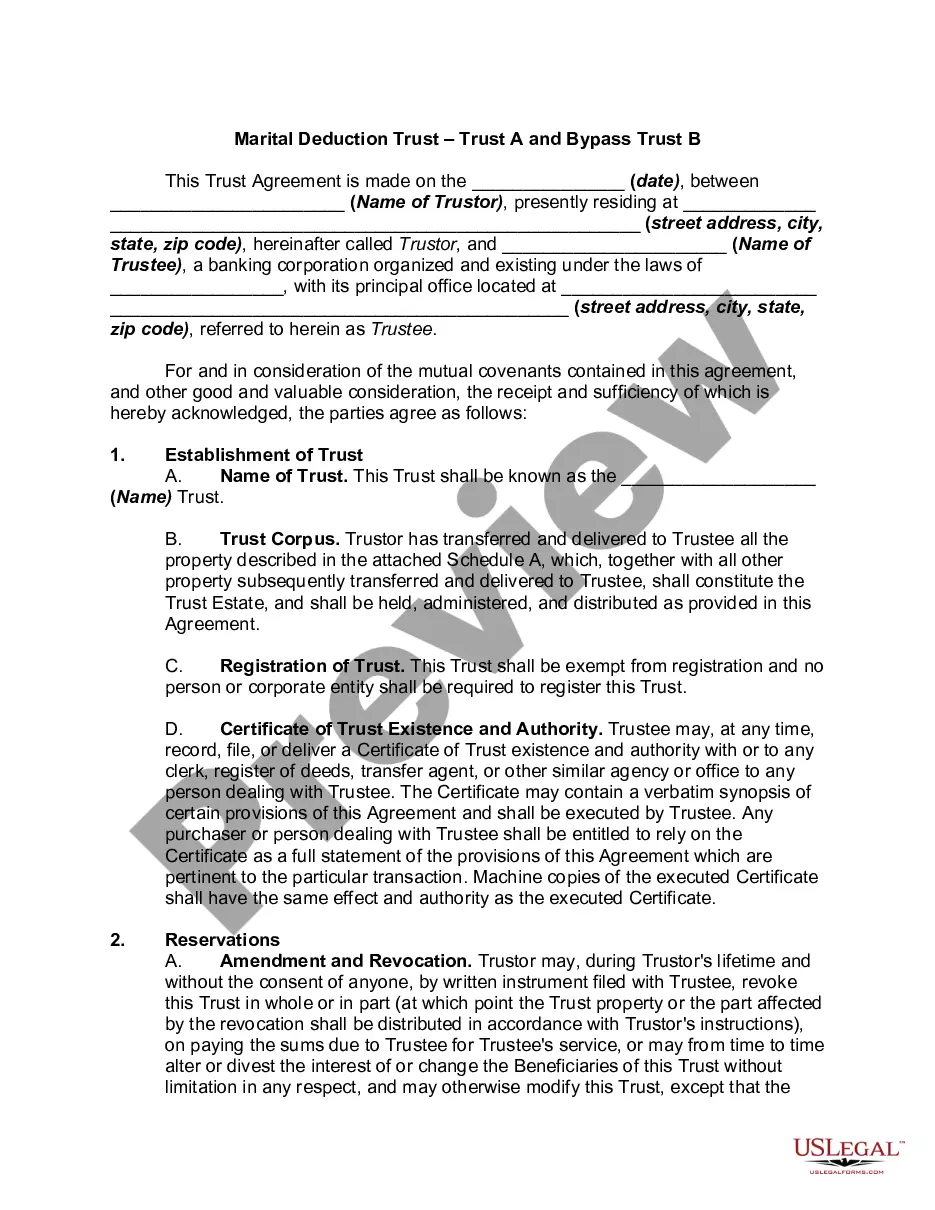
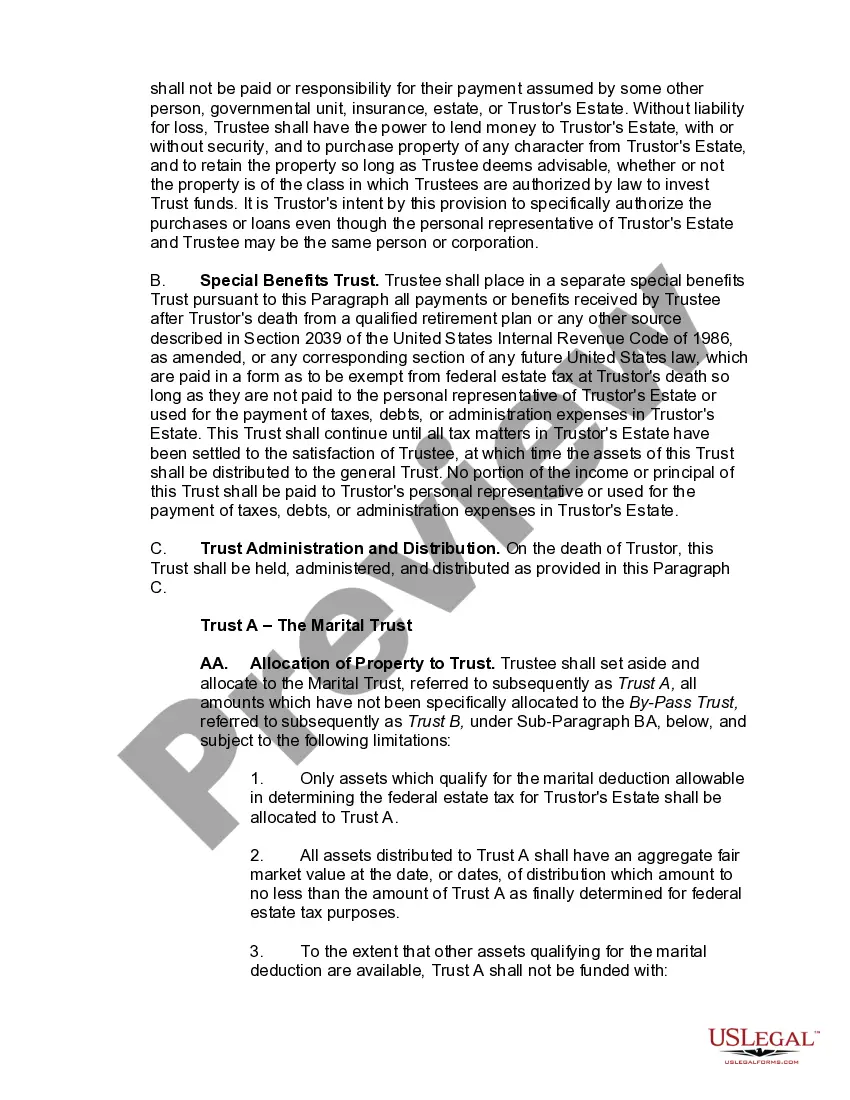
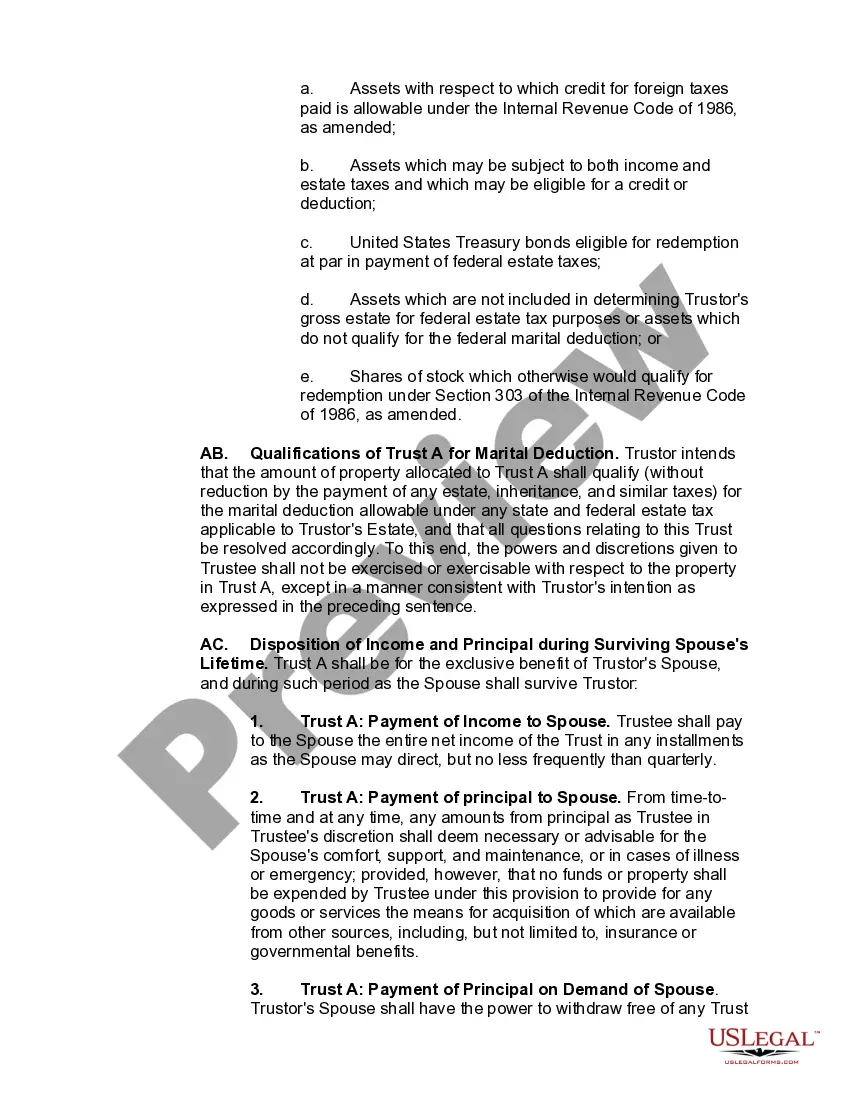
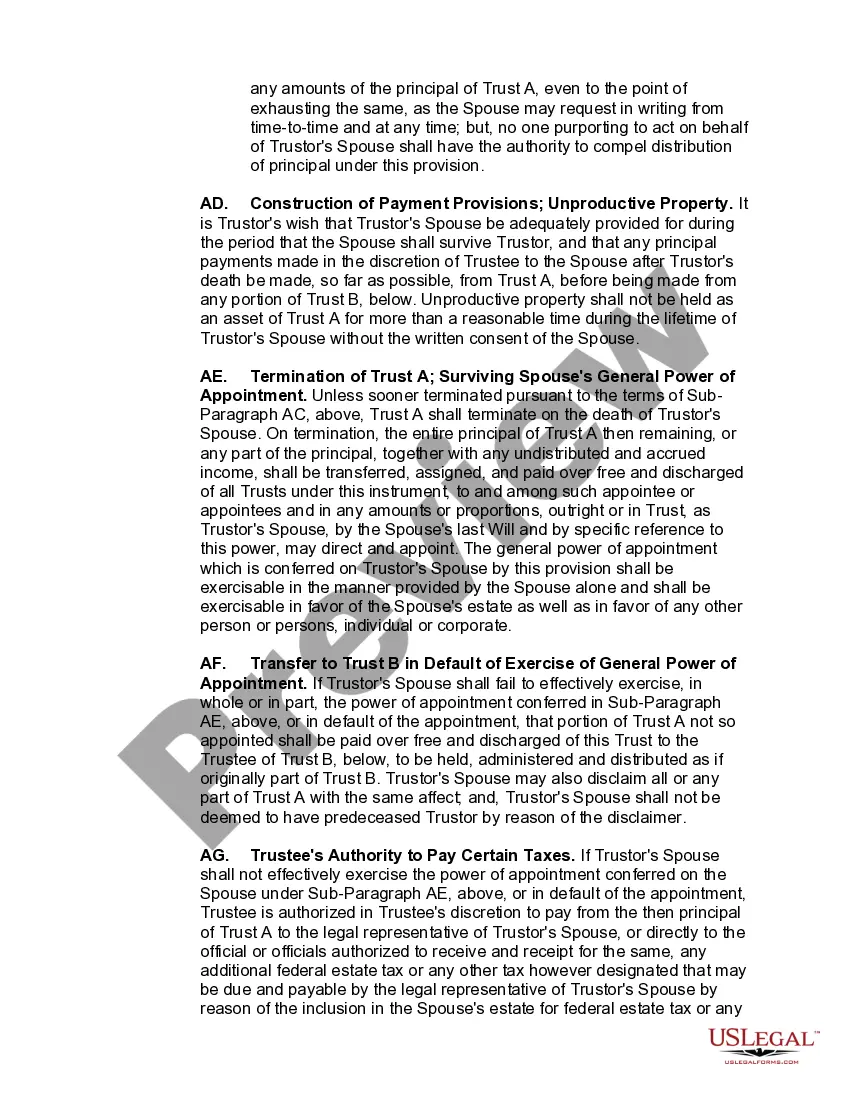
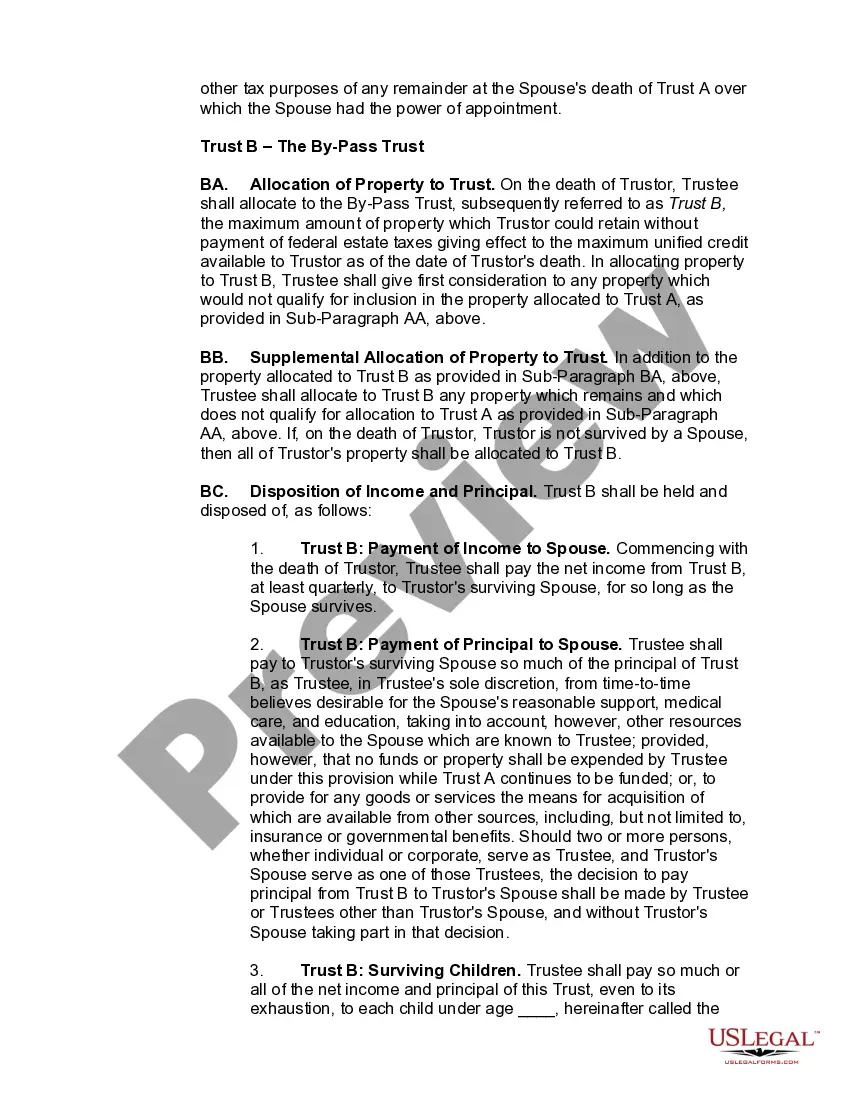
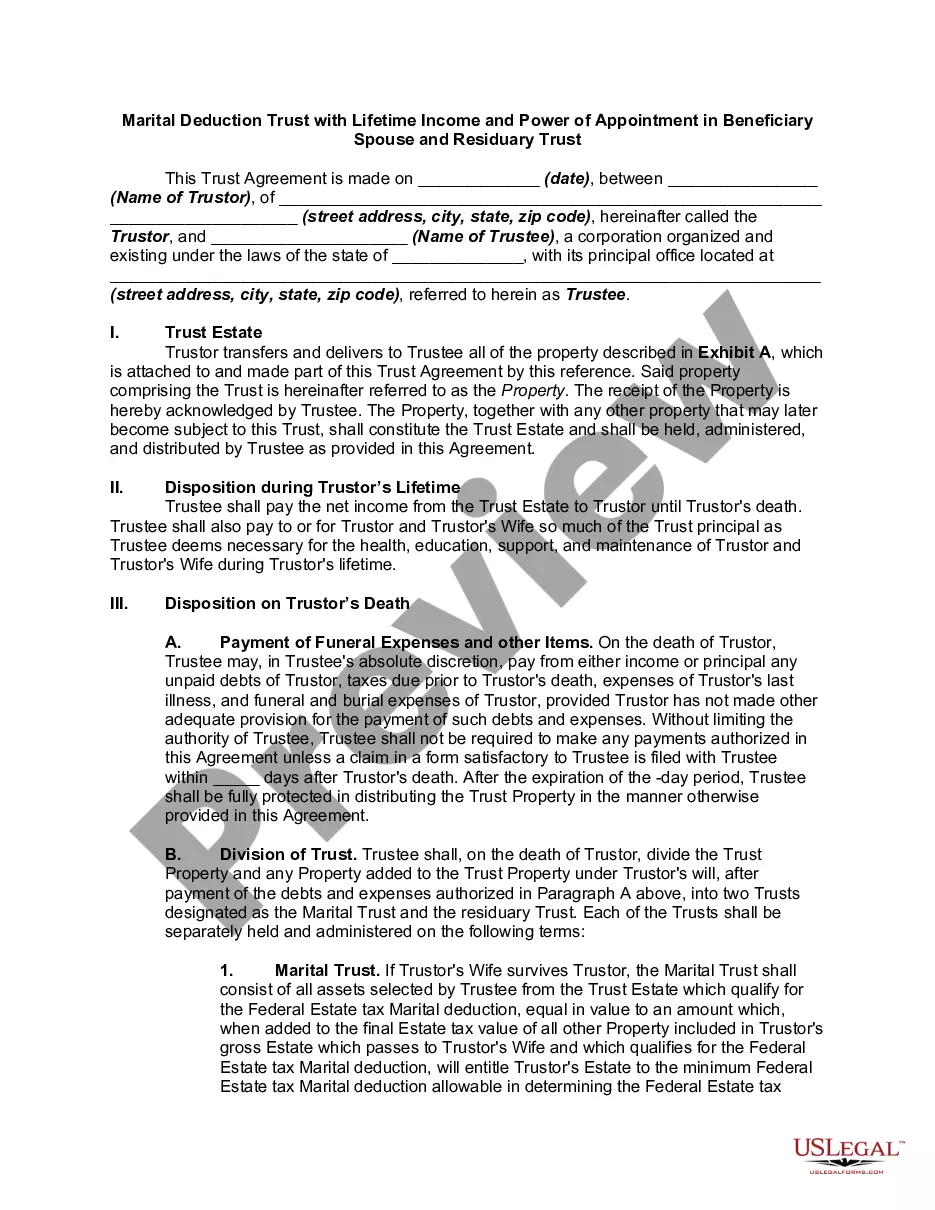
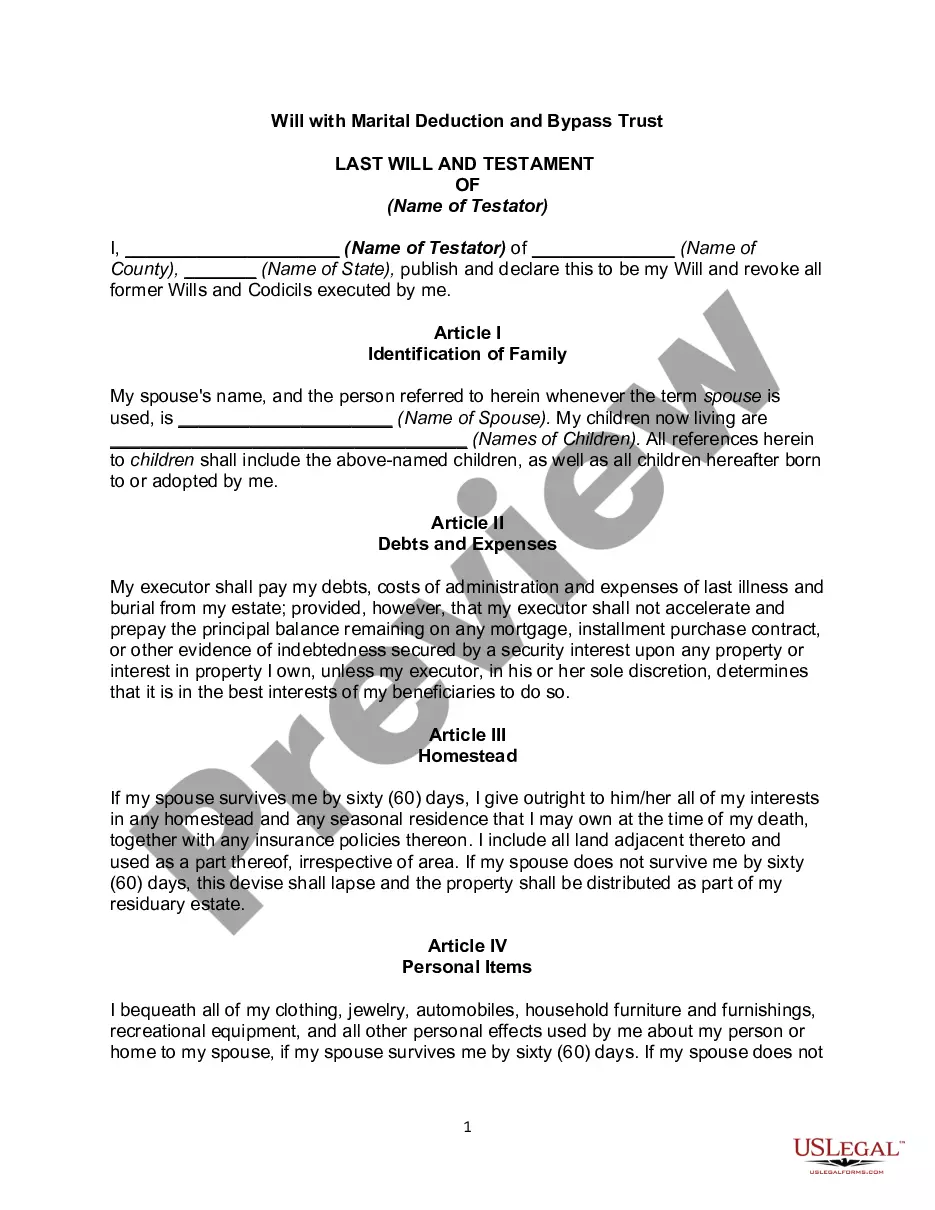
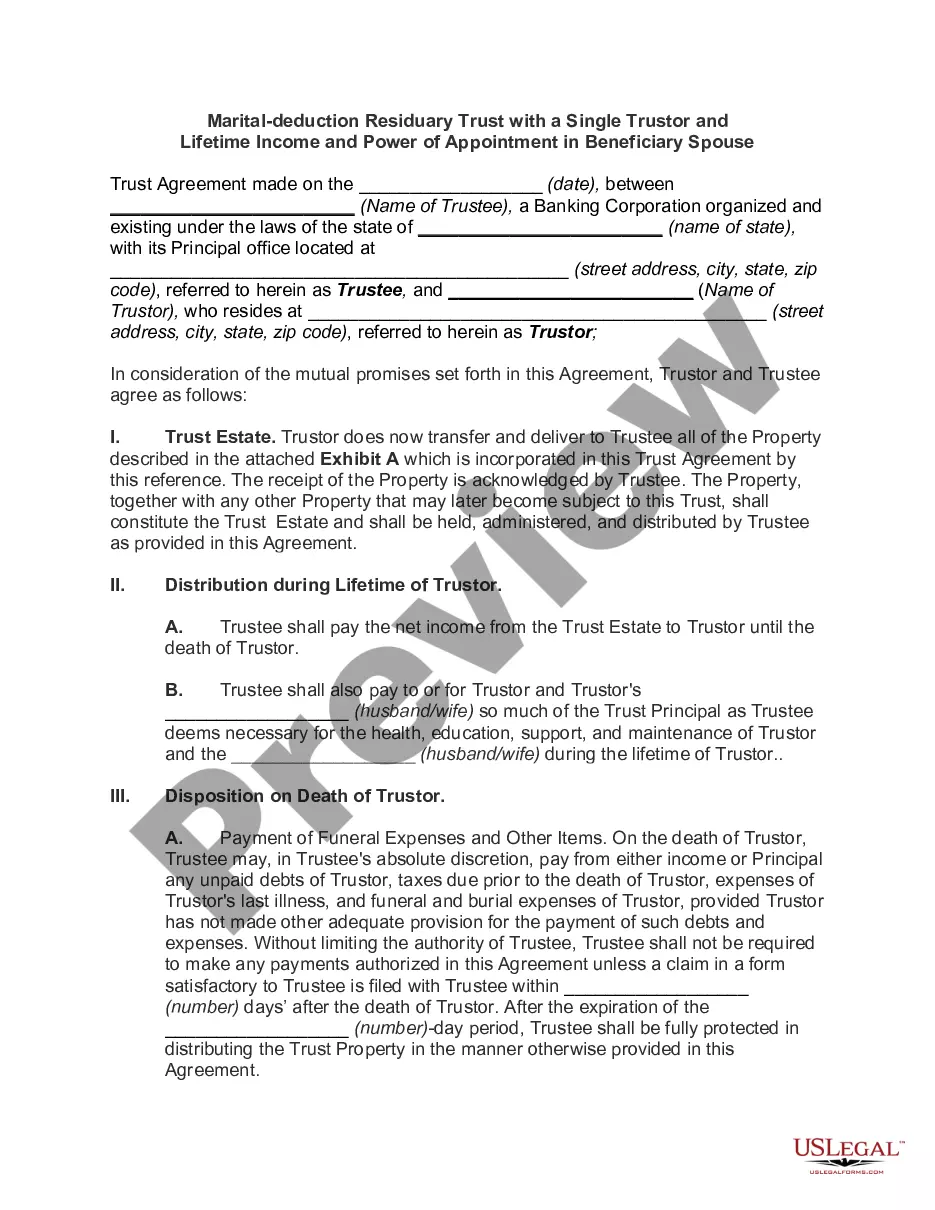
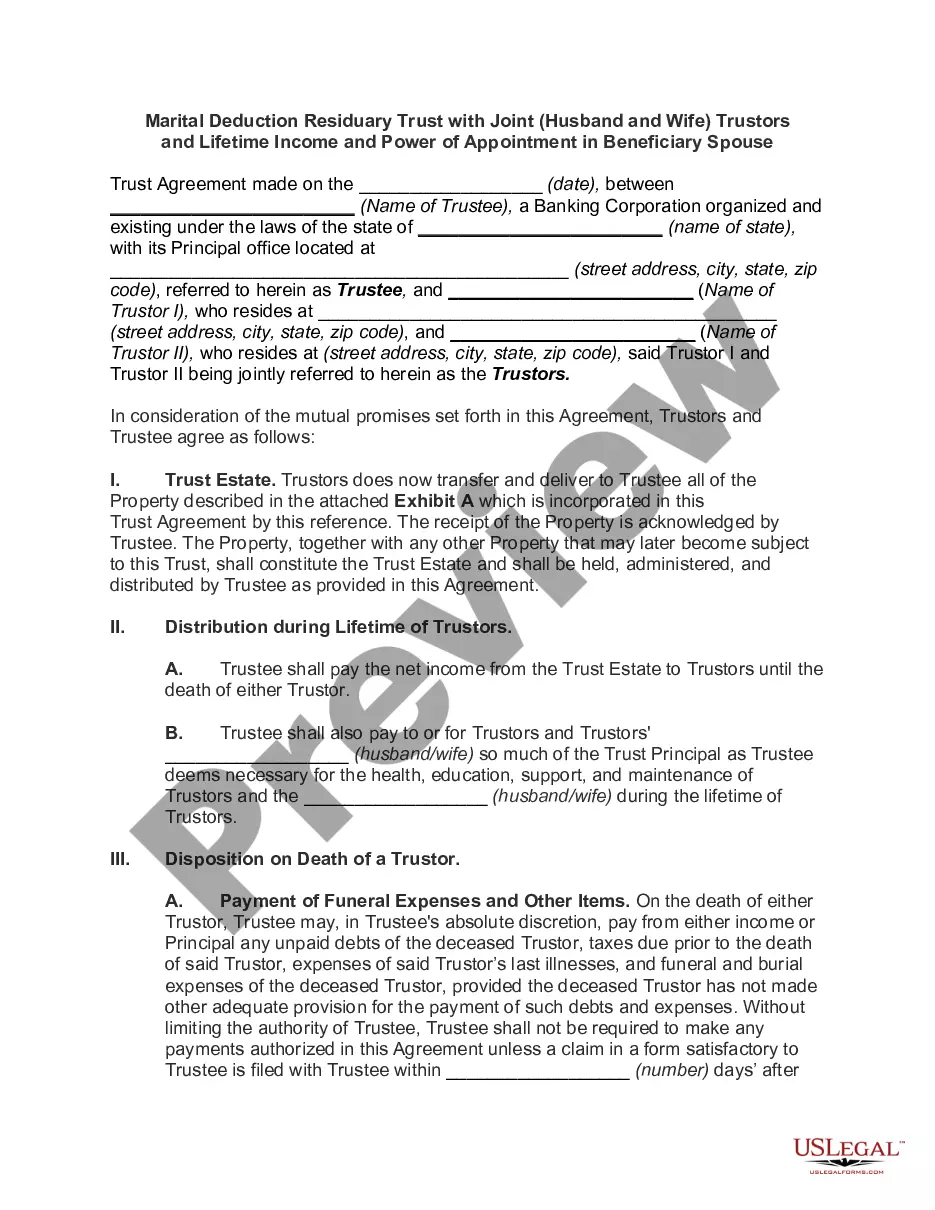
The Marital Deduction TrustâTrust A and Bypass Trust B is a specialized legal document used to create an A-B trust, which splits into two separate trusts upon the death of the first spouse. This trust structure allows couples to maximize estate tax exemptions and take advantage of the marital deduction, ensuring that no estate taxes are due when the first spouse passes away. By effectively using both spouses' applicable exclusion amounts, the trust helps pass more wealth to heirs without incurring federal estate taxes.
Main sections of this form
- Name of Trust: Establishes the title of the trust.
- Trust Corpus: Details the assets included in the trust.
- Amendment and Revocation: Allows the trustor to modify or revoke the trust during their lifetime.
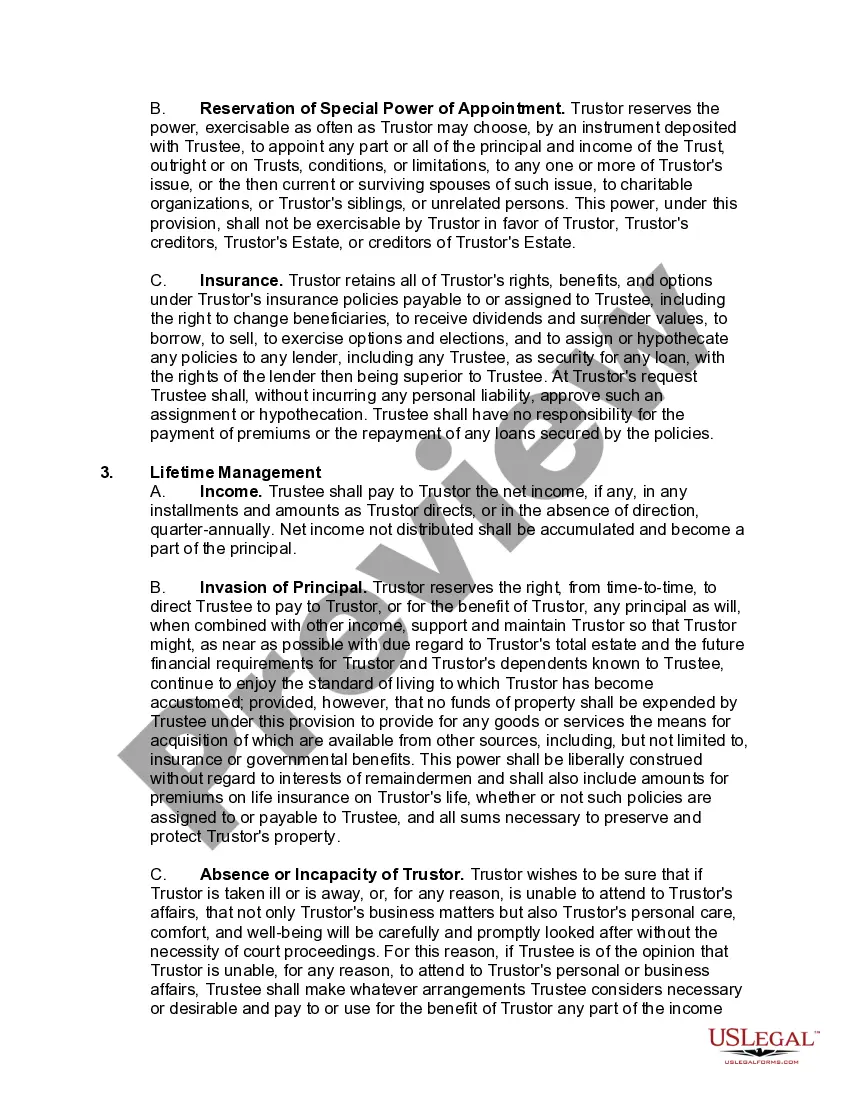
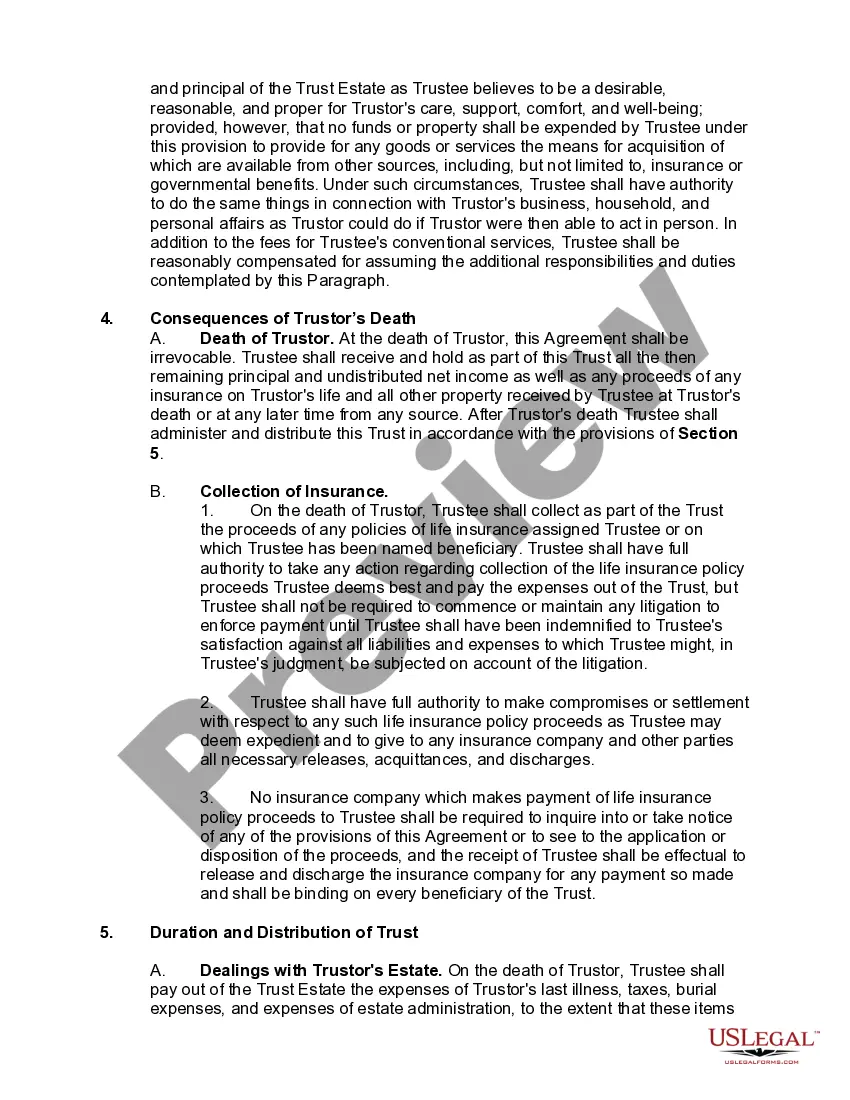
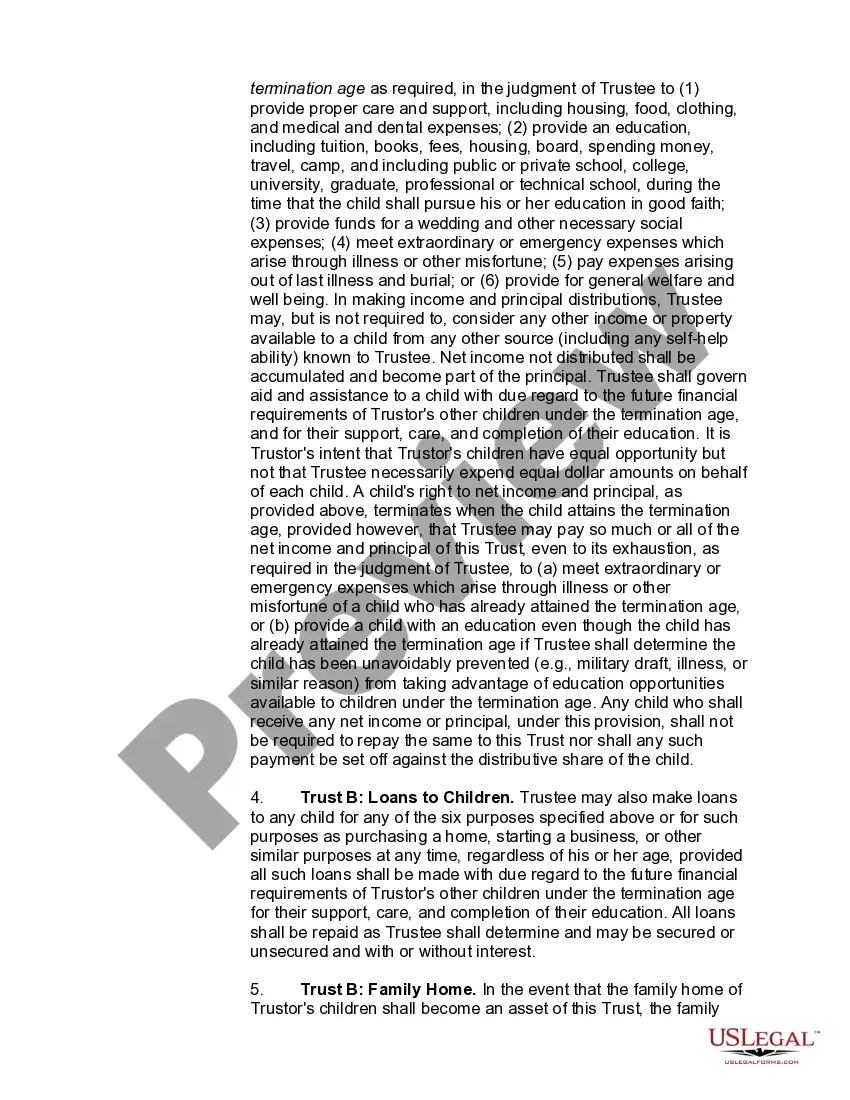
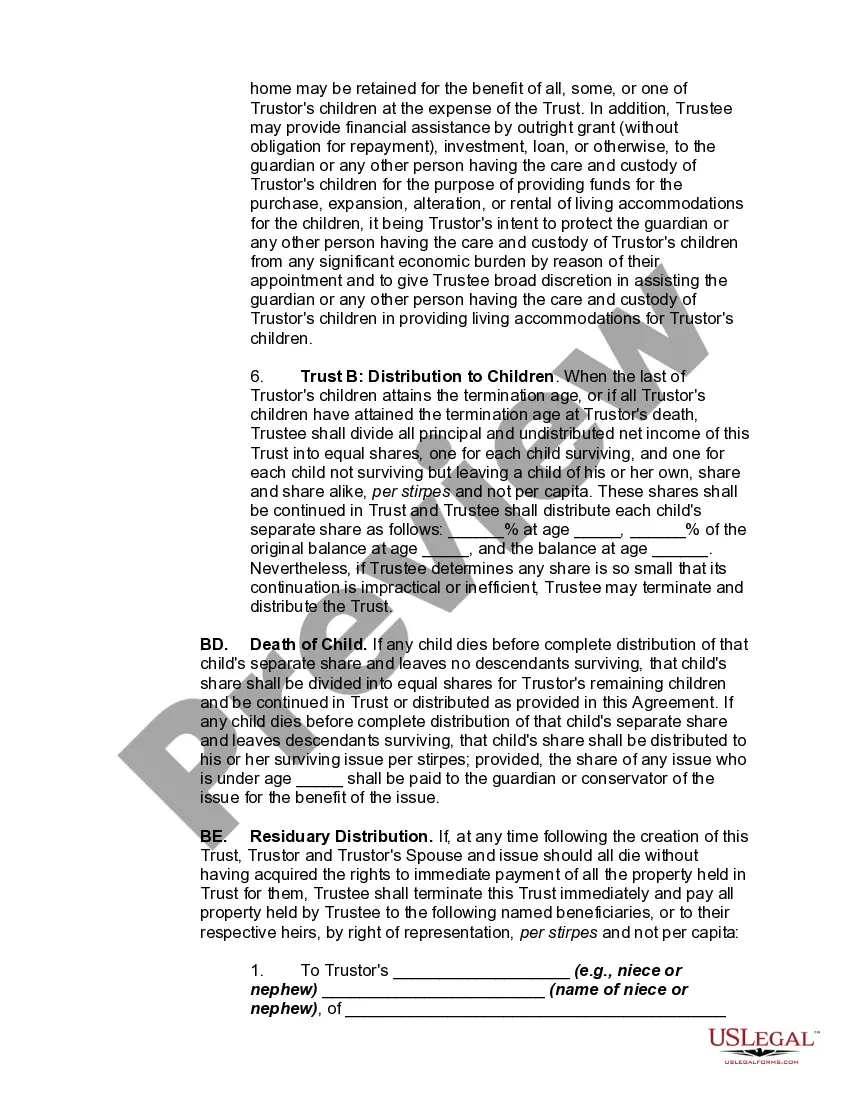
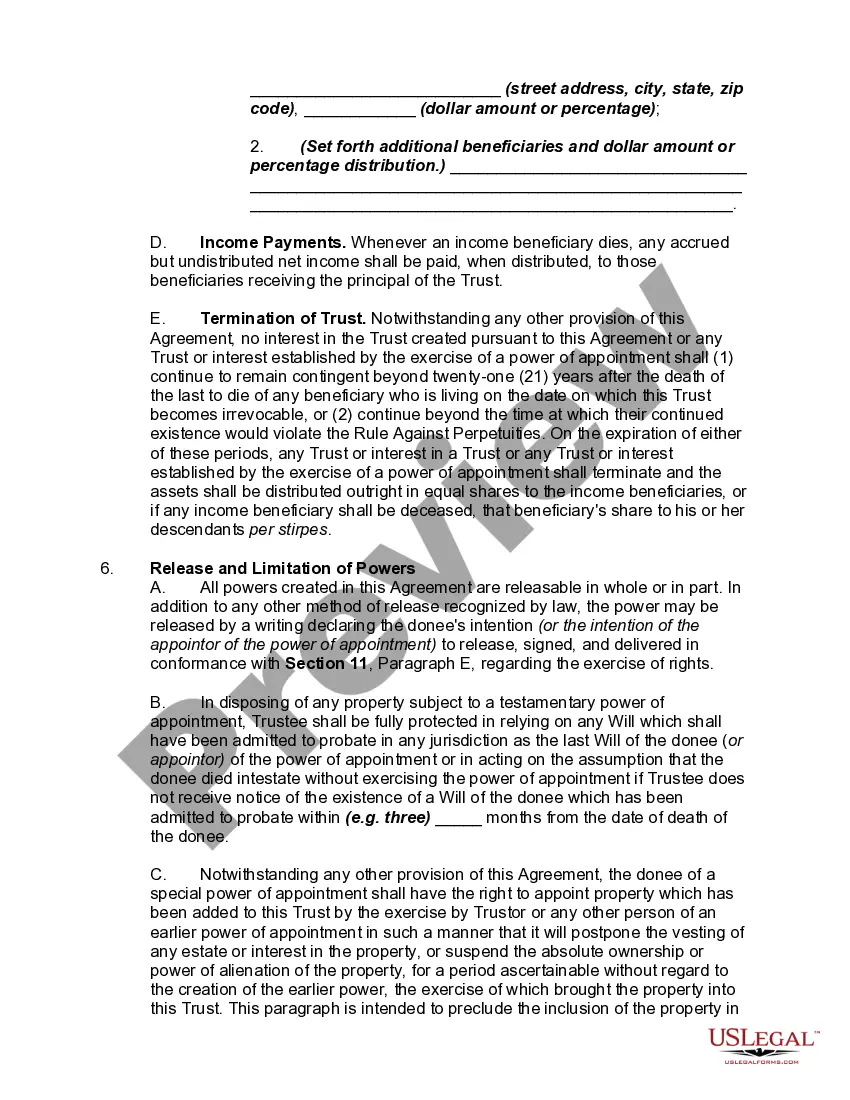
- Distribution upon Death: Outlines how the trust's assets will be managed and distributed after the trustor's death.
- Trustee Powers: Specifies the authority granted to the trustee in managing trust assets.


Common use cases
This form is ideal for couples who wish to ensure that their estate plans are optimized for tax efficiency. It is particularly useful when one spouse is concerned about maximizing the inheritance left to their heirs while minimizing estate taxes. Situations where an A-B trust may be beneficial include large estates or when one spouse has substantial assets that could trigger estate tax liabilities. Additionally, it is helpful for couples looking to secure their financial legacy in a structured way.
Intended users of this form
- Married couples with significant assets.
- Individuals concerned about federal estate taxes.
- People seeking to provide a financial safety net for their surviving spouse.
- Those looking to divide their estate into two parts for tax advantages.
Steps to complete this form
- Identify the parties involved: the trustor (creator of the trust) and the trustee (manager of the trust).
- Specify the assets that will be included in the trust by detailing them in the attached Schedule A.
- Choose a name for the trust to distinguish it.
- Fill in the dates and signatures of all parties involved to validate the document.
- Review the trust provisions to ensure they comply with your intentions and legal requirements.
Does this form need to be notarized?
This form does not typically require notarization unless specified by local law. However, it is advisable to have the signatures witnessed by a notary to establish the document's legitimacy.
Get your form ready online
Our built-in tools help you complete, sign, share, and store your documents in one place.
Make edits, fill in missing information, and update formatting in US Legal Forms—just like you would in MS Word.
Download a copy, print it, send it by email, or mail it via USPS—whatever works best for your next step.
Sign and collect signatures with our SignNow integration. Send to multiple recipients, set reminders, and more. Go Premium to unlock E-Sign.
If this form requires notarization, complete it online through a secure video call—no need to meet a notary in person or wait for an appointment.
We protect your documents and personal data by following strict security and privacy standards.

Make edits, fill in missing information, and update formatting in US Legal Forms—just like you would in MS Word.

Download a copy, print it, send it by email, or mail it via USPS—whatever works best for your next step.

Sign and collect signatures with our SignNow integration. Send to multiple recipients, set reminders, and more. Go Premium to unlock E-Sign.

If this form requires notarization, complete it online through a secure video call—no need to meet a notary in person or wait for an appointment.

We protect your documents and personal data by following strict security and privacy standards.
Typical mistakes to avoid
- Failing to accurately list all assets intended for the trust.
- Not understanding the implications of revocation and amendment clauses.
- Neglecting to update the trust after significant life events, such as a divorce or birth of children.
Benefits of completing this form online
- Convenience: Easily complete and download the form from the comfort of your home.
- Editability: Customize the trust details to suit your financial situation and goals.
- Reliable: Documents drafted by licensed attorneys ensure compliance and legal validity.
Legal use & context
- The Marital Deduction Trust provides significant tax benefits but requires careful management to remain valid.
- Each state's laws can influence the trust's effectiveness; therefore, consult with a legal professional familiar with estate planning in your jurisdiction.
What to keep in mind
- The Marital Deduction Trust is tailored for married couples looking to optimize estate planning.
- This form ensures the strategic division of assets to eliminate or reduce estate taxes effectively.
- Completion of the trust is crucial for its validity, involving specific details about property and beneficiary designations.
Glossary of terms
- Trustor: The individual who creates the trust.
- Trustee: The person or entity responsible for managing the trust assets.
- Revocable Living Trust: A trust that can be altered or dissolved by the Trustor during their lifetime.
- Marital Deduction: The ability to transfer unlimited assets to a spouse without incurring estate taxes.
Looking for another form?
Form popularity
FAQ
A bypass trust can still be useful in some circumstances. If your estate is greater than the current estate tax exemption, a bypass trust is still a good way to protect your assets from the estate tax.
The trust qualifies for the marital deduction. In a QTIP trust, the surviving spouse must receive all income generated by the trust property for life, paid at least annually.After the surviving spouse's death, the property passes to the remainder beneficiaries of the trust, who usually are the children of the couple.
A bypass trust, or AB trust, is a legal arrangement that allows married couples to avoid estate tax on certain assets when one spouse passes away.The first part is the marital trust, or A trust. The second is a bypass, family or B trust. The marital trust is a revocable trust that belongs to the surviving spouse.
The effect of the marital deduction trust is that it shields both spouse's assets and estates from federal estate taxes because when the first spouse dies, the assets indicated by the settlor (the spouse who created the trust) pass to the marital trust free and clear of any and all federal estate taxes.
In the case of a marital trust, the IRS subjects the remaining trust assets to federal estate taxes when the surviving spouse passes. However, a couple can take advantage of the federal gift and estate tax exemption. This is the amount that you can pass on to heirs before you'd ever owe an actual estate tax.
An estate trust is a type of marital deduction trust requiring that when the surviving spouse dies, all remaining trust principal must go into his/her estate. This means the surviving spouse gets to choose the final beneficiaries, by will or within a living trust.
Separate trusts provide more flexibility in the event of a death in the marriage. Since the trust property is already divided, separate trusts preserve the surviving spouse's ability to amend or revoke assets held within their own trust, while ensuring that the deceased spouse's trust cannot be amended after death.
A marital deduction trust is a trust in which transfers of property between married partners are free of federal transfer tax.
A marital trust is a legal entity established to pass assets to a surviving spouse or children/grandchildren. When a spouse dies, their assets are moved into the trust. A general power of appointment, an estate trust, and a QTIP trust are three types of marital trusts.