Motion to Suppress Evidence when Property was Seized as Result of an Unlawful Search, Seizure, and Arrest
What this document covers
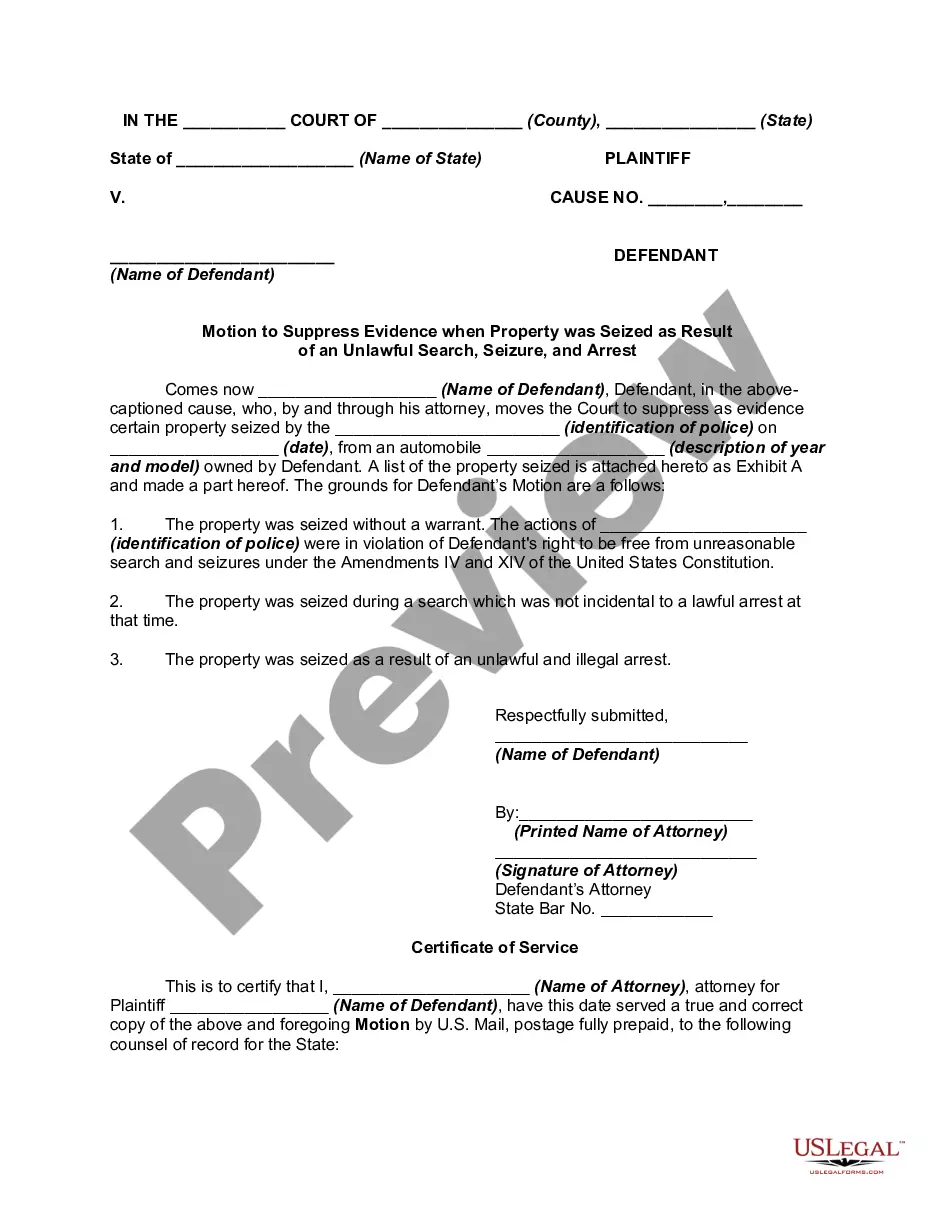
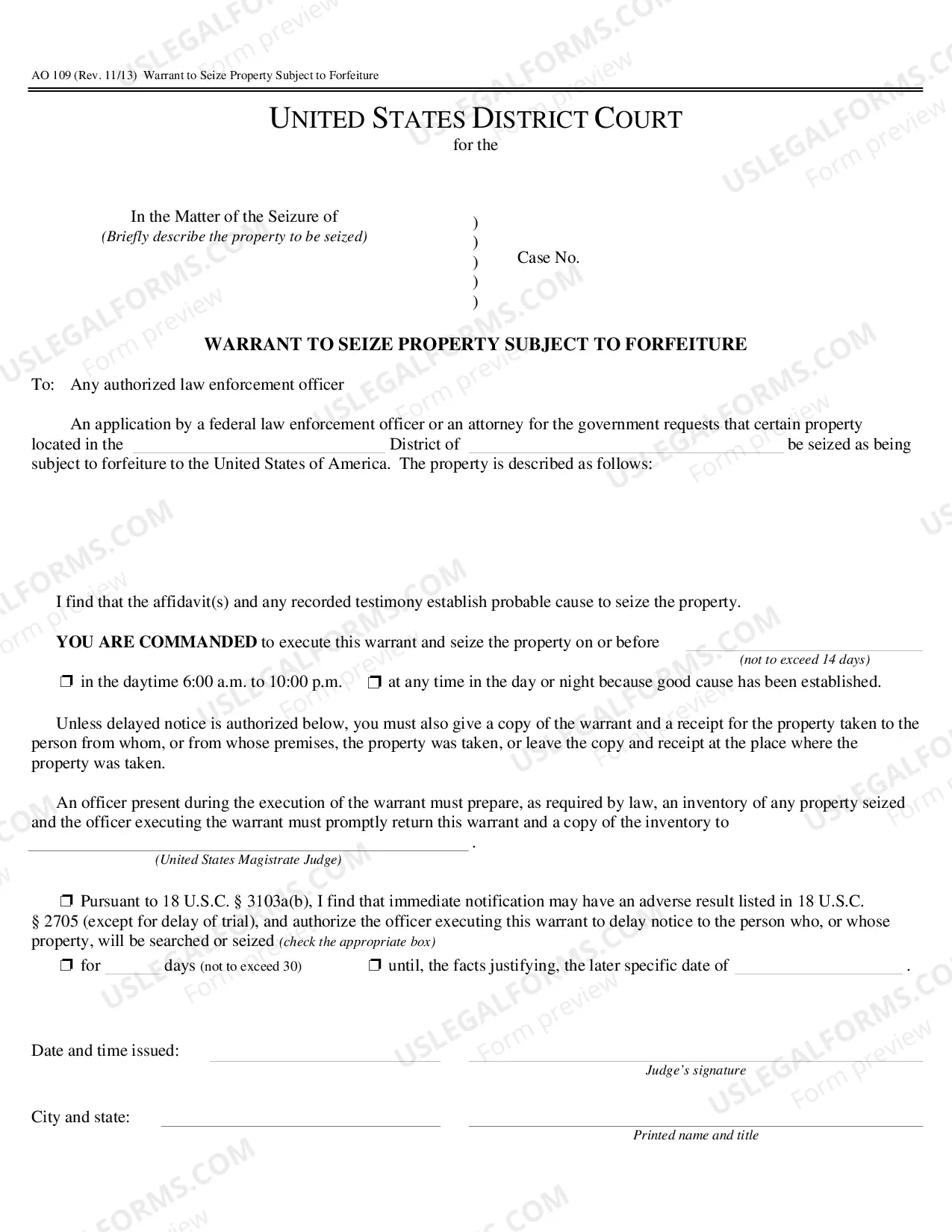
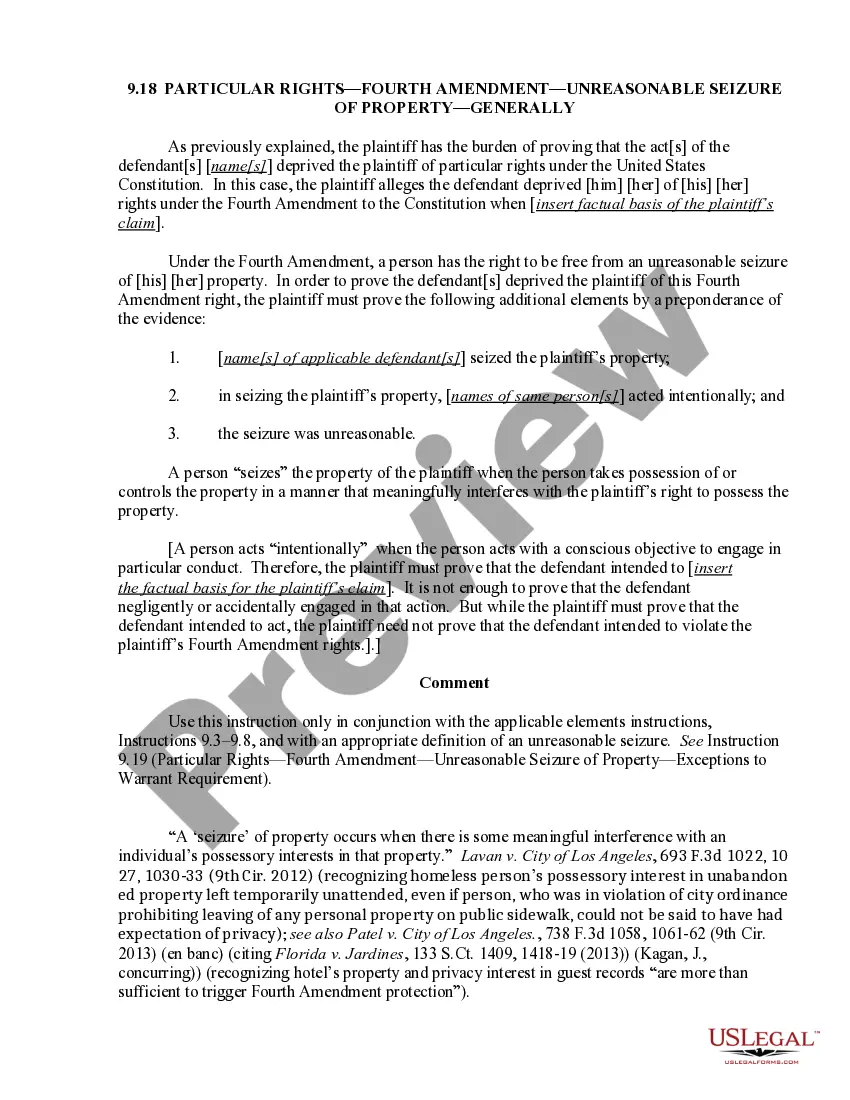
The Motion to Suppress Evidence when Property was Seized as Result of an Unlawful Search, Seizure, and Arrest is a legal document filed by a defendant in a criminal case. Its primary purpose is to request the court to exclude certain evidence obtained during what the defendant claims was an unlawful search and seizure. This form is essential for protecting the rights of individuals against unreasonable searches and seizures as outlined in the Fourth and Fourteenth Amendments of the U.S. Constitution. Unlike other motions, this specific form addresses the unlawful acquisition of evidence directly related to searches and arrests without a warrant.
Form components explained
- Identification of the court and parties involved in the case.
- Clear articulation of the motion's reasons, including details of the unlawful actions taken.
- List of property seized, attached as Exhibit A.
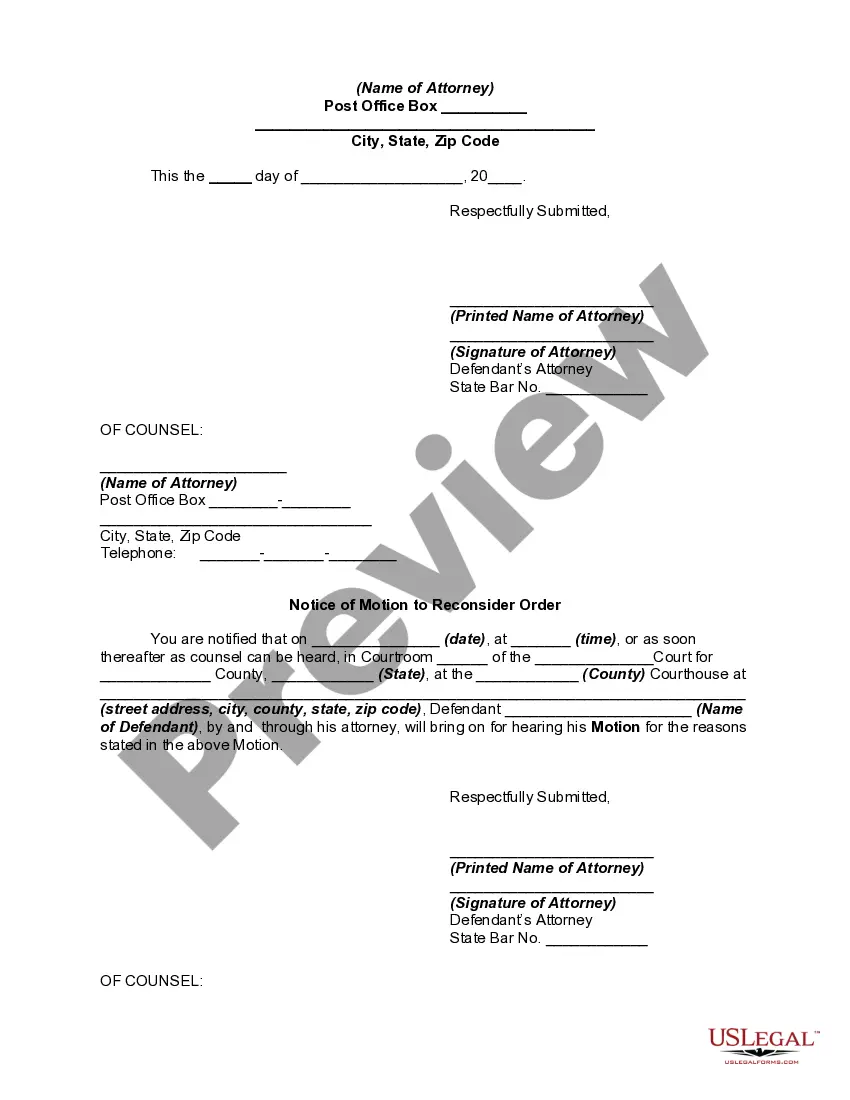
- Signature and certification of service by the defendant's attorney.
- Notice of the motion hearing date, time, and location.


When to use this form
This form should be used in situations where a defendant believes that evidence against them was obtained through illegal means, such as a search conducted without a warrant or an arrest deemed unlawful. It is crucial when the evidence obtained may significantly affect the outcome of the case, such as in drug-related offenses or other criminal charges where the legality of the evidence is contested.
Intended users of this form
This form is intended for:
- Defendants facing criminal charges who believe that evidence has been unlawfully obtained.
- Legal representatives or attorneys acting on behalf of defendants.
- Individuals seeking to protect their constitutional rights regarding searches and seizures.
Instructions for completing this form
- Identify the state and court where the motion is being filed.
- Input the names of the plaintiff and defendant, along with their respective counsel.
- Clearly describe the property seized and attach a detailed list as Exhibit A.
- Articulate the reasons for the motion, citing relevant amendments and legal principles.
- Sign the form as the attorney representing the defendant and include a certificate of service.
- Complete the notice section indicating the date, time, and location of the hearing for the motion.
Notarization requirements for this form
Notarization is not commonly needed for this form. However, certain documents or local rules may make it necessary. Our notarization service, powered by Notarize, allows you to finalize it securely online anytime, day or night.
Get your form ready online
Our built-in tools help you complete, sign, share, and store your documents in one place.
Make edits, fill in missing information, and update formatting in US Legal Forms—just like you would in MS Word.
Download a copy, print it, send it by email, or mail it via USPS—whatever works best for your next step.
Sign and collect signatures with our SignNow integration. Send to multiple recipients, set reminders, and more. Go Premium to unlock E-Sign.
If this form requires notarization, complete it online through a secure video call—no need to meet a notary in person or wait for an appointment.
We protect your documents and personal data by following strict security and privacy standards.

Make edits, fill in missing information, and update formatting in US Legal Forms—just like you would in MS Word.

Download a copy, print it, send it by email, or mail it via USPS—whatever works best for your next step.

Sign and collect signatures with our SignNow integration. Send to multiple recipients, set reminders, and more. Go Premium to unlock E-Sign.

If this form requires notarization, complete it online through a secure video call—no need to meet a notary in person or wait for an appointment.

We protect your documents and personal data by following strict security and privacy standards.
Typical mistakes to avoid
- Failing to attach the evidence list as Exhibit A.
- Omitting essential details about the property seized and the nature of the unlawful search or arrest.
- Incorrectly identifying the court or jurisdiction in which to file the motion.
- Not adhering to the required format or procedural rules specific to the state.
Why complete this form online
- Convenient access to the form, allowing for quick completion and submission.
- Editability to customize the form as per specific case needs.
- Reliable templates drafted by licensed attorneys to ensure legal compliance.
Looking for another form?








Form popularity
FAQ
At the motion to suppress hearing, both parties have the opportunity to present evidence and arguments in support of or in opposition to the motion. Testimony is taken from: The arresting officer about how the evidence was obtained by the officeri.e., plain view, consent by the defendant. The defendant.
Use general discovery motions to your advantage. Always cite Tex. File a motion in limine along with your motion to suppress. Request a jury charge. Don't reveal specific grounds for the motion until the hearing. Consider Tex. Attack the probable cause affidavit.
Any intentional, reckless, or negligent hiding of evidence by either party to the proceeding is illegal. This is known as spoliation of evidence (also tampering with evidence) and can result in serious legal consequences.
While in general, on a motion to suppress, the defendant has the burden of proving, by a preponderance of the evidence, that the material in question was seized in violation of his constitutional rights, there are several situations where the burden shifts to the government. United States v. De La Fuente, 548 F.
A motion to suppress is a motion that revolves around the exclusion of evidence from trial. In the United States, a motion to suppress is a request made by a criminal defendant in advance of a criminal trial asking the court to exclude certain evidence from the trial.
Penal Code 1538.5 PC Motion to suppress evidence. ((o) Within 30 days after a defendant's motion is granted at a special hearing in a felony case, the people may file a petition for writ of mandate or prohibition in the court of appeal, seeking appellate review of the ruling regarding the search or seizure motion.
Often, the suppression of the right evidence can lead a jury to acquit you at trial, or even to the dismissal of charges before a trial ever happens.This is often the main piece of evidence in drug cases and without it, the prosecution usually knows it cannot prove the drug charges beyond a reasonable doubt.