Motion to Dismiss Criminal Charges for Failure to follow Breathalyzer Protocols - DUI
Understanding this form
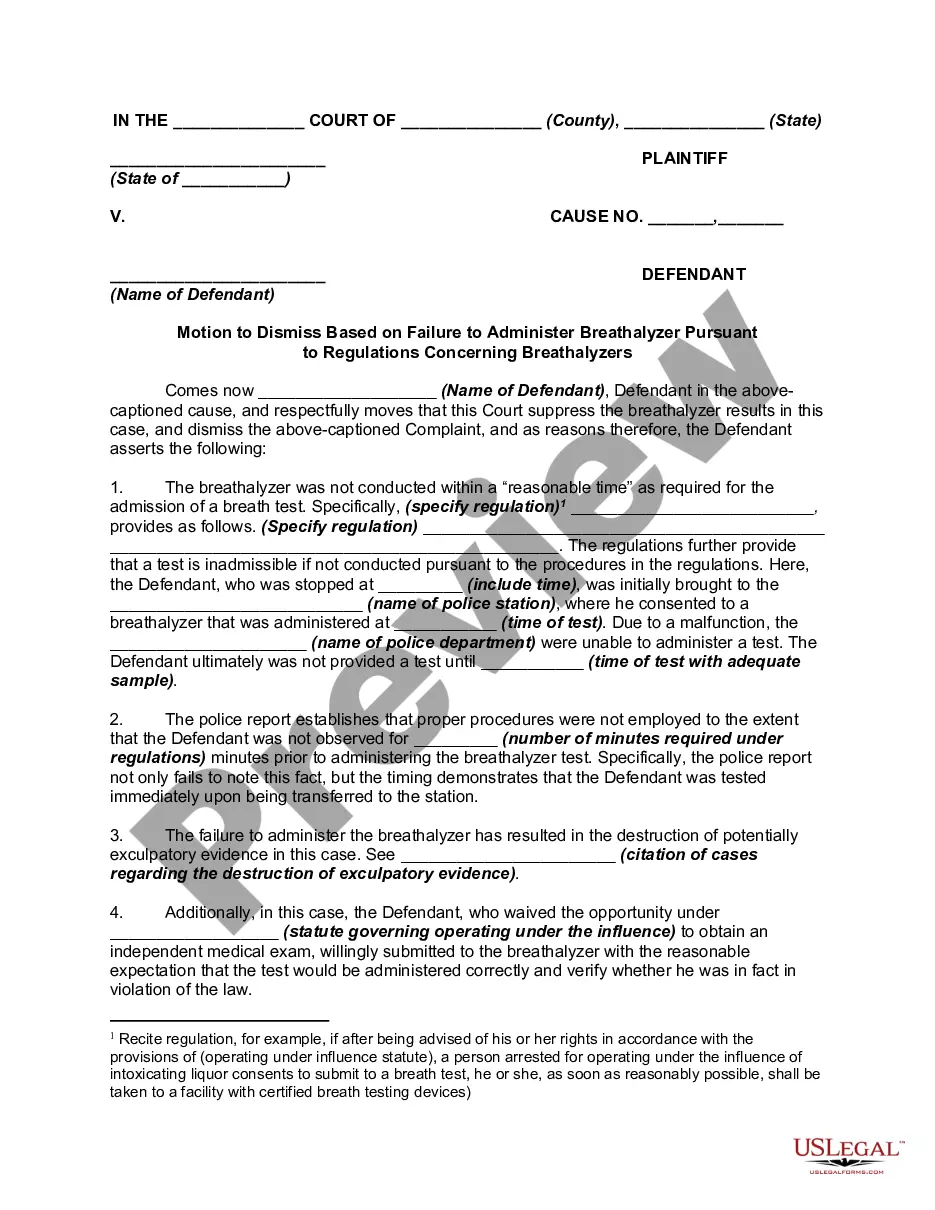
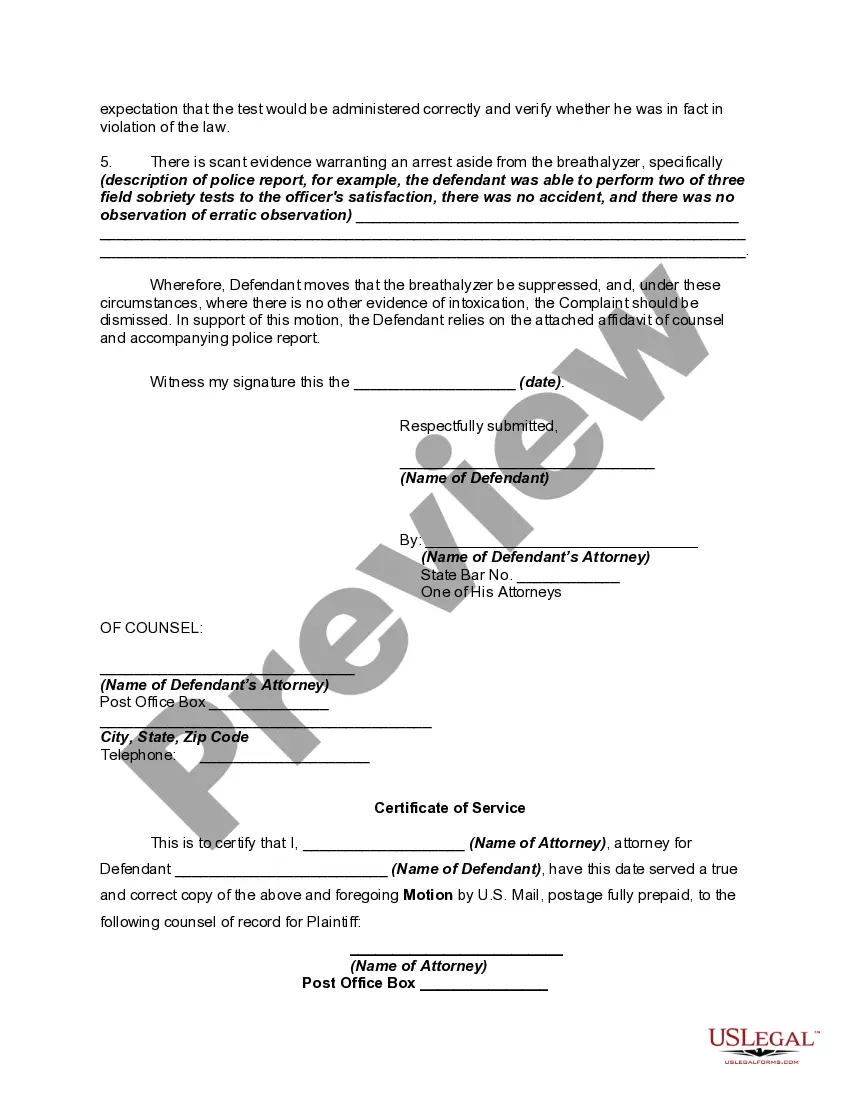
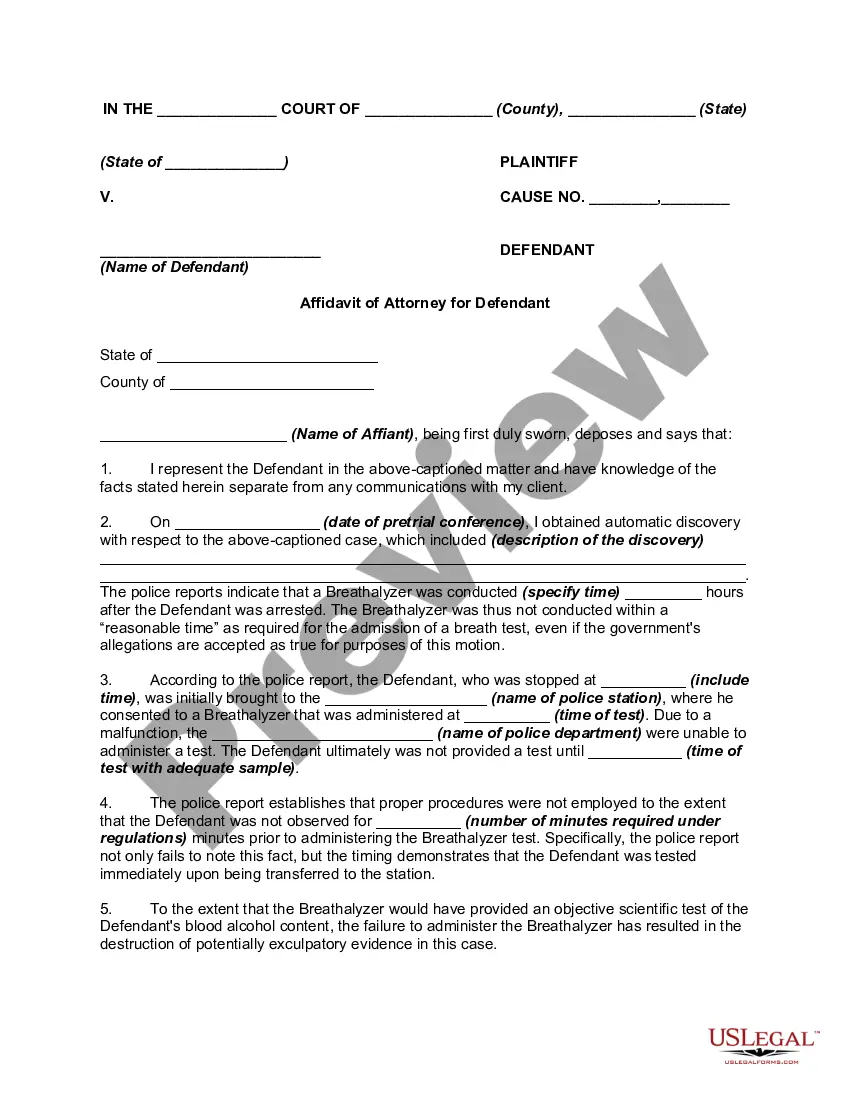
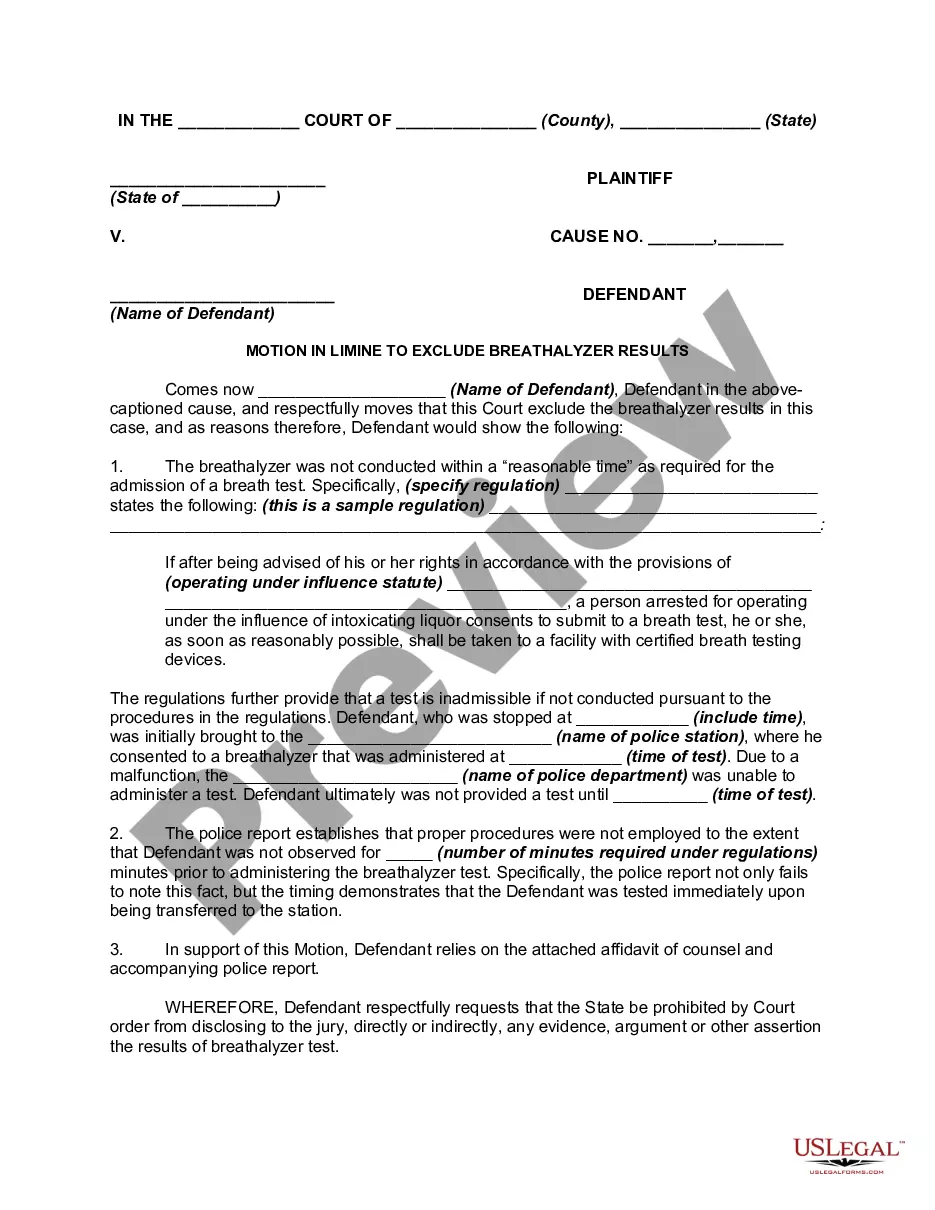
This form, the Motion to Dismiss Criminal Charges for Failure to Follow Breathalyzer Protocols, is a legal document used by a defendant to request the court to dismiss DUI charges based on improper administration of a breathalyzer test. It highlights specific procedural failures that affect the admissibility of breathalyzer results in court, distinguishing it from related motions that may not specifically address breathalyzer protocol violations.
What’s included in this form
- Defendant's name and case information
- Citations of relevant regulations regarding breathalyzer administration
- Claims regarding the procedural failures in the breathalyzer administration
- Details regarding the timing and location of the breathalyzer test
- Affidavit of counsel supporting the motion
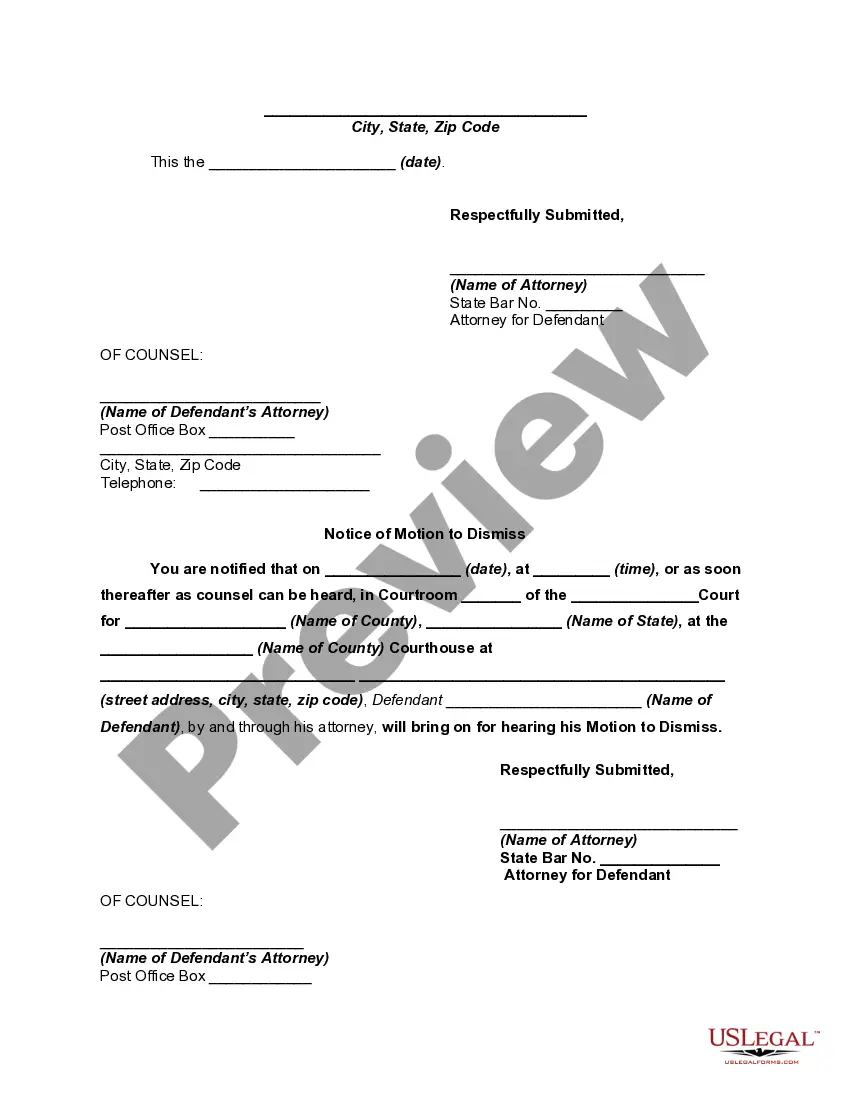
- Notification for a hearing date and time for the motion

When to use this document
This form should be used when a defendant believes that the breathalyzer test, which is critical in establishing DUI charges, was not administered according to legal requirements. It is applicable in situations where there are procedural inaccuracies that could undermine the test results, such as delays in administering the test or failure to adhere to observation protocols prior to testing.
Who can use this document
- Defendants charged with DUI who have valid reasons to challenge breathalyzer results
- Attorneys representing defendants in DUI cases
- Individuals seeking to understand their legal rights concerning breathalyzer test results
How to complete this form
- Enter the defendant's name and the case number at the top of the form.
- Specify the regulations that were allegedly not followed in the breathalyzer administration.
- Provide details regarding the timeline of events related to the breathalyzer test.
- Include citations related to exculpatory evidence if applicable.
- Gather signatures from the defendant and their attorney to finalize the motion.
- Submit the completed form to the appropriate court and notify involved parties of the motion hearing.
Does this form need to be notarized?
This form usually doesn’t need to be notarized. However, local laws or specific transactions may require it. Our online notarization service, powered by Notarize, lets you complete it remotely through a secure video session, available 24/7.
Get your form ready online
Our built-in tools help you complete, sign, share, and store your documents in one place.
Make edits, fill in missing information, and update formatting in US Legal Forms—just like you would in MS Word.
Download a copy, print it, send it by email, or mail it via USPS—whatever works best for your next step.
Sign and collect signatures with our SignNow integration. Send to multiple recipients, set reminders, and more. Go Premium to unlock E-Sign.
If this form requires notarization, complete it online through a secure video call—no need to meet a notary in person or wait for an appointment.
We protect your documents and personal data by following strict security and privacy standards.

Make edits, fill in missing information, and update formatting in US Legal Forms—just like you would in MS Word.

Download a copy, print it, send it by email, or mail it via USPS—whatever works best for your next step.

Sign and collect signatures with our SignNow integration. Send to multiple recipients, set reminders, and more. Go Premium to unlock E-Sign.

If this form requires notarization, complete it online through a secure video call—no need to meet a notary in person or wait for an appointment.

We protect your documents and personal data by following strict security and privacy standards.
Common mistakes to avoid
- Failing to provide specific regulations that were violated.
- Not including complete details about the timeline and location of the breathalyzer test.
- Omitting necessary signatures from the defendant or attorney.
- Not notifying the opposing counsel about the motion hearing.
Why complete this form online
- Instant access to legal form templates created by licensed attorneys.
- Convenient online completion and downloading, which eliminates the need for paperwork.
- The ability to edit and customize the form to fit specific legal needs.
- Secure storage of the document for future reference.
Legal use & context
- The motion must comply with local court rules regarding the format and filing process.
- The effectiveness of the motion may depend on the specifics of the local DUI laws.
- Understanding the legal ramifications of breathalyzer protocol deviations is crucial for a successful dismissal.
What to keep in mind
- This motion seeks to dismiss DUI charges based on improper breathalyzer administration.
- It is essential to provide valid evidence of the procedural failures in administering the breathalyzer.
- Consulting with an attorney can provide clarity and enhance the effectiveness of the motion.
Looking for another form?
Form popularity
FAQ
Crimes Against Persons. Crimes against persons also called personal crimes, include murder, aggravated assault, rape, and robbery. Crimes Against Property. Property crimes involve the theft of property without bodily harm, such as burglary, larceny, auto theft, and arson. Hate Crimes.
Crimes receive different classifications according to their severity. The mildest crimes are known as infractions, more serious crimes are known as misdemeanors, and the most serious crimes are known as felonies.
Drug Possession. Vandalism. Fraud. Property Crimes. Assault. Disorderly Conduct. Weapons Charges. Violent Crimes. Rape, murder, kidnapping and other violent crimes are all too common within in the US.
Theft. This refers to stealing or taking away someone else's property with the intent to permanently deprive them of it. Robbery. A Robbery is a theft plus the use of force, or the threat of the use of force, in commission of flight from a theft. Burglary. Unauthorized Use of a Motor Vehicle (UUMV). Arson.
Larceny / Theft. Larceny-theft hits the top of the crime list, far outweighing any other crime. Burglary. The next most prevalent crime is burglary, another property crime. Motor Vehicle Theft. Aggravated Assault. Robbery.
Felonies and misdemeanors are two classifications of crimes used in most states, with petty offenses (infractions) being the third. Misdemeanors are punishable by substantial fines and sometimes jail time, usually less than one year.
Many types of crime exist. Criminologists commonly group crimes into several major categories: (1) violent crime; (2) property crime; (3) white-collar crime; (4) organized crime; and (5) consensual or victimless crime. Within each category, many more specific crimes exist.
Drugs These violations are the most common, with about 2,000,000 annually. Property crimes Including auto theft, burglary, larceny, arson, and theft. Assault This felony is unfortunately common, with more than 1,000,000 offenses annually. Disorderly conduct Includes various crimes that pose a risk to society.
Criminal charges are brought against a person in one of three ways: Through an indictment voted by a grand jury. Through the filing of an information by the prosecuting attorney (also called the county, district, or state's attorney) alleging that a crime was committed.