Letter Agreement between Artist and Gallery for Sale of Original Art Work
What this document covers
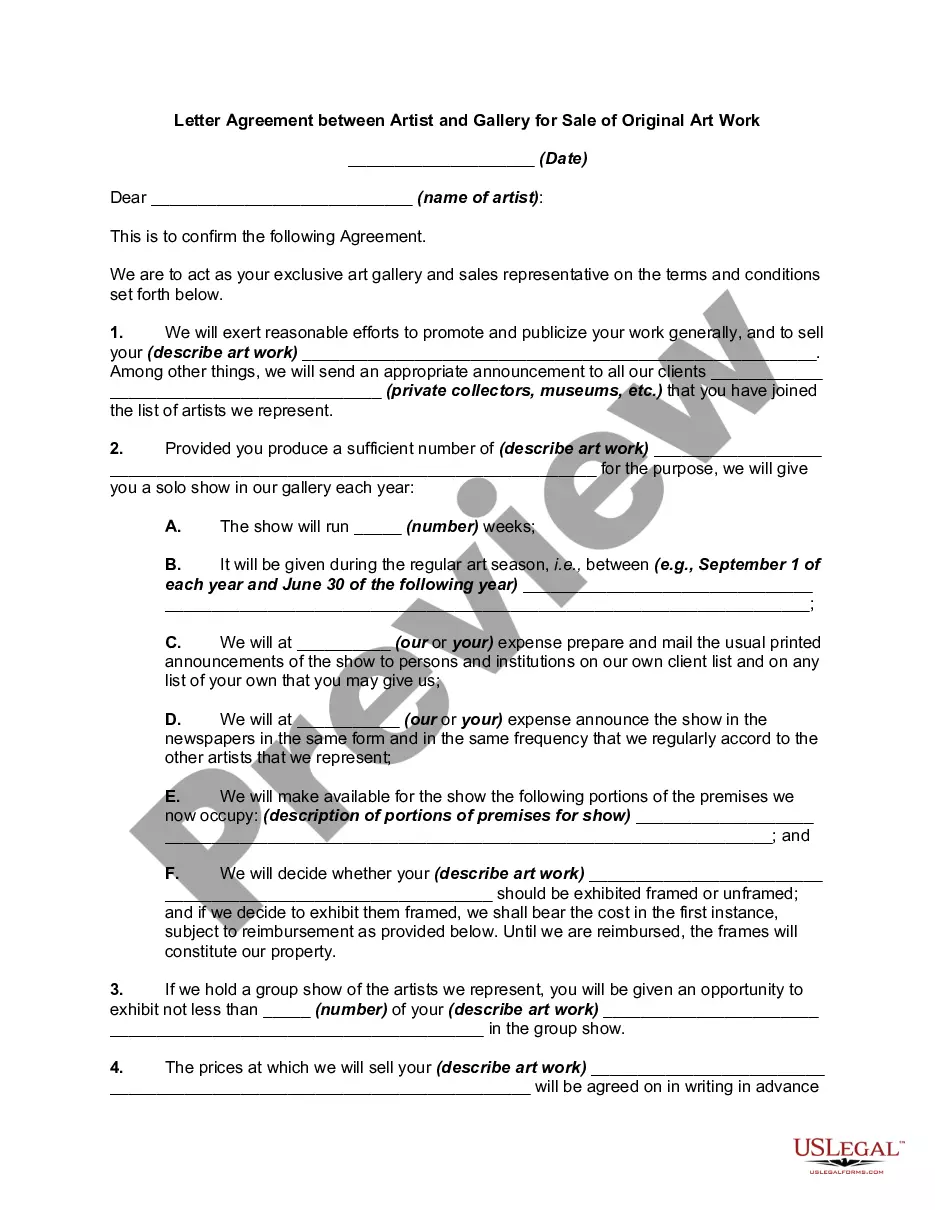
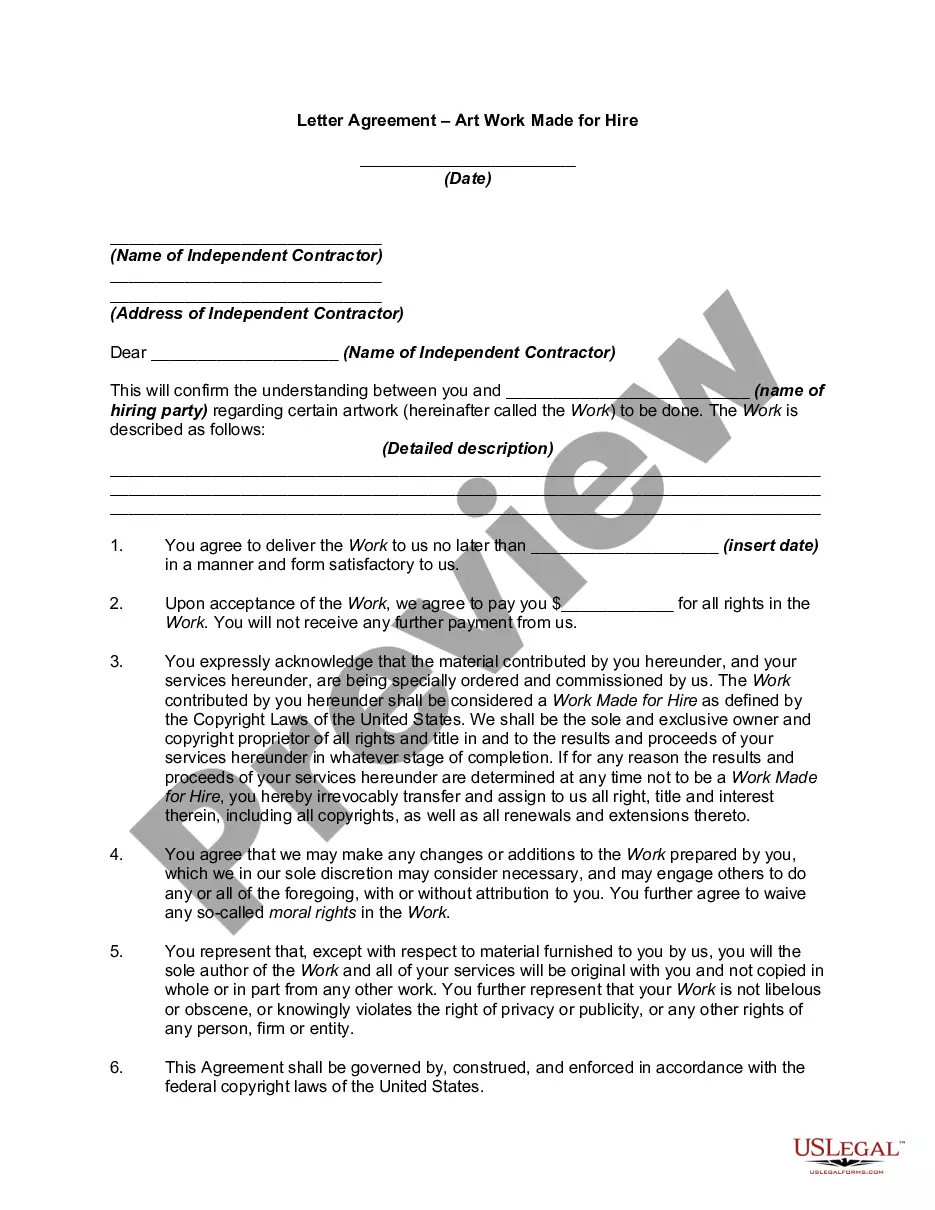
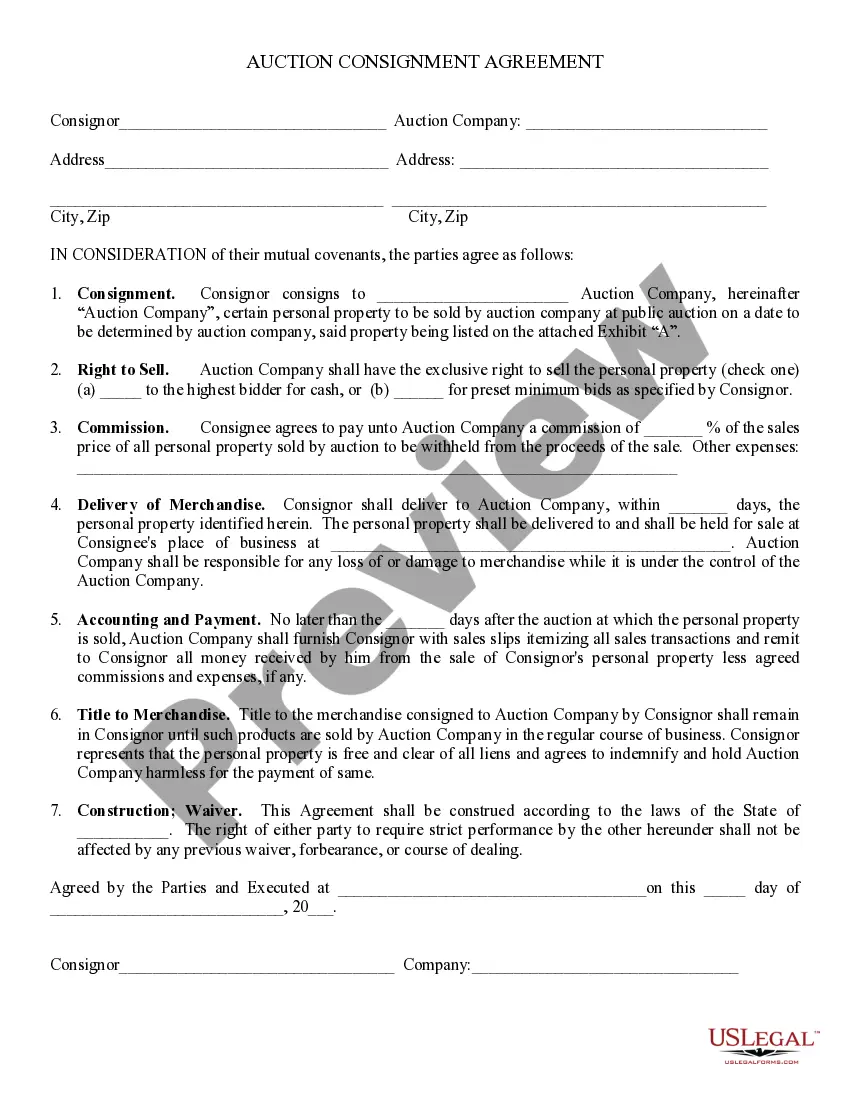
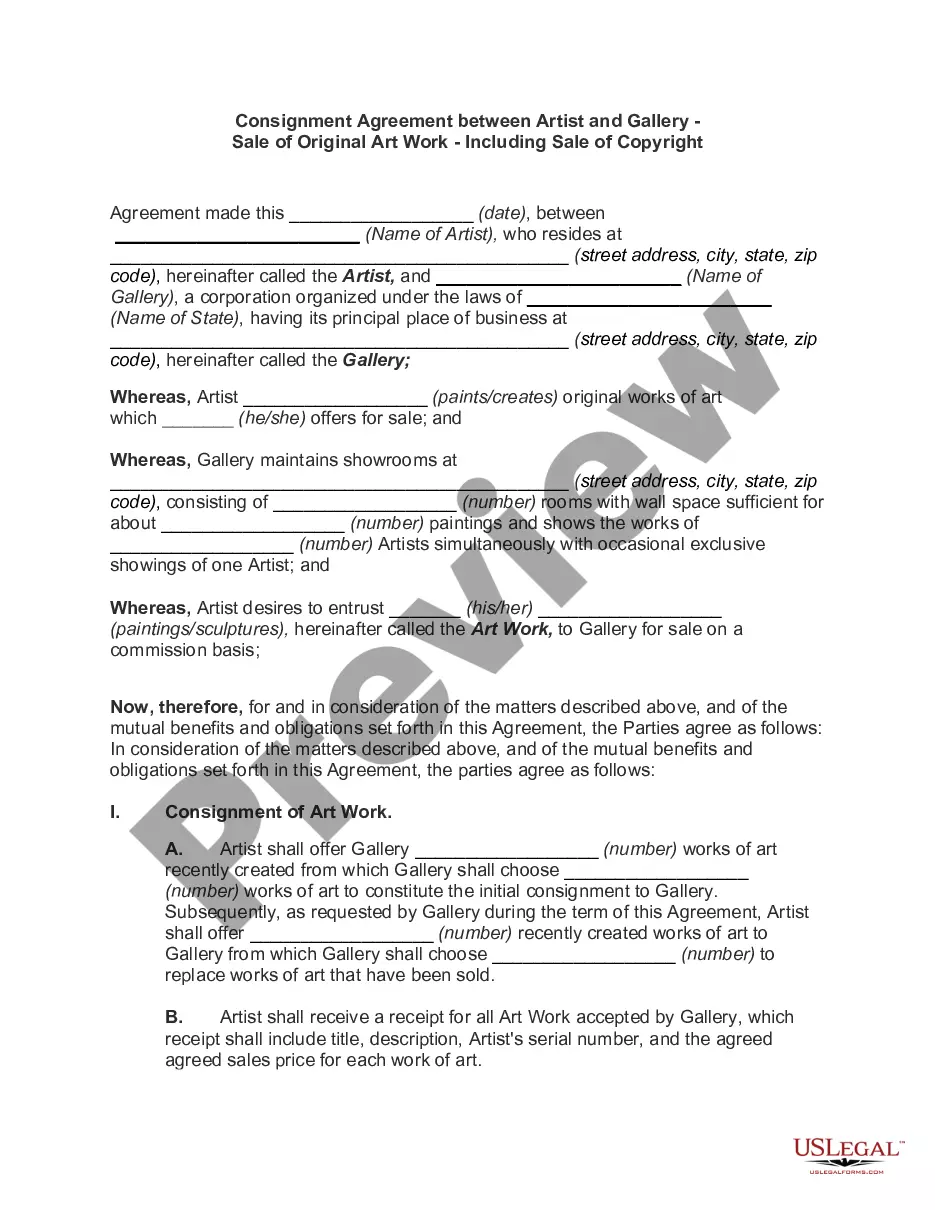
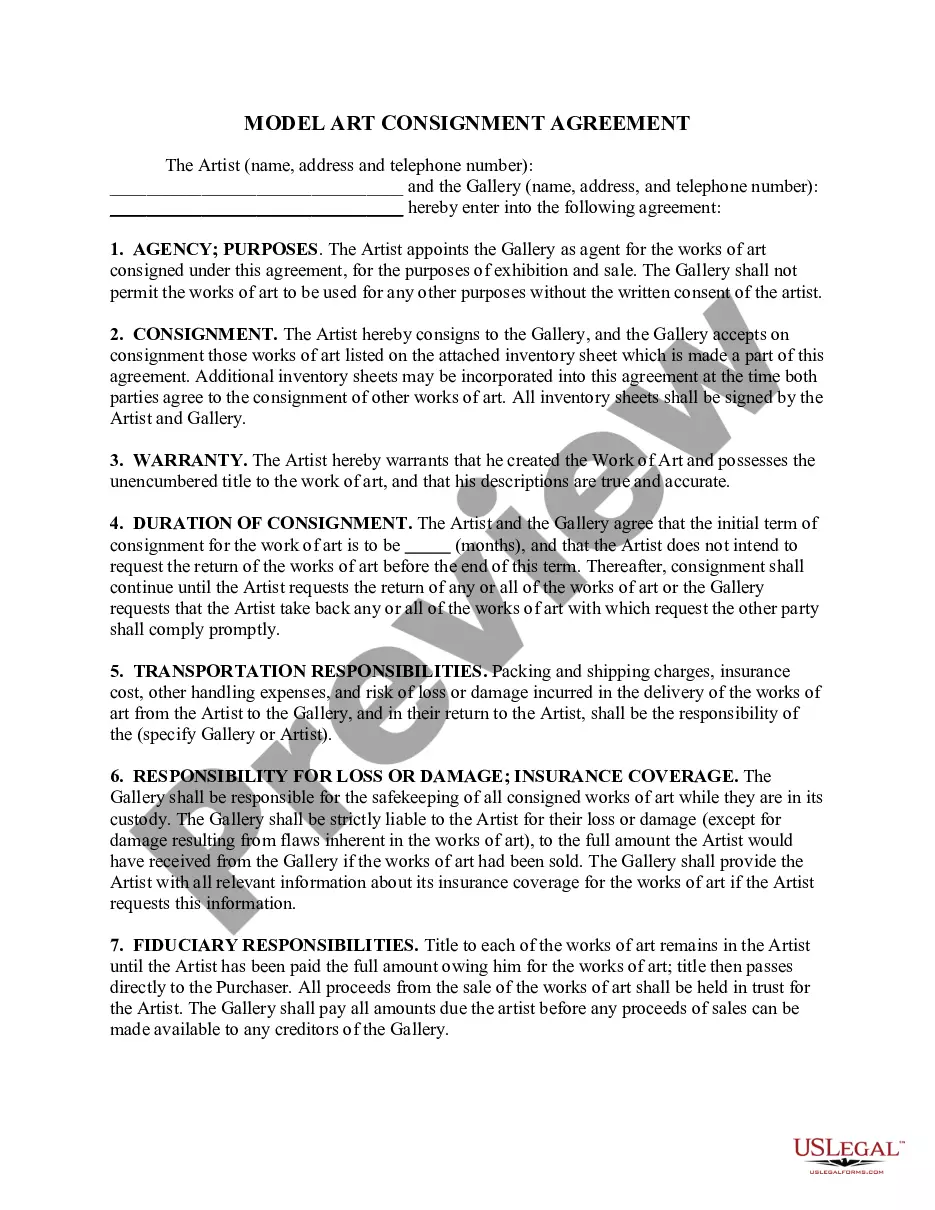
This Letter Agreement between Artist and Gallery for Sale of Original Art Work outlines the terms and conditions under which an art gallery represents an artist's original artwork. This agreement is essential for clarifying the roles and responsibilities of both parties, as well as establishing terms for commissions, exhibitions, and sales. By using this legal form, both the artist and gallery can ensure a clear and mutual understanding of their agreement, differentiating it from other forms of contracts in the art industry.
Main sections of this form
- Date and names of the parties involved
- Promotional efforts and solo show commitments
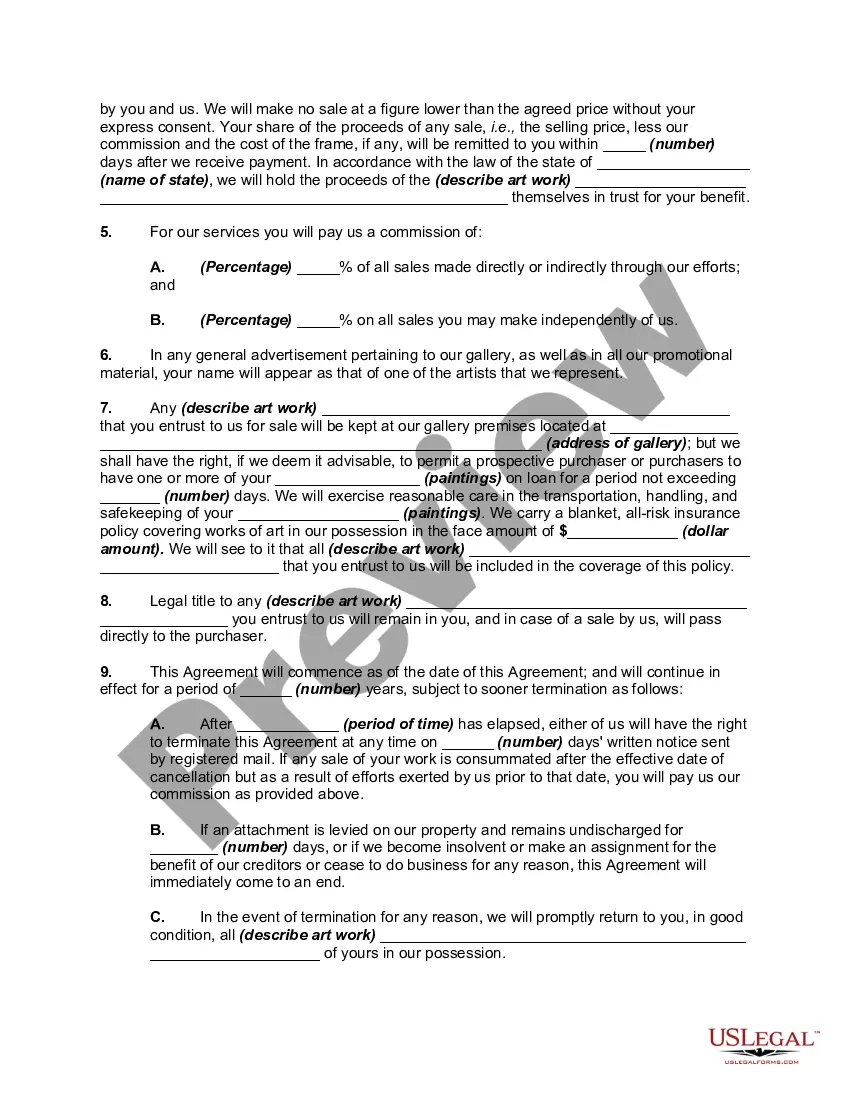
- Sales price agreement and commission structure
- Responsibilities regarding the safekeeping and insurance of artwork
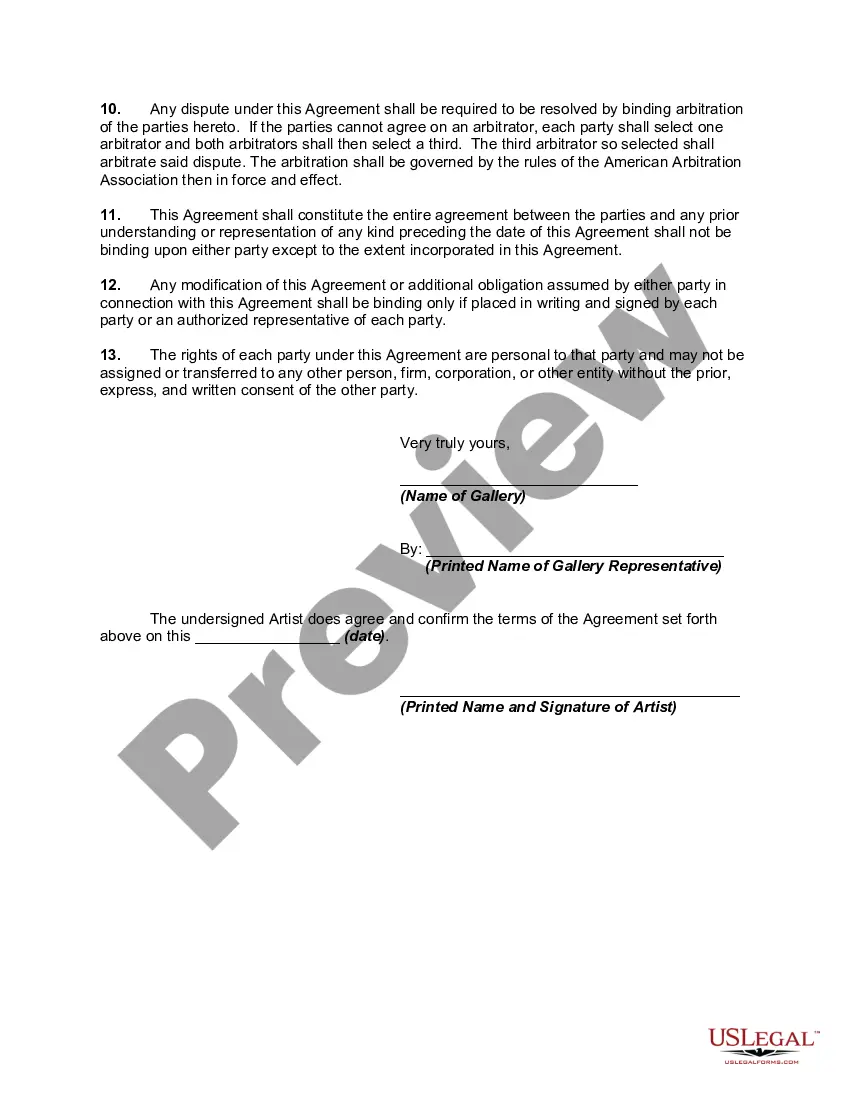
- Duration of the agreement and termination conditions
- Dispute resolution through binding arbitration
When to use this document
You should use this form when an artist wants to establish a formal relationship with a gallery for the promotion and sale of their original artwork. This agreement sets clear expectations for both parties regarding exhibitions, sales, and commissions, making it particularly useful for artists entering a new partnership with a gallery or for galleries looking to formalize their representation of an artist.
Who this form is for
- Artists seeking representation from galleries
- Gallery owners or managers who wish to formalize agreements with artists
- Individuals or businesses involved in the art sales industry
How to prepare this document
- Enter the date and names of the artist and gallery representative at the top of the document.
- Fill in the specific descriptions of the artwork being consigned and any commitments regarding promotional efforts.
- Specify the pricing and commission percentages agreed upon by both parties.
- Indicate the duration of the agreement and any terms for early termination.
- Ensure both parties sign and date the agreement to confirm their acceptance of the terms.
Does this document require notarization?
This form does not typically require notarization unless specified by local law. However, it's recommended to consult specific state regulations to ensure compliance.
Get your form ready online
Our built-in tools help you complete, sign, share, and store your documents in one place.
Make edits, fill in missing information, and update formatting in US Legal Forms—just like you would in MS Word.
Download a copy, print it, send it by email, or mail it via USPS—whatever works best for your next step.
Sign and collect signatures with our SignNow integration. Send to multiple recipients, set reminders, and more. Go Premium to unlock E-Sign.
If this form requires notarization, complete it online through a secure video call—no need to meet a notary in person or wait for an appointment.
We protect your documents and personal data by following strict security and privacy standards.

Make edits, fill in missing information, and update formatting in US Legal Forms—just like you would in MS Word.

Download a copy, print it, send it by email, or mail it via USPS—whatever works best for your next step.

Sign and collect signatures with our SignNow integration. Send to multiple recipients, set reminders, and more. Go Premium to unlock E-Sign.

If this form requires notarization, complete it online through a secure video call—no need to meet a notary in person or wait for an appointment.

We protect your documents and personal data by following strict security and privacy standards.
Common mistakes to avoid
- Failing to specify the details of the artwork clearly.
- Not agreeing on the sales price and commission structure before signing.
- Overlooking the importance of including a clear termination clause.
Why use this form online
- Convenience of accessing and downloading the form instantly.
- Easy customization to fit the specific needs of the artist and gallery.
- Reliability of a legally vetted template drafted by licensed attorneys.
Legal use & context
- This form serves as a binding contract that creates obligations between the artist and the gallery.
- Understanding the legal ramifications helps ensure both parties adhere to their commitments.
- It's essential for artists to keep records of their agreements to avoid potential disputes.
What to keep in mind
- The letter agreement formalizes the relationship between an artist and a gallery.
- Clear terms help prevent misunderstandings and legal disputes.
- Review local laws to ensure compliance with any specific state requirements.
Looking for another form?
Form popularity
FAQ
Write a succinct, clear, and impactful query letter. Mention to him or her how you learned of their gallery, any artists that you admire that they represent, and, if possible, the name of a person who recommended them to you. Tell them as clearly and briefly as possible why you think your work would make a good fit.
The agreement or contract is the legal document between an artist or owner of an artwork and a borrowing institution, or between an exhibition organiser and the host venue.They are written to specify details about work to be undertaken and the expected outcomes.
Recording company details (name, contact info) Artist details (group name, names of each artist, contact info) Production details, e.g. studio address, recording session dates, control over song selections on the recording, and control over album title.
Get it in writing. Keep it simple. Deal with the right person. Identify each party correctly. Spell out all of the details. Specify payment obligations. Agree on circumstances that terminate the contract. Agree on a way to resolve disputes.
Client Info. Begin your contract with each parties' name, business, address, email, and phone number to make it clear who is involved and how you can get in touch. Project Info and Terms. Project Timeline. Costs and Payment Terms. Itemization. Artist's Rights. Cancellation Terms. Acceptance of Agreement.
Promoting yourself on social media. Putting yourself physically out there. Showcasing available works on your website. Documenting your work. Selling art straight through your website. Commissions. Loans. Gifts.
Use simple language, avoiding art jargon and buzzwords. Open with a strong, clear sentence that succinctly communicates your idea. Write directly, and avoid using the conditional or future tenses. Be specific when writing about your work.
If you are selling any artwork yourself, it is a legal requirement to have a business license. It allows you to file for a DBA (Doing Business As) so that you can operate under the business name of your choice. You can also operate a business under your own name.
The general consensus is that in most cases you do need a business license to sell your art. A business license is a local requirement that basically enables you to sell something. It is necessary if you want to collect taxes or for remaining in compliance with your business.