Contract with Self-Employed Independent Contractor with Confidentiality Agreement and Covenant Not to Compete
Overview of this form
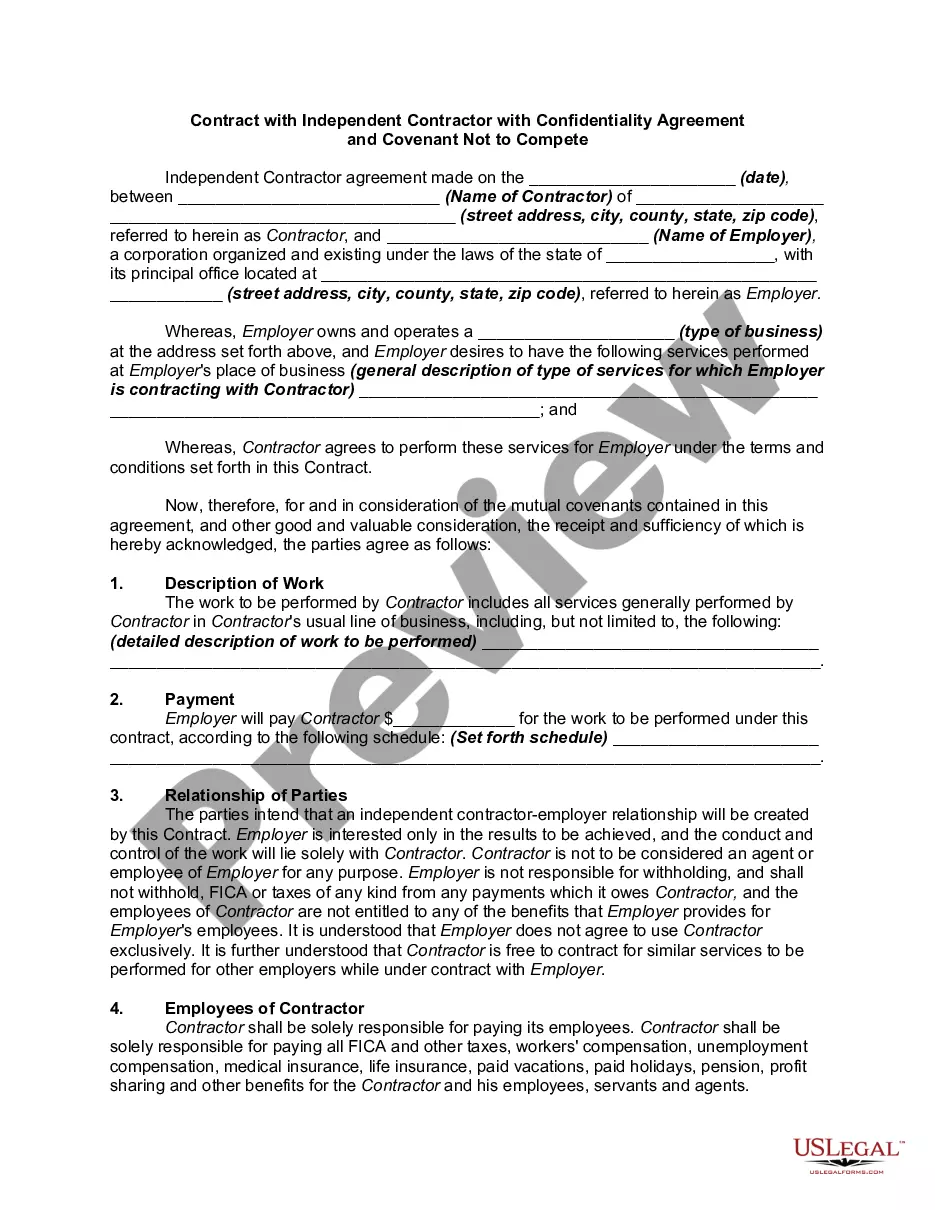
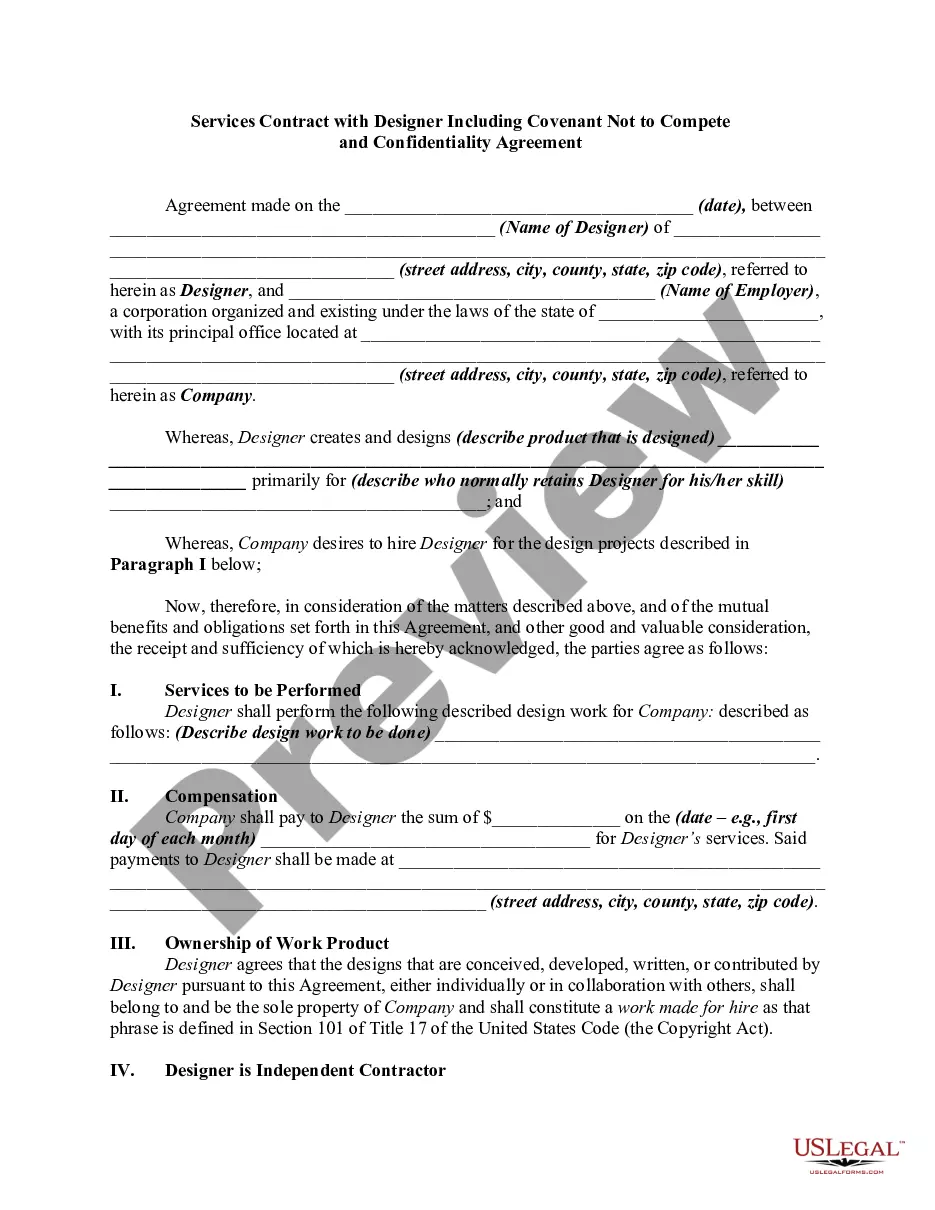
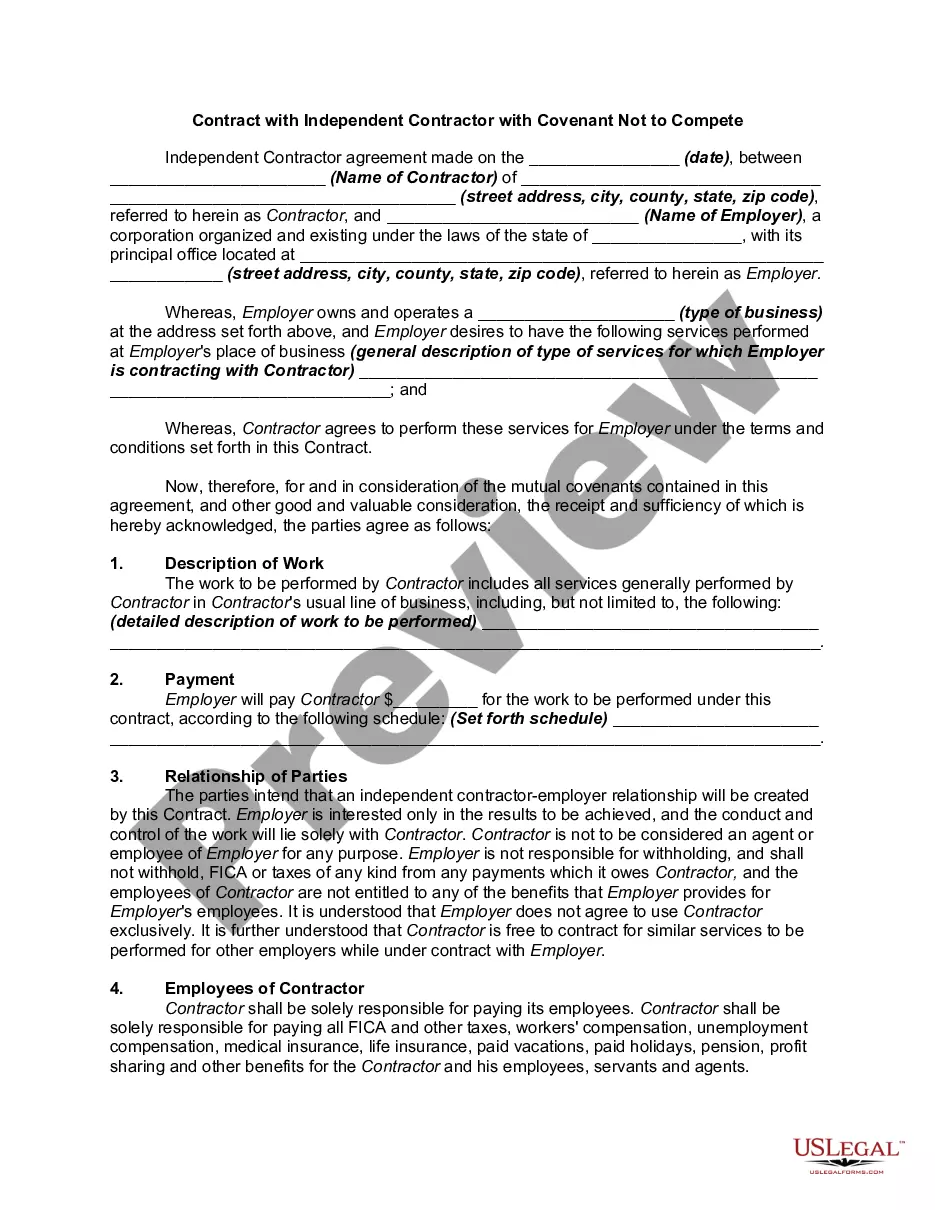
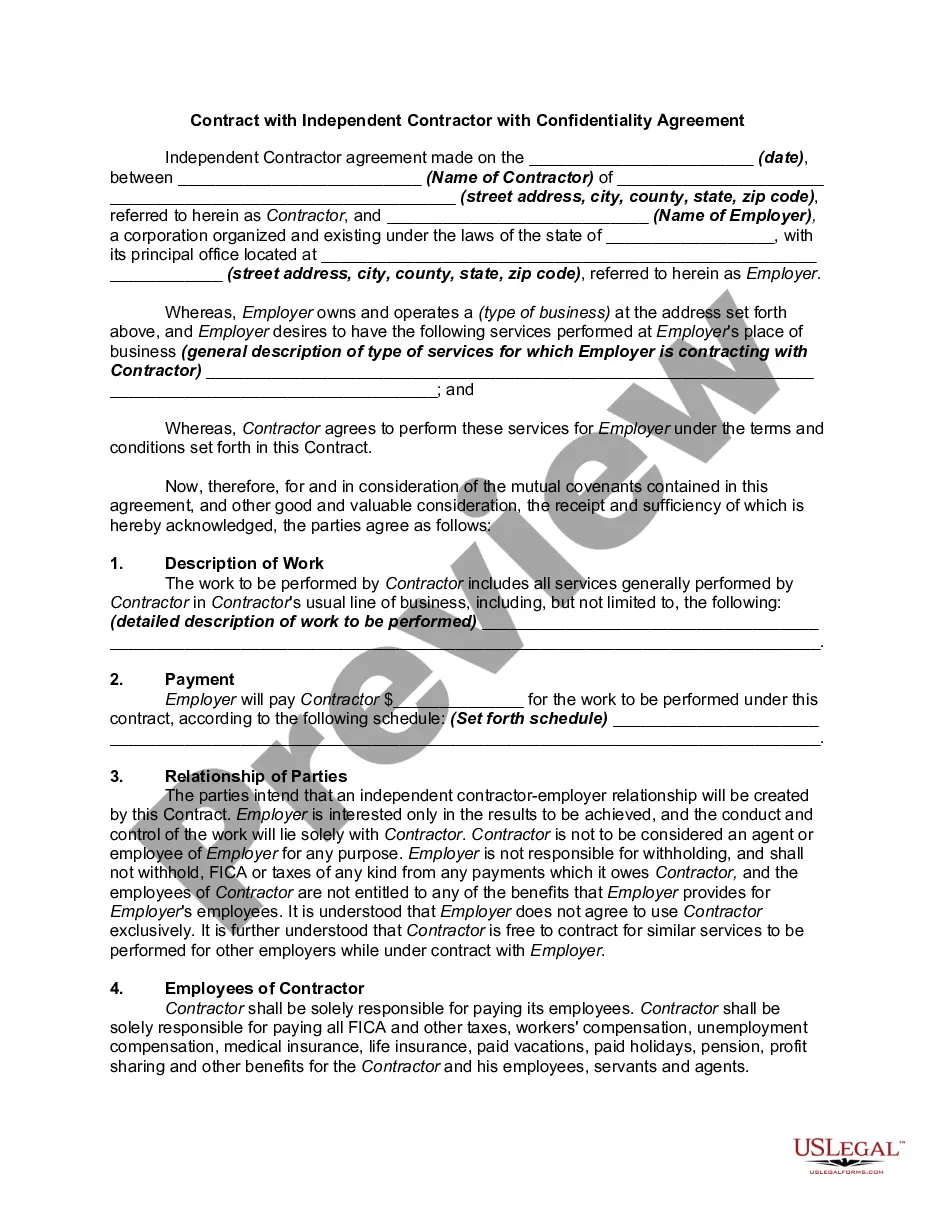
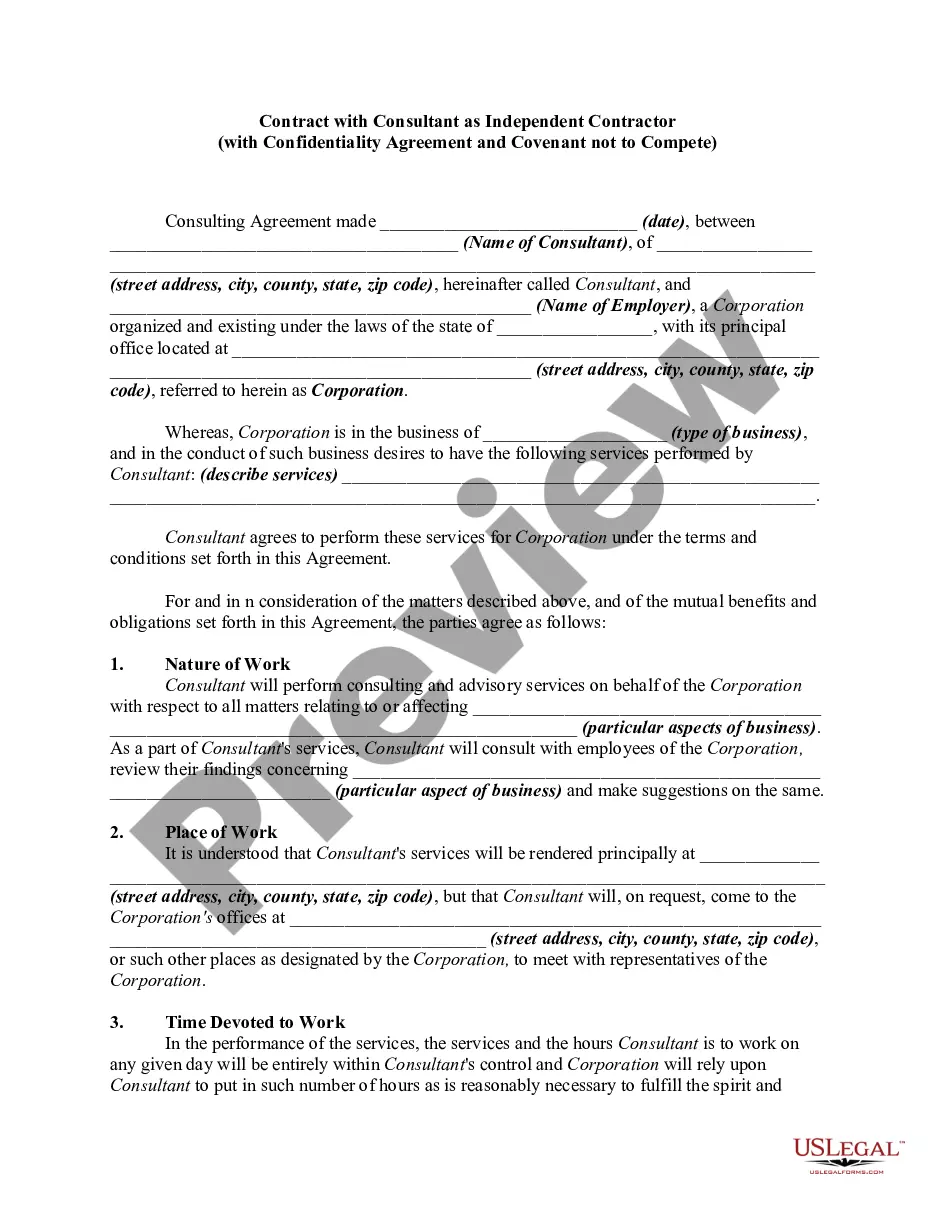
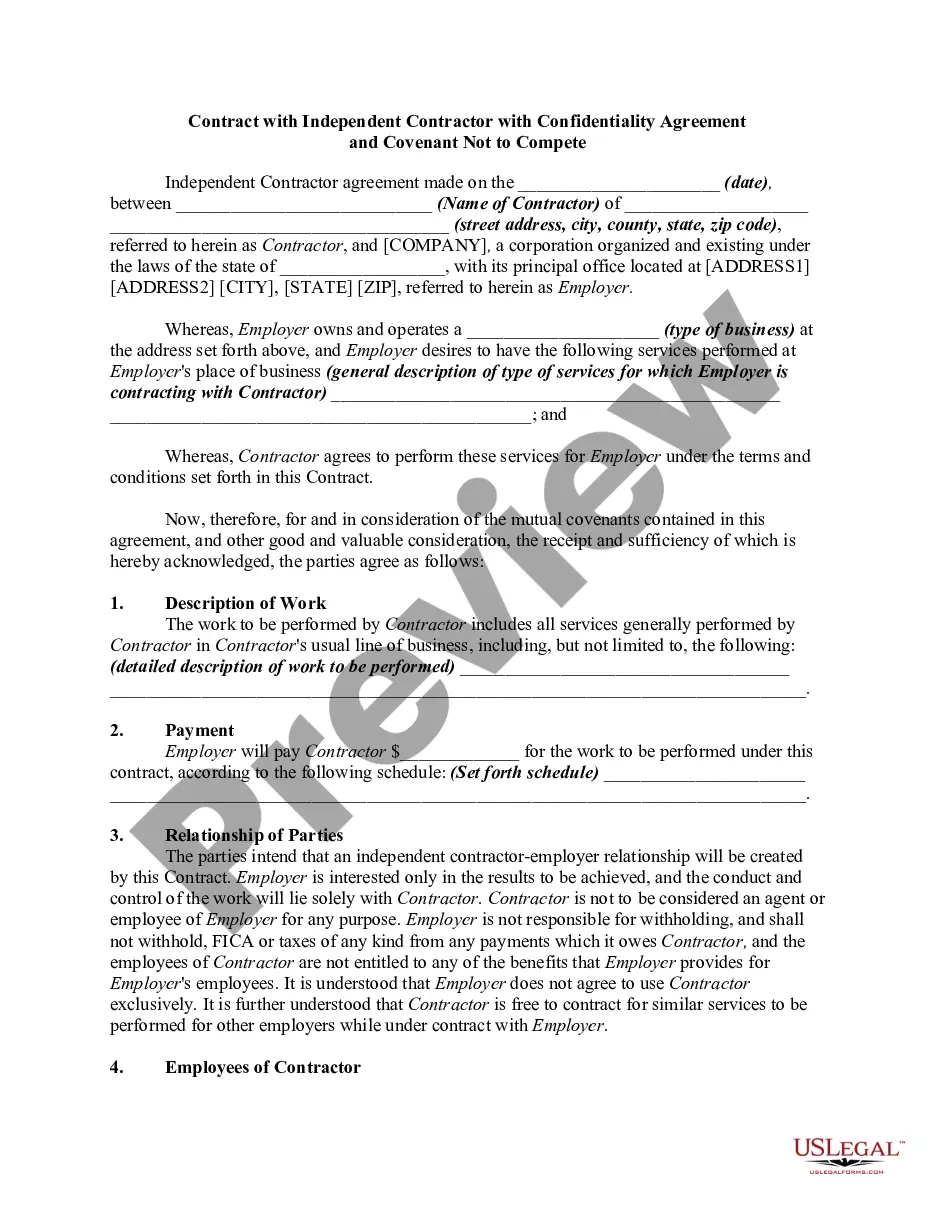
This form is a Contract with Self-Employed Independent Contractor that includes a confidentiality agreement and a covenant not to compete. It establishes a formal agreement between an employer and an independent contractor, detailing the nature of work, payment, responsibilities, and confidentiality obligations. Unlike standard employment contracts, this form allows for greater flexibility in the relationship between the parties, as the contractor operates independently and is not subject to the employer's control over how services are performed.
Main sections of this form
- Parties involved: Identifies the contractor and employer, including their addresses.
- Description of work: Outlines the specific services the contractor will provide.
- Payment terms: Specifies the compensation and payment schedule.
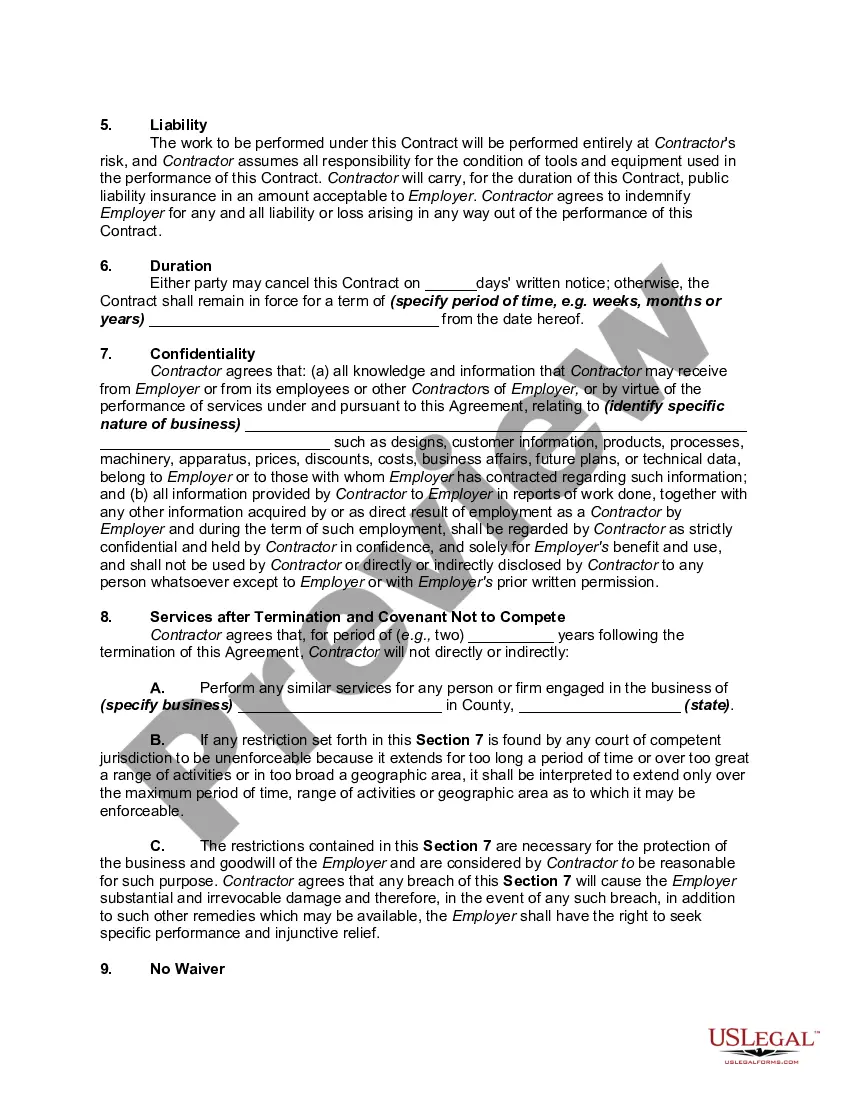
- Confidentiality clause: Defines what constitutes confidential information and obligations regarding it.
- Covenant not to compete: Sets restrictions on the contractor's ability to work with competitors after termination.
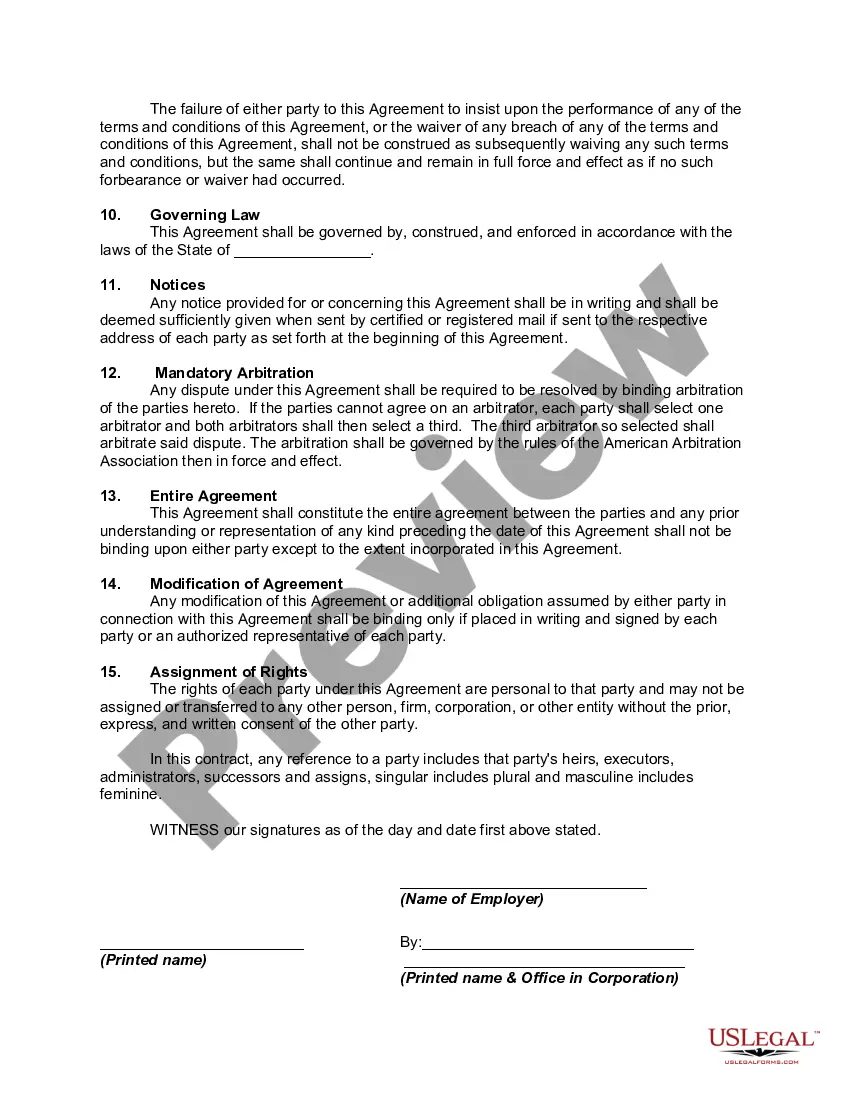
- Duration and termination: States the length of the contract and termination procedures.

Common use cases
This form is useful when engaging a self-employed independent contractor for services while ensuring that sensitive information is protected and that competition is restricted for a specified period. This situation typically arises in various industries, such as consulting, freelance work, or for specialized projects where confidentiality is crucial.
Who needs this form
- Employers looking to hire independent contractors for specific tasks without establishing a traditional employer-employee relationship.
- Independent contractors wanting to outline the terms under which they will provide services, including provisions for confidentiality and non-competition.
- Businesses emphasizing the protection of proprietary information and maintaining competitive advantages in their industry.
How to prepare this document
- Identify the parties: Fill in the names and addresses of both the contractor and the employer.
- Describe the work: Provide a detailed description of the services the contractor will perform.
- Specify payment terms: Indicate the agreed compensation and payment schedule.
- Outline confidentiality obligations: Clearly define what information is considered confidential.
- Enter duration and terms of termination: Complete the section on how long the contract will remain active and how it can be terminated.
Notarization guidance
In most cases, this form does not require notarization. However, some jurisdictions or signing circumstances might. US Legal Forms offers online notarization powered by Notarize, accessible 24/7 for a quick, remote process.
Get your form ready online
Our built-in tools help you complete, sign, share, and store your documents in one place.
Make edits, fill in missing information, and update formatting in US Legal Forms—just like you would in MS Word.
Download a copy, print it, send it by email, or mail it via USPS—whatever works best for your next step.
Sign and collect signatures with our SignNow integration. Send to multiple recipients, set reminders, and more. Go Premium to unlock E-Sign.
If this form requires notarization, complete it online through a secure video call—no need to meet a notary in person or wait for an appointment.
We protect your documents and personal data by following strict security and privacy standards.

Make edits, fill in missing information, and update formatting in US Legal Forms—just like you would in MS Word.

Download a copy, print it, send it by email, or mail it via USPS—whatever works best for your next step.

Sign and collect signatures with our SignNow integration. Send to multiple recipients, set reminders, and more. Go Premium to unlock E-Sign.

If this form requires notarization, complete it online through a secure video call—no need to meet a notary in person or wait for an appointment.

We protect your documents and personal data by following strict security and privacy standards.
Common mistakes
- Failing to clearly define confidential information, leading to potential disputes.
- Not specifying the duration of the non-compete clause which may result in enforceability issues.
- Leaving out payment terms or details, creating confusion about the contractor's compensation.
- Using vague descriptions of work that could lead to misunderstandings about responsibilities.
Why use this form online
- Immediate access to a professionally drafted template that saves time and legal expenses.
- Easy customization to fit specific needs, altering clauses related to payment, duration, and confidentiality as required.
- Guidance on how to complete the form ensures clarity and completeness.
Legal use & context
- This contract clarifies the relationship between the employer and contractor, mitigating the risk of misclassification.
- The confidentiality and non-compete clauses are enforceable when reasonable in scope and duration, as determined by state law.
- It's essential to review the specific laws of your state regarding independent contractor agreements to ensure compliance.
Summary of main points
- This form provides legal protection for both the employer and the independent contractor.
- Clearly outlines the relationship and responsibilities of each party.
- Incorporates confidentiality and non-compete clauses to secure the employer's interests.
Looking for another form?
Form popularity
FAQ
Study your competition. Write up the agreement. Have your agreement reviewed by a legal professional. Present the non-compete contract to your employee. If everyone is satisfied, sign and date the agreement.
A noncompete agreement is a binding contract that prevents an independent contractor from competing with the employer during the contract and a set period of time afterwards. The agreement means the contractor cannot work for a competitor or work independently in the same exact field.
When we see the Indian legal scenario about the non compete clause, it is prohibited under the Law of Contracts. Section 27 of the Indian Contract Act-1872 provides that Every agreement by which anyone is restrained from exercising a lawful profession or trade or business of any kind, is to that extent void.
On average, non-compete cases cost $10,000 or less. Many times an employer is seeking an injunction, which if the employer loses may result in a quicker resolution. Many times the issues are less factual and more legal. Legal issues require less discovery, which can be the most costly part of litigation.
The California courts will no longer enforce non-compete agreements. Employers in the state cannot make signing a non-compete a required term of employment (unless employees are independent contractors) in California.
Well, if you are fortunate enough to be employed in California, the answer is NO, your current employer cannot stop you from going to work for a competitor.Although non-compete agreements are unenforceable in California, confidentiality agreements are enforceable.
A non-compete agreement is a contract between an employee and employer. While an employer cannot require you to sign a non-compete, they may terminate, or choose not to hire you if you refuse to sign.Courts generally do not approve of non-compete agreements.
Under Florida law, in certain circumstances, an independent contractor agreement can contain an enforceable non-compete clause. Florida courts will uphold a non-compete agreement if the non-compete clause is reasonable in geographic scope and reasonable in its time-frame.
Typically, the only way to fight a non-compete agreement is to go to court. It may be that your former employer has never sued another employee to enforce the non-compete agreement.