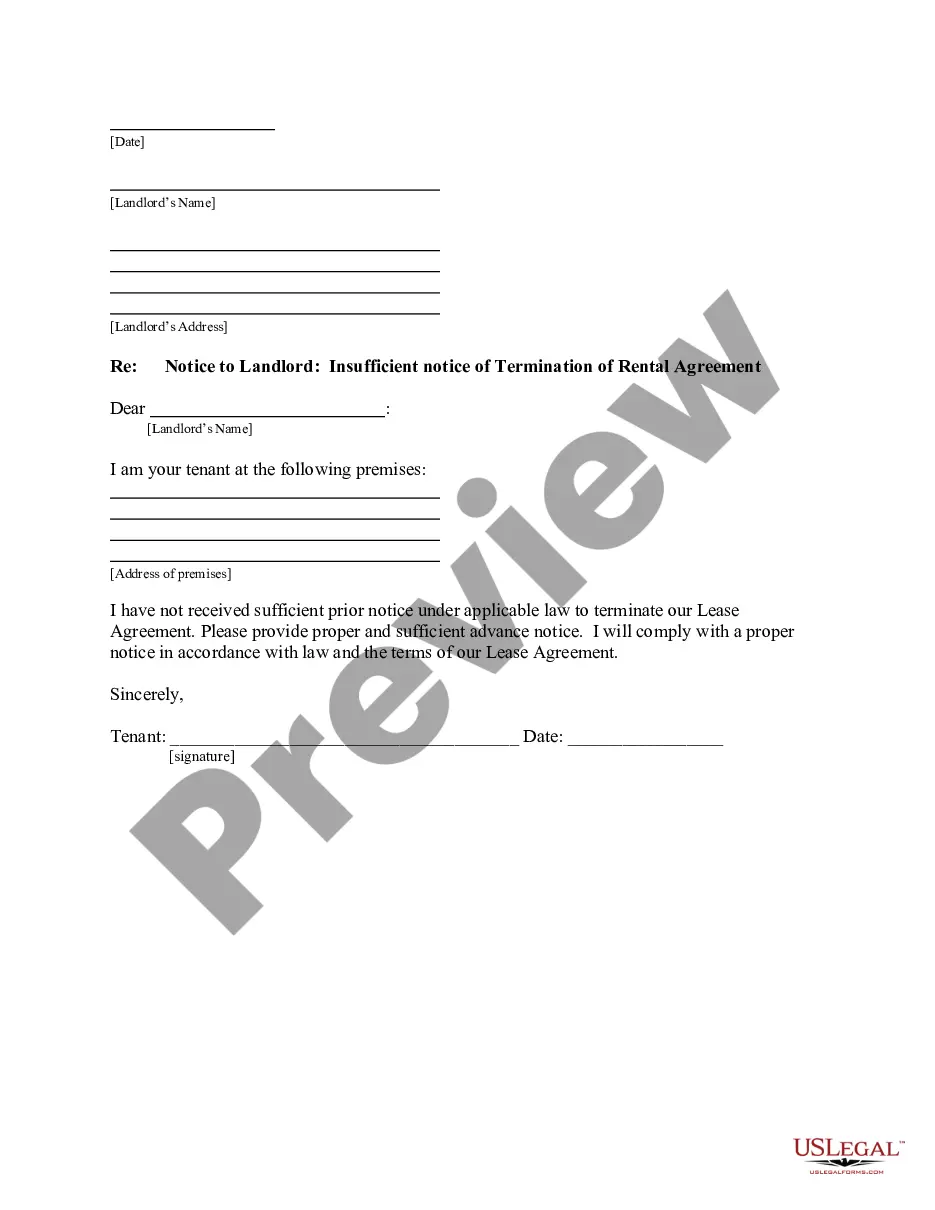
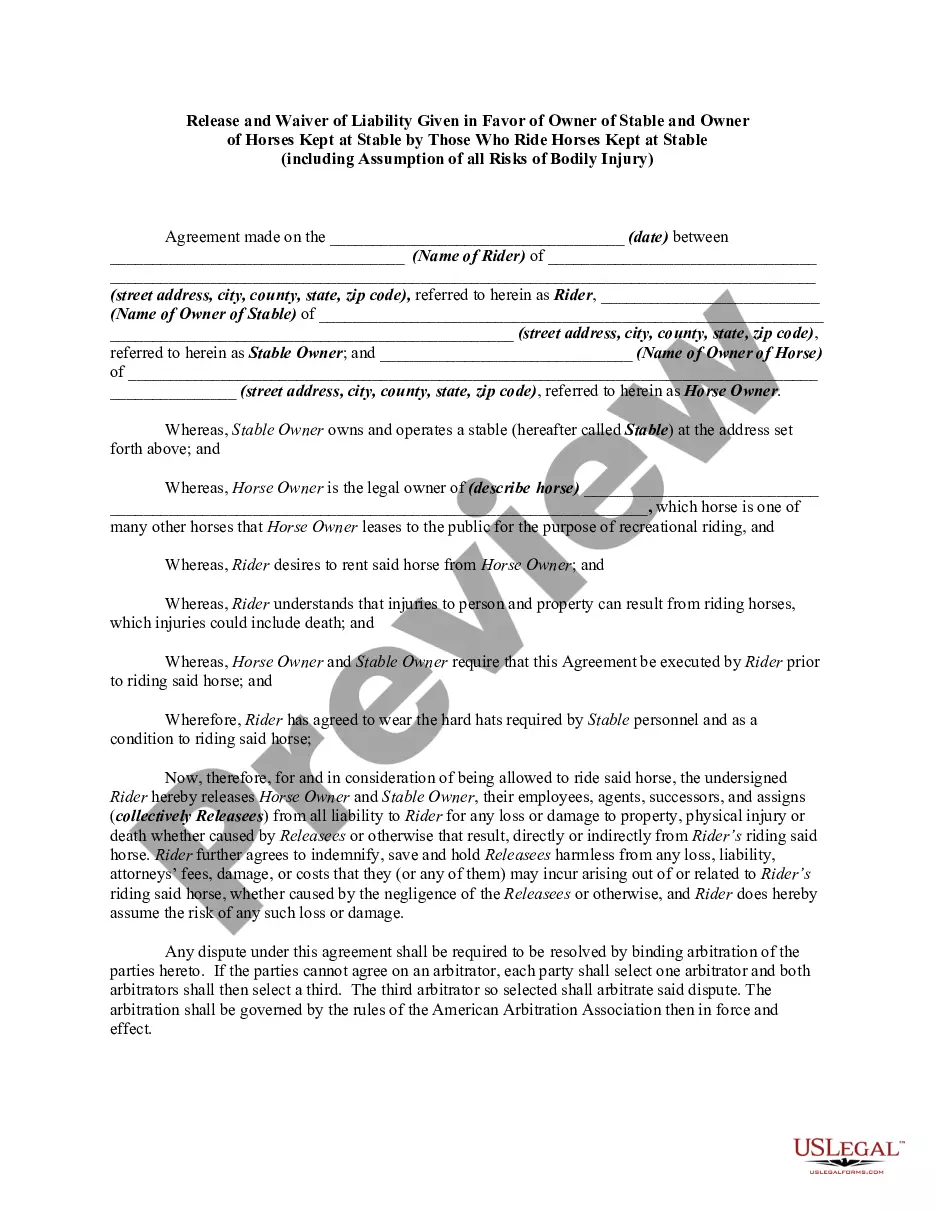
Release and Waiver of Liability Given in Favor of Owner of Stable and Owner of Horses Kept at Stable by Those Who Ride Horses Kept at Stable including Assumption of all Risks of Personal Bodily Injury - Horseback Riding
What this document covers
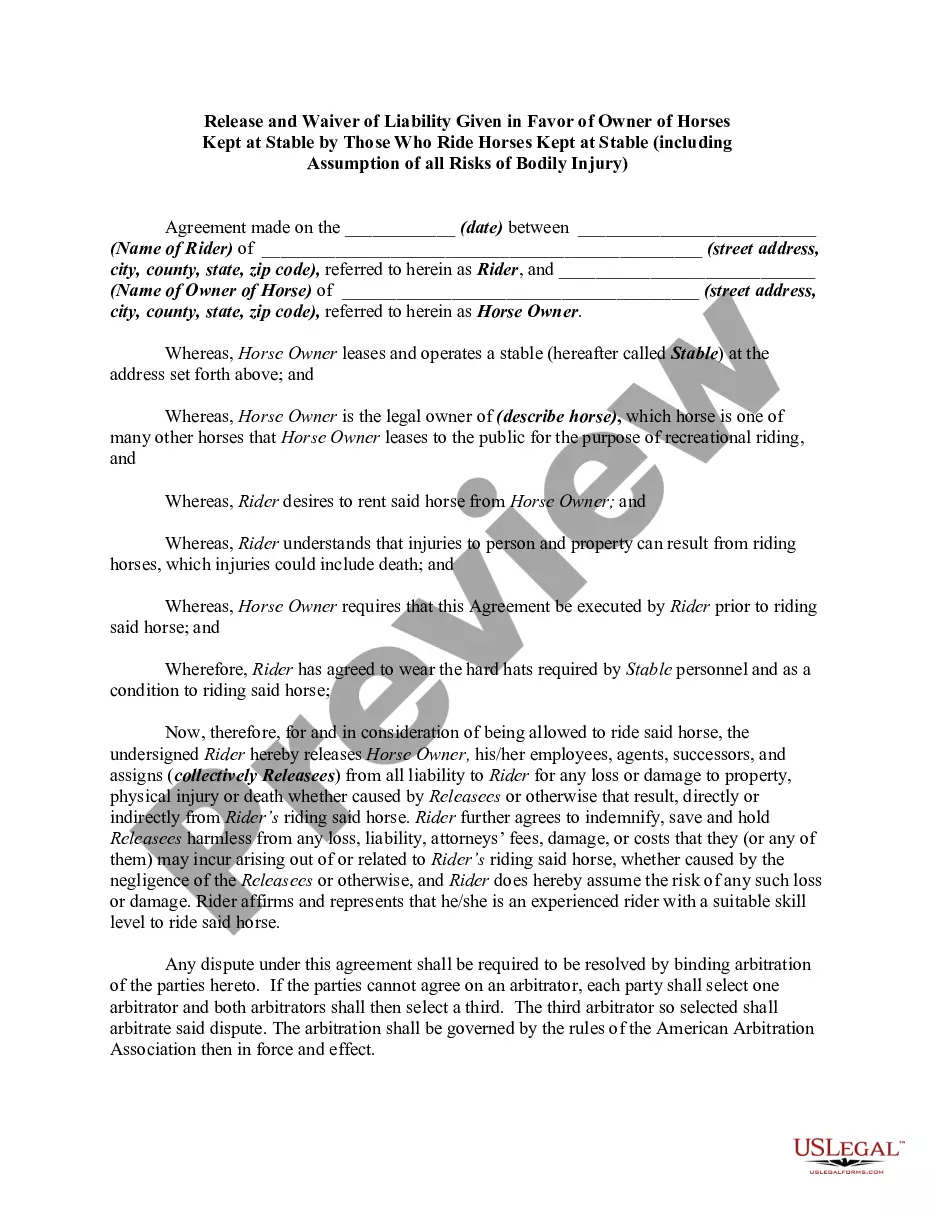
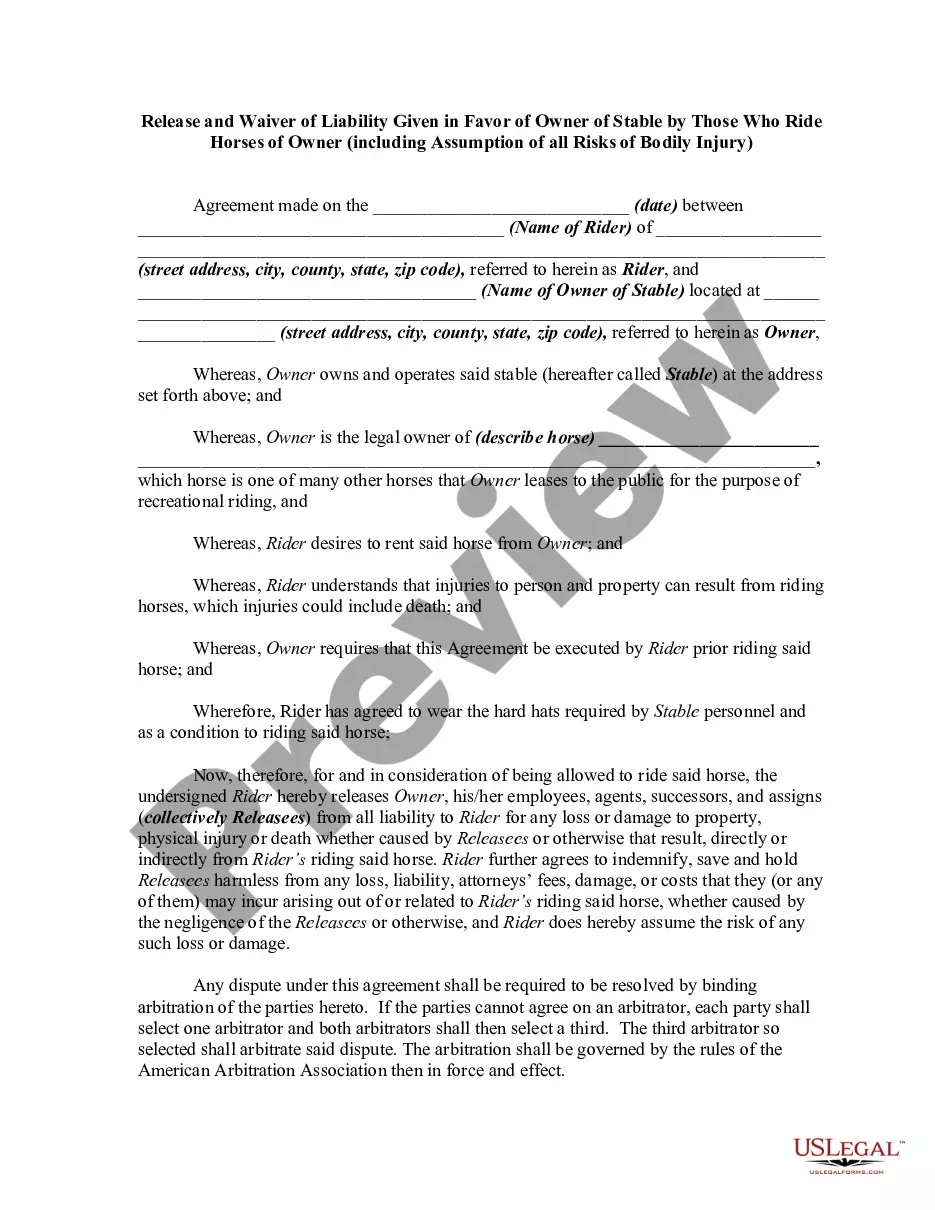
This Release and Waiver of Liability form is a legal document that allows individuals who ride horses at a stable to acknowledge the inherent risks involved in horseback riding. By signing this form, riders relinquish their right to sue the owners of the stable and the horses should an injury occur during their riding activities. This form is essential for protecting stable owners from liability claims and differs from other waivers as it specifically addresses risks associated with horseback riding, including bodily injury and even death.
Key parts of this document
- Date of the agreement between the rider, stable owner, and horse owner.
- Identification of the rider, stable owner, and horse owner with their respective addresses.
- Description of the horse being rented for riding.
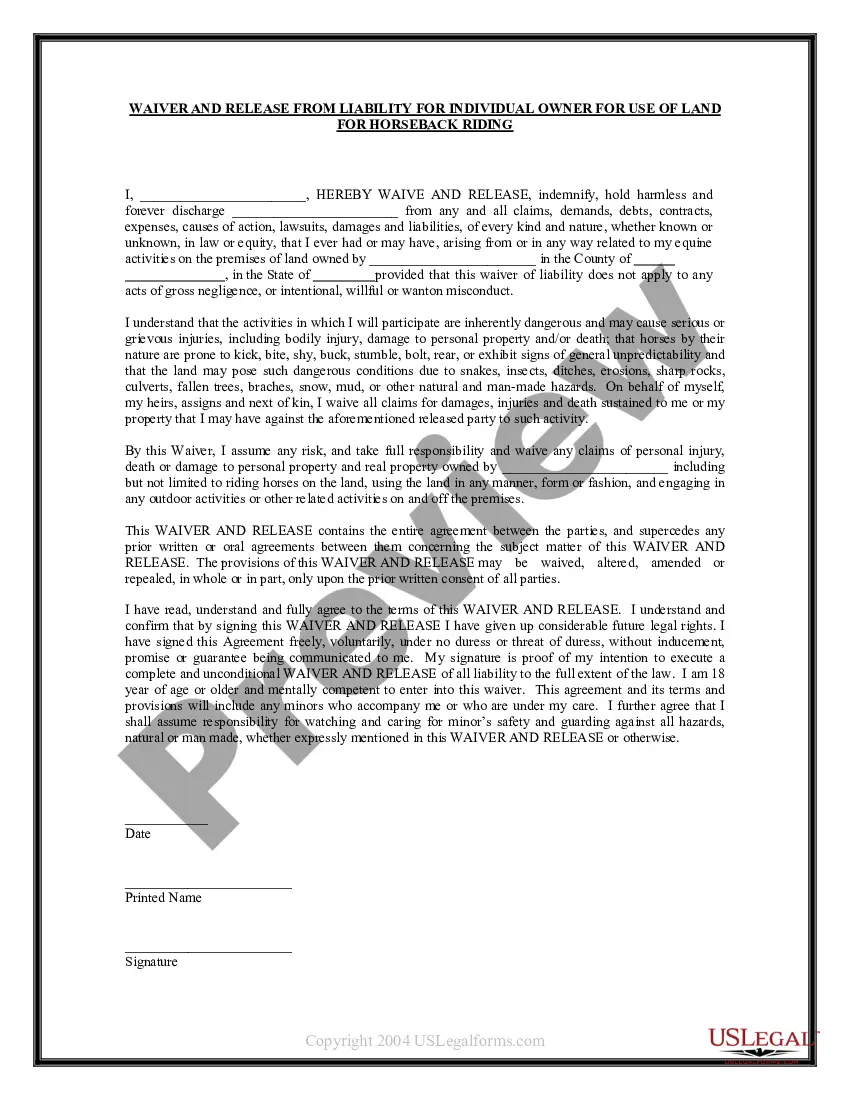
- Statement of risks associated with horseback riding.
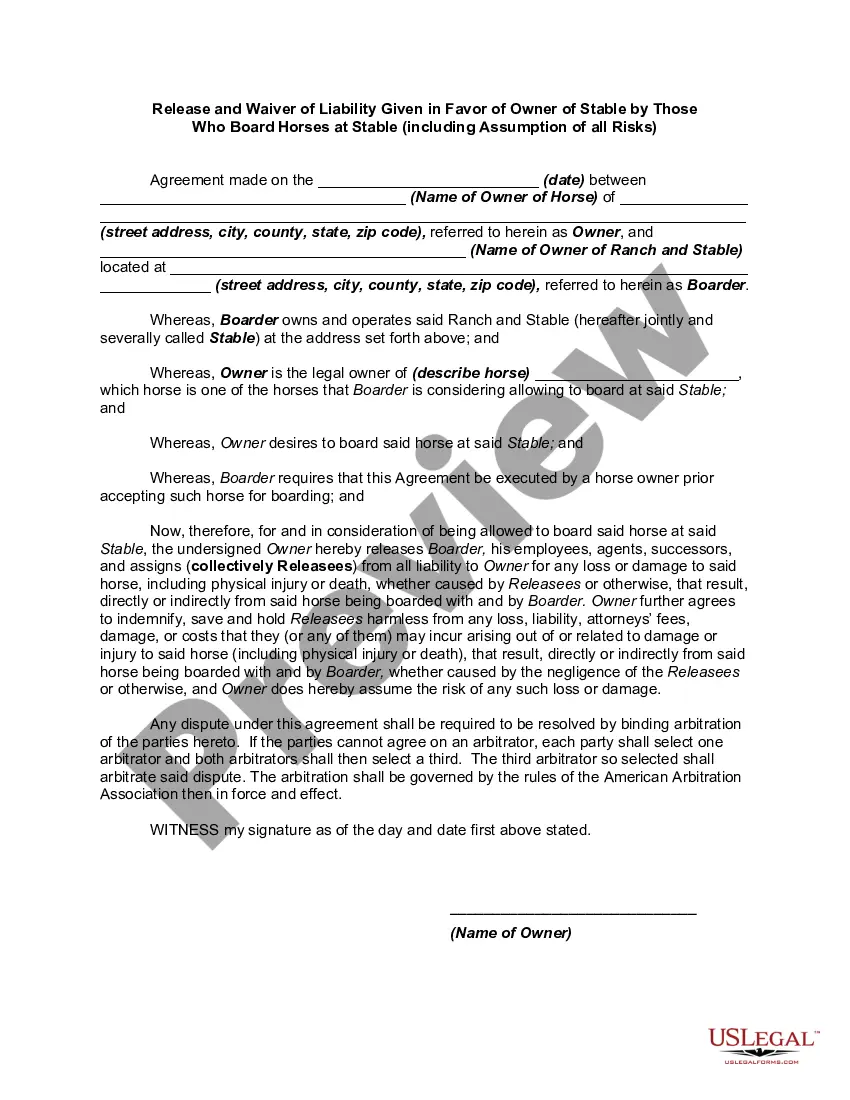
- Release of liability clause protecting the stable and horse owners from claims of injury or damage.
- Indemnification agreement where the rider agrees to compensate the owners for any related losses.
- Arbitration clause for resolving disputes under the agreement.
When this form is needed
This form should be used when a rider wishes to rent a horse from a stable for recreational riding. It is particularly important when the rider is aware of and accepts the risks of potential injuries that could arise from horseback riding. By securing this signed waiver, both the owner of the stable and the horse are legally protected against lawsuits stemming from accidents or injuries that may occur during riding sessions.
Intended users of this form
- Individuals renting horses from a stable for recreational purposes.
- Stable owners who require a formal agreement to protect against liability claims.
- Parents or guardians signing on behalf of minors who will be riding horses.
Steps to complete this form
- Identify the parties involved: the rider, stable owner, and horse owner.
- Enter the date of the agreement.
- Provide a detailed description of the horse being rented.
- Review and understand the release of liability and indemnification clauses.
- Have all parties sign and date the agreement to ensure it is enforceable.
Notarization requirements for this form
This form does not typically require notarization to be legally valid. However, some jurisdictions or document types may still require it. US Legal Forms provides secure online notarization powered by Notarize, available 24/7 for added convenience.
Get your form ready online
Our built-in tools help you complete, sign, share, and store your documents in one place.
Make edits, fill in missing information, and update formatting in US Legal Forms—just like you would in MS Word.
Download a copy, print it, send it by email, or mail it via USPS—whatever works best for your next step.
Sign and collect signatures with our SignNow integration. Send to multiple recipients, set reminders, and more. Go Premium to unlock E-Sign.
If this form requires notarization, complete it online through a secure video call—no need to meet a notary in person or wait for an appointment.
We protect your documents and personal data by following strict security and privacy standards.

Make edits, fill in missing information, and update formatting in US Legal Forms—just like you would in MS Word.

Download a copy, print it, send it by email, or mail it via USPS—whatever works best for your next step.

Sign and collect signatures with our SignNow integration. Send to multiple recipients, set reminders, and more. Go Premium to unlock E-Sign.

If this form requires notarization, complete it online through a secure video call—no need to meet a notary in person or wait for an appointment.

We protect your documents and personal data by following strict security and privacy standards.
Common mistakes
- Failing to provide complete and correct contact information for all parties.
- Not thoroughly reading the risk acknowledgment sections before signing.
- Neglecting to sign the form, which could invalidate the waiver.
- Using the form without ensuring it complies with local laws.
Benefits of completing this form online
- Convenience of filling out and downloading the form at any time.
- Easy access to state-specific legal guidelines to ensure accuracy.
- Secure and reliable format, reducing the likelihood of errors or omissions.
Legal use & context
- Releases and waivers are generally enforceable if they clearly outline the risks involved.
- Courts may invalidate waivers signed on behalf of minors, requiring additional consideration.
- Agreements that waive liability for gross negligence may not be enforceable and can be deemed against public policy.
Main things to remember
- The form serves to protect stable and horse owners from legal liability when injuries occur during horseback riding.
- All parties must understand and agree to the risks involved in riding horses.
- Properly completing and signing the form is essential to maintaining its legal effectiveness.
Looking for another form?
Form popularity
FAQ
"If you're too anxious to accomplish even that," he adds, "then dismount and immediately do some groundwork to regain control and remind him to listen and be respectful. You may or may not get back on at that point, but the key thing is to stay with your horse and work him until your fear subsides."
Can I ride my horse on all roads? You should never ride or lead a horse on a pavement or footpath, nor should you take your equine onto cycle tracks. You are not allowed to ride a horse on a motorway.
Buy a couple of good books or e-books on riding horses. Find horse blogs that offer information on riding horses and read their content. Buy or Rent In-Depth Horse Riding DVDs.
Thus, while the two men were initially charged for driving while intoxicated, this was later dropped and switched to a charge of public intoxication.But to sum up, it is technically illegal in many regions of the world to ride a horse while drunk.
Becoming more aware of your body. Learning more about riding and the techniques. Understanding horses better. Creating a positive mindset. Visualizing your riding. Getting fit for riding. Watching others ride. Setting riding goals.
Well, the good news is that you're never too old to ride a horse! As long as you can manage to get in and out of the saddle, you'll be able to embark on all the equine adventures you could wish for.
According to the NSW Road Rules, horse riders cannot travel on the road more than two abreast and must be within 1.5 metres of each other. Horses and riders are permitted to travel on footpaths and nature strips unless specifically prohibited and provided they give way to pedestrians at all times.
Horse racing is one of the sports in which gambling is very prominent. It is not something which is illegal in India. Its legality has been challenged before the courts as well and the Supreme Court held it to be legal.
You MUST NOT take a horse onto a footpath or pavement, and you should not take a horse onto a cycle track.Equestrian crossings may be provided for horse riders to cross the road and you should use these where available (see Crossings).