Employment of Executive or General Manager in a Closely Held Corporate Business
About this form
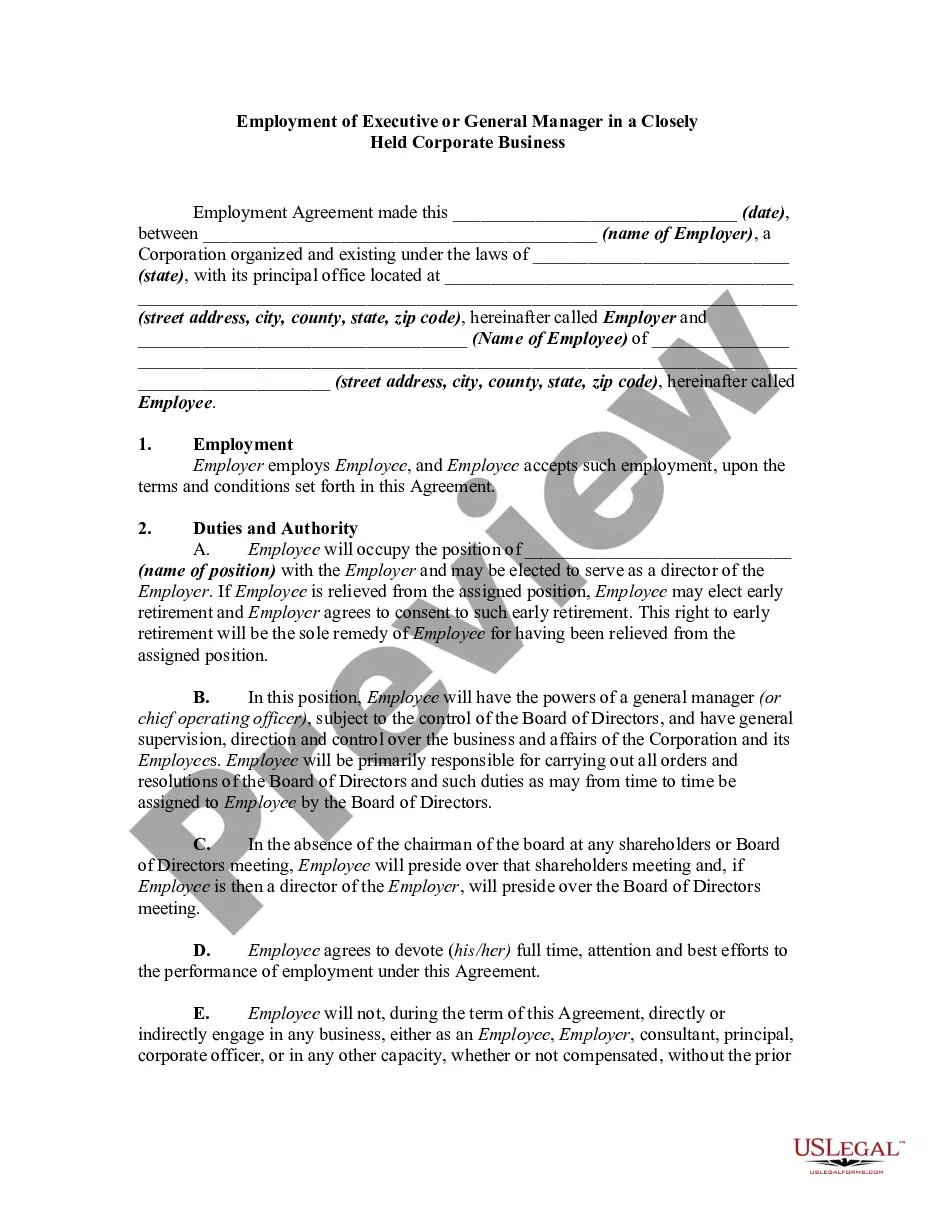
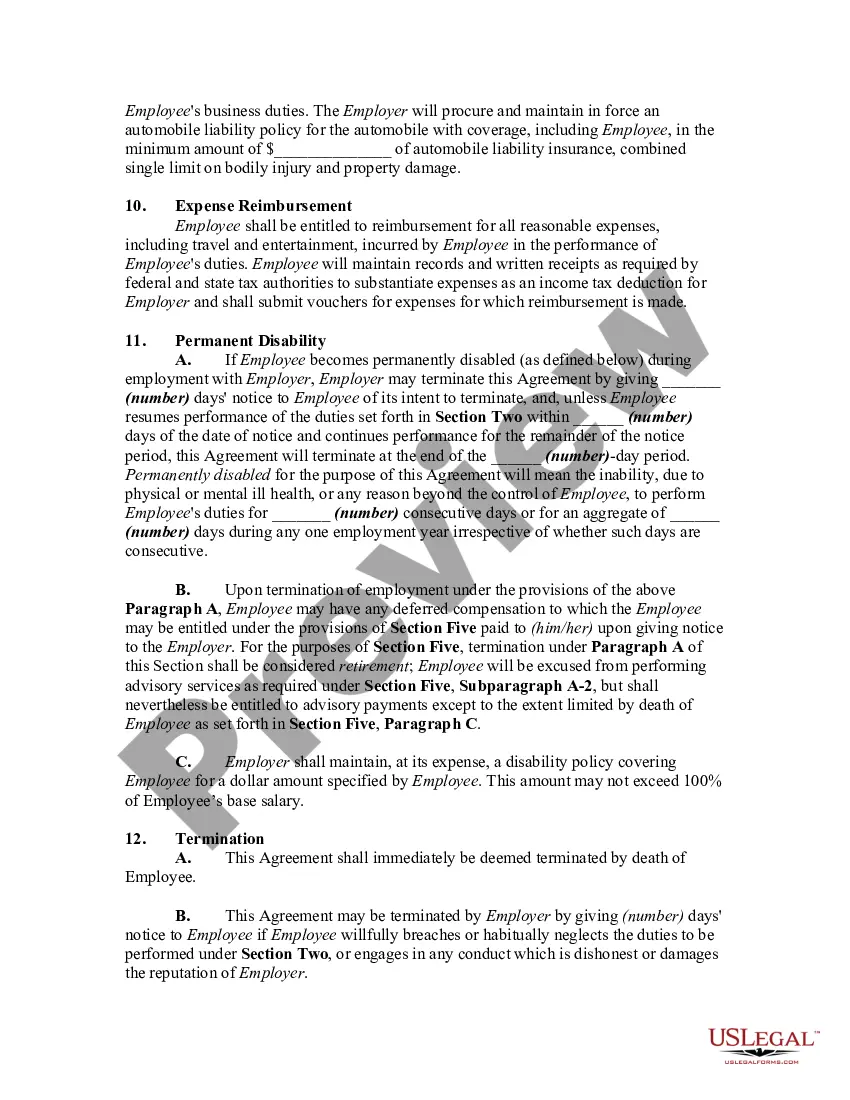
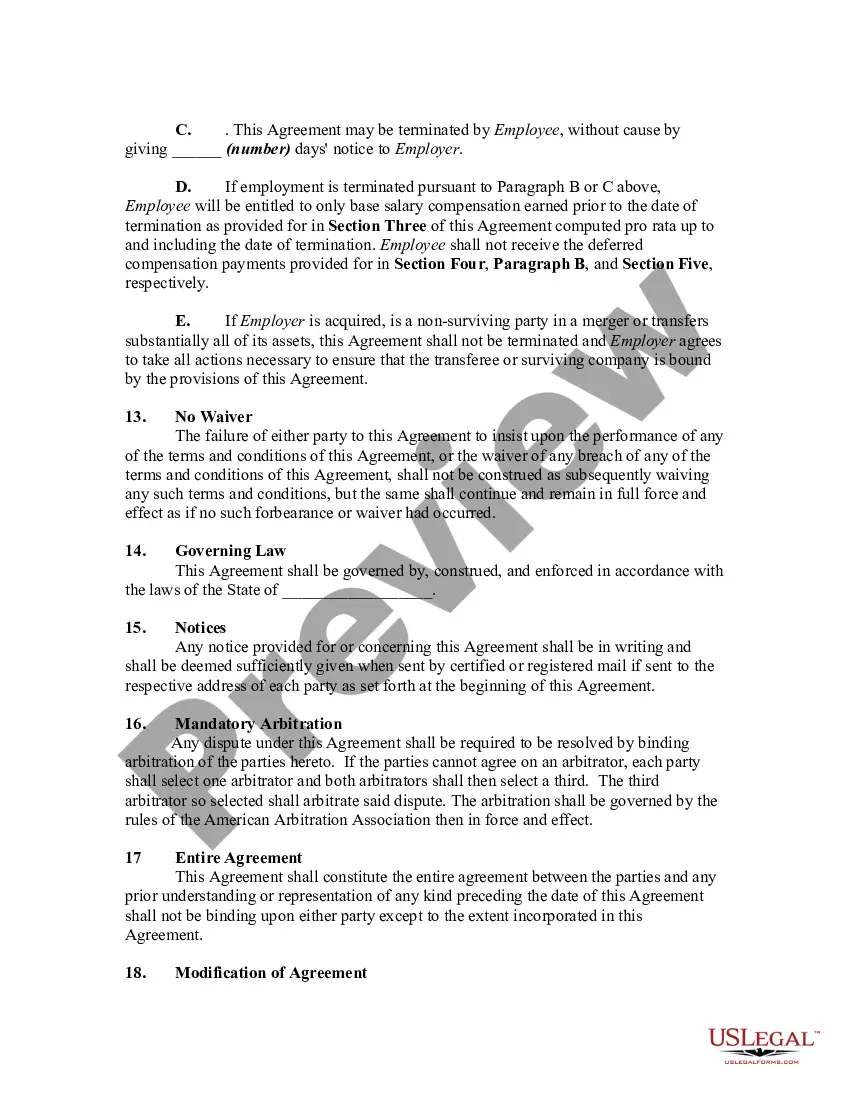
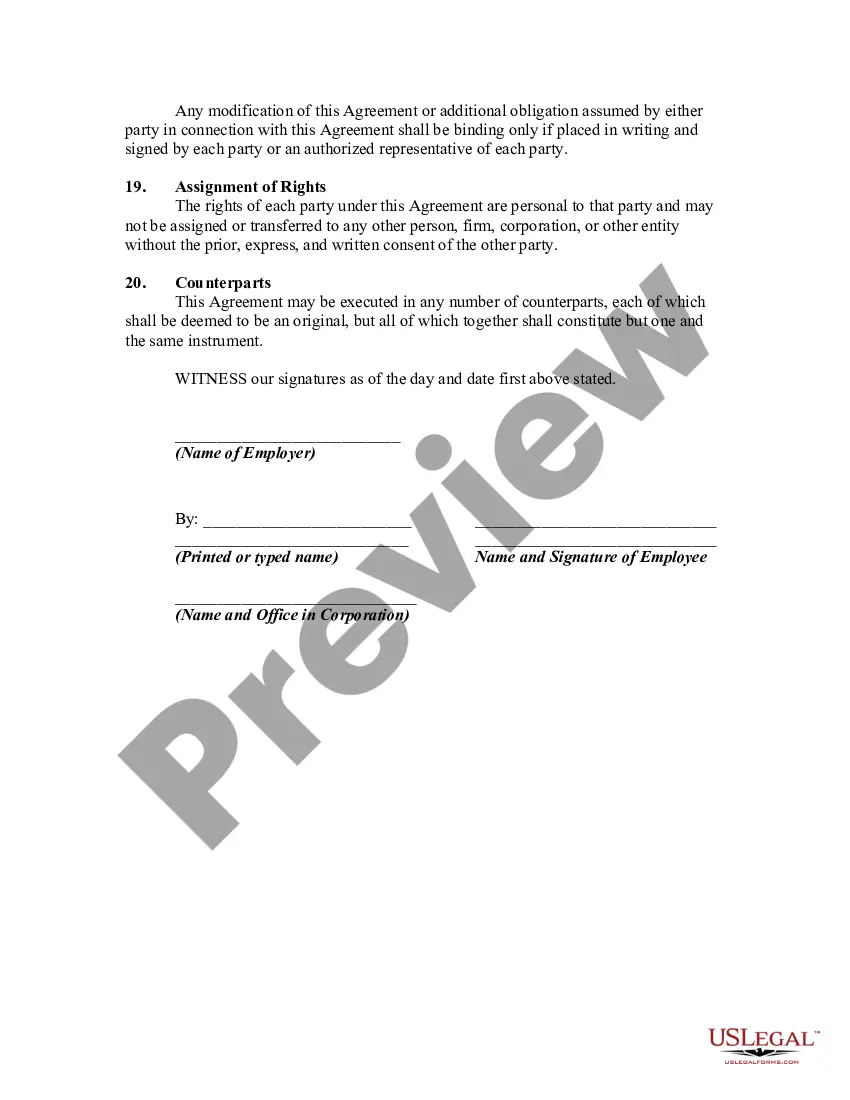
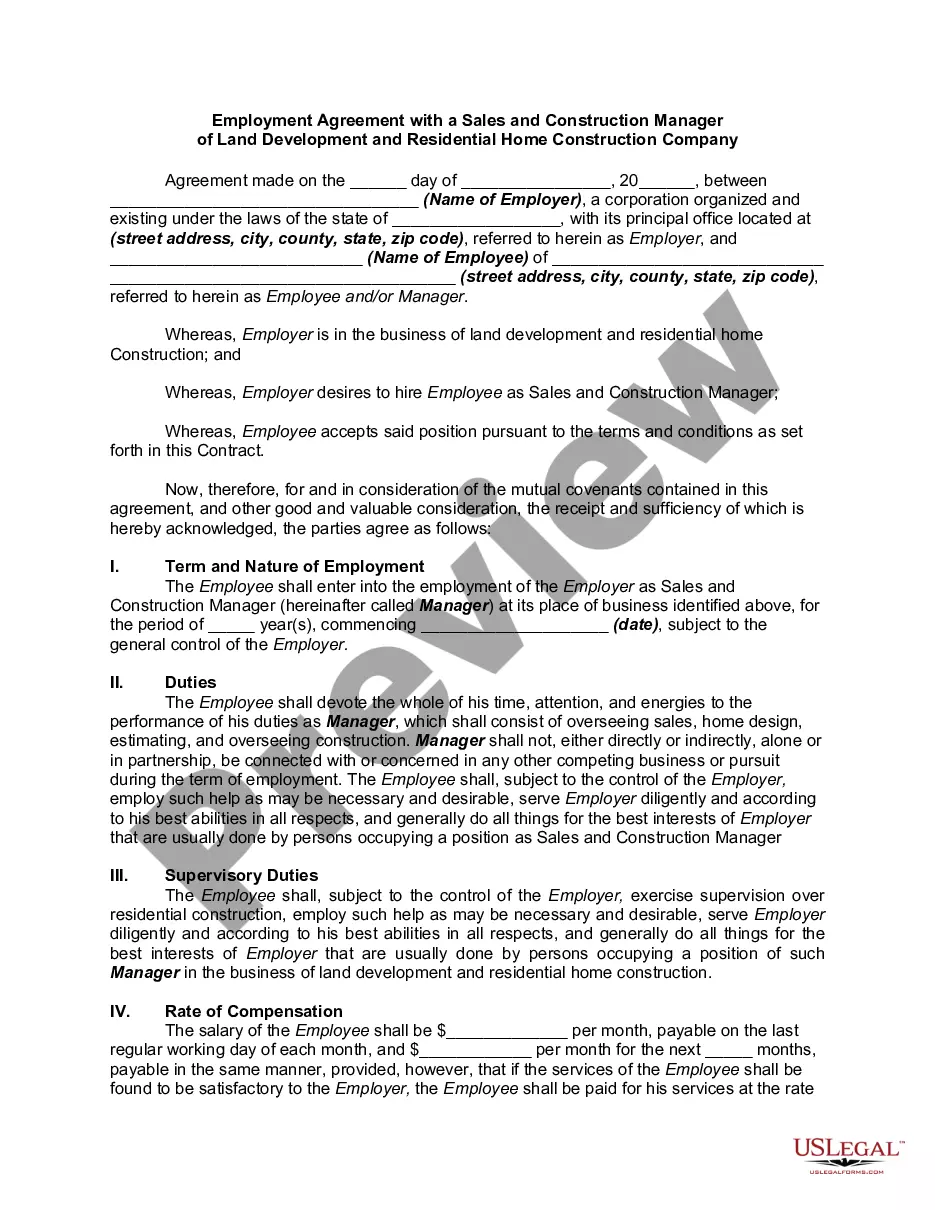
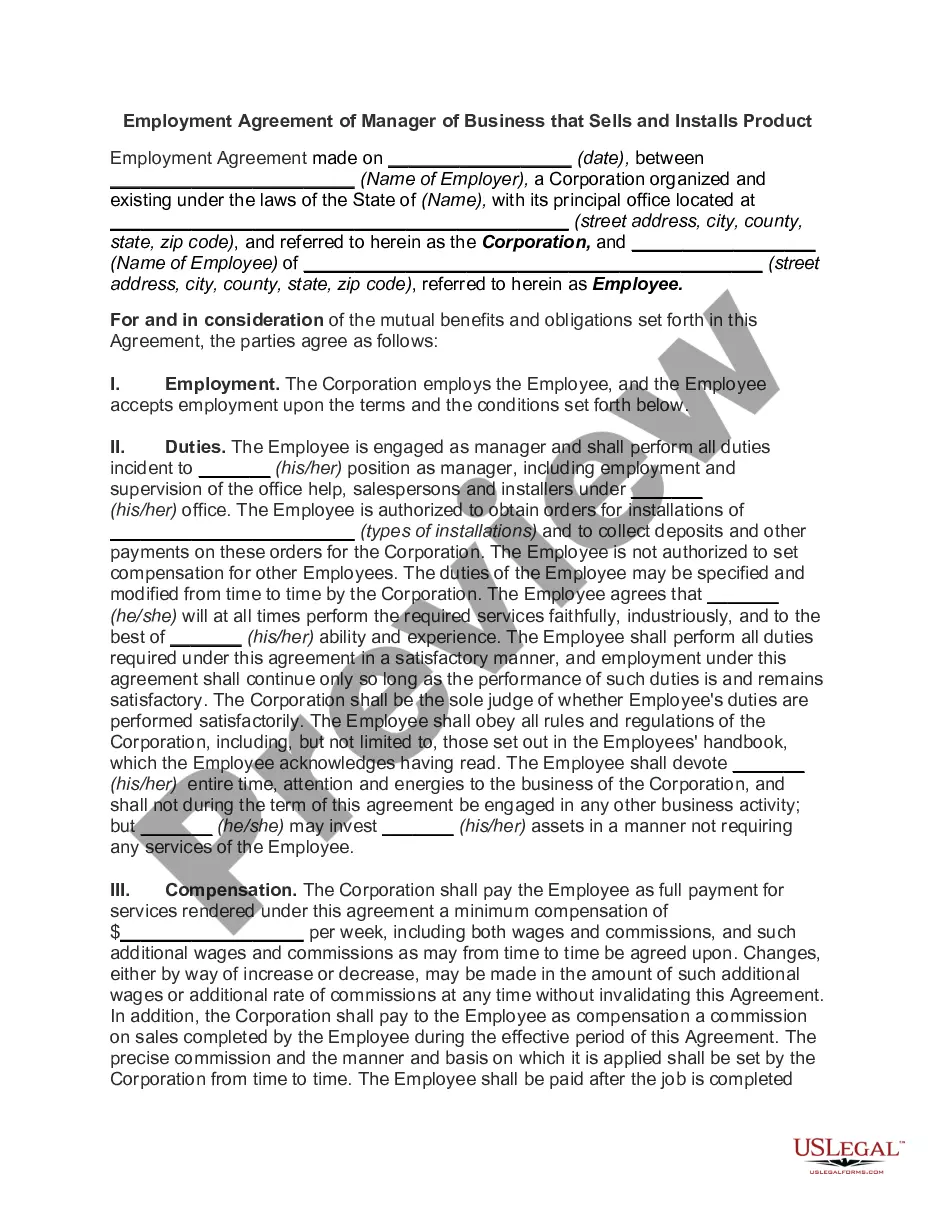
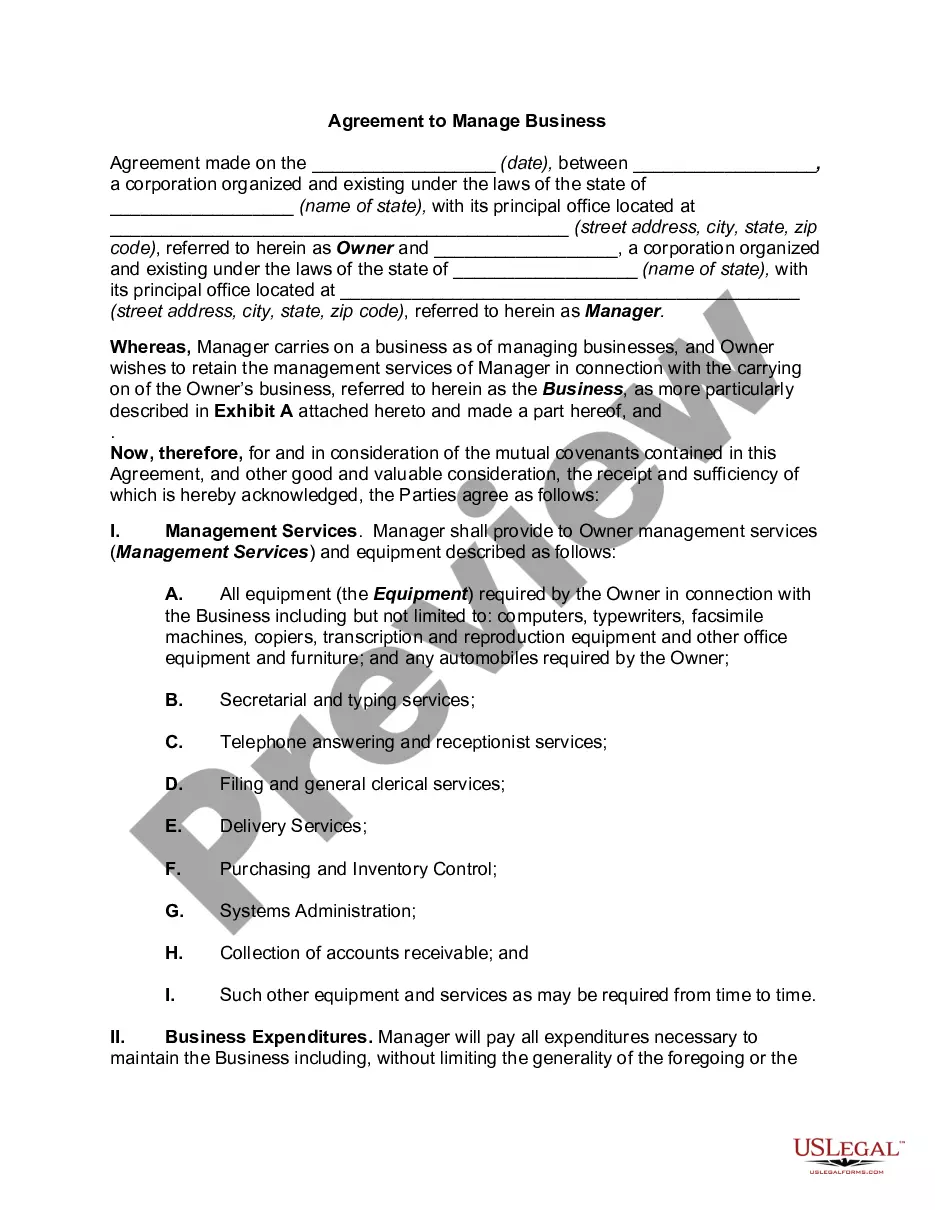
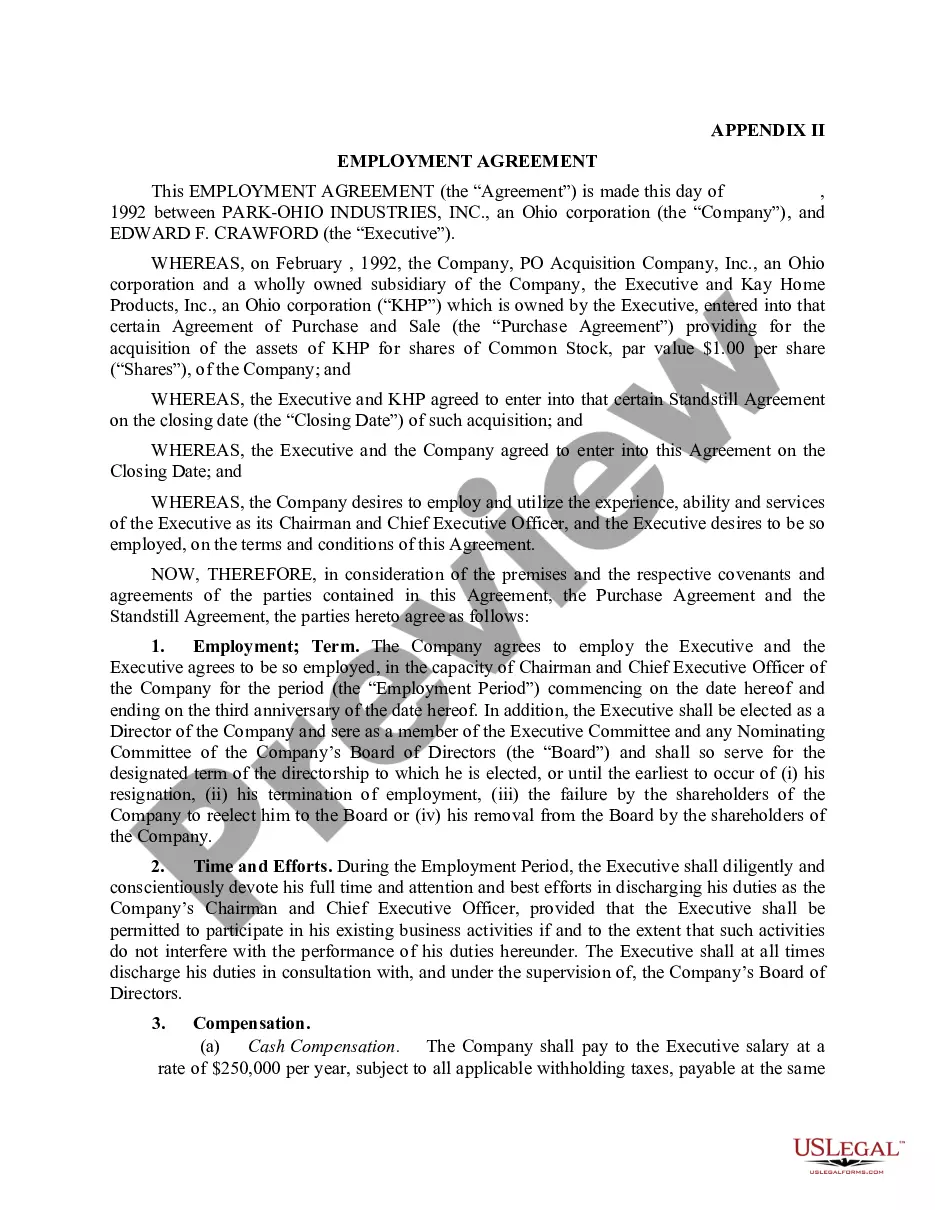
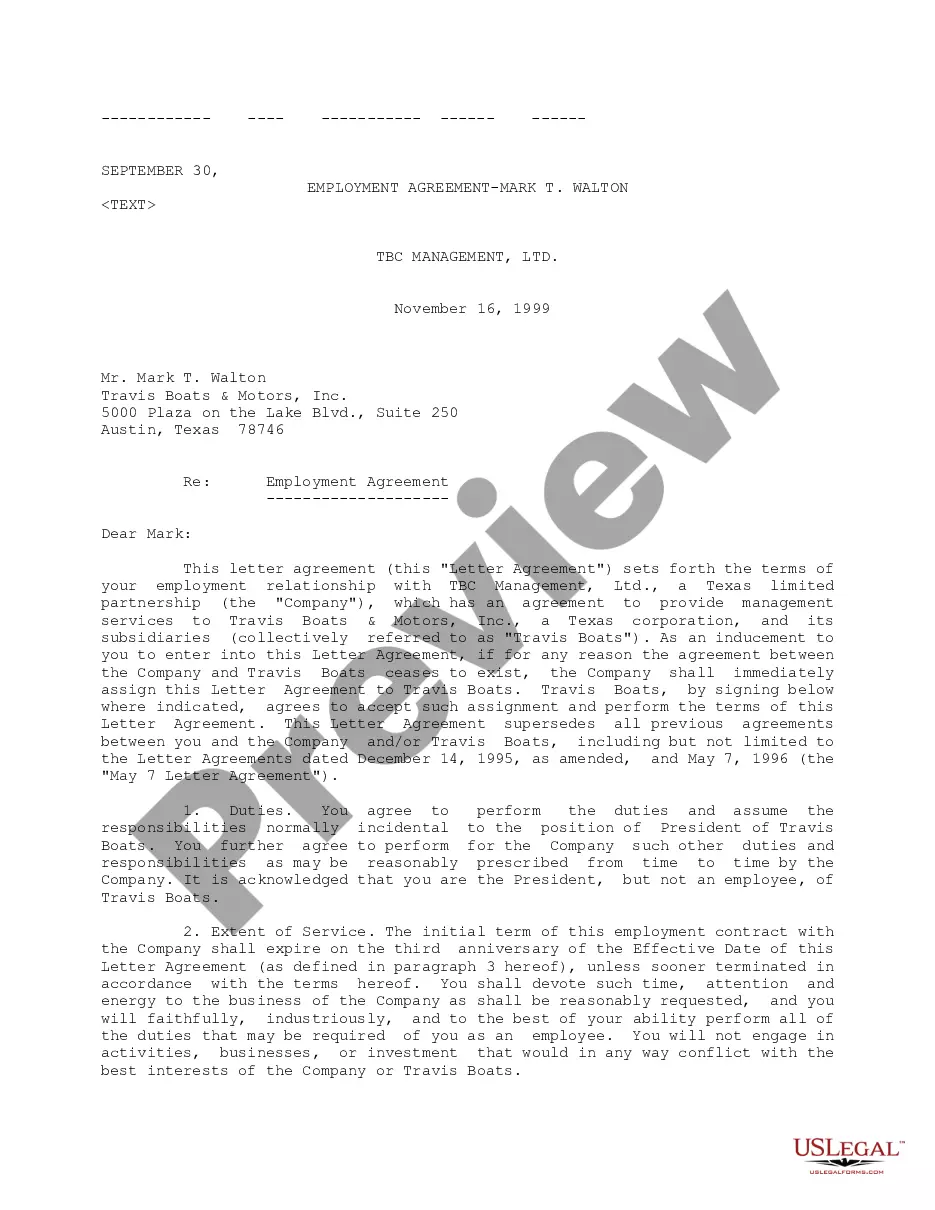
This Employment of Executive or General Manager in a Closely Held Corporate Business form is a legal document used by closely held corporations to define the terms of employment for key executives, such as a chief operating officer. It outlines the duties, compensation, and conditions of employment, distinguishing it from other employment agreements typically used in larger corporations or public companies.
Form components explained
- Identification of the parties involved (Employer and Employee).
- Job duties and authority of the Employee.
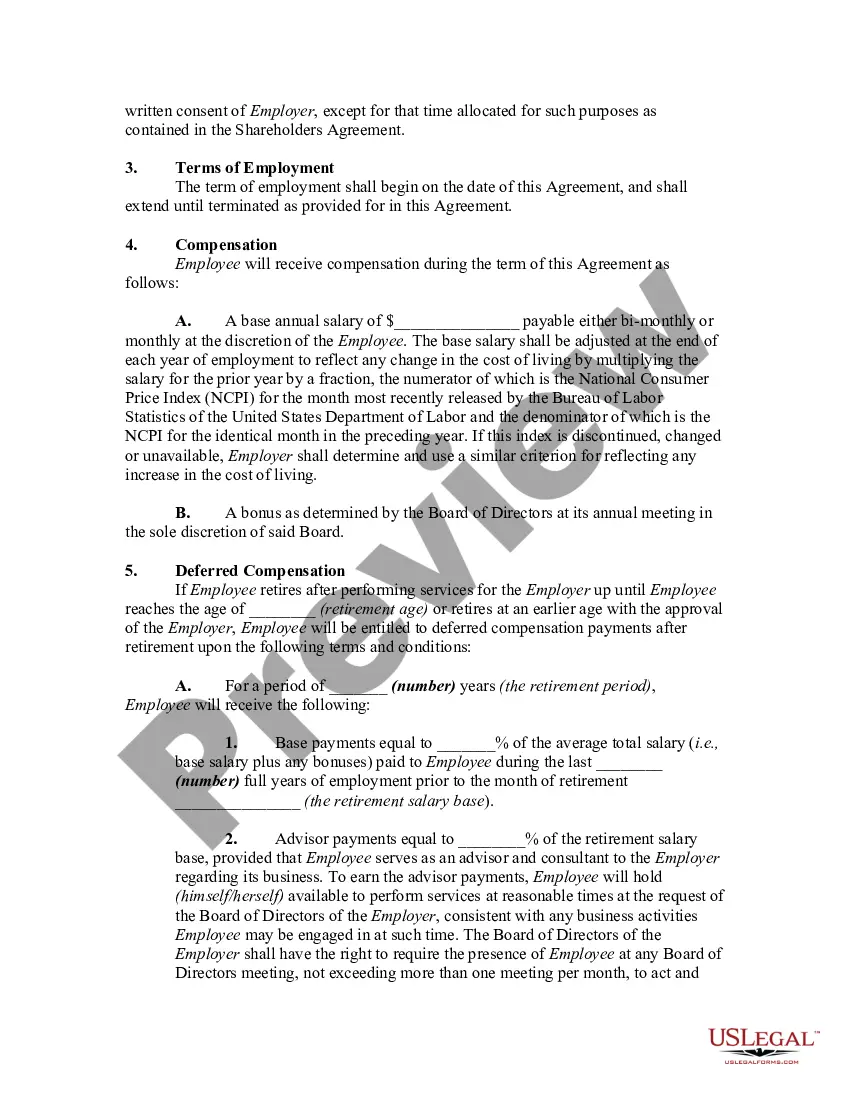
- Terms of employment, including duration and termination conditions.
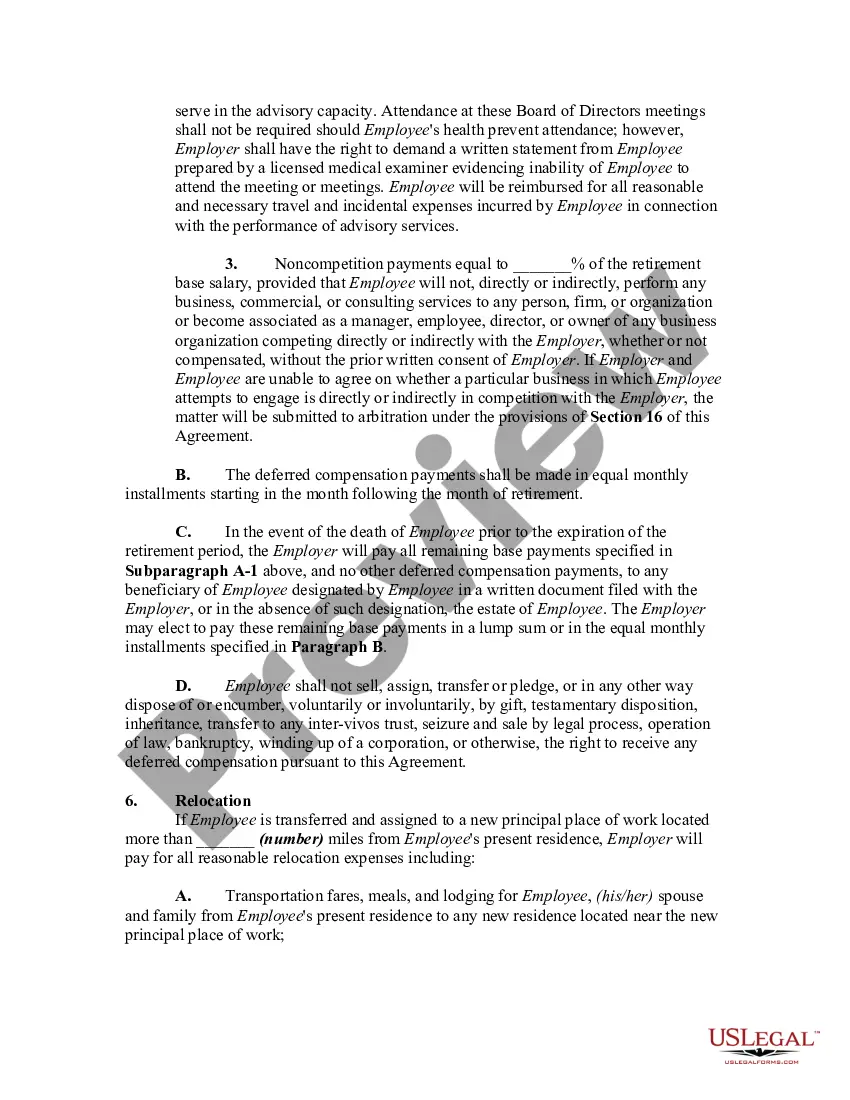
- Compensation details, such as salary, bonuses, and deferred compensation.
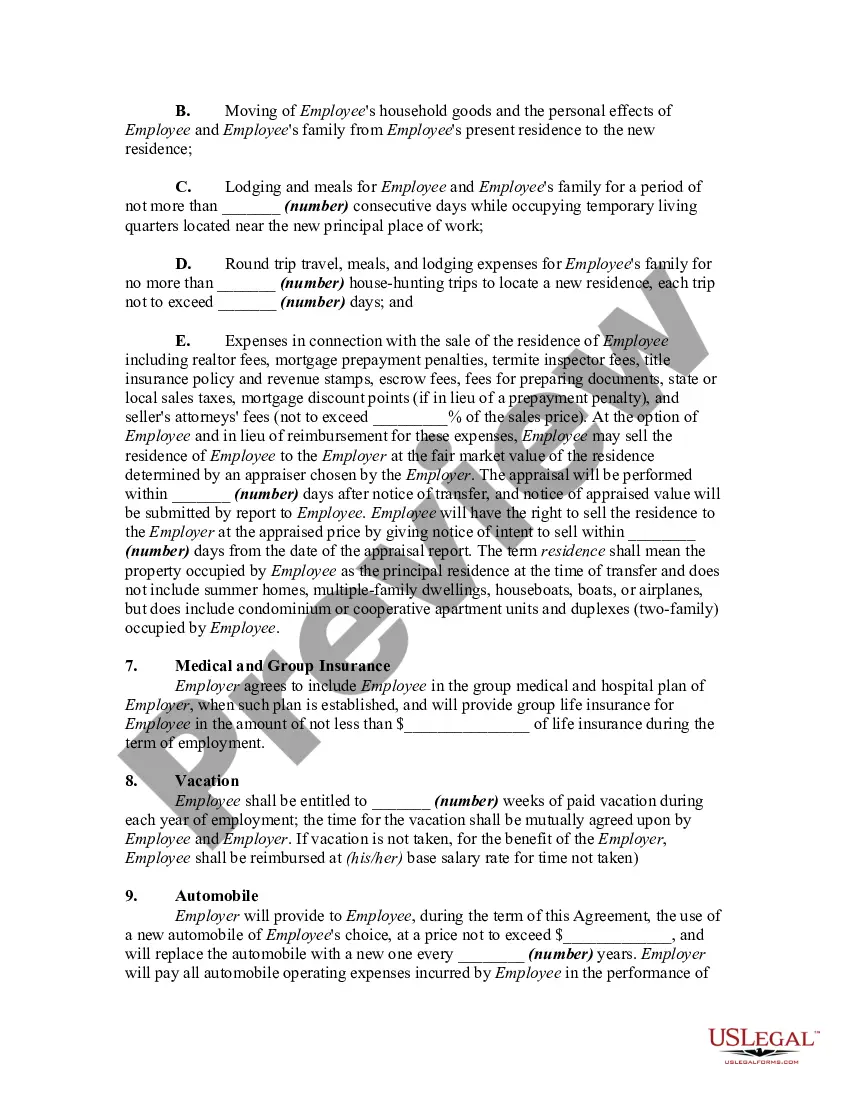
- Relocation expenses if applicable.
- Medical and group insurance provisions.
- Vacation entitlements and automobile provisions.
Common use cases
This form should be used when a closely held corporation hires an executive or general manager and needs to specify the terms of that employment. It is particularly relevant for businesses with a limited number of shareholders who seek to ensure clarity in the roles and responsibilities of their executives.
Who this form is for
- Corporations with a closely-knit group of shareholders.
- Small businesses transitioning from sole proprietorships or partnerships to corporate structures.
- Employers seeking to formalize their agreement with an executive or general manager.
How to complete this form
- Identify the Employer and Employee by filling in their names and addresses.
- Specify the position of the Employee and outline their duties.
- Detail the compensation, including base salary and any bonuses.
- Include terms related to relocation expenses and benefits.
- Both parties should review the entire agreement before signing to ensure all terms are clear and agreed upon.
Notarization guidance
This form does not typically require notarization unless specified by local law. Always check local regulations to ensure compliance.
Get your form ready online
Our built-in tools help you complete, sign, share, and store your documents in one place.
Make edits, fill in missing information, and update formatting in US Legal Forms—just like you would in MS Word.
Download a copy, print it, send it by email, or mail it via USPS—whatever works best for your next step.
Sign and collect signatures with our SignNow integration. Send to multiple recipients, set reminders, and more. Go Premium to unlock E-Sign.
If this form requires notarization, complete it online through a secure video call—no need to meet a notary in person or wait for an appointment.
We protect your documents and personal data by following strict security and privacy standards.

Make edits, fill in missing information, and update formatting in US Legal Forms—just like you would in MS Word.

Download a copy, print it, send it by email, or mail it via USPS—whatever works best for your next step.

Sign and collect signatures with our SignNow integration. Send to multiple recipients, set reminders, and more. Go Premium to unlock E-Sign.

If this form requires notarization, complete it online through a secure video call—no need to meet a notary in person or wait for an appointment.

We protect your documents and personal data by following strict security and privacy standards.
Common mistakes
- Failing to clearly define the Employee's duties and authority.
- Omitting details about compensation adjustments and bonuses.
- Not including termination conditions for both parties.
- Neglecting the consideration of state-specific employment laws.
Benefits of using this form online
- Easy access to legal templates from licensed attorneys.
- Customizable sections to fit specific needs of the business.
- Time-saving, as the form can be filled out and downloaded immediately.
- Reduced risk of errors with clear instructions provided for completion.
Legal use & context
- Enforceable under state law as a standard employment contract.
- Addresses specific needs of closely held corporations.
- Includes arbitration clauses to resolve disputes efficiently.
Looking for another form?

Form popularity
FAQ
The managing director, who ranks above the general manager, is supposed to spend less time on oversight. A good general manager shouldn't need a lot of that. Businesses looking to fill a general manager position typically want someone with at least a bachelor's degree in business management.
Chief Executive Officer (CEO) Chief Operating Officer (COO) Chief Financial Officer (CFO) or Controller. Chief Marketing Officer (CMO) Chief Technology Officer (CTO) President. Vice President. Executive Assistant.
A general manager is expected to improve efficiency and increase profits while managing the overall operations of a company or division. General manager duties include managing staff, overseeing the budget, employing marketing strategies, and many other facets of the business.
What is the difference between Executive and Manager? A manager is the person who is responsible for the activities of a group of employees in an organization.In short, an executive has to oversee the administration function of the organization. An executive has a higher standing in an organization than a manager.
Executive job titles are used to describe individuals who have C-level jobs. The "C" in C-level jobs means chief.Executive job titles also include those with president or director in their job title, and these executives collaborate with C-level executives to make decisions and strategize.
General managers effectively act as scaled-down CEOs, overseeing the daily operations of a business segment, department, or stand-alone retail location. They ensure strategic goals are met by setting operational policies, creating and maintaining budgets, managing employees, and more.
A general manager (GM) is an executive who has overall responsibility for managing both the revenue and cost elements of a company's income statement, known as profit & loss (P&L) responsibility.
In small companies, the general manager may be one of the top executives. In hierarchical organizations, GMs rank above most employees but below corporate-level executives.
The general manager in the hierarchy usually falls below the vice president of operations. Vice presidents stand below the C-suite executives. Below the vice presidents come directors and then managers.