Property Management Agreement
Overview of this form
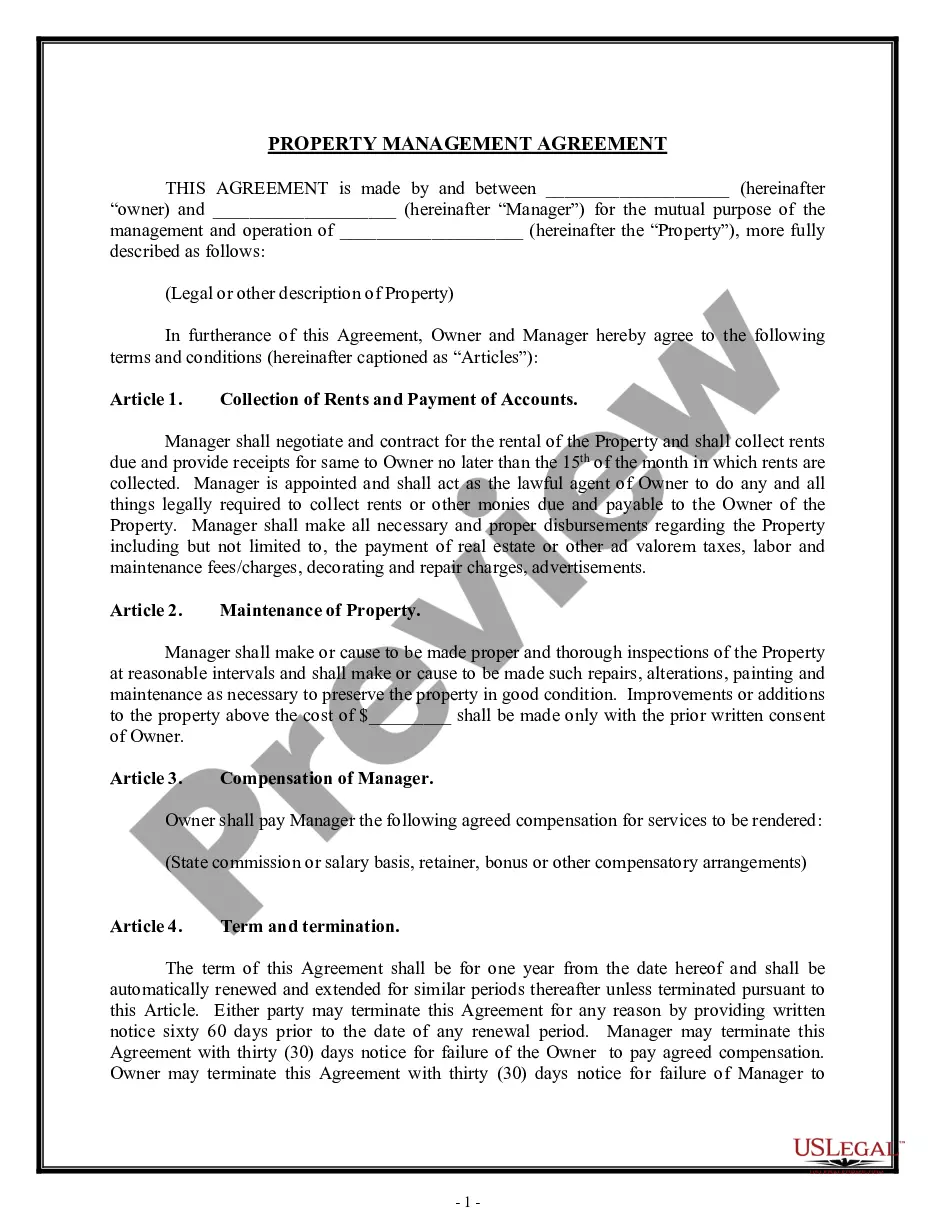
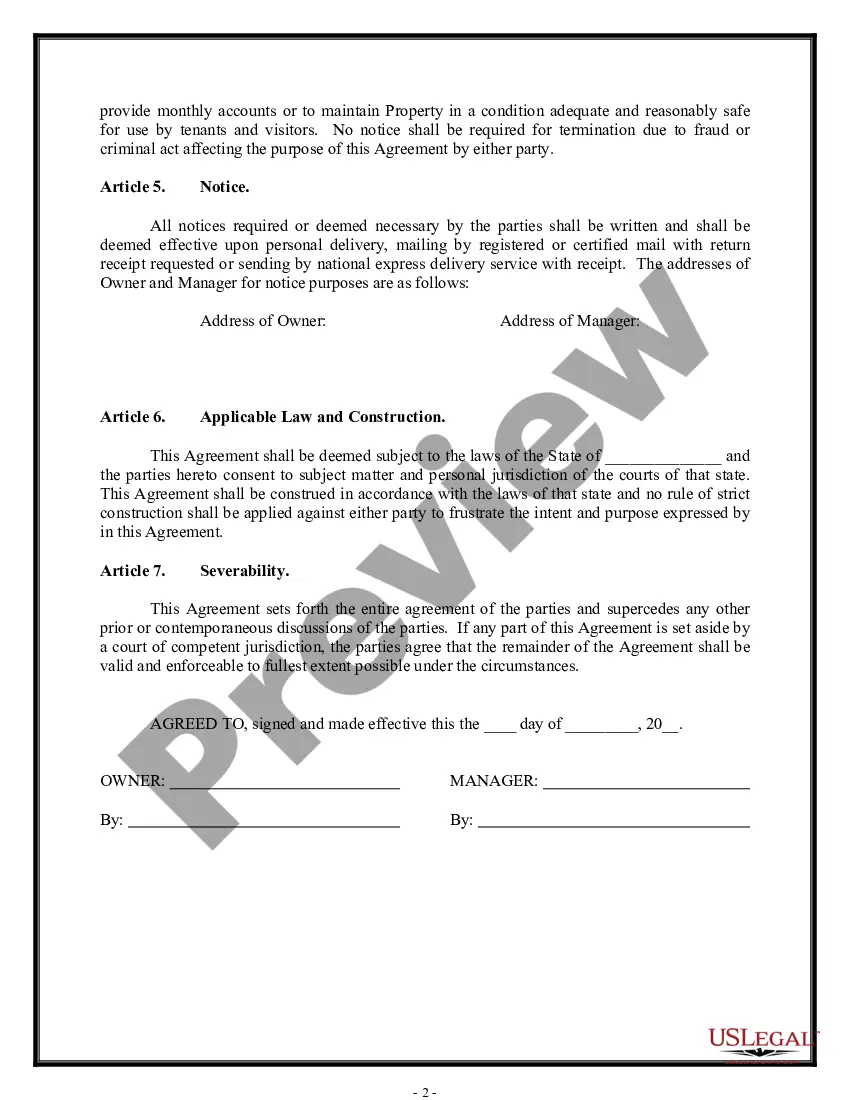
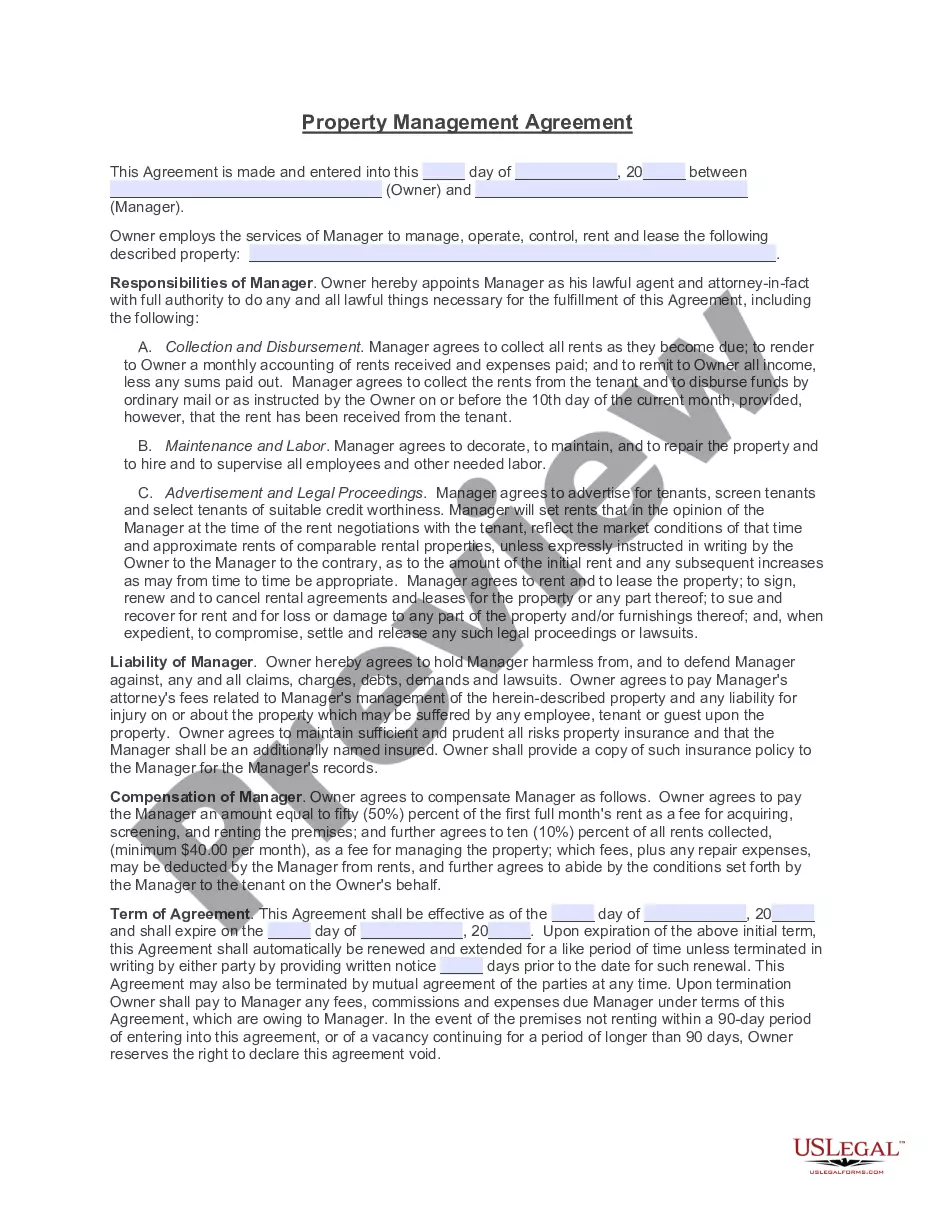
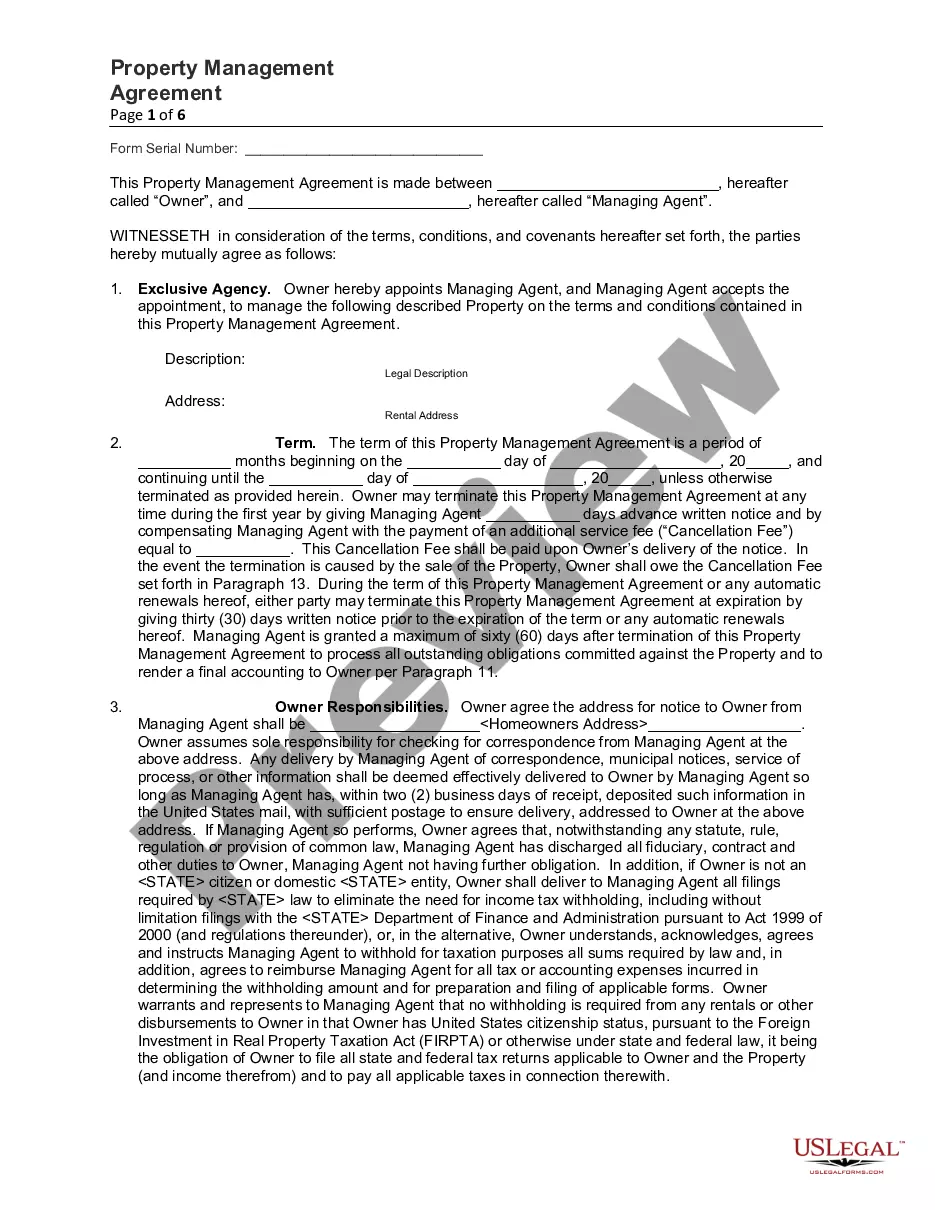
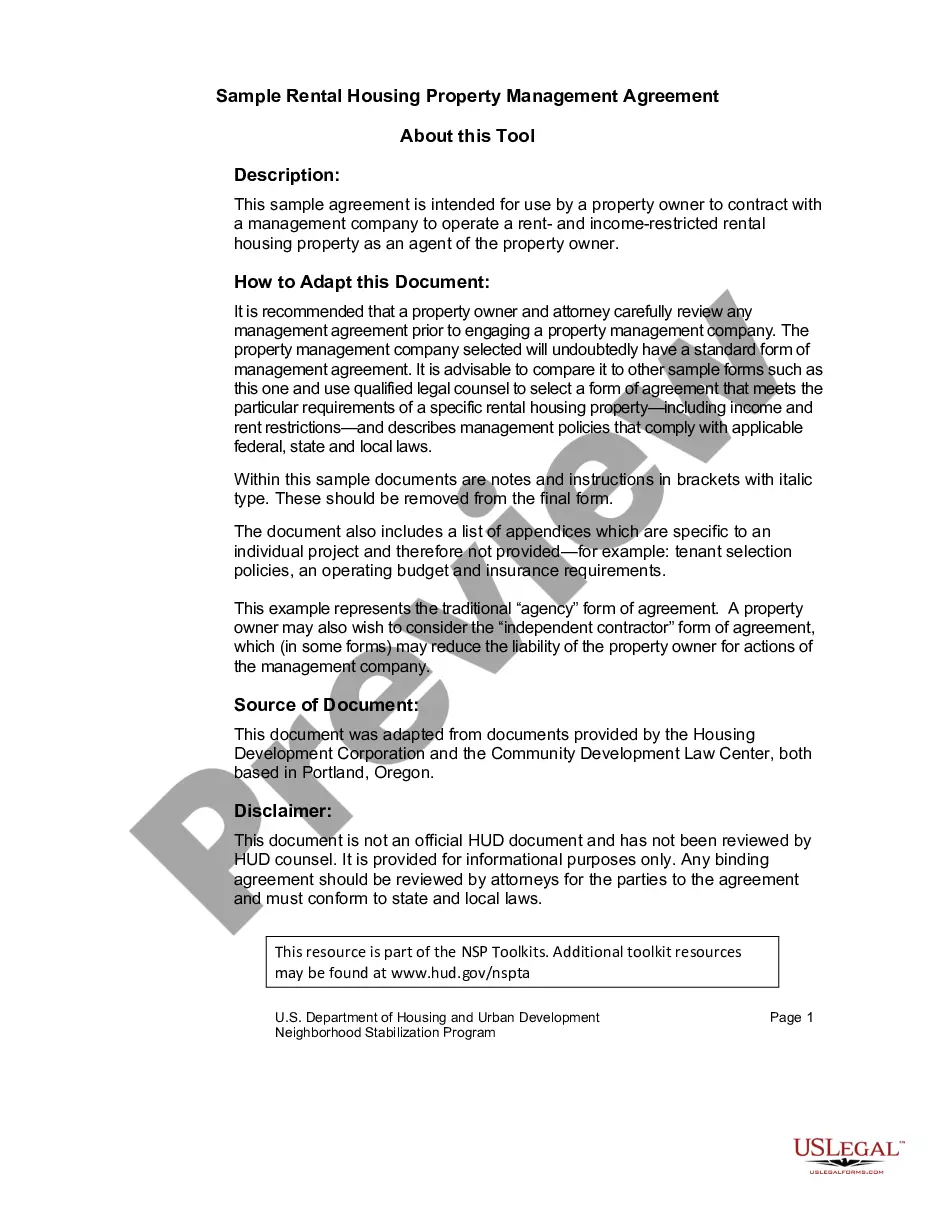
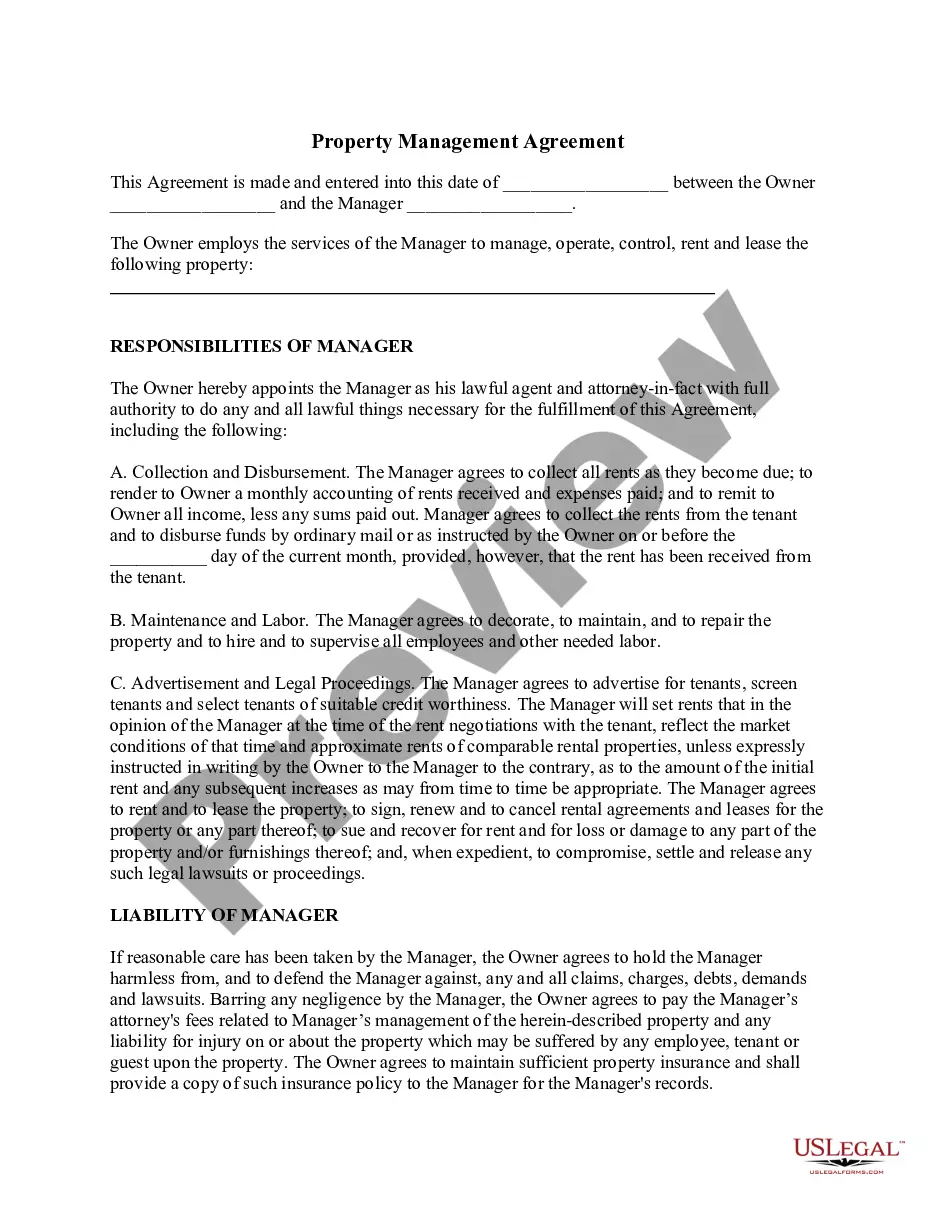
The Property Management Agreement is a legal document between a property owner and a manager designed to outline the responsibilities and obligations regarding the management and operation of a specific property. This agreement helps clarify the roles of each party, including rent collection, property maintenance, and managerial compensation. It differs from other agreements by focusing specifically on the management aspect rather than ownership or rental terms.
What’s included in this form
- Article 1: Collection of Rents and Payment of Accounts - Details the manager's duties to collect rent, provide receipts, and handle property-related payments.
- Article 2: Maintenance of Property - Outlines the manager's responsibility for property inspections and necessary repairs.
- Article 3: Compensation of Manager - Specifies how the manager will be compensated for their services.
- Article 4: Term and termination - Describes the duration of the agreement, renewal terms, and conditions for termination.
- Article 7: Severability - Ensures that if any part of the agreement is found invalid, the rest remains enforceable.
When to use this form
This form should be used when a property owner wants to hire a manager for their property. It is beneficial in scenarios involving residential or commercial properties where the owner requires professional management services, including rent collection, maintenance, and tenant relations.
Intended users of this form
- Property owners seeking professional management for real estate.
- Real estate managers who are entering into a contract with property owners.
- Investors who own rental properties and want to streamline management tasks.
How to complete this form
- Identify the parties involved: Clearly state the owner and manager's names.
- Specify the property: Provide a legal description of the property being managed.
- Fill in the compensation details: Outline how the manager will be paid.
- Detail the maintenance responsibilities: Indicate what repairs and inspections the manager is expected to perform.
- Sign and date the agreement: Ensure both parties agree to the terms and conditions outlined in the document.
Does this form need to be notarized?
This form does not typically require notarization to be legally valid. However, some jurisdictions or document types may still require it. US Legal Forms provides secure online notarization powered by Notarize, available 24/7 for added convenience.
Get your form ready online
Our built-in tools help you complete, sign, share, and store your documents in one place.
Make edits, fill in missing information, and update formatting in US Legal Forms—just like you would in MS Word.
Download a copy, print it, send it by email, or mail it via USPS—whatever works best for your next step.
Sign and collect signatures with our SignNow integration. Send to multiple recipients, set reminders, and more. Go Premium to unlock E-Sign.
If this form requires notarization, complete it online through a secure video call—no need to meet a notary in person or wait for an appointment.
We protect your documents and personal data by following strict security and privacy standards.

Make edits, fill in missing information, and update formatting in US Legal Forms—just like you would in MS Word.

Download a copy, print it, send it by email, or mail it via USPS—whatever works best for your next step.

Sign and collect signatures with our SignNow integration. Send to multiple recipients, set reminders, and more. Go Premium to unlock E-Sign.

If this form requires notarization, complete it online through a secure video call—no need to meet a notary in person or wait for an appointment.

We protect your documents and personal data by following strict security and privacy standards.
Typical mistakes to avoid
- Failing to specify compensation details can lead to disputes.
- Leaving out property details may cause confusion about the management scope.
- Not including clear termination clauses can complicate ending the agreement.
Advantages of online completion
- Convenient access to professionally drafted agreements.
- Editability allows for customization to suit specific property needs.
- Reliable format ensures compliance with standard legal requirements.
Legal use & context
- The agreement establishes a clear legal framework for the roles of both owner and manager.
- Ensures compliance with local regulations regarding property management and tenant rights.
- Improves enforceability of terms related to payment and maintenance responsibilities.
Summary of main points
- The Property Management Agreement outlines the duties of both the property owner and manager.
- Clear terms regarding rents, maintenance, and compensation help prevent disputes.
- This agreement is essential for any property owner looking to effectively manage their property through a professional.
Looking for another form?
Form popularity
FAQ
This is a legal contract between a property owner and a manager that sets the manager’s duties for operating and maintaining a property, including rent collection, property maintenance, and how the manager is compensated. It also defines the term and termination terms. Use it when an owner hires professional management for residential or commercial property.
Duration is defined in Article 4 (Term and termination). The form describes the length of the agreement, renewal terms, and the conditions under which either party may terminate. In practice, terms are set for a specific period, with renewal options and any notice requirements spelled out in the contract.
This standard agreement covers several core areas: Article 1 on Collection of Rents and Payment of Accounts, detailing the manager’s duties to collect rent and provide receipts; Article 2 on Maintenance of Property (inspections and repairs); Article 3 on Compensation of Manager; Article 4 on Term and termination; and Article 7 on Severability.
Key provisions include how rents are collected and receipts provided (Article 1), the manager's responsibilities for property maintenance (Article 2), how the manager is compensated (Article 3), the term and termination process (Article 4), and a severability clause ensuring enforceability even if one provision is invalid (Article 7).
Generally, the 80/20 rule suggests that roughly 80% of results come from about 20% of efforts. In property management, practitioners often focus resources on the most impactful tasks and tenants. This Property Management Agreement itself does not define or rely on that rule; it governs specific duties like rent collection, maintenance, and compensation.
This Property Management Agreement governs management duties, not the terms of a tenant lease. For lease concerns, review the lease document itself. Common red flags in leases include vague rent terms, unclear maintenance responsibilities, automatic renewal without notice, and missing termination rights; consult a licensed attorney for advice tailored to your situation.