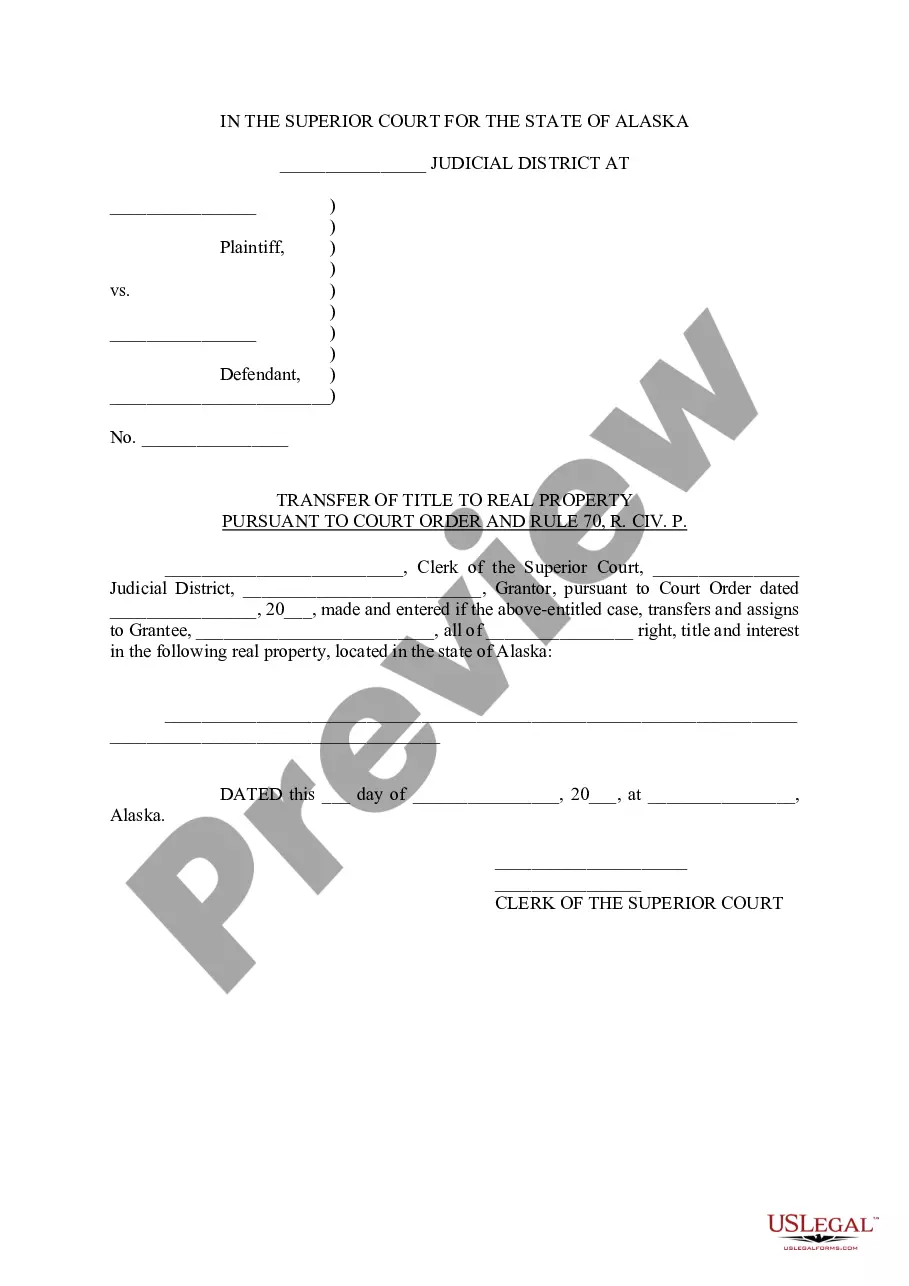
Motion in Bankruptcy Court by Mortgagee to Vacate Stay to Permit Foreclosure of Mortgage on Debtor's Real Property
Understanding this form
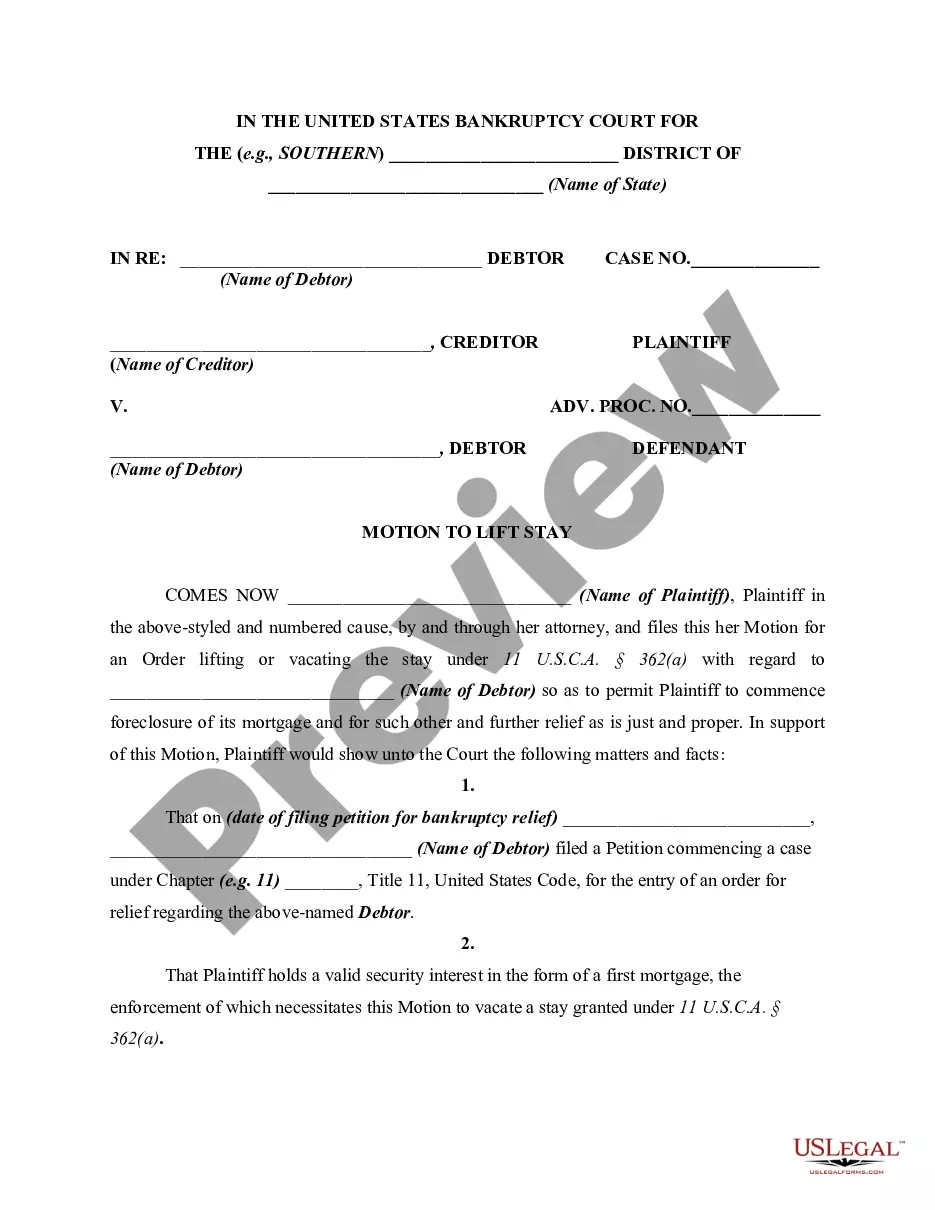
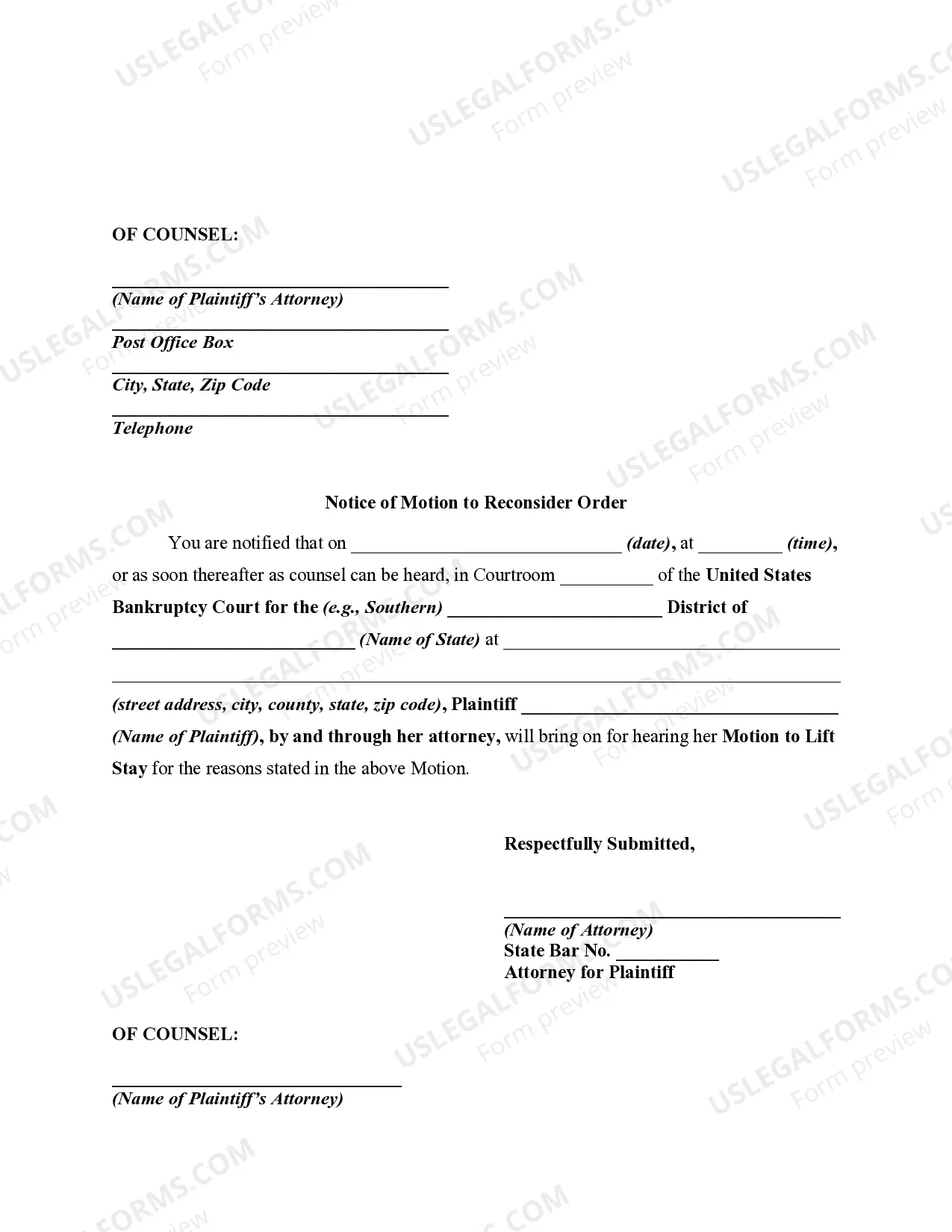
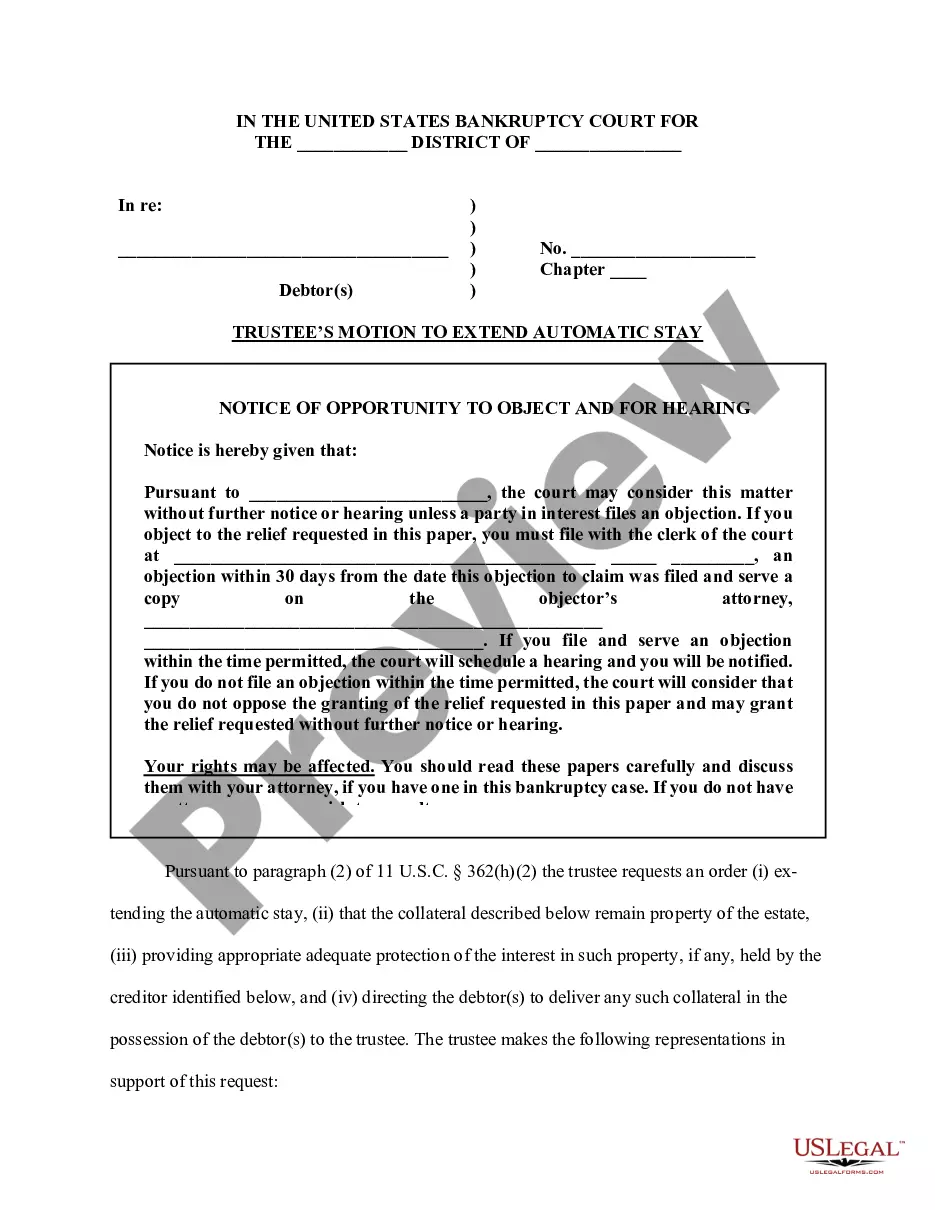
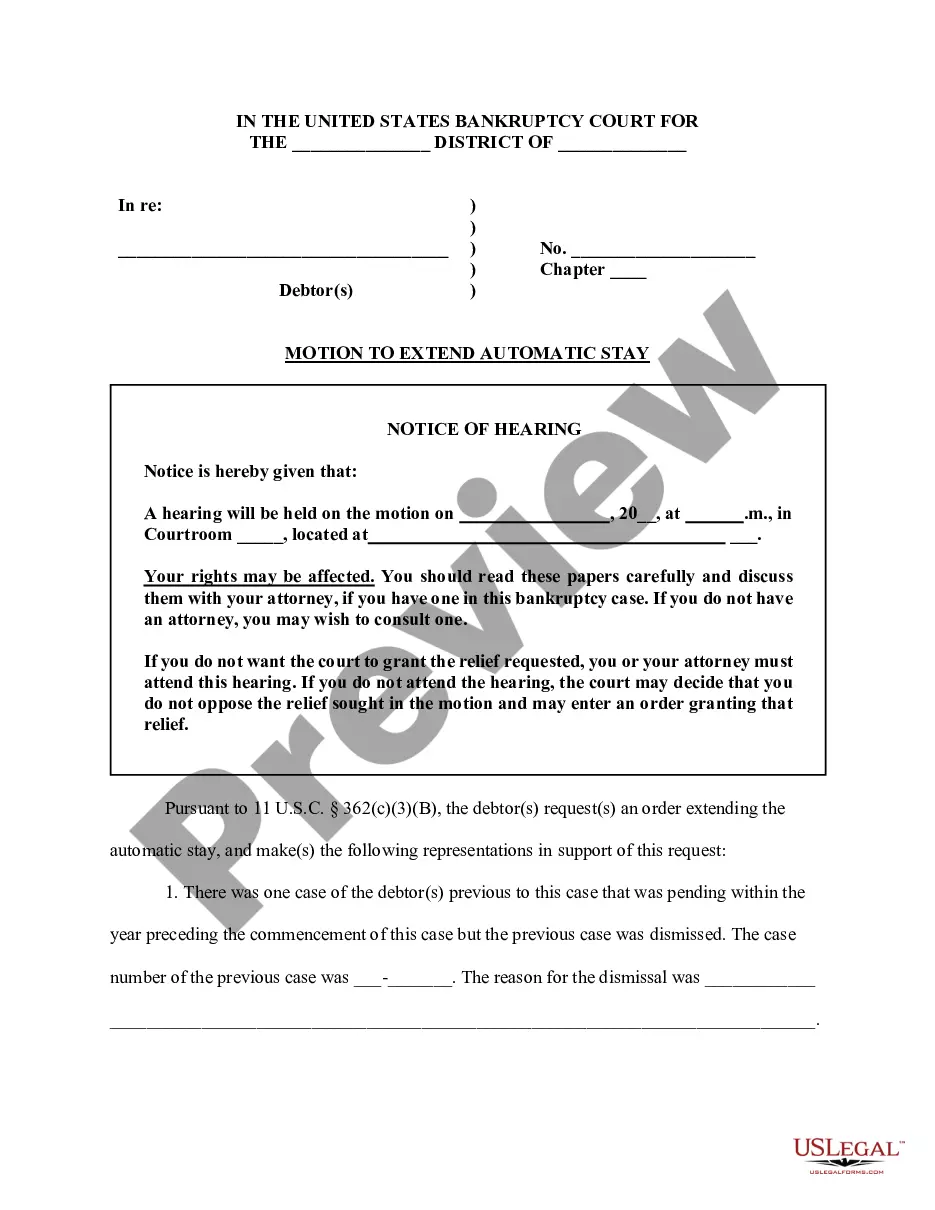
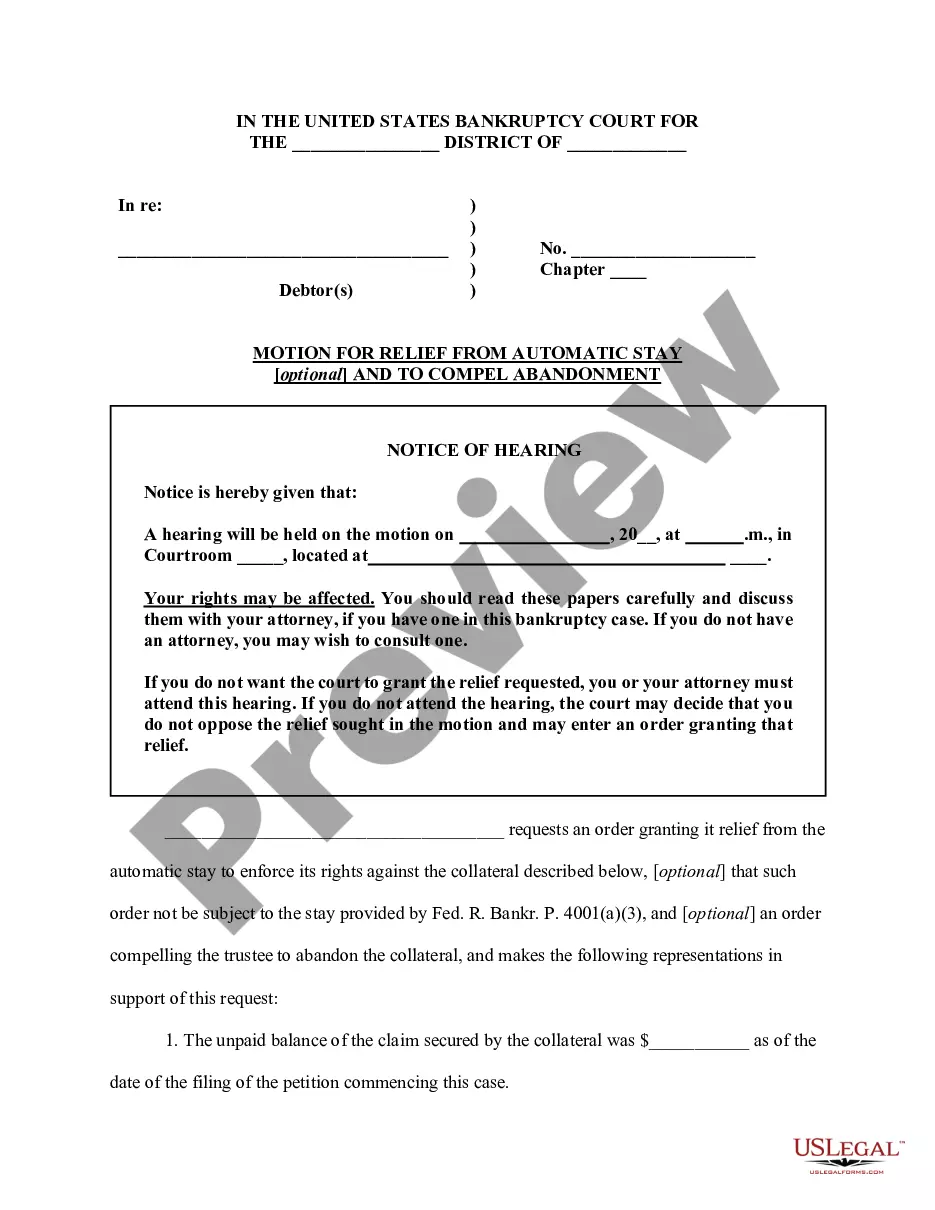
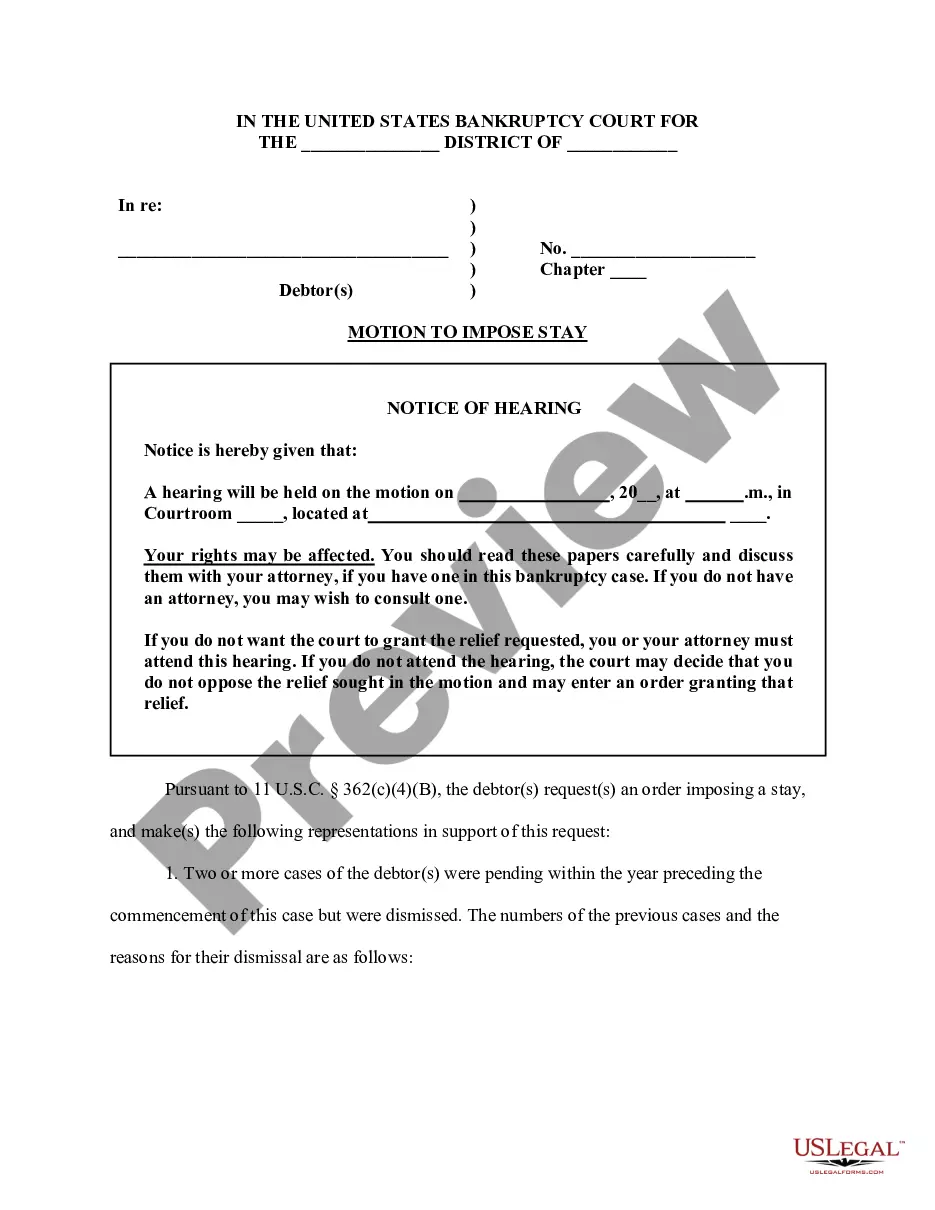
The Motion in Bankruptcy Court by Mortgagee to Vacate Stay to Permit Foreclosure of Mortgage on Debtor's Real Property is a legal document filed in bankruptcy proceedings. Its primary purpose is to request the bankruptcy court to lift the automatic stay, allowing the mortgagee (creditor) to proceed with foreclosure on the debtor's real property. This form is essential in situations where creditors seek to preserve their rights and recover their investments after a bankruptcy petition is filed.
Key components of this form
- Identification of the bankruptcy court and parties involved.
- Factual background regarding the filing of the bankruptcy petition.
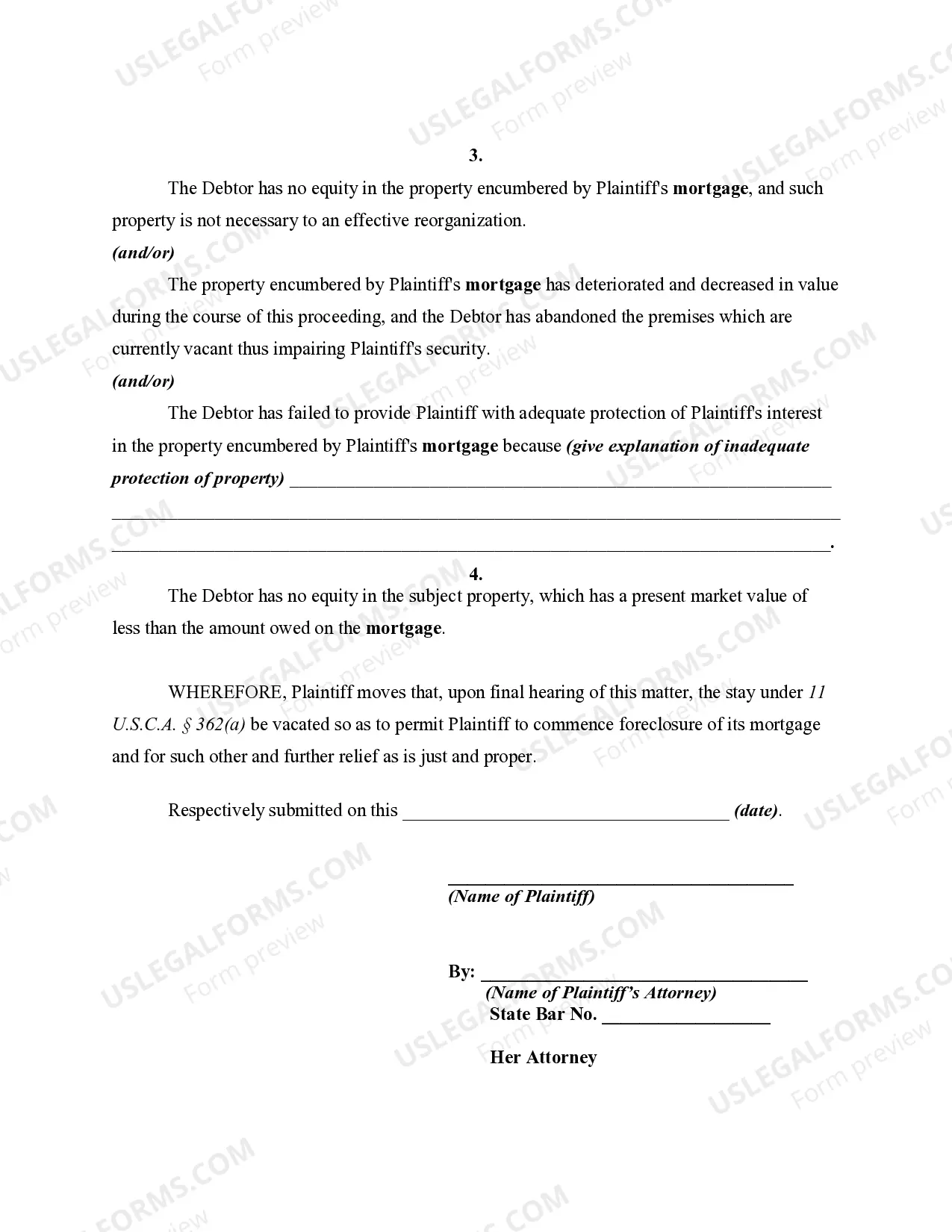
- Justifications for lifting the automatic stay, including lack of equity in the property or abandonment by the debtor.
- Details on existing mortgage and the necessity for foreclosure.
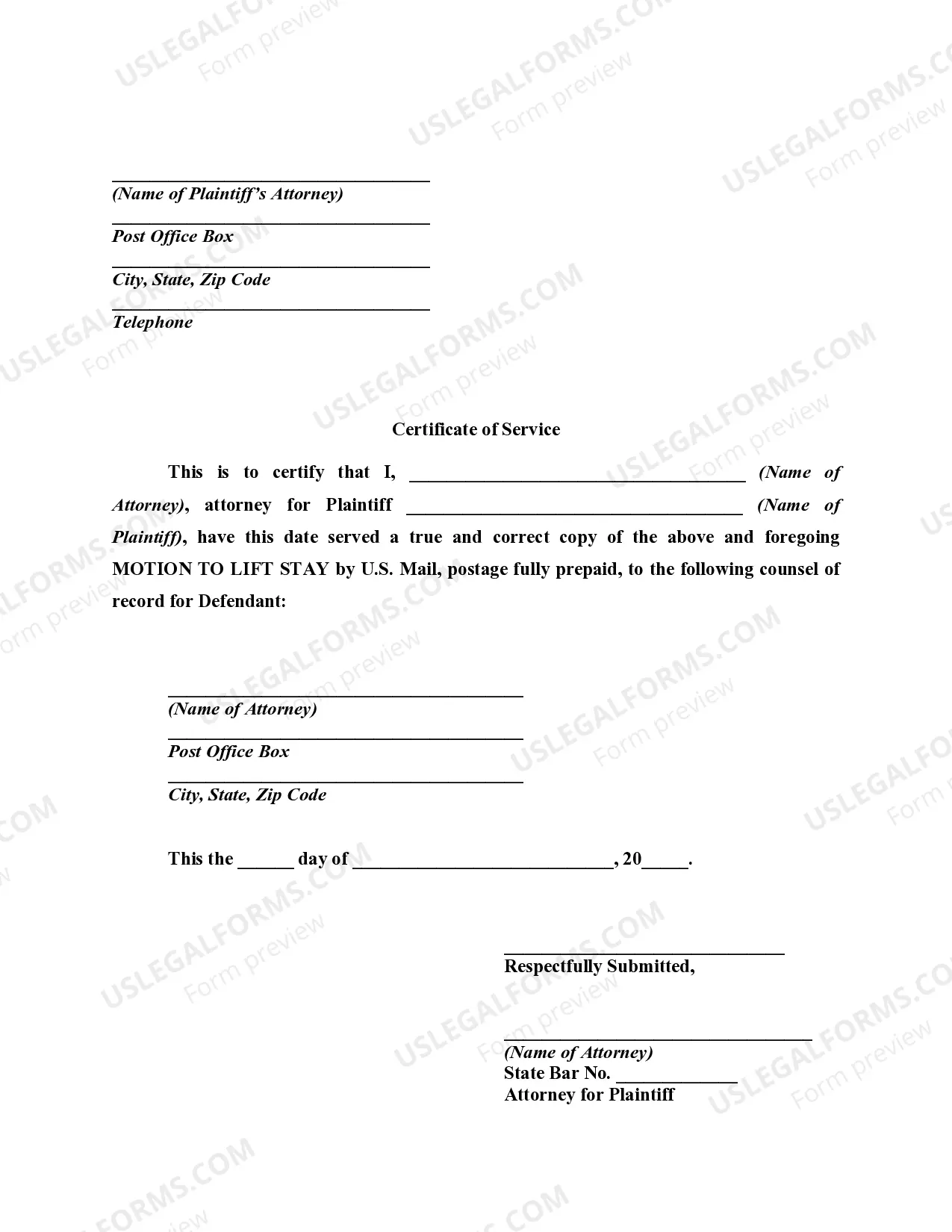
- Certification of service indicating that all parties were notified of the motion.

When to use this form
This form is typically used when a mortgagee wants to initiate foreclosure proceedings on mortgaged property during a bankruptcy case. You would use this form if you are a creditor holding a valid mortgage and believe that the debtor has no equity in the property or has failed to provide adequate protection of your interest, making it necessary to lift the stay imposed by the bankruptcy filing.
Who this form is for
- Mortgagees or creditors seeking to foreclose on a debtor's property.
- Attorneys representing creditors in bankruptcy cases.
- Individuals involved in bankruptcy proceedings where foreclosure is an issue.
Instructions for completing this form
- Identify the district court and state where the case is filed.
- Enter the names of the debtor and creditor as well as the case number.
- State the date of the bankruptcy filing and specify reasons for requesting to lift the stay.
- Provide detailed information regarding the property, including its market value and the status of the mortgage.
- Have the attorney sign the motion and include relevant contact information.
Is notarization required?
This form does not typically require notarization unless specified by local law. Always check local court requirements to confirm.
Get your form ready online
Our built-in tools help you complete, sign, share, and store your documents in one place.
Make edits, fill in missing information, and update formatting in US Legal Forms—just like you would in MS Word.
Download a copy, print it, send it by email, or mail it via USPS—whatever works best for your next step.
Sign and collect signatures with our SignNow integration. Send to multiple recipients, set reminders, and more. Go Premium to unlock E-Sign.
If this form requires notarization, complete it online through a secure video call—no need to meet a notary in person or wait for an appointment.
We protect your documents and personal data by following strict security and privacy standards.

Make edits, fill in missing information, and update formatting in US Legal Forms—just like you would in MS Word.

Download a copy, print it, send it by email, or mail it via USPS—whatever works best for your next step.

Sign and collect signatures with our SignNow integration. Send to multiple recipients, set reminders, and more. Go Premium to unlock E-Sign.

If this form requires notarization, complete it online through a secure video call—no need to meet a notary in person or wait for an appointment.

We protect your documents and personal data by following strict security and privacy standards.
Common mistakes to avoid
- Failing to provide adequate justification for lifting the stay.
- Omitting important details about the property's condition or the status of payments.
- Not including the required certification of service.
- Using incorrect case names, numbers, or court information.
Advantages of online completion
- Easy access to the latest legal templates drafted by licensed attorneys.
- Convenient downloading and printing options for immediate use.
- Editable formats that allow customization to fit specific needs.
- Time-saving as users can complete forms quickly from their home or office.
Legal use & context
- This form is used within the legal framework of the United States Bankruptcy Code, specifically under Section 362 regarding automatic stays.
- It allows the creditor to regain the right to foreclose when certain conditions regarding the property and debtor are met.
- Ensure compliance with applicable local bankruptcy court rules for the motion to lift stay.
Key takeaways
- The form is essential for mortgagees seeking to lift an automatic stay during bankruptcy proceedings.
- Filling out the form accurately is crucial to successfully proceeding with foreclosure.
- Accessing legal forms online provides convenience and ensures that you have up-to-date legal templates.
Looking for another form?

Form popularity
FAQ
How to Ask to Lift the Automatic Stay. The creditor must file a written motion with the court explaining the need to lift the stay. The burden is on the creditor to prove that good cause exists to lift the automatic stay. The creditor must also provide the debtor with notice of the motion and the hearing on the matter.
The automatic stay in bankruptcy is a temporary federal injunction that immediately stops most collection efforts by creditors, collection agencies and government entities against debtors and their property.It merely suspends efforts to collect or proceed against those debts while a bankruptcy case is open.
When you file a Chapter 13 bankruptcy an automatic stay goes into effect immediately upon the filing of your case.When these payments are not made, a secured creditor can file a Motion for Relief seeking relief from the Automatic Stay so they can take action against the collateral (i.e. your house or car).
Once they get a court order lifting the automatic stay, the creditor is allowed to move forward with the foreclosure or repossession of the property that secures the debt.You no longer have the property and you're still paying on it.
However, under certain circumstances, creditors can ask the court to allow them to go ahead with collections in spite of the bankruptcy filing. This is called a Motion for Relief from Automatic Stay, and a successful one often negates the whole purpose of filing for Chapter 7 bankruptcy in the first place.
The automatic stay is an order that goes into place and stops most collection efforts during your bankruptcy.A creditor can ask the bankruptcy court to lift the automatic stay and allow collection efforts to resume. If successful, the creditor can continue pursuing its debt.
Once a Chapter 13 bankruptcy petition is filed, the automatic stay goes into effect with the order of relief being entered on the filing date. It's this automatic stay that prohibits the creditors from taking any further action outside the bankruptcy to collect monies that are owed to them from the debtor.
In Chapter 13 bankruptcy, the automatic stay can give you time to catch up on any mortgage arrears and stay in the home. You'll repay debts (some in part and some in full) over a period of three to five yearsincluding delinquent payments on a home mortgage.