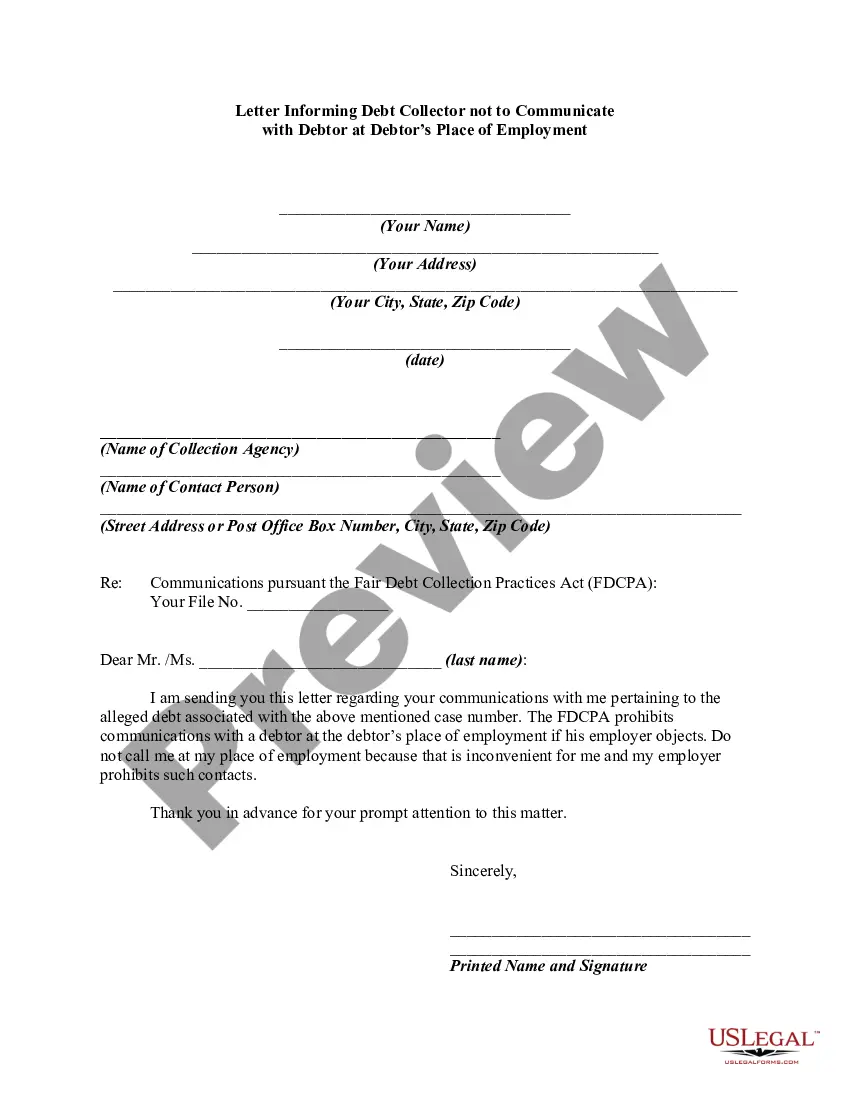
Letter Informing Debt Collector not to Communicate with Debtor at Debtor's Place of Employment
What is this form?
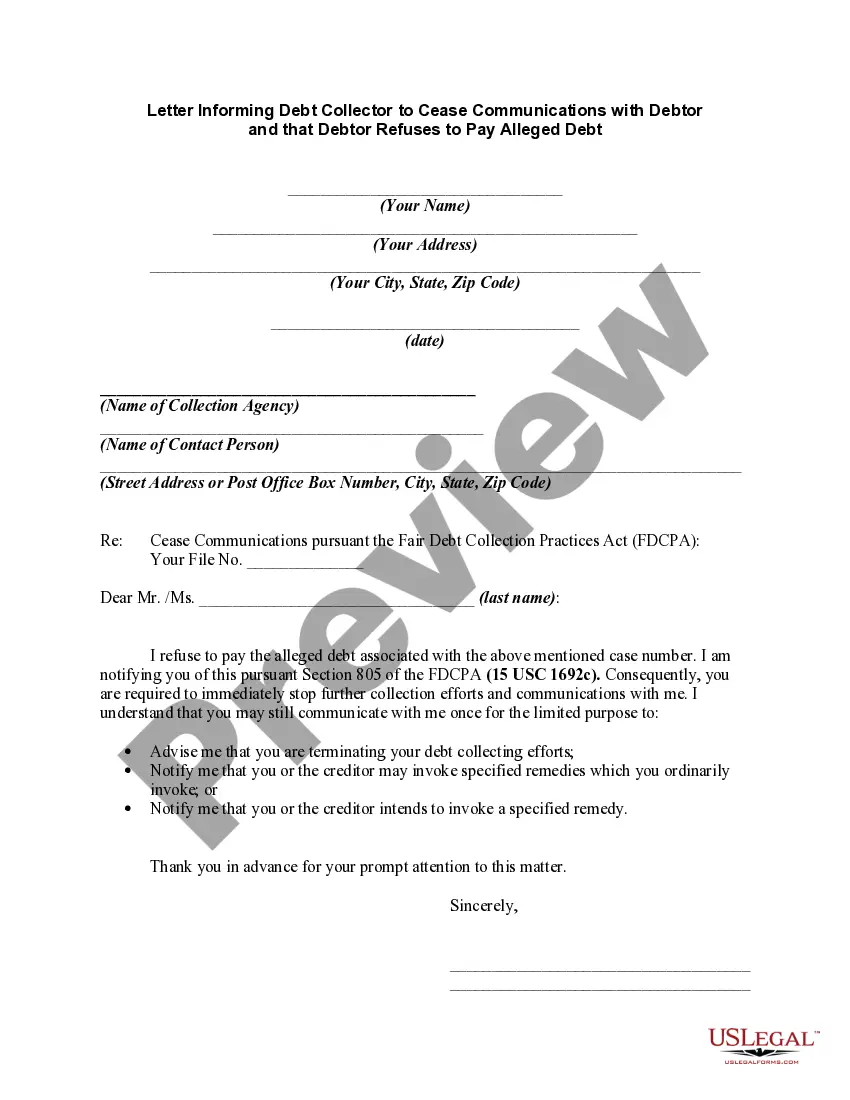
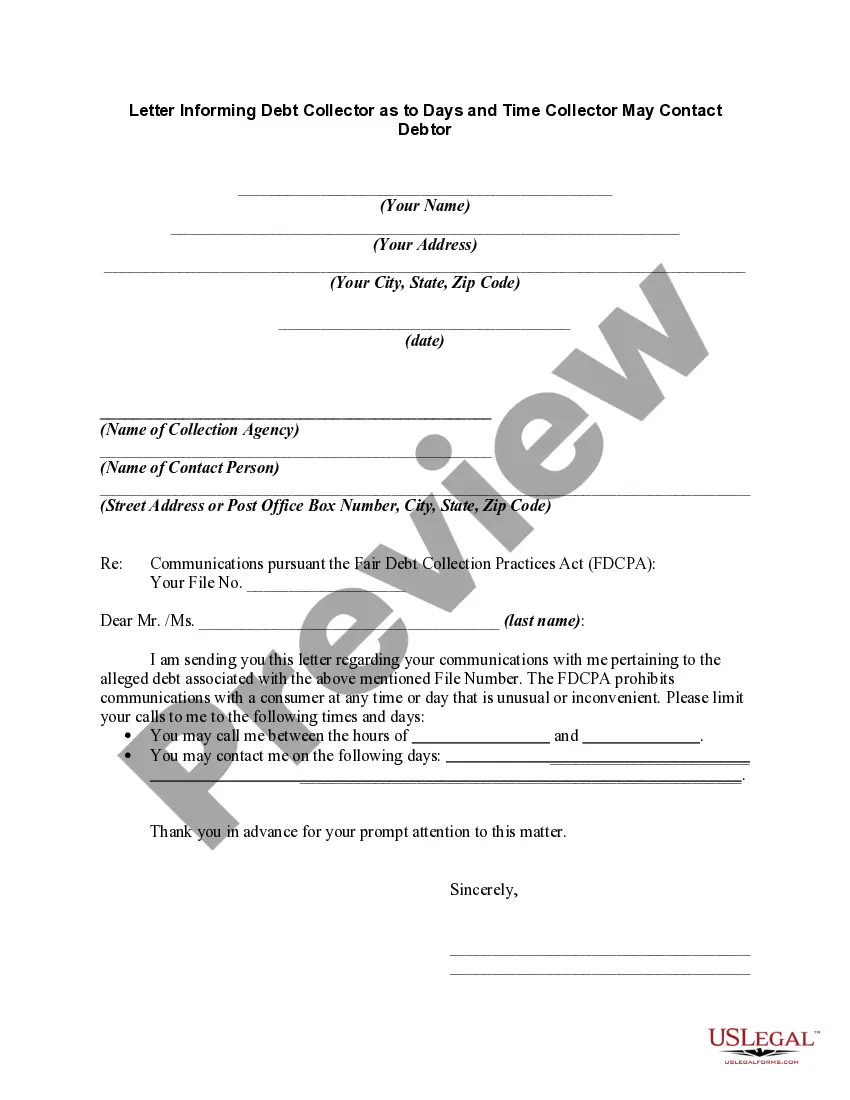
The Letter Informing Debt Collector not to Communicate with Debtor at Debtor's Place of Employment is a legal document that allows a debtor to formally request that debt collectors cease communications at their workplace. This form is an essential tool for individuals facing harassment from debt collectors, as it ensures compliance with the Fair Debt Collection Practices Act (FDCPA), which protects consumers from abusive collection practices.
Main sections of this form
- Your name and contact information.
- Date of the letter.
- Collection agency name and address.
- Reference to the specific debt associated with the case number.
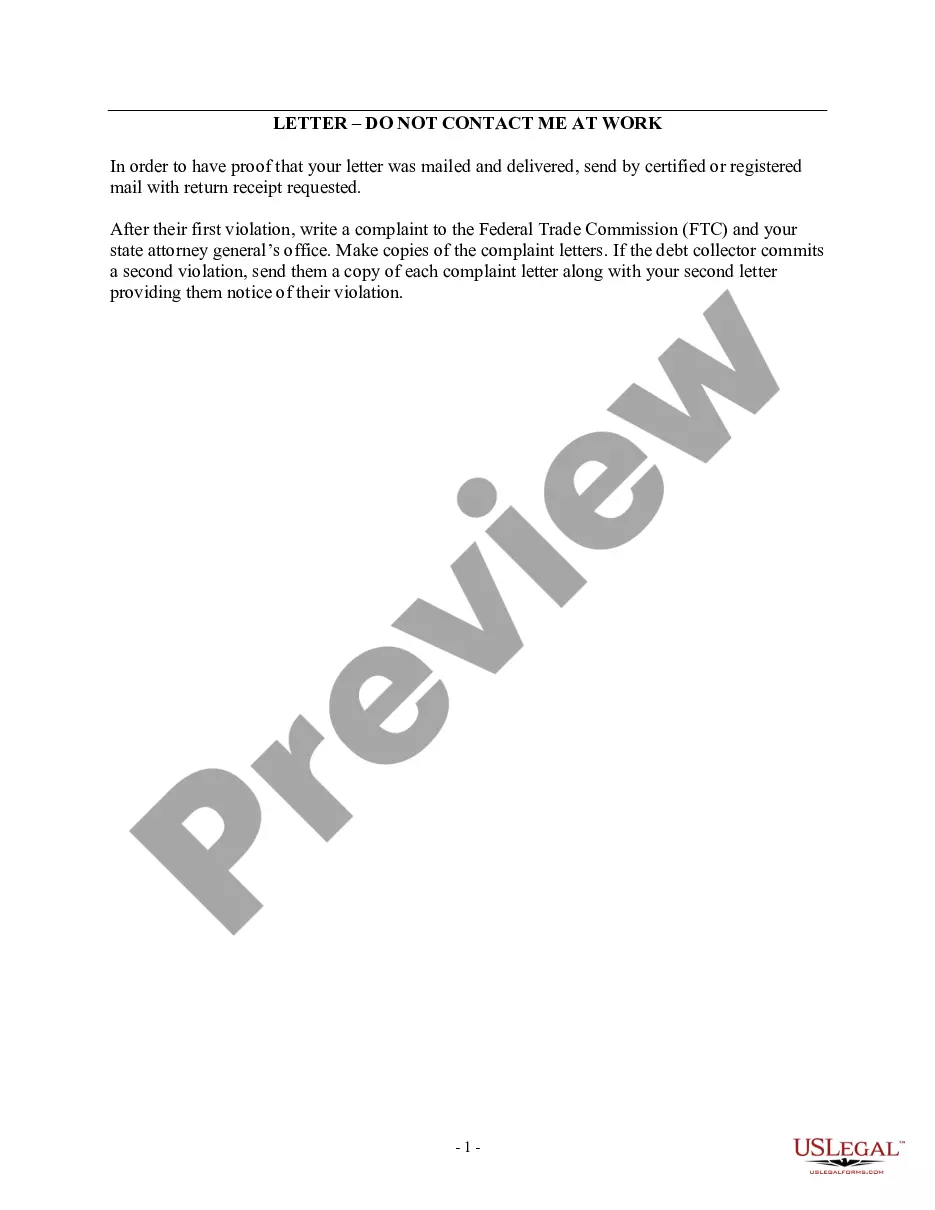
- A clear statement requesting that the collector stop contacting you at your place of employment.
- Your printed name and signature for validation.
Common use cases
This form should be used when you are receiving calls or communications from a debt collector at your workplace, and you wish to prevent further contact there. It is especially important to use this letter if your employer has a policy against such communications. Sending this letter helps ensure that your rights under the FDCPA are protected.
Who can use this document
- Individuals being contacted by debt collectors at their place of employment.
- Those who want to formally object to workplace contact regarding debts.
- People seeking protection under the Fair Debt Collection Practices Act.
How to prepare this document
- Enter your full name and address at the top of the letter.
- Specify the date you are sending the letter.
- Fill in the collection agency's name and contact person.
- Clearly state your request for no further communication at your workplace.
- Sign the letter and print your name below the signature.
Notarization requirements for this form
In most cases, this form does not require notarization. However, some jurisdictions or signing circumstances might. US Legal Forms offers online notarization powered by Notarize, accessible 24/7 for a quick, remote process.
Get your form ready online
Our built-in tools help you complete, sign, share, and store your documents in one place.
Make edits, fill in missing information, and update formatting in US Legal Forms—just like you would in MS Word.
Download a copy, print it, send it by email, or mail it via USPS—whatever works best for your next step.
Sign and collect signatures with our SignNow integration. Send to multiple recipients, set reminders, and more. Go Premium to unlock E-Sign.
If this form requires notarization, complete it online through a secure video call—no need to meet a notary in person or wait for an appointment.
We protect your documents and personal data by following strict security and privacy standards.

Make edits, fill in missing information, and update formatting in US Legal Forms—just like you would in MS Word.

Download a copy, print it, send it by email, or mail it via USPS—whatever works best for your next step.

Sign and collect signatures with our SignNow integration. Send to multiple recipients, set reminders, and more. Go Premium to unlock E-Sign.

If this form requires notarization, complete it online through a secure video call—no need to meet a notary in person or wait for an appointment.

We protect your documents and personal data by following strict security and privacy standards.
Typical mistakes to avoid
- Failing to include the date on the letter.
- Not addressing the letter to the correct contact person at the agency.
- Omitting personal contact information which might lead to confusion about who sent the letter.
Benefits of using this form online
- Convenient immediate download and access.
- Easy customization to fit your specific situation.
- Reliable templates drafted by licensed attorneys for peace of mind.
Legal use & context
- This form is legally recognized under the FDCPA for protecting debtors from workplace harassment.
- Using this form helps establish a clear boundary regarding communications from debt collectors.
- It is advisable to send this letter via a method that provides proof of delivery.
Looking for another form?




Form popularity
FAQ
Under the FDCPA, you can tell a debt collector to stop contacting you; but it's not always a good idea. The federal Fair Debt Collection Practices Act (FDCPA) gives you the right to force a debt collector to stop communicating with you.it may (or will) sue you or use another legal remedy to collect the debt.
The FDCPA prohibits debt collectors from calling you repeatedly, using profane language, making threats, or otherwise harassing you. If a debt collector is constantly calling you and causing you stress, sending a cease and desist letter can stop the collector from harassing you.
Answer the phone and explain you're not the person they're looking for. Tell them that the number they're calling is not the right one. Send a cease and desist letter to request that they stop contacting you.
I am responding to your contact about a debt you are attempting to collect. You contacted me by phone/mail, on date. You identified the debt as any information they gave you about the debt. Please stop all communication with me and with this address about this debt.
Even if the debt is yours, you still have the right not to talk to the debt collector and you can tell the debt collector to stop calling you. However, telling a debt collector to stop contacting you does not stop the debt collector or creditor from using other legal ways to collect the debt from you if you owe it.
Debt collectors are not allowed to call you at a time that's inconvenient to you, according to the Fair Debt Collection Practices Act (FDCPA). So if a debt collector is calling you at work, you're legally allowed to tell them to stop.
Write a Letter Requesting To Cease Communications. The first thing to do is to write the debt collector a letter telling them to stop calling you. Document All Contact and Harassment. File a Complaint With the FTC.
Never Give Them Your Personal Information. A call from a debt collection agency will include a series of questions. Never Admit That The Debt Is Yours. Even if the debt is yours, don't admit that to the debt collector. Never Provide Bank Account Information.
You have the right to tell a debt collector to stop communicating with you. To stop communication, send a letter to the debt collector and keep a copy of the letter. If you don't want a debt collector to contact you again, write a letter to the debt collector saying so.