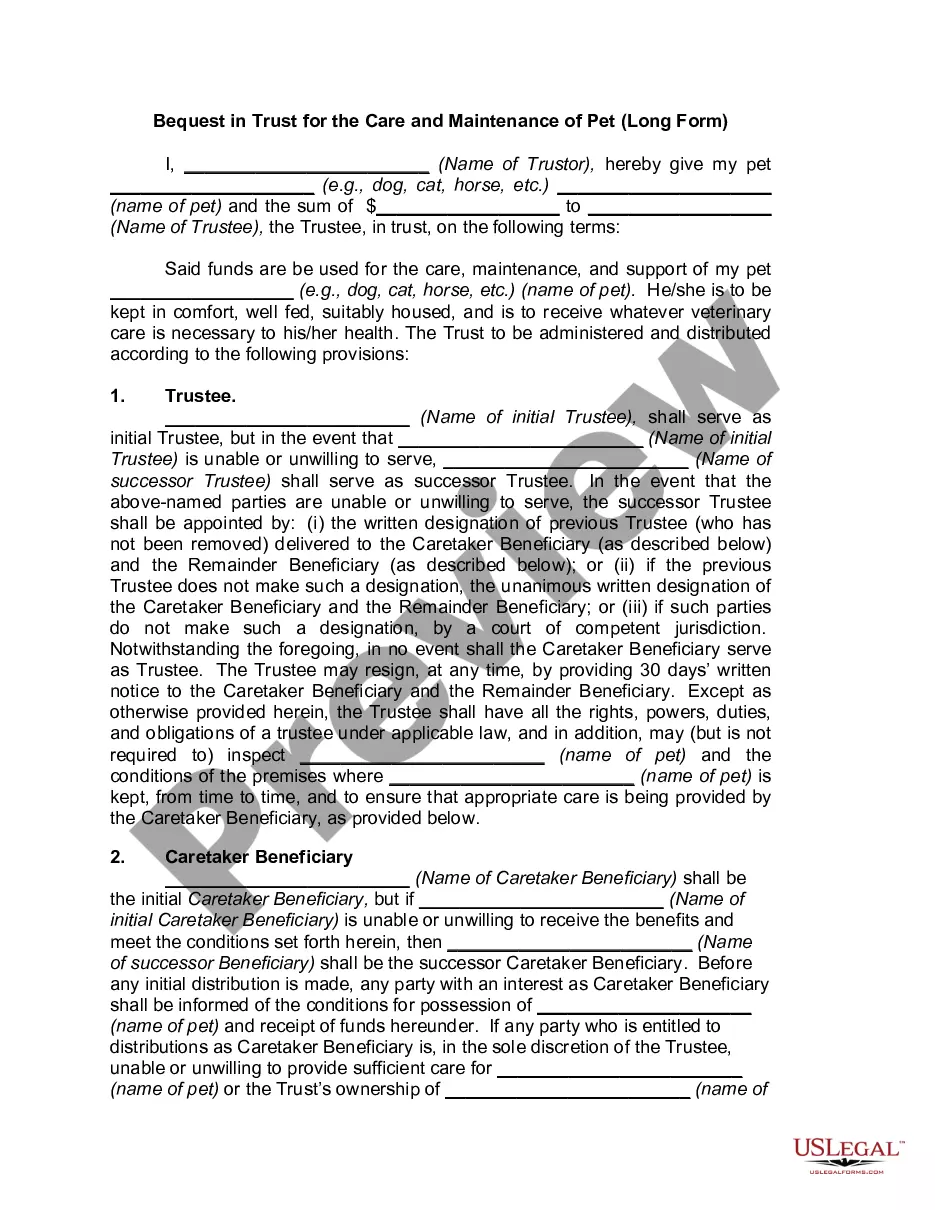
Bequest in Trust for the Care and Maintenance of Pet (Long Form)
About this form
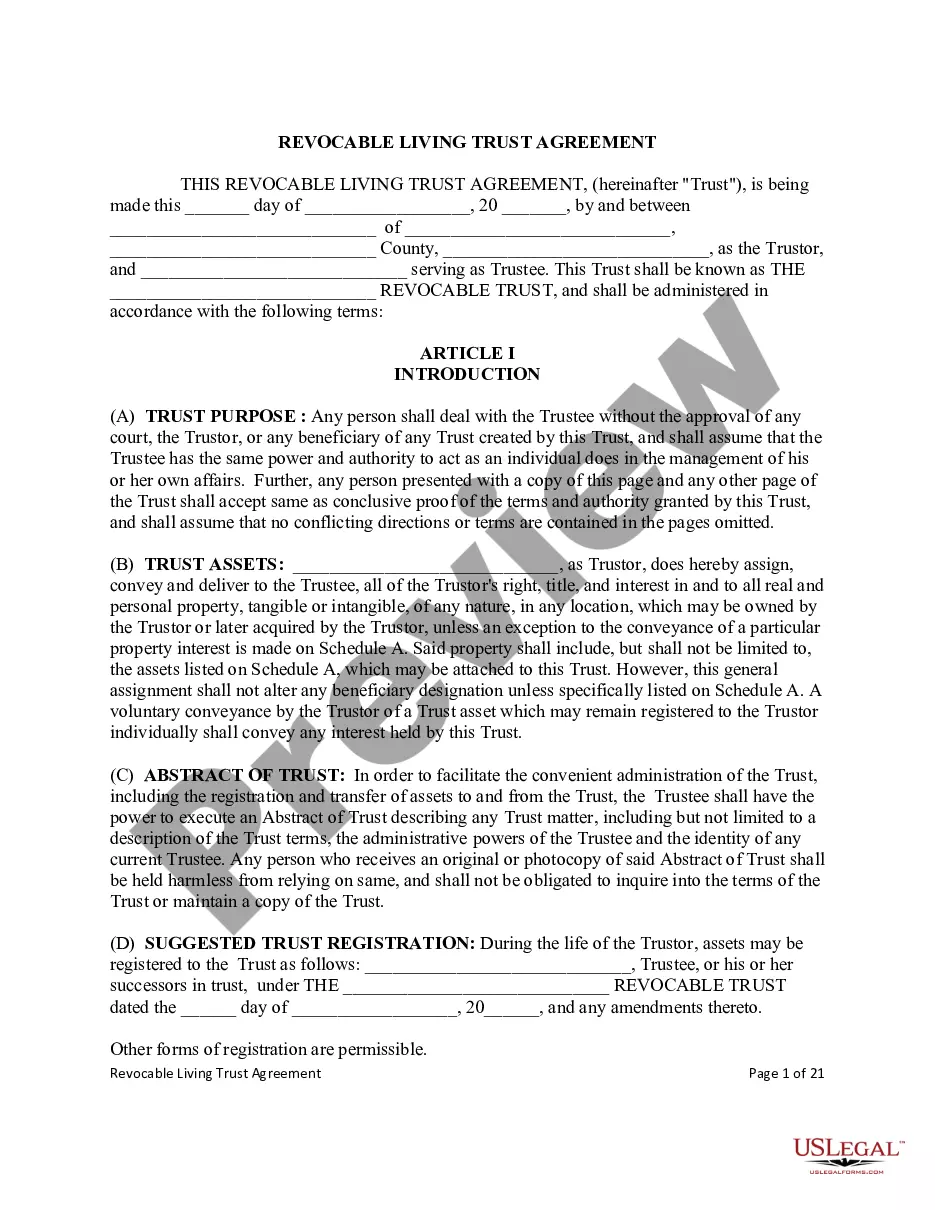
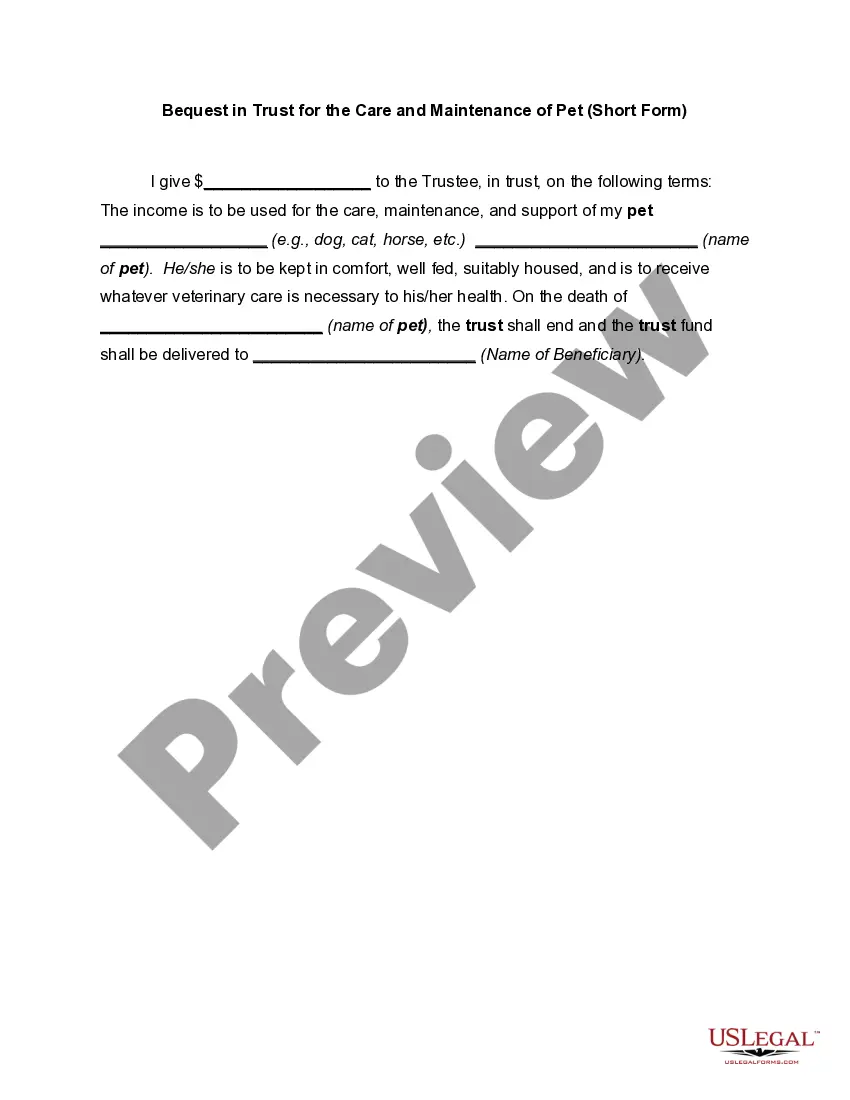
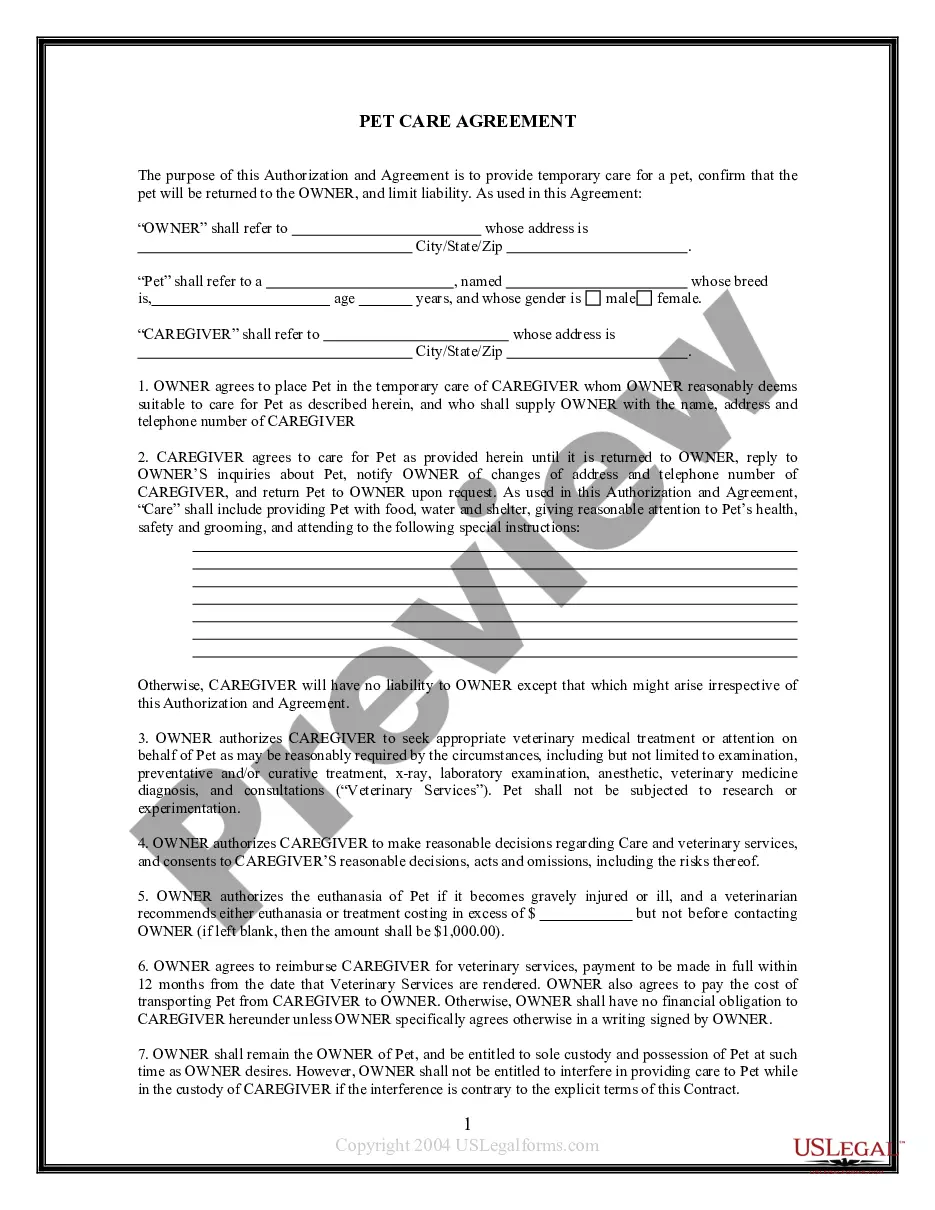
The Bequest in Trust for the Care and Maintenance of Pet (Long Form) is a legal document that allows a pet owner (the Trustor) to create a trust dedicated to the care of their pet after their passing. This form establishes a trustee to manage finances specifically allocated for the pet's welfare, ensuring that the pet receives proper care, medical attention, and comfortable living conditions. This distinguishes it from general wills or trusts, as it focuses on the unique needs of pets and their caregivers.
Key components of this form
- Identification of the Trustor and Trustee
- Details about the pet being cared for
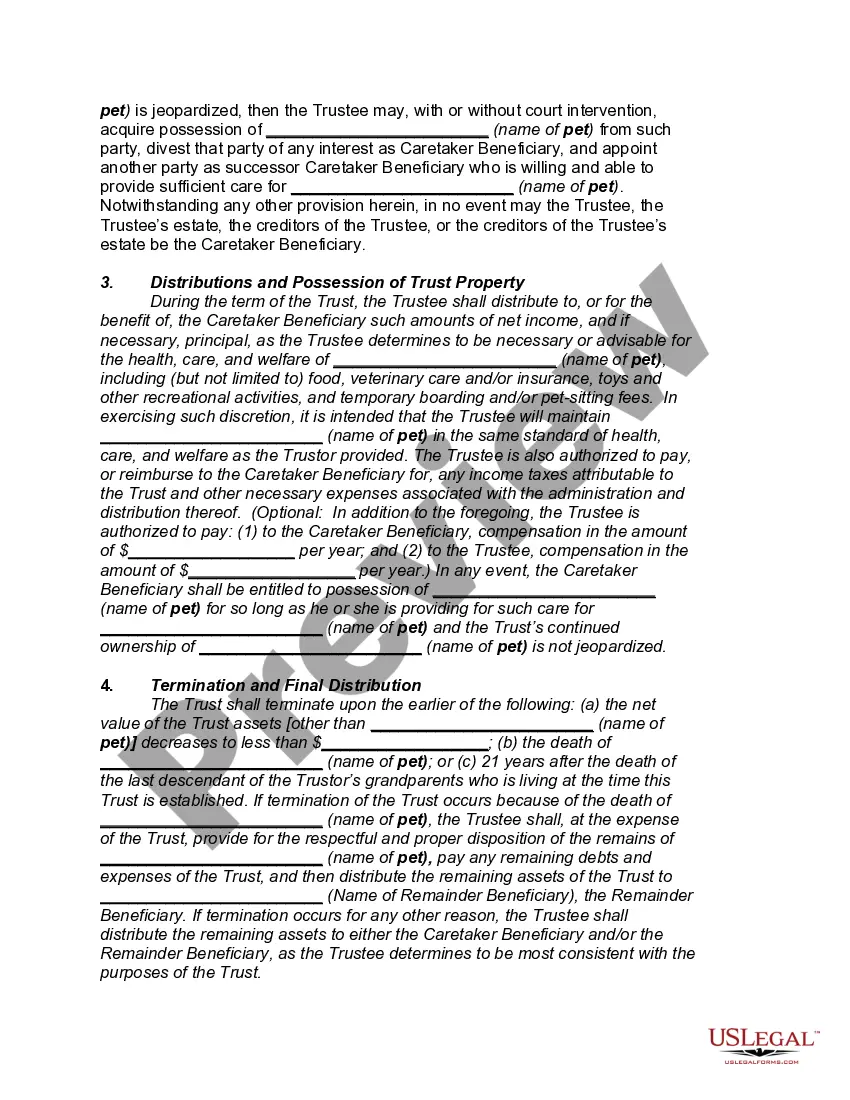
- Provisions for the use of funds for the petâs care and maintenance
- Succession plan for Trustee and Caretaker Beneficiary
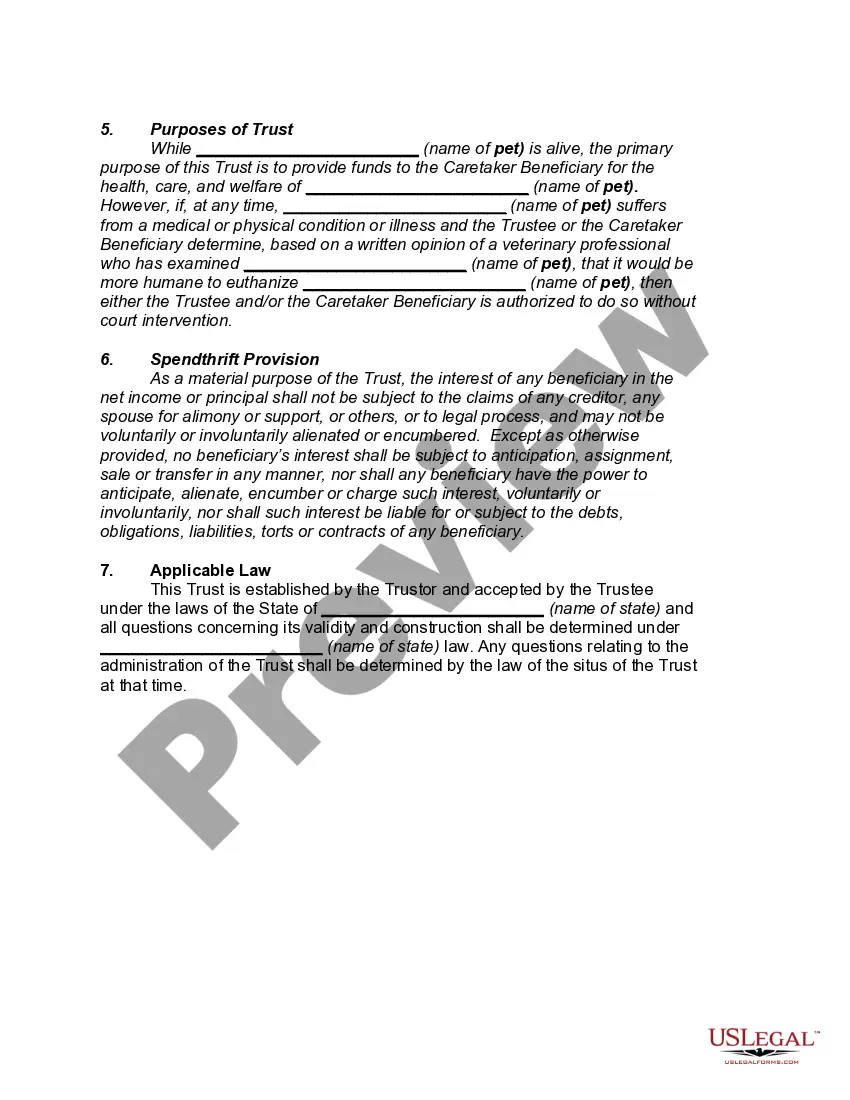
- Guidelines for pet possession and care requirements
- Procedures for trust termination and distribution of assets
When this form is needed
This form is ideal for pet owners who want to ensure that their pets will be adequately cared for after their death. It should be used when creating a legal arrangement that specifies how funds will be allocated for the pet's care. This is particularly important for individuals with pets that require ongoing medical attention or special care and for those who want to avoid disputes about their petâs welfare among family or friends.
Intended users of this form
This form is suitable for:
- Individuals who own pets and wish to provide for their long-term care upon their passing.
- Pet owners who have specific concerns regarding the care and maintenance of their pets.
- Those who want to designate trusted individuals to oversee the care of their pets.
Instructions for completing this form
- Identify the parties involved: Trustor, Trustee, Caretaker Beneficiary, and Remainder Beneficiary.
- Provide the specific details of the pet, including its name and type.
- Enter the amount of money to be allocated for the petâs care.
- Outline the terms for the pet's care and any specific conditions or instructions for the Trustee.
- Sign and date the document, ensuring that all involved parties understand their roles and responsibilities.
Notarization guidance
This form does not typically require notarization unless specified by local law. Always check local requirements to ensure compliance. However, using online legal services can provide options for secure video notarization if desired.
Get your form ready online
Our built-in tools help you complete, sign, share, and store your documents in one place.
Make edits, fill in missing information, and update formatting in US Legal Forms—just like you would in MS Word.
Download a copy, print it, send it by email, or mail it via USPS—whatever works best for your next step.
Sign and collect signatures with our SignNow integration. Send to multiple recipients, set reminders, and more. Go Premium to unlock E-Sign.
If this form requires notarization, complete it online through a secure video call—no need to meet a notary in person or wait for an appointment.
We protect your documents and personal data by following strict security and privacy standards.

Make edits, fill in missing information, and update formatting in US Legal Forms—just like you would in MS Word.

Download a copy, print it, send it by email, or mail it via USPS—whatever works best for your next step.

Sign and collect signatures with our SignNow integration. Send to multiple recipients, set reminders, and more. Go Premium to unlock E-Sign.

If this form requires notarization, complete it online through a secure video call—no need to meet a notary in person or wait for an appointment.

We protect your documents and personal data by following strict security and privacy standards.
Common mistakes
- Failing to clearly specify the pet's care instructions, leading to confusion.
- Not identifying a successor Trustee or Caretaker Beneficiary, which can complicate trust management.
- Omitting details about how funds should be spent for the petâs welfare.
- Neglecting to sign the document properly, which can render it invalid.
Benefits of completing this form online
- Convenient access to expertly drafted legal forms without the need for extensive legal consultation.
- Editable templates allow customization to fit individual needs and preferences.
- Immediate availability enables you to complete the form at your own pace and time.
What to keep in mind
- This form secures provisions for your pet's care after your passing.
- It designates a trustee and caretaker to manage your pet's needs.
- State laws may affect the validity of the trustâalways confirm local requirements.
Legal terms and meanings
- Trustor: The individual who creates the trust.
- Trustee: The person or entity appointed to manage the trust's assets for the benefit of the trust's beneficiaries.
- Beneficiary: Any individual who receives benefits from the trust.
- Caregiver Beneficiary: The person responsible for the care of the pet as specified in the trust.
- Trust Assets: The property or funds held under the trust for the pet's care.
Looking for another form?
Form popularity
FAQ
A trust is a fiduciary arrangement that allows a third party, or trustee, to hold assets on behalf of a beneficiary or beneficiaries.Assets in a trust may also be able to pass outside of probate, saving time, court fees, and potentially reducing estate taxes as well.
State pets are covered. Name a caretaker. Leave an amount of money to be used for pet care. Describe how the pet should be cared for. Name a person to go to court and enforce the terms of the trust if necessary. State what should be done with any money that's left over when the animal dies.
Paperwork. Setting up a living trust isn't difficult or expensive, but it requires some paperwork. Record Keeping. After a revocable living trust is created, little day-to-day record keeping is required. Transfer Taxes. Difficulty Refinancing Trust Property. No Cutoff of Creditors' Claims.
A trust agreement is a document that spells out the rules that you want followed for property held in trust for your beneficiaries. Common objectives for trusts are to reduce the estate tax liability, to protect property in your estate, and to avoid probate.
Trusts aren't recorded anywhere, so you can't go to the County Recorder's office in the courthouse to ask to see a copy of the trust. However, if real estate is involved, the trust may be recorded in the local office of the county clerk.
A pet trust is a legally sanctioned arrangement providing for the care and maintenance of one or more companion animals in the event of a grantor's disability or death.Typically, a trustee will hold property (cash, for example) in trust for the benefit of the grantor's pets.
I will just name my pet as a beneficiary to get around these restrictions. Well, you would be wrong if you did that, because just as your animal is not able to own property, they are not able to be a beneficiary in a trust, will, or any other testamentary instrument.
A trust agreement is a document that spells out the rules that you want followed for property held in trust for your beneficiaries. Common objectives for trusts are to reduce the estate tax liability, to protect property in your estate, and to avoid probate.
Trusts are established to provide legal protection for the trustor's assets, to make sure those assets are distributed according to the wishes of the trustor, and to save time, reduce paperwork and, in some cases, avoid or reduce inheritance or estate taxes.