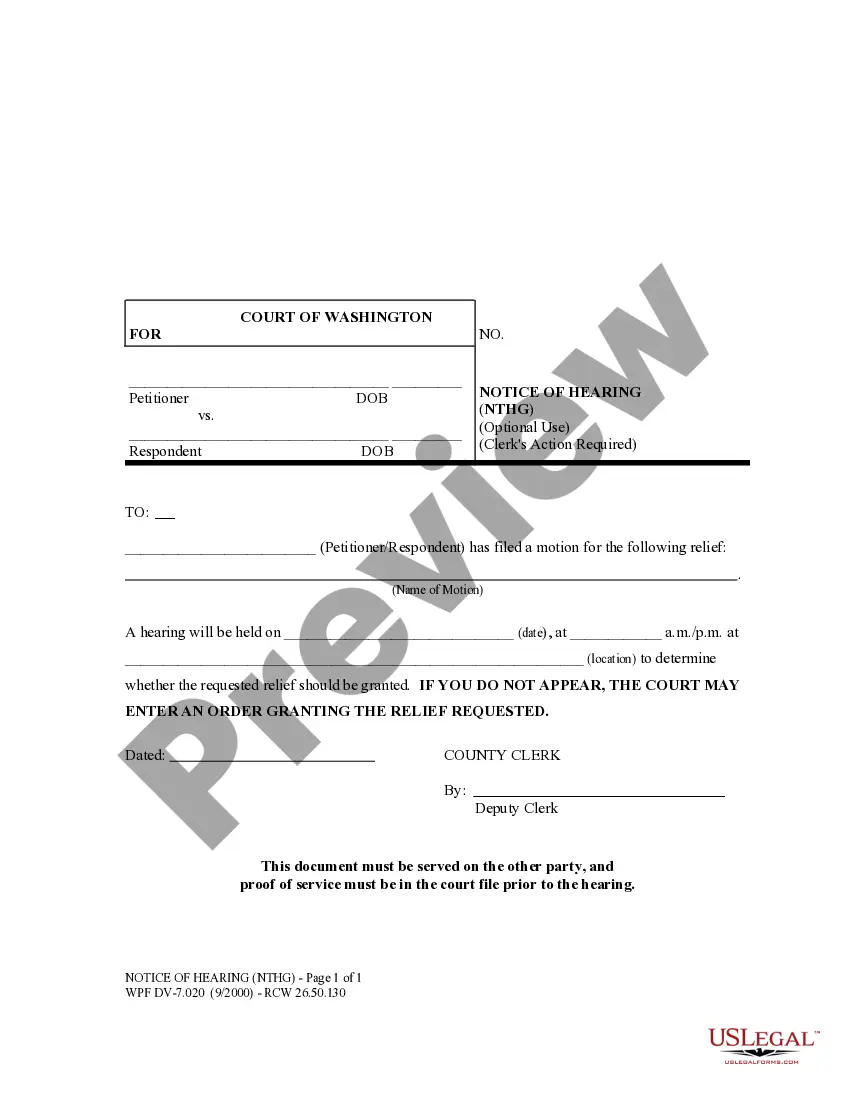
Complaint for Amount Due for Work and Labor Done on Open Account Basis - Breach of Oral or Implied Contracts
What this document covers
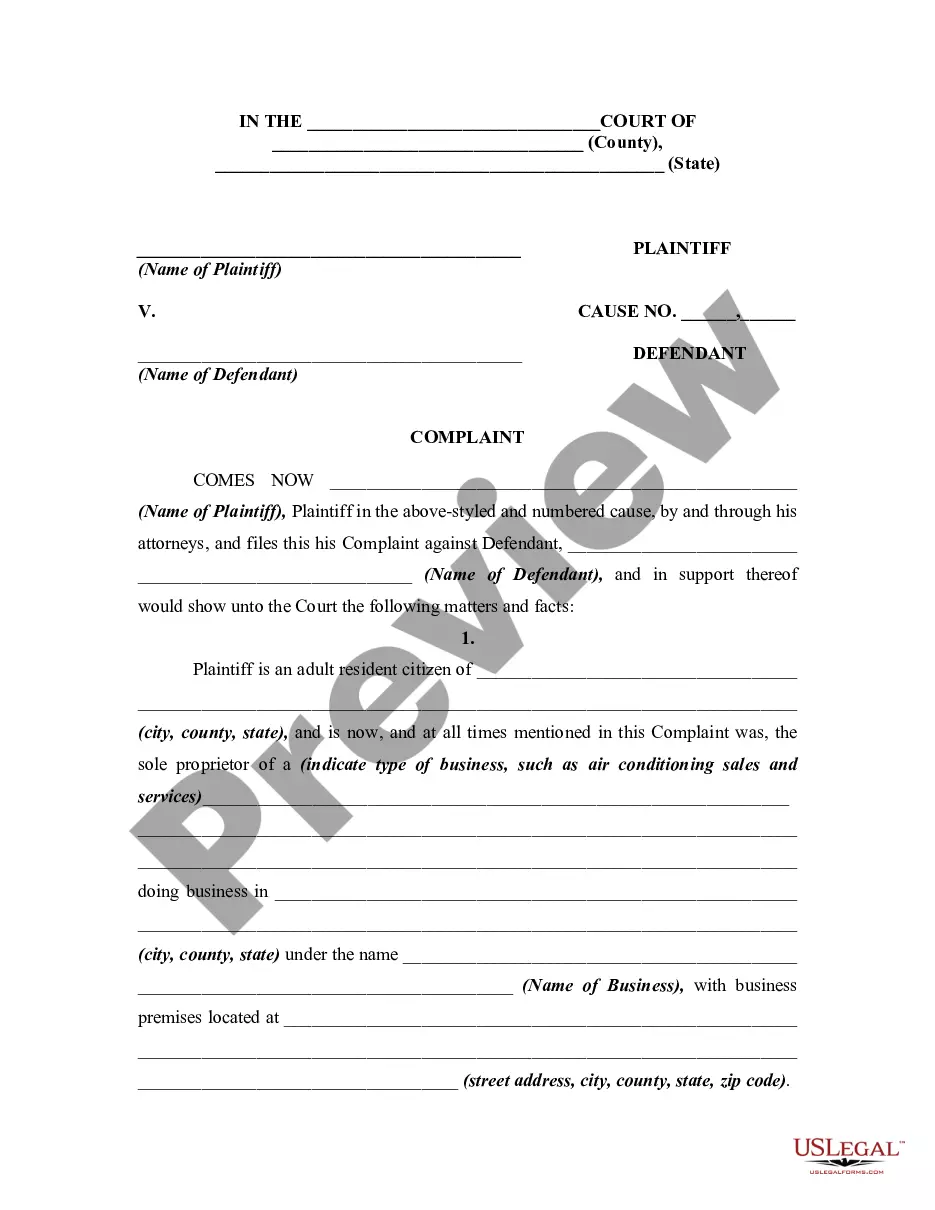
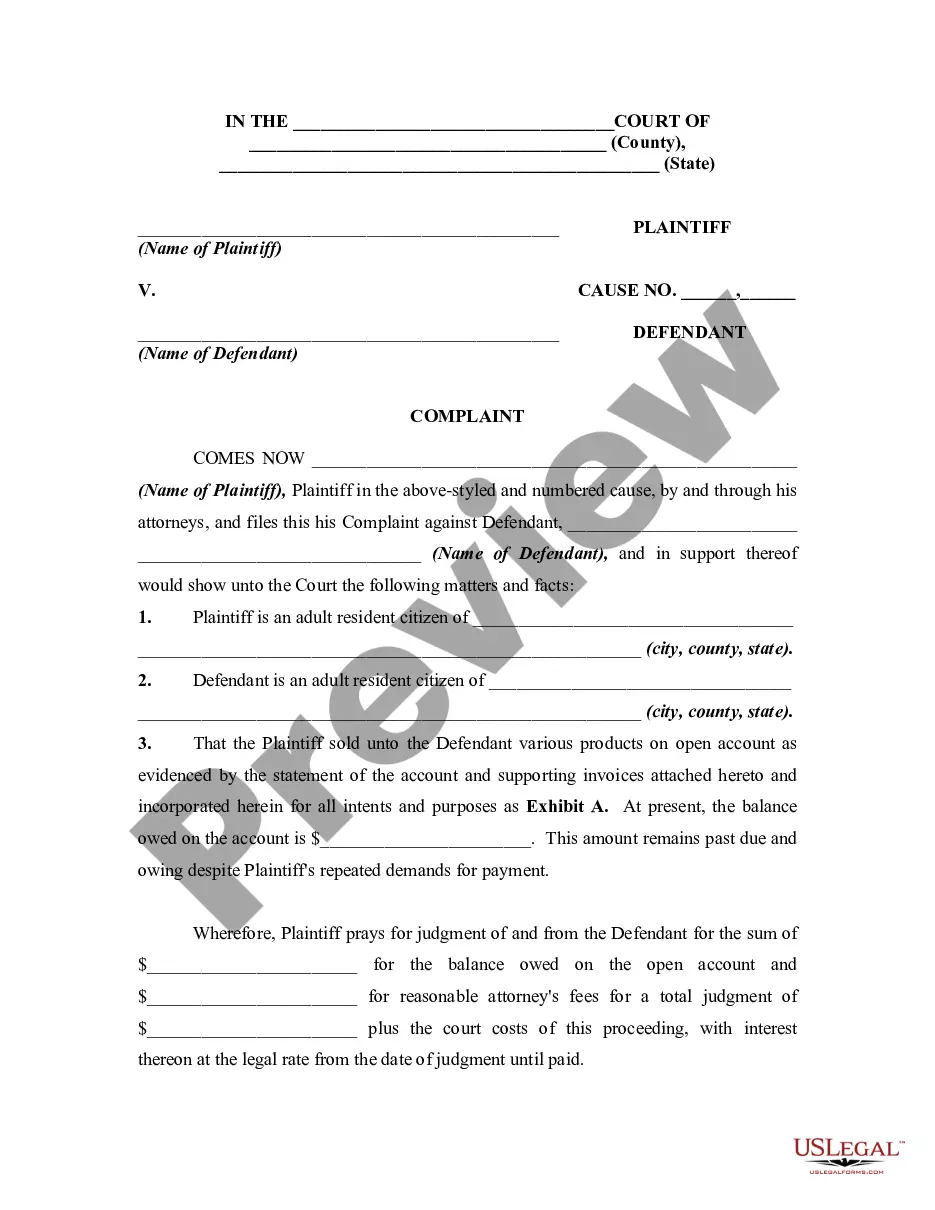
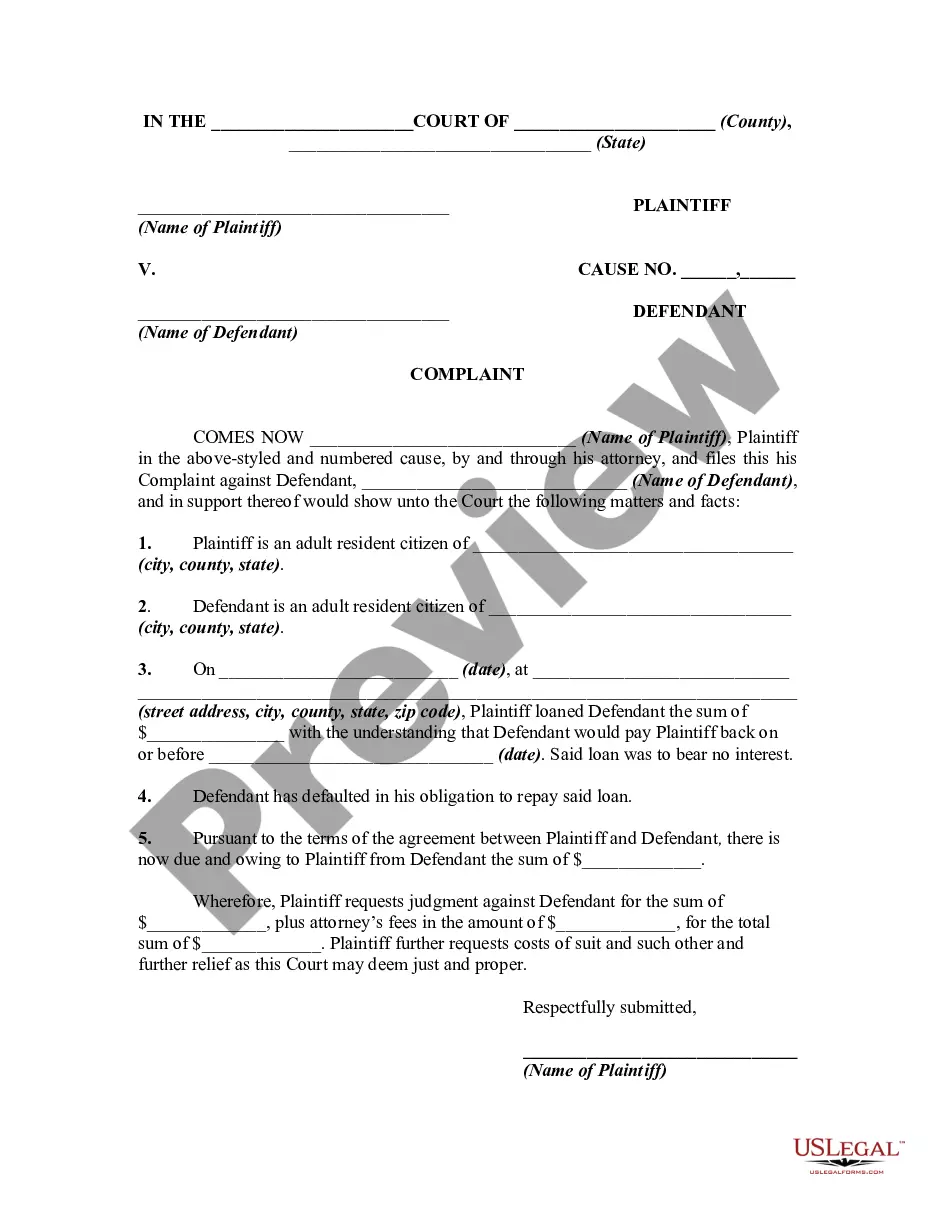
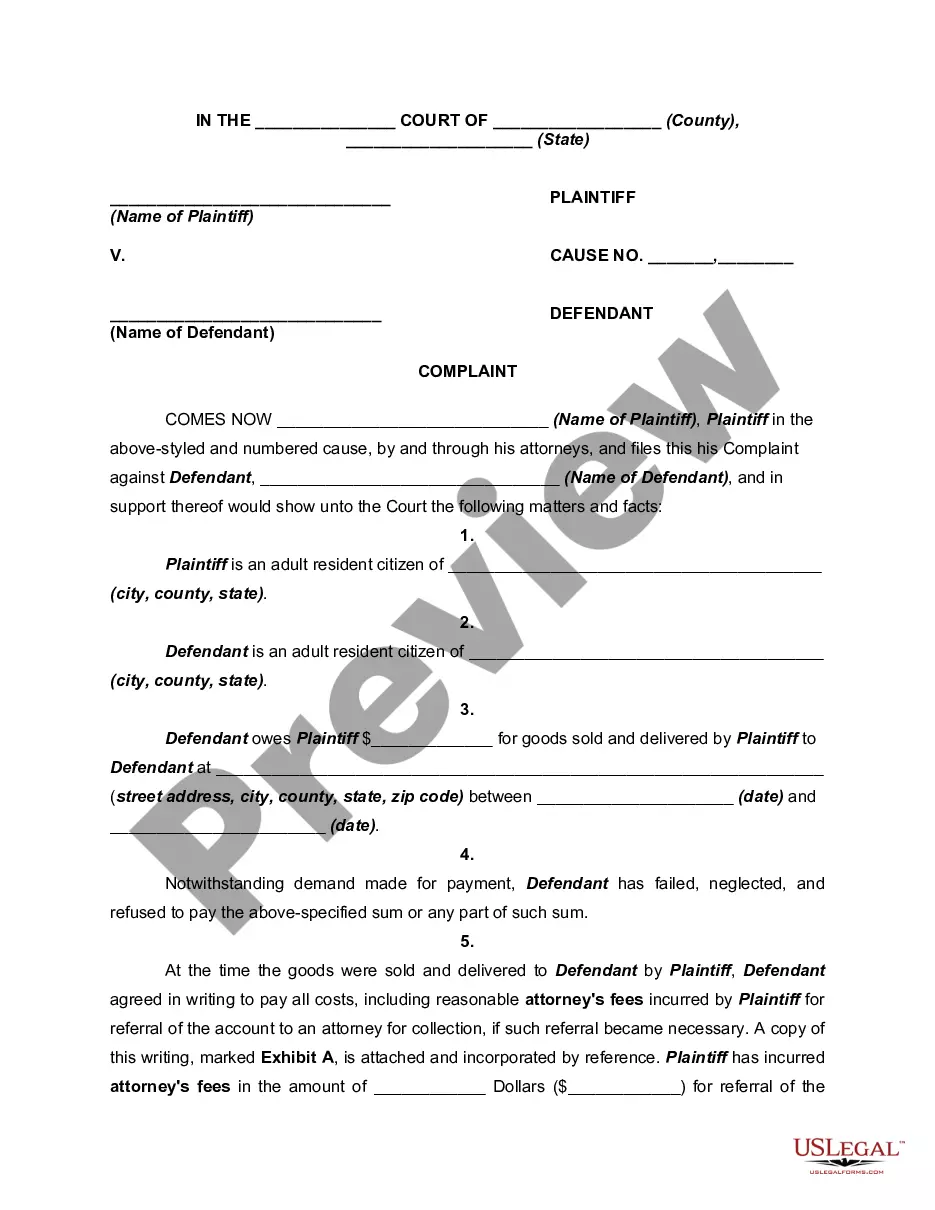
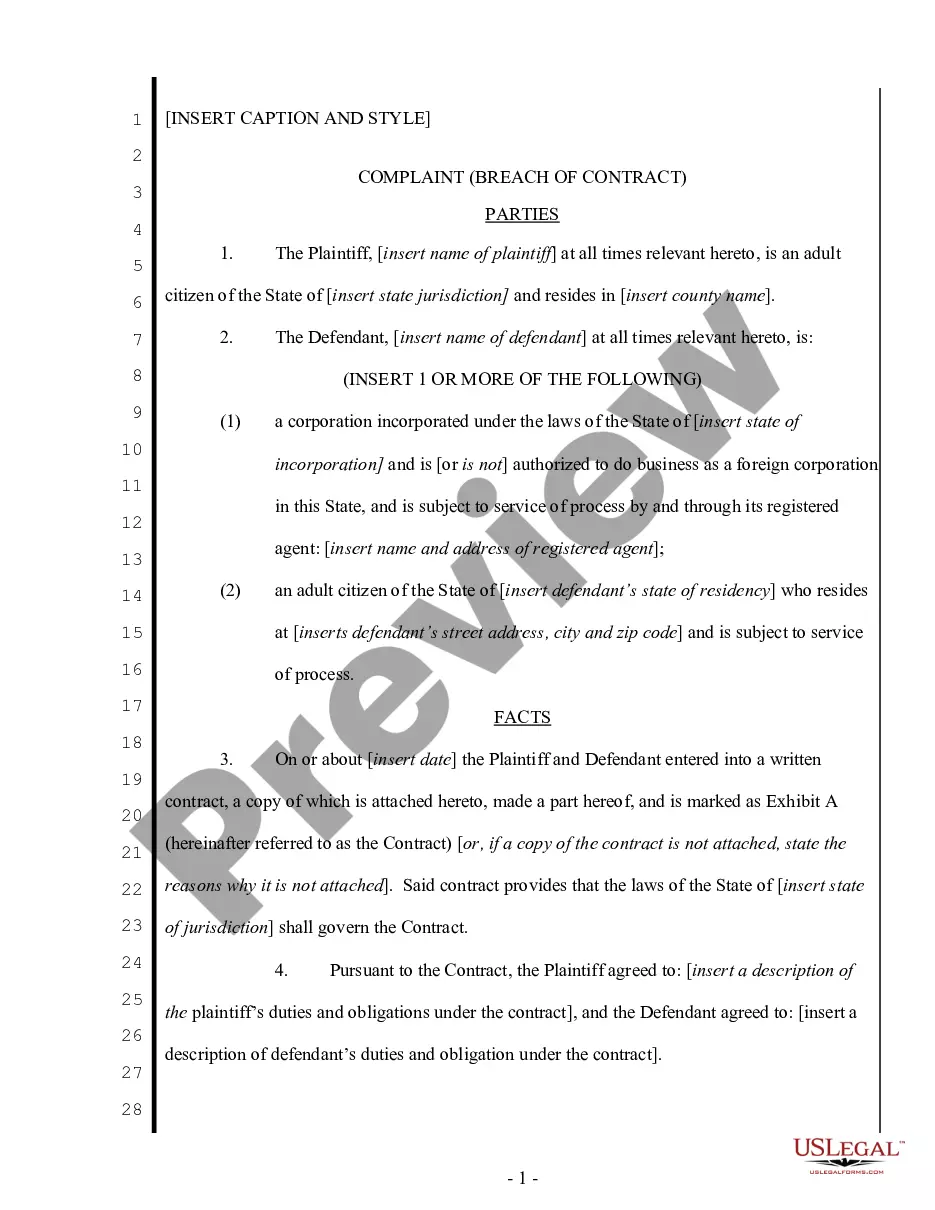
The Complaint for Amount Due for Work and Labor Done on Open Account Basis is a legal document used to initiate a lawsuit to recover payments owed under an implied or oral contract. This form serves to present the plaintiffâs claims regarding work completed or services rendered that have not been paid for. Unlike other types of contracts, it does not require an extensive itemization of each service; instead, it allows for a straightforward statement of the total amount due, making it easier for individuals or businesses to seek recovery in a court of law.
Key parts of this document
- Name and details of the Plaintiff and Defendant.
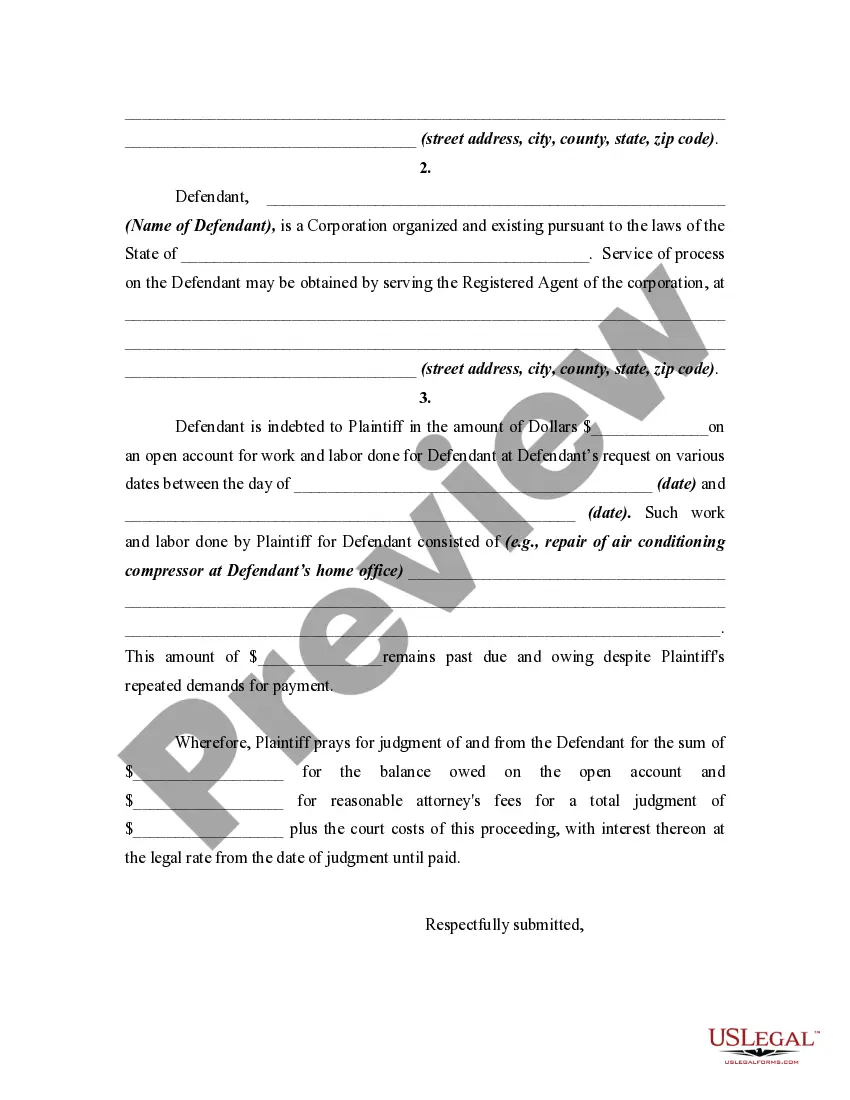
- A description of the work or labor performed along with the dates.
- The total amount owed by the Defendant for the work done.
- Details regarding the request for court costs and attorneyâs fees.
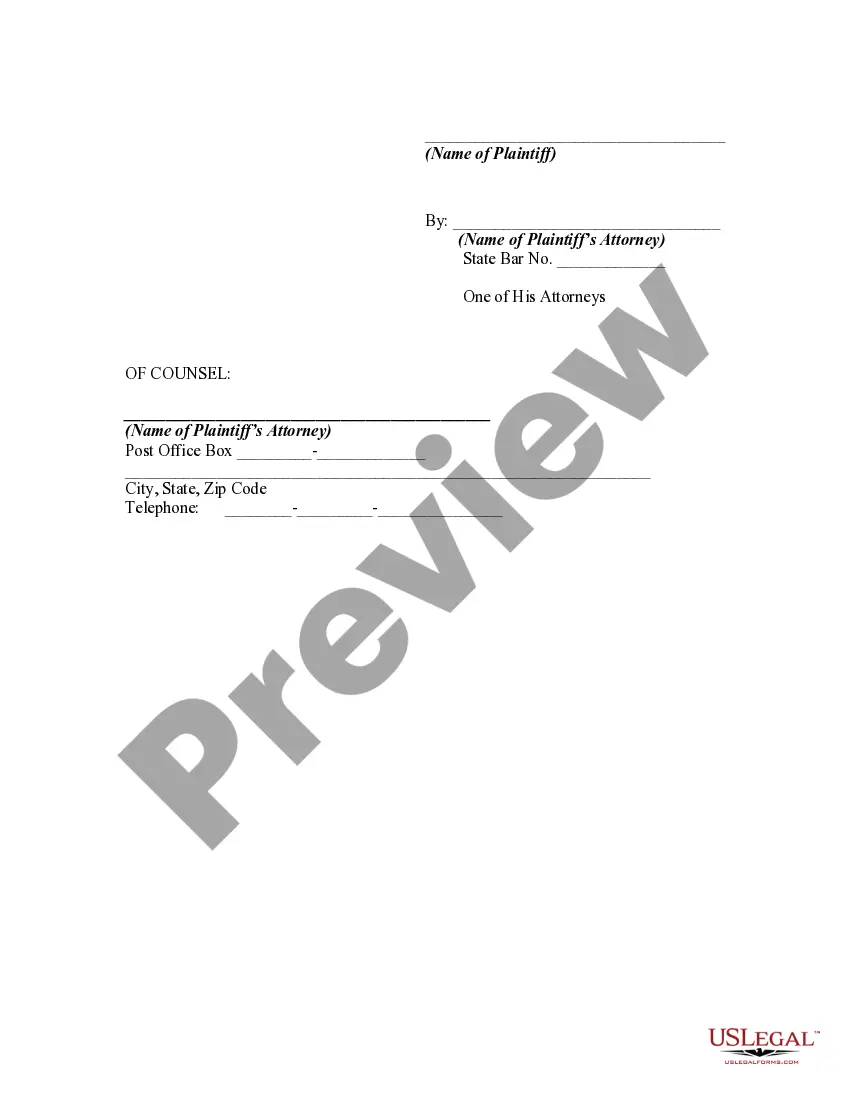
- Signature section for the Plaintiff and legal counsel.

Common use cases
This form is essential when an individual or business has performed work or provided services to another party on an open account basis and has not received payment despite repeated attempts to collect the outstanding amount. Situations may include freelancers seeking payment for services rendered, contractors awaiting payment for completed work, or suppliers looking to recover debts for goods delivered.
Who should use this form
This form is intended for:
- Individuals or businesses that have performed work or services without receiving payment.
- Contractors, service providers, or freelancers who have agreements based on implied or oral contracts.
- Legal representatives handling collections on behalf of clients.
Instructions for completing this form
- Identify and enter the names of the Plaintiff and Defendant at the top of the form.
- Describe the work performed, including the type of service and specific dates.
- Specify the amount owed, clearly stating the total due from the Defendant.
- Add any claims for attorney's fees and court costs.
- Sign the document and have your attorney sign if applicable.
Is notarization required?
This form does not typically require notarization unless specified by local law. However, it is advisable to check with your local jurisdiction to confirm any additional requirements regarding notarization for legal documents.
Get your form ready online
Our built-in tools help you complete, sign, share, and store your documents in one place.
Make edits, fill in missing information, and update formatting in US Legal Forms—just like you would in MS Word.
Download a copy, print it, send it by email, or mail it via USPS—whatever works best for your next step.
Sign and collect signatures with our SignNow integration. Send to multiple recipients, set reminders, and more. Go Premium to unlock E-Sign.
If this form requires notarization, complete it online through a secure video call—no need to meet a notary in person or wait for an appointment.
We protect your documents and personal data by following strict security and privacy standards.

Make edits, fill in missing information, and update formatting in US Legal Forms—just like you would in MS Word.

Download a copy, print it, send it by email, or mail it via USPS—whatever works best for your next step.

Sign and collect signatures with our SignNow integration. Send to multiple recipients, set reminders, and more. Go Premium to unlock E-Sign.

If this form requires notarization, complete it online through a secure video call—no need to meet a notary in person or wait for an appointment.

We protect your documents and personal data by following strict security and privacy standards.
Avoid these common issues
- Failing to provide sufficient details about the work performed.
- Not including the correct names or addresses for the Plaintiff and Defendant.
- Omitting the request for attorneys' fees or court costs.
- Using outdated or incorrect jurisdictional references.
Benefits of using this form online
- Convenience of downloading and filling out the form at your own pace.
- Editability ensures you can include specific details relevant to your case.
- Access to templates drafted by licensed attorneys increases reliability.
Legal use & context
- This form serves as a formal complaint to initiate legal proceedings for debt recovery.
- Enforceability depends on the jurisdictionâs recognition of oral or implied contracts.
- Failure to provide appropriate documentation may hinder the success of the claim.
Key takeaways
- The Complaint for Amount Due is critical for recovering unpaid debts for services.
- Completing the form accurately and completely is vital for legal success.
- Local laws may influence how this form is used or required documentation.
Looking for another form?
Form popularity
FAQ
To make a complaint about an unsafe workplace in these industries, you can call on 1300 814 609, make a complaint online or email cau@planning.nsw.gov.au.
Here are just a few examples of unfair treatment at work: Passing up someone for a training opportunity or promotion because of someone's race, color, gender or other protected characteristic. Creating offensive comments, emails or social media posts about an employee.
An employee grievance is a concern, problem, or complaint that an employee has about their work, the workplace, or someone they work withthis includes management. Something has made them feel dissatisfied, and they believe it is unfair and/or unjust on them.
Listen fully to the complaint. Even if it seems like a frivolous issue, listen completely. Ask lots of questions. During the conversation, ask a lot of questions about the incident. Ask for something in writing. Advise the person to keep the complaint to themselves. Ensure action.
HR reports into the business, just the same way every other department does. That means, if your complaint is about a first level line manager, HR can probably step in, offer some coaching, and help fix the problem.
Keep the contents of your letter to the point. Stick to the facts and never make accusations or allegations when you don't have evidence. Use professional language only, never use profanities, offensive or abusive language as this might put the reader off.
If you sue your employer, it won't be enough for you to prove that your employer made the wrong decision, or even that your employer was a no-goodnik. If you don't have a valid legal claim against your employer, then you will ultimately lose your case. One big reason to think twice before you sue.
Right to a safe workplace free of dangerous conditions, toxic substances, and other potential safety hazards; Right to be free from retaliation for filing a claim or complaint against an employer (these are sometimes called "whistleblower" rights); and. Right to fair wages for work performed.